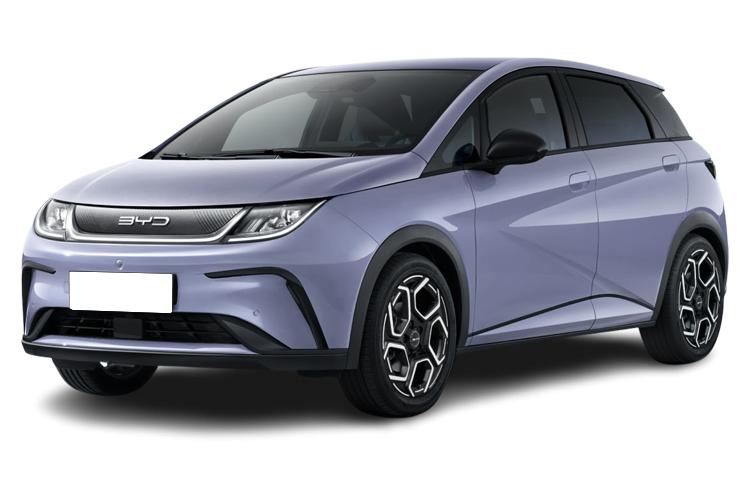
Images are for illustrative purposes only.

150kW Comfort 60kWh 5dr Auto
Need some assistance or advice? Call Us 01903 538835


By Jonathan Crouch
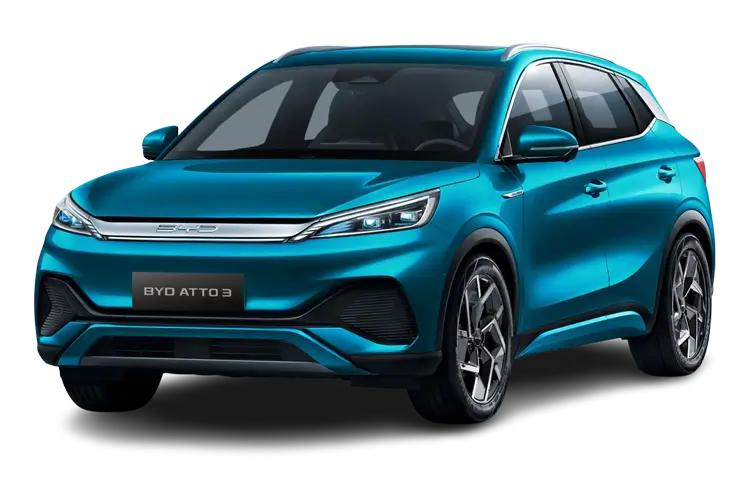
BYD's very first car on the UK market was this one, the Atto 3 full-electric family hatch. Arriving in 2023, it entered the crowded market for compact family-sized Crossover EVs, though this fresh Chinese contender was a little less compact than its mass-market rivals - and in some ways, a little cleverer too. On the used market, it's the alternative you probably won't have considered, but possibly should.
5dr Family Hatchback (EV)
Chinese maker BYD launched on the UK market with this car, the Atto 3. The brand letters stand for 'Build Your Dreams' and by the time of this model's introduction in 2023, the company was already a huge global player, in 2022 selling nearly 1.9 million EVs and Plug-in Hybrids. Apart from a few e6 MPV electric taxis though, the Atto 3 was the first BYD product we'd seen here, its name derived from the word 'attosecond' (which apparently is one quintillionth of a second). This car had already been a hit in China, but there it was called the Yuan Plus. In mid-2026 BYD completely redesigned the Atto 3. But here, let's check out the early versions of this Atto3 as a used buy.
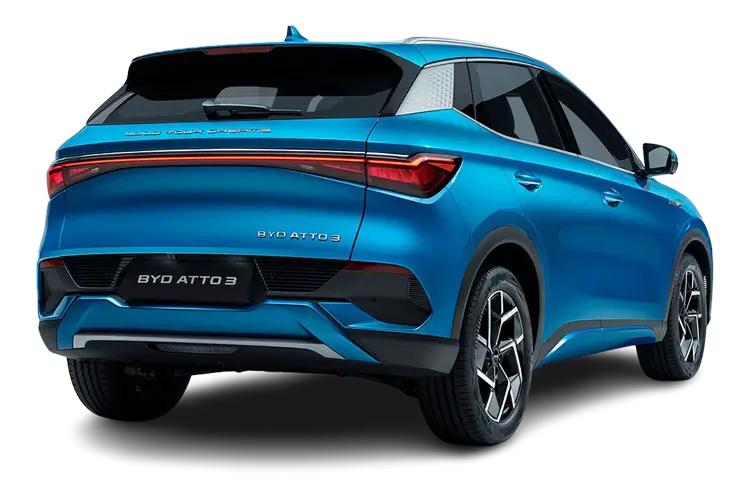
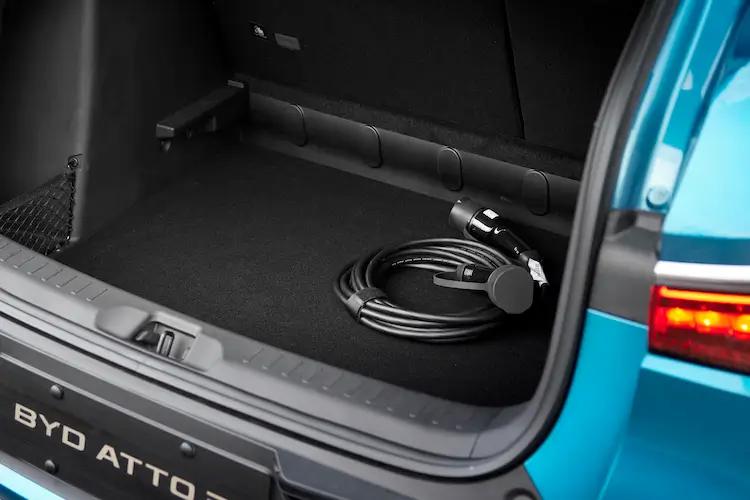
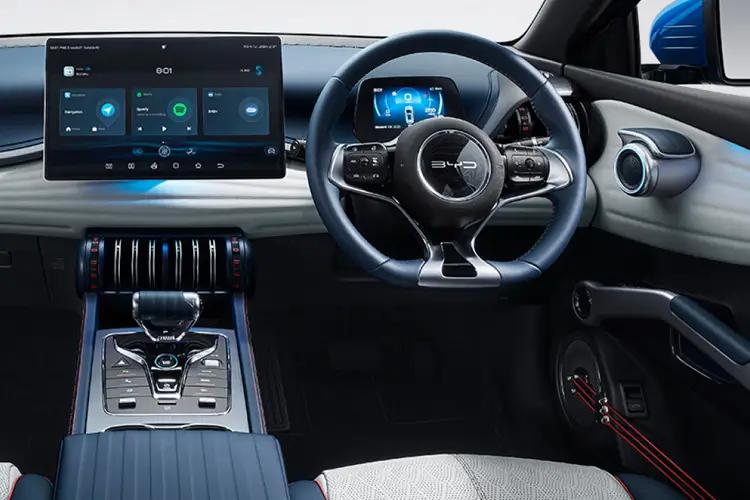
At a glance, for several reasons, you might be left a little unsure of what this Atto 3 model is. In terms of brand, there's a kind of 'I-can't-quite-place-it-MG' sort of vibe. You might also be a touch undecided in terms of this Chinese model's size, where the positioning is little large for models in the compact hatch Kia Niro EV / Volkswagen ID.3 electric segment. And a little small if you're looking at something in the sector just above, like a Volkswagen ID.4 or a Hyundai IONIQ 5. Dimensionally then, the Atto 3 straddles two sectors, a bit like the Skoda Enyaq, one of its closest rivals. The Crossover styling is a touch blander than one of those, but smart - in a conservative kind of way, enlivened by a silver textured D-pillar panel. The rear is smart, the tailgate notable for being the only one in the industry with a manufacturer slogan ('Build Your Dreams') emblazoned upon it. A slim chrome strip sits above narrow LED light clusters and a subtle roof spoiler features further up. It's a lot more memorable inside, where there's a clear design layout with some unexpectedly quirky touches. First impressions take in the small instrument screen and huge centre display. Then, as you survey the two-tone interior, you'll start to note little design touches; the weird door pull catch mounted on top of a circular speaker; the strange tubular silver gear selector and, just below it, a start/stop button with a twinkling outer frame; the textured top for the stowage bin between the seats; air vents like old CD racks; the stitched dash top covering; and door bins impractically framed by red guitar string-like cords. The main feature of note though, is the central 'Electric rotary touchscreen', which will be either 12.8-inches or an enormous 15.6-inches in size, depending on the trim level you've chosen. Strangely, it can rotate to display in either landscape or portrait formats via a push of a provided steering wheel button (BYD thinks it's safer to use the landscape screen for media functions and the portrait screen for the sat nav). The much smaller digital instrument screen has a much more restricted 5-inch space to show it's information but is pretty clearly laid out. In the back, rear leg room is good, even by the impressive EV class standard, and there's a flat floor, though this bench doesn't slide or recline. The headroom's a little restricted by the standard panoramic glass roof. But you could fit three folk across the back seat if you had to more easily than is the case with more rivals. You pay for that rear seat legroom a little in boot space. You only get a powered tailgate with the top 'Design' level of trim. And when it eventually rises, a 440-litre space is revealed (35-litres less than the slightly smaller Kia Niro EV). Push forward the 60:40-split backrest and there's 1,338-litres of space available.
Prices for this earlier version of the Atto 3 start from around £18,000 (around £23,750 retail) for the base 'Comfort'-spec model on a '23-plate. Stretch to plusher 'Design' trim on a '23-plate and you'll be looking at needing from around £18,450 (around £20,750 retail). All quoted values are sourced through industry experts cap hpi. <a href="https://hpivaluations.com/">Click here for a free valuation.</a>
Not much goes wrong. We've come across screen software glitches. And owners have complained about the low-quality Atlas Batman tyres fitted to early models which were awful in the wet (later swapped for proper Continentals - check what's fitted). In a few cases, owners have accidently triggered the car's 'Transport' mode in screen menus, which restricts speed to just 30km/h. Unresponsive parking sensors have been reported. Minor electrical issues like exterior light issues can often be resolved by restarting the car or beginning an Over-the-Air software update. Do a thorough charging check - and make sure the lead hasn't been damaged. Otherwise, it's just the usual things; look out for stone chips and alloy wheel scratches. And insist on a fully stamped-up service history.
[Atto 3 Design - ex-VAT] BYD parts prices are pretty affordable. You'll need around £8-£30 for an air filter. A set of front brake pads is in the £35-£175 bracket depending on brand. Reconditioned front brake discs cost in the £55-£145 per pair. Wiper blades cost in the £7-£26 bracket per pair.
The performance on offer here won't be 'Beyond Your Dreams', unless those dreams happen to be somewhat modest. Nor, more significantly, will the 261 mile range figure you'll get from the 60.5kWh battery, despite said battery's uniquely-dense 'Blade'-style construction. It powers a single 201bhp electric motor mounted on the front axle (rather than on the rear one, as would it would be from a rival Volkswagen, Skoda or CUPRA model in this class). The Atto 3 doesn't pointlessly hurl itself at the horizon from the get-go, but performance is pleasantly eager. There are three drive modes, 'Eco', 'Normal' and 'Sport', with not a huge amount of difference between them, but you'll need 'Sport' of course to achieve the quoted 7.3 second 0-62mph time, which is about a second faster than comparable Kia Niro EV or Skoda Enyaq 60 models. Not that this should suggest handling dynamics tailored for those who like their driving. On the contrary, as you might expect, the multi-link rear suspension with its soft springs has been set up here to prioritise comfort, as most likely owners will want. It's better even than most Citroens we've tried, which is very impressive. If you do feel the need to push on, should you be running late around a twisting secondary route, expect very able levels of cornering traction. And the usual EV-typical 99mph top speed. Provided you can overlook the weird other-worldly pedestrian acoustic noise the car emits at slow urban speeds, you should, like us, feel refinement to be excellent (not always the case with EVs in this class). Which is a boon when cruising - where you'll also benefit from the standard Adaptive Cruise Control system fitted across the range. As with most EVs, you can vary the amount of regenerative braking - in this case via a toggle on the centre console that lets you switch between 'Standard' and 'High' regen, though there's not that much difference between those two settings and even the fiercer option won't suit if you want the 'one pedal' experience promised by some manufacturers of rival EVs. You'd think that BYD building, designing and owning this car's entire set of EV drivetrain components (including battery and semiconductors) would have allowed the company to make the Atto 3 the first car in its segment to offer a truly modern 800V electrical architecture capable of allowing charging with the new breed of ultra-rapid DC public chargers - something that by 2023 we'd already seen with the only-slightly-larger Hyundai IONIQ 5. But no, it's the same conventional 400V system as everyone else from this period used - and the entry model only gets it with a feeble 7kW on-board charger: from mid-spec 'Comfort' trim upwards, a proper 11kW charger unit comes included. Which, when connected to a public 150kW DC charger allows the Atto 3 to be charged to a modest maximum of 88kW. At that speed, a 30-80% boost takes 29 minutes. An AC charge from a home 7kW single-phase wallbox takes 9 hours and 42 minutes from empty to full. If you've avoided base trim and can use an 11kW 3-phase charger, that figure falls to six and a half hours. You can schedule charging via a 'Smart Charging' section of the centre screen.
So yet another option to add to your list if you're seeking a compact but family-shaped Crossover-style EV from the 2023-2026 period. We're surprised that BYD didn't price the Atto 3 a touch lower to give customers more reason to switch from an established brand. But there's no doubt that you get an awful lot for what you're paying here, including a greater slice of interior tech than you might expect at this price point. Interestingly, BYD (which wasn't even making cars until the turn of the century) describes itself as a 'technology company' rather than a car brand. Which shows itself here with this model's uniquely dense 'Blade' battery and standard heat pump. So there's more to this Atto 3 than meets the eye. It's well worth a look.
Data provided by CAP-HPI database - Ref# 102369
By Jonathan Crouch
BYD's very first car on the UK market was this one, the Atto 3 full-electric family hatch. Arriving in 2023, it entered the crowded market for compact family-sized Crossover EVs, though this fresh Chinese contender was a little less compact than its mass-market rivals - and in some ways, a little cleverer too. On the used market, it's the alternative you probably won't have considered, but possibly should.
5dr Family Hatchback (EV)
Chinese maker BYD launched on the UK market with this car, the Atto 3. The brand letters stand for 'Build Your Dreams' and by the time of this model's introduction in 2023, the company was already a huge global player, in 2022 selling nearly 1.9 million EVs and Plug-in Hybrids. Apart from a few e6 MPV electric taxis though, the Atto 3 was the first BYD product we'd seen here, its name derived from the word 'attosecond' (which apparently is one quintillionth of a second). This car had already been a hit in China, but there it was called the Yuan Plus. In mid-2026 BYD completely redesigned the Atto 3. But here, let's check out the early versions of this Atto3 as a used buy.
At a glance, for several reasons, you might be left a little unsure of what this Atto 3 model is. In terms of brand, there's a kind of 'I-can't-quite-place-it-MG' sort of vibe. You might also be a touch undecided in terms of this Chinese model's size, where the positioning is little large for models in the compact hatch Kia Niro EV / Volkswagen ID.3 electric segment. And a little small if you're looking at something in the sector just above, like a Volkswagen ID.4 or a Hyundai IONIQ 5. Dimensionally then, the Atto 3 straddles two sectors, a bit like the Skoda Enyaq, one of its closest rivals. The Crossover styling is a touch blander than one of those, but smart - in a conservative kind of way, enlivened by a silver textured D-pillar panel. The rear is smart, the tailgate notable for being the only one in the industry with a manufacturer slogan ('Build Your Dreams') emblazoned upon it. A slim chrome strip sits above narrow LED light clusters and a subtle roof spoiler features further up. It's a lot more memorable inside, where there's a clear design layout with some unexpectedly quirky touches. First impressions take in the small instrument screen and huge centre display. Then, as you survey the two-tone interior, you'll start to note little design touches; the weird door pull catch mounted on top of a circular speaker; the strange tubular silver gear selector and, just below it, a start/stop button with a twinkling outer frame; the textured top for the stowage bin between the seats; air vents like old CD racks; the stitched dash top covering; and door bins impractically framed by red guitar string-like cords. The main feature of note though, is the central 'Electric rotary touchscreen', which will be either 12.8-inches or an enormous 15.6-inches in size, depending on the trim level you've chosen. Strangely, it can rotate to display in either landscape or portrait formats via a push of a provided steering wheel button (BYD thinks it's safer to use the landscape screen for media functions and the portrait screen for the sat nav). The much smaller digital instrument screen has a much more restricted 5-inch space to show it's information but is pretty clearly laid out. In the back, rear leg room is good, even by the impressive EV class standard, and there's a flat floor, though this bench doesn't slide or recline. The headroom's a little restricted by the standard panoramic glass roof. But you could fit three folk across the back seat if you had to more easily than is the case with more rivals. You pay for that rear seat legroom a little in boot space. You only get a powered tailgate with the top 'Design' level of trim. And when it eventually rises, a 440-litre space is revealed (35-litres less than the slightly smaller Kia Niro EV). Push forward the 60:40-split backrest and there's 1,338-litres of space available.
Prices for this earlier version of the Atto 3 start from around £18,000 (around £23,750 retail) for the base 'Comfort'-spec model on a '23-plate. Stretch to plusher 'Design' trim on a '23-plate and you'll be looking at needing from around £18,450 (around £20,750 retail). All quoted values are sourced through industry experts cap hpi. <a href="https://hpivaluations.com/">Click here for a free valuation.</a>
Not much goes wrong. We've come across screen software glitches. And owners have complained about the low-quality Atlas Batman tyres fitted to early models which were awful in the wet (later swapped for proper Continentals - check what's fitted). In a few cases, owners have accidently triggered the car's 'Transport' mode in screen menus, which restricts speed to just 30km/h. Unresponsive parking sensors have been reported. Minor electrical issues like exterior light issues can often be resolved by restarting the car or beginning an Over-the-Air software update. Do a thorough charging check - and make sure the lead hasn't been damaged. Otherwise, it's just the usual things; look out for stone chips and alloy wheel scratches. And insist on a fully stamped-up service history.
[Atto 3 Design - ex-VAT] BYD parts prices are pretty affordable. You'll need around £8-£30 for an air filter. A set of front brake pads is in the £35-£175 bracket depending on brand. Reconditioned front brake discs cost in the £55-£145 per pair. Wiper blades cost in the £7-£26 bracket per pair.
The performance on offer here won't be 'Beyond Your Dreams', unless those dreams happen to be somewhat modest. Nor, more significantly, will the 261 mile range figure you'll get from the 60.5kWh battery, despite said battery's uniquely-dense 'Blade'-style construction. It powers a single 201bhp electric motor mounted on the front axle (rather than on the rear one, as would it would be from a rival Volkswagen, Skoda or CUPRA model in this class). The Atto 3 doesn't pointlessly hurl itself at the horizon from the get-go, but performance is pleasantly eager. There are three drive modes, 'Eco', 'Normal' and 'Sport', with not a huge amount of difference between them, but you'll need 'Sport' of course to achieve the quoted 7.3 second 0-62mph time, which is about a second faster than comparable Kia Niro EV or Skoda Enyaq 60 models. Not that this should suggest handling dynamics tailored for those who like their driving. On the contrary, as you might expect, the multi-link rear suspension with its soft springs has been set up here to prioritise comfort, as most likely owners will want. It's better even than most Citroens we've tried, which is very impressive. If you do feel the need to push on, should you be running late around a twisting secondary route, expect very able levels of cornering traction. And the usual EV-typical 99mph top speed. Provided you can overlook the weird other-worldly pedestrian acoustic noise the car emits at slow urban speeds, you should, like us, feel refinement to be excellent (not always the case with EVs in this class). Which is a boon when cruising - where you'll also benefit from the standard Adaptive Cruise Control system fitted across the range. As with most EVs, you can vary the amount of regenerative braking - in this case via a toggle on the centre console that lets you switch between 'Standard' and 'High' regen, though there's not that much difference between those two settings and even the fiercer option won't suit if you want the 'one pedal' experience promised by some manufacturers of rival EVs. You'd think that BYD building, designing and owning this car's entire set of EV drivetrain components (including battery and semiconductors) would have allowed the company to make the Atto 3 the first car in its segment to offer a truly modern 800V electrical architecture capable of allowing charging with the new breed of ultra-rapid DC public chargers - something that by 2023 we'd already seen with the only-slightly-larger Hyundai IONIQ 5. But no, it's the same conventional 400V system as everyone else from this period used - and the entry model only gets it with a feeble 7kW on-board charger: from mid-spec 'Comfort' trim upwards, a proper 11kW charger unit comes included. Which, when connected to a public 150kW DC charger allows the Atto 3 to be charged to a modest maximum of 88kW. At that speed, a 30-80% boost takes 29 minutes. An AC charge from a home 7kW single-phase wallbox takes 9 hours and 42 minutes from empty to full. If you've avoided base trim and can use an 11kW 3-phase charger, that figure falls to six and a half hours. You can schedule charging via a 'Smart Charging' section of the centre screen.
So yet another option to add to your list if you're seeking a compact but family-shaped Crossover-style EV from the 2023-2026 period. We're surprised that BYD didn't price the Atto 3 a touch lower to give customers more reason to switch from an established brand. But there's no doubt that you get an awful lot for what you're paying here, including a greater slice of interior tech than you might expect at this price point. Interestingly, BYD (which wasn't even making cars until the turn of the century) describes itself as a 'technology company' rather than a car brand. Which shows itself here with this model's uniquely dense 'Blade' battery and standard heat pump. So there's more to this Atto 3 than meets the eye. It's well worth a look.
160kW Advance 65kWh 5dr Auto

POA
POA