
Images are for illustrative purposes only.

1.0 TCe 90 Expression 5dr
Need some assistance or advice? Call Us 01903 538835


By Jonathan Crouch
A considerably more affordable used car is always a tempting prospect and when it's as smartly styled and capable as Dacia's second generation Duster, the concept becomes particularly appealing. Like its HS predecessor, this HM MK2 design undercut rival models in the small SUV segment by an enormous amount, this Romanian budget brand using proven Renault engineering to create a very likeable product that could prove ideal as back-up family transport. This second generation version got more technology and a bit of extra polish but otherwise, the basic recipe was pretty much unchanged. Which for some, will make this car very tempting indeed.
5-door SUV [1.6 petrol / 1.0 TCe turbo petrol / 1.5 dCi diesel]
The Duster is the car that epitomises Dacia, the Renault-owned Romanian brand who've brought a whole new value perspective to family cars since their launch in our market back in 2012. The original HS version of this model was astonishingly well priced - but felt it in some aspects of its design. With a few of the rough edges smoothed off though, this second generation HM version was a decent step forward. There was nothing radically different about this MK2 design, but at the same time, almost everything was changed - or so Dacia claimed anyway. The reality was that the 'B0'-series platform and a lot of the engineering you couldn't see was much the same as it had been before, but it was true that every exterior panel was new. The drive experience was much better too - the brand boldly promised that refinement was almost twice as good. Plus there was extra 4WD functionality and buyers got a proper electric power steering system to replace the ponderous old hydraulic set-up. Best of all perhaps, the cabin no longer had the feel of an Armenian thrift store. And buyers could to option it up with sophisticated features foreign to the Dacia brand in the past, like climate control, keyless entry and a multi-view rear camera. To do that though, was to dilute this car's most unique selling point - its value proposition. This MK2 model sold until late 2024, when it was replaced by a new MK3 Duster.
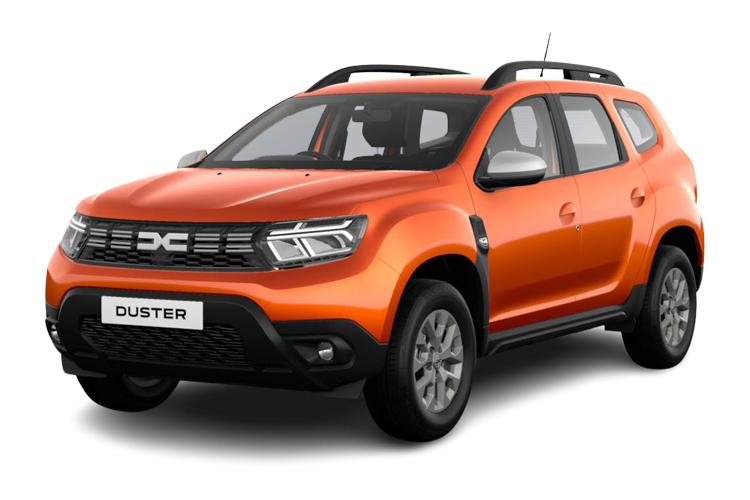
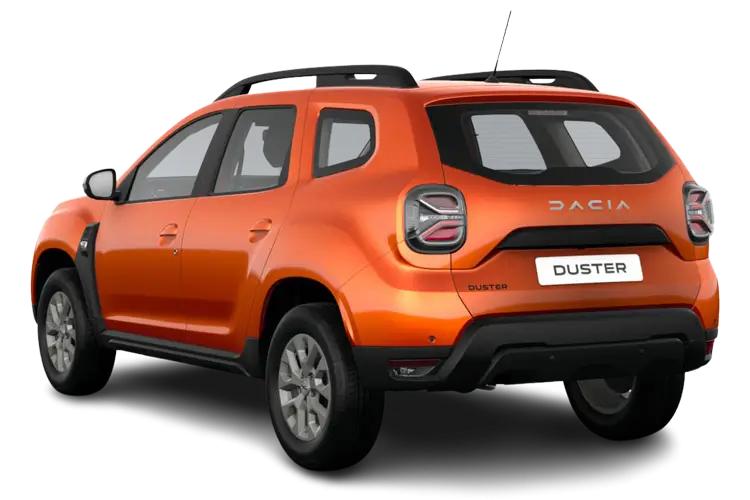
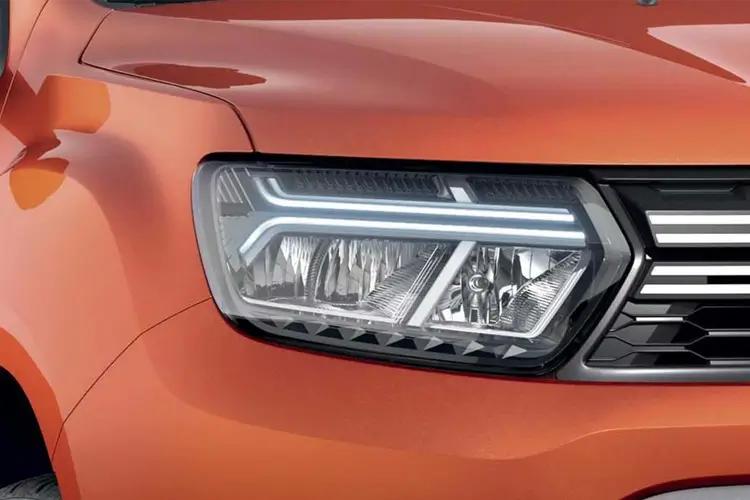
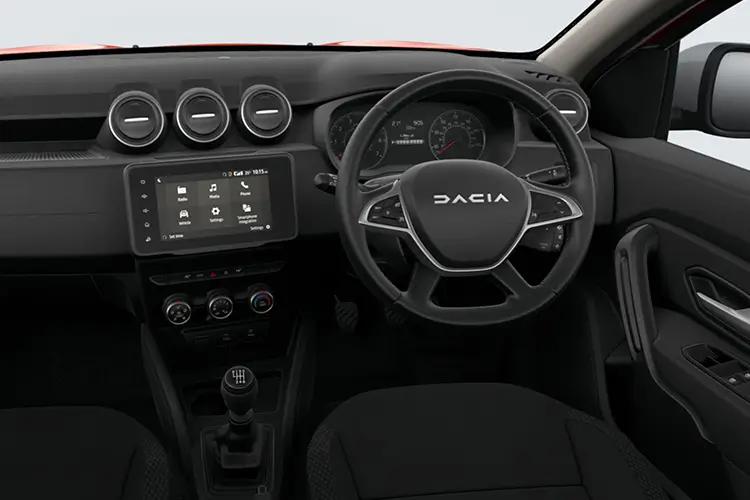
In redesigning this car, the Romanian brand could have followed rivals and made the Duster a little more bling, but thankfully, they didn't. Every body panel was changed to make it smarter, smoother and more modern, but it still remained very much a sensible, no nonsense compact Sport Utility Vehicle. To some extent, this design continuity was heavily influenced by the fact that this second generation model had to ride on the same B0 platform as its predecessor and used the same wheelbase and a lot of the same mechanicals. There was also the same ride height as before, which saw this car raised 210mm from the deck - an almost unheard-of height in the small SUV segment. Familiar design cues were also carried over - a glasshouse shallower than that of some rivals, a kicked-up rear window line and a wheelbase that appeared longer than it was. But there were changes too. The previous curious crescent-style crease that flowed between the chunky arches was replaced by more conventional smooth chamfered surfacing and a sharp swage line just above the sills. Potentially, customers from new could specify wheels of up to 17-inches in size. The branded roof rails were neat. And there was a black vertical trimming panel behind the front wheel arch that was intended to make the profile look a little more purposeful. Inside this MK2 Duster, you'd still know that you were in a budget brand model but it was a vast improvement on what had been offered up before. The centre console no longer looked like something from the last century, incorporating three smart central vents and a higher-set screen for the 'MediaNav' infotainment display customers got on plusher models. Yes, there were a few things (the door handle pulls for instance) that still let the side down a little when it comes to quality but otherwise, most of the areas you're likely to regularly touch - the door armrests and the chunky gear lever for instance - here felt quite good. If you happen to have experience of the previous model, you'll also immediately notice the slightly airier feel thanks to the way the windscreen was moved forward by 100mm. And the seats. As previously, they were SUV-like in their raised positioning - not all cars in this class from this period actually offer that - but in this MK2 model they were vastly more comfortable. And storage capacity? Well Dacia claimed that around the cabin, this had increased by 20% to 28.6-litres. What else? Well thanks to that raised driving position and the large glass area, forward vision is fine, but your rear three-quarter view is rather limited by the up-swept rear windows and thick pillars. Time to consider the rear. The fact that, like its predecessor, this MK2 Duster was so much larger than the class norm helped enormously here. Once inside, you'll really feel the benefits of that extra body length if you've tried other typical models in this segment. There's a bit more width than the class average too - enough in fact to allow the fitment of three child seats, should that be required. Finally, let's consider the boot, which also benefited from this Duster's generous exterior sizing. Most cars in this class give you 350-400-litres of trunk space; here, you get 445-litres in a front-driven model. With everything flat, there's 1,623-litres of fresh air on offer in the front-driven version - or 1,559-litres in the 4WD version.
Please contact us for an exact up-to-date valuation.
Things to look out for are, first and foremost, elements that tend to apply to all Dacia models. We came across some faults with the engine management systems - mainly with the petrol variants - the diesel's pretty bullet-proof but we came across one owner who reported whistling from the exhaust system, vibration on the over-run, low running water temperature and poor fuel consumption. We also came across complaints regarding wheel alignment. Catalytic converter light failures are well known on Dacias, preceded by a warning light on the dash. And there's plenty else to look out for too. Some owners report various rattles - from the seat belt holder to the steering wheel. The wiper blades are of poor quality - but Dacia will apparently change them if owners complain. There was only one recall for this MK2 model; make sure that it was attended to. Quite a few issues have been reported with the rare LPG model - engine rattles, stalling and so on; check this thoroughly on the test drive if that's the version you're looking at. It's worth checking out the owners' website - www.daciaforum.co.uk as usual, check for bodywork scrapes (cheaper models didn't get parking sensors0 and alloy wheel scrapes, plus interior child damage. It's unlikely that the front-driven versions will have been much used off-road (though the 4x4 versions may well have been, so check underneath just in case). Insist on a fully stamped-up service history.
(approx based on a 2018 1.0 TCe ex VAT) An oil filter costs around £6-£15. An air filter costs around £7-£13. Front brake discs cost in the £28 to £152 bracket. Front brake pads sit in the £14 to £24 bracket for a set. A fuel filter costs in the £2 to £47 bracket. A radiator is around £56-£174. A water pump costs in the £33 to £88 bracket. A wiper blade costs in the £6-£22 bracket.
On the move, a couple of key things characterised the drive dynamics of this second generation Duster. The first thing that impresses itself upon you is the steering, this time round a modern electrically-assisted set-up that's vastly better than the vague old hydraulic system used previously. It rather light and devoid of much feedback (which to be honest reflects the handling overall), but it makes the car much easier to manoeuvre in tight spots than it was before. The second and equally important change here relates to refinement. It's a measure of what a noisy old thing the previous Duster was that Dacia can claim a 50% reduction in interior noise this time round. It certainly feels significantly quieter, especially at lower speeds. Engine-wise, there's a choice of two 115hp powerplants. Either the 1.6-litre SCe normally aspirated petrol unit we're trying here. Or the preferable 1.5-litre 'Blue dCi' turbo diesel that gives you nearly 70% more pulling power through the gears and can manage 64.2mpg on the combined cycle and 115g/km of CO2. Either way, 4WD is an option if you want it, the same Nissan-engineered three-mode system used by the previous model, with '2WD' and 'Auto' settings for normal driving and a 'Lock' mode for heavy off road use. You'll probably want this set-up if you plan to do some towing with this car. The diesel variant can tug along up to 1.5-tonnes if need be.
Cars are often a lot more expensive than perhaps they need to be, especially in fashionable market sectors like those for small SUVs. It's a trend manufacturers try and justify with high technology that's certainly very impressive but which many buyers neither appreciate nor really want. These are the people being targeted here by a very clever package indeed and one that makes as much sense used as it did new, giving you almost everything you need - and nothing you don't. All of which begs the question. Will you be one of those who constantly pays over the odds for a car of this kind, justifying your purchase with vague notions of brand loyalty and high technology? Or, as Dacia suggests, have we reached the point where it's time to take a different, more realistic approach? It's a convincing argument.
Data provided by CAP-HPI database - Ref# 100923
By Jonathan Crouch
A considerably more affordable used car is always a tempting prospect and when it's as smartly styled and capable as Dacia's second generation Duster, the concept becomes particularly appealing. Like its HS predecessor, this HM MK2 design undercut rival models in the small SUV segment by an enormous amount, this Romanian budget brand using proven Renault engineering to create a very likeable product that could prove ideal as back-up family transport. This second generation version got more technology and a bit of extra polish but otherwise, the basic recipe was pretty much unchanged. Which for some, will make this car very tempting indeed.
5-door SUV [1.6 petrol / 1.0 TCe turbo petrol / 1.5 dCi diesel]
The Duster is the car that epitomises Dacia, the Renault-owned Romanian brand who've brought a whole new value perspective to family cars since their launch in our market back in 2012. The original HS version of this model was astonishingly well priced - but felt it in some aspects of its design. With a few of the rough edges smoothed off though, this second generation HM version was a decent step forward. There was nothing radically different about this MK2 design, but at the same time, almost everything was changed - or so Dacia claimed anyway. The reality was that the 'B0'-series platform and a lot of the engineering you couldn't see was much the same as it had been before, but it was true that every exterior panel was new. The drive experience was much better too - the brand boldly promised that refinement was almost twice as good. Plus there was extra 4WD functionality and buyers got a proper electric power steering system to replace the ponderous old hydraulic set-up. Best of all perhaps, the cabin no longer had the feel of an Armenian thrift store. And buyers could to option it up with sophisticated features foreign to the Dacia brand in the past, like climate control, keyless entry and a multi-view rear camera. To do that though, was to dilute this car's most unique selling point - its value proposition. This MK2 model sold until late 2024, when it was replaced by a new MK3 Duster.
In redesigning this car, the Romanian brand could have followed rivals and made the Duster a little more bling, but thankfully, they didn't. Every body panel was changed to make it smarter, smoother and more modern, but it still remained very much a sensible, no nonsense compact Sport Utility Vehicle. To some extent, this design continuity was heavily influenced by the fact that this second generation model had to ride on the same B0 platform as its predecessor and used the same wheelbase and a lot of the same mechanicals. There was also the same ride height as before, which saw this car raised 210mm from the deck - an almost unheard-of height in the small SUV segment. Familiar design cues were also carried over - a glasshouse shallower than that of some rivals, a kicked-up rear window line and a wheelbase that appeared longer than it was. But there were changes too. The previous curious crescent-style crease that flowed between the chunky arches was replaced by more conventional smooth chamfered surfacing and a sharp swage line just above the sills. Potentially, customers from new could specify wheels of up to 17-inches in size. The branded roof rails were neat. And there was a black vertical trimming panel behind the front wheel arch that was intended to make the profile look a little more purposeful. Inside this MK2 Duster, you'd still know that you were in a budget brand model but it was a vast improvement on what had been offered up before. The centre console no longer looked like something from the last century, incorporating three smart central vents and a higher-set screen for the 'MediaNav' infotainment display customers got on plusher models. Yes, there were a few things (the door handle pulls for instance) that still let the side down a little when it comes to quality but otherwise, most of the areas you're likely to regularly touch - the door armrests and the chunky gear lever for instance - here felt quite good. If you happen to have experience of the previous model, you'll also immediately notice the slightly airier feel thanks to the way the windscreen was moved forward by 100mm. And the seats. As previously, they were SUV-like in their raised positioning - not all cars in this class from this period actually offer that - but in this MK2 model they were vastly more comfortable. And storage capacity? Well Dacia claimed that around the cabin, this had increased by 20% to 28.6-litres. What else? Well thanks to that raised driving position and the large glass area, forward vision is fine, but your rear three-quarter view is rather limited by the up-swept rear windows and thick pillars. Time to consider the rear. The fact that, like its predecessor, this MK2 Duster was so much larger than the class norm helped enormously here. Once inside, you'll really feel the benefits of that extra body length if you've tried other typical models in this segment. There's a bit more width than the class average too - enough in fact to allow the fitment of three child seats, should that be required. Finally, let's consider the boot, which also benefited from this Duster's generous exterior sizing. Most cars in this class give you 350-400-litres of trunk space; here, you get 445-litres in a front-driven model. With everything flat, there's 1,623-litres of fresh air on offer in the front-driven version - or 1,559-litres in the 4WD version.
Please contact us for an exact up-to-date valuation.
Things to look out for are, first and foremost, elements that tend to apply to all Dacia models. We came across some faults with the engine management systems - mainly with the petrol variants - the diesel's pretty bullet-proof but we came across one owner who reported whistling from the exhaust system, vibration on the over-run, low running water temperature and poor fuel consumption. We also came across complaints regarding wheel alignment. Catalytic converter light failures are well known on Dacias, preceded by a warning light on the dash. And there's plenty else to look out for too. Some owners report various rattles - from the seat belt holder to the steering wheel. The wiper blades are of poor quality - but Dacia will apparently change them if owners complain. There was only one recall for this MK2 model; make sure that it was attended to. Quite a few issues have been reported with the rare LPG model - engine rattles, stalling and so on; check this thoroughly on the test drive if that's the version you're looking at. It's worth checking out the owners' website - www.daciaforum.co.uk as usual, check for bodywork scrapes (cheaper models didn't get parking sensors0 and alloy wheel scrapes, plus interior child damage. It's unlikely that the front-driven versions will have been much used off-road (though the 4x4 versions may well have been, so check underneath just in case). Insist on a fully stamped-up service history.
(approx based on a 2018 1.0 TCe ex VAT) An oil filter costs around £6-£15. An air filter costs around £7-£13. Front brake discs cost in the £28 to £152 bracket. Front brake pads sit in the £14 to £24 bracket for a set. A fuel filter costs in the £2 to £47 bracket. A radiator is around £56-£174. A water pump costs in the £33 to £88 bracket. A wiper blade costs in the £6-£22 bracket.
On the move, a couple of key things characterised the drive dynamics of this second generation Duster. The first thing that impresses itself upon you is the steering, this time round a modern electrically-assisted set-up that's vastly better than the vague old hydraulic system used previously. It rather light and devoid of much feedback (which to be honest reflects the handling overall), but it makes the car much easier to manoeuvre in tight spots than it was before. The second and equally important change here relates to refinement. It's a measure of what a noisy old thing the previous Duster was that Dacia can claim a 50% reduction in interior noise this time round. It certainly feels significantly quieter, especially at lower speeds. Engine-wise, there's a choice of two 115hp powerplants. Either the 1.6-litre SCe normally aspirated petrol unit we're trying here. Or the preferable 1.5-litre 'Blue dCi' turbo diesel that gives you nearly 70% more pulling power through the gears and can manage 64.2mpg on the combined cycle and 115g/km of CO2. Either way, 4WD is an option if you want it, the same Nissan-engineered three-mode system used by the previous model, with '2WD' and 'Auto' settings for normal driving and a 'Lock' mode for heavy off road use. You'll probably want this set-up if you plan to do some towing with this car. The diesel variant can tug along up to 1.5-tonnes if need be.
Cars are often a lot more expensive than perhaps they need to be, especially in fashionable market sectors like those for small SUVs. It's a trend manufacturers try and justify with high technology that's certainly very impressive but which many buyers neither appreciate nor really want. These are the people being targeted here by a very clever package indeed and one that makes as much sense used as it did new, giving you almost everything you need - and nothing you don't. All of which begs the question. Will you be one of those who constantly pays over the odds for a car of this kind, justifying your purchase with vague notions of brand loyalty and high technology? Or, as Dacia suggests, have we reached the point where it's time to take a different, more realistic approach? It's a convincing argument.
