
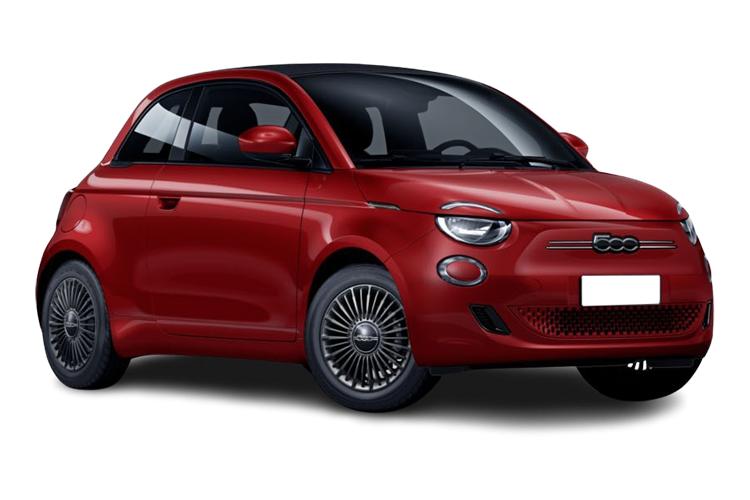
Images are for illustrative purposes only.

0.9 TwinAir Rock Star 2dr
Need some assistance or advice? Call Us 01903 538835


By Jonathan Crouch
The modern era version of Fiat's cheeky little 500 city car was even harder to resist in 500C convertible form. It wasn't fundamentally changed throughout its life - but then loyal buyers didn't really want it to be. Apart from the fabric roof, these people will like the smart look, media options and the individual feel. You can tell that Fiat knows its market.
3dr citycar convertible (0.9 petrol [Pop, Lounge, Sport, Star, Rockstar])
Good things very often come in small packages and there's little doubt that the first modern-era version of the little 500 was a 'good thing' for Fiat, rejuvenating the Italian brand from America to Andalucía. Crucial to the profitability of this little car was the success of the variant we look at here, the open-topped 500C. Like its fixed-top counterpart, it was significantly improved in mid-2015, then gained a mild hybrid engine in 2020. 'Al fresco' motoring has always been a significant option in creating the full Fiat 500 experience. Indeed, it only took a year from the launch of the original 'Nuova 500' in 1957 for an open-topped '500N' version to be introduced. This wasn't a full convertible - and it didn't need to be. Instead, a vast fabric sunroof provided open air enjoyment without the need for significant extra cost or weight. Just as it did in this modern-era open-topped 500 model, the 500C. We first saw this variant in 2009, a car identical to its fixed-top stablemate in every way, save for the vast concertina-ing fabric top that could be electrically retracted right back. This set-up came with quite a price premium, but many customers seemed happy to pay it, seduced by saccharine-laden levels of cuteness that could be liberally embellished from the exhaustive options list. By 2015, this type of 'al fresco' roof arrangement had been copied by direct rivals like the DS3 Cabrio and the Vauxhall ADAM Rocks Air. Plus it was more affordably offered as an option on citycars like Peugeot's 108, Citroen's C1 and Toyota's Aygo, models that targeted lower-level derivatives of this Fiat. Meanwhile, top-end 500C variants were facing fresh competition from MINI's third generation Convertible. With no full-replacement 500C model available to meet this varied challenge, Fiat responded in 2015 with a far-reaching package of changes that brought minor tweaks and a little more efficiency, even more scope for personalisation and wider availability of the Fiat Group's Uconnect infotainment technology. A more far-reaching update happened in 2020 with the arrival of a mild hybrid version of the little 0.9-litre engine. This car sold until 2024, when it finally had to be deleted due to being unable to meet EU cybersecurity regulations. A 500C Hybrid based on the third generation model was introduced in 2026.
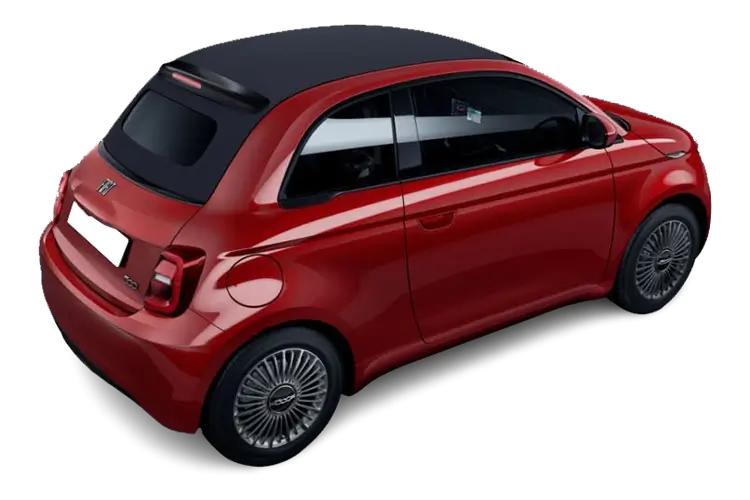
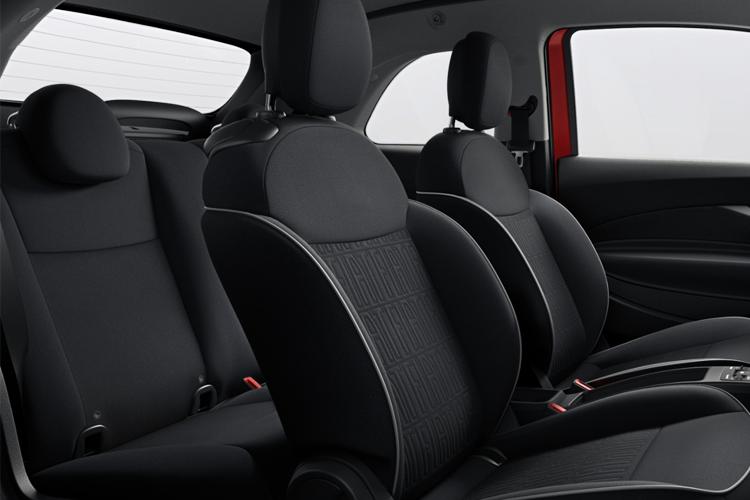
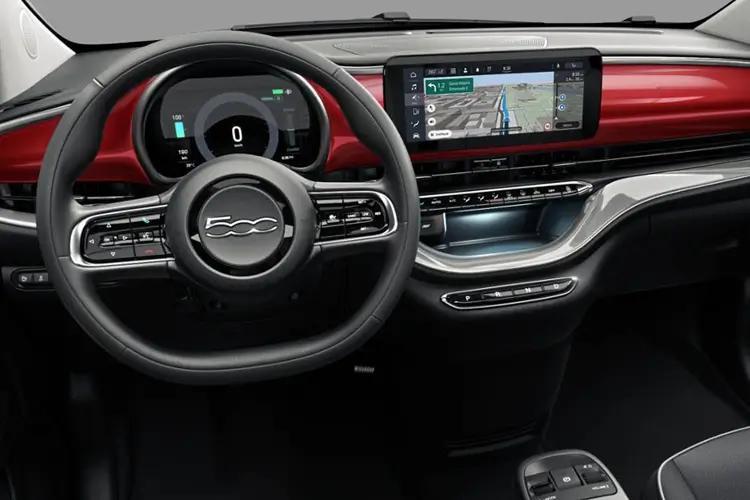
Who couldn't love a face like that of this 500C? It was faithfully updated from the Fifties and a 1958 Fiat '500N' model that back then, set a template for affordable open-topped motoring. Rather than the complete top half of the car raising and folding back as it would on a conventional convertible, that early fabric-topped 500 model used a kind of giant sunroof in a sardine tin-like arrangement that saw the canvas top concertina-ing backwards and forwards to suit the weather. Half a century on, either in a nod to the original or a bid to save costs, this 500C used exactly the same kind of idea, open-roofed, yet retaining the same B-pillars, door frames and rear side windows as the standard fixed-top hatch. At the rear, this post-2015 revised model adopted what Fiat called 'empty' light clusters, comprised of ring-shaped structures with body-coloured centres. That meant the need to relocate the foglight and the reversing light lower down into the edges of the redesigned bumper. What draws the eye at the back though, at least when the roof is down, are the substantial folds of fabric that create well-publicised issues when it comes to rearward vision. At least though, they don't very much impinge on boot space, the 182-litre capacity being virtually the same as you'd get on the normal 500 hatch. Compare that to the paltry 160-litres you'd get roof-down with a pricier drop-top MINI from this era. The bootlid itself does, it's true, have a pretty small opening but at least you can use it when the soft top's fully down, the electrics automatically lifting the retracted hood bundle a few centimetres upwards when the boot release is activated so you can raise the luggage door properly. Should you need more carriage capacity, the rear seatbacks fold forward to increase the space available to 520-litres. As for the roof, well, it can be activated, either when you're stationary or at speeds of up to 37mph, by pressing a button next to the interior roof light. Unlike the Fifties 500 model's canvas roof, this double-layered fabric top won't leak or flap about. It also features a proper glass rear window and was available in a choice of colours. When you want to put it down again, one press takes the roof automatically back to the spoiler position. Then you press the button again for at least half a second to fully open the roof. Every 500C model invited a high degree of personalisation via a myriad of colour and trim permutation options from new, but whatever you choose is sure to dovetail deliciously with the very well-judged blend of retro chic and clean contemporary design in the cabin.
Please contact us for an exact up-to-date valuation.
The 500C has earned a decent reliability record but there are some things to look out for here. Make sure the roof mechanism works properly. Ideally, put the car through a car wash to make sure it doesn't leak. With the Hybrid version, we've heard of issues with the 12V battery, which will drain quickly if the car isn't driven regularly or the system isn't charging itself properly through engine braking. Otherwise, the issues you'll come across are normal ones with this era of 500. So trim rattles and problems with the coolant reservoir. The start and stop system can sometimes fail to engage correctly due to low battery charge. We've heard of misfiring due to a faulty coil pack. And the door handles can break, the light clusters sometimes crack and allow moisture inside and the alloy wheels are prone to oxidation. Make sure the tailgate microswitch works because it's expensive to replace. Check the steering wheel on older models which can wear quickly. We heard of failing dashboard warning lights and faulty gauges. Thoroughly check the Uconnect media set-up too. Check for upholstery damage caused by child seats in the back, wheel scratches and typical supermarket dints and scrapes. The 500 isn't bad on consumables like brake pads and most people should be able to park it without nerfing the extremities.
[based on 500C Hybrid - 2020 - autodoc.co.uk - ex-VAT] Expect to pay around £4-£12 for an oil filter, around £7-£21 for an air filter and around £5-£23 for a wiper blade. Front brake pads vary in price between £15-£50 for a set. Front brake discs cost in the £25-£56 bracket. A radiator costs in the £65-£147 bracket. A water pump is in the £40-£80 bracket; a thermostat is around £22-£55.
So what's it like on the move? Well, we should perhaps start by talking specifically about the roof. It certainly nice that you don't have to slow right down to pedestrian speeds to operate it, in the way you'd need to in rival models. Instead, it's possible to electrically open or close the 6ft fabric top at speeds of up to 37mph, moving through three pre-set positions via upper buttons near the rear view mirror. When it's shut, standards of refinement are, rather impressively, almost identical to those of the ordinary fixed-top model. When it's open, you get the opportunity of a tan without being blown about. The best of both worlds? Well many buyers see it that way. The majority of original 500C customers specified their cars with the least expensive 69bhp 1.2-litre four cylinder petrol unit fitted beneath the bonnet. In a 2016-2020-era version of this model though, don't automatically choose that powerplant though, without at least considering Fiat's two cylinder 0.9-litre TwinAir technology. This unit came in either 85 or 105bhp guises and offers useful extra pulling power along with very good economy. If you want to do better, for a short time after this updated model's launch in 2015, there was a 95bhp 1.3-litre Muiltjet diesel option. Or, if you want more speed, a 1.4-litre petrol turbo unit in the performance-minded Abarth variants. From 2020 (Abarth versions apart), you had to have a mild hybrid 70hp 1.0-litre three cylinder petrol engine. This 'Firefly'-series unit lacked a turbocharger but gained a 12V Belt Starter Generator (known as a 'BSG'), along with an 11Ah lithium-ion battery, the major components of the mild hybrid system that the badging of this car loudly trumpeted. The Belt Starter Generator harvests energy during braking and deceleration and stores it in the system's little integrated battery so that it can be used in two ways. Either to aid acceleration. Or to power the car's auxiliaries as the engine stop/start system activates when you're waiting at the lights or in a traffic queue. There'll never be enough charge generated to power the car without the aid of its combustion unit; and even if there was, the battery wouldn't be big enough to store it. What this is then, is less a Hybrid powerplant and more an embellishment to combustion engineering that boosts efficiency - by up to 30% in terms of CO2 emissions, according to Fiat. On the move, a few areas betray the age of this design - notably the ride, steering feel and the shift quality of the manual gearbox (which now has 6 speeds). But potential customers will forgive this car much for its trendy demeanour, cheeky engine note and its turn-on-a-sixpence manoeuvrability.
We're used to the idea of paying through the nose for items deemed to be on the cutting edge of fashion but Fiat's 500C provides a welcome break from all that. Though the premium this soft-top model demands over its hatchback counterpart seems high, the overall package still represents one of the most affordable routes into soft-top motoring. And in summary? Well in one of these, even the most mundane of commutes can be turned into a journey you might actually look forward to making. Here's an open-topped citycar that's very difficult to dislike, a carefree cabrio that's free, sunny and open in its outlook, with a sheer joie de vivre that's central to its charming appeal. Choosing a 'fashionable' little runabout can often be a risk. Here though, is one you can enjoy without a worry.
Data provided by CAP-HPI database - Ref# 88925
By Jonathan Crouch
The modern era version of Fiat's cheeky little 500 city car was even harder to resist in 500C convertible form. It wasn't fundamentally changed throughout its life - but then loyal buyers didn't really want it to be. Apart from the fabric roof, these people will like the smart look, media options and the individual feel. You can tell that Fiat knows its market.
3dr citycar convertible (0.9 petrol [Pop, Lounge, Sport, Star, Rockstar])
Good things very often come in small packages and there's little doubt that the first modern-era version of the little 500 was a 'good thing' for Fiat, rejuvenating the Italian brand from America to Andalucía. Crucial to the profitability of this little car was the success of the variant we look at here, the open-topped 500C. Like its fixed-top counterpart, it was significantly improved in mid-2015, then gained a mild hybrid engine in 2020. 'Al fresco' motoring has always been a significant option in creating the full Fiat 500 experience. Indeed, it only took a year from the launch of the original 'Nuova 500' in 1957 for an open-topped '500N' version to be introduced. This wasn't a full convertible - and it didn't need to be. Instead, a vast fabric sunroof provided open air enjoyment without the need for significant extra cost or weight. Just as it did in this modern-era open-topped 500 model, the 500C. We first saw this variant in 2009, a car identical to its fixed-top stablemate in every way, save for the vast concertina-ing fabric top that could be electrically retracted right back. This set-up came with quite a price premium, but many customers seemed happy to pay it, seduced by saccharine-laden levels of cuteness that could be liberally embellished from the exhaustive options list. By 2015, this type of 'al fresco' roof arrangement had been copied by direct rivals like the DS3 Cabrio and the Vauxhall ADAM Rocks Air. Plus it was more affordably offered as an option on citycars like Peugeot's 108, Citroen's C1 and Toyota's Aygo, models that targeted lower-level derivatives of this Fiat. Meanwhile, top-end 500C variants were facing fresh competition from MINI's third generation Convertible. With no full-replacement 500C model available to meet this varied challenge, Fiat responded in 2015 with a far-reaching package of changes that brought minor tweaks and a little more efficiency, even more scope for personalisation and wider availability of the Fiat Group's Uconnect infotainment technology. A more far-reaching update happened in 2020 with the arrival of a mild hybrid version of the little 0.9-litre engine. This car sold until 2024, when it finally had to be deleted due to being unable to meet EU cybersecurity regulations. A 500C Hybrid based on the third generation model was introduced in 2026.
Who couldn't love a face like that of this 500C? It was faithfully updated from the Fifties and a 1958 Fiat '500N' model that back then, set a template for affordable open-topped motoring. Rather than the complete top half of the car raising and folding back as it would on a conventional convertible, that early fabric-topped 500 model used a kind of giant sunroof in a sardine tin-like arrangement that saw the canvas top concertina-ing backwards and forwards to suit the weather. Half a century on, either in a nod to the original or a bid to save costs, this 500C used exactly the same kind of idea, open-roofed, yet retaining the same B-pillars, door frames and rear side windows as the standard fixed-top hatch. At the rear, this post-2015 revised model adopted what Fiat called 'empty' light clusters, comprised of ring-shaped structures with body-coloured centres. That meant the need to relocate the foglight and the reversing light lower down into the edges of the redesigned bumper. What draws the eye at the back though, at least when the roof is down, are the substantial folds of fabric that create well-publicised issues when it comes to rearward vision. At least though, they don't very much impinge on boot space, the 182-litre capacity being virtually the same as you'd get on the normal 500 hatch. Compare that to the paltry 160-litres you'd get roof-down with a pricier drop-top MINI from this era. The bootlid itself does, it's true, have a pretty small opening but at least you can use it when the soft top's fully down, the electrics automatically lifting the retracted hood bundle a few centimetres upwards when the boot release is activated so you can raise the luggage door properly. Should you need more carriage capacity, the rear seatbacks fold forward to increase the space available to 520-litres. As for the roof, well, it can be activated, either when you're stationary or at speeds of up to 37mph, by pressing a button next to the interior roof light. Unlike the Fifties 500 model's canvas roof, this double-layered fabric top won't leak or flap about. It also features a proper glass rear window and was available in a choice of colours. When you want to put it down again, one press takes the roof automatically back to the spoiler position. Then you press the button again for at least half a second to fully open the roof. Every 500C model invited a high degree of personalisation via a myriad of colour and trim permutation options from new, but whatever you choose is sure to dovetail deliciously with the very well-judged blend of retro chic and clean contemporary design in the cabin.
Please contact us for an exact up-to-date valuation.
The 500C has earned a decent reliability record but there are some things to look out for here. Make sure the roof mechanism works properly. Ideally, put the car through a car wash to make sure it doesn't leak. With the Hybrid version, we've heard of issues with the 12V battery, which will drain quickly if the car isn't driven regularly or the system isn't charging itself properly through engine braking. Otherwise, the issues you'll come across are normal ones with this era of 500. So trim rattles and problems with the coolant reservoir. The start and stop system can sometimes fail to engage correctly due to low battery charge. We've heard of misfiring due to a faulty coil pack. And the door handles can break, the light clusters sometimes crack and allow moisture inside and the alloy wheels are prone to oxidation. Make sure the tailgate microswitch works because it's expensive to replace. Check the steering wheel on older models which can wear quickly. We heard of failing dashboard warning lights and faulty gauges. Thoroughly check the Uconnect media set-up too. Check for upholstery damage caused by child seats in the back, wheel scratches and typical supermarket dints and scrapes. The 500 isn't bad on consumables like brake pads and most people should be able to park it without nerfing the extremities.
[based on 500C Hybrid - 2020 - autodoc.co.uk - ex-VAT] Expect to pay around £4-£12 for an oil filter, around £7-£21 for an air filter and around £5-£23 for a wiper blade. Front brake pads vary in price between £15-£50 for a set. Front brake discs cost in the £25-£56 bracket. A radiator costs in the £65-£147 bracket. A water pump is in the £40-£80 bracket; a thermostat is around £22-£55.
So what's it like on the move? Well, we should perhaps start by talking specifically about the roof. It certainly nice that you don't have to slow right down to pedestrian speeds to operate it, in the way you'd need to in rival models. Instead, it's possible to electrically open or close the 6ft fabric top at speeds of up to 37mph, moving through three pre-set positions via upper buttons near the rear view mirror. When it's shut, standards of refinement are, rather impressively, almost identical to those of the ordinary fixed-top model. When it's open, you get the opportunity of a tan without being blown about. The best of both worlds? Well many buyers see it that way. The majority of original 500C customers specified their cars with the least expensive 69bhp 1.2-litre four cylinder petrol unit fitted beneath the bonnet. In a 2016-2020-era version of this model though, don't automatically choose that powerplant though, without at least considering Fiat's two cylinder 0.9-litre TwinAir technology. This unit came in either 85 or 105bhp guises and offers useful extra pulling power along with very good economy. If you want to do better, for a short time after this updated model's launch in 2015, there was a 95bhp 1.3-litre Muiltjet diesel option. Or, if you want more speed, a 1.4-litre petrol turbo unit in the performance-minded Abarth variants. From 2020 (Abarth versions apart), you had to have a mild hybrid 70hp 1.0-litre three cylinder petrol engine. This 'Firefly'-series unit lacked a turbocharger but gained a 12V Belt Starter Generator (known as a 'BSG'), along with an 11Ah lithium-ion battery, the major components of the mild hybrid system that the badging of this car loudly trumpeted. The Belt Starter Generator harvests energy during braking and deceleration and stores it in the system's little integrated battery so that it can be used in two ways. Either to aid acceleration. Or to power the car's auxiliaries as the engine stop/start system activates when you're waiting at the lights or in a traffic queue. There'll never be enough charge generated to power the car without the aid of its combustion unit; and even if there was, the battery wouldn't be big enough to store it. What this is then, is less a Hybrid powerplant and more an embellishment to combustion engineering that boosts efficiency - by up to 30% in terms of CO2 emissions, according to Fiat. On the move, a few areas betray the age of this design - notably the ride, steering feel and the shift quality of the manual gearbox (which now has 6 speeds). But potential customers will forgive this car much for its trendy demeanour, cheeky engine note and its turn-on-a-sixpence manoeuvrability.
We're used to the idea of paying through the nose for items deemed to be on the cutting edge of fashion but Fiat's 500C provides a welcome break from all that. Though the premium this soft-top model demands over its hatchback counterpart seems high, the overall package still represents one of the most affordable routes into soft-top motoring. And in summary? Well in one of these, even the most mundane of commutes can be turned into a journey you might actually look forward to making. Here's an open-topped citycar that's very difficult to dislike, a carefree cabrio that's free, sunny and open in its outlook, with a sheer joie de vivre that's central to its charming appeal. Choosing a 'fashionable' little runabout can often be a risk. Here though, is one you can enjoy without a worry.
