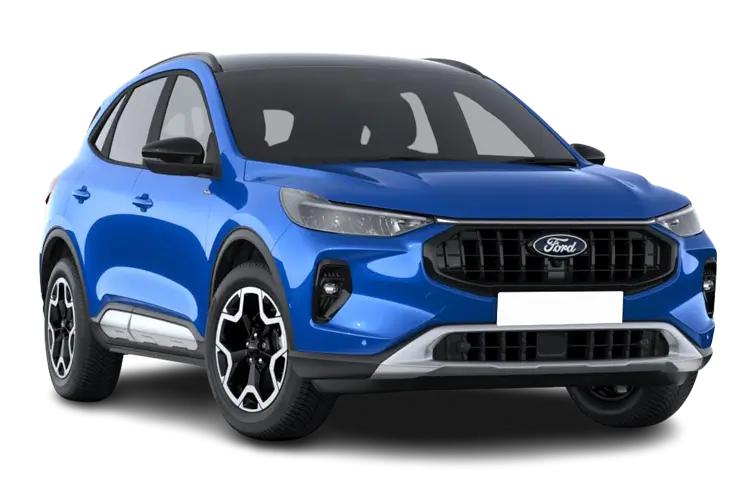
Images are for illustrative purposes only.
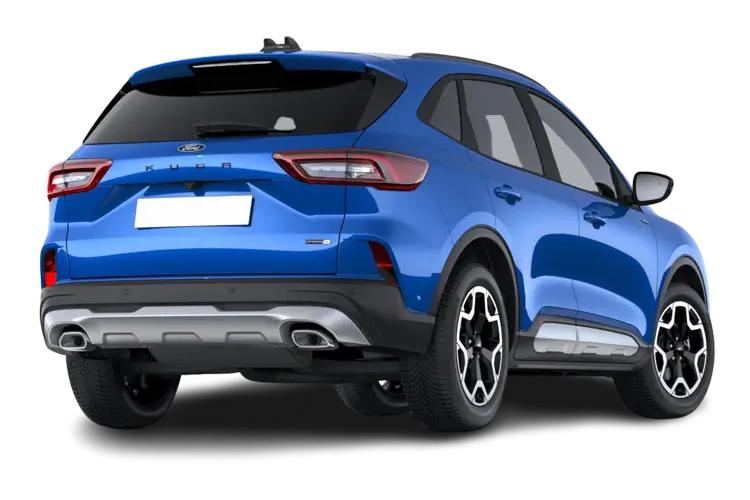

2.5 PHEV ST-Line X Edition 5dr CVT
Need some assistance or advice? Call Us 01903 538835


By Jonathan Crouch
Back in 2020, it seemed you couldn't have a cutting-edge mid-sized SUV of any kind without having a Plug-in Hybrid version, so Ford offered that tech with the original version of its third generation Kuga crossover. There are the usual PHEV calling card features here - a 35 mile all-electric driving range, a super-low Benefit-in-Kind taxation rating and a rather high sticker price. Built into a package that should feel a touch more dynamic than most of its rivals. Here, we look at the pre-facelift 2019-2023 version of this model.
5 door SUV [petrol] 2.5 PHEV
Perhaps being a market leader is about following established trends rather than pioneering new ones. Ford certainly seems to work that way. The Blue Oval brand didn't really establish any sort of real presence in the SUV sector until the second generation version of its mid-sized Kuga crossover model was facelifted in 2017. And it took the company almost until the 21st century's third decade to properly launch its first volume made EV (the Mustang Mach-E) and its first plug-in car, the Kuga PHEV model which is our focus here. This was the third generation Kuga, moved subtly up-market to make space for the freshly introduced Puma crossover which slotted in below this model. By 2019, it was just as well that the Canadian-built Edge SUV was no more as the Kuga PHEV's asking price would have trampled all over it - it was knocking on the door of premium territory. It's the pre-facelift 2019-2023-era versions of this CX482-series model we look at here.
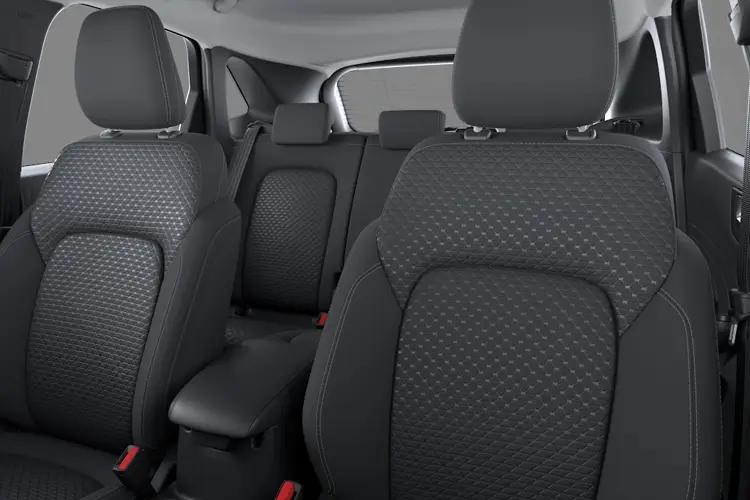
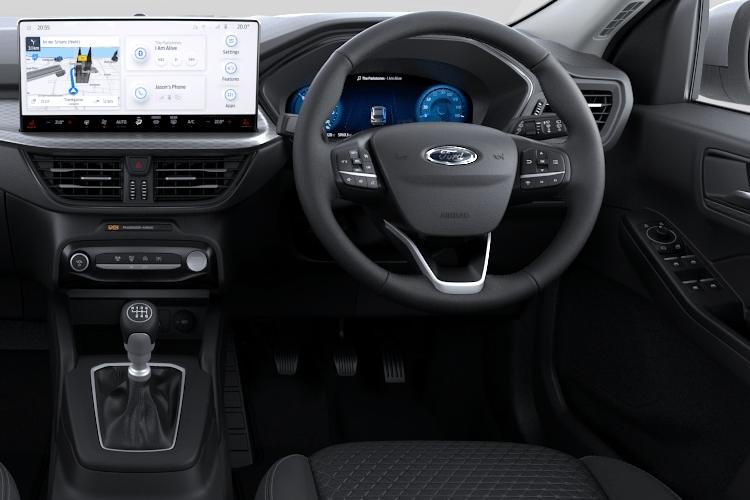
There are no really obvious visual giveaways that this plug-in variant is the PHEV model in the range - unless you're sharp-eyed enough to spot the extra flap for the charging point. If you're not familiar with this third generation design, you'll find it to be significantly bigger than its predecessor, 44mm wider and 89mm longer, with a wheelbase increased by 20mm. At the wheel, it's much as it would be in a Focus hatch from the period, with an 8-inch centre-dash SYNC 3 infotainment touchscreen. You sit quite high, the cabin's pretty spacious and plenty of tinsel was added to upper-spec variants to try and justify more exalted price positioning, though ultimately, some hard and scratchy lower order plastics betray this cabin's relatively humble origins. Upper-spec variants get a 12.3-inch digital instrument cluster, which incorporates a right hand 'Power Gauge', showing in kWs the current output of either battery or engine. In between the two main dials is a customisable section into which you can add various EV-orientated read-outs. The rear bench wasn't compromised by battery placement, as is the case with some PHEV models. And it reclines for greater comfort and slides over a range of 150mm, allowing you to choose between legroom and luggage space behind. As for luggage space, well cargo capacity is still significantly reduced by the plug-in package - down from 475 to 411-litres. Slide the rear seat forward as far as it will go (in which case there'll be very little legroom for back seat folk) and there'll be 581-litre of room (down from 645-litres normally). Flatten the 60:40-split-folding bench and there's 1,481-litres of total capacity to the window line.
Please contact us for an exact up-to-date valuation.
We've heard of issues with the auxiliary heater, the eCall software, the glass roof and the Plug-in Hybrid model's battery pack. One owner mentioned an emergency call button malfunction. And noticed a series of 'malfunction' warnings, including for the Emergency Call System, Active Park Assist and the BLIS Blind Spot system. Another owner found the nearside door mirror wouldn't fully fold when the car was locked; and that the offside door lock rattled. He also mentioned squeaking sounds from the driver's-side B-pillar, a leaking screen wash bottle and a near-side door rattle, plus both front electric window switches had to be replaced due to peeling chrome plating. Some Ford Kuga PHEV owners have reported charging issues, including slow charging speeds or failure to charge at all. These can be caused by faulty charging leads, incompatible home charging systems or software issues, leading to reduced all-electric range. It's extremely unlikely that any Kuga will have been used on rough surfaces, but check around the undersides just in case. Check the alloy rims for scuffs and the interior for child damage. As usual, insist on a fully stamp-up service record. There's lots of useful ingo on www.kugaownersclub.co.uk
(approx based on a 2021 Kuga PHEV - Ex Vat autodoc.co.uk) An oil filter usually costs in the £4-£11 bracket. An air filter costs in the £10-£60 bracket. A fuel filter is in the £2-£46 bracket. A pollen filter costs in the £9-£55 bracket. A wiper blade is in the £5-£21 bracket. A front brake disc costs in the £54-£156 bracket. A rear brake disc costs in the £24-£90 bracket. A front brake pad is in the £32-£156 bracket; rears are in the £15-£90 bracket. A water pump is in the £15-£63 bracket.
Here, a 2.5-litre Duratec petrol powerplant is paired with a 110PS electric motor, resulting in a useful total output of 225PS. The electrified element of the whole set-up is powered by a decently-sized 14.4kWh lithium-ion battery and the whole shooting match is mated to a CVT automatic gearbox. Keep the battery cells topped up and theoretically, up to 35 miles of WLTP-rated electric driving range is quoted, though you'll get nowhere near that if you explore the possibility offered here of driving at up to 85mph on battery power alone. With the full powertrain working, 62mph from rest takes 9.2s en route to 124mph. Handling isn't quite as sharp as more conventional Kugas, but it's vastly more involving than directly comparable SUV Crossover plug-in hybrid rivals. You'll need to get your head around all the drive modes. As well as the usual 'Normal', 'Eco' and 'Sport' settings, there are also 'Slippery' and 'Deep Snow/Sand' modes - which is curious because unlike its Stellantis Group Plug-in SUV rivals, this Kuga PHEV could only be had with front wheel drive. There are also four further settings for the electric drivetrain: 'EV Now' focuses the drivetrain on all-electric output; 'EV Charge' (rather inefficiently) tops up the battery using the engine; and 'EV Later' holds the current state of charge so that you can save it for urban driving you might want to do later in your trip. Most of the time though, you'll simply leave the car in 'EV Auto', where clever electronics determine the most efficient use of engine and battery power. You can boost brake regeneration (and therefore energy harvesting) by clicking on an 'L' button on the gear selector. And various drive system read-outs - 'EV Coach', 'Eco Behaviour' and 'Electric Efficiency' - combine with the available 'Eco' drive mode setting to help you to drive more frugally. The quickest you'll be able to recharge from empty is in 3.3 hours from a 7.4kW garage wallbox. A standard domestic 3-pin plug will charge the car in around six hours. The quoted WLTP-rated combined cycle fuel figure was up to 201.7mpg and there was a quoted WLTP CO2 return of 32g/km that made possible this Plug-in variant's low 10% initial Benefit-in-Kind taxation rating.
This Kuga certainly required wider appeal if it was to expand its market share and push itself up-market and this third generation model's extra full-Hybrid drivetrain options delivered just that. Adding the weight and complexity of a PHEV system didn't do the Kuga any favours in terms of either its handling or its price positioning. Ford though, hoped that target market customers would think these drawbacks an acceptable trade for the not inconsiderable benefit of being able to slash taxation payments and being able to conduct almost exclusively electrified mileage. This car's array of mid-sized SUV plug-in rivals all have the same appeal of course, but this Kuga feels a more interesting steer than any of them, despite its near-1.9-tonne kerb weight. Which is important. Just because your next family car might need to be in some way electric, it doesn't have to feel like some kind of domestic appliance. Ford knows how to create something better. And it shows with this car.
Data provided by CAP-HPI database - Ref# 94671
By Jonathan Crouch
Back in 2020, it seemed you couldn't have a cutting-edge mid-sized SUV of any kind without having a Plug-in Hybrid version, so Ford offered that tech with the original version of its third generation Kuga crossover. There are the usual PHEV calling card features here - a 35 mile all-electric driving range, a super-low Benefit-in-Kind taxation rating and a rather high sticker price. Built into a package that should feel a touch more dynamic than most of its rivals. Here, we look at the pre-facelift 2019-2023 version of this model.
5 door SUV [petrol] 2.5 PHEV
Perhaps being a market leader is about following established trends rather than pioneering new ones. Ford certainly seems to work that way. The Blue Oval brand didn't really establish any sort of real presence in the SUV sector until the second generation version of its mid-sized Kuga crossover model was facelifted in 2017. And it took the company almost until the 21st century's third decade to properly launch its first volume made EV (the Mustang Mach-E) and its first plug-in car, the Kuga PHEV model which is our focus here. This was the third generation Kuga, moved subtly up-market to make space for the freshly introduced Puma crossover which slotted in below this model. By 2019, it was just as well that the Canadian-built Edge SUV was no more as the Kuga PHEV's asking price would have trampled all over it - it was knocking on the door of premium territory. It's the pre-facelift 2019-2023-era versions of this CX482-series model we look at here.
There are no really obvious visual giveaways that this plug-in variant is the PHEV model in the range - unless you're sharp-eyed enough to spot the extra flap for the charging point. If you're not familiar with this third generation design, you'll find it to be significantly bigger than its predecessor, 44mm wider and 89mm longer, with a wheelbase increased by 20mm. At the wheel, it's much as it would be in a Focus hatch from the period, with an 8-inch centre-dash SYNC 3 infotainment touchscreen. You sit quite high, the cabin's pretty spacious and plenty of tinsel was added to upper-spec variants to try and justify more exalted price positioning, though ultimately, some hard and scratchy lower order plastics betray this cabin's relatively humble origins. Upper-spec variants get a 12.3-inch digital instrument cluster, which incorporates a right hand 'Power Gauge', showing in kWs the current output of either battery or engine. In between the two main dials is a customisable section into which you can add various EV-orientated read-outs. The rear bench wasn't compromised by battery placement, as is the case with some PHEV models. And it reclines for greater comfort and slides over a range of 150mm, allowing you to choose between legroom and luggage space behind. As for luggage space, well cargo capacity is still significantly reduced by the plug-in package - down from 475 to 411-litres. Slide the rear seat forward as far as it will go (in which case there'll be very little legroom for back seat folk) and there'll be 581-litre of room (down from 645-litres normally). Flatten the 60:40-split-folding bench and there's 1,481-litres of total capacity to the window line.
Please contact us for an exact up-to-date valuation.
We've heard of issues with the auxiliary heater, the eCall software, the glass roof and the Plug-in Hybrid model's battery pack. One owner mentioned an emergency call button malfunction. And noticed a series of 'malfunction' warnings, including for the Emergency Call System, Active Park Assist and the BLIS Blind Spot system. Another owner found the nearside door mirror wouldn't fully fold when the car was locked; and that the offside door lock rattled. He also mentioned squeaking sounds from the driver's-side B-pillar, a leaking screen wash bottle and a near-side door rattle, plus both front electric window switches had to be replaced due to peeling chrome plating. Some Ford Kuga PHEV owners have reported charging issues, including slow charging speeds or failure to charge at all. These can be caused by faulty charging leads, incompatible home charging systems or software issues, leading to reduced all-electric range. It's extremely unlikely that any Kuga will have been used on rough surfaces, but check around the undersides just in case. Check the alloy rims for scuffs and the interior for child damage. As usual, insist on a fully stamp-up service record. There's lots of useful ingo on www.kugaownersclub.co.uk
(approx based on a 2021 Kuga PHEV - Ex Vat autodoc.co.uk) An oil filter usually costs in the £4-£11 bracket. An air filter costs in the £10-£60 bracket. A fuel filter is in the £2-£46 bracket. A pollen filter costs in the £9-£55 bracket. A wiper blade is in the £5-£21 bracket. A front brake disc costs in the £54-£156 bracket. A rear brake disc costs in the £24-£90 bracket. A front brake pad is in the £32-£156 bracket; rears are in the £15-£90 bracket. A water pump is in the £15-£63 bracket.
Here, a 2.5-litre Duratec petrol powerplant is paired with a 110PS electric motor, resulting in a useful total output of 225PS. The electrified element of the whole set-up is powered by a decently-sized 14.4kWh lithium-ion battery and the whole shooting match is mated to a CVT automatic gearbox. Keep the battery cells topped up and theoretically, up to 35 miles of WLTP-rated electric driving range is quoted, though you'll get nowhere near that if you explore the possibility offered here of driving at up to 85mph on battery power alone. With the full powertrain working, 62mph from rest takes 9.2s en route to 124mph. Handling isn't quite as sharp as more conventional Kugas, but it's vastly more involving than directly comparable SUV Crossover plug-in hybrid rivals. You'll need to get your head around all the drive modes. As well as the usual 'Normal', 'Eco' and 'Sport' settings, there are also 'Slippery' and 'Deep Snow/Sand' modes - which is curious because unlike its Stellantis Group Plug-in SUV rivals, this Kuga PHEV could only be had with front wheel drive. There are also four further settings for the electric drivetrain: 'EV Now' focuses the drivetrain on all-electric output; 'EV Charge' (rather inefficiently) tops up the battery using the engine; and 'EV Later' holds the current state of charge so that you can save it for urban driving you might want to do later in your trip. Most of the time though, you'll simply leave the car in 'EV Auto', where clever electronics determine the most efficient use of engine and battery power. You can boost brake regeneration (and therefore energy harvesting) by clicking on an 'L' button on the gear selector. And various drive system read-outs - 'EV Coach', 'Eco Behaviour' and 'Electric Efficiency' - combine with the available 'Eco' drive mode setting to help you to drive more frugally. The quickest you'll be able to recharge from empty is in 3.3 hours from a 7.4kW garage wallbox. A standard domestic 3-pin plug will charge the car in around six hours. The quoted WLTP-rated combined cycle fuel figure was up to 201.7mpg and there was a quoted WLTP CO2 return of 32g/km that made possible this Plug-in variant's low 10% initial Benefit-in-Kind taxation rating.
This Kuga certainly required wider appeal if it was to expand its market share and push itself up-market and this third generation model's extra full-Hybrid drivetrain options delivered just that. Adding the weight and complexity of a PHEV system didn't do the Kuga any favours in terms of either its handling or its price positioning. Ford though, hoped that target market customers would think these drawbacks an acceptable trade for the not inconsiderable benefit of being able to slash taxation payments and being able to conduct almost exclusively electrified mileage. This car's array of mid-sized SUV plug-in rivals all have the same appeal of course, but this Kuga feels a more interesting steer than any of them, despite its near-1.9-tonne kerb weight. Which is important. Just because your next family car might need to be in some way electric, it doesn't have to feel like some kind of domestic appliance. Ford knows how to create something better. And it shows with this car.