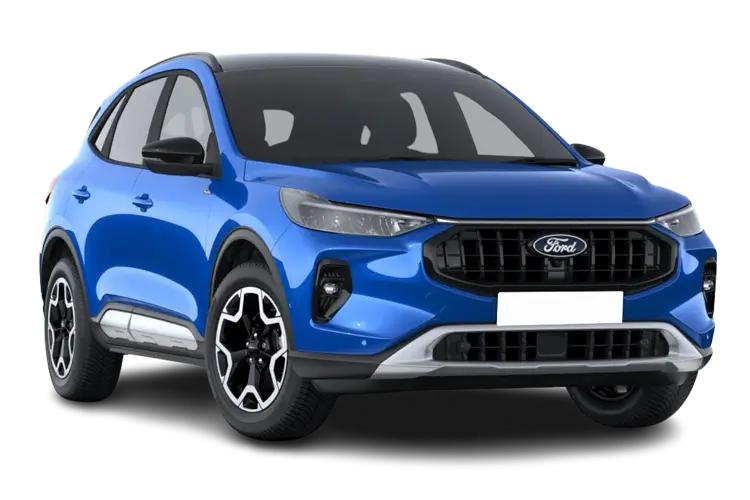
Images are for illustrative purposes only.
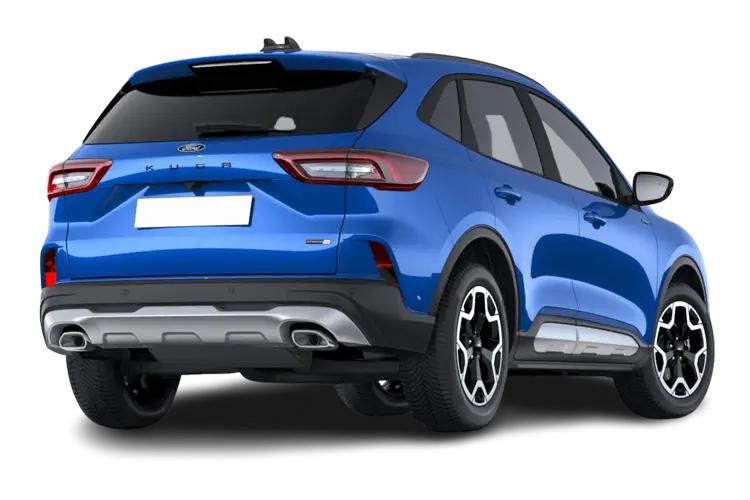
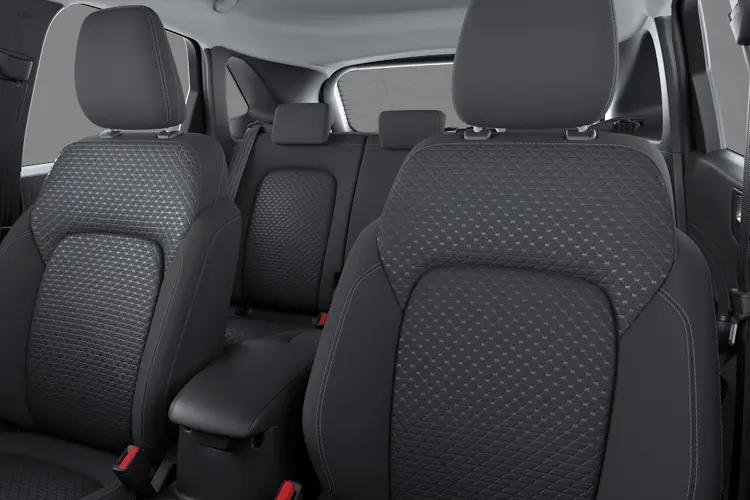
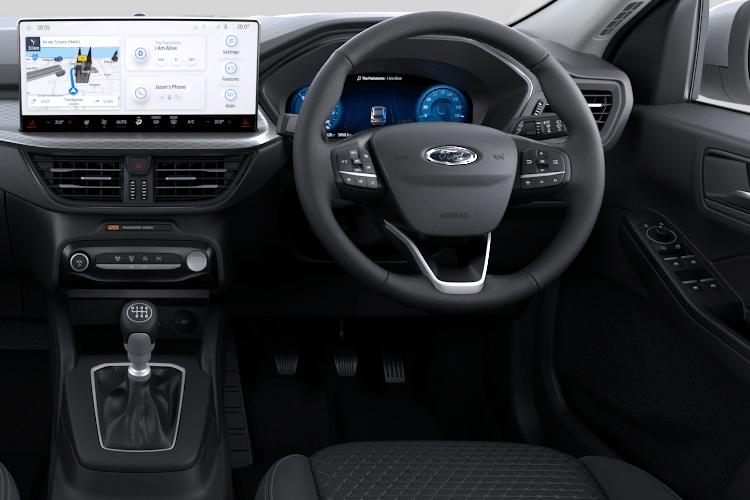

2.5 PHEV Vignale 5dr CVT
Need some assistance or advice? Call Us 01903 538835


By Jonathan Crouch
Ford's Kuga sharpened up its act in this third generation CX482 guise, evolving into a much more credible upper mid-sized SUV contender. From launch in 2020, there was sharper styling, a much nicer cabin and extra technology that segment buyers liked, plus this Blue Oval brand crossover still offered class-leading drive dynamics. And across the range, more frugal conventional engines shared showroom space with a range of electrified ones - there was a choice of mild Hybrid, self-charging Hybrid and PHEV plug-in Hybrid options. Here, we check out the pre-facelifted version of this model as a used buy.
5 door SUV [petrol] 1.5 EcoBoost, 2.5 FHEV Hybrid, 2.5 PHEV / [diesel] 1.5 EcoBlue, 2.0 EcoBlue
For a best-selling volume brand, it took Ford a remarkably long time to come up with a really class-competitive range of SUVs. For an awful long period, the only credible crossover nameplate the company offered was this one, the mid-sized Kuga model. Here, we're going to tell you everything you need to know about the early pre-facelift version of this third generation CX482-series model. The original Kuga, the first C394-series model, dates back to 2008 and was one of the first affordable family SUVs to properly prioritise a decent driving experience. Rivals were beginning to copy that approach by the time the second generation C520-series version was launched, then significantly updated in 2017 prior to the launch of this MK3 model in late 2019. Throughout that period, the Kuga sustained Ford's SUV sales as other less well developed crossovers from the Blue Oval brand faltered, mainly because they were primarily developed for markets outside Europe. The rather half-baked smaller EcoSport for instance. Or the larger, clunkier Ford Edge. By 2019 though, a Ford showroom had become a much more inviting place for crossover customers. This Kuga sat just above another recently-launched Blue Oval brand SUV we've strongly praised, the Puma. And it was a huge step forward from its MK2 predecessor in terms of engine technology, media connectivity and overall sophistication. Both mild Hybrid and Plug-in Hybrid powertrains were available, plus this car was significantly bigger than the design it replaced, recognising its new role as Ford's flagship SUV. But one thing though, didn't change. Ford promised us that this Kuga would be better to drive than ever, a lot of this thanks to an all-new C2 platform that was shared with the Focus hatch. The Kuga sold in this form until early 2024 when it was significantly facelifted. The diesel variant lasted only until 2021. It's the pre-facelift 2019-2023-era versions of this CX482-series model we look at here.
By 2019, Kuga buyers were ready for a change - for “more emotional design” as Ford styling Chief Amko Leenarts put it. He characterised this MK3 Kuga's shape as being “visually sleeker, lower and wider”: and reckoned that it would “make you feel excited just by looking at it”. We're not sure we'd go that far but there was certainly a switch in visual emphasis here, away from the more rugged appearance of the previous Kuga to something a touch more elegant - and bigger. This third generation car is 89mm longer and 44mm wider than its predecessor but despite that, is around 80kgs lighter. Inside, as with the Puma, there's a TFT instrument cluster screen ahead of the driver that changes in theme according to the driving mode you select. And quite a lot of tinsel was added to upper-spec variants to try and justify more exalted price positioning, though ultimately, some hard and scratchy lower order plastics betray this cabin's relatively humble origins. Still, in compensation, you sit satisfyingly high behind the wheel, there's plenty of storage provision and it feels considerably more spacious up-front than the previous generation model; Ford said there was 43mm more shoulder room. And, despite the lower exterior roof height, there was 13mm more headroom too. The brand claimed instrument panel positioning was optimised to increase this perception of space - perhaps most notably with the so-called 'floating' design of the SYNC3 centre-dash touchscreen. As for rear passenger space, well the more generous exterior dimensions meant that there was 36mm more hip room and 35mm more headroom than the old MK2 design, but compared to previous Kugas, the big news here was Ford's addition of a sliding bench, incorporated as a result of customer feedback. It slides over a range of 150mm, is 60:40-split and with both sections fully back, rear occupants can enjoy a best-in-class legroom figure of 1,035mm. The side squab-mounted levers allow the seatbacks to recline as well, for greater comfort on longer journeys. Once the tailgate's raised, a very decently-sized boot with a low loading lip is revealed, square in shape with little wheel arch intrusion. It's 475-litres in size with conventional variants, though that figure falls to 411-litres with the PHEV model. You retract the seatbacks using rather flimsy cargo sidewall catches and when the seats eventually spring forward, they don't fold completely flat. Total capacity to the window line is rated at 1,534-litres - or 1,481-litres in the PHEV model.
Please contact us for an exact up-to-date valuation.
We've heard of issues with the auxiliary heater, the eCall software, the glass roof and the Plug-in Hybrid model's battery pack. One owner mentioned an emergency call button malfunction. And noticed a series of 'malfunction' warnings, including for the Emergency Call System, Active Park Assist and the BLIS Blind Spot system. Another owner found the nearside door mirror wouldn't fully fold when the car was locked; and that the offside door lock rattled. He also mentioned squeaking sounds from the driver's-side B-pillar, a leaking screen wash bottle and a near-side door rattle, plus both front electric window switches had to be replaced due to peeling chrome plating. Some Ford Kuga PHEV owners have reported charging issues, including slow charging speeds or failure to charge at all. These can be caused by faulty charging leads, incompatible home charging systems or software issues, leading to reduced all-electric range. It's extremely unlikely that any Kuga will have been used on rough surfaces, but check around the undersides just in case. Check the alloy rims for scuffs and the interior for child damage. As usual, insist on a fully stamp-up service record. There's lots of useful info on www.kugaownersclub.co.uk
(approx based on a 2021 Kuga PHEV - Ex Vat autodoc.co.uk) An oil filter usually costs in the £4-£11 bracket. An air filter costs in the £10-£60 bracket. A fuel filter is in the £2-£46 bracket. A pollen filter costs in the £9-£55 bracket. A wiper blade is in the £5-£21 bracket. A front brake disc costs in the £54-£156 bracket. A rear brake disc costs in the £24-£90 bracket. A front brake pad is in the £32-£156 bracket; rears are in the £15-£90 bracket. A water pump is in the £15-£63 bracket.
For years, a Ford Kuga was the mid-sized SUV Crossover that other brands turned to if they were developing a car in this class and wanted it to be good to drive. This MK3 design had to offer drive dynamics that would return this model to a pre-eminent position in its segment - which was quite a brief for the Ford engineers because it also had to be bigger and carry around quite a lot more weighty equipment. Helping them was this third generation Kuga model's adoption of engineering from the planet's best-handling family hatch, the Ford Focus. This SUV shares that car's stiffer, more sophisticated C2 platform and, unlike the Focus, has the advantage that in all its forms, it features proper all-round independent suspension. On top of that, the steering column's twice as stiff as that the previous MK2 Kuga and compared to that old car, there's a 10% gain in torsional stiffness, a 44mm wider track and a 10mm lower centre of gravity. It all sounds quite promising And so it proves. On the road, this car feels like what it is: a slightly larger, slightly taller version of the Focus. The steering isn't perfect in terms of feedback, but it's quick and accurate and much better than the previous model's electrified rack. Push on through the bends and this Ford delivers the kind of confidence you simply wouldn't normally expect a contender in this class to be able to give. You'll want to know about engines because quite a lot changed beneath the bonnet with this MK3. Things kick off with a couple of Focus-derived 1.5-litre units, a four cylinder 120PS EcoBlue diesel with manual or auto transmission. Or a manual-only three cylinder EcoBoost petrol powerplant, offered with either 120 or 150PS. Ideally though, you'd stretch to one of the electrified engines; there are several - though all of them are combustion-based. The mild hybrid option was the most popular, a 2.0-litre EcoBlue mHEV diesel with 150PS, though was a proposition slightly hobbled by Ford's inability to offer it with either automatic transmission or AWD. For both of those two features in a black pump-fuelled Kuga derivative, you'd have to have the more conventional 2.0-litre EcoBlue 190PS diesel model - which has the largest towing capacity in the range, rated at 2.1-tonnes. All the diesel engines left the range at the end of 2021. Your other route to 4x4 traction in a Kuga is to opt for the self-charging 'HEV' full-hybrid petrol model, which can be had in front-driven or AWD forms and uses a 2.5-litre normally aspirated Duratec engine. This is mated to an electric motor (or in the case of the AWD variant, a pair of electric motors) powered by a 1.1kWh lithium-ion battery that sits at the back of the car. Total power output is 200PS and the front wheels are driven via a power-split CVT belt-driven 6-speed automatic auto transmission. Much the same engineering set-up also features in the top 'PHEV' Plug-in hybrid 225PS variant, though with this front driven-only model, there's a much bigger 14.4kWh battery, facilitating a claimed 35 mile WLTP-rated all-electric driving range. That's when the car is fully charged, which takes 3 hours from the 7.4kW garage wallbox or 6 hours from a standard domestic plug. This plug-in derivative's WLTP combined cycle fuel reading is up to 201.7mpg and the quoted WLTP CO2 return is 32g/km, which made possible this Ford PHEV model's year one 10% Benefit-in-Kind taxation rating. Ford's relative inexperience in engineering EV technology did show in a few areas - the slightly abrupt way the PHEV model steps off from rest for instance. And the slightly 'grabby' feeling you get from the brakes. But there are lots of drive options allowing you to maximise this plug-in Kuga model's all-electric range. Primarily, you'll be using four EV drive modes - 'EV Now' focuses the drivetrain on all-electric output; 'EV Charge' (rather inefficiently) tops up the battery using the engine; and 'EV Later' holds the current state of charge so that you can save it for urban driving you might want to do later in your trip. Most of the time though, you'll simply leave the car in 'EV Auto' where clever electronics determine the most efficient use of engine and battery power. You can boost brake regeneration (and therefore energy harvesting) by activating an 'L' setting on the rotary gear selector. And there are various efficiency read-outs to help you drive more frugally.
Having in recent years at last got serious about SUVs, Ford also got serious about this Kuga with this MK3 model - as it needed to. This car isn't perfect of course. The cabin, though much improved, still doesn't quite have the quality you'll find in some rivals. And some elements of the way the drive dynamics work in the PHEV model - the slightly sharp start-off demeanour and a little 'grabbiness' with the brakes - betray Ford's comparative lack of experience with EV technology. Where Ford's experience does stand this car in good stead is when it comes to the ride and handling balance that's been achieved here. Like its smaller Puma showroom stablemate, this Kuga's a class leader in this regard.
Data provided by CAP-HPI database - Ref# 91480
By Jonathan Crouch
Ford's Kuga sharpened up its act in this third generation CX482 guise, evolving into a much more credible upper mid-sized SUV contender. From launch in 2020, there was sharper styling, a much nicer cabin and extra technology that segment buyers liked, plus this Blue Oval brand crossover still offered class-leading drive dynamics. And across the range, more frugal conventional engines shared showroom space with a range of electrified ones - there was a choice of mild Hybrid, self-charging Hybrid and PHEV plug-in Hybrid options. Here, we check out the pre-facelifted version of this model as a used buy.
5 door SUV [petrol] 1.5 EcoBoost, 2.5 FHEV Hybrid, 2.5 PHEV / [diesel] 1.5 EcoBlue, 2.0 EcoBlue
For a best-selling volume brand, it took Ford a remarkably long time to come up with a really class-competitive range of SUVs. For an awful long period, the only credible crossover nameplate the company offered was this one, the mid-sized Kuga model. Here, we're going to tell you everything you need to know about the early pre-facelift version of this third generation CX482-series model. The original Kuga, the first C394-series model, dates back to 2008 and was one of the first affordable family SUVs to properly prioritise a decent driving experience. Rivals were beginning to copy that approach by the time the second generation C520-series version was launched, then significantly updated in 2017 prior to the launch of this MK3 model in late 2019. Throughout that period, the Kuga sustained Ford's SUV sales as other less well developed crossovers from the Blue Oval brand faltered, mainly because they were primarily developed for markets outside Europe. The rather half-baked smaller EcoSport for instance. Or the larger, clunkier Ford Edge. By 2019 though, a Ford showroom had become a much more inviting place for crossover customers. This Kuga sat just above another recently-launched Blue Oval brand SUV we've strongly praised, the Puma. And it was a huge step forward from its MK2 predecessor in terms of engine technology, media connectivity and overall sophistication. Both mild Hybrid and Plug-in Hybrid powertrains were available, plus this car was significantly bigger than the design it replaced, recognising its new role as Ford's flagship SUV. But one thing though, didn't change. Ford promised us that this Kuga would be better to drive than ever, a lot of this thanks to an all-new C2 platform that was shared with the Focus hatch. The Kuga sold in this form until early 2024 when it was significantly facelifted. The diesel variant lasted only until 2021. It's the pre-facelift 2019-2023-era versions of this CX482-series model we look at here.
By 2019, Kuga buyers were ready for a change - for “more emotional design” as Ford styling Chief Amko Leenarts put it. He characterised this MK3 Kuga's shape as being “visually sleeker, lower and wider”: and reckoned that it would “make you feel excited just by looking at it”. We're not sure we'd go that far but there was certainly a switch in visual emphasis here, away from the more rugged appearance of the previous Kuga to something a touch more elegant - and bigger. This third generation car is 89mm longer and 44mm wider than its predecessor but despite that, is around 80kgs lighter. Inside, as with the Puma, there's a TFT instrument cluster screen ahead of the driver that changes in theme according to the driving mode you select. And quite a lot of tinsel was added to upper-spec variants to try and justify more exalted price positioning, though ultimately, some hard and scratchy lower order plastics betray this cabin's relatively humble origins. Still, in compensation, you sit satisfyingly high behind the wheel, there's plenty of storage provision and it feels considerably more spacious up-front than the previous generation model; Ford said there was 43mm more shoulder room. And, despite the lower exterior roof height, there was 13mm more headroom too. The brand claimed instrument panel positioning was optimised to increase this perception of space - perhaps most notably with the so-called 'floating' design of the SYNC3 centre-dash touchscreen. As for rear passenger space, well the more generous exterior dimensions meant that there was 36mm more hip room and 35mm more headroom than the old MK2 design, but compared to previous Kugas, the big news here was Ford's addition of a sliding bench, incorporated as a result of customer feedback. It slides over a range of 150mm, is 60:40-split and with both sections fully back, rear occupants can enjoy a best-in-class legroom figure of 1,035mm. The side squab-mounted levers allow the seatbacks to recline as well, for greater comfort on longer journeys. Once the tailgate's raised, a very decently-sized boot with a low loading lip is revealed, square in shape with little wheel arch intrusion. It's 475-litres in size with conventional variants, though that figure falls to 411-litres with the PHEV model. You retract the seatbacks using rather flimsy cargo sidewall catches and when the seats eventually spring forward, they don't fold completely flat. Total capacity to the window line is rated at 1,534-litres - or 1,481-litres in the PHEV model.
Please contact us for an exact up-to-date valuation.
We've heard of issues with the auxiliary heater, the eCall software, the glass roof and the Plug-in Hybrid model's battery pack. One owner mentioned an emergency call button malfunction. And noticed a series of 'malfunction' warnings, including for the Emergency Call System, Active Park Assist and the BLIS Blind Spot system. Another owner found the nearside door mirror wouldn't fully fold when the car was locked; and that the offside door lock rattled. He also mentioned squeaking sounds from the driver's-side B-pillar, a leaking screen wash bottle and a near-side door rattle, plus both front electric window switches had to be replaced due to peeling chrome plating. Some Ford Kuga PHEV owners have reported charging issues, including slow charging speeds or failure to charge at all. These can be caused by faulty charging leads, incompatible home charging systems or software issues, leading to reduced all-electric range. It's extremely unlikely that any Kuga will have been used on rough surfaces, but check around the undersides just in case. Check the alloy rims for scuffs and the interior for child damage. As usual, insist on a fully stamp-up service record. There's lots of useful info on www.kugaownersclub.co.uk
(approx based on a 2021 Kuga PHEV - Ex Vat autodoc.co.uk) An oil filter usually costs in the £4-£11 bracket. An air filter costs in the £10-£60 bracket. A fuel filter is in the £2-£46 bracket. A pollen filter costs in the £9-£55 bracket. A wiper blade is in the £5-£21 bracket. A front brake disc costs in the £54-£156 bracket. A rear brake disc costs in the £24-£90 bracket. A front brake pad is in the £32-£156 bracket; rears are in the £15-£90 bracket. A water pump is in the £15-£63 bracket.
For years, a Ford Kuga was the mid-sized SUV Crossover that other brands turned to if they were developing a car in this class and wanted it to be good to drive. This MK3 design had to offer drive dynamics that would return this model to a pre-eminent position in its segment - which was quite a brief for the Ford engineers because it also had to be bigger and carry around quite a lot more weighty equipment. Helping them was this third generation Kuga model's adoption of engineering from the planet's best-handling family hatch, the Ford Focus. This SUV shares that car's stiffer, more sophisticated C2 platform and, unlike the Focus, has the advantage that in all its forms, it features proper all-round independent suspension. On top of that, the steering column's twice as stiff as that the previous MK2 Kuga and compared to that old car, there's a 10% gain in torsional stiffness, a 44mm wider track and a 10mm lower centre of gravity. It all sounds quite promising And so it proves. On the road, this car feels like what it is: a slightly larger, slightly taller version of the Focus. The steering isn't perfect in terms of feedback, but it's quick and accurate and much better than the previous model's electrified rack. Push on through the bends and this Ford delivers the kind of confidence you simply wouldn't normally expect a contender in this class to be able to give. You'll want to know about engines because quite a lot changed beneath the bonnet with this MK3. Things kick off with a couple of Focus-derived 1.5-litre units, a four cylinder 120PS EcoBlue diesel with manual or auto transmission. Or a manual-only three cylinder EcoBoost petrol powerplant, offered with either 120 or 150PS. Ideally though, you'd stretch to one of the electrified engines; there are several - though all of them are combustion-based. The mild hybrid option was the most popular, a 2.0-litre EcoBlue mHEV diesel with 150PS, though was a proposition slightly hobbled by Ford's inability to offer it with either automatic transmission or AWD. For both of those two features in a black pump-fuelled Kuga derivative, you'd have to have the more conventional 2.0-litre EcoBlue 190PS diesel model - which has the largest towing capacity in the range, rated at 2.1-tonnes. All the diesel engines left the range at the end of 2021. Your other route to 4x4 traction in a Kuga is to opt for the self-charging 'HEV' full-hybrid petrol model, which can be had in front-driven or AWD forms and uses a 2.5-litre normally aspirated Duratec engine. This is mated to an electric motor (or in the case of the AWD variant, a pair of electric motors) powered by a 1.1kWh lithium-ion battery that sits at the back of the car. Total power output is 200PS and the front wheels are driven via a power-split CVT belt-driven 6-speed automatic auto transmission. Much the same engineering set-up also features in the top 'PHEV' Plug-in hybrid 225PS variant, though with this front driven-only model, there's a much bigger 14.4kWh battery, facilitating a claimed 35 mile WLTP-rated all-electric driving range. That's when the car is fully charged, which takes 3 hours from the 7.4kW garage wallbox or 6 hours from a standard domestic plug. This plug-in derivative's WLTP combined cycle fuel reading is up to 201.7mpg and the quoted WLTP CO2 return is 32g/km, which made possible this Ford PHEV model's year one 10% Benefit-in-Kind taxation rating. Ford's relative inexperience in engineering EV technology did show in a few areas - the slightly abrupt way the PHEV model steps off from rest for instance. And the slightly 'grabby' feeling you get from the brakes. But there are lots of drive options allowing you to maximise this plug-in Kuga model's all-electric range. Primarily, you'll be using four EV drive modes - 'EV Now' focuses the drivetrain on all-electric output; 'EV Charge' (rather inefficiently) tops up the battery using the engine; and 'EV Later' holds the current state of charge so that you can save it for urban driving you might want to do later in your trip. Most of the time though, you'll simply leave the car in 'EV Auto' where clever electronics determine the most efficient use of engine and battery power. You can boost brake regeneration (and therefore energy harvesting) by activating an 'L' setting on the rotary gear selector. And there are various efficiency read-outs to help you drive more frugally.
Having in recent years at last got serious about SUVs, Ford also got serious about this Kuga with this MK3 model - as it needed to. This car isn't perfect of course. The cabin, though much improved, still doesn't quite have the quality you'll find in some rivals. And some elements of the way the drive dynamics work in the PHEV model - the slightly sharp start-off demeanour and a little 'grabbiness' with the brakes - betray Ford's comparative lack of experience with EV technology. Where Ford's experience does stand this car in good stead is when it comes to the ride and handling balance that's been achieved here. Like its smaller Puma showroom stablemate, this Kuga's a class leader in this regard.
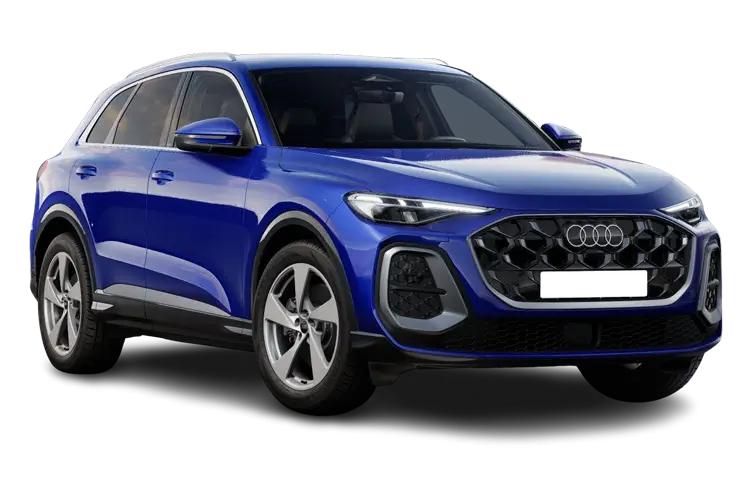
2.0 TFSI e Quattro 299 S Line 5dr S Tronic

POA
Business Lease Price per month (excl VAT) £495.64