Images are for illustrative purposes only.

70kW Advance 30kWh 5dr Auto
Need some assistance or advice? Call Us 01903 538835


You won't have tried anything quite like Honda's smallest EV, the Super-N. Jonathan Crouch takes a look.
With this Super-N, Honda is providing something really different in the smallest part of the segment for EV city cars. It's charming, practical and fun in a way rivals just aren't.
For Honda, the full-EV revolution has to begin all over again. And it restarts in explosive style with this car, the Super-N. It seems incredible that prior to the launch of this model in July 2026, Honda didn't have a single EV in its line-up. The brand has tried of course. Its first two efforts, the charismatic little Honda e and the rather anodyne e:NY1, didn't sell because they were too expensive and didn't go far enough between charges. The new era beyond these designs was supposed to be covered by a new 'O Series' line-up of EVs, but they've now been cancelled, presumably because Honda thinks the slow market take-up on electric cars gives it time to come up with something better. But what to offer EV folk in the meantime? Well the Super-N is that stop-gap, a tiny, sprightly little urban runabout bursting with charisma. Its origins lie with the brand's Japanese market N-One, developed for that country's segment for even tinier sub-citycar-sized 'kei' cars and subsequently launched in all-electric form as the N-One E. The Super-N is the performance version of that car, known as the 'Super-One' in Japan but called the 'Super-N' for naming rights reasons here.
Imagine what would happen if a proper petrol-blooded engineer got hold of a tiny EV and gave it an '80s Turbo-Tastic' dose of added fun. That's pretty much what's happened here. The fact that this Super-N has just 63bhp doesn't matter too much. First because it weighs under 1.35-tonnes (astonishingly light for an EV); and secondly because it has a small blue 'Boost' button switch on the steering wheel that temporarily nearly doubles the output to 94bhp. The potential for using the extra urge has to be limited because the battery size is just 29.6kWh; some PHEV batteries are bigger than that. The result is a combined range of just 128 miles - a worryingly small figure for the brand given that limited range was one of the things that scuppered the previous Honda e. The company claims this figure rises to 199 miles in city-only motoring. Short bursts of fun weren't really enough to make another small supposedly super-fun EV model, the Abarth 500e, a must-have for enthusiasts. But this Super-N has a somewhat deeper depth of performance engineering and a much more realistic fake engine note. The key addition here is a simulated 7-speed 'manual' gearbox operated by steering wheel paddles, which works with the Active Sound Control to mimic the noise and response of a petrol engine. That soundtrack was increased in volume following UK testing that revealed the original level being drowned out by road noise. The 'gearbox' is remarkably realistic, even bouncing off a fake rev limiter if you don't change up - a bit like a Hyundai IONIQ 5N. Leave the car in its default D gearbox mode though and it swaps through the 'gears' as any automatic would. With Boost and the sound simulator's deep-chested growl engaged, 0-62mph takes 10.0s (vs 14.5s in 'Normal' mode), but it feels faster. Top speed (totally irrelevant in this kind of car) is limited to just 78mph. Unlike the old Honda e, the Super-N is front-driven and through the corners, expect it to be quick and responsive, aided by grippy tyres, a stiff chassis and a wide track.
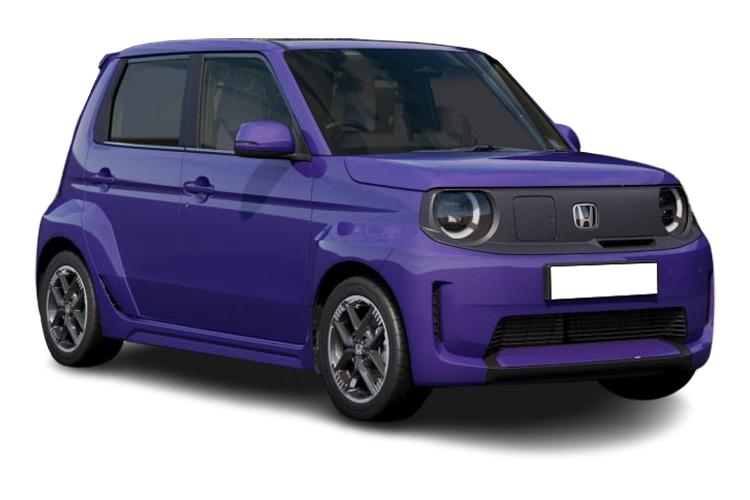
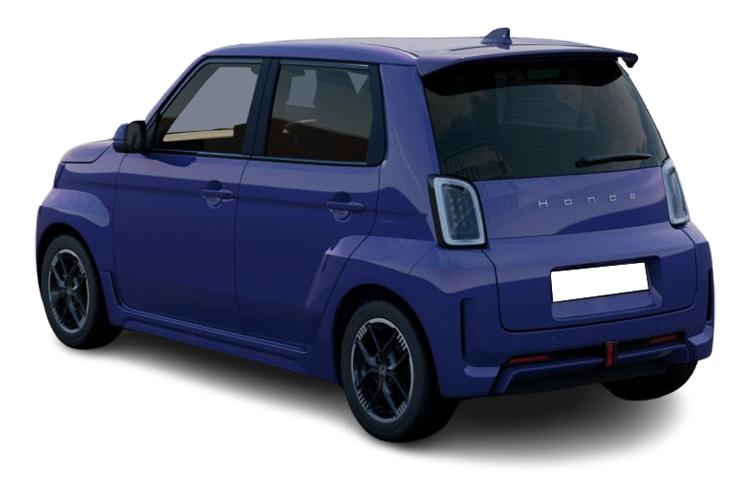
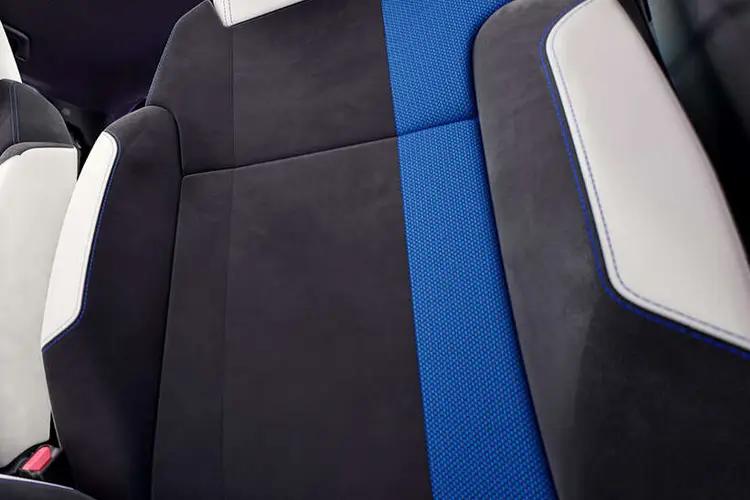
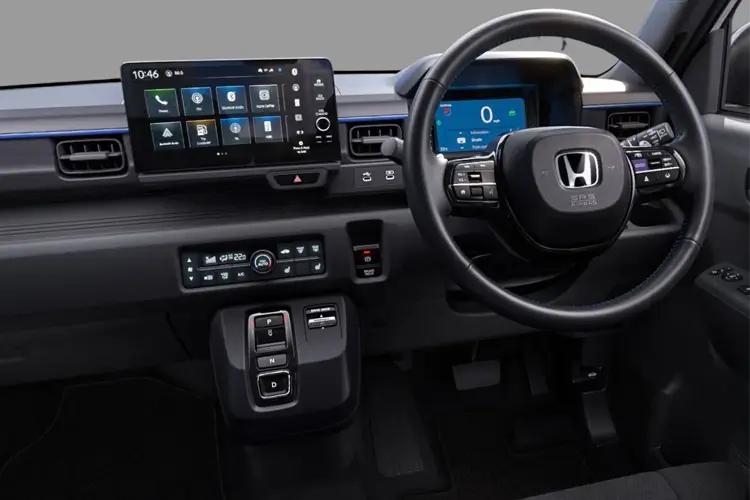
Visually, the Super-N has moved quite a long way from its Japanese urban tiddler kei car roots. In fact, with its flared wings and wide tracks, this performance variant is too big to qualify as a kei car in its own market. But from a European perspective, it's still a tiny thing, just 3.4-metres in length. From the front, the friendly face of this model's Honda e predecessor has been replaced with something altogether more aggressive, with sharp LED headlights, pronounced front air intakes and bold bumpers. The 15-inch wheels are set in flared arches and (unlike with the e), the charging port is located on the nose rather than on the bonnet. The tall boxy shape is set off at the back by subtle roof spoiler and a blacked-out centre panel - plus there's a small vertical lower rear fog light. The N-One E kei car this Super-N is based on is a cheap city runabout that donates its basic interior to this performance variant. It's certainly a very different cabin from the luxurious tech-laden interior that characterised the old Honda e. In place of wood trim, virtual mirrors and fishpond graphics, you get hard, brittle plastics with a small shelf running along the entire width of the dashboard. The kei car parentage is evident in the cabin's narrowness but because of the high roof line, it doesn't feel cramped. Two separate displays feature, one (a 7-inch digital gauge cluster) viewed through the thin-rimmed heated paddleshifter wheel for instruments; the other (9-inches in size) for infotainment. The gear selection buttons are mounted on a little panel jutting out from the middle of the bottom the fascia, where the centre stack would normally be. In contrast to the current trend, there are buttons everywhere, particularly on the two-spoke wheel. Between the seats, there's small cubby with a single cup holder and storage tray, plus there's a bin to the right side of the driver. The seats are unique for this model and incorporate retro-inspired materials and bolsters, with a blue-trimmed theme (also replicated on the dash top) that apparently pays homage to Honda's legendary Turbo City II model. The back seat can only take two people, the cabin feels narrow and leg room is obviously limited by the diminutive exterior length. Apart from that though, the news is all good. First, an advantage of the small battery is that the floor and seat base haven't had to be raised, so you don't feel 'perched' and your knees aren't up towards your chest, as in some other small EVs. Second, there's one of our favourite Honda features, a 'Magic' rear seat mechanism that flips up the bench base to accommodate tall items and bulky loads. Which is just as well because there's hardly any boot space.
At just under £19,000, the Super-N is what its Honda e predecessor wasn't; realistically priced. Obviously, it's a cheaper-feeling, less tech-laden and luxurious product, but even so, given that some versions of the Honda e were listing at around £37,000, there's now a huge difference in the price-pitching of Honda's smallest EV offering. Instead of targeting the MINI Cooper Electric and Volkswagen ID.Polo market (as a direct Honda e replacement would have done), the Super-N is instead pitched at people who would otherwise be considering far less sporty and practical offerings like the Renault Twingo E-Tech and the Hyundai Inster. It's more personalisable than those competitors too. Honda says that Super-N owners will be able to choose from a wide range of exterior colours and customisable options 'each created to create that personal touch'. Included within these options are 'distinctive' body graphics and a two-tone paint finish. Standard features include a bespoke Bose stereo, ambient lighting and a suite of Honda SENSING advanced driver aids.
The DC charging speed is pretty slow - just 50kW - so it's just as well that the battery is so small. A 10-80% DC charge will need around 35 minutes. At home, a 7.4kW single-phase AC wallbox will need around 4 hours for a full charge. You can improve that to around 2 hours 30 minutes if you're able to charge using a three-phase 11kW AC wallbox, which will add about 43 miles of charge per hour of charging. What else? Well like all EVs, this one falls into the lowest Benefit-in-Kind taxation bracket of 4% until Spring 2027, with a 1% annual rise thereafter. This EV model's battery has its own separate 8 year 100,000 mile warranty guaranteeing charge capacity of at least 70%. The three year 90,000 mile warranty is better than the package you get from some competitors too, though is bettered by quite a few others. And there's the usual peace of mind stuff; surface corrosion is covered for three years, chassis corrosion is covered for ten years and structural corrosion for twelve years.
This Super-N isn't going to put Honda on the map as an EV maker, nor is it likely to sell in very significant numbers but we're glad the brand is bringing it here. In a segment populated by self-consciously trendy small EVs, the Super-N has genuine charisma. Nothing else in the class looks or drives quite like it. Even better, the brand has learned from its pricing mistakes with the Honda e and the e:Ny1, pitching this model affordably. And after a test drive in a Super-N, the small EVs you can get for similar money are likely to feel quite dull in comparison.
Data provided by CAP-HPI database - Ref# 110620
You won't have tried anything quite like Honda's smallest EV, the Super-N. Jonathan Crouch takes a look.
With this Super-N, Honda is providing something really different in the smallest part of the segment for EV city cars. It's charming, practical and fun in a way rivals just aren't.
For Honda, the full-EV revolution has to begin all over again. And it restarts in explosive style with this car, the Super-N. It seems incredible that prior to the launch of this model in July 2026, Honda didn't have a single EV in its line-up. The brand has tried of course. Its first two efforts, the charismatic little Honda e and the rather anodyne e:NY1, didn't sell because they were too expensive and didn't go far enough between charges. The new era beyond these designs was supposed to be covered by a new 'O Series' line-up of EVs, but they've now been cancelled, presumably because Honda thinks the slow market take-up on electric cars gives it time to come up with something better. But what to offer EV folk in the meantime? Well the Super-N is that stop-gap, a tiny, sprightly little urban runabout bursting with charisma. Its origins lie with the brand's Japanese market N-One, developed for that country's segment for even tinier sub-citycar-sized 'kei' cars and subsequently launched in all-electric form as the N-One E. The Super-N is the performance version of that car, known as the 'Super-One' in Japan but called the 'Super-N' for naming rights reasons here.
Imagine what would happen if a proper petrol-blooded engineer got hold of a tiny EV and gave it an '80s Turbo-Tastic' dose of added fun. That's pretty much what's happened here. The fact that this Super-N has just 63bhp doesn't matter too much. First because it weighs under 1.35-tonnes (astonishingly light for an EV); and secondly because it has a small blue 'Boost' button switch on the steering wheel that temporarily nearly doubles the output to 94bhp. The potential for using the extra urge has to be limited because the battery size is just 29.6kWh; some PHEV batteries are bigger than that. The result is a combined range of just 128 miles - a worryingly small figure for the brand given that limited range was one of the things that scuppered the previous Honda e. The company claims this figure rises to 199 miles in city-only motoring. Short bursts of fun weren't really enough to make another small supposedly super-fun EV model, the Abarth 500e, a must-have for enthusiasts. But this Super-N has a somewhat deeper depth of performance engineering and a much more realistic fake engine note. The key addition here is a simulated 7-speed 'manual' gearbox operated by steering wheel paddles, which works with the Active Sound Control to mimic the noise and response of a petrol engine. That soundtrack was increased in volume following UK testing that revealed the original level being drowned out by road noise. The 'gearbox' is remarkably realistic, even bouncing off a fake rev limiter if you don't change up - a bit like a Hyundai IONIQ 5N. Leave the car in its default D gearbox mode though and it swaps through the 'gears' as any automatic would. With Boost and the sound simulator's deep-chested growl engaged, 0-62mph takes 10.0s (vs 14.5s in 'Normal' mode), but it feels faster. Top speed (totally irrelevant in this kind of car) is limited to just 78mph. Unlike the old Honda e, the Super-N is front-driven and through the corners, expect it to be quick and responsive, aided by grippy tyres, a stiff chassis and a wide track.
Visually, the Super-N has moved quite a long way from its Japanese urban tiddler kei car roots. In fact, with its flared wings and wide tracks, this performance variant is too big to qualify as a kei car in its own market. But from a European perspective, it's still a tiny thing, just 3.4-metres in length. From the front, the friendly face of this model's Honda e predecessor has been replaced with something altogether more aggressive, with sharp LED headlights, pronounced front air intakes and bold bumpers. The 15-inch wheels are set in flared arches and (unlike with the e), the charging port is located on the nose rather than on the bonnet. The tall boxy shape is set off at the back by subtle roof spoiler and a blacked-out centre panel - plus there's a small vertical lower rear fog light. The N-One E kei car this Super-N is based on is a cheap city runabout that donates its basic interior to this performance variant. It's certainly a very different cabin from the luxurious tech-laden interior that characterised the old Honda e. In place of wood trim, virtual mirrors and fishpond graphics, you get hard, brittle plastics with a small shelf running along the entire width of the dashboard. The kei car parentage is evident in the cabin's narrowness but because of the high roof line, it doesn't feel cramped. Two separate displays feature, one (a 7-inch digital gauge cluster) viewed through the thin-rimmed heated paddleshifter wheel for instruments; the other (9-inches in size) for infotainment. The gear selection buttons are mounted on a little panel jutting out from the middle of the bottom the fascia, where the centre stack would normally be. In contrast to the current trend, there are buttons everywhere, particularly on the two-spoke wheel. Between the seats, there's small cubby with a single cup holder and storage tray, plus there's a bin to the right side of the driver. The seats are unique for this model and incorporate retro-inspired materials and bolsters, with a blue-trimmed theme (also replicated on the dash top) that apparently pays homage to Honda's legendary Turbo City II model. The back seat can only take two people, the cabin feels narrow and leg room is obviously limited by the diminutive exterior length. Apart from that though, the news is all good. First, an advantage of the small battery is that the floor and seat base haven't had to be raised, so you don't feel 'perched' and your knees aren't up towards your chest, as in some other small EVs. Second, there's one of our favourite Honda features, a 'Magic' rear seat mechanism that flips up the bench base to accommodate tall items and bulky loads. Which is just as well because there's hardly any boot space.
At just under £19,000, the Super-N is what its Honda e predecessor wasn't; realistically priced. Obviously, it's a cheaper-feeling, less tech-laden and luxurious product, but even so, given that some versions of the Honda e were listing at around £37,000, there's now a huge difference in the price-pitching of Honda's smallest EV offering. Instead of targeting the MINI Cooper Electric and Volkswagen ID.Polo market (as a direct Honda e replacement would have done), the Super-N is instead pitched at people who would otherwise be considering far less sporty and practical offerings like the Renault Twingo E-Tech and the Hyundai Inster. It's more personalisable than those competitors too. Honda says that Super-N owners will be able to choose from a wide range of exterior colours and customisable options 'each created to create that personal touch'. Included within these options are 'distinctive' body graphics and a two-tone paint finish. Standard features include a bespoke Bose stereo, ambient lighting and a suite of Honda SENSING advanced driver aids.
The DC charging speed is pretty slow - just 50kW - so it's just as well that the battery is so small. A 10-80% DC charge will need around 35 minutes. At home, a 7.4kW single-phase AC wallbox will need around 4 hours for a full charge. You can improve that to around 2 hours 30 minutes if you're able to charge using a three-phase 11kW AC wallbox, which will add about 43 miles of charge per hour of charging. What else? Well like all EVs, this one falls into the lowest Benefit-in-Kind taxation bracket of 4% until Spring 2027, with a 1% annual rise thereafter. This EV model's battery has its own separate 8 year 100,000 mile warranty guaranteeing charge capacity of at least 70%. The three year 90,000 mile warranty is better than the package you get from some competitors too, though is bettered by quite a few others. And there's the usual peace of mind stuff; surface corrosion is covered for three years, chassis corrosion is covered for ten years and structural corrosion for twelve years.
This Super-N isn't going to put Honda on the map as an EV maker, nor is it likely to sell in very significant numbers but we're glad the brand is bringing it here. In a segment populated by self-consciously trendy small EVs, the Super-N has genuine charisma. Nothing else in the class looks or drives quite like it. Even better, the brand has learned from its pricing mistakes with the Honda e and the e:Ny1, pitching this model affordably. And after a test drive in a Super-N, the small EVs you can get for similar money are likely to feel quite dull in comparison.
![TOYOTA BZ4X 150kW Motion 71.4kWh 5dr Auto [11kW]](https://cdn.automotus.uk/store/CVD/car/99720/front_view/bz4x-tobz-24.jpg)
150kW Motion 71.4kWh 5dr Auto [11kW]

POA
Business Lease Price per month (excl VAT) £454.03
EV60 160kW Iconic Esprit Alpine 60kWh 5dr Auto
POA
Business Lease Price per month (excl VAT) £315.95