
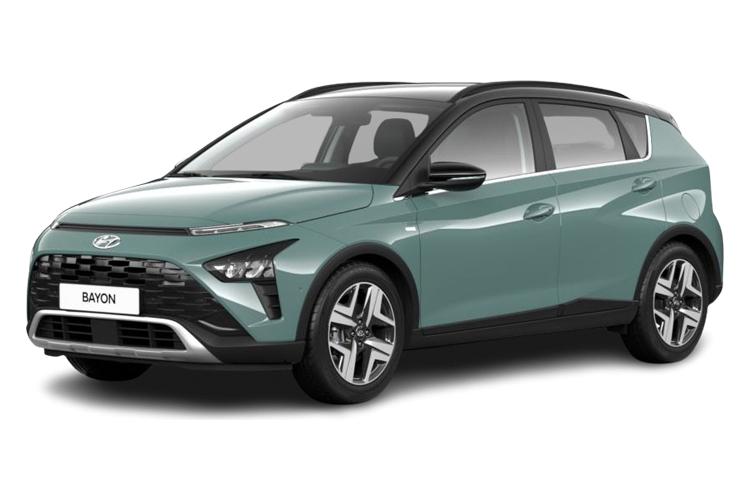
Images are for illustrative purposes only.
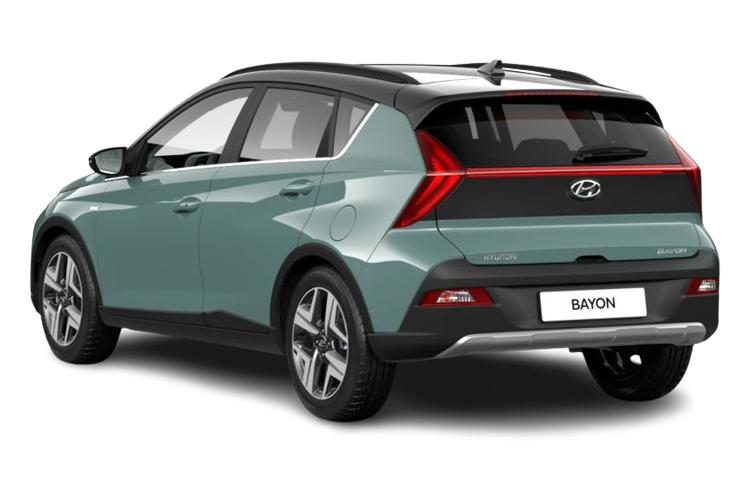

1.0 TGDi 48V MHEV SE Connect 5dr DCT
Need some assistance or advice? Call Us 01903 538835


By Jonathan Crouch
In 2021, Hyundai introduced a new entry-level point for its broadening SUV line-up - this car, the Bayon. It took established engineering from the brand's i20 supermini and delivered it with the trendier crossover vibe that customers for small cars increasingly wanted in this time. Plus there was also the advantage of a more sophisticated and more spacious cabin than those people would get with a conventional small hatch. This was a much-copied formula of course, but this Hyundai delivered it here with value and a class-leading warranty. Here, we look at the earlier 202-2023-era versions of this model.
5dr SUV (1.0 T-GDI) [SE Connect, Premium, Ultimate]
Small SUVs are big business. If you doubt that, just check out how many brands these days offer a choice of two of them. Companies like Hyundai, who back in 2021 wanted you to consider this car, the Bayon, as the first rung on their ever-widening range of Crossovers. Back at this model's original launch, you might quite reasonably have been under the impression that Hyundai already had a well established contender in this segment, the Kona. But in 2021 that was being moved up-market and anyway, it was never built upon the compact supermini platform that models in the Juke and Captur class usually have. The Bayon was, sharing virtually all its engineering with the current third generation version of Hyundai's i20 supermini. Prior to the Bayon, we'd had SUV-flavoured i20s before. The previous generation version of the Korean brand's Fiesta-sized hatch included an 'Active'-spec model in its line-up to meet this need, but that was nothing more than an i20 with roof rails and a bit of body cladding. The Bayon was different, a proper purpose-designed SUV positioned in Hyundai's line-up just below the Kona, yet you could own this car at close-to-supermini pricing. It was certainly designed very much for our European market, hence the selection of name (derived from Bayonne, capital of the French Basque country). And the choice of ex-Lamborghini designer Luc Donckerwolke to create the angular looks that should attract the necessary glances outside the gym. Nothing too fiery under the bonnet was needed, but the petrol powertrain of this original early model had 48-volt mild hybrid tech and there was a clever manual gearbox allowing owners to make the most of that extra efficiency. The Bayon sold in this original form until late 2023, when it was facelifted. With that later version, Hyundai deleted the original model's mild hybrid engine tech. It's the earlier 2021-2023-era models though, that we look at here.
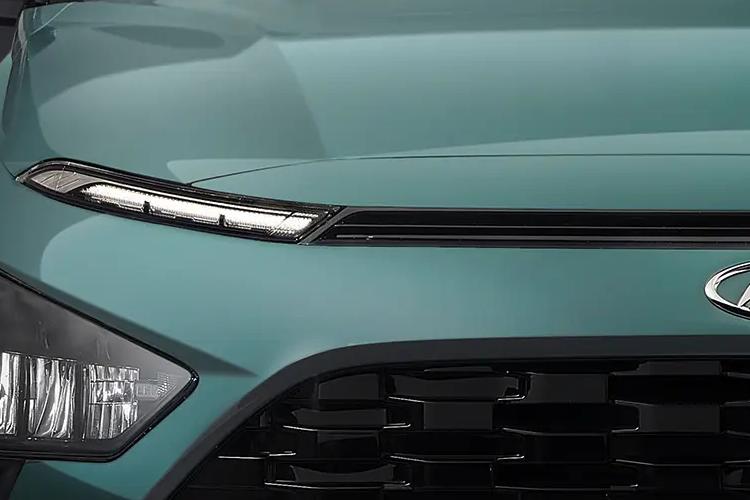
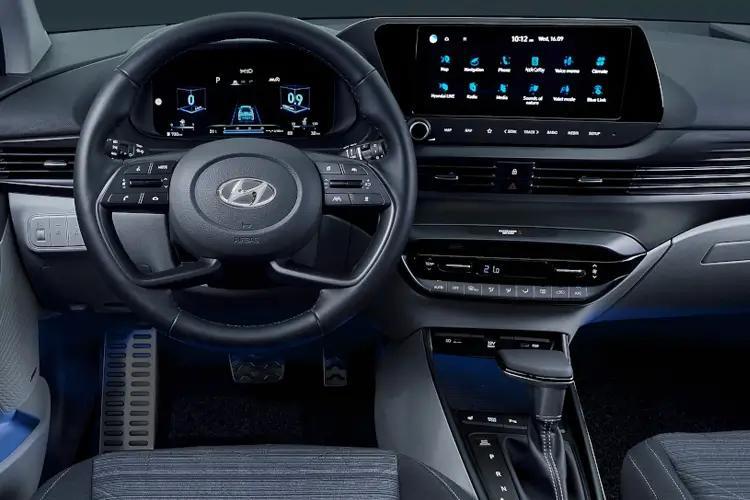
Eye-catching design is a key component of modern Hyundai models. If you doubt that, go and look at an IONIQ 5. Stylist Luc Donckerwolke didn't have quite as much fun here as he had with that car but this Bayon is still quite a striking-looking thing, with all its slashes, angles and attitude. The frontal face is defined by independently positioned upper daytime running lights, rather than the arrow-shaped three-part headlights, which combine with the side air intakes. And from the side? Well this may theoretically have been the smallest SUV in the company's range but it's still 4.2-metres in length, those dimensions disguised by all manner of slashing and creasing to distract the eye: notably the dynamic shoulder line (which creates the wedge-shape profile), the angular lines above the rear wheel arch and the arrow-shaped C pillar. We think the rear section is perhaps this car's most pleasing perspective, arrow-shaped LED lights connected by a thin horizontal line. Up-front inside, there's not as much to catch the eye as there was outside when you greeted the car on first acquaintance. But start to look around and this cabin, described by Hyundai as 'a modern digital interior', might start to grow on you, providing your expectations come aligned with this Bayon's relatively affordable asking fee. It's certainly very digital: you might not expect to get a configurable full-width instrument display included at this price point - and the level of provided centre screen media connectivity also sets the segment standard. Everything's borrowed directly from the brand's i20 supermini, including the seating position which, though a fraction higher is certainly not SUV-like. You might also have hoped for something a bit trendier than the rather dour dark hard plastic interior trim, but it's solidly fashioned and there are a few interesting touches - the weirdly-spoked steering wheel, the smart cross-hatched seat trim and the serrated flashing around the door catches for instance. As for the rear, well the doors open nice and wide. And once inside, you'll find that this Hyundai has as much rear space for legs and knees as you could reasonably expect in this class. Headroom isn't quite so noteworthy, thanks to that tapering rear roof line, but you'd need to be over six foot tall to have a problem. And the relatively wide exterior width and the low centre transmission tunnel mean it's reasonably realistic to take a trio of passengers back here if you absolutely had to, though the raised central cushion won't do much for the comfort of the middle occupant. Let's finish this section with a look at the boot. Lift the hatch and you're greeted with one of the more accommodating luggage areas in the segment, 411-litres in size, which is 37-litres more than a Kona and 59-litres more than you get with the i20 supermini this car is based upon.
Please contact us for an exact up-to-date valuation.
Generally, most Bayon customers we surveyed seemed very happy with their cars. Check all the media tech on your test drive - and the workings of the navigation system (if fitted) to see if it's been kept up to date. Check the touchscreens and Bluetooth connectivity. Check the upholstery for cuts and stains. And inspect the alloy wheels for kerbing damage. Check all the electrical functions too. And insist on a fully stamped-up service history.
(approx based on a 2021 Bayon - Ex Vat) Front brake pads sit in the £27 bracket; rear pad sets are around £24-£38. Front brake discs sit in the £88 bracket; rear discs are around £58. An air filter is around £5. An oil filter is around £4. A wiper blade is in the £7-£30 bracket. A water pump is around £103.
Set off in this Bayon and the first thing you notice is that everything's so light and easy-to-use. Primarily the electric steering but also, if you've opted for manual transmission, the clutch and gear shift action too; a DCT 7-speed automatic was optional from new. Either way, the transmission must be mated to Hyundai's usual 1.0-litre T-GDi petrol engine, available with either 100PS or, as in this case, 120PS. This is a willing little three cylinder unit that goes about its business with plenty of pulling power and a cheerful three cylinder thrum, but to be frank, the benefits of its 48-volt technology are difficult to discern, both on the move and on the balance sheet; the WLTP returns you get from this engine in both its forms - 53.3mpg and up to 119g/km - aren't that much better than the readings you'd get in this class from this period from non-electrified rivals. And quite a few of the gains that are being delivered here actually came from the clever 'iMT' 'Intelligent Manual Transmission' set-up, which de-couples the engine from the gearbox after the driver releases the accelerator and allows the car to coast for greater economy. Predictably, the Bayon's most at home in town, thanks to its light steering and easy manoeuvrability, though you'll feel harsher speed humps and tarmac tears. Beyond the city limits, at speed through the turns, that steering rack doesn't communicate back much of what's happening beneath the front wheels, but the slight firmness in this car's ride quality and excellent body control still might encourage you to throw the thing about a bit, were you to be running late for your gym session or the school pick-up. Highway refinement is pretty well judged, though the little three cylinder engine's characteristically vibrant soundtrack will be very evident should short notice overtakes be required. For these, you'll need to have selected the most dynamic of the three available drive modes - 'Sport' - which delivers a red tinge to the 'Digital Supervision Cluster' instrument binnacle screen in front of you. The two other settings are 'Eco' (with a turquoise theme) and 'Comfort' (which turns everything white).
So what might you like about this Bayon? Cars of this kind are mainly bought on looks and this one looks avant garde from some angles but a little unusual from others: an acquired taste perhaps? The well built interior too, might leave you a little conflicted. It could use a touch more flair, but it's very practical, the standardised digital instrument screen was rare in period in this segment and media connectivity met the very highest standards of its time. Once you've got over all that, you're also going to be looking for running cost efficiency from this class of car, something this Bayon can deliver thanks to the 48-volt mild hybrid engine tech that was deleted in the later facelifted version of this model. That alone is a good reason to opt for the earlier 2021-2023-era versions we've been looking at here. Overall, the Bayon manages to make good use of its supermini underpinnings and engineering while remaining very much its own car. There's just enough design flair here to satisfy this SUV's fashion-orientated target audience.
Data provided by CAP-HPI database - Ref# 97770
By Jonathan Crouch
In 2021, Hyundai introduced a new entry-level point for its broadening SUV line-up - this car, the Bayon. It took established engineering from the brand's i20 supermini and delivered it with the trendier crossover vibe that customers for small cars increasingly wanted in this time. Plus there was also the advantage of a more sophisticated and more spacious cabin than those people would get with a conventional small hatch. This was a much-copied formula of course, but this Hyundai delivered it here with value and a class-leading warranty. Here, we look at the earlier 202-2023-era versions of this model.
5dr SUV (1.0 T-GDI) [SE Connect, Premium, Ultimate]
Small SUVs are big business. If you doubt that, just check out how many brands these days offer a choice of two of them. Companies like Hyundai, who back in 2021 wanted you to consider this car, the Bayon, as the first rung on their ever-widening range of Crossovers. Back at this model's original launch, you might quite reasonably have been under the impression that Hyundai already had a well established contender in this segment, the Kona. But in 2021 that was being moved up-market and anyway, it was never built upon the compact supermini platform that models in the Juke and Captur class usually have. The Bayon was, sharing virtually all its engineering with the current third generation version of Hyundai's i20 supermini. Prior to the Bayon, we'd had SUV-flavoured i20s before. The previous generation version of the Korean brand's Fiesta-sized hatch included an 'Active'-spec model in its line-up to meet this need, but that was nothing more than an i20 with roof rails and a bit of body cladding. The Bayon was different, a proper purpose-designed SUV positioned in Hyundai's line-up just below the Kona, yet you could own this car at close-to-supermini pricing. It was certainly designed very much for our European market, hence the selection of name (derived from Bayonne, capital of the French Basque country). And the choice of ex-Lamborghini designer Luc Donckerwolke to create the angular looks that should attract the necessary glances outside the gym. Nothing too fiery under the bonnet was needed, but the petrol powertrain of this original early model had 48-volt mild hybrid tech and there was a clever manual gearbox allowing owners to make the most of that extra efficiency. The Bayon sold in this original form until late 2023, when it was facelifted. With that later version, Hyundai deleted the original model's mild hybrid engine tech. It's the earlier 2021-2023-era models though, that we look at here.
Eye-catching design is a key component of modern Hyundai models. If you doubt that, go and look at an IONIQ 5. Stylist Luc Donckerwolke didn't have quite as much fun here as he had with that car but this Bayon is still quite a striking-looking thing, with all its slashes, angles and attitude. The frontal face is defined by independently positioned upper daytime running lights, rather than the arrow-shaped three-part headlights, which combine with the side air intakes. And from the side? Well this may theoretically have been the smallest SUV in the company's range but it's still 4.2-metres in length, those dimensions disguised by all manner of slashing and creasing to distract the eye: notably the dynamic shoulder line (which creates the wedge-shape profile), the angular lines above the rear wheel arch and the arrow-shaped C pillar. We think the rear section is perhaps this car's most pleasing perspective, arrow-shaped LED lights connected by a thin horizontal line. Up-front inside, there's not as much to catch the eye as there was outside when you greeted the car on first acquaintance. But start to look around and this cabin, described by Hyundai as 'a modern digital interior', might start to grow on you, providing your expectations come aligned with this Bayon's relatively affordable asking fee. It's certainly very digital: you might not expect to get a configurable full-width instrument display included at this price point - and the level of provided centre screen media connectivity also sets the segment standard. Everything's borrowed directly from the brand's i20 supermini, including the seating position which, though a fraction higher is certainly not SUV-like. You might also have hoped for something a bit trendier than the rather dour dark hard plastic interior trim, but it's solidly fashioned and there are a few interesting touches - the weirdly-spoked steering wheel, the smart cross-hatched seat trim and the serrated flashing around the door catches for instance. As for the rear, well the doors open nice and wide. And once inside, you'll find that this Hyundai has as much rear space for legs and knees as you could reasonably expect in this class. Headroom isn't quite so noteworthy, thanks to that tapering rear roof line, but you'd need to be over six foot tall to have a problem. And the relatively wide exterior width and the low centre transmission tunnel mean it's reasonably realistic to take a trio of passengers back here if you absolutely had to, though the raised central cushion won't do much for the comfort of the middle occupant. Let's finish this section with a look at the boot. Lift the hatch and you're greeted with one of the more accommodating luggage areas in the segment, 411-litres in size, which is 37-litres more than a Kona and 59-litres more than you get with the i20 supermini this car is based upon.
Please contact us for an exact up-to-date valuation.
Generally, most Bayon customers we surveyed seemed very happy with their cars. Check all the media tech on your test drive - and the workings of the navigation system (if fitted) to see if it's been kept up to date. Check the touchscreens and Bluetooth connectivity. Check the upholstery for cuts and stains. And inspect the alloy wheels for kerbing damage. Check all the electrical functions too. And insist on a fully stamped-up service history.
(approx based on a 2021 Bayon - Ex Vat) Front brake pads sit in the £27 bracket; rear pad sets are around £24-£38. Front brake discs sit in the £88 bracket; rear discs are around £58. An air filter is around £5. An oil filter is around £4. A wiper blade is in the £7-£30 bracket. A water pump is around £103.
Set off in this Bayon and the first thing you notice is that everything's so light and easy-to-use. Primarily the electric steering but also, if you've opted for manual transmission, the clutch and gear shift action too; a DCT 7-speed automatic was optional from new. Either way, the transmission must be mated to Hyundai's usual 1.0-litre T-GDi petrol engine, available with either 100PS or, as in this case, 120PS. This is a willing little three cylinder unit that goes about its business with plenty of pulling power and a cheerful three cylinder thrum, but to be frank, the benefits of its 48-volt technology are difficult to discern, both on the move and on the balance sheet; the WLTP returns you get from this engine in both its forms - 53.3mpg and up to 119g/km - aren't that much better than the readings you'd get in this class from this period from non-electrified rivals. And quite a few of the gains that are being delivered here actually came from the clever 'iMT' 'Intelligent Manual Transmission' set-up, which de-couples the engine from the gearbox after the driver releases the accelerator and allows the car to coast for greater economy. Predictably, the Bayon's most at home in town, thanks to its light steering and easy manoeuvrability, though you'll feel harsher speed humps and tarmac tears. Beyond the city limits, at speed through the turns, that steering rack doesn't communicate back much of what's happening beneath the front wheels, but the slight firmness in this car's ride quality and excellent body control still might encourage you to throw the thing about a bit, were you to be running late for your gym session or the school pick-up. Highway refinement is pretty well judged, though the little three cylinder engine's characteristically vibrant soundtrack will be very evident should short notice overtakes be required. For these, you'll need to have selected the most dynamic of the three available drive modes - 'Sport' - which delivers a red tinge to the 'Digital Supervision Cluster' instrument binnacle screen in front of you. The two other settings are 'Eco' (with a turquoise theme) and 'Comfort' (which turns everything white).
So what might you like about this Bayon? Cars of this kind are mainly bought on looks and this one looks avant garde from some angles but a little unusual from others: an acquired taste perhaps? The well built interior too, might leave you a little conflicted. It could use a touch more flair, but it's very practical, the standardised digital instrument screen was rare in period in this segment and media connectivity met the very highest standards of its time. Once you've got over all that, you're also going to be looking for running cost efficiency from this class of car, something this Bayon can deliver thanks to the 48-volt mild hybrid engine tech that was deleted in the later facelifted version of this model. That alone is a good reason to opt for the earlier 2021-2023-era versions we've been looking at here. Overall, the Bayon manages to make good use of its supermini underpinnings and engineering while remaining very much its own car. There's just enough design flair here to satisfy this SUV's fashion-orientated target audience.
