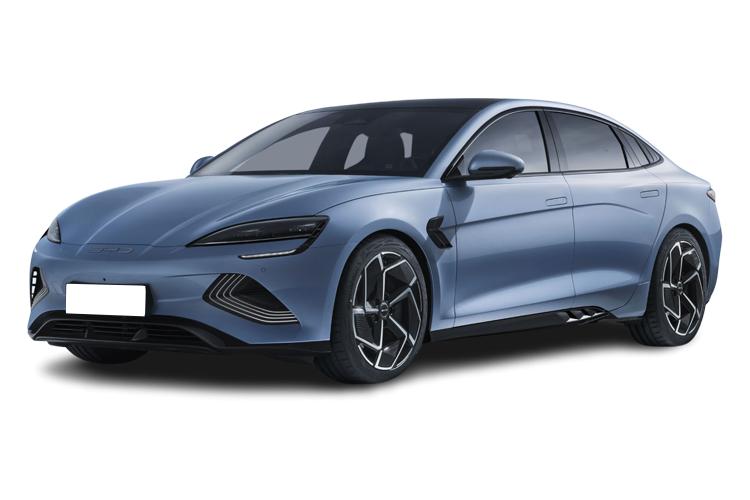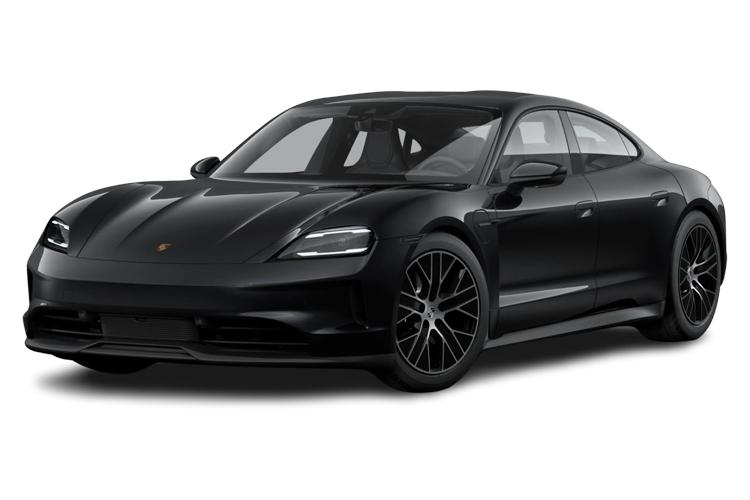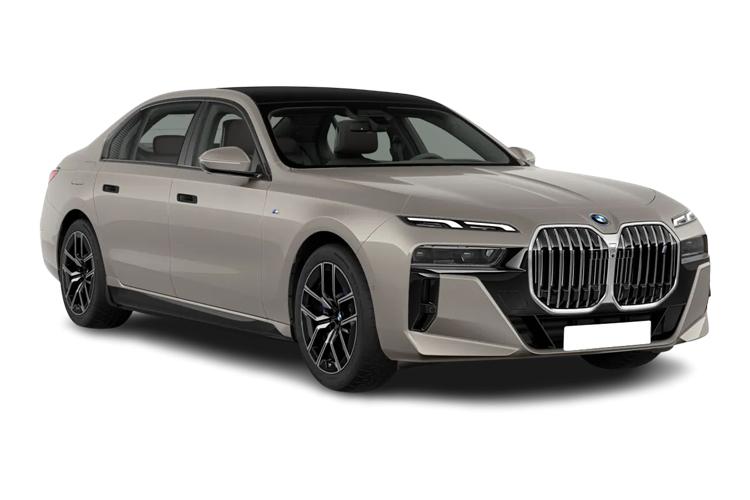
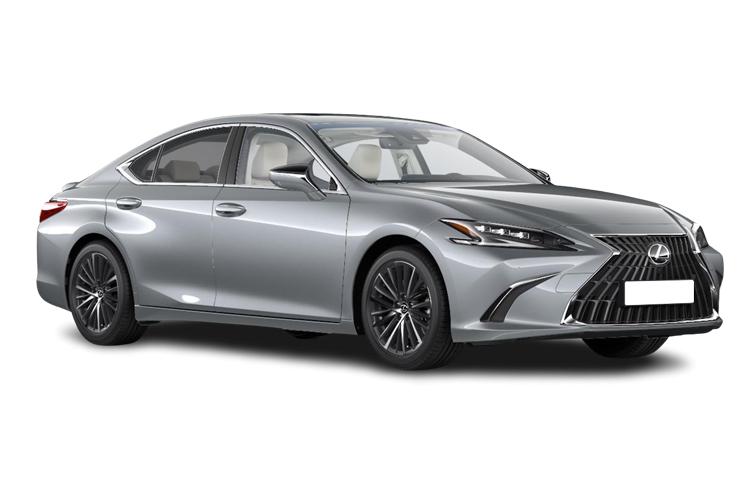
Images are for illustrative purposes only.

168kW Premium 84kWh 4dr Auto
Need some assistance or advice? Call Us 01903 538835


Hyundai's slippery IONIQ 6 saloon gets a far-reaching mid-term facelift. Jonathan Crouch takes a look.
The race is on to create the most streamlined passenger EV - and here's Hyundai's contender, the IONIQ 6, here revised with even more striking looks. If you like the styling, you might also like a lot else here; the now-improved luxurious cabin, the refinement and the very class-competitive EV range figures. If you're looking at cars like the Polestar 2 and the Tesla Model 3, it's also well worth considering this one.
Hyundai's IONIQ 6 was the car that set a fresh segment standard for mid-sized EV model aerodynamics at its original launch back in 2023. Yet Hyundai's stylists seem to have had a nagging doubt that they didn't get the original look of this car quite right. Hence the early mid-term facelift we look at here. In this form, the car manages to look even sleeker but loses degree of its previous visual excess. There's also a mild cabin makeover and the addition of the wild IONIQ 6 N performance model at the top of the line-up that we speculated about with the original model. Mainstream versions though, are our focus here. As before, the shape's said to be inspired by 'streamliner' models of the 1930s and '40s. Simon Loasby, Hyundai's Head of Styling, cites the 1947 Stout Scarab, the Phantom Corsair and the Saab Ursaab as major influences. No, we don't remember them either. But if you're seeking a mid-sized luxurious EV, don't want an SUV and would like something a bit different, the IONIQ 6 is still well worth considering. If you choose it, it'll be because of one thing and one thing only: the way it looks.
The sleek aerodynamics have always graced the IONIQ 6 for a reason; to maximise EV range. Which is also why digital door mirrors have now been standardised. The engineering and battery tech updates that would really do that are missing though from this updated model. Which shares the same powertrains as the original design, though not that earlier IONIQ 6's entry-level 53kWh battery pack, which has now been dropped. That means a line-up based around the larger 77.4kWh Long Range battery, available either with the single motor 225bhp Long Range RWD variant; or with the dual motor 321bhp Long Range AWD version. Maximum range is 338 miles for the single motor derivative; and 322 miles for the dual motor model. The dual motor set-up also of features on a fresh addition to the range, the IONIQ 6 N - albeit with an awful lot more power. As you'd expect, the 6 N borrows the drivetrain of the brand's wild IONIQ 5 N, which means an 84kWh battery energising twin motors with a total output of 641bhp, good enough to spirit the car to 62mph in just over three seconds. With the more mainstream variants we're focusing on here, streamlining obviously helps refinement too. But don't be fooled by that 911-style rear end into assuming this to be some kind of sports saloon - it isn't, though it's as quick as many sedans of that sort, the dual motor AWD version making 62mph from rest in just 5.0s. There are three drive settings ('Eco', 'Normal' and 'Sport') and brake regen steering wheel paddles. Plus sound effects as you drive, which are audibly futuristic and which you'll probably quickly turn off.
Hyundai says this is how the IONIQ 6 should always have looked. There are certainly a lot of visual changes for a facelift, with the most significant of these being the removal of the original model's prominent ducktail rear wing. Instead, there's a subtler extended boot lip above a chrome-trimmed rear bumper. At the front, the bonnet profile has been raised and now flows into a more dynamic shark-like front end with a prominent splitter. The headlights are different too, now slimmer with a pixel motif. And the lower body is now black-finished to emphasise this 'electric streamliner' model's aerodynamic silhouette. The changes to the interior are less overt but still significant. Hyundai has redesigned the centre console for better ease-of-use. Plus there's a restyled steering wheel, new door trim materials and a larger climate control display. Perhaps most importantly, all IONIQ 6 models now have to have the brand's controversial side view cameras in place of door mirrors, used via screens that are now more deftly integrated into the main infotainment housing. As before, the dashboard has a twin 12.3 inch display arrangement. And there's an ambient lighting system offering 4096 colour combinations that can change in hue as you go quicker. You might expect this car's swept-back roof and 50mm wheelbase reduction over the boxier IONIQ 5 to compromise things in the rear, but actually it's not too bad at all for a couple of adult six-footers. There's a decently-sized 401-litre boot too, plus a little 'frunk' beneath the bonnet (though its 45-litre size falls to just 12-litres if you choose an AWD model).
With this update, the IONIQ 6 range has filled out a bit. The entry-level 'Premium' and plusher 'Ultimate' trim levels continue, but there's also now a sportier-looking 'N-Line' trim level too. This gets revised bumpers and a slightly different rear end that swaps the standard car's 'ice cube tray'-style rear lights for a gloss black bar with fewer lighting points. Across the range, expect prices, as before, to start at just under £50,000. You can also ask your dealer about a top IONIQ 6 N dual motor super saloon variant with a potent 641bhp, but you can expect to need around £66,000 for one of those. Even the base 'Premium' variant comes pretty well kitted out, with a digital side view camera system, big 20-inch alloy wheels, piercing Dual LED low and high projection headlamps with smart high beam, power-folding mirrors, rear tinted windows, all-round parking sensors, keyless entry, a Thatcham Category 1 alarm and smart cruise control with Stop & Go. Plus there's a powered tailgate, which can activate with a swipe of your foot. Inside, the two big 12.3-inch screens are standard fit, along with a rear view camera, a heated steering wheel, an electrochrome rear view mirror and a wireless charging pad. The two front seats have power adjustment, heating and lumbar support. And the outer positions on the rear bench have heating. Plus the dual-zone air conditioning system has useful 'Autodehumidify' and 'Autodefog' climate functions. And the ambient lighting system allows you to choose from a spectrum of 64 colours and six pre-programmable themes selected by colour experts.
We gave you the driving range figures in our 'Driving Experience' section: they're very class-competitive. And very dependent on the sleek aerodynamics, said to have been influenced by everything from a Spitfire World War 2 fighter plane to the shape that a peregrine falcon takes when it dives after prey. The drag factor's also aided by active air flaps, wheel air curtains, wheel gap reducers, separation traps and wheel deflectors. Like other Hyundai, Kia and Genesis EVs (but unlike many competitors), this car has an 800V electrical infrastructure, which means that it's future-proofed for the new area of ultra-rapid chargers that will be springing up on major European routes shortly. In the unlikely event you were to come across one of these Ultra-Rapid charging stations today, a 10-80% top-up would take just 17 minutes, with 62 miles of range for every 5 minutes of charging with the 77.4kWh model. But of course, right at present it's far more likely that you'll be using a more conventional 50kW Fast Charging station, which requires 56 and a half minutes to charge a 77.4kWh model from 10-80% - that's 17 miles for every 5 minutes; with the smaller-battery 53kWh model, it'd be 46 minutes for the same fill. Mostly of course, you'll be charging at home. The times required here depend of course on your property's power supply and the capacity of the wallbox you fit. If you use a typical 7.4kW household wallbox, you're looking at 11 hours 45 minutes for the 77.4kWh battery. Plug in to a conventional 3-pin domestic plug and of course replenishment will take heaps longer - 30 hours and 45 minutes. All IONIQ 6 models come with a 1 year subscription to the IONITY charging network, plus Hyundai's 5 Year Unlimited Mileage Warranty, an 8 Year/100,000 Mile High Voltage Battery Warranty, a 5 Year Annual Health Check, a 3 year MapCare navigation update program, a Roadside Assistance package, and a 12 Year Anti Corrosion Warranty.
This package of updates won't sell you an IONIQ 6 unless you already wanted one anyway. But for those who did, they'll be a welcome incentive to more seriously consider Hyundai's quirky mid-sized 'electric streamliner'. Not long ago, the most interesting choices you could make if you wanted a cutting-edge mid-sized plush electric vehicle were all conventional SUVs. Now, you could argue that it's more avant-garde to choose something far less obviously of the Crossover genre. Three of the segment's most advanced contenders - the Tesla Model 3, the Polestar 2 and this IONIQ 6 - all take that route. All three cars are interesting, forward-thinking and innovative - but for very different reasons. That Hyundai can compete on equal terms against competitors of this calibre says a lot for how far the company has come over the last few years. The brand has seized the EV revolution as a chance to reinvent itself and cars like this improved IONIQ 6 are doing just that. The trumpeted EV range figures are dependent on so many caveats that few owners will ever achieve them, but the possibility of a regular 300 mile range reading is real enough - and that's a strong incentive in this segment. So, yet another interesting Hyundai. Once a byword for blandness, this Korean brand really has re-invented itself.
Data provided by CAP-HPI database - Ref# 111117
Hyundai's slippery IONIQ 6 saloon gets a far-reaching mid-term facelift. Jonathan Crouch takes a look.
The race is on to create the most streamlined passenger EV - and here's Hyundai's contender, the IONIQ 6, here revised with even more striking looks. If you like the styling, you might also like a lot else here; the now-improved luxurious cabin, the refinement and the very class-competitive EV range figures. If you're looking at cars like the Polestar 2 and the Tesla Model 3, it's also well worth considering this one.
Hyundai's IONIQ 6 was the car that set a fresh segment standard for mid-sized EV model aerodynamics at its original launch back in 2023. Yet Hyundai's stylists seem to have had a nagging doubt that they didn't get the original look of this car quite right. Hence the early mid-term facelift we look at here. In this form, the car manages to look even sleeker but loses degree of its previous visual excess. There's also a mild cabin makeover and the addition of the wild IONIQ 6 N performance model at the top of the line-up that we speculated about with the original model. Mainstream versions though, are our focus here. As before, the shape's said to be inspired by 'streamliner' models of the 1930s and '40s. Simon Loasby, Hyundai's Head of Styling, cites the 1947 Stout Scarab, the Phantom Corsair and the Saab Ursaab as major influences. No, we don't remember them either. But if you're seeking a mid-sized luxurious EV, don't want an SUV and would like something a bit different, the IONIQ 6 is still well worth considering. If you choose it, it'll be because of one thing and one thing only: the way it looks.
The sleek aerodynamics have always graced the IONIQ 6 for a reason; to maximise EV range. Which is also why digital door mirrors have now been standardised. The engineering and battery tech updates that would really do that are missing though from this updated model. Which shares the same powertrains as the original design, though not that earlier IONIQ 6's entry-level 53kWh battery pack, which has now been dropped. That means a line-up based around the larger 77.4kWh Long Range battery, available either with the single motor 225bhp Long Range RWD variant; or with the dual motor 321bhp Long Range AWD version. Maximum range is 338 miles for the single motor derivative; and 322 miles for the dual motor model. The dual motor set-up also of features on a fresh addition to the range, the IONIQ 6 N - albeit with an awful lot more power. As you'd expect, the 6 N borrows the drivetrain of the brand's wild IONIQ 5 N, which means an 84kWh battery energising twin motors with a total output of 641bhp, good enough to spirit the car to 62mph in just over three seconds. With the more mainstream variants we're focusing on here, streamlining obviously helps refinement too. But don't be fooled by that 911-style rear end into assuming this to be some kind of sports saloon - it isn't, though it's as quick as many sedans of that sort, the dual motor AWD version making 62mph from rest in just 5.0s. There are three drive settings ('Eco', 'Normal' and 'Sport') and brake regen steering wheel paddles. Plus sound effects as you drive, which are audibly futuristic and which you'll probably quickly turn off.
Hyundai says this is how the IONIQ 6 should always have looked. There are certainly a lot of visual changes for a facelift, with the most significant of these being the removal of the original model's prominent ducktail rear wing. Instead, there's a subtler extended boot lip above a chrome-trimmed rear bumper. At the front, the bonnet profile has been raised and now flows into a more dynamic shark-like front end with a prominent splitter. The headlights are different too, now slimmer with a pixel motif. And the lower body is now black-finished to emphasise this 'electric streamliner' model's aerodynamic silhouette. The changes to the interior are less overt but still significant. Hyundai has redesigned the centre console for better ease-of-use. Plus there's a restyled steering wheel, new door trim materials and a larger climate control display. Perhaps most importantly, all IONIQ 6 models now have to have the brand's controversial side view cameras in place of door mirrors, used via screens that are now more deftly integrated into the main infotainment housing. As before, the dashboard has a twin 12.3 inch display arrangement. And there's an ambient lighting system offering 4096 colour combinations that can change in hue as you go quicker. You might expect this car's swept-back roof and 50mm wheelbase reduction over the boxier IONIQ 5 to compromise things in the rear, but actually it's not too bad at all for a couple of adult six-footers. There's a decently-sized 401-litre boot too, plus a little 'frunk' beneath the bonnet (though its 45-litre size falls to just 12-litres if you choose an AWD model).
With this update, the IONIQ 6 range has filled out a bit. The entry-level 'Premium' and plusher 'Ultimate' trim levels continue, but there's also now a sportier-looking 'N-Line' trim level too. This gets revised bumpers and a slightly different rear end that swaps the standard car's 'ice cube tray'-style rear lights for a gloss black bar with fewer lighting points. Across the range, expect prices, as before, to start at just under £50,000. You can also ask your dealer about a top IONIQ 6 N dual motor super saloon variant with a potent 641bhp, but you can expect to need around £66,000 for one of those. Even the base 'Premium' variant comes pretty well kitted out, with a digital side view camera system, big 20-inch alloy wheels, piercing Dual LED low and high projection headlamps with smart high beam, power-folding mirrors, rear tinted windows, all-round parking sensors, keyless entry, a Thatcham Category 1 alarm and smart cruise control with Stop & Go. Plus there's a powered tailgate, which can activate with a swipe of your foot. Inside, the two big 12.3-inch screens are standard fit, along with a rear view camera, a heated steering wheel, an electrochrome rear view mirror and a wireless charging pad. The two front seats have power adjustment, heating and lumbar support. And the outer positions on the rear bench have heating. Plus the dual-zone air conditioning system has useful 'Autodehumidify' and 'Autodefog' climate functions. And the ambient lighting system allows you to choose from a spectrum of 64 colours and six pre-programmable themes selected by colour experts.
We gave you the driving range figures in our 'Driving Experience' section: they're very class-competitive. And very dependent on the sleek aerodynamics, said to have been influenced by everything from a Spitfire World War 2 fighter plane to the shape that a peregrine falcon takes when it dives after prey. The drag factor's also aided by active air flaps, wheel air curtains, wheel gap reducers, separation traps and wheel deflectors. Like other Hyundai, Kia and Genesis EVs (but unlike many competitors), this car has an 800V electrical infrastructure, which means that it's future-proofed for the new area of ultra-rapid chargers that will be springing up on major European routes shortly. In the unlikely event you were to come across one of these Ultra-Rapid charging stations today, a 10-80% top-up would take just 17 minutes, with 62 miles of range for every 5 minutes of charging with the 77.4kWh model. But of course, right at present it's far more likely that you'll be using a more conventional 50kW Fast Charging station, which requires 56 and a half minutes to charge a 77.4kWh model from 10-80% - that's 17 miles for every 5 minutes; with the smaller-battery 53kWh model, it'd be 46 minutes for the same fill. Mostly of course, you'll be charging at home. The times required here depend of course on your property's power supply and the capacity of the wallbox you fit. If you use a typical 7.4kW household wallbox, you're looking at 11 hours 45 minutes for the 77.4kWh battery. Plug in to a conventional 3-pin domestic plug and of course replenishment will take heaps longer - 30 hours and 45 minutes. All IONIQ 6 models come with a 1 year subscription to the IONITY charging network, plus Hyundai's 5 Year Unlimited Mileage Warranty, an 8 Year/100,000 Mile High Voltage Battery Warranty, a 5 Year Annual Health Check, a 3 year MapCare navigation update program, a Roadside Assistance package, and a 12 Year Anti Corrosion Warranty.
This package of updates won't sell you an IONIQ 6 unless you already wanted one anyway. But for those who did, they'll be a welcome incentive to more seriously consider Hyundai's quirky mid-sized 'electric streamliner'. Not long ago, the most interesting choices you could make if you wanted a cutting-edge mid-sized plush electric vehicle were all conventional SUVs. Now, you could argue that it's more avant-garde to choose something far less obviously of the Crossover genre. Three of the segment's most advanced contenders - the Tesla Model 3, the Polestar 2 and this IONIQ 6 - all take that route. All three cars are interesting, forward-thinking and innovative - but for very different reasons. That Hyundai can compete on equal terms against competitors of this calibre says a lot for how far the company has come over the last few years. The brand has seized the EV revolution as a chance to reinvent itself and cars like this improved IONIQ 6 are doing just that. The trumpeted EV range figures are dependent on so many caveats that few owners will ever achieve them, but the possibility of a regular 300 mile range reading is real enough - and that's a strong incentive in this segment. So, yet another interesting Hyundai. Once a byword for blandness, this Korean brand really has re-invented itself.
350e 165kW Premium 77 kWh 4dr Auto

POA
Business Lease Price per month (excl VAT) £448.14