Images are for illustrative purposes only.

100kW Premium 39kWh 5dr Auto
Need some assistance or advice? Call Us 01903 538835


By Jonathan Crouch
Hyundai's first generation Kona Electric played a significant role in the expansion of the EV market following its introduction in 2018, hence the importance of this updated version of the MK1 model in 2021. Cabin quality and connectivity took a big step forward. And with the top version, driving range was still class leading. Plenty to like as a used buy then.
5dr SUV (EV) [SE, Premium, Premium SE]
No manufacturer is more invested in the whole concept of clean automotive mobility than Hyundai. By the century's second decade, the brand had mild hybrid, full-hybrid and even hydrogen fuel cell options in its range. And of course, some full-electric battery-powered EV models too. Here's perhaps the most familiar of them, the Kona Electric, first launched in 2018, then significantly updated two years on to create the car we're going to look at here. When the automotive history books come to be written on the period in which EV motoring got underway, the Nissan Renault Alliance group might well get plaudits for introducing the first mass market models (the Nissan LEAF and the Renault ZOE). But it's arguably the Hyundai Motor Group who should get the credit for really popularising the segment with the launch of two models in 2018, the Kia e-Niro and the original version of this Kona Electric. Back then, it was pretty unusual for a car of this size to be available in a variant that gave you up to 300 miles between charges - come to think of it, it's still pretty unusual. But of course, following this car's market introduction, other brand piled into this segment, that for more affordable family hatch-sized EVs, some of them family hatches, some of them superminis and some, like this car, with a leaning toward the Crossover genre. In 2021, Nissan's LEAF was still a major player in this part of the market but by then, increasingly, so were German-engineered contenders like the Volkswagen ID.3 and the Skoda Enyaq iV. Mind you, the Kona Electric featured quite a bit of German engineering too and looked significantly more class-competitive following the wide-ranging package of updates that created the car we're going to look at here, embellished with smarter looks and a rejuvenated cabin full of digital connectivity. The MK1 updated Kona Electric sold in its this form between 2021 and Summer 2023, when it was replaced by a new second generation model.
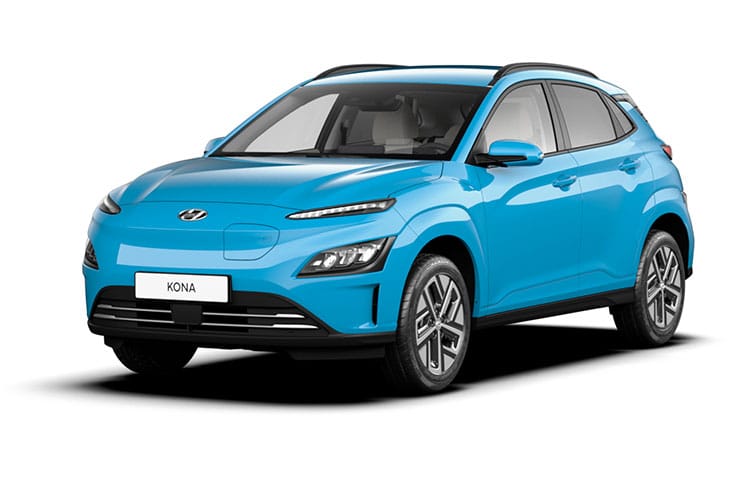
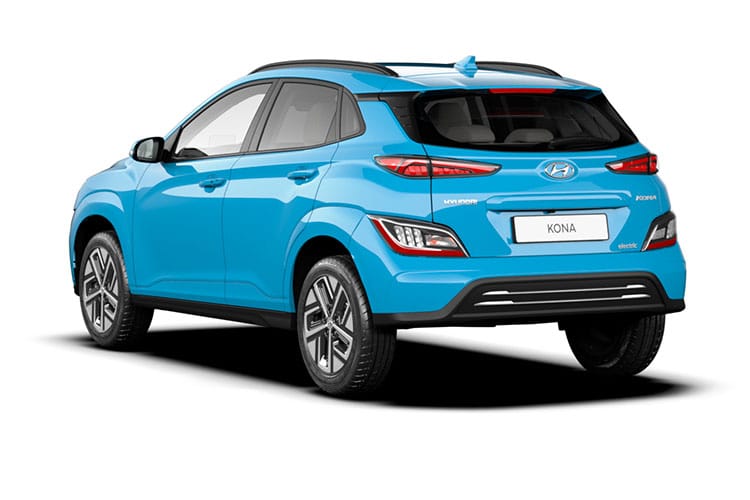
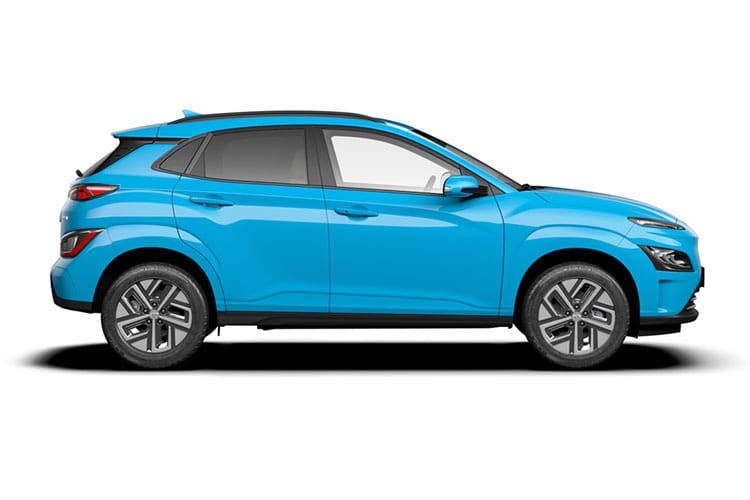
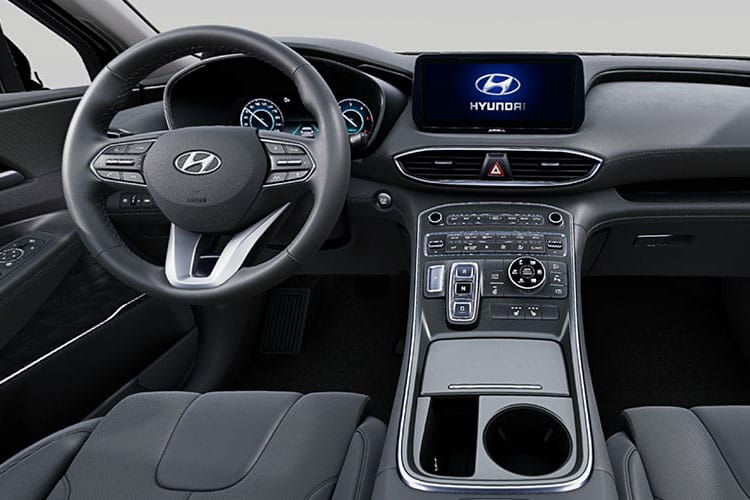
This improved MK1 Kona Electric emerged from this mid-term update looking a little smarter and more gym-toned than before, though, as so often with mid-term updates, you might initially be scratching your head a little to establish exactly why. Possibly it's because in this form it was a little more obviously an EV - the kind of thing the market these days seems to clearly want. Come in search of the changes made here over the 2018 original version of this model and most are to be found up-front. With this revised design, there's no pretence at a grille (previously there was a perforated front panel). Hyundai now wanted you to know without any question that this was an EV, hence the rather curious decision to try and make a frontward feature out of the charging port flap. More successful were the changes made to the upper LED daytime running lights and the sleeker headlamp pods, the beams embellished with multifaceted reflector technology. From the side, the look remained much as it was before, though if you were to get your tape measure out, you'd find this updated design to be 25mm longer than its predecessor: It's actually not that much different behind the wheel from the original model - but it feels as if it is because the screen technology took such a step with the adoption of big 10.25-inch displays across the range for the instrument cluster and the centre screen, which in this updated model came complete with a whole range of 'Bluelink' connectivity functions. The cabin differences over an ordinary combustion Kona are actually more pronounced than you might expect, the key change being the installation of a wider aircraft-style silver-trimmed centre console, which incorporates the 'shift-by-wire' push-button controls for the single-speed auto gearbox that all EV models have to have. As before, you're not sat particularly commandingly in what is supposed to be an SUV, but up-front you're favoured with a pair of unexpectedly cushy pews that should allow all shapes and sizes to get comfortable. And, unique to this Electric model is the extra storage space you get under the broad centre console. And in the rear? Well it's in this part of the car that you're likely to be most keenly reminded that you've bought an SUV based on a small car platform, rather than that of a family hatchback. As it turns out, it's not too bad in the back for the carriage of two folk, providing they're not especially lanky of leg. If they are, then compromises will be need to made by the front seat occupants in order to be able to accommodate them. Let's finish with a few words on boot space. The design team's efforts to build in the battery packs in a way that doesn't impinge on carriage capacity weren't entirely successful. That fell from the 374-litre total you get in a standard Kona to 332-litres here. Push forward the 60/40 split-folding rear seat and you'll reveal a relatively flat loading floor with as much as 1,114-litres of total fresh air if you load to the roof.
Please contact us for an exact up-to-date valuation.
Very little goes wrong here, though it's worth noting that Hyundai recommends that “Consumers should only charge their vehicles up to 90% of its battery capacity.” In terms of faults, we came across one owner who complained of a rubbing noise; and another who cited a grating noise. Otherwise, there's a clean bill of health. Of course though, there are issues to look out for. If the car won't charge, it could be a problem with your home electrics (or those at the public charge point you're using). Check the charge light to make sure that electricity really is going through the charge port. And make sure there really is charge in the socket you're using to power from - plug something else into it to see - say, your 'phone. If that charges OK, it could be that your charging cable is demanding too much power, so try another power source. Another problem could be that the circuit may have tripped due to a circuit overload. Or perhaps there could be a problem with the charge cable: this needs to be cared for properly. Repeatedly driving over it (as previous owners may conceivably have done) will damage it eventually. Make sure you do a charge-up before signing for the car you're looking at. When you do this, make sure that when you plug in to start the charge cycle you hear the charge port and the cable locking and engaging as they should; that's all part of the charger basically confirming with the car's onboard computer that everything's good to go before releasing power. But if the charging cable fails to lock as it should, then that won't happen. If there is a failure to lock, the issue could be actuator failure, caused by a blown fuse. Otherwise, the issues here to look for are pretty much as they are in other early EV models. We've come up across problems with owners saying that when they update the navigation system, the GPS set-up then refuses to work, so then requiring a reset of the electronic control unit while the car's battery is disconnected. Otherwise, it's just the usual things to look for: parking knocks and scrapes and any damage to the interior caused by kids. And of course insist on fully stamped-up service history.
(approx based on a 2021 Kona Electric - Ex Vat) Front brake pads sit in the £37 bracket. Front brake discs sit in the £70-£100 bracket. A pollen filter is around £10. A mirror glass is around £24. A wiper blade is in the £5-£12 bracket.
Hyundai didn't make any changes to the engineering or the powertrain of this improved Kona Electric, but since that original model was on sale for only two years, we're going to assume a lack of familiarity here. Which will certainly be the case if you never happen to have driven an electric car before. Should you be new to the EV genre, the first thing you're going to notice is the way this car hurls itself away from rest. Once you understand the drive dynamics here though, the rush of blood to the head that this Hyundai gets every time you press the loud pedal with any real vigour is only to be expected. There's a lot more pulling power than would be generated by an equivalent combustion engine - 395Nm of torque - and all of it's delivered to you right from the get-go, rather than building, as it would do with a fossil-fuelled powerplant. 62mph from rest takes 9.9s in the entry-level 39kWh version, which uses a 136PS electric motor and has a 189 mile driving range between charges. But most Kona Electric customers are going to want the alternative 64kWh variant, which uses a 204PS motor and manages a WLTP-rated range of 300 miles that continues to set the standard amongst affordable EVs. Conserving your available driving range requires careful management of the energy regenerative process that kicks in when you come off the throttle. Like some other EVs, this one provides you with paddleshifters behind the steering wheel that allow you to either intensify or reduce the regenerative braking feel. Alternatively, you can automise things using a 'Smart Regenerative Braking System' that constantly calculates the optimum level of braking regeneration, based on the positioning of vehicle ahead. There's also a selectable 'Virtual External Sound System' for creating artificial noise to warn those on the pavement of your approach in urban areas. On the open road, this car struggles a little with weight (it's 300kgs heavier than a conventional Kona), but the even distribution of the battery pack across the floor plan helps with handling and a more advanced independent rear suspension set-up has allowed the engineers to deliver a decent quality of ride. As usual with an EV, you get plenty of cabin screen options to allow you to plan your route around your remaining available charge. When it's depleted, you'll be able to recharge your Kona in just 47 minutes if you can find a 100kW DC CCS charging point. Most of the time though, you'll be charging this Hyundai overnight using a 7kW wallbox. In the 64kWh model. You can revive the cells from empty in this way in 9 hours and fifteen minutes (which would use around £9 of electricity at current rates). It would take just over six hours if you were to go for this 39kWh model.
Hyundai seems to specialise in game-changing design. The ix35 FCV was the world's first mass-market hydrogen-powered car. The IONIQ was the first model with three different electric powertrains in one body type. The i30N hot hatch changed the shape of the shopping rocket segment. And this MK1 Kona Electric revolutionised what we can expect from an affordable electric car. There's nothing particularly ground-breaking about the components of this mid-term update, but it's worth stretching to, if only for the slightly more inspiring cabin. In a Volkswagen ID.3, you'd still get a more futuristic interior. In a Nissan LEAF, you'd get more rear seat passenger space. But both those cars are completely trounced by the driving range this Kona Electric can offer in its higher output form. Which is something that only this car's Kia cousins from this era can match for the price. Which is also why if you're searching for an EV at this price point from the 2021-2023 period, this is one you can't afford to ignore.
Data provided by CAP-HPI database - Ref# 96744
By Jonathan Crouch
Hyundai's first generation Kona Electric played a significant role in the expansion of the EV market following its introduction in 2018, hence the importance of this updated version of the MK1 model in 2021. Cabin quality and connectivity took a big step forward. And with the top version, driving range was still class leading. Plenty to like as a used buy then.
5dr SUV (EV) [SE, Premium, Premium SE]
No manufacturer is more invested in the whole concept of clean automotive mobility than Hyundai. By the century's second decade, the brand had mild hybrid, full-hybrid and even hydrogen fuel cell options in its range. And of course, some full-electric battery-powered EV models too. Here's perhaps the most familiar of them, the Kona Electric, first launched in 2018, then significantly updated two years on to create the car we're going to look at here. When the automotive history books come to be written on the period in which EV motoring got underway, the Nissan Renault Alliance group might well get plaudits for introducing the first mass market models (the Nissan LEAF and the Renault ZOE). But it's arguably the Hyundai Motor Group who should get the credit for really popularising the segment with the launch of two models in 2018, the Kia e-Niro and the original version of this Kona Electric. Back then, it was pretty unusual for a car of this size to be available in a variant that gave you up to 300 miles between charges - come to think of it, it's still pretty unusual. But of course, following this car's market introduction, other brand piled into this segment, that for more affordable family hatch-sized EVs, some of them family hatches, some of them superminis and some, like this car, with a leaning toward the Crossover genre. In 2021, Nissan's LEAF was still a major player in this part of the market but by then, increasingly, so were German-engineered contenders like the Volkswagen ID.3 and the Skoda Enyaq iV. Mind you, the Kona Electric featured quite a bit of German engineering too and looked significantly more class-competitive following the wide-ranging package of updates that created the car we're going to look at here, embellished with smarter looks and a rejuvenated cabin full of digital connectivity. The MK1 updated Kona Electric sold in its this form between 2021 and Summer 2023, when it was replaced by a new second generation model.
This improved MK1 Kona Electric emerged from this mid-term update looking a little smarter and more gym-toned than before, though, as so often with mid-term updates, you might initially be scratching your head a little to establish exactly why. Possibly it's because in this form it was a little more obviously an EV - the kind of thing the market these days seems to clearly want. Come in search of the changes made here over the 2018 original version of this model and most are to be found up-front. With this revised design, there's no pretence at a grille (previously there was a perforated front panel). Hyundai now wanted you to know without any question that this was an EV, hence the rather curious decision to try and make a frontward feature out of the charging port flap. More successful were the changes made to the upper LED daytime running lights and the sleeker headlamp pods, the beams embellished with multifaceted reflector technology. From the side, the look remained much as it was before, though if you were to get your tape measure out, you'd find this updated design to be 25mm longer than its predecessor: It's actually not that much different behind the wheel from the original model - but it feels as if it is because the screen technology took such a step with the adoption of big 10.25-inch displays across the range for the instrument cluster and the centre screen, which in this updated model came complete with a whole range of 'Bluelink' connectivity functions. The cabin differences over an ordinary combustion Kona are actually more pronounced than you might expect, the key change being the installation of a wider aircraft-style silver-trimmed centre console, which incorporates the 'shift-by-wire' push-button controls for the single-speed auto gearbox that all EV models have to have. As before, you're not sat particularly commandingly in what is supposed to be an SUV, but up-front you're favoured with a pair of unexpectedly cushy pews that should allow all shapes and sizes to get comfortable. And, unique to this Electric model is the extra storage space you get under the broad centre console. And in the rear? Well it's in this part of the car that you're likely to be most keenly reminded that you've bought an SUV based on a small car platform, rather than that of a family hatchback. As it turns out, it's not too bad in the back for the carriage of two folk, providing they're not especially lanky of leg. If they are, then compromises will be need to made by the front seat occupants in order to be able to accommodate them. Let's finish with a few words on boot space. The design team's efforts to build in the battery packs in a way that doesn't impinge on carriage capacity weren't entirely successful. That fell from the 374-litre total you get in a standard Kona to 332-litres here. Push forward the 60/40 split-folding rear seat and you'll reveal a relatively flat loading floor with as much as 1,114-litres of total fresh air if you load to the roof.
Please contact us for an exact up-to-date valuation.
Very little goes wrong here, though it's worth noting that Hyundai recommends that “Consumers should only charge their vehicles up to 90% of its battery capacity.” In terms of faults, we came across one owner who complained of a rubbing noise; and another who cited a grating noise. Otherwise, there's a clean bill of health. Of course though, there are issues to look out for. If the car won't charge, it could be a problem with your home electrics (or those at the public charge point you're using). Check the charge light to make sure that electricity really is going through the charge port. And make sure there really is charge in the socket you're using to power from - plug something else into it to see - say, your 'phone. If that charges OK, it could be that your charging cable is demanding too much power, so try another power source. Another problem could be that the circuit may have tripped due to a circuit overload. Or perhaps there could be a problem with the charge cable: this needs to be cared for properly. Repeatedly driving over it (as previous owners may conceivably have done) will damage it eventually. Make sure you do a charge-up before signing for the car you're looking at. When you do this, make sure that when you plug in to start the charge cycle you hear the charge port and the cable locking and engaging as they should; that's all part of the charger basically confirming with the car's onboard computer that everything's good to go before releasing power. But if the charging cable fails to lock as it should, then that won't happen. If there is a failure to lock, the issue could be actuator failure, caused by a blown fuse. Otherwise, the issues here to look for are pretty much as they are in other early EV models. We've come up across problems with owners saying that when they update the navigation system, the GPS set-up then refuses to work, so then requiring a reset of the electronic control unit while the car's battery is disconnected. Otherwise, it's just the usual things to look for: parking knocks and scrapes and any damage to the interior caused by kids. And of course insist on fully stamped-up service history.
(approx based on a 2021 Kona Electric - Ex Vat) Front brake pads sit in the £37 bracket. Front brake discs sit in the £70-£100 bracket. A pollen filter is around £10. A mirror glass is around £24. A wiper blade is in the £5-£12 bracket.
Hyundai didn't make any changes to the engineering or the powertrain of this improved Kona Electric, but since that original model was on sale for only two years, we're going to assume a lack of familiarity here. Which will certainly be the case if you never happen to have driven an electric car before. Should you be new to the EV genre, the first thing you're going to notice is the way this car hurls itself away from rest. Once you understand the drive dynamics here though, the rush of blood to the head that this Hyundai gets every time you press the loud pedal with any real vigour is only to be expected. There's a lot more pulling power than would be generated by an equivalent combustion engine - 395Nm of torque - and all of it's delivered to you right from the get-go, rather than building, as it would do with a fossil-fuelled powerplant. 62mph from rest takes 9.9s in the entry-level 39kWh version, which uses a 136PS electric motor and has a 189 mile driving range between charges. But most Kona Electric customers are going to want the alternative 64kWh variant, which uses a 204PS motor and manages a WLTP-rated range of 300 miles that continues to set the standard amongst affordable EVs. Conserving your available driving range requires careful management of the energy regenerative process that kicks in when you come off the throttle. Like some other EVs, this one provides you with paddleshifters behind the steering wheel that allow you to either intensify or reduce the regenerative braking feel. Alternatively, you can automise things using a 'Smart Regenerative Braking System' that constantly calculates the optimum level of braking regeneration, based on the positioning of vehicle ahead. There's also a selectable 'Virtual External Sound System' for creating artificial noise to warn those on the pavement of your approach in urban areas. On the open road, this car struggles a little with weight (it's 300kgs heavier than a conventional Kona), but the even distribution of the battery pack across the floor plan helps with handling and a more advanced independent rear suspension set-up has allowed the engineers to deliver a decent quality of ride. As usual with an EV, you get plenty of cabin screen options to allow you to plan your route around your remaining available charge. When it's depleted, you'll be able to recharge your Kona in just 47 minutes if you can find a 100kW DC CCS charging point. Most of the time though, you'll be charging this Hyundai overnight using a 7kW wallbox. In the 64kWh model. You can revive the cells from empty in this way in 9 hours and fifteen minutes (which would use around £9 of electricity at current rates). It would take just over six hours if you were to go for this 39kWh model.
Hyundai seems to specialise in game-changing design. The ix35 FCV was the world's first mass-market hydrogen-powered car. The IONIQ was the first model with three different electric powertrains in one body type. The i30N hot hatch changed the shape of the shopping rocket segment. And this MK1 Kona Electric revolutionised what we can expect from an affordable electric car. There's nothing particularly ground-breaking about the components of this mid-term update, but it's worth stretching to, if only for the slightly more inspiring cabin. In a Volkswagen ID.3, you'd still get a more futuristic interior. In a Nissan LEAF, you'd get more rear seat passenger space. But both those cars are completely trounced by the driving range this Kona Electric can offer in its higher output form. Which is something that only this car's Kia cousins from this era can match for the price. Which is also why if you're searching for an EV at this price point from the 2021-2023 period, this is one you can't afford to ignore.
160kW Advance 63kWh 5dr Auto

POA
Business Lease Price per month (excl VAT) £333.90