
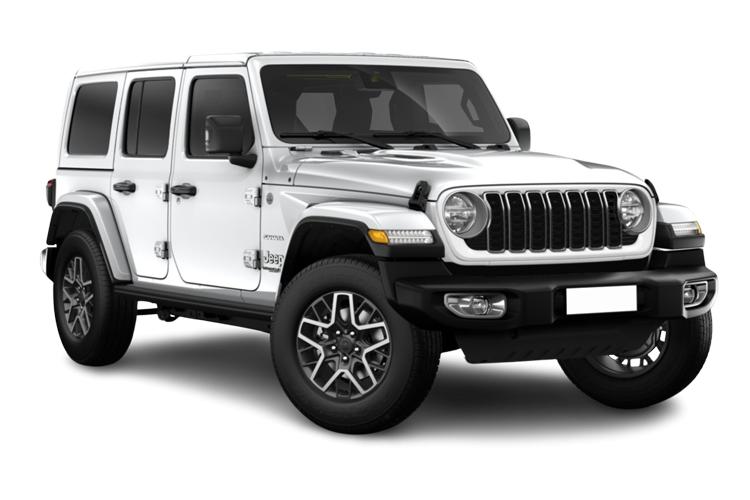
Images are for illustrative purposes only.

2.0 GME Overland 2dr Auto8
Need some assistance or advice? Call Us 01903 538835


By Jonathan Crouch
The Jeep Wrangler is an icon that has managed to remain loyal to its roots while adapting to the changing spirit of its age. If you think that it's strictly for Californian rock hoppers and D-list boy band members, then think again. The much improved 'JL'-series fourth generation model introduced in 2018 was the most credible Wrangler yet, justifying what Jeep sees as its position as the only true off-road company in the market. Here, we look at the 2018-2022 'JL'-series models as a used buy.
(2dr/4dr SUV - 2.0 petrol, 2.2 diesel 4x4)
Back in 1938, the US government's original brief for a 'light reconnaissance vehicle' resulted in the development of the Willys Jeep, and the subsequent production of 368,000 of them for use during World War 2. General George C Marshall described it as "America's greatest contribution to modern warfare". The spiritual successor to the Willys Jeep is the Jeep Wrangler. Much separates the two designs of course. What's ideal for a theatre of war doesn't necessarily work for a family trip to the cinema and over the years, through CJ, YJ and TJ Wrangler models, as different company owners have come and gone, Jeep designers have struggled with the need to develop this icon without losing its distinct appeal. Their biggest challenge came with the 'JK' version, launched in 2007 with the need to justify its existence in a modern SUV market that claims to have an answer to every need. Jeep's response was offer two Wrangler 'firsts': five doors and diesel power. But that 'JK'-series model still didn't really reach out beyond this car's hard core base of enthusiasts. This, its 'JL'-series successor, needed to continue to please these people - as it did, with better off road angles, more ground clearance and a tighter turning circle. But at the same time, this more modern Wrangler needed to offer slightly wider appeal. For that, brand owners Fiat Chrysler knew that a completely fresh generation of powertrains would be required. And areas like ride quality, refinement and day-to-day usability would need to be completely re-evaluated. As they were with this 'JL'-series car. It's a Wrangler - but perhaps not quite as you know it. The Wrangler sold in this form from 2018. Buy 2022 though, the diesel engine option had been dropped and a 4xe Plug-in petrol variant introduced. It's the 2018-2022-era 'JL'-series models we look at here.
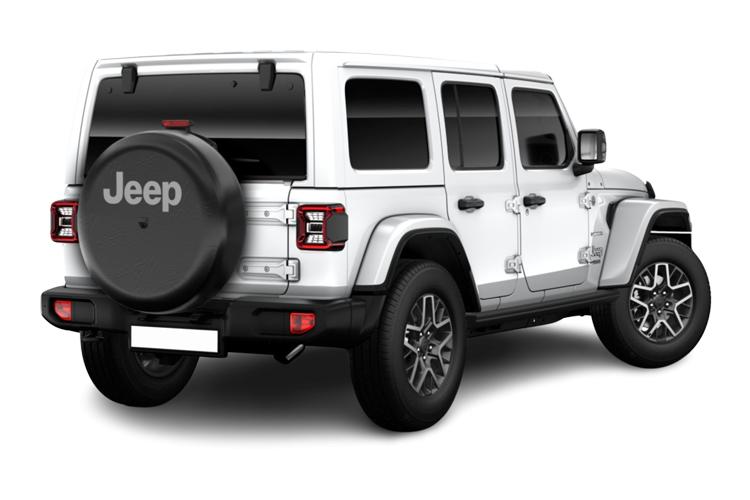
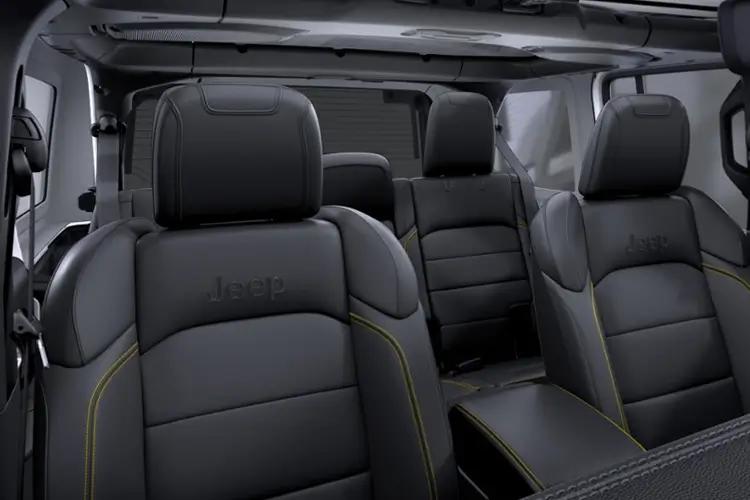
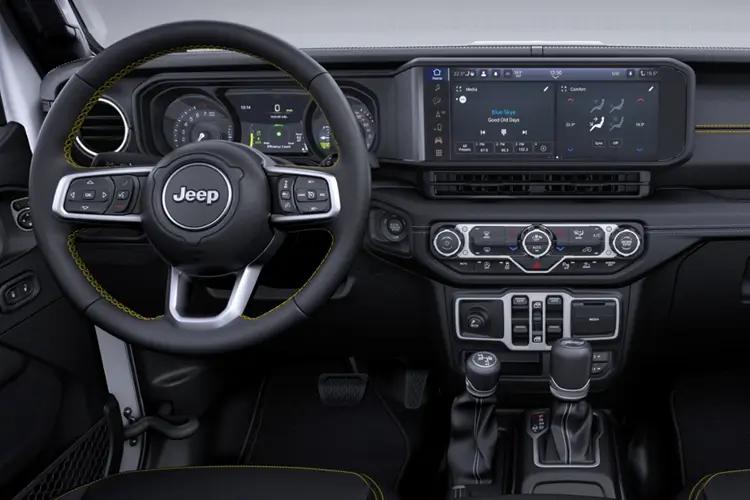
The Wrangler format is iconic: a simple boxy body dropped onto an old-style ladder-frame chassis with a folding screen, detachable doors and a removable roof. You don't mess with that. Or with the familiar frontage, which offers up the usual circular headlights and familiar seven-slot grille. Elsewhere around the car, all the usual Wrangler hallmarks are present and correct: the separate bumpers, the outboard spare wheel and extended wheel arches flared at angles similar to those of the original Willys Jeep. Look more closely though and you'll find that much changed with this 'JL'-series design, as the designers sought to subtly evolve the look for this fourth generation model. That front grille for instance features a canted upper section and its outer slats intersect with headlights that feature full-LED beams from Magnetti Marelli. Even the vertical windscreen is different - in this form, it's not quite so vertical and has a different 4-bolt design at the top of the frame that allows it to fold down far more easily, though you've still got to get your socket set out to do it. Up-front, you're faced with a dashboard structure as bluff as the north face of the Eiger, but it's much more appealing than the boring plasticky layout that characterised the interior of the previous 'JK'-series model. The coloured fascia frontage aimed to reference the metal-panelled dashboards used in much earlier Wranglers and the previous tightly sectioned centre stack gave way to a more open layout, though one absolutely festooned with knobs and buttons. Everything's of much better quality than anything that buyers of this model had previously seen. Plus there's a sophisticated 8.8-inch centre-dash 'Uconnect' infotainment screen and a further 7-inch TFT display between the conventional dials in the instrument binnacle. We should talk about the open air aspect; all 'JL' Wranglers come as standard with a three-piece Modular Hard Top with lift-off front panels. The rear section must be removed with a socket set. If you don't like the thought of that, you can get a car whose original owner specified a 'Sunrider Soft Top' that folds back either manually or electrically instead. With the roof fully down, the doors removed and the windscreen folded, the Wrangler driving experience really is like nothing else. In the rear, the 4-Door model's extra half metre of length might make possible a properly-sized rear seat, but it doesn't deliver doors that open with a very wide aperture. And once you're inside, it's not hugely comfortable either, though it's obviously a huge improvement on the cramped conditions you'd get in the alternative 2-Door model. We thought leg room might be an issue here, but actually we think you'd get more complaints about the rather upright backrests for occupants on a longer trip. Still, if your driver has removed the doors and you're travelling al fresco open to the elements, you won't care about any of that. Travelling in the back on an SUV isn't usually an experience to be in any way savoured but in a Wrangler, it can be. Let's finish with the boot. Once everything's opened up, there's a 533-litre boot which ought to be bigger but can't be because it's compromised by the tubular structural beams and the siting of a huge audio speaker on the right hand side. There's no ski hatch or 40:20:40 sear seat split for longer items, so if you need more room, you'll need to push forward the 60:40-split rear seats; annoyingly, you have to go round to the side of the car to release the backrests. That frees up 1,044-litres of space.
Please contact us for an exact up-to-date valuation.
Most Wrangler owners we surveyed seemed pretty happy with their cars, but inevitably, there were some buyers with issues. Mainly, it's just the usual things; check the alloys for kerbing and the underside for over-enthusiastic off road use. Always first check the body of the vehicle: the undercarriage will be the most visible indicator of how much life is left in the Wrangler you're looking at. It doesn't matter if there are few miles on the transmission or the vehicle has a newer engine if the undercarriage is in poor condition. Check the outer panels too: significant denting can be a sign of hard use. Inspecting the tyres for uneven wear patterns is important in spotting things like alignment problems or improper rotation. For example, if you see the front tyres are more worn than the back, the front tyres have been bearing too much of the engine weight and will need to be replaced earlier. Overall mileage is important, but you should also ask how the vehicle was driven. A Wrangler with low mileage might have been driven under severe off-road conditions, which could make another vehicle with high mileage and gentle use a better option. If everything looks good under the bonnet, you should still ask for a full record of maintenance and repairs the vehicle has received. A spotty maintenance history could set you up for early part failure. Always take a test drive. This is a chance to uncover symptoms or issues with the vehicle. Take your test drive in the morning so you can hear how the engine sounds on start-up. Listen for unexpected idling upon warm-up, stuttering during idling and loud ticking. During your drive, pay attention to how shifting feels and note any unstable handling, jerks or vibrations that could indicate a death wobble in the future.
[based on a Wrangler 2.0 petrol - 2019] As you might expect for a car of American origin, parts are not particularly cheap. However, there is a well-established dealer network so it should be reasonably easy to track spares down. To give you a guide based on the 2.0 petrol model, an oil filter would be around £8-£13. Front brake pads would be around £19 a set; rear pads around £50. Wiper blades sit in the £4-£12 bracket.
Previous Wranglers never had to be very good on road. As long as they didn't shake your fillings out on the way to your surf shack, all would be forgiven once you set a tyre on the rough stuff. But Marlboro men are in short supply these days and to keep this car in customers, Jeep had to appeal beyond those who might use their cars as weekend mountain playthings. Without diluting what makes a Wrangler a Wrangler. No small task. How successful you'll perceive the designers' efforts to have been depends whether you've experienced previous versions of this Jeep. If you haven't, then you're likely to find the wind noise, the rumbly demeanour and the vague steering all pretty crude. Those coming to this car from an older Wrangler though will find this 'JL'-series model a vast improvement. The revised steering's much better and the revised five-link suspension means that potholes no longer feel like craters. The main changes though with this MK4 design took place beneath the bonnet. Buyers choose between a 200hp 2.2-litre Multijet diesel or the 272hp 2.0-litre petrol turbo unit, both engines available only mated to a slicker-shifting 8-speed auto gearbox. The NEDC figures suggested at launch that an entry-level 4-Door petrol variant could deliver 31.4mpg on the combined cycle with a CO2 reading of 210g/km and such a Wrangler would be able to tug along up to 2.5-tonnes. As with all proper off roaders, there's a two-speed transfer case offering a series of dedicated 4x4 driving settings - '4H', '4H part-time' and the '4LO' crawler gear. With the slightly more road-orientated 'Sahara' and 'Overland' variants, all this works through a 'Command-Trac' 4WD system, but with the more serious top 'Rubicon' derivative, there's a heavy duty 'Rock-Trac' 4WD set-up, which uses a tougher low range crawler ratio. 'Rubicon' models also get detachable 'Sway bars' for extra suspension travel; heavy duty Dana front and rear axles that can be manually locked with the brand's 'Tru-Lok' electric front and rear axle lockers; and gnarlier BF Goodrich 32-inch tyres. All of this delivers an extreme level of off road capability. And once you've experienced it, you'll view this Jeep in a whole different light.
You've still got to be serious about hard core off-road driving to consider a Jeep Wrangler - but not quite as serious as you had to be before. This 'JL'-series model offered considerable improvements in refinement, quality and technology. Which allowed it to make a decent fist of providing versatile family transport for the user who doesn't mind making a few sacrifices at the altar of comfort, ride and handling. It's got a style all of its own, but its heart and soul remain on the Rubicon Trail rather than on the Kings Road. Thank goodness for that. If previous generation versions of this Jeep weren't for you, you probably still won't like this one. No problem: the market's stacked with compromised alternatives. But if you've always wanted an excuse to choose one of these, this 'JL'-series model's extra polish and new-found sophistication provides it. In this form, it proved to be a vastly more capable all-rounder. But it's still very much a Wrangler. And that's all that really matters.
Data provided by CAP-HPI database - Ref# 86918
By Jonathan Crouch
The Jeep Wrangler is an icon that has managed to remain loyal to its roots while adapting to the changing spirit of its age. If you think that it's strictly for Californian rock hoppers and D-list boy band members, then think again. The much improved 'JL'-series fourth generation model introduced in 2018 was the most credible Wrangler yet, justifying what Jeep sees as its position as the only true off-road company in the market. Here, we look at the 2018-2022 'JL'-series models as a used buy.
(2dr/4dr SUV - 2.0 petrol, 2.2 diesel 4x4)
Back in 1938, the US government's original brief for a 'light reconnaissance vehicle' resulted in the development of the Willys Jeep, and the subsequent production of 368,000 of them for use during World War 2. General George C Marshall described it as "America's greatest contribution to modern warfare". The spiritual successor to the Willys Jeep is the Jeep Wrangler. Much separates the two designs of course. What's ideal for a theatre of war doesn't necessarily work for a family trip to the cinema and over the years, through CJ, YJ and TJ Wrangler models, as different company owners have come and gone, Jeep designers have struggled with the need to develop this icon without losing its distinct appeal. Their biggest challenge came with the 'JK' version, launched in 2007 with the need to justify its existence in a modern SUV market that claims to have an answer to every need. Jeep's response was offer two Wrangler 'firsts': five doors and diesel power. But that 'JK'-series model still didn't really reach out beyond this car's hard core base of enthusiasts. This, its 'JL'-series successor, needed to continue to please these people - as it did, with better off road angles, more ground clearance and a tighter turning circle. But at the same time, this more modern Wrangler needed to offer slightly wider appeal. For that, brand owners Fiat Chrysler knew that a completely fresh generation of powertrains would be required. And areas like ride quality, refinement and day-to-day usability would need to be completely re-evaluated. As they were with this 'JL'-series car. It's a Wrangler - but perhaps not quite as you know it. The Wrangler sold in this form from 2018. Buy 2022 though, the diesel engine option had been dropped and a 4xe Plug-in petrol variant introduced. It's the 2018-2022-era 'JL'-series models we look at here.
The Wrangler format is iconic: a simple boxy body dropped onto an old-style ladder-frame chassis with a folding screen, detachable doors and a removable roof. You don't mess with that. Or with the familiar frontage, which offers up the usual circular headlights and familiar seven-slot grille. Elsewhere around the car, all the usual Wrangler hallmarks are present and correct: the separate bumpers, the outboard spare wheel and extended wheel arches flared at angles similar to those of the original Willys Jeep. Look more closely though and you'll find that much changed with this 'JL'-series design, as the designers sought to subtly evolve the look for this fourth generation model. That front grille for instance features a canted upper section and its outer slats intersect with headlights that feature full-LED beams from Magnetti Marelli. Even the vertical windscreen is different - in this form, it's not quite so vertical and has a different 4-bolt design at the top of the frame that allows it to fold down far more easily, though you've still got to get your socket set out to do it. Up-front, you're faced with a dashboard structure as bluff as the north face of the Eiger, but it's much more appealing than the boring plasticky layout that characterised the interior of the previous 'JK'-series model. The coloured fascia frontage aimed to reference the metal-panelled dashboards used in much earlier Wranglers and the previous tightly sectioned centre stack gave way to a more open layout, though one absolutely festooned with knobs and buttons. Everything's of much better quality than anything that buyers of this model had previously seen. Plus there's a sophisticated 8.8-inch centre-dash 'Uconnect' infotainment screen and a further 7-inch TFT display between the conventional dials in the instrument binnacle. We should talk about the open air aspect; all 'JL' Wranglers come as standard with a three-piece Modular Hard Top with lift-off front panels. The rear section must be removed with a socket set. If you don't like the thought of that, you can get a car whose original owner specified a 'Sunrider Soft Top' that folds back either manually or electrically instead. With the roof fully down, the doors removed and the windscreen folded, the Wrangler driving experience really is like nothing else. In the rear, the 4-Door model's extra half metre of length might make possible a properly-sized rear seat, but it doesn't deliver doors that open with a very wide aperture. And once you're inside, it's not hugely comfortable either, though it's obviously a huge improvement on the cramped conditions you'd get in the alternative 2-Door model. We thought leg room might be an issue here, but actually we think you'd get more complaints about the rather upright backrests for occupants on a longer trip. Still, if your driver has removed the doors and you're travelling al fresco open to the elements, you won't care about any of that. Travelling in the back on an SUV isn't usually an experience to be in any way savoured but in a Wrangler, it can be. Let's finish with the boot. Once everything's opened up, there's a 533-litre boot which ought to be bigger but can't be because it's compromised by the tubular structural beams and the siting of a huge audio speaker on the right hand side. There's no ski hatch or 40:20:40 sear seat split for longer items, so if you need more room, you'll need to push forward the 60:40-split rear seats; annoyingly, you have to go round to the side of the car to release the backrests. That frees up 1,044-litres of space.
Please contact us for an exact up-to-date valuation.
Most Wrangler owners we surveyed seemed pretty happy with their cars, but inevitably, there were some buyers with issues. Mainly, it's just the usual things; check the alloys for kerbing and the underside for over-enthusiastic off road use. Always first check the body of the vehicle: the undercarriage will be the most visible indicator of how much life is left in the Wrangler you're looking at. It doesn't matter if there are few miles on the transmission or the vehicle has a newer engine if the undercarriage is in poor condition. Check the outer panels too: significant denting can be a sign of hard use. Inspecting the tyres for uneven wear patterns is important in spotting things like alignment problems or improper rotation. For example, if you see the front tyres are more worn than the back, the front tyres have been bearing too much of the engine weight and will need to be replaced earlier. Overall mileage is important, but you should also ask how the vehicle was driven. A Wrangler with low mileage might have been driven under severe off-road conditions, which could make another vehicle with high mileage and gentle use a better option. If everything looks good under the bonnet, you should still ask for a full record of maintenance and repairs the vehicle has received. A spotty maintenance history could set you up for early part failure. Always take a test drive. This is a chance to uncover symptoms or issues with the vehicle. Take your test drive in the morning so you can hear how the engine sounds on start-up. Listen for unexpected idling upon warm-up, stuttering during idling and loud ticking. During your drive, pay attention to how shifting feels and note any unstable handling, jerks or vibrations that could indicate a death wobble in the future.
[based on a Wrangler 2.0 petrol - 2019] As you might expect for a car of American origin, parts are not particularly cheap. However, there is a well-established dealer network so it should be reasonably easy to track spares down. To give you a guide based on the 2.0 petrol model, an oil filter would be around £8-£13. Front brake pads would be around £19 a set; rear pads around £50. Wiper blades sit in the £4-£12 bracket.
Previous Wranglers never had to be very good on road. As long as they didn't shake your fillings out on the way to your surf shack, all would be forgiven once you set a tyre on the rough stuff. But Marlboro men are in short supply these days and to keep this car in customers, Jeep had to appeal beyond those who might use their cars as weekend mountain playthings. Without diluting what makes a Wrangler a Wrangler. No small task. How successful you'll perceive the designers' efforts to have been depends whether you've experienced previous versions of this Jeep. If you haven't, then you're likely to find the wind noise, the rumbly demeanour and the vague steering all pretty crude. Those coming to this car from an older Wrangler though will find this 'JL'-series model a vast improvement. The revised steering's much better and the revised five-link suspension means that potholes no longer feel like craters. The main changes though with this MK4 design took place beneath the bonnet. Buyers choose between a 200hp 2.2-litre Multijet diesel or the 272hp 2.0-litre petrol turbo unit, both engines available only mated to a slicker-shifting 8-speed auto gearbox. The NEDC figures suggested at launch that an entry-level 4-Door petrol variant could deliver 31.4mpg on the combined cycle with a CO2 reading of 210g/km and such a Wrangler would be able to tug along up to 2.5-tonnes. As with all proper off roaders, there's a two-speed transfer case offering a series of dedicated 4x4 driving settings - '4H', '4H part-time' and the '4LO' crawler gear. With the slightly more road-orientated 'Sahara' and 'Overland' variants, all this works through a 'Command-Trac' 4WD system, but with the more serious top 'Rubicon' derivative, there's a heavy duty 'Rock-Trac' 4WD set-up, which uses a tougher low range crawler ratio. 'Rubicon' models also get detachable 'Sway bars' for extra suspension travel; heavy duty Dana front and rear axles that can be manually locked with the brand's 'Tru-Lok' electric front and rear axle lockers; and gnarlier BF Goodrich 32-inch tyres. All of this delivers an extreme level of off road capability. And once you've experienced it, you'll view this Jeep in a whole different light.
You've still got to be serious about hard core off-road driving to consider a Jeep Wrangler - but not quite as serious as you had to be before. This 'JL'-series model offered considerable improvements in refinement, quality and technology. Which allowed it to make a decent fist of providing versatile family transport for the user who doesn't mind making a few sacrifices at the altar of comfort, ride and handling. It's got a style all of its own, but its heart and soul remain on the Rubicon Trail rather than on the Kings Road. Thank goodness for that. If previous generation versions of this Jeep weren't for you, you probably still won't like this one. No problem: the market's stacked with compromised alternatives. But if you've always wanted an excuse to choose one of these, this 'JL'-series model's extra polish and new-found sophistication provides it. In this form, it proved to be a vastly more capable all-rounder. But it's still very much a Wrangler. And that's all that really matters.
