
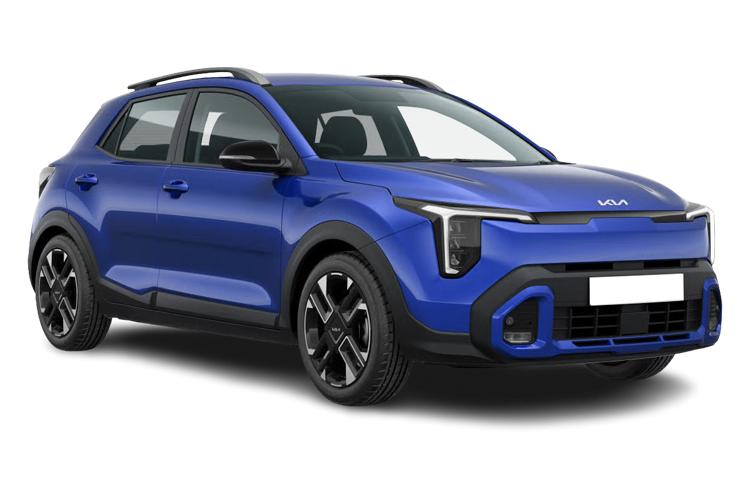
Images are for illustrative purposes only.
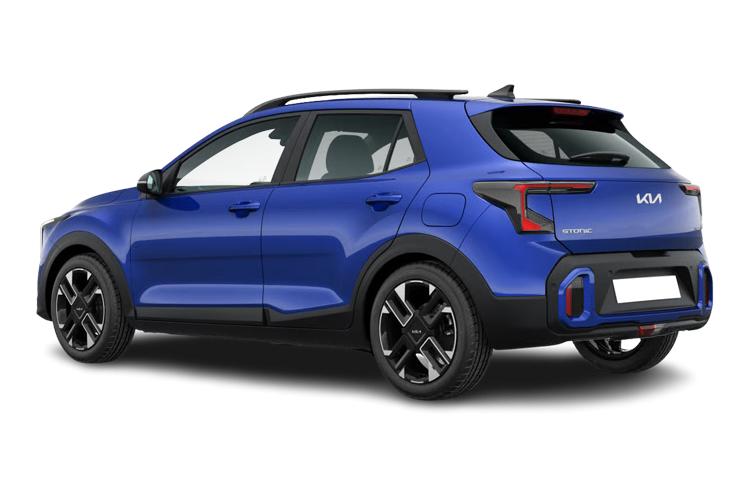
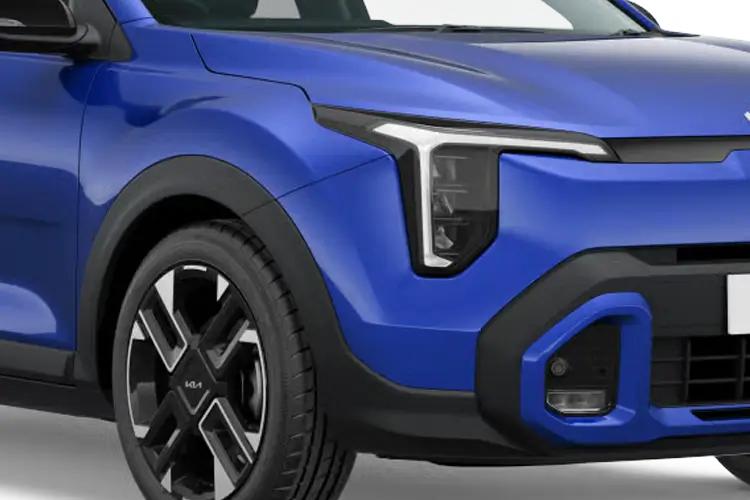
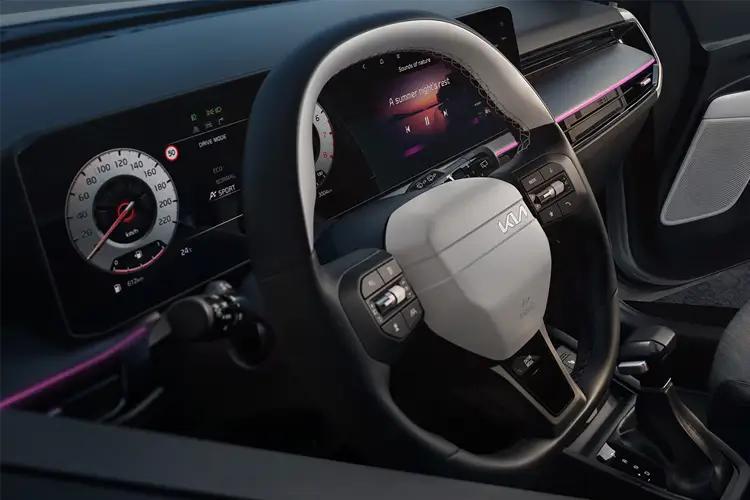

1.0T GDi 3 5dr Auto
Need some assistance or advice? Call Us 01903 538835


By Jonathan Crouch
Launched in 2017, Kia's Stonic offered buyers of small SUVs yet another tempting choice. The looks can be eye-catching and it's good to drive in comparison to most obvious rivals. In addition, this car is reasonably spacious and pretty affordable to run, especially in diesel form or when fitted out with the brand's impressive 1.0-litre T-GDI petrol engine. Plus prices are pitched keenly. It is, in short, a very competitive proposition indeed. Here, we look at the earlier 2017-2025-era versions of this model.
5dr SUV (1.4 MPi, 1.0 T GDi, 48V 1.0 T GDI / 1.6 CRDi [2,3,4])
By 2017, Kia had become a very significant player on the market for compact crossover SUVs. But the company had back then never really had a product of this sort to directly target the smallest section of this segment. That was the brief assigned to this Stonic model and, on paper at least, it seemed to be almost everything you might want a car of this kind to be. The name's interesting isn't it? (apparently a combination of the words 'speedy' and 'tonic'). As is the back history here. It's tempting to think of Kia as a late-comer to this sector - this contender wasn't launched until the Autumn of 2017. Actually though, the company could claim to be one of the originators of this class, first at the turn of the century with earlier smaller versions of its Sportage SUV and again in 2009 with the funky little Soul model. By 2017 though, the Sportage had been moved up a size to compete with larger Qashqai-class family hatchback segment SUVs, which should have freed up the Soul to directly target profitable little B-segment SUVs like Nissan's Juke and Renault's Captur. It didn't work out like that. The Soul proved to be too much of a niche product to meet that need, prior to 2017 leaving Kia without a really effective presence in a market segment due to double in size by 2020. That was a problem for the brand, hence the speed at which this particular model was designed and brought to market. It shared almost everything with the maker's Rio supermini and rolled down the same Sohari production line in South Korea. A little surprisingly, it didn't share those same underpinnings with sister company Hyundai's Kona model - their entry in this exploding sector - though the two manufacturers did use the same engineware, most notably in this case the 1.0-litre T-GDi petrol unit that Kia rightly expected the majority of Stonic buyers to choose. The other two engines initially offered (but rarely chosen) were a feeble 1.4-litre MPi petrol unit and a 1.6-litre CRDi diesel, both units discontinued in 2020. In 2022, a 48V 1.0-litre T-GDi mild hybrid unit was introduced. Then in 2023, the range was solely centred around a 1.0-litre T GDi 98 unit. The Stonic sold in this form until early 2026, when it got a mild facelift. Here, we look at the earlier 2017-2025-era versions of this model.
Back in 2017, the Stonic was one of the most strikingly Kia models we'd seen, though the shape incorporates several of the brand's key recognisable signature design elements. Styled in Europe in collaboration with Kia's Korean design studio, the body aims to blend sharp horizontal feature lines with softer sculpted surfaces. Inside, this Stonic doesn't really seat you much higher than you would be in the ordinary Rio supermini model it's based on. You'll also miss out on the kind of jaunty cabin finishing you might expect from a car of this kind if you don't stretch to a high-grade trim level that brings inside the contrasting roof and mirror colour chosen for the exterior. And in the rear? Well it's best not to get your hopes up too high here given that the wheelbase of this Stonic - or in other words, the space on offer between front and rear wheels - is no different from the length available in the little Rio supermini. On the plus side, the body shell's slightly wider than it is in a Rio, though not by enough to make the prospect of sharing the back seat with two other adults a particularly comfortable one, despite the low centre transmission tunnel Still, that's the case with all other models in this class and what's on offer back here is a big improvement on the cramped quarters provided by a rival Nissan Juke. Let's finish with a few words on boot space, which thanks to this Stonic model's longer rear overhangs, rose by 27-litres over what you'd get in a Kia Rio. The tailgate is light to lift and reveals a 352-litre luggage area that's class-competitive but unremarkable by current SUV B-segment standards. Push forward the 60/40 split-folding rear seat and you'll reveal a relatively flat loading floor with as much as 1,155-litres of total fresh air if you load to the roof.
Stonic pricing starts from around £7,325 (around £9,725 retail), which gets you an early base '2'-spec 1.0 T GDi model on a '17-plate; don't bother with the rare 1.4 MPi version - it'll only save you around £100 over the turbo unit and is much feebler. For a later 48V mild hybrid 1.0 T GDi model, prices start from around £12,850 (around £15,250 retail), which gets you a mid-level '3'-spec model on a '22-plate. The rare 1.6 CRDi diesel values from around £7,025 (around £9,425 retail) on a '17-plate with base '2' trim. All quoted values are sourced through industry experts cap hpi. <a href="https://hpivaluations.com/">Click here for a free valuation.</a>
We had quite a lot of trouble finding anyone with a bad word to say about this Stonic. You might need to be careful though if you're looking at a 1.0T GDi with the 7-speed DCT auto gearbox, which has been known to be rather jerky. We've heard of issues with battery drain (insufficiently charged starter batteries). And noisy start/stop systems. Some owners report (sometimes spurious) engine warning lights. Otherwise, it's just the usual stuff. Give the electrical systems a thorough test and make sure the central screen has had all its necessary map updates. Check the alloys for scuffs. The interior for child damage. And insist on a fully stamped-up service history. If you're looking at the CRDi diesel, make sure the DPF Diesel Particular Filter hasn't clogged up with too much suburban and town driving. Careful questioning of the seller's driving habits should help here.
(approx based on a 2020 Stonic 1.0 T-GDi ex VAT) An air filter will be priced in the £7-£13 bracket, an oil filter will sit in the £4-£7 bracket and a pollen filter costs in the £7-£21 bracket. For a front brake disc, you're looking at paying in the £30 to £55 bracket. A pair of front brake pads are around £22-£52. An alternator can cost anything between £207-£405. A radiator is in the £55-£101 bracket.
This Stonic is 70mm taller than the Rio supermini model it was based upon and to compensate, has lengthened springs and dampers. At the wheel, you don't get a particularly commanding driving position but what is on offer, rather surprisingly, is a slightly sharper driving experience than was available in the Rio. That's down to a standard torque vectoring system that gives you extra traction at speed through tight corners. Plus there's a stiff body shell and fairly firm suspension that acquaints you with small bumps and tarmac tears a little more keenly than is the case with some rivals. It's nothing you couldn't live with though and suspension smoothness improves the faster you go. Thanks to this and very reasonable levels of refinement, the Stonic is a surprisingly able partner for longer trips. Engine-wise, from launch there was a three-way choice. Most buyers, quite rightly, will ignore the entry-level 98bhp four cylinder 1.4-litre MPi normally aspirated petrol unit and opt instead for the 1.0-litre T-GDI turbo petrol powerplant most Stonics were sold with - that available with either manual or auto transmission. This three cylinder unit develops 118bhp and can be impressively clean and frugal, managing 56.5mpg on the combined cycle and 115g/km of CO2, the kind of figures that before 2017, you'd have needed a diesel to achieve in this segment. If you do want a diesel, Kia initially offered a 108bhp 1.6-litre CRDi powerplant. Predictably, there's no 4WD system or traction-enhancing set-up on offer, but a 42mm ride height increase that this model enjoys over its Rio supermini donor design suggests that reasonable progress could be made in slippery car parks or on light field tracks if you were to equip this car with a decent set of Winter tyres.
Here's yet another Kia that should change the way you think about this ambitious Korean brand. Not only is it well built and decent value but it also manages to be cute and characterful in a way that potential buyers will like. Are there issues? A few. Some will wonder why this car's rather conventional driving position isn't further removed from that of the Rio supermini it's based upon. And the base-level old-tech MPi petrol engine offered from launch looks rather redundant. Otherwise, most of the criticisms you could make apply to just about every other model in this fashionable segment. Adding weight and height to any car won't help its efficiency or drive dynamics, though this one deals with that compromise better than most. Which is just as well, because it faces an army of accomplished rivals also targeted at buyers in the small SUV segment from this era. True to its name, this car sets out to offer a 'speedy tonic' to Juke and Captur-class models of that sort - a more complete little Crossover than you might have expected this kind of money would buy you.
Data provided by CAP-HPI database - Ref# 86259
By Jonathan Crouch
Launched in 2017, Kia's Stonic offered buyers of small SUVs yet another tempting choice. The looks can be eye-catching and it's good to drive in comparison to most obvious rivals. In addition, this car is reasonably spacious and pretty affordable to run, especially in diesel form or when fitted out with the brand's impressive 1.0-litre T-GDI petrol engine. Plus prices are pitched keenly. It is, in short, a very competitive proposition indeed. Here, we look at the earlier 2017-2025-era versions of this model.
5dr SUV (1.4 MPi, 1.0 T GDi, 48V 1.0 T GDI / 1.6 CRDi [2,3,4])
By 2017, Kia had become a very significant player on the market for compact crossover SUVs. But the company had back then never really had a product of this sort to directly target the smallest section of this segment. That was the brief assigned to this Stonic model and, on paper at least, it seemed to be almost everything you might want a car of this kind to be. The name's interesting isn't it? (apparently a combination of the words 'speedy' and 'tonic'). As is the back history here. It's tempting to think of Kia as a late-comer to this sector - this contender wasn't launched until the Autumn of 2017. Actually though, the company could claim to be one of the originators of this class, first at the turn of the century with earlier smaller versions of its Sportage SUV and again in 2009 with the funky little Soul model. By 2017 though, the Sportage had been moved up a size to compete with larger Qashqai-class family hatchback segment SUVs, which should have freed up the Soul to directly target profitable little B-segment SUVs like Nissan's Juke and Renault's Captur. It didn't work out like that. The Soul proved to be too much of a niche product to meet that need, prior to 2017 leaving Kia without a really effective presence in a market segment due to double in size by 2020. That was a problem for the brand, hence the speed at which this particular model was designed and brought to market. It shared almost everything with the maker's Rio supermini and rolled down the same Sohari production line in South Korea. A little surprisingly, it didn't share those same underpinnings with sister company Hyundai's Kona model - their entry in this exploding sector - though the two manufacturers did use the same engineware, most notably in this case the 1.0-litre T-GDi petrol unit that Kia rightly expected the majority of Stonic buyers to choose. The other two engines initially offered (but rarely chosen) were a feeble 1.4-litre MPi petrol unit and a 1.6-litre CRDi diesel, both units discontinued in 2020. In 2022, a 48V 1.0-litre T-GDi mild hybrid unit was introduced. Then in 2023, the range was solely centred around a 1.0-litre T GDi 98 unit. The Stonic sold in this form until early 2026, when it got a mild facelift. Here, we look at the earlier 2017-2025-era versions of this model.
Back in 2017, the Stonic was one of the most strikingly Kia models we'd seen, though the shape incorporates several of the brand's key recognisable signature design elements. Styled in Europe in collaboration with Kia's Korean design studio, the body aims to blend sharp horizontal feature lines with softer sculpted surfaces. Inside, this Stonic doesn't really seat you much higher than you would be in the ordinary Rio supermini model it's based on. You'll also miss out on the kind of jaunty cabin finishing you might expect from a car of this kind if you don't stretch to a high-grade trim level that brings inside the contrasting roof and mirror colour chosen for the exterior. And in the rear? Well it's best not to get your hopes up too high here given that the wheelbase of this Stonic - or in other words, the space on offer between front and rear wheels - is no different from the length available in the little Rio supermini. On the plus side, the body shell's slightly wider than it is in a Rio, though not by enough to make the prospect of sharing the back seat with two other adults a particularly comfortable one, despite the low centre transmission tunnel Still, that's the case with all other models in this class and what's on offer back here is a big improvement on the cramped quarters provided by a rival Nissan Juke. Let's finish with a few words on boot space, which thanks to this Stonic model's longer rear overhangs, rose by 27-litres over what you'd get in a Kia Rio. The tailgate is light to lift and reveals a 352-litre luggage area that's class-competitive but unremarkable by current SUV B-segment standards. Push forward the 60/40 split-folding rear seat and you'll reveal a relatively flat loading floor with as much as 1,155-litres of total fresh air if you load to the roof.
Stonic pricing starts from around £7,325 (around £9,725 retail), which gets you an early base '2'-spec 1.0 T GDi model on a '17-plate; don't bother with the rare 1.4 MPi version - it'll only save you around £100 over the turbo unit and is much feebler. For a later 48V mild hybrid 1.0 T GDi model, prices start from around £12,850 (around £15,250 retail), which gets you a mid-level '3'-spec model on a '22-plate. The rare 1.6 CRDi diesel values from around £7,025 (around £9,425 retail) on a '17-plate with base '2' trim. All quoted values are sourced through industry experts cap hpi. <a href="https://hpivaluations.com/">Click here for a free valuation.</a>
We had quite a lot of trouble finding anyone with a bad word to say about this Stonic. You might need to be careful though if you're looking at a 1.0T GDi with the 7-speed DCT auto gearbox, which has been known to be rather jerky. We've heard of issues with battery drain (insufficiently charged starter batteries). And noisy start/stop systems. Some owners report (sometimes spurious) engine warning lights. Otherwise, it's just the usual stuff. Give the electrical systems a thorough test and make sure the central screen has had all its necessary map updates. Check the alloys for scuffs. The interior for child damage. And insist on a fully stamped-up service history. If you're looking at the CRDi diesel, make sure the DPF Diesel Particular Filter hasn't clogged up with too much suburban and town driving. Careful questioning of the seller's driving habits should help here.
(approx based on a 2020 Stonic 1.0 T-GDi ex VAT) An air filter will be priced in the £7-£13 bracket, an oil filter will sit in the £4-£7 bracket and a pollen filter costs in the £7-£21 bracket. For a front brake disc, you're looking at paying in the £30 to £55 bracket. A pair of front brake pads are around £22-£52. An alternator can cost anything between £207-£405. A radiator is in the £55-£101 bracket.
This Stonic is 70mm taller than the Rio supermini model it was based upon and to compensate, has lengthened springs and dampers. At the wheel, you don't get a particularly commanding driving position but what is on offer, rather surprisingly, is a slightly sharper driving experience than was available in the Rio. That's down to a standard torque vectoring system that gives you extra traction at speed through tight corners. Plus there's a stiff body shell and fairly firm suspension that acquaints you with small bumps and tarmac tears a little more keenly than is the case with some rivals. It's nothing you couldn't live with though and suspension smoothness improves the faster you go. Thanks to this and very reasonable levels of refinement, the Stonic is a surprisingly able partner for longer trips. Engine-wise, from launch there was a three-way choice. Most buyers, quite rightly, will ignore the entry-level 98bhp four cylinder 1.4-litre MPi normally aspirated petrol unit and opt instead for the 1.0-litre T-GDI turbo petrol powerplant most Stonics were sold with - that available with either manual or auto transmission. This three cylinder unit develops 118bhp and can be impressively clean and frugal, managing 56.5mpg on the combined cycle and 115g/km of CO2, the kind of figures that before 2017, you'd have needed a diesel to achieve in this segment. If you do want a diesel, Kia initially offered a 108bhp 1.6-litre CRDi powerplant. Predictably, there's no 4WD system or traction-enhancing set-up on offer, but a 42mm ride height increase that this model enjoys over its Rio supermini donor design suggests that reasonable progress could be made in slippery car parks or on light field tracks if you were to equip this car with a decent set of Winter tyres.
Here's yet another Kia that should change the way you think about this ambitious Korean brand. Not only is it well built and decent value but it also manages to be cute and characterful in a way that potential buyers will like. Are there issues? A few. Some will wonder why this car's rather conventional driving position isn't further removed from that of the Rio supermini it's based upon. And the base-level old-tech MPi petrol engine offered from launch looks rather redundant. Otherwise, most of the criticisms you could make apply to just about every other model in this fashionable segment. Adding weight and height to any car won't help its efficiency or drive dynamics, though this one deals with that compromise better than most. Which is just as well, because it faces an army of accomplished rivals also targeted at buyers in the small SUV segment from this era. True to its name, this car sets out to offer a 'speedy tonic' to Juke and Captur-class models of that sort - a more complete little Crossover than you might have expected this kind of money would buy you.
