Images are for illustrative purposes only.
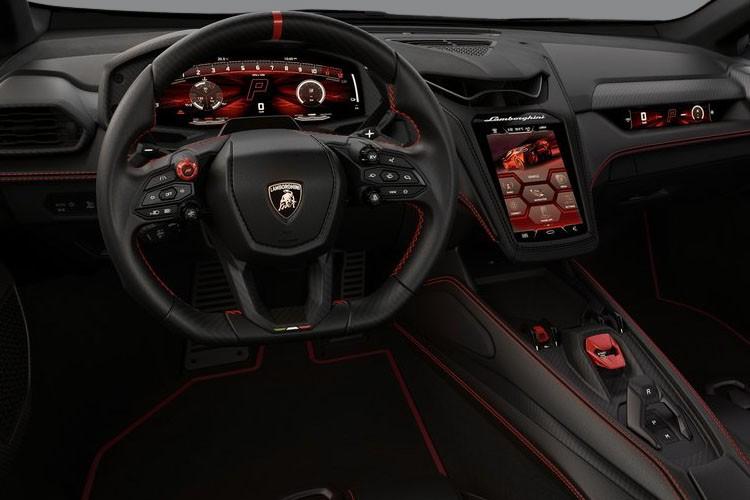

4.0T V8 PHEV 2dr Auto
Need some assistance or advice? Call Us 01903 538835


Lamborghini's Temerario proves that the Sant' Agata maker's future is in safe hands. Jonathan Crouch takes a look.
Going forward, the Temerario will be Lamborghini's core sports car - and represents a change of direction for this famous brand. The switch to V8 power and PHEV drive will be new for the fortunate few who will own one of these. But the explosive drive experience might be familiar.
It's hard to imagine a Lamborghini sports car without cylinder count measured in double digits. The brand's fastest offering, the Revuelto, still offers a throbbing V12, even with a PHEV system in tow. And the Italian maker's core sports car of modern times, the Huracan, was always based around a legendary normally aspirated V10. It's replacement though, this Temerario, gets a twin turbo 4.0-litre V8 - and it's a PHEV, or (in Lamborghini terminology) a 'High Performance Electrified Vehicle'. A fresh era truly has arrived for the Sant' Agata marque. It's interesting that this car rolls out of the same Neckarsulm Audi factory that used to produce Ingolstadt's old R8 super sportscar. Had we had a replacement third generation R8, this Temerario might have been it. But this is an R8 let off the leash. And a Lamborghini to savour.
We'd understand if, like us, you consider that the idea of a Lamborghini sports car with a V8 engine feels somehow, well, wrong. But this 4.0-litre V8 isn't like the Audi unit the brand borrows for its Urus SUV. No: this is a proper Sant' Agata engine. A throbbing flat-plane-crank powertrain with titanium conrods, motorsport-derived valve gear and the biggest turbochargers it was possible to fit. As a result, it has an awful lot more power than any Huracan ever had - 920hp, 800hp from the V8 and the rest from the incorporated Plug-in Hybrid system's three motors. One of these motors is crammed between the engine and the rear-mounted eight-speed dual clutch transmission; the other two sit up front where they independently drive (and sometimes strategically slow) each front wheel. The combination delivers AWD traction - and quite astonishing performance, even by supercar standards. 62mph flashes by in just 2.7s en route to 213mph flat out. And the engine makes up for the two cylinders it's lost over the Huracan's old normally aspirated V10 by revving much higher - to a heady 10,000rpm. It doesn't actually need to; most of the meaningful thrust has been delivered by 7,000rpm: the rest is mainly about sound and fury - which is exactly the way it should be in a Lamborghini. Lots of power means the need for lots of cooling - 50% more than the Huracan required. But the airflow necessary for this is managed so effectively that Temerario has 103% more downforce than its predecessor. It carries around 300kg more weight, but that bulk (much of it from the 3.8kWh hybrid battery sandwiched between the seats) has been used strategically, lowering the centre of gravity. All of this, combined with the latest asymmetrical electric torque vectoring technology, means cornering grip is astonishing. But if you don't want it, a drift mode lets you pick one of three rear-out angle settings via a control knob. More normal modes are dealt with by steering wheel rotary controllers. The one on the left switches drive modes ('Strada', 'Sport' and 'Corsa'). The one on the right deals with powertrain ('Recharge', 'Hybrid', 'Performance' and 'EV'); yes, EV. Battery range is about 5 miles.
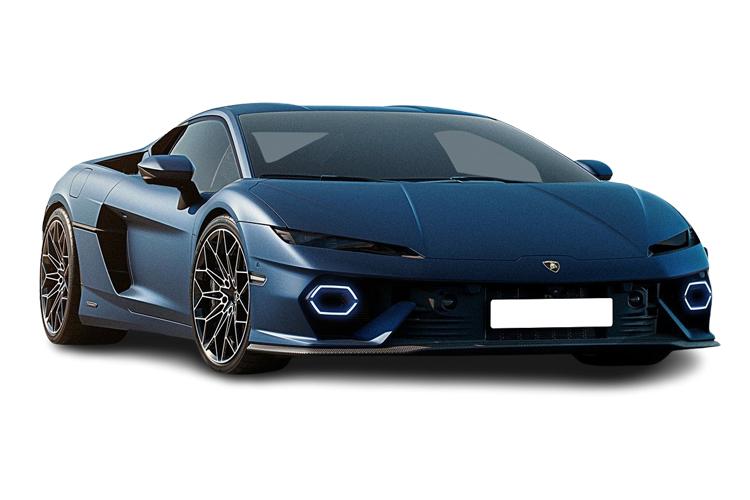
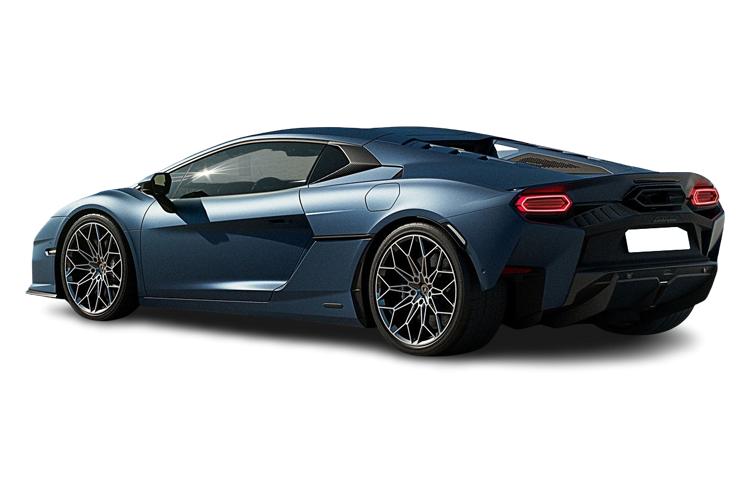
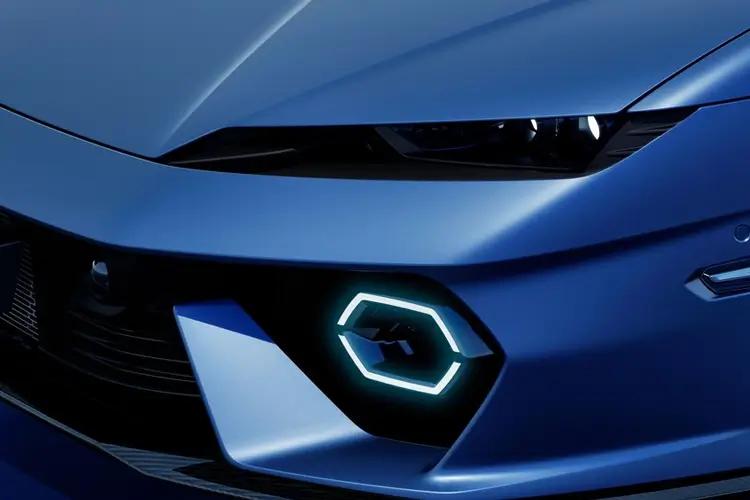
Like its Huracan predecessor, the Temerario sits on an aluminium space frame construction. But it's over 20% more torsionally rigid and, at 4,706mm long, the car itself is significantly bigger (186mm longer than the Huracan). The wheels are 20-inches at the front and 21-inches at the rear. You'll have your own opinions about the looks; they're certainly dramatic, particularly the open rear bodywork that exposes the enormous 325/30 ZR21 rear tyres - a look supposed to reference the early Countach. At the front, a gap between the hexagonal daytime running lights houses a venturi into the radiator behind. A gap below the headlights channels air in multiple directions - into the engine bay, over the roof and to energise the integrated rear wing. The stuff you can't see is equally intricate. Beneath the floor are multiple vortex generators that work the air before a huge diffuser expels it rearwards, sucking the Temerario into the ground. A 38mm increase in wheelbase length justifies Lamborghini's claim that this car's cabin is more spacious than its predecessor. There's supposed to be about an inch and a half more leg room and head room than the Huracan could offer but it still feels pretty tight and taller folk will have to choose their seat configurations carefully, allowing for the kind of helmeted track use that you ought to be occasionally engaging in with this car. Quality is a big step forward from the previous model and there's lashings of carbon fibre to justify the price hike. There's more screen tech of course - a busy 12.3-inch instrument cluster viewed through the many-buttoned three-spoke flat-bottomed steering wheel. Plus an 8.4-inch centre monitor and an optional 9.1-inch display ahead of the passenger. The Temerario debuts the brand's 'LAVU' ('Lamborghini Vision Unit') set-up, which uses three cameras to deliver a second generation telemetry system. This includes a 'memories recorder' - and a dashcam which can be replayed either through the centre screen or the company's Unica app. There's more cabin storage space than you might expect. And a reasonable (for a supercar) 112-litre boot in the nose.
Lamborghini wanted £260,400 for a Temerario at the time of this model's UK launch. Console yourself with the fact that this is around £200,000 less than the brand is asking for the next model up in its line-up, the Revuelto. Are you really getting £200,000 less Lamborghini here? We don't think so. Obviously, Temerario prices will of course only rise from this point - and probably have by the time you read this. But they're in line with what you'd have to find for a comparable Ferrari 296 GTB. Obviously, the asking price here is a huge jump up (around £50,000 more) from that applied to the old Huracan, but then there's been a big jump in power and technology here too. Nobody buying this Lamborghini will merely be paying list price for it. All manner of pricey extras will be added - and if you've no interest in that, Sant-Agata probably won't be much interested in taking your order. Key options include Bridgestone Potenza Race tyres and rge brand's 'Alleggerita pack' - which takes around 12kg from the body weight and adds 67% more downforce (and around £30,000 to the sticker price). You might well also want the carbo aero kit for the exterior, the titanium exhaust and the carbon wheels. And you may also want the optional bucket seats.
You might hope that the adoption of Plug-in Hybrid technology would make the Temerario a little cheaper to run, but as with the similarly-engineered Revuelto, that's a forlorn wish. Because the PHEV system's 3.8kWh lithium-ion battery can only take the car up to five miles before it has to trouble the big V8, the CO2 figure will still severely trouble the green lobby - 272g/km. Once battery energy has run out, the petrol unit works as a (very inefficient) generator. Combined cycle fuel economy is rated at 25.2mpg, but if you ever achieve that, then you've clearly not been using this Lamborghini in any way as its maker intended and it deserves a better home; you know where we are. Lamborghini has vetted its customers carefully to try to prevent against speculators but there are always going to be low mileage cars being sold for £50k over list. Obviously, maintenance costs are going to be huge. And the cost of replacing the bespoke rubber, doesn't bear thinking about, so keep that in mind if you're tempted to go track day show boating. Expect exceptionally good residuals; after all, who wouldn't want a well looked after Temerario?
Lamborghini says this Temerario is a 'fuoriclasse' - a car in a league of its own. There's certainly nothing else quite like it. You might not think its styling to be quite as exotic as it's Huracan or Gallardo predecessors, but it's certainly arresting. As is performance from the new 4.0-litre V8. Too arresting? It certainly difficult to imagine many opportunities to use nearly 1,000hp on a public road. Which is why off a race track, the only time you'll probably be able to rev to the promised 10,000rpm maximum is in first gear. Still, a Lamborghini should have an extravagant CV. This one does. Which is why you might very much want one.
Data provided by CAP-HPI database - Ref# 106832
Lamborghini's Temerario proves that the Sant' Agata maker's future is in safe hands. Jonathan Crouch takes a look.
Going forward, the Temerario will be Lamborghini's core sports car - and represents a change of direction for this famous brand. The switch to V8 power and PHEV drive will be new for the fortunate few who will own one of these. But the explosive drive experience might be familiar.
It's hard to imagine a Lamborghini sports car without cylinder count measured in double digits. The brand's fastest offering, the Revuelto, still offers a throbbing V12, even with a PHEV system in tow. And the Italian maker's core sports car of modern times, the Huracan, was always based around a legendary normally aspirated V10. It's replacement though, this Temerario, gets a twin turbo 4.0-litre V8 - and it's a PHEV, or (in Lamborghini terminology) a 'High Performance Electrified Vehicle'. A fresh era truly has arrived for the Sant' Agata marque. It's interesting that this car rolls out of the same Neckarsulm Audi factory that used to produce Ingolstadt's old R8 super sportscar. Had we had a replacement third generation R8, this Temerario might have been it. But this is an R8 let off the leash. And a Lamborghini to savour.
We'd understand if, like us, you consider that the idea of a Lamborghini sports car with a V8 engine feels somehow, well, wrong. But this 4.0-litre V8 isn't like the Audi unit the brand borrows for its Urus SUV. No: this is a proper Sant' Agata engine. A throbbing flat-plane-crank powertrain with titanium conrods, motorsport-derived valve gear and the biggest turbochargers it was possible to fit. As a result, it has an awful lot more power than any Huracan ever had - 920hp, 800hp from the V8 and the rest from the incorporated Plug-in Hybrid system's three motors. One of these motors is crammed between the engine and the rear-mounted eight-speed dual clutch transmission; the other two sit up front where they independently drive (and sometimes strategically slow) each front wheel. The combination delivers AWD traction - and quite astonishing performance, even by supercar standards. 62mph flashes by in just 2.7s en route to 213mph flat out. And the engine makes up for the two cylinders it's lost over the Huracan's old normally aspirated V10 by revving much higher - to a heady 10,000rpm. It doesn't actually need to; most of the meaningful thrust has been delivered by 7,000rpm: the rest is mainly about sound and fury - which is exactly the way it should be in a Lamborghini. Lots of power means the need for lots of cooling - 50% more than the Huracan required. But the airflow necessary for this is managed so effectively that Temerario has 103% more downforce than its predecessor. It carries around 300kg more weight, but that bulk (much of it from the 3.8kWh hybrid battery sandwiched between the seats) has been used strategically, lowering the centre of gravity. All of this, combined with the latest asymmetrical electric torque vectoring technology, means cornering grip is astonishing. But if you don't want it, a drift mode lets you pick one of three rear-out angle settings via a control knob. More normal modes are dealt with by steering wheel rotary controllers. The one on the left switches drive modes ('Strada', 'Sport' and 'Corsa'). The one on the right deals with powertrain ('Recharge', 'Hybrid', 'Performance' and 'EV'); yes, EV. Battery range is about 5 miles.
Like its Huracan predecessor, the Temerario sits on an aluminium space frame construction. But it's over 20% more torsionally rigid and, at 4,706mm long, the car itself is significantly bigger (186mm longer than the Huracan). The wheels are 20-inches at the front and 21-inches at the rear. You'll have your own opinions about the looks; they're certainly dramatic, particularly the open rear bodywork that exposes the enormous 325/30 ZR21 rear tyres - a look supposed to reference the early Countach. At the front, a gap between the hexagonal daytime running lights houses a venturi into the radiator behind. A gap below the headlights channels air in multiple directions - into the engine bay, over the roof and to energise the integrated rear wing. The stuff you can't see is equally intricate. Beneath the floor are multiple vortex generators that work the air before a huge diffuser expels it rearwards, sucking the Temerario into the ground. A 38mm increase in wheelbase length justifies Lamborghini's claim that this car's cabin is more spacious than its predecessor. There's supposed to be about an inch and a half more leg room and head room than the Huracan could offer but it still feels pretty tight and taller folk will have to choose their seat configurations carefully, allowing for the kind of helmeted track use that you ought to be occasionally engaging in with this car. Quality is a big step forward from the previous model and there's lashings of carbon fibre to justify the price hike. There's more screen tech of course - a busy 12.3-inch instrument cluster viewed through the many-buttoned three-spoke flat-bottomed steering wheel. Plus an 8.4-inch centre monitor and an optional 9.1-inch display ahead of the passenger. The Temerario debuts the brand's 'LAVU' ('Lamborghini Vision Unit') set-up, which uses three cameras to deliver a second generation telemetry system. This includes a 'memories recorder' - and a dashcam which can be replayed either through the centre screen or the company's Unica app. There's more cabin storage space than you might expect. And a reasonable (for a supercar) 112-litre boot in the nose.
Lamborghini wanted £260,400 for a Temerario at the time of this model's UK launch. Console yourself with the fact that this is around £200,000 less than the brand is asking for the next model up in its line-up, the Revuelto. Are you really getting £200,000 less Lamborghini here? We don't think so. Obviously, Temerario prices will of course only rise from this point - and probably have by the time you read this. But they're in line with what you'd have to find for a comparable Ferrari 296 GTB. Obviously, the asking price here is a huge jump up (around £50,000 more) from that applied to the old Huracan, but then there's been a big jump in power and technology here too. Nobody buying this Lamborghini will merely be paying list price for it. All manner of pricey extras will be added - and if you've no interest in that, Sant-Agata probably won't be much interested in taking your order. Key options include Bridgestone Potenza Race tyres and rge brand's 'Alleggerita pack' - which takes around 12kg from the body weight and adds 67% more downforce (and around £30,000 to the sticker price). You might well also want the carbo aero kit for the exterior, the titanium exhaust and the carbon wheels. And you may also want the optional bucket seats.
You might hope that the adoption of Plug-in Hybrid technology would make the Temerario a little cheaper to run, but as with the similarly-engineered Revuelto, that's a forlorn wish. Because the PHEV system's 3.8kWh lithium-ion battery can only take the car up to five miles before it has to trouble the big V8, the CO2 figure will still severely trouble the green lobby - 272g/km. Once battery energy has run out, the petrol unit works as a (very inefficient) generator. Combined cycle fuel economy is rated at 25.2mpg, but if you ever achieve that, then you've clearly not been using this Lamborghini in any way as its maker intended and it deserves a better home; you know where we are. Lamborghini has vetted its customers carefully to try to prevent against speculators but there are always going to be low mileage cars being sold for £50k over list. Obviously, maintenance costs are going to be huge. And the cost of replacing the bespoke rubber, doesn't bear thinking about, so keep that in mind if you're tempted to go track day show boating. Expect exceptionally good residuals; after all, who wouldn't want a well looked after Temerario?
Lamborghini says this Temerario is a 'fuoriclasse' - a car in a league of its own. There's certainly nothing else quite like it. You might not think its styling to be quite as exotic as it's Huracan or Gallardo predecessors, but it's certainly arresting. As is performance from the new 4.0-litre V8. Too arresting? It certainly difficult to imagine many opportunities to use nearly 1,000hp on a public road. Which is why off a race track, the only time you'll probably be able to rev to the promised 10,000rpm maximum is in first gear. Still, a Lamborghini should have an extravagant CV. This one does. Which is why you might very much want one.
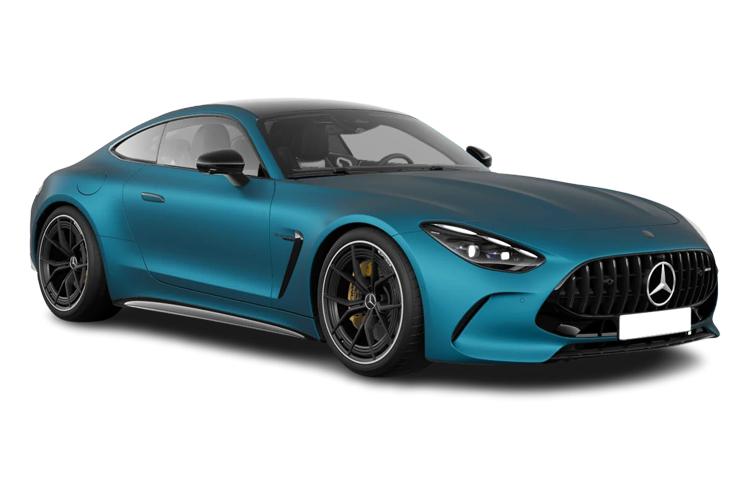
GT 63 S E Performance 4WD Premium Plus 2dr Auto

POA
POA

![PORSCHE CAYENNE E-Hybrid 5dr Tiptronic S [5 Seat]](https://cdn.automotus.uk/store/CVD/car/103055/front_view/cayenne-coupe-pocc-26.jpg)
![PORSCHE CAYENNE S E-Hybrid 5dr Tiptronic S [5 Seat]](https://cdn.automotus.uk/store/CVD/car/104292/front_view/cayenne-coupe-pocc-26.jpg)