
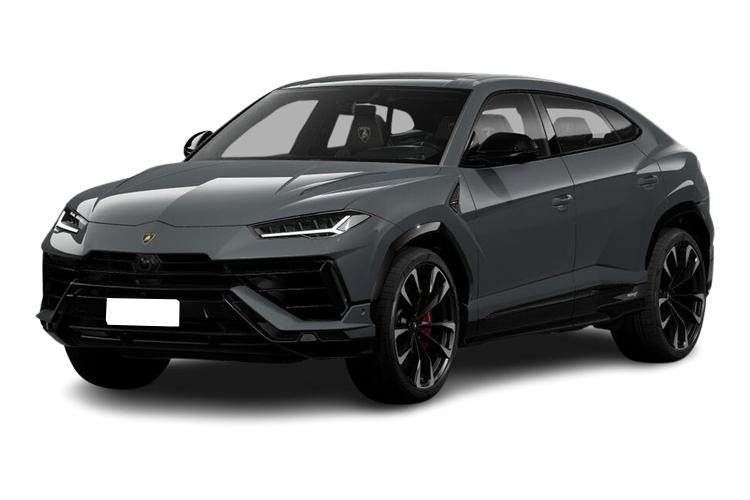
Images are for illustrative purposes only.
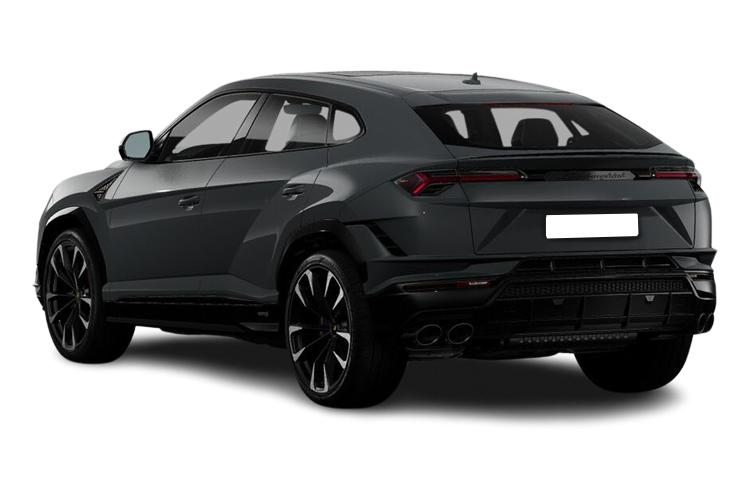
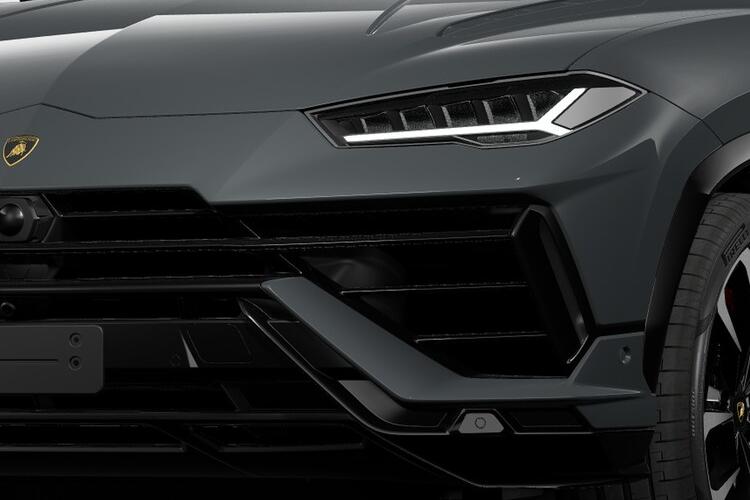

4.0T V8 800 PHEV SE Capsule 5dr Auto
Need some assistance or advice? Call Us 01903 538835


The Lamborghini Urus redefines exactly what a performance super-SUV can be. Now, it's a Plug-in Hybrid. Jonathan Crouch takes a look at the Urus SE.
With the Lamborghini Urus, which was the brand's first performance SUV, everything's super-sized: shape, performance, technology - and usually running costs. But to some extent, that latter issue's been addressed here with the brand's very first Plug-in Hybrid, the Urus SE. Previous conventionally-engined versions of the Urus have turned around this brand, being blindingly fast, very luxurious and properly practical without the lumbering feel common to many segment rivals. So with PHEV tech and the handling tweaks that have come with it, this car's become very desirable indeed.
You might think the idea of a Lamborghini super-SUV a little strange but the company itself actually believes that it basically invented this kind of car - with the brutal V12-engined LM002 model of the Eighties and Nineties. That hand-built muscle model was though, a rather different thing from today's Urus, the car that has singlehandedly changed the company from a boutique sports car maker to a brand with a production capacity that now rivals that of Ferrari. Only 328 LM002 models were ever made. Since its launch in 2018 the Urus, in contrast, has doubled its marque's production output to around 7,000 cars a year. You wonder what company founder Ferruccio Lamborghini would have made of it all. It's only forty years since this famous maker was in receivership. Now, it's more successful than McLaren. But at what price? To create the Urus, the company has had to borrow almost everything from Volkswagen Group engineering. So can the result be a true Lamborghini? And could any modern SUV ever really be, especially in this car's current PHEV guise? Let's find out.
So, even Lamborghini's had to go electrified. But not very electrified. There's still a throaty petrol 4.0-litre V8 beneath the bonnet, albeit in slightly de-tuned 611bhp form with 800Nm of torque (the original un-electrified Urus had 657bhp and 850Nm). Now though, that unit's mated to a 189bhp electric motor inside the 8-speed gearbox, giving a total power output figure of 789bhp (a little more than the Bentley Continental GT Speed this powertrain is borrowed from). The electric motor's energised by a 25.9kWh battery. Other changes for the SE include the replacement of the four wheel drive system's usual Torsen centre differential with a fully variable clutch pack. And a new e-LSD has been added at the back. In theory, this should make for better stability and traction. Performance remains startling, though despite the SE's extra outright power, its 3.4s 0-62mph sprint time is only 0.1s faster than the original model. For the very brave, top speed is 194mph. It still sounds great too - unless you're running in full-EV mode, which you're supposed to be able to do for up to 40 miles, according to Lamborghini; good luck with that. That 'EV Drive' setting is one of no fewer than 11 available drive modes, the others including 'Hybrid', 'Performance' and 'Recharge'. Other settings lower the suspension; or raise it for off road driving (yes, the Urus can capably go off road) which can raise the body by as much as 40mm. Plus of course there's an individual menu via which you can decide your own parameters for suspension feel, engine note and steering weight. Huge carbon ceramic brakes with ten-piston callipers are standard, as is a 48-volt active anti-roll system. Though virtually all the ingredients here are from other Volkswagen Group products, Lamborghini claims to have used them in a way unique to this Sant'Agata brand.
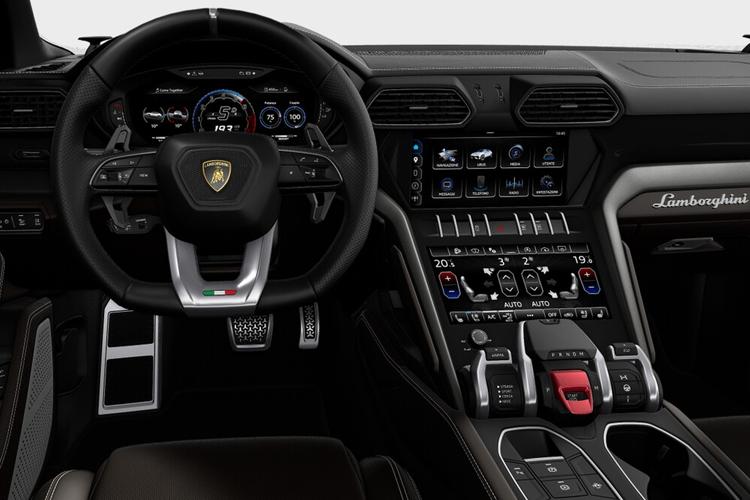
The visual changes that have created this Urus SE Plug-in Hybrid model are uber-subtle. The main recognition point for an owner of an earlier version will be this PHEV version's updated light signature, with softer-looking headlamps and a slightly revised bonnet line. At the back, the lights are set in a 'grille' trim piece supposed to reference the Gallardo. Plus there are smarter wheel designs too - of 21 or 23-inches. Otherwise, things are exactly as before. Any Lamborghini should have road presence and, sure enough, the Urus is guaranteed to turn heads. As a super-SUV, it's obviously a pretty substantial thing, 5,112mm in length and 2,016mm in width - though a rival Bentley Bentayga is bigger and much taller. There's plenty of Lamborghini DNA in the sharp-edged styling, some of it apparently inspired by the brand's chunky original LM002 SUV of the Eighties. Some of the detailing though (principally the black plastic wheel arch extensions and the lower body mouldings) has more of a volume brand feel. And quite a few owners are going to feel that they need to upgrade to the larger 23-inch wheels to really deliver this car's pavement theatre potential. Venture to enter the cabin and the doors feel a little lighter than usual for a large SUV (that's because they're frameless). Inside, the update changes are again minor, the main difference being the installation of a slightly bigger central touchscreen in the redesigned centre stack, though thankfully, all the previous dashboard buttons still remain in place. As before in a Urus, you sit a little lower than is usual in a car in this class and all-round visibility from the narrow glasshouse isn't great, though the parking camera system helps enormously with manoeuvring. The dash screen set-up borrows Audi technology, so you get a 'virtual cockpit'-style instrument binnacle monitor and twin centre stack displays. Also on the centre console is an array of what Lamborghini calls 'Tamburo' controls which allow you to select your various driving modes. The gear selector adds a further level of complexity: instead of the usual stick, you'll need to navigate through various stylised buttons and rocker switches to pick your ratio. For the rear, you'll need to select between individual rear chairs or a conventional bench. With the narrow window glass, it can feel a little claustrophobic. At least there's a big 616-litre boot, extendable to 1,596-litres with the back seat folded.
At the time of writing (Autumn 2024), you'd need about £208,000 for a Urus SE, about £20,000 more than a conventionally-engined Urus S model cost just before this PHEV variant's launch. As previously, there are so many 'must-have' options that hardly any customers ever pay the starting price: Lamborghini says the average is around £220,000. At point of purchase, there are some key decisions to make starting with a choice of a convention three-person rear bench or to individual rear chairs. If you'll ever be venturing off a paved surface (gravel tracks are amazing fun in this car) you'll need to have ticked the box for the 'Off-Road Package' which gives you reprofiled front and rear bumpers and various specific off road driving modes. Unfortunately, most of the camera safety stuff costs extra too, available as part of Lamborghini's range of optional Advanced Drive Assistance System packages. There are three to choose from, branded 'Urban Road', 'Full ADAS' and 'Highway'. With everything fitted, you get stuff like emergency brake assist and lane-keeping assistance, plus a head-up display. Luxury options include a 1.700-watt Bang & Olufsen sound system and individual twin rear TV screens. Lamborghini also hopes that owners will want to imbue their cars with their own bespoke 'styles' via the brand's 'Ad Personam' programme which offers a huge range of pricey colour and trim choices.
Thanks in part to the original Urus model's substantial 2,197kg kerb weight, its running costs were crippling to anyone without a suitably buoyant bank balance. Yes, despite engine cylinder deactivation and an aluminium-intensive MLB chassis architecture. This SE version probably will still be vastly expensive to run, but its figures certainly sound more promising - 135.8mpg on the combined cycle and 51g/km of CO2 thanks to the 37-40 mile EV range figure (which isn't great by current standards, thanks partly to the fact that only 21.8kWh of the 25.9kWh battery capacity is actually usable). Once you use up the battery charge, the stats are probably going to be worse than those of the original conventional V8 model (which for reference were a thirsty 19mpg - on a good day - and 335g/km of CO2). Of course there's still top-of-the-shop group 50 insurance. And that's all before you start factoring in the cost of the consumables you'll get through if you start to drive this car hard - things like tyres and brake pads. At least residual values ought to stay pretty strong, assuming that the Urus mirrors the showing of its sports car stablemates. That's not a given, since this SUV will be produced in much greater numbers than apply to Lambo supercars - around 3,500 units annually.
This car sells on its badge - no question. But it's an astonishing thing nonetheless, especially in this PHEV form. Even with the original Urus, it was difficult to think of a rival that could eaxctly duplicate this Sant'Agata firm's offering. And with Plug-in Hybrid power, the Urus SE is even more completely in a class of its own. Despite the extra weight, there's still circuit capability better than most sports cars, yet a luxury highway demeanour when you want that and the ability to shrug off testing off road trails, should the occasion demand it. This is, and for the foreseeable future will remain, the most exotic of all the market's super-luxury performance SUVs. And the most sophisticated take on the Volkswagen Group's MLB Evo architecture. But scroll back a few decades and ask yourself: would you want a picture of one on your bedroom wall? As a small child, would you dream about owning this car? I rather think I would. With a Gallardo in the garage as well of course...
Data provided by CAP-HPI database - Ref# 110220
The Lamborghini Urus redefines exactly what a performance super-SUV can be. Now, it's a Plug-in Hybrid. Jonathan Crouch takes a look at the Urus SE.
With the Lamborghini Urus, which was the brand's first performance SUV, everything's super-sized: shape, performance, technology - and usually running costs. But to some extent, that latter issue's been addressed here with the brand's very first Plug-in Hybrid, the Urus SE. Previous conventionally-engined versions of the Urus have turned around this brand, being blindingly fast, very luxurious and properly practical without the lumbering feel common to many segment rivals. So with PHEV tech and the handling tweaks that have come with it, this car's become very desirable indeed.
You might think the idea of a Lamborghini super-SUV a little strange but the company itself actually believes that it basically invented this kind of car - with the brutal V12-engined LM002 model of the Eighties and Nineties. That hand-built muscle model was though, a rather different thing from today's Urus, the car that has singlehandedly changed the company from a boutique sports car maker to a brand with a production capacity that now rivals that of Ferrari. Only 328 LM002 models were ever made. Since its launch in 2018 the Urus, in contrast, has doubled its marque's production output to around 7,000 cars a year. You wonder what company founder Ferruccio Lamborghini would have made of it all. It's only forty years since this famous maker was in receivership. Now, it's more successful than McLaren. But at what price? To create the Urus, the company has had to borrow almost everything from Volkswagen Group engineering. So can the result be a true Lamborghini? And could any modern SUV ever really be, especially in this car's current PHEV guise? Let's find out.
So, even Lamborghini's had to go electrified. But not very electrified. There's still a throaty petrol 4.0-litre V8 beneath the bonnet, albeit in slightly de-tuned 611bhp form with 800Nm of torque (the original un-electrified Urus had 657bhp and 850Nm). Now though, that unit's mated to a 189bhp electric motor inside the 8-speed gearbox, giving a total power output figure of 789bhp (a little more than the Bentley Continental GT Speed this powertrain is borrowed from). The electric motor's energised by a 25.9kWh battery. Other changes for the SE include the replacement of the four wheel drive system's usual Torsen centre differential with a fully variable clutch pack. And a new e-LSD has been added at the back. In theory, this should make for better stability and traction. Performance remains startling, though despite the SE's extra outright power, its 3.4s 0-62mph sprint time is only 0.1s faster than the original model. For the very brave, top speed is 194mph. It still sounds great too - unless you're running in full-EV mode, which you're supposed to be able to do for up to 40 miles, according to Lamborghini; good luck with that. That 'EV Drive' setting is one of no fewer than 11 available drive modes, the others including 'Hybrid', 'Performance' and 'Recharge'. Other settings lower the suspension; or raise it for off road driving (yes, the Urus can capably go off road) which can raise the body by as much as 40mm. Plus of course there's an individual menu via which you can decide your own parameters for suspension feel, engine note and steering weight. Huge carbon ceramic brakes with ten-piston callipers are standard, as is a 48-volt active anti-roll system. Though virtually all the ingredients here are from other Volkswagen Group products, Lamborghini claims to have used them in a way unique to this Sant'Agata brand.
The visual changes that have created this Urus SE Plug-in Hybrid model are uber-subtle. The main recognition point for an owner of an earlier version will be this PHEV version's updated light signature, with softer-looking headlamps and a slightly revised bonnet line. At the back, the lights are set in a 'grille' trim piece supposed to reference the Gallardo. Plus there are smarter wheel designs too - of 21 or 23-inches. Otherwise, things are exactly as before. Any Lamborghini should have road presence and, sure enough, the Urus is guaranteed to turn heads. As a super-SUV, it's obviously a pretty substantial thing, 5,112mm in length and 2,016mm in width - though a rival Bentley Bentayga is bigger and much taller. There's plenty of Lamborghini DNA in the sharp-edged styling, some of it apparently inspired by the brand's chunky original LM002 SUV of the Eighties. Some of the detailing though (principally the black plastic wheel arch extensions and the lower body mouldings) has more of a volume brand feel. And quite a few owners are going to feel that they need to upgrade to the larger 23-inch wheels to really deliver this car's pavement theatre potential. Venture to enter the cabin and the doors feel a little lighter than usual for a large SUV (that's because they're frameless). Inside, the update changes are again minor, the main difference being the installation of a slightly bigger central touchscreen in the redesigned centre stack, though thankfully, all the previous dashboard buttons still remain in place. As before in a Urus, you sit a little lower than is usual in a car in this class and all-round visibility from the narrow glasshouse isn't great, though the parking camera system helps enormously with manoeuvring. The dash screen set-up borrows Audi technology, so you get a 'virtual cockpit'-style instrument binnacle monitor and twin centre stack displays. Also on the centre console is an array of what Lamborghini calls 'Tamburo' controls which allow you to select your various driving modes. The gear selector adds a further level of complexity: instead of the usual stick, you'll need to navigate through various stylised buttons and rocker switches to pick your ratio. For the rear, you'll need to select between individual rear chairs or a conventional bench. With the narrow window glass, it can feel a little claustrophobic. At least there's a big 616-litre boot, extendable to 1,596-litres with the back seat folded.
At the time of writing (Autumn 2024), you'd need about £208,000 for a Urus SE, about £20,000 more than a conventionally-engined Urus S model cost just before this PHEV variant's launch. As previously, there are so many 'must-have' options that hardly any customers ever pay the starting price: Lamborghini says the average is around £220,000. At point of purchase, there are some key decisions to make starting with a choice of a convention three-person rear bench or to individual rear chairs. If you'll ever be venturing off a paved surface (gravel tracks are amazing fun in this car) you'll need to have ticked the box for the 'Off-Road Package' which gives you reprofiled front and rear bumpers and various specific off road driving modes. Unfortunately, most of the camera safety stuff costs extra too, available as part of Lamborghini's range of optional Advanced Drive Assistance System packages. There are three to choose from, branded 'Urban Road', 'Full ADAS' and 'Highway'. With everything fitted, you get stuff like emergency brake assist and lane-keeping assistance, plus a head-up display. Luxury options include a 1.700-watt Bang & Olufsen sound system and individual twin rear TV screens. Lamborghini also hopes that owners will want to imbue their cars with their own bespoke 'styles' via the brand's 'Ad Personam' programme which offers a huge range of pricey colour and trim choices.
Thanks in part to the original Urus model's substantial 2,197kg kerb weight, its running costs were crippling to anyone without a suitably buoyant bank balance. Yes, despite engine cylinder deactivation and an aluminium-intensive MLB chassis architecture. This SE version probably will still be vastly expensive to run, but its figures certainly sound more promising - 135.8mpg on the combined cycle and 51g/km of CO2 thanks to the 37-40 mile EV range figure (which isn't great by current standards, thanks partly to the fact that only 21.8kWh of the 25.9kWh battery capacity is actually usable). Once you use up the battery charge, the stats are probably going to be worse than those of the original conventional V8 model (which for reference were a thirsty 19mpg - on a good day - and 335g/km of CO2). Of course there's still top-of-the-shop group 50 insurance. And that's all before you start factoring in the cost of the consumables you'll get through if you start to drive this car hard - things like tyres and brake pads. At least residual values ought to stay pretty strong, assuming that the Urus mirrors the showing of its sports car stablemates. That's not a given, since this SUV will be produced in much greater numbers than apply to Lambo supercars - around 3,500 units annually.
This car sells on its badge - no question. But it's an astonishing thing nonetheless, especially in this PHEV form. Even with the original Urus, it was difficult to think of a rival that could eaxctly duplicate this Sant'Agata firm's offering. And with Plug-in Hybrid power, the Urus SE is even more completely in a class of its own. Despite the extra weight, there's still circuit capability better than most sports cars, yet a luxury highway demeanour when you want that and the ability to shrug off testing off road trails, should the occasion demand it. This is, and for the foreseeable future will remain, the most exotic of all the market's super-luxury performance SUVs. And the most sophisticated take on the Volkswagen Group's MLB Evo architecture. But scroll back a few decades and ask yourself: would you want a picture of one on your bedroom wall? As a small child, would you dream about owning this car? I rather think I would. With a Gallardo in the garage as well of course...
1.5 TSI eHybrid Beach Camper 5dr 4MOTION DSG

POA
POA

![VOLVO V90 2.0 T6 [350] PHEV Plus Dark 5dr AWD Auto](https://cdn.automotus.uk/store/CVD/car/106236/front_view/v90-vov9-25.jpg)
![JAECOO 8 1.5T SHS Luxury 5dr Auto [7 Seater]](https://cdn.automotus.uk/store/CVD/car/109843/front_view/j8-jcs8-26.jpg)