
Images are for illustrative purposes only.

C300 AMG Line Premium 5dr 9G-Tronic
Need some assistance or advice? Call Us 01903 538835


By Jonathan Crouch
Despite the rise and rise of the SUV, the C-Class continues to be Mercedes' most recognisable international model. Plenty of pressure then for this fifth generation 'W206'-series version launched in 2021, which fully embraced various forms of engine electrification. And brought more than a dash of S-Class luxury to this important segment.
4dr Saloon / Estate (C200/C300/C300e/C220d/C300d/C300de/C 43 AMG/C 63 AMG)
In the first two decades of this century, for anyone thinking of a German mid-sized premium badged saloon or estate, the options were always pretty straightforward; the dynamic drive of a BMW 3 Series, the uber-cool technology of an Audi A4 or the aspirational image of a Mercedes C-Class. That's how it traditionally was in this segment, but with this more aspirational MK5 'W206'-series C-Class design launched in 2021, the Stuttgart maker aimed to significantly broaden this model line's appeal. By then, over 8.6 million C-Classes had been sold since the original first generation 'W202'-series version was launched in 1993, with sleeker 'W203' and 'W204' second and third generation designs following in 2000 and 2007, before this MK5 model's predecessor, the 'W205'-series fourth generation car, first arrived in 2014. That MK4 design sold well, helped by a far-reaching update in 2018, with over 2.5-million cars delivered in over 120 countries before this fifth generation 'W206'-series design arrived in mid-2021, available only in the core saloon and estate variants that most customers wanted. By 2021, the C-Class didn't have to be the cheapest saloon Mercedes made - by then that role in the range was occupied by a four-door version of the front-driven A-Class - so there was a little more scope for this car to include pricier technology. Much of this was borrowed from the S-Class limo, including the updated 'MRA Mercedes Rear Architecture' platform and the opulent screen-centred interior. All of which was just as well because this new-era C-Class faced more competition from more different quarters in 2021 than it ever had before - not only from other class favourites but also from SUVs and EVs, including those in Mercedes-Benz's own G and EQ-series product line-ups. With this fifth generation design, Mercedes wanted to offer more; a sharper drive to tempt BMW folk; and a big enough step forward in technology and efficiency to make a potential Audi customer think again. We'd been promised these advancements with previous C-Class models, but there were stronger grounds for Mercedes' claims this time round, the aim being to redefine what 'luxury' means in this segment. A Mercedes-AMG C 43 performance petrol model was launched in 2022. In 2023, Mercedes introduced a faster Mercedes-AMG C 63 S model with a controversial PHEV engine. In 2025, there was also a C300de diesel PHEV model too. This 'W206'-era model line sold in its original form until Summer 2026, when it was extensively facelifted. It's the pre-facelift 2021-2026-era version we look at here as a used buy.
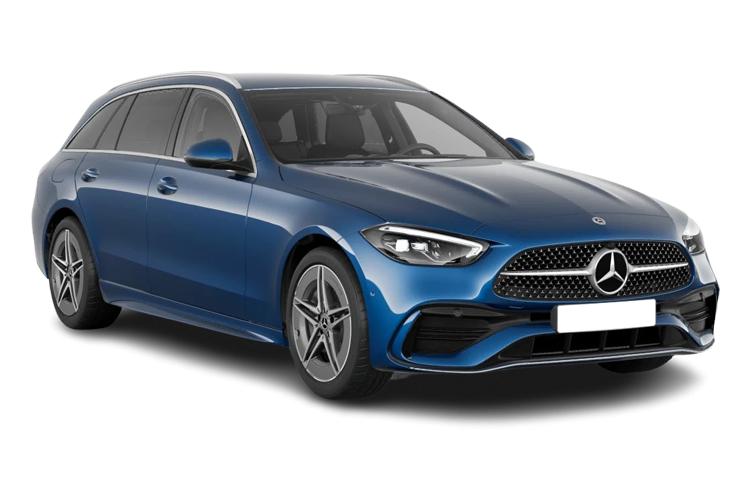
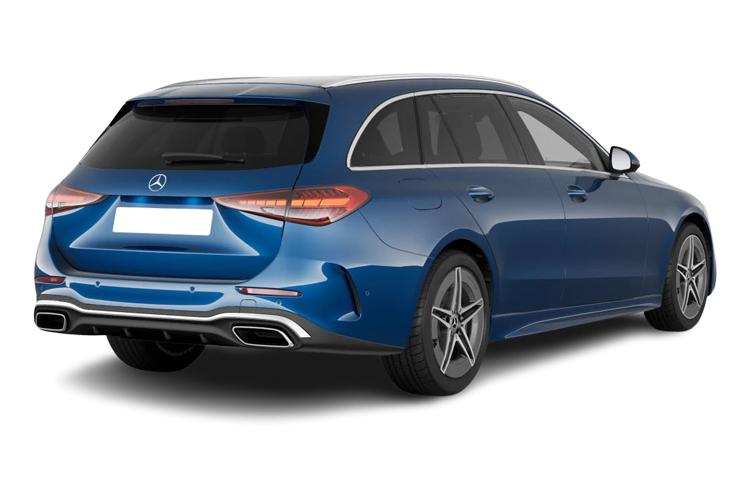
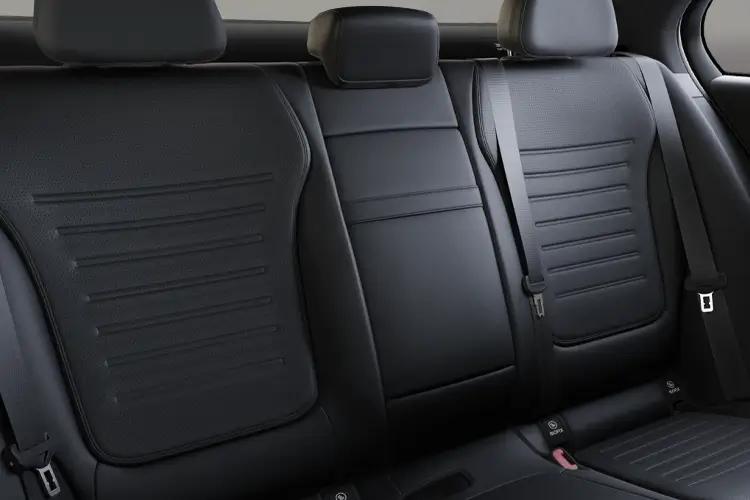
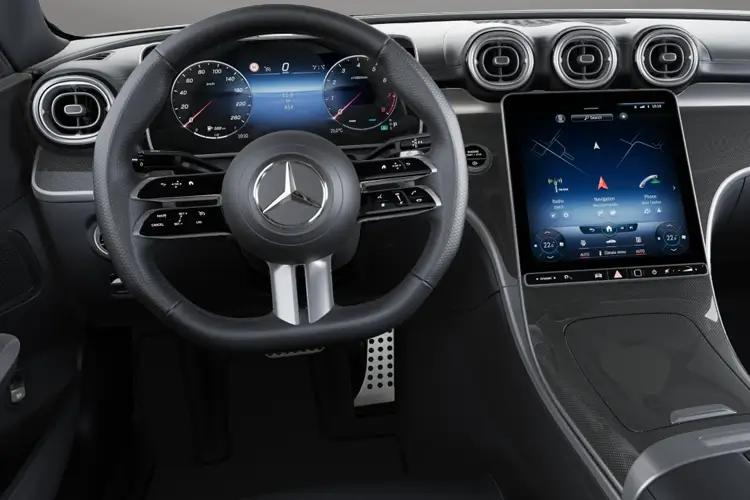
This could only be a small Mercedes. There's plenty of E-Class in the genes of this fifth generation 'W206'-series design - and cues too from the even larger S-Class sedan. The saloon and estate C-Class variants that most wanted were both deceptively curvy and both significantly larger than before. A previous owner will notice that from the side - this saloon model's 65mm longer than before and, perhaps more significantly, 42mm longer than a competing BMW 3 Series. Either way, there's a bit more pavement presence this time round, thanks to a slightly sleeker roof line that's reduced height by 9mm. It's very E-Class-like at the front, characterised as usual by the brand's hallmark radiator grille, which will look quite different - and much less arresting - if you attempt to save an insignificant amount and opt for entry-level 'Sport' trim. The various AMG Line models get twinkling chrome pins around the central three-pointed Star and a much more dynamic-looking AMG lower bumper, air intake and lower splitter design. The rear gets an uplift with the AMG Line trim levels too, the bumper gaining high-gloss chrome elements, a more potent design and more prominent exhaust apertures that might make folk think you've stretched to one of the sportier Mercedes-AMG variants. And inside? Well back in 2021 no car in this class had ever felt quite as up-market as this. It really does feel like a luxurious cabin of a larger car. Specifically the S-Class, which in this era used much the same kind of twin screen arrangement - in this case an 11.9-inch central multimedia colour display for infotainment and a customisable 12.3-inch digital instrument cluster display for the drive gauges. Get settled in and other freshly evolved details present themselves; the three squarical 'jet engine'-style circular vents just above the infotainment monitor; the leather-stitched wheel with its unusual twin-bar horizontal spokes; and the cleverly sculpted door cards, which have unusual concave shaping and 'floating'-style silver-trimmed handle panels. It all makes the cabins you get in competitor models from this era feel very last generation. Not everything feels as good to use as it looks - the vents for instance. The tiny steering wheel touch-sensitive buttons take a bit of getting used to and there are some brittle plastics here and there but the standard leather seats are properly supportive, there's plenty of stowage space and the trimming can be exquisite. And the rear seat? Well that offered rather cramped quarters in the previous generation model. Which is presumably why Mercedes extended the wheelbase by 25mm for this 'W206'-era design. The result was an improvement in cabin space, though not as much of a one as some had hoped for. The stats claimed that legroom was up by 21mm, elbow room by 15mm and headroom by around 12mm, but you'll still feel more comfortable in the back of, say, an Audi A4 from this era. As usual in this class, it's perfectly comfortable for two passengers (unless they're really tall) but a real squash for three, the further impediment here being a prominent transmission tunnel. Finally, the boot. Given this MK5 model's length increase, you might be surprised to find the cargo area no bigger than the previous generation model - it's 455-litres in size with the saloon. Though shorter, the alternative Estate body style is still able to up the trunk capacity to 490-litres. We really like the useful corner seatback retraction catches too. Activate them in the Estate and 1,510-litres of carriage capacity can be freed up.
We'll base values on the Saloon body shape; it's only a few hundred more for the Estate. MK5 C-Class prices start from around £21,600 (around £24,250 retail), which gets you a base 'Sport'-spec C200 petrol model on a '21 plate. You'll need about £24,350 (about £27,000 retail) for the faster C300 (with 'AMG Line' trim) on a '21-plate. For the C300e PHEV, values on a '21-plate with 'AMG Line' trim start from around £25,550 (about £28,500 retail). The Mercedes-AMG C 43 4MATIC values from around £32,700 (around £37,750 retail) on a '22-plate in base 'Premium' trim. The Mercedes-AMG C 63 4MATIC PHEV values from around £47,700 (around £54,250 retail) on a '22-plate in base 'Night Edition Premium' trim. Want a diesel C-Class? For the C220d diesel, values on a '21-plate with 'AMG Line' trim start from around £24,150 (about £26,750 retail). For the C300d diesel, values on a '21-plate with 'AMG Line' trim start from around £26,350 (about £29,250 retail). All quoted values are sourced through industry experts cap hpi. <a href="https://hpivaluations.com/">Click here for a free valuation.</a>
We've heard of excessive dashboard and door trim rattles, especially from earlier 2021 and 2022-era versions of this W206-era model. Some owners have complained about an annoying whining noise from the mild hybrid system's Integrated Starter-Generator, the fixing of which requires a dealer software update. Another mild hybrid issue related to battery drain from the 48V lithium-ion battery, which can lose charge or develop grounding problems if paint interferes with the earth connection. This leads to hybrid system warnings, stop-start system failures and potentially, complete battery drain if you leave the car parked for a few days. Thumping noises and play in the telescoping steering column have also been reported. Check the MBUX infotainment system out thoroughly; we've heard of the central screen freezing, lagging or resetting itself. Sensor glitches for the cars Advanced Driver Assist Systems have also been reported (like parking sensors, adaptive cruise control and lane-keeping); this happens particularly in wet weather. Insist on a full Mercedes dealer service history, especially for the most recent models whose lengthy warranty - effectively for the life of the car - is dependent on proper servicing by an authorised agent. Check that all the accessories work and watch out for cosmetic damage which can be expensive to correct. Also look for the usual signs of wheel kerbing and poorly repaired accident damage. Otherwise, it's the usual things here; interior trim and electrical issues were the most commonly afflicted things that came up in our survey. Check for uneven panel gaps and paint flaws. Inspect the electrics and the air conditioning functionality - it should blow our really chilled air. Obviously insist on a fully stamped up service book.
(approx based on a 2021 C200- Ex Vat) An air filter is around £9-£15. An oil filter is around £7-£15. Front brake pads sit in the £35-£84 bracket for a set. Front brake discs cost in the £44-£136 bracket. A starter motor is in the £120-£148 bracket. An alternator sits in the £250-£450 bracket. A starter battery costs in the £140-£170 bracket.
Mercedes decided that this fifth generation C-Class should be a little more engaging and, in its own words, 'significantly more electric'. And that's pretty much what you get. If you owned or are familiar with the previous generation model, when you push on a little around secondary road twists and turns you'll discover that this car feels a little lighter and more agile than before; the steering's that bit more accurate, the grip that bit more tenacious. Is it BMW 3 Series-like? Not quite, but in terms of handling feedback, this 'C' was lifted well clear of what used to be its most dynamically comparable rival, Audi's A4. The firm lowered sports suspension that most models had to have delivers excellent body control, but the downside of that is an unsettled ride over bumpy surfaces - which you can't do anything about because adaptive damping was never an option for our market. The all-wheel steering and 4MATIC AWD systems available on Continental models weren't offered here either. All the 'W206' model engines were just four cylinders in size - yes, even the one beneath the bonnet of the Mercedes-AMG C 63 flagship variant, which controversially became a Plug-in hybrid with 680hp on tap. And sold alongside the more conventional 421hp Mercedes-AMG C 43 4MATIC variant. More relevant were the mainstream models we're focusing on here, all of which featured 48-volt mild hybrid assistance and drove their rear wheels through a 9-speed auto gearbox. The C200 variant used a relatively humble 1.5-litre petrol engine, offered in a 204hp state of tune. The alternative was a 2.0-litre petrol powerplant that featured in 258hp form in the C300 or with 313hp in the C300e, the latter a PHEV plug-in that could take you up to 62 miles on battery power, almost doubling the previous generation plug-in model's range. Back in 2021, diesels were also still popular amongst C-Class folk, so Mercedes continued to offer the 2.0-litre 'OM654'-series unit, offered with 200hp in the C220d, which returns up to 61.4mpg on the combined cycle and up to 120g/km of CO2. The alternative was the C300d, which used the same engine in 265hp form. In 2025, Mercedes also offered a PHEV diesel, the C300de.
In summary, for this century's first two decades, it used to be easy to pigeonhole buyers amongst the three main protagonists in this sector; a 3 Series for the driving enthusiast, an A4 for the technophile and a C-Class as a compromise badge-equity choice. In this MK5 'W206'-era form, this Mercedes proved to be a great deal more than that. It managed to blur those traditional boundaries. And in doing so made the choice in this segment for potential customers just that little bit more pleasantly difficult.
Data provided by CAP-HPI database - Ref# 99608
By Jonathan Crouch
Despite the rise and rise of the SUV, the C-Class continues to be Mercedes' most recognisable international model. Plenty of pressure then for this fifth generation 'W206'-series version launched in 2021, which fully embraced various forms of engine electrification. And brought more than a dash of S-Class luxury to this important segment.
4dr Saloon / Estate (C200/C300/C300e/C220d/C300d/C300de/C 43 AMG/C 63 AMG)
In the first two decades of this century, for anyone thinking of a German mid-sized premium badged saloon or estate, the options were always pretty straightforward; the dynamic drive of a BMW 3 Series, the uber-cool technology of an Audi A4 or the aspirational image of a Mercedes C-Class. That's how it traditionally was in this segment, but with this more aspirational MK5 'W206'-series C-Class design launched in 2021, the Stuttgart maker aimed to significantly broaden this model line's appeal. By then, over 8.6 million C-Classes had been sold since the original first generation 'W202'-series version was launched in 1993, with sleeker 'W203' and 'W204' second and third generation designs following in 2000 and 2007, before this MK5 model's predecessor, the 'W205'-series fourth generation car, first arrived in 2014. That MK4 design sold well, helped by a far-reaching update in 2018, with over 2.5-million cars delivered in over 120 countries before this fifth generation 'W206'-series design arrived in mid-2021, available only in the core saloon and estate variants that most customers wanted. By 2021, the C-Class didn't have to be the cheapest saloon Mercedes made - by then that role in the range was occupied by a four-door version of the front-driven A-Class - so there was a little more scope for this car to include pricier technology. Much of this was borrowed from the S-Class limo, including the updated 'MRA Mercedes Rear Architecture' platform and the opulent screen-centred interior. All of which was just as well because this new-era C-Class faced more competition from more different quarters in 2021 than it ever had before - not only from other class favourites but also from SUVs and EVs, including those in Mercedes-Benz's own G and EQ-series product line-ups. With this fifth generation design, Mercedes wanted to offer more; a sharper drive to tempt BMW folk; and a big enough step forward in technology and efficiency to make a potential Audi customer think again. We'd been promised these advancements with previous C-Class models, but there were stronger grounds for Mercedes' claims this time round, the aim being to redefine what 'luxury' means in this segment. A Mercedes-AMG C 43 performance petrol model was launched in 2022. In 2023, Mercedes introduced a faster Mercedes-AMG C 63 S model with a controversial PHEV engine. In 2025, there was also a C300de diesel PHEV model too. This 'W206'-era model line sold in its original form until Summer 2026, when it was extensively facelifted. It's the pre-facelift 2021-2026-era version we look at here as a used buy.
This could only be a small Mercedes. There's plenty of E-Class in the genes of this fifth generation 'W206'-series design - and cues too from the even larger S-Class sedan. The saloon and estate C-Class variants that most wanted were both deceptively curvy and both significantly larger than before. A previous owner will notice that from the side - this saloon model's 65mm longer than before and, perhaps more significantly, 42mm longer than a competing BMW 3 Series. Either way, there's a bit more pavement presence this time round, thanks to a slightly sleeker roof line that's reduced height by 9mm. It's very E-Class-like at the front, characterised as usual by the brand's hallmark radiator grille, which will look quite different - and much less arresting - if you attempt to save an insignificant amount and opt for entry-level 'Sport' trim. The various AMG Line models get twinkling chrome pins around the central three-pointed Star and a much more dynamic-looking AMG lower bumper, air intake and lower splitter design. The rear gets an uplift with the AMG Line trim levels too, the bumper gaining high-gloss chrome elements, a more potent design and more prominent exhaust apertures that might make folk think you've stretched to one of the sportier Mercedes-AMG variants. And inside? Well back in 2021 no car in this class had ever felt quite as up-market as this. It really does feel like a luxurious cabin of a larger car. Specifically the S-Class, which in this era used much the same kind of twin screen arrangement - in this case an 11.9-inch central multimedia colour display for infotainment and a customisable 12.3-inch digital instrument cluster display for the drive gauges. Get settled in and other freshly evolved details present themselves; the three squarical 'jet engine'-style circular vents just above the infotainment monitor; the leather-stitched wheel with its unusual twin-bar horizontal spokes; and the cleverly sculpted door cards, which have unusual concave shaping and 'floating'-style silver-trimmed handle panels. It all makes the cabins you get in competitor models from this era feel very last generation. Not everything feels as good to use as it looks - the vents for instance. The tiny steering wheel touch-sensitive buttons take a bit of getting used to and there are some brittle plastics here and there but the standard leather seats are properly supportive, there's plenty of stowage space and the trimming can be exquisite. And the rear seat? Well that offered rather cramped quarters in the previous generation model. Which is presumably why Mercedes extended the wheelbase by 25mm for this 'W206'-era design. The result was an improvement in cabin space, though not as much of a one as some had hoped for. The stats claimed that legroom was up by 21mm, elbow room by 15mm and headroom by around 12mm, but you'll still feel more comfortable in the back of, say, an Audi A4 from this era. As usual in this class, it's perfectly comfortable for two passengers (unless they're really tall) but a real squash for three, the further impediment here being a prominent transmission tunnel. Finally, the boot. Given this MK5 model's length increase, you might be surprised to find the cargo area no bigger than the previous generation model - it's 455-litres in size with the saloon. Though shorter, the alternative Estate body style is still able to up the trunk capacity to 490-litres. We really like the useful corner seatback retraction catches too. Activate them in the Estate and 1,510-litres of carriage capacity can be freed up.
We'll base values on the Saloon body shape; it's only a few hundred more for the Estate. MK5 C-Class prices start from around £21,600 (around £24,250 retail), which gets you a base 'Sport'-spec C200 petrol model on a '21 plate. You'll need about £24,350 (about £27,000 retail) for the faster C300 (with 'AMG Line' trim) on a '21-plate. For the C300e PHEV, values on a '21-plate with 'AMG Line' trim start from around £25,550 (about £28,500 retail). The Mercedes-AMG C 43 4MATIC values from around £32,700 (around £37,750 retail) on a '22-plate in base 'Premium' trim. The Mercedes-AMG C 63 4MATIC PHEV values from around £47,700 (around £54,250 retail) on a '22-plate in base 'Night Edition Premium' trim. Want a diesel C-Class? For the C220d diesel, values on a '21-plate with 'AMG Line' trim start from around £24,150 (about £26,750 retail). For the C300d diesel, values on a '21-plate with 'AMG Line' trim start from around £26,350 (about £29,250 retail). All quoted values are sourced through industry experts cap hpi. <a href="https://hpivaluations.com/">Click here for a free valuation.</a>
We've heard of excessive dashboard and door trim rattles, especially from earlier 2021 and 2022-era versions of this W206-era model. Some owners have complained about an annoying whining noise from the mild hybrid system's Integrated Starter-Generator, the fixing of which requires a dealer software update. Another mild hybrid issue related to battery drain from the 48V lithium-ion battery, which can lose charge or develop grounding problems if paint interferes with the earth connection. This leads to hybrid system warnings, stop-start system failures and potentially, complete battery drain if you leave the car parked for a few days. Thumping noises and play in the telescoping steering column have also been reported. Check the MBUX infotainment system out thoroughly; we've heard of the central screen freezing, lagging or resetting itself. Sensor glitches for the cars Advanced Driver Assist Systems have also been reported (like parking sensors, adaptive cruise control and lane-keeping); this happens particularly in wet weather. Insist on a full Mercedes dealer service history, especially for the most recent models whose lengthy warranty - effectively for the life of the car - is dependent on proper servicing by an authorised agent. Check that all the accessories work and watch out for cosmetic damage which can be expensive to correct. Also look for the usual signs of wheel kerbing and poorly repaired accident damage. Otherwise, it's the usual things here; interior trim and electrical issues were the most commonly afflicted things that came up in our survey. Check for uneven panel gaps and paint flaws. Inspect the electrics and the air conditioning functionality - it should blow our really chilled air. Obviously insist on a fully stamped up service book.
(approx based on a 2021 C200- Ex Vat) An air filter is around £9-£15. An oil filter is around £7-£15. Front brake pads sit in the £35-£84 bracket for a set. Front brake discs cost in the £44-£136 bracket. A starter motor is in the £120-£148 bracket. An alternator sits in the £250-£450 bracket. A starter battery costs in the £140-£170 bracket.
Mercedes decided that this fifth generation C-Class should be a little more engaging and, in its own words, 'significantly more electric'. And that's pretty much what you get. If you owned or are familiar with the previous generation model, when you push on a little around secondary road twists and turns you'll discover that this car feels a little lighter and more agile than before; the steering's that bit more accurate, the grip that bit more tenacious. Is it BMW 3 Series-like? Not quite, but in terms of handling feedback, this 'C' was lifted well clear of what used to be its most dynamically comparable rival, Audi's A4. The firm lowered sports suspension that most models had to have delivers excellent body control, but the downside of that is an unsettled ride over bumpy surfaces - which you can't do anything about because adaptive damping was never an option for our market. The all-wheel steering and 4MATIC AWD systems available on Continental models weren't offered here either. All the 'W206' model engines were just four cylinders in size - yes, even the one beneath the bonnet of the Mercedes-AMG C 63 flagship variant, which controversially became a Plug-in hybrid with 680hp on tap. And sold alongside the more conventional 421hp Mercedes-AMG C 43 4MATIC variant. More relevant were the mainstream models we're focusing on here, all of which featured 48-volt mild hybrid assistance and drove their rear wheels through a 9-speed auto gearbox. The C200 variant used a relatively humble 1.5-litre petrol engine, offered in a 204hp state of tune. The alternative was a 2.0-litre petrol powerplant that featured in 258hp form in the C300 or with 313hp in the C300e, the latter a PHEV plug-in that could take you up to 62 miles on battery power, almost doubling the previous generation plug-in model's range. Back in 2021, diesels were also still popular amongst C-Class folk, so Mercedes continued to offer the 2.0-litre 'OM654'-series unit, offered with 200hp in the C220d, which returns up to 61.4mpg on the combined cycle and up to 120g/km of CO2. The alternative was the C300d, which used the same engine in 265hp form. In 2025, Mercedes also offered a PHEV diesel, the C300de.
In summary, for this century's first two decades, it used to be easy to pigeonhole buyers amongst the three main protagonists in this sector; a 3 Series for the driving enthusiast, an A4 for the technophile and a C-Class as a compromise badge-equity choice. In this MK5 'W206'-era form, this Mercedes proved to be a great deal more than that. It managed to blur those traditional boundaries. And in doing so made the choice in this segment for potential customers just that little bit more pleasantly difficult.
