
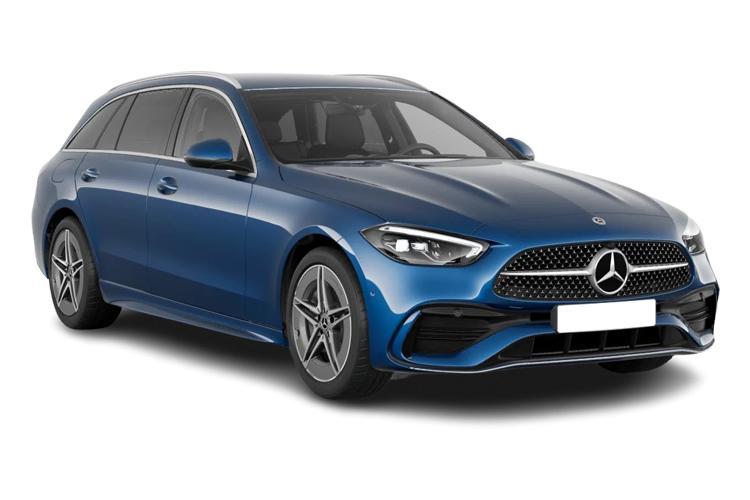
Images are for illustrative purposes only.
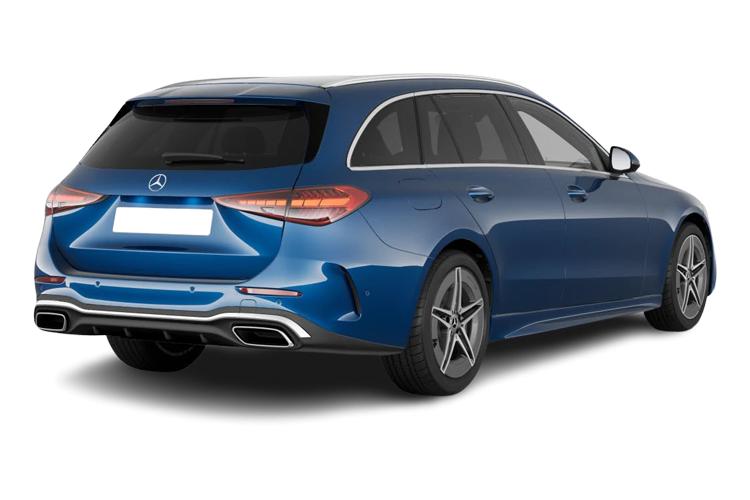

C300e Urban Edition 4dr 9G-Tronic
Need some assistance or advice? Call Us 01903 538835


The revised version of Mercedes' fifth generation C-Class Estate looks a more complete package, thinks Jonathan Crouch
In this updated form, the fifth generation Mercedes-Benz C-Class Estate offers a smarter exterior, plus detail engineering and cabin changes. As before, this premium lower mid-sized station wagon model brings more than a dash of S-Class luxury to this important segment.
The fifth generation W206-era C-Class Estate still offers the largest boot of any C-Class station wagon yet made. That isn't saying too much, the 490-litre figure still well inferior to apparently smaller, humbler station wagons. Still, buyers in this segment don't usually come looking for ultimate capacity. They want sophistication and class - which the latest version of this MK5 station wagon model provides in spades. What's on offer here is a sharper drive to temp BMW folk; and a big enough step forward in technology to make a potential Audi customer think again. We've heard this before down the decades of course, most recently at this W206-era model's original launch back in 2021. As then, the aim here is to redefine what 'luxury' means in the premium badged part of the mid-sized estate segment. Sounds promising. Let's take a look.
C-Class Estate customers, unlike those for the C-Class Saloon, aren't being offered the option of a full-electric drivetrain - which seems strange. Mercedes says that the GLC Electric SUV covers off that need. In terms of the combustion engines you can have, not a lot has been done to the engineering this facelifted design. For the UK, the important news is that Mercedes doesn't want to sell diesel versions of this car any more - of either the mild hybrid of PHEV kind, which is disappointing given that these variants carry on elsewhere in Europe. Mercedes says that the remaining mild hybrid petrol units that make up the bulk of the line-up have been revised to meet tougher Euro 7 emission standards. Specifically, the 48V system now powers a new electric compressor for the turbocharger, which is claimed to reduce turbo lag. Across the board, power and torque outputs of this rear-driven 9-speed auto model have slightly improved as a result. There are two main mild hybrid petrol options, starting with the C 250, which as before uses a turbocharged four cylinder 2.0-litre M 254 EVO engine mated to an electric motor and puts out 237bhp with 320Nm of torque, allowing for a 7.3 second 0-62mph time and a 154mph top speed. The alternative is the C 300, which uses a more powerful version of the same four cylinder unit and the same 48V mild hybrid set-up. Total power here is 278bhp with 400Nm of torque, which lowers the 0-62 mph time to 6.1 seconds and increases the top speed to 155mph. Mercedes also retains a very strong PHEV variant, the C 300e, capable of driving up to 65 miles on energy from its 19.5kWh battery. The C 300e uses the turbo 2.0-litre petrol engine and offers 347bhp, a little more than previously thanks to a small power increase for the petrol and electric motors. Mercedes has engineered the usual flagship high performance AMG models to complete the line-up. In all models, the chassis has been tweaked as part of this update, with stiffer dampers supposed to improve agility without compromising ride at cruising speeds. As before, adaptive damping and rear-wheel steering are optional on mainstream models. With rear-axle steering fitted, at lower speeds, the rear wheels steer in the opposite direction to the front wheels - by up to 2.5-degrees opposite to the front-axle angle during parking. This reduces the turning circle by 43cms to 10.64 metres. Go faster and the rear wheels turn slightly in the same direction as those at the front to improve corner turn-in.
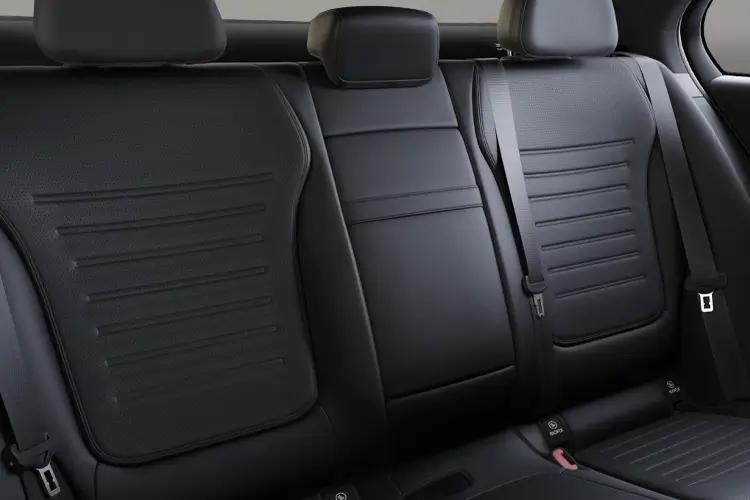
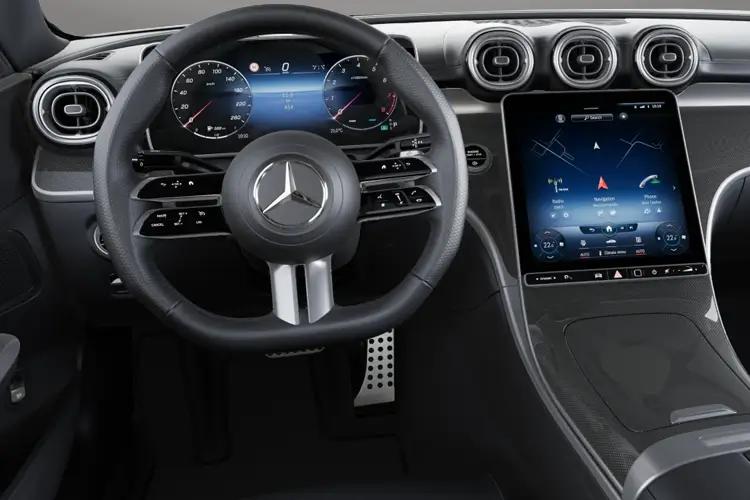
Obviously, this fairly minor mid-term facelift hasn't changed anything about this C-Class Estate's practicality. If your experience of this model goes back to the pre-2021-era W205-series design, then you'll find this W206 station wagon 49mm longer than its MK4 predecessor, 10mm wider and 7mm lower. That extra length was put to good use, giving the car a luggage area of 490-litres (30-litres more than the old W205-generation model could offer). That falls to 360-litres with the PHEV. There's 1,510-litres of space with everything folded (1,375-litres with the PHEV). The C-Class saloon, by the way, has a 455-litre boot (or 315-litres with the PHEV). A key practical improvement with this generation of C-Class Estate lies in the way that the height of the load compartment under the retractable cover has, like the load compartment length, been increased compared to the MK4 model. The loading sill is slightly lower too. The Estate model features the EASY-PACK powered tailgate as standard. And its rear seat backrest has a 40:20:40 folding split, with operation via two push buttons on the left and right side. The retractable luggage cover and dividing net have a two-piece design. Each has its own roller cassette and the relatively light weight of the individual cassettes makes operation easy. Otherwise of course, everything's just as with the saloon body style. Which means quite a different front end look for this updated car. With a more overt grille on the nose which features chrome accents and can be had with an illuminated surround. It connects via black trim to headlamps that now feature star-shaped daytime running lights. Inside, Mercedes has resisted the temptation to add the full cabin-width screenfest that features on its other latest models. So the interior is the same as before with a 'floating' 12.3-inch driver's instrument display and an 11.9-inch portrait-orientated infotainment touchscreen. But lots of work has gone in to improve that central monitor, with a new user interface, extra AI support in the software and navigation incorporating both Google AI and Maps data. Mercedes has also redesigned the steering wheel with a reinstated physical rocker switch and dial for the cruise and sound systems respectively. And there are refreshed materials and trim options on which (as before) you'll have to spend quite a lot to get the kind of high-end feeling cabin finish Mercedes wants you to have. Which includes background lighting for the three 'jet engine'-style circular central vents and the single vents at either end of the dash. Space in the rear is as before comfortable for two but a squash for three.
Prices are much as with the earlier version of this W206 generation model, which means you can expect to pay somewhere in the £49,000 and £65,000 bracket for mainstream combustion models, depending on the engine and trim level you want. This Estate attracts a premium of about £2,500 over the Saloon. Whatever kind of powertrain you want with your C-Class Estate, trim levels kick off with 'Sport', then there's 'AMG Line', 'AMG Line Premium Plus' and top 'Premier Edition'. As you'd hope for the money, equipment levels are generous. Even the 'Sport' version gets 19-inch wheels, plus synthetic leather and micro-suede upholstery. 'AMG Line' trim for £5,000 more gets you an illuminated grille with 'Digital' LED headlights, upgraded ambient lighting, a 360-degree parking camera and powered front seats clad in full-synthetic leather. For another £2,500, mid-range 'Premium Plus' trim gets you a smarter 19-inch wheel design, a head-up display, a panoramic sunroof and an upgraded Burmester stereo system. If you can find another £2,500 for the top 'Premier Edition', you get another smarter wheel design, real leather upholstery, adaptive damping and rear-wheel steering. Obviously, across the line-up there are lots of options. If you can't stretch to top-spec trim, you can add adaptive damping and rear-wheel steering as a part of a 'Refinement Package' for £2,500 extra. And there's the option of real leather upholstery for another £1,750.
Let's get to the WLTP-rated figures, starting with the petrol mild hybrid models. For the 2.0-litre C 250, the combined stat is 43.5mpg (the same as a rival BMW 320i). For the C 300, it's 42.9mpg. CO2 emissions are rated at 147g/km for the C 250 and 150g/km for the C 300. For the C 300e PHEV, the combined cycle figure is 113mpg with up to 58g/km of CO2 and up to 65 miles of EV range. The C 300e PHEV can DC-charge (not a given with PHEV models in this segment) and can be charged in 30 minutes with a 55kW fast charger (an 11kW device is fitted as standard). This PHEV also benefits from an adjustable energy recuperation system that can top up the battery at up to 100kW when cruising or decelerating. Mercedes has also added in a hybrid-specific route-planning function that uses the navigation, route topography and traffic data to work out the most efficient route, enabling, for instance, automatic prioritisation of the electric motor in town driving. If you're wondering about the C-Class Electric, well that car in its C 400 4MATIC launch spec can go up to 452 miles on a charge. A 10-80% DC charge can be completed in 22 minutes and nearly 200 miles of range can be added in just 10 minutes if you find a fast enough charge. At home, a full AC charge using a single phase 7.4kW wallbox needs15.25 hours, a time you can reduce to 10.50 hours if you're able to charge using a three-phase 11kW AC wallbox. You can AC charge at 22kW too, but that requires an extra £1,000 package to be added.
The C-Class continues to have a car park presence its segment rivals can't quite match, though the divisively-styled nose of this updated fifth generation model makes it a slightly more controversial one. On paper, it's easy to argue that the more recently designed BMW alternative is a slightly better overall product. But buying and leasing decisions in this segment aren't only made on paper and a spell in this rejuvenated C might still persuade you to spend your money Stuttgart's way. We wonder a little about some the powertrain choices made here. The decision to drop diesel might be slightly premature. And it seems odd that there's no electric estate model. But the Plug-in Hybrid tech remains difficult to better and ride quality's still class leading. Even so, you won't choose one of these if you can't get on with its newly-added frontal look. But if you like it, then your buying decision might be confirmed by a cabin that can feel extremely high-end if you spend enough money on it. So there's a C-change here, but ultimately nothing is really very different. Which is just as many customers will want it.
Data provided by CAP-HPI database - Ref# 105746
The revised version of Mercedes' fifth generation C-Class Estate looks a more complete package, thinks Jonathan Crouch
In this updated form, the fifth generation Mercedes-Benz C-Class Estate offers a smarter exterior, plus detail engineering and cabin changes. As before, this premium lower mid-sized station wagon model brings more than a dash of S-Class luxury to this important segment.
The fifth generation W206-era C-Class Estate still offers the largest boot of any C-Class station wagon yet made. That isn't saying too much, the 490-litre figure still well inferior to apparently smaller, humbler station wagons. Still, buyers in this segment don't usually come looking for ultimate capacity. They want sophistication and class - which the latest version of this MK5 station wagon model provides in spades. What's on offer here is a sharper drive to temp BMW folk; and a big enough step forward in technology to make a potential Audi customer think again. We've heard this before down the decades of course, most recently at this W206-era model's original launch back in 2021. As then, the aim here is to redefine what 'luxury' means in the premium badged part of the mid-sized estate segment. Sounds promising. Let's take a look.
C-Class Estate customers, unlike those for the C-Class Saloon, aren't being offered the option of a full-electric drivetrain - which seems strange. Mercedes says that the GLC Electric SUV covers off that need. In terms of the combustion engines you can have, not a lot has been done to the engineering this facelifted design. For the UK, the important news is that Mercedes doesn't want to sell diesel versions of this car any more - of either the mild hybrid of PHEV kind, which is disappointing given that these variants carry on elsewhere in Europe. Mercedes says that the remaining mild hybrid petrol units that make up the bulk of the line-up have been revised to meet tougher Euro 7 emission standards. Specifically, the 48V system now powers a new electric compressor for the turbocharger, which is claimed to reduce turbo lag. Across the board, power and torque outputs of this rear-driven 9-speed auto model have slightly improved as a result. There are two main mild hybrid petrol options, starting with the C 250, which as before uses a turbocharged four cylinder 2.0-litre M 254 EVO engine mated to an electric motor and puts out 237bhp with 320Nm of torque, allowing for a 7.3 second 0-62mph time and a 154mph top speed. The alternative is the C 300, which uses a more powerful version of the same four cylinder unit and the same 48V mild hybrid set-up. Total power here is 278bhp with 400Nm of torque, which lowers the 0-62 mph time to 6.1 seconds and increases the top speed to 155mph. Mercedes also retains a very strong PHEV variant, the C 300e, capable of driving up to 65 miles on energy from its 19.5kWh battery. The C 300e uses the turbo 2.0-litre petrol engine and offers 347bhp, a little more than previously thanks to a small power increase for the petrol and electric motors. Mercedes has engineered the usual flagship high performance AMG models to complete the line-up. In all models, the chassis has been tweaked as part of this update, with stiffer dampers supposed to improve agility without compromising ride at cruising speeds. As before, adaptive damping and rear-wheel steering are optional on mainstream models. With rear-axle steering fitted, at lower speeds, the rear wheels steer in the opposite direction to the front wheels - by up to 2.5-degrees opposite to the front-axle angle during parking. This reduces the turning circle by 43cms to 10.64 metres. Go faster and the rear wheels turn slightly in the same direction as those at the front to improve corner turn-in.
Obviously, this fairly minor mid-term facelift hasn't changed anything about this C-Class Estate's practicality. If your experience of this model goes back to the pre-2021-era W205-series design, then you'll find this W206 station wagon 49mm longer than its MK4 predecessor, 10mm wider and 7mm lower. That extra length was put to good use, giving the car a luggage area of 490-litres (30-litres more than the old W205-generation model could offer). That falls to 360-litres with the PHEV. There's 1,510-litres of space with everything folded (1,375-litres with the PHEV). The C-Class saloon, by the way, has a 455-litre boot (or 315-litres with the PHEV). A key practical improvement with this generation of C-Class Estate lies in the way that the height of the load compartment under the retractable cover has, like the load compartment length, been increased compared to the MK4 model. The loading sill is slightly lower too. The Estate model features the EASY-PACK powered tailgate as standard. And its rear seat backrest has a 40:20:40 folding split, with operation via two push buttons on the left and right side. The retractable luggage cover and dividing net have a two-piece design. Each has its own roller cassette and the relatively light weight of the individual cassettes makes operation easy. Otherwise of course, everything's just as with the saloon body style. Which means quite a different front end look for this updated car. With a more overt grille on the nose which features chrome accents and can be had with an illuminated surround. It connects via black trim to headlamps that now feature star-shaped daytime running lights. Inside, Mercedes has resisted the temptation to add the full cabin-width screenfest that features on its other latest models. So the interior is the same as before with a 'floating' 12.3-inch driver's instrument display and an 11.9-inch portrait-orientated infotainment touchscreen. But lots of work has gone in to improve that central monitor, with a new user interface, extra AI support in the software and navigation incorporating both Google AI and Maps data. Mercedes has also redesigned the steering wheel with a reinstated physical rocker switch and dial for the cruise and sound systems respectively. And there are refreshed materials and trim options on which (as before) you'll have to spend quite a lot to get the kind of high-end feeling cabin finish Mercedes wants you to have. Which includes background lighting for the three 'jet engine'-style circular central vents and the single vents at either end of the dash. Space in the rear is as before comfortable for two but a squash for three.
Prices are much as with the earlier version of this W206 generation model, which means you can expect to pay somewhere in the £49,000 and £65,000 bracket for mainstream combustion models, depending on the engine and trim level you want. This Estate attracts a premium of about £2,500 over the Saloon. Whatever kind of powertrain you want with your C-Class Estate, trim levels kick off with 'Sport', then there's 'AMG Line', 'AMG Line Premium Plus' and top 'Premier Edition'. As you'd hope for the money, equipment levels are generous. Even the 'Sport' version gets 19-inch wheels, plus synthetic leather and micro-suede upholstery. 'AMG Line' trim for £5,000 more gets you an illuminated grille with 'Digital' LED headlights, upgraded ambient lighting, a 360-degree parking camera and powered front seats clad in full-synthetic leather. For another £2,500, mid-range 'Premium Plus' trim gets you a smarter 19-inch wheel design, a head-up display, a panoramic sunroof and an upgraded Burmester stereo system. If you can find another £2,500 for the top 'Premier Edition', you get another smarter wheel design, real leather upholstery, adaptive damping and rear-wheel steering. Obviously, across the line-up there are lots of options. If you can't stretch to top-spec trim, you can add adaptive damping and rear-wheel steering as a part of a 'Refinement Package' for £2,500 extra. And there's the option of real leather upholstery for another £1,750.
Let's get to the WLTP-rated figures, starting with the petrol mild hybrid models. For the 2.0-litre C 250, the combined stat is 43.5mpg (the same as a rival BMW 320i). For the C 300, it's 42.9mpg. CO2 emissions are rated at 147g/km for the C 250 and 150g/km for the C 300. For the C 300e PHEV, the combined cycle figure is 113mpg with up to 58g/km of CO2 and up to 65 miles of EV range. The C 300e PHEV can DC-charge (not a given with PHEV models in this segment) and can be charged in 30 minutes with a 55kW fast charger (an 11kW device is fitted as standard). This PHEV also benefits from an adjustable energy recuperation system that can top up the battery at up to 100kW when cruising or decelerating. Mercedes has also added in a hybrid-specific route-planning function that uses the navigation, route topography and traffic data to work out the most efficient route, enabling, for instance, automatic prioritisation of the electric motor in town driving. If you're wondering about the C-Class Electric, well that car in its C 400 4MATIC launch spec can go up to 452 miles on a charge. A 10-80% DC charge can be completed in 22 minutes and nearly 200 miles of range can be added in just 10 minutes if you find a fast enough charge. At home, a full AC charge using a single phase 7.4kW wallbox needs15.25 hours, a time you can reduce to 10.50 hours if you're able to charge using a three-phase 11kW AC wallbox. You can AC charge at 22kW too, but that requires an extra £1,000 package to be added.
The C-Class continues to have a car park presence its segment rivals can't quite match, though the divisively-styled nose of this updated fifth generation model makes it a slightly more controversial one. On paper, it's easy to argue that the more recently designed BMW alternative is a slightly better overall product. But buying and leasing decisions in this segment aren't only made on paper and a spell in this rejuvenated C might still persuade you to spend your money Stuttgart's way. We wonder a little about some the powertrain choices made here. The decision to drop diesel might be slightly premature. And it seems odd that there's no electric estate model. But the Plug-in Hybrid tech remains difficult to better and ride quality's still class leading. Even so, you won't choose one of these if you can't get on with its newly-added frontal look. But if you like it, then your buying decision might be confirmed by a cabin that can feel extremely high-end if you spend enough money on it. So there's a C-change here, but ultimately nothing is really very different. Which is just as many customers will want it.


![VOLVO V90 2.0 T6 [350] PHEV Plus Dark 5dr AWD Auto](https://cdn.automotus.uk/store/CVD/car/106236/front_view/v90-vov9-25.jpg)