
Images are for illustrative purposes only.

1.5 VTi-TECH Explore 5dr
Need some assistance or advice? Call Us 01903 538835


By Jonathan Crouch
If you're looking for an affordable small hatch from the 2018 to 2024 period, this updated version of the MG3 is a supermini you probably won't have considered. Yet it's fun to drive, practical to own and vastly more affordable than the conventional choices in this segment from this era. Compared to the original version of the MK1 MG3, this revised version offered sharper looks, a smarter cabin and improved media connectivity. If you don't need class-leading efficiency from a car of this period and you're prepared to forgive a few rough edges in return for the big savings on offer, then it could rank as a very clever choice.
5-door Hatch [1.5 petrol] [Explore, Excite, Exclusive]
There's something about the two letters 'MG' that strikes a chord in the British consciousness. The brand named after 'Morris Garages' way back in 1924 has been a part of our automotive heritage for nearly a century and though its cars no longer roll down the Longbridge production line, they still have a distinctive appeal. Take this one for instance, the usefully revised version of the MG3 supermini that was launched in 2018. Of course, by 2018 MG was a very different company from the one that filed for bankruptcy in 2005. Back then, the brand looked down and out but in fact, a new future was just beginning. The Chinese were looking for a foothold in the Western market and what was left of MG seemed tempting. In 2007, the country's oldest car maker NAC snapped up the business, then two years later merged with China's largest car producer SAIC, who immediate announced plans to develop MG for the modern era. It certainly took time for things to get going though. The brand's initial offering, the mid-sized MG6 of 2011, really wasn't up to much. Things improved though when the original version of this British-engineered MG3 supermini made its debut in late 2013 and the upward trend then continued with the subsequent introduction of a couple of compact SUVs, the GS of 2016 and the XS of 2017. The XS was particularly well received and was the model responsible for boosting the brand's sales by 167% during its first twelve months on sale. That XS SUV lent many of its features to this rejuvenated MG3 model. By 2018, this supermini was no longer assembled in Britain but it was still extremely affordable, offering supermini space for citycar money. In terms of pricing, from new it was around 25% less than most mainstream brand segment rivals. This update retained the previous 1.5-litre petrol engine but delivered sharper looks and a completely new cabin incorporating much improved media connectivity. In this updated form, this remained one of the most personalisable cars in the sector and it always had a reputation for being one of the better ones to drive. Here, we check this updated MK1 MG3 out as a used buy. It sold until 2024 when a second generation model arrived.
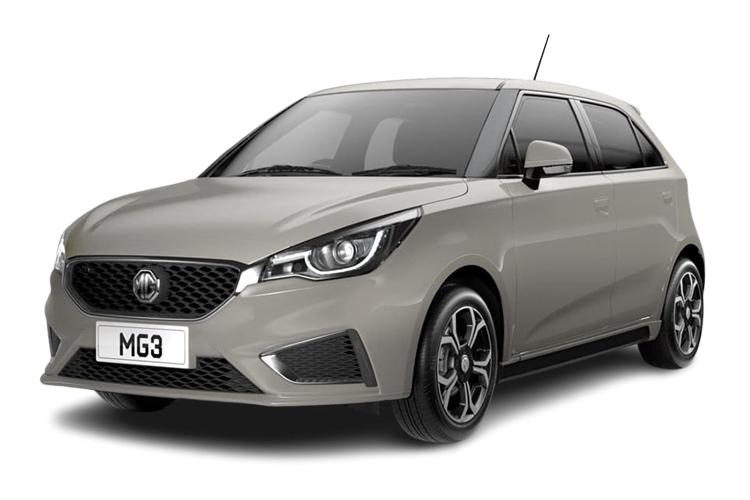
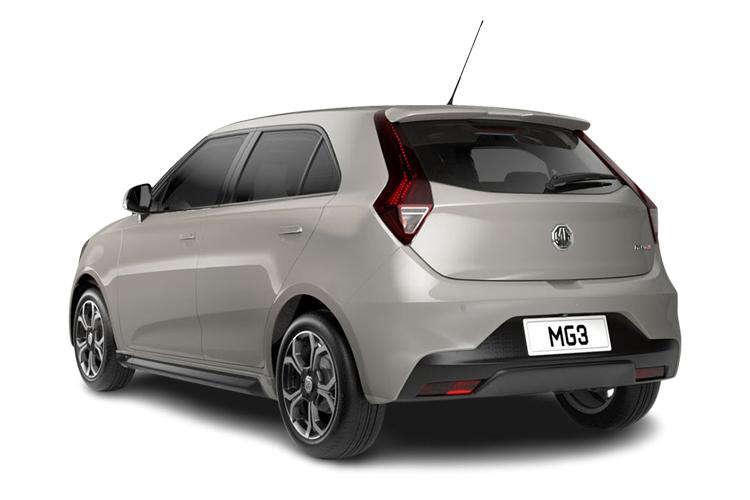
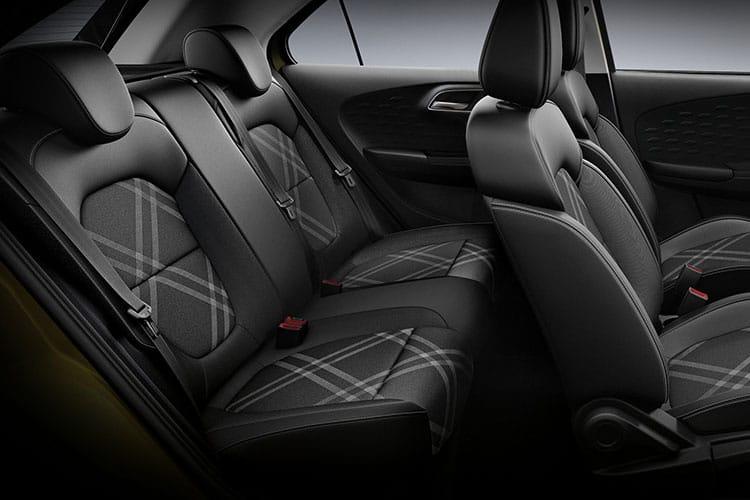
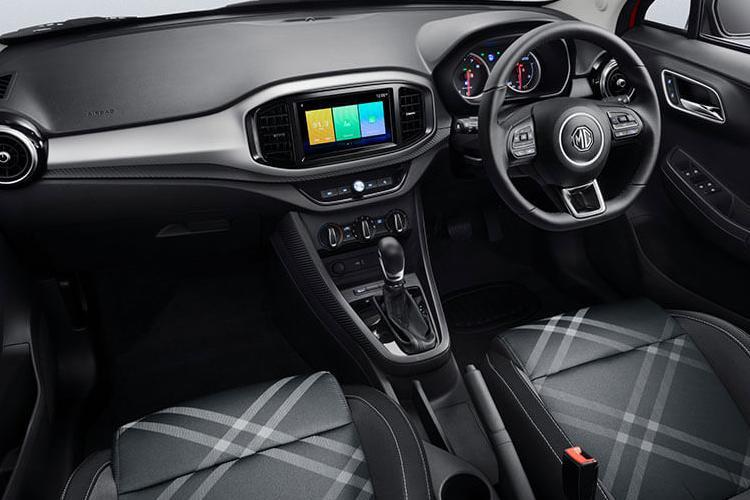
This revised MG3 borrowed much from its XS SUV showroom stablemate, primarily its enlarged full-frame grille with its bigger MG octagonal badge. As with the original model, all the expected modern design cues are certainly present and correct - blacked-out A-pillars, a wraparound windscreen, twinkling daytime running lights and sharply-sculpted crease lines. In short, there's certainly nothing economy-minded about the way this thing looks. And from new it was more personalisable than most other supermini segment models if you like the idea of bright colours and sporty stripes. Inside, the brand devoted nearly all of this facelift model's improvement budget to bringing the cabin up to date and the effort paid off. The primary change was the installation of a completely new dashboard, needed because for this upgraded car, the designers had to incorporate a new 8-inch centre-dash colour touchscreen. It came as standard providing buyers avoided entry-level trim and original owners had to have it to get things like a DAB digital radio and an 'Apple CarPlay' feature that lets you duplicate smartphone functions onto the fascia screen and use your favourite apps. There was also a revised three-spoke wheel, through which you view a clearly designated set of red-tinged instrument dials. In the rear, headroom is genuinely impressive and, for this class of car, there's a reasonable amount of legroom too thanks to the way the front seatbacks have been sculpted. A couple of six-footers will be perfectly comfortable and three kids quite happy. And out back? Well the boot isn't the biggest in the class but it's certainly very class-competitive. You get 256-litres if, as we would, you elect to carry a spare wheel rather than a silly little puncture repair kit. Otherwise, there's 285-litres on offer.
Please contact us for an exact up-to-date valuation.
Budget brand models always tend to deliver a few more ownership faults than cars from pricier brands, so we weren't surprised to find quite a few issues raised during our ownership survey. We found several reports of clutch problems - jerking and juddering from a standing start; look out for this. The paint finish on the body panels can be suspect too; it only takes a small piece of grit to chip the thin paint finish, so be warned. Other owners reported problems with the electrics, the radiator and the brakes. In one case, a radiator split at only 35,000 miles. Another owner reported noisy air conditioning. Otherwise, look for the usual things - rear seat child damage, scratched alloys etc.
(approx based on a 2019 MG3 - autodoc.co.uk) Parts should be pretty affordable. An oil filter tends to be in the £5-£14 bracket. An air filter tends to be in the £10-£21 bracket. A fuel filter tends to be in the £7-£45 bracket. A set of front brake pads are in the £22-£33 bracket. A front brake disc is in the £24-£46 bracket. An alternator is in the £410-£441 bracket. A starter motor is in the £292-£358 bracket. A wiper blade is in the £4-£11 bracket.
There were no changes beneath the bonnet of this much improved post-2018-era MG3, so as before, it soldiered on with the brand's normally aspirated 1.5-litre petrol unit and a five-speed manual gearbox. As before though, a little compensation came with the news that it developed a healthy 105bhp, substantially more than you'd get in the entry-level versions of other competing superminis. That means a reasonable turn of speed, rest to sixty two achievable in 10.4s en route to a 108mph top speed. Though it's true that most of this car is Chinese, many of the bits that really matter are British through and through - an observation especially true when it comes to the elements concerned with ride and handling. This was tuned for European roads by a team at Longbridge and they did a fine job. There are suppler-riding cars in this class from this period - and more sportily-suspended ones - but few models of this kind that we've tried from this time manage to achieve a better combination of both attributes over good roads and bad. Of course you can't have everything. Refinement wasn't great, the gear change is somewhat imprecise and efficiency is well off the class standard - NEDC2 figures from the time suggested 47.1mpg on the combined cycle and a CO2 emissions reading of 140g/km. Still, you can forgive this MG much for its low price and chirpy personality. In short, there are few really inexpensive cars that we'd enjoy driving more than this one.
MG's modern era may have begun with the Chinese takeover in 2007 but in real terms, its future as a credible manufacturer actually started with this car, the MG3. It may not be the very cheapest supermini you can buy from its period, but it's supremely affordable and delivers far more character than its closest Dacia-branded competitor - for not much more money. The changes made to this revised post-2018-era model were welcome - primarily the sharper looks and the smarter cabin with its upgraded infotainment - but we were disappointed that cutting edge modern technology continued to be lacking beneath the bonnet. As before though, compensation comes with the sheer driving effervescence that continues the heritage of the MG brand. It's this, more than anything else, that gives this car the right to wear its famous octagonal badge with some sort of credibility.
Data provided by CAP-HPI database - Ref# 86546
By Jonathan Crouch
If you're looking for an affordable small hatch from the 2018 to 2024 period, this updated version of the MG3 is a supermini you probably won't have considered. Yet it's fun to drive, practical to own and vastly more affordable than the conventional choices in this segment from this era. Compared to the original version of the MK1 MG3, this revised version offered sharper looks, a smarter cabin and improved media connectivity. If you don't need class-leading efficiency from a car of this period and you're prepared to forgive a few rough edges in return for the big savings on offer, then it could rank as a very clever choice.
5-door Hatch [1.5 petrol] [Explore, Excite, Exclusive]
There's something about the two letters 'MG' that strikes a chord in the British consciousness. The brand named after 'Morris Garages' way back in 1924 has been a part of our automotive heritage for nearly a century and though its cars no longer roll down the Longbridge production line, they still have a distinctive appeal. Take this one for instance, the usefully revised version of the MG3 supermini that was launched in 2018. Of course, by 2018 MG was a very different company from the one that filed for bankruptcy in 2005. Back then, the brand looked down and out but in fact, a new future was just beginning. The Chinese were looking for a foothold in the Western market and what was left of MG seemed tempting. In 2007, the country's oldest car maker NAC snapped up the business, then two years later merged with China's largest car producer SAIC, who immediate announced plans to develop MG for the modern era. It certainly took time for things to get going though. The brand's initial offering, the mid-sized MG6 of 2011, really wasn't up to much. Things improved though when the original version of this British-engineered MG3 supermini made its debut in late 2013 and the upward trend then continued with the subsequent introduction of a couple of compact SUVs, the GS of 2016 and the XS of 2017. The XS was particularly well received and was the model responsible for boosting the brand's sales by 167% during its first twelve months on sale. That XS SUV lent many of its features to this rejuvenated MG3 model. By 2018, this supermini was no longer assembled in Britain but it was still extremely affordable, offering supermini space for citycar money. In terms of pricing, from new it was around 25% less than most mainstream brand segment rivals. This update retained the previous 1.5-litre petrol engine but delivered sharper looks and a completely new cabin incorporating much improved media connectivity. In this updated form, this remained one of the most personalisable cars in the sector and it always had a reputation for being one of the better ones to drive. Here, we check this updated MK1 MG3 out as a used buy. It sold until 2024 when a second generation model arrived.
This revised MG3 borrowed much from its XS SUV showroom stablemate, primarily its enlarged full-frame grille with its bigger MG octagonal badge. As with the original model, all the expected modern design cues are certainly present and correct - blacked-out A-pillars, a wraparound windscreen, twinkling daytime running lights and sharply-sculpted crease lines. In short, there's certainly nothing economy-minded about the way this thing looks. And from new it was more personalisable than most other supermini segment models if you like the idea of bright colours and sporty stripes. Inside, the brand devoted nearly all of this facelift model's improvement budget to bringing the cabin up to date and the effort paid off. The primary change was the installation of a completely new dashboard, needed because for this upgraded car, the designers had to incorporate a new 8-inch centre-dash colour touchscreen. It came as standard providing buyers avoided entry-level trim and original owners had to have it to get things like a DAB digital radio and an 'Apple CarPlay' feature that lets you duplicate smartphone functions onto the fascia screen and use your favourite apps. There was also a revised three-spoke wheel, through which you view a clearly designated set of red-tinged instrument dials. In the rear, headroom is genuinely impressive and, for this class of car, there's a reasonable amount of legroom too thanks to the way the front seatbacks have been sculpted. A couple of six-footers will be perfectly comfortable and three kids quite happy. And out back? Well the boot isn't the biggest in the class but it's certainly very class-competitive. You get 256-litres if, as we would, you elect to carry a spare wheel rather than a silly little puncture repair kit. Otherwise, there's 285-litres on offer.
Please contact us for an exact up-to-date valuation.
Budget brand models always tend to deliver a few more ownership faults than cars from pricier brands, so we weren't surprised to find quite a few issues raised during our ownership survey. We found several reports of clutch problems - jerking and juddering from a standing start; look out for this. The paint finish on the body panels can be suspect too; it only takes a small piece of grit to chip the thin paint finish, so be warned. Other owners reported problems with the electrics, the radiator and the brakes. In one case, a radiator split at only 35,000 miles. Another owner reported noisy air conditioning. Otherwise, look for the usual things - rear seat child damage, scratched alloys etc.
(approx based on a 2019 MG3 - autodoc.co.uk) Parts should be pretty affordable. An oil filter tends to be in the £5-£14 bracket. An air filter tends to be in the £10-£21 bracket. A fuel filter tends to be in the £7-£45 bracket. A set of front brake pads are in the £22-£33 bracket. A front brake disc is in the £24-£46 bracket. An alternator is in the £410-£441 bracket. A starter motor is in the £292-£358 bracket. A wiper blade is in the £4-£11 bracket.
There were no changes beneath the bonnet of this much improved post-2018-era MG3, so as before, it soldiered on with the brand's normally aspirated 1.5-litre petrol unit and a five-speed manual gearbox. As before though, a little compensation came with the news that it developed a healthy 105bhp, substantially more than you'd get in the entry-level versions of other competing superminis. That means a reasonable turn of speed, rest to sixty two achievable in 10.4s en route to a 108mph top speed. Though it's true that most of this car is Chinese, many of the bits that really matter are British through and through - an observation especially true when it comes to the elements concerned with ride and handling. This was tuned for European roads by a team at Longbridge and they did a fine job. There are suppler-riding cars in this class from this period - and more sportily-suspended ones - but few models of this kind that we've tried from this time manage to achieve a better combination of both attributes over good roads and bad. Of course you can't have everything. Refinement wasn't great, the gear change is somewhat imprecise and efficiency is well off the class standard - NEDC2 figures from the time suggested 47.1mpg on the combined cycle and a CO2 emissions reading of 140g/km. Still, you can forgive this MG much for its low price and chirpy personality. In short, there are few really inexpensive cars that we'd enjoy driving more than this one.
MG's modern era may have begun with the Chinese takeover in 2007 but in real terms, its future as a credible manufacturer actually started with this car, the MG3. It may not be the very cheapest supermini you can buy from its period, but it's supremely affordable and delivers far more character than its closest Dacia-branded competitor - for not much more money. The changes made to this revised post-2018-era model were welcome - primarily the sharper looks and the smarter cabin with its upgraded infotainment - but we were disappointed that cutting edge modern technology continued to be lacking beneath the bonnet. As before though, compensation comes with the sheer driving effervescence that continues the heritage of the MG brand. It's this, more than anything else, that gives this car the right to wear its famous octagonal badge with some sort of credibility.
