Images are for illustrative purposes only.

150kW SE EV Long Range 64kWh 5dr Auto
Need some assistance or advice? Call Us 01903 538835


By Jonathan Crouch
Back in 2022, the MG4 redefined its brand - and redefined what customers should have to pay for a cutting-edge compact five-seat EV family hatchback. It might not be on your wish list if you're currently looking for a car of this kind from the 2022-2025 period. It should be. Here, we look at the initial pre-facelift MG4 models.
5dr SUV (EV)
By 2022, for the first time in its long history, MG had become a proper mainstream player. Proper in terms of sales (by then it was out-selling brands like MINI, Skoda and Land Rover). And proper in terms of product - or at least in terms of this one, the MG4, launched in that year. The company called this compact full-EV hatch a 'disruptor', offering much more for much less: and that's exactly what it was. For less than the cost of an EV supermini, here was an all-electric family car that made similarly sized rivals look hopelessly over-priced. With new Chinese-era MGs of the past, there would have been a caveat to come at this point - or several. Cheap build quality, dull road manners, naff interior plastics and, in the case of an EV, feeble driving range. None of which, on paper at least, seemed back in 2022 to apply to the MG4, which was the first of several subsequent models from the brand to use the sophisticated and then all-new Modular Scalable Platform that was tasked with transforming what we could expect from the marque. The MG4 was thoroughly updated in early 2026. But it's the earlier 2022-2025-era versions of this car we look at here.
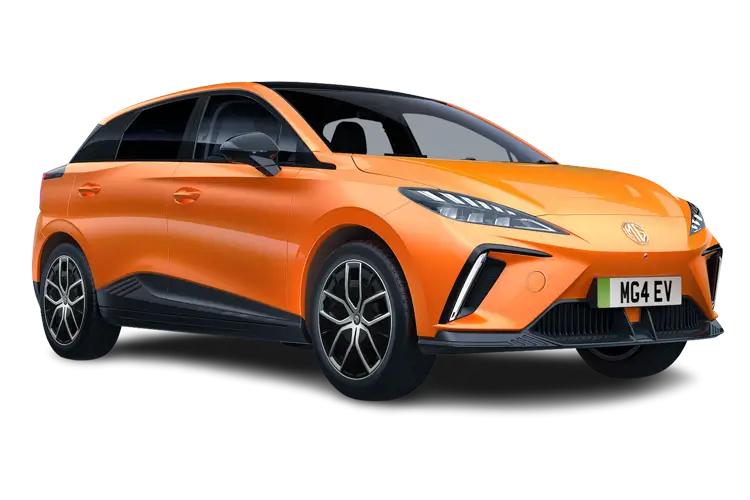
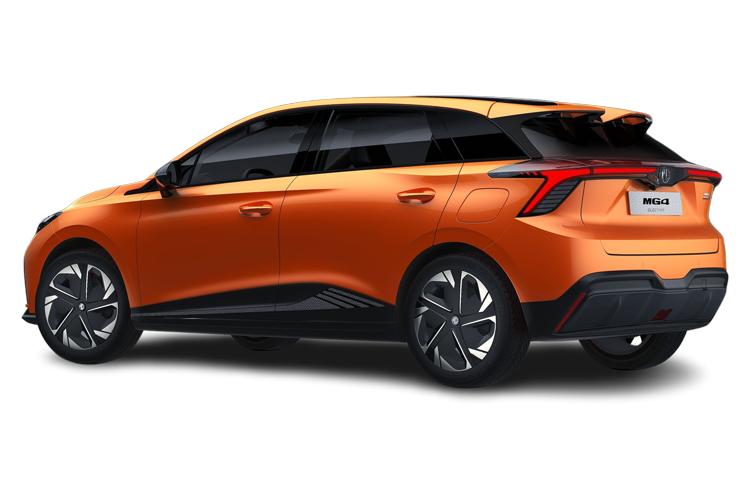
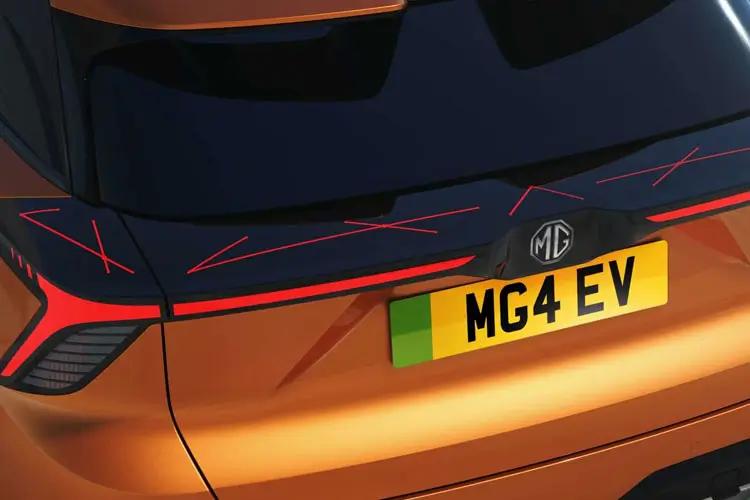
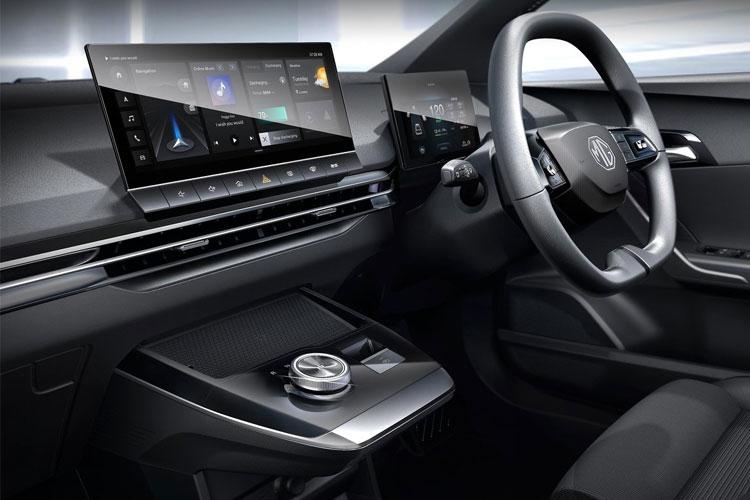
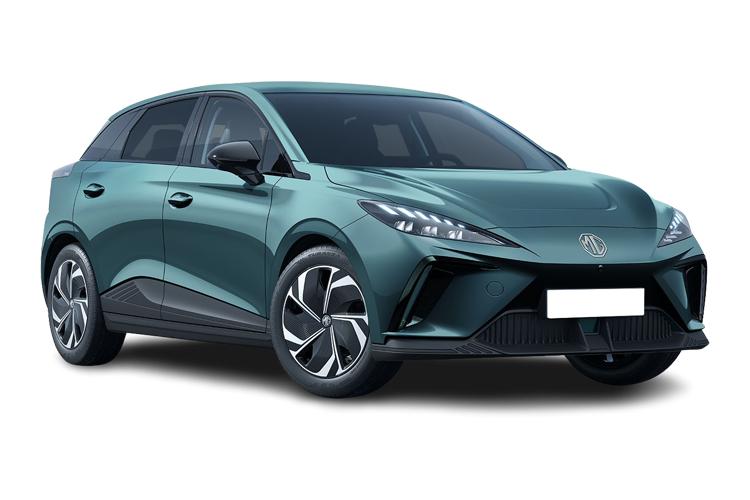
Did you ever imagine an MG might look like this? More to the point, did you ever imagine an ordinary family hatchback might look like this? Think of this car as a Chinese take on a Volkswagen ID.3 and you won't be far off the mark. The two EVs are similar in size and if anything, the MG4 looks more contemporary, almost CUPRA-like, with its 'floating' roof, heavily sculpted black lower bodywork, short rear overhangs and intricate rear light clusters. It was also the first MG model with badging referencing its SAIC conglomerate parent (in the side of the rear light unit). The insectoid looks could do with a larger set of wheels than the standard 17-inch rims to set them off, but aesthetically that's about it on the debit side. Plip the key fob and the projector LED headlamps spring into life welcoming you in. Inside it feels minimalist, uber-modern and was a whole generation on from anything MG had previously ever produced. At first glance, there's a curious and slightly over-large steering wheel (flat-topped and bottomed) through which you view a 7-inch instrument screen. Plus a centre 'floating' 10.25-inch infotainment display. And not a lot else. The interior looks lacks the bright and cheery feel of an ID.3. And you could nit-pick about some aspects of plastics quality. But overall, the design here lacks little in either ambition or execution. You might find it annoying that there's no way of turning the car off should you wish to park up and remain in it; the only way of powering the MG4 down is to get out and lock it. A great benefit of EV drivetrain packaging is the way that it usually frees up surprising amounts of rear seat leg room - which is again the case here. Even a six foot adult wouldn't have too many complaints in the back. The tailgate rises to reveal a 363-litre boot that looks reasonably-sized but is 22-litres smaller than that of that rival ID.3. Still, there are small netted side pockets, plus the practical shaping means you can make good use of what's available and there's an adjustable-height floor under which you can conveniently store the charging cables.
Prices start with base 51kWh model in 'SE' form on an early '22 plate valuing at around £10,100 (around £12,500 retail). For the 64kWh Long Range model, prices with base 'SE' trim on an early '22 plate start from around £11,600 (around £14,000 retail). Add around £1,400 in either case for top 'Trophy' trim. All quoted values are sourced through industry experts cap hpi. <a href="https://hpivaluations.com/">Click here for a free valuation.</a>
We've come across various things to look out for. Which magazine reported that there was an 'unusual' flaw with the car's lane-departure warning system, which had a tendency to pull the car off the road or to the wrong side of it. Check this out on your test drive. Other than that, the main and most common issue is that EV range seems to be way off what the manufacturer claims. There are plenty of reports of electrical glitches, with warning lights illuminating on the dashboard and intermittent problems with power windows, door locks and window seals. We've also heard of issues with the infotainment screen freezing, unresponsive touch-sensitive controls and audio failures. With the EV powertrain, some owners have experienced problems with the 12V battery. And there have been various charging glitches, so give any car you look at a full charging cycle. Otherwise, it's just the usual things; look out for stone chips and alloy wheel scratches. And insist on a fully stamped-up service history. The drive battery should have quite a bit of life in it, unless you happen to be looking at one of the very earliest '22-plate versions. When the battery is on its way out, you'll obviously find that it won't go as far on each charge - and when it starts to run low on charge, you'll find that the car will particularly start to struggle going uphill. When it gets old, the lithium-ion battery used here can suffer from the ionised liquid in the battery freezing certain cells; those cells are then unable to receive charge. Before going to all that trouble though, make sure the issue really is the battery. If the car won't charge, it could be a problem with your home electrics (or those at the public charge point you're using). Check the charge light to make sure that electricity really is going through the charge port. And make sure there really is charge in the socket you're using to power from - plug something else into it to see - say, your 'phone. If that charges OK, it could be that your charging cable is demanding too much power, so try another power source. Another problem could be that the circuit may have tripped due to a circuit overload. Or perhaps there could be a problem with the charge cable: this needs to be cared for properly. Repeatedly driving over it (as previous owners may conceivably have done) will damage it eventually. Make sure you do a charge-up before signing for the car you're looking at. When you do this, make sure that when you plug in to start the charge cycle you hear the charge port and the cable locking and engaging as they should; that's all part of the charger basically confirming with the car's onboard computer that everything's good to go before releasing power. But if the charging cable fails to lock as it should, then that won't happen. If there is a failure to lock, the issue could be actuator failure, caused by a blown fuse.
[MG 4 EV 64kWh - autodoc.co.uk - ex-VAT] MG parts prices are pretty affordable. Here are some examples; Brake Pads (Front/Rear): £10.49 - £50.99 per set. Coil Springs: £24.49 - £172.99. TPMS Sensor (RIDEX): £27.99. Wiper Blades (BOSCH): £24. Door Parts/Rollers: £5.00 - £63.00. Headlight Parts (Bulb Sockets/Trim): £5.59 - £31.00.
There's no key or starter button and thankfully, unlike some other Far Eastern models, no silly chimes either: you just get in, take a seat, press the brake and the car comes to life. This was the first of a series of new-era MG models developed to ride and handle at a similar level to pricier volume brand competitors. Being able to base everything on properly modern underpinnings helped with this - in this case, the brand's freshly developed Modular Scalable Platform. But there's more to the engineering here than that: a slender battery pack that occupies almost the whole wheelbase length, a compact rear-mounted motor and perfect 50:50 weight distribution. To start with, there was a choice of two powertrains, both of which put out 250Nm of pulling power. The base 51kWh version has a 170PS motor, manages 218 miles of range and makes 62mph from rest in 7.5s. Ideally, you'll want to stretch to the 64kWh version, which has a 203PS motor, is a fraction slower to 62mph (7.7s), but goes 281 miles between charges - or 270 miles if you opt for the plusher (but portlier) 'Trophy' trim spec. As promised, that chassis helps the car feel taut and responsive; and though the ride's on the firm side, it's something you can live with and gives you the feel that this MG would be up for a few playful back roads if you could afford the battery range to let it have its head. Do that and you'll find decent body control, eager traction and not too much evidence of the portly near-1.7-tonne kerb weight. It was easily the most entertaining MG to date. You'd expect various drive modes and settings and, sure enough, this MG provides them. There are five driving modes ('Normal', 'Sport', 'Eco', 'Snow' and 'Custom'); and four selectable regenerative braking settings ('Weak', 'Medium', 'Strong' and 'Adaptive'), the fiercest of these doing 80% of braking for you. As for charging the battery, well the 64kWh 'Long Range' variant (61.7kWh usable) that most will want equals the same charging speed you'd get with a rival Volkswagen ID.3, accepting rates of 135kW (though bear in mind that figure falls to 117kW with the 51kWh 'Standard Range' model, which has 50.8kWh of usable battery capacity). Connect up this 'Long Range' model to a 150kW public charger and that's enough to replenish the battery from 10 to 80% in 35 minutes (39 minutes for the 'Standard Range' version). Most of the time of course, you'll be charging your MG4 from home. Using a conventional 7.4kW garage wallbox, the 'Standard Range' model needs 8 hours, 15 minutes for a full charge; it'd be 10 hours for this 'Long Range' version.
Prior to 2022, in the period following MG's take over by the Chinese SAIC conglomerate, the cars it sold were good value, well equipped and practical. But never desirable or dynamically truly class competitive. All that changed with the MG4. What's really important here is that the basics are right; in fact, back in 2022 this was one of the most surprising cars we'd reviewed for ages. All the engineering stuff stacks up, it looks good and driving range and charging figures are well up to snuff. Having said all of that, it's clear that some aspects of this car were built to a price and you'll need to buy on the used market extremely carefully, taking note of the issues we've flagged up in this review. But get a good one and you might think the effort to be worth it. After trying an MG4, you may well still decide you want a better-known segment rival. But make no mistake: if you're choosing an EV in this class, try one you must.
Data provided by CAP-HPI database - Ref# 101149
By Jonathan Crouch
Back in 2022, the MG4 redefined its brand - and redefined what customers should have to pay for a cutting-edge compact five-seat EV family hatchback. It might not be on your wish list if you're currently looking for a car of this kind from the 2022-2025 period. It should be. Here, we look at the initial pre-facelift MG4 models.
5dr SUV (EV)
By 2022, for the first time in its long history, MG had become a proper mainstream player. Proper in terms of sales (by then it was out-selling brands like MINI, Skoda and Land Rover). And proper in terms of product - or at least in terms of this one, the MG4, launched in that year. The company called this compact full-EV hatch a 'disruptor', offering much more for much less: and that's exactly what it was. For less than the cost of an EV supermini, here was an all-electric family car that made similarly sized rivals look hopelessly over-priced. With new Chinese-era MGs of the past, there would have been a caveat to come at this point - or several. Cheap build quality, dull road manners, naff interior plastics and, in the case of an EV, feeble driving range. None of which, on paper at least, seemed back in 2022 to apply to the MG4, which was the first of several subsequent models from the brand to use the sophisticated and then all-new Modular Scalable Platform that was tasked with transforming what we could expect from the marque. The MG4 was thoroughly updated in early 2026. But it's the earlier 2022-2025-era versions of this car we look at here.
Did you ever imagine an MG might look like this? More to the point, did you ever imagine an ordinary family hatchback might look like this? Think of this car as a Chinese take on a Volkswagen ID.3 and you won't be far off the mark. The two EVs are similar in size and if anything, the MG4 looks more contemporary, almost CUPRA-like, with its 'floating' roof, heavily sculpted black lower bodywork, short rear overhangs and intricate rear light clusters. It was also the first MG model with badging referencing its SAIC conglomerate parent (in the side of the rear light unit). The insectoid looks could do with a larger set of wheels than the standard 17-inch rims to set them off, but aesthetically that's about it on the debit side. Plip the key fob and the projector LED headlamps spring into life welcoming you in. Inside it feels minimalist, uber-modern and was a whole generation on from anything MG had previously ever produced. At first glance, there's a curious and slightly over-large steering wheel (flat-topped and bottomed) through which you view a 7-inch instrument screen. Plus a centre 'floating' 10.25-inch infotainment display. And not a lot else. The interior looks lacks the bright and cheery feel of an ID.3. And you could nit-pick about some aspects of plastics quality. But overall, the design here lacks little in either ambition or execution. You might find it annoying that there's no way of turning the car off should you wish to park up and remain in it; the only way of powering the MG4 down is to get out and lock it. A great benefit of EV drivetrain packaging is the way that it usually frees up surprising amounts of rear seat leg room - which is again the case here. Even a six foot adult wouldn't have too many complaints in the back. The tailgate rises to reveal a 363-litre boot that looks reasonably-sized but is 22-litres smaller than that of that rival ID.3. Still, there are small netted side pockets, plus the practical shaping means you can make good use of what's available and there's an adjustable-height floor under which you can conveniently store the charging cables.
Prices start with base 51kWh model in 'SE' form on an early '22 plate valuing at around £10,100 (around £12,500 retail). For the 64kWh Long Range model, prices with base 'SE' trim on an early '22 plate start from around £11,600 (around £14,000 retail). Add around £1,400 in either case for top 'Trophy' trim. All quoted values are sourced through industry experts cap hpi. <a href="https://hpivaluations.com/">Click here for a free valuation.</a>
We've come across various things to look out for. Which magazine reported that there was an 'unusual' flaw with the car's lane-departure warning system, which had a tendency to pull the car off the road or to the wrong side of it. Check this out on your test drive. Other than that, the main and most common issue is that EV range seems to be way off what the manufacturer claims. There are plenty of reports of electrical glitches, with warning lights illuminating on the dashboard and intermittent problems with power windows, door locks and window seals. We've also heard of issues with the infotainment screen freezing, unresponsive touch-sensitive controls and audio failures. With the EV powertrain, some owners have experienced problems with the 12V battery. And there have been various charging glitches, so give any car you look at a full charging cycle. Otherwise, it's just the usual things; look out for stone chips and alloy wheel scratches. And insist on a fully stamped-up service history. The drive battery should have quite a bit of life in it, unless you happen to be looking at one of the very earliest '22-plate versions. When the battery is on its way out, you'll obviously find that it won't go as far on each charge - and when it starts to run low on charge, you'll find that the car will particularly start to struggle going uphill. When it gets old, the lithium-ion battery used here can suffer from the ionised liquid in the battery freezing certain cells; those cells are then unable to receive charge. Before going to all that trouble though, make sure the issue really is the battery. If the car won't charge, it could be a problem with your home electrics (or those at the public charge point you're using). Check the charge light to make sure that electricity really is going through the charge port. And make sure there really is charge in the socket you're using to power from - plug something else into it to see - say, your 'phone. If that charges OK, it could be that your charging cable is demanding too much power, so try another power source. Another problem could be that the circuit may have tripped due to a circuit overload. Or perhaps there could be a problem with the charge cable: this needs to be cared for properly. Repeatedly driving over it (as previous owners may conceivably have done) will damage it eventually. Make sure you do a charge-up before signing for the car you're looking at. When you do this, make sure that when you plug in to start the charge cycle you hear the charge port and the cable locking and engaging as they should; that's all part of the charger basically confirming with the car's onboard computer that everything's good to go before releasing power. But if the charging cable fails to lock as it should, then that won't happen. If there is a failure to lock, the issue could be actuator failure, caused by a blown fuse.
[MG 4 EV 64kWh - autodoc.co.uk - ex-VAT] MG parts prices are pretty affordable. Here are some examples; Brake Pads (Front/Rear): £10.49 - £50.99 per set. Coil Springs: £24.49 - £172.99. TPMS Sensor (RIDEX): £27.99. Wiper Blades (BOSCH): £24. Door Parts/Rollers: £5.00 - £63.00. Headlight Parts (Bulb Sockets/Trim): £5.59 - £31.00.
There's no key or starter button and thankfully, unlike some other Far Eastern models, no silly chimes either: you just get in, take a seat, press the brake and the car comes to life. This was the first of a series of new-era MG models developed to ride and handle at a similar level to pricier volume brand competitors. Being able to base everything on properly modern underpinnings helped with this - in this case, the brand's freshly developed Modular Scalable Platform. But there's more to the engineering here than that: a slender battery pack that occupies almost the whole wheelbase length, a compact rear-mounted motor and perfect 50:50 weight distribution. To start with, there was a choice of two powertrains, both of which put out 250Nm of pulling power. The base 51kWh version has a 170PS motor, manages 218 miles of range and makes 62mph from rest in 7.5s. Ideally, you'll want to stretch to the 64kWh version, which has a 203PS motor, is a fraction slower to 62mph (7.7s), but goes 281 miles between charges - or 270 miles if you opt for the plusher (but portlier) 'Trophy' trim spec. As promised, that chassis helps the car feel taut and responsive; and though the ride's on the firm side, it's something you can live with and gives you the feel that this MG would be up for a few playful back roads if you could afford the battery range to let it have its head. Do that and you'll find decent body control, eager traction and not too much evidence of the portly near-1.7-tonne kerb weight. It was easily the most entertaining MG to date. You'd expect various drive modes and settings and, sure enough, this MG provides them. There are five driving modes ('Normal', 'Sport', 'Eco', 'Snow' and 'Custom'); and four selectable regenerative braking settings ('Weak', 'Medium', 'Strong' and 'Adaptive'), the fiercest of these doing 80% of braking for you. As for charging the battery, well the 64kWh 'Long Range' variant (61.7kWh usable) that most will want equals the same charging speed you'd get with a rival Volkswagen ID.3, accepting rates of 135kW (though bear in mind that figure falls to 117kW with the 51kWh 'Standard Range' model, which has 50.8kWh of usable battery capacity). Connect up this 'Long Range' model to a 150kW public charger and that's enough to replenish the battery from 10 to 80% in 35 minutes (39 minutes for the 'Standard Range' version). Most of the time of course, you'll be charging your MG4 from home. Using a conventional 7.4kW garage wallbox, the 'Standard Range' model needs 8 hours, 15 minutes for a full charge; it'd be 10 hours for this 'Long Range' version.
Prior to 2022, in the period following MG's take over by the Chinese SAIC conglomerate, the cars it sold were good value, well equipped and practical. But never desirable or dynamically truly class competitive. All that changed with the MG4. What's really important here is that the basics are right; in fact, back in 2022 this was one of the most surprising cars we'd reviewed for ages. All the engineering stuff stacks up, it looks good and driving range and charging figures are well up to snuff. Having said all of that, it's clear that some aspects of this car were built to a price and you'll need to buy on the used market extremely carefully, taking note of the issues we've flagged up in this review. But get a good one and you might think the effort to be worth it. After trying an MG4, you may well still decide you want a better-known segment rival. But make no mistake: if you're choosing an EV in this class, try one you must.
170kW Premium Long Range 64kWh 5dr Auto

POA
Business Lease Price per month (excl VAT) £259.03