
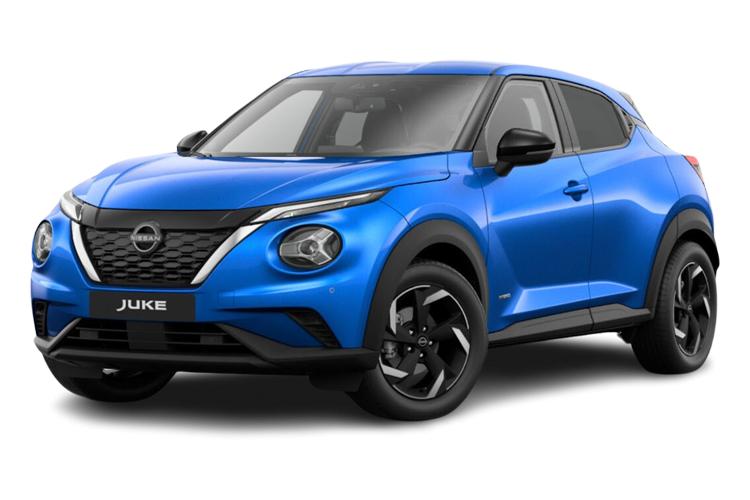
Images are for illustrative purposes only.
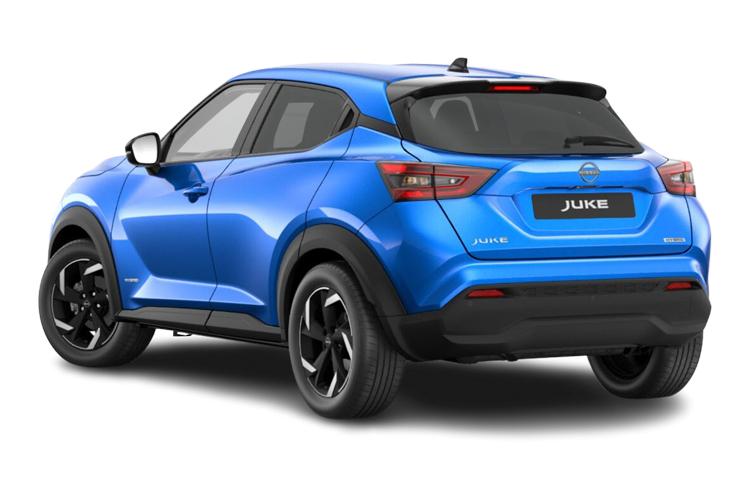
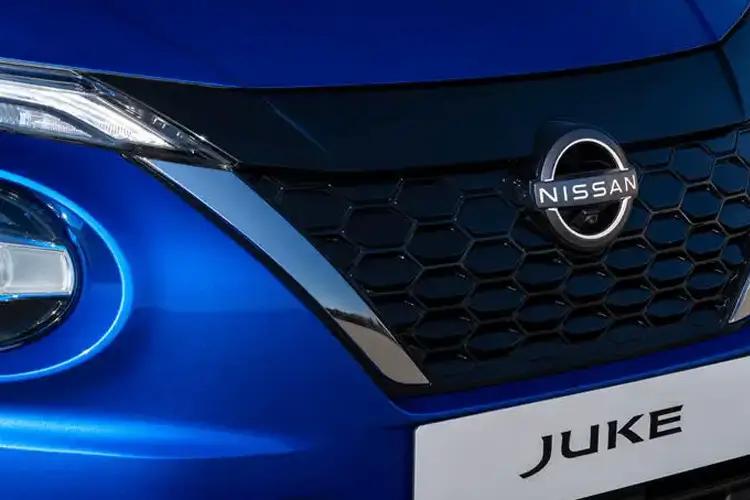
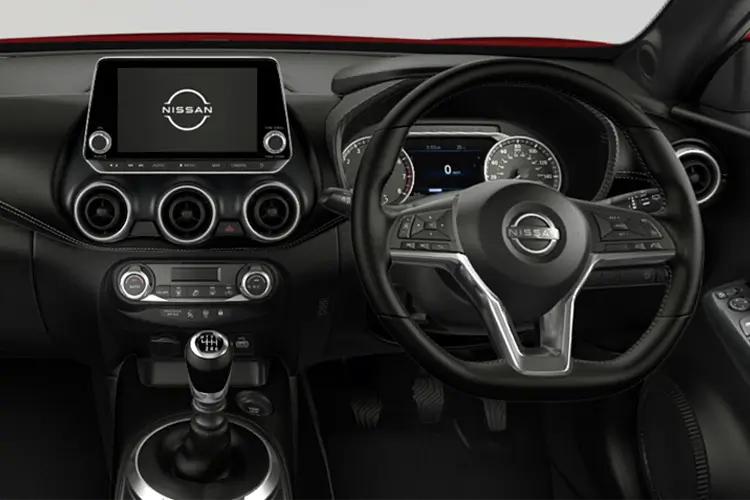

1.0 DiG-T 114 Tekna 5dr
Need some assistance or advice? Call Us 01903 538835


By Jonathan Crouch
Light, nimble and extrovert, the Nissan Juke was the original small supermini-derived crossover model, combining attitude, irreverence, modish style and energy with a mischievous sense of fun. After the first F15-era model's original launch, plenty of would-be rivals attempted to copy its concept, prompting Nissan to introduce this second generation F16 model to try and ensure continued segment leadership. As before, the result certainly won't appeal to everyone - but then that's because it isn't supposed to. It's aimed at the young - and the young at heart, many of whom will continue to love this car and admire its designers for having the courage to do something different. Very different. Here, we look at earlier versions of this F16 design as a used buy.
5dr SUV (1.0 DIG-T petrol / 1.6 Hybrid petrol)
There's nothing quite like a Nissan Juke, part-SUV, part-sports coupe, part-hot hatch - with a few bike and rally car genes thrown in for good measure. It sounds an unpromising mix but against the odds, Nissan made it work and in the original F15-era version of this car, defined once and for all what the market's smallest breed of crossover-class car should be like. Here's the second generation model. What was most amazing about that original Juke was that a company the size of Nissan could build it. The usual procedure is for a maverick designer to come up with just such a concept, only for company heads to shelve it, for customer clinics to reject it or for marketing pressure to water it down. Somehow the earlier Juke survived all of these potential trapdoors and in 2019, the replacement MK2 F16 model remained equally polarising. The original Juke didn't invent the compact crossover segment, but it was very much the car that popularised it. Launched in 2010, then significantly updated in 2014, over 1.5 million examples of it were sold by the time this second generation version arrived in the Autumn of 2019, 285,000 of them in the UK. Under the skin, the engineering of this MK2 version was slightly less distinct and varied than that of the previous car. That old model had had an adapted platform unique to it and offered customers a choice of petrol and diesel power. And front or four-wheel drive. This replacement shared its front driven-only CMF-B platform with its cousin and close rival the Renault Captur. From launch, there was only one engine (also shared with that Renault), a 1.0-litre three cylinder petrol unit, claimed to be 15% faster and 30% cleaner than its DIG-T unit predecessor. A full-Hybrid version was added to the range in 2023. This Juke was styled at Nissan's European Design Centre in Paddington, London and developed at the brand's R&D facility in Cranfield. It was also built on these shores, in Wearside near Sunderland. The range received a thorough update in mid-2024. It's the pre-facelift 2019-2024-era versions of this J16 design we look at here.
Yes, in this MK2 F16 form, the Juke does still look like either something dredged up from the abyssal depths of the ocean. Or a fun, friendly and futuristic little runabout. It all depends on your perspective. Whichever camp you're in, you have to hand it to Nissan for not losing its resolve here. It would have been so easy for them to water this design down so as to reach a wider audience. But as it is, buyers of the original model will immediately recognise this second generation version, with its exaggerated wheel arches, rising window line, strong shoulders and a squat rear end. All of which artfully disguises a slight size increase over what we had before - its 29mm wider and 75mm longer. Inside, if you remember the F15 original, you'll find that a few of the motorcycle-style touches of the original model are gone, but the cabin's of much higher quality and was just as personalisable as before. The sporty-looking 'monoform' seats with their integrated headrests position you a little higher up than in some direct rivals and (unlike in the original version) the steering wheel adjusts for reach as well as rake. Through it, you view a couple of clear analogue gauges separated by a good-sized screen. Anything that can't tell you will be covered off by a centre-dash 8-inch NissanConnect display, which was standard above entry-level trim and was equipped with plenty; 'Apple CarPlay'/'Android Auto' smartphone mirroring, plus voice control, NissanConnect Live information services and a rear view camera. Frontward vision is good; rearward visibility less so. And there's a reasonable amount of cabin storage. Nissan boated of an extra 58mm of leg room in the back for this MK2 model, enough to make the difference between what previously felt very much like a 'kids-only' space and one that with this F16 design feels like it could take a couple of adults for short-to-medium-length journeys without upsetting them too much. Younger folk will be pleased to find a USB port added to the back, near the central cubby. And the centre transmission tunnel isn't too high, so if you really do have to squeeze a third person in, that ought to be possible without the central occupant needing a trip to the osteopath afterwards. The 422-litre capacity is 20% greater than what was on offer before. For the boot, most models get a standard adjustable-height floor, which in its lowest setting will allow you to carry some really quite tall items.
Please contact us for an exact up-to-date valuation.
There are various things a used buyer has to look out for here. It's worth checking out the www.jukeforums.com owners' site. There's also Nissan Juke owners group on Facebook. We've heard of potential stalling issues during acceleration, defective internal bearings and the possibility of a need for entire gearbox replacement if issues arise. We also heard of clutch problems, turbocharger faults, fuel economy concerns and premature wear on the front brake pads. And you should be particularly careful if you are looking at the CVT auto gearbox models; with these, give the car a particularly thorough road test to make sure that changes are happening as they should. In one case, a CVT Juke owner found the car stuck in Park mode. The Hybrid version is CVT-only, but we haven't come across and particular reported issues with this more complicated powertrain - just a product recall with the hybrid electric vehicle control software. One owner of the conventional 1.0-litre model had an experience that seemed like she was pressing the accelerator with nothing happening. For the DIG-T model, there was a product recall based around the rear seat back not being securely latched when returned to the upright position; and another recall with the driver's airbag tearing during inflation. Check that the car you are looking at has had all relevant recalls attended to if applicable. Since this is a family car, check for the usual side panel and alloy wheels scrapes - and signs of child damage or luggage scrapes inside.
(approx based on a 2022 Juke Hybrid - Ex Vat autopartspro.co.uk) An oil filter is in the £5-£16 bracket. An air filter is in the £11-£17 bracket. Front and rear brake pads cost in the £17-£42 bracket. Front brake discs cost in the £30-£76 bracket. Rear brake discs cost in the £22-£47 bracket. A wiper blade's in the £5-£11 bracket. A shock absorber set's in the £95-£102 bracket.
When we first tried the original Juke, we likened it to 'a kind of shrunken SUV sportscar in super-springy trainers'. In some ways, not too much changed with this second generation model, which got a handling CV enhanced with a stiffer, more sophisticated CMF-B platform, more responsive steering and 'Active Trace Control' torque vectoring for extra traction through the turns. All of which explains why this Nissan is more rewarding to drive than most of its 'B'-segment small SUV rivals from this period. The brand had to adopt a pretty stiff suspension set-up to make it all work though. Too stiff, you might feel, if you've opted for a version with the big 19-inch wheels that come fitted to top 'Tekna' models. With the 16 or 17-inch rims of lesser variants though, the damping balance offers a more bearable compromise, helped by smaller secondary springs housed within the dampers to cushion rebound strokes as you drive over bumps. And standard 'Active Ride Control' which immediately after you've hit a pothole or a tarmac tear, gently applies brake pad to brake disc- usually at the rear - so as to ease back body pitch and keep the car more stable. From launch, there was only one engine option - a three cylinder 1.0 DIG-T petrol turbo unit with 117PS - but there was the option of a (rather jerky) 7-speed paddleshift auto gearbox as an alternative to the standard 6-speed manual. Plusher variants get a set of 'D-Mode' drive settings. And WLTP-rated efficiency was very class-competitive, the manual model managing 47.9mpg and 135g/km of CO2. What about the Hybrid version? Well the drivetrain here was basically the same one Renault used in the Clio, the Captur and the Arkana. Albeit with changes made to the 1.6-litre petrol engine (which here develops 93bhp) and to the set-up's electric motor (here putting out 48bhp and working with a 20bhp starter generator). Total system output is 141bhp. As with Renault, that e-motor is mounted within a four-speed 'multi-modal' auto gearbox which manages both power sources. What was unique to the Juke Hybrid though was this Nissan's 'e-Pedal' function, which increases regenerative braking - to the point where the car can slow right down to 5mph when you come off the throttle. It also improves water cooling for the compact 1.2kWh battery, which always powers the car from start-off and can take you up to 34mph without troubling fossil fuel. Once you crest the EV speed barrier, the powertrain switches into 'series hybrid' mode, where the engine charges the battery - great for urban driving. And at high speeds and under heavy acceleration, the whole set-up reverts to 'parallel mode' in which both the e-motor and the engine drive the wheels. Nissan had to tweak the springs and dampers to accommodate the Hybrid system's extra 100kgs of weight and did so with settings it hoped would be firm enough to assure this Juke's urban status as 'the roundabout superstar' - their words, not ours. In other words, don't expect a cosseting ride over the speed humps. Get out on the open road and the 62mph sprint is dispatched in 10.1s, 1.7s quicker than the conventional 1.0-litre DIG-T model.
The Juke was always a clever idea, originally launched by Nissan in its MK1 F15 form to offer SUV-like style for the small car sector without any SUV-like compromises - precisely the same trick the company's bigger Qashqai crossover had already pulled off in targeting larger family-sized models in the market segment above. There's no point though, in starting a trend if you're not prepared to develop it and in the face of increasing competition, this car needed to evolve. It did in this F16 MK2 guise. If you liked the earlier Juke, you'll love this F16 version even more. If though, it was a little.. extrovert for you in its original form, it still won't be to your taste and you'll probably want something similar that's a little more restrained - maybe, say, a Peugeot 2008 or perhaps a Volkswagen T-Cross. A Juke is different: very different in fact, if you get a car whose original owner chose all the trendy personalisation options. Not everyone will agree - but one thing's for sure: this is an original. In every sense.
Data provided by CAP-HPI database - Ref# 95830
By Jonathan Crouch
Light, nimble and extrovert, the Nissan Juke was the original small supermini-derived crossover model, combining attitude, irreverence, modish style and energy with a mischievous sense of fun. After the first F15-era model's original launch, plenty of would-be rivals attempted to copy its concept, prompting Nissan to introduce this second generation F16 model to try and ensure continued segment leadership. As before, the result certainly won't appeal to everyone - but then that's because it isn't supposed to. It's aimed at the young - and the young at heart, many of whom will continue to love this car and admire its designers for having the courage to do something different. Very different. Here, we look at earlier versions of this F16 design as a used buy.
5dr SUV (1.0 DIG-T petrol / 1.6 Hybrid petrol)
There's nothing quite like a Nissan Juke, part-SUV, part-sports coupe, part-hot hatch - with a few bike and rally car genes thrown in for good measure. It sounds an unpromising mix but against the odds, Nissan made it work and in the original F15-era version of this car, defined once and for all what the market's smallest breed of crossover-class car should be like. Here's the second generation model. What was most amazing about that original Juke was that a company the size of Nissan could build it. The usual procedure is for a maverick designer to come up with just such a concept, only for company heads to shelve it, for customer clinics to reject it or for marketing pressure to water it down. Somehow the earlier Juke survived all of these potential trapdoors and in 2019, the replacement MK2 F16 model remained equally polarising. The original Juke didn't invent the compact crossover segment, but it was very much the car that popularised it. Launched in 2010, then significantly updated in 2014, over 1.5 million examples of it were sold by the time this second generation version arrived in the Autumn of 2019, 285,000 of them in the UK. Under the skin, the engineering of this MK2 version was slightly less distinct and varied than that of the previous car. That old model had had an adapted platform unique to it and offered customers a choice of petrol and diesel power. And front or four-wheel drive. This replacement shared its front driven-only CMF-B platform with its cousin and close rival the Renault Captur. From launch, there was only one engine (also shared with that Renault), a 1.0-litre three cylinder petrol unit, claimed to be 15% faster and 30% cleaner than its DIG-T unit predecessor. A full-Hybrid version was added to the range in 2023. This Juke was styled at Nissan's European Design Centre in Paddington, London and developed at the brand's R&D facility in Cranfield. It was also built on these shores, in Wearside near Sunderland. The range received a thorough update in mid-2024. It's the pre-facelift 2019-2024-era versions of this J16 design we look at here.
Yes, in this MK2 F16 form, the Juke does still look like either something dredged up from the abyssal depths of the ocean. Or a fun, friendly and futuristic little runabout. It all depends on your perspective. Whichever camp you're in, you have to hand it to Nissan for not losing its resolve here. It would have been so easy for them to water this design down so as to reach a wider audience. But as it is, buyers of the original model will immediately recognise this second generation version, with its exaggerated wheel arches, rising window line, strong shoulders and a squat rear end. All of which artfully disguises a slight size increase over what we had before - its 29mm wider and 75mm longer. Inside, if you remember the F15 original, you'll find that a few of the motorcycle-style touches of the original model are gone, but the cabin's of much higher quality and was just as personalisable as before. The sporty-looking 'monoform' seats with their integrated headrests position you a little higher up than in some direct rivals and (unlike in the original version) the steering wheel adjusts for reach as well as rake. Through it, you view a couple of clear analogue gauges separated by a good-sized screen. Anything that can't tell you will be covered off by a centre-dash 8-inch NissanConnect display, which was standard above entry-level trim and was equipped with plenty; 'Apple CarPlay'/'Android Auto' smartphone mirroring, plus voice control, NissanConnect Live information services and a rear view camera. Frontward vision is good; rearward visibility less so. And there's a reasonable amount of cabin storage. Nissan boated of an extra 58mm of leg room in the back for this MK2 model, enough to make the difference between what previously felt very much like a 'kids-only' space and one that with this F16 design feels like it could take a couple of adults for short-to-medium-length journeys without upsetting them too much. Younger folk will be pleased to find a USB port added to the back, near the central cubby. And the centre transmission tunnel isn't too high, so if you really do have to squeeze a third person in, that ought to be possible without the central occupant needing a trip to the osteopath afterwards. The 422-litre capacity is 20% greater than what was on offer before. For the boot, most models get a standard adjustable-height floor, which in its lowest setting will allow you to carry some really quite tall items.
Please contact us for an exact up-to-date valuation.
There are various things a used buyer has to look out for here. It's worth checking out the www.jukeforums.com owners' site. There's also Nissan Juke owners group on Facebook. We've heard of potential stalling issues during acceleration, defective internal bearings and the possibility of a need for entire gearbox replacement if issues arise. We also heard of clutch problems, turbocharger faults, fuel economy concerns and premature wear on the front brake pads. And you should be particularly careful if you are looking at the CVT auto gearbox models; with these, give the car a particularly thorough road test to make sure that changes are happening as they should. In one case, a CVT Juke owner found the car stuck in Park mode. The Hybrid version is CVT-only, but we haven't come across and particular reported issues with this more complicated powertrain - just a product recall with the hybrid electric vehicle control software. One owner of the conventional 1.0-litre model had an experience that seemed like she was pressing the accelerator with nothing happening. For the DIG-T model, there was a product recall based around the rear seat back not being securely latched when returned to the upright position; and another recall with the driver's airbag tearing during inflation. Check that the car you are looking at has had all relevant recalls attended to if applicable. Since this is a family car, check for the usual side panel and alloy wheels scrapes - and signs of child damage or luggage scrapes inside.
(approx based on a 2022 Juke Hybrid - Ex Vat autopartspro.co.uk) An oil filter is in the £5-£16 bracket. An air filter is in the £11-£17 bracket. Front and rear brake pads cost in the £17-£42 bracket. Front brake discs cost in the £30-£76 bracket. Rear brake discs cost in the £22-£47 bracket. A wiper blade's in the £5-£11 bracket. A shock absorber set's in the £95-£102 bracket.
When we first tried the original Juke, we likened it to 'a kind of shrunken SUV sportscar in super-springy trainers'. In some ways, not too much changed with this second generation model, which got a handling CV enhanced with a stiffer, more sophisticated CMF-B platform, more responsive steering and 'Active Trace Control' torque vectoring for extra traction through the turns. All of which explains why this Nissan is more rewarding to drive than most of its 'B'-segment small SUV rivals from this period. The brand had to adopt a pretty stiff suspension set-up to make it all work though. Too stiff, you might feel, if you've opted for a version with the big 19-inch wheels that come fitted to top 'Tekna' models. With the 16 or 17-inch rims of lesser variants though, the damping balance offers a more bearable compromise, helped by smaller secondary springs housed within the dampers to cushion rebound strokes as you drive over bumps. And standard 'Active Ride Control' which immediately after you've hit a pothole or a tarmac tear, gently applies brake pad to brake disc- usually at the rear - so as to ease back body pitch and keep the car more stable. From launch, there was only one engine option - a three cylinder 1.0 DIG-T petrol turbo unit with 117PS - but there was the option of a (rather jerky) 7-speed paddleshift auto gearbox as an alternative to the standard 6-speed manual. Plusher variants get a set of 'D-Mode' drive settings. And WLTP-rated efficiency was very class-competitive, the manual model managing 47.9mpg and 135g/km of CO2. What about the Hybrid version? Well the drivetrain here was basically the same one Renault used in the Clio, the Captur and the Arkana. Albeit with changes made to the 1.6-litre petrol engine (which here develops 93bhp) and to the set-up's electric motor (here putting out 48bhp and working with a 20bhp starter generator). Total system output is 141bhp. As with Renault, that e-motor is mounted within a four-speed 'multi-modal' auto gearbox which manages both power sources. What was unique to the Juke Hybrid though was this Nissan's 'e-Pedal' function, which increases regenerative braking - to the point where the car can slow right down to 5mph when you come off the throttle. It also improves water cooling for the compact 1.2kWh battery, which always powers the car from start-off and can take you up to 34mph without troubling fossil fuel. Once you crest the EV speed barrier, the powertrain switches into 'series hybrid' mode, where the engine charges the battery - great for urban driving. And at high speeds and under heavy acceleration, the whole set-up reverts to 'parallel mode' in which both the e-motor and the engine drive the wheels. Nissan had to tweak the springs and dampers to accommodate the Hybrid system's extra 100kgs of weight and did so with settings it hoped would be firm enough to assure this Juke's urban status as 'the roundabout superstar' - their words, not ours. In other words, don't expect a cosseting ride over the speed humps. Get out on the open road and the 62mph sprint is dispatched in 10.1s, 1.7s quicker than the conventional 1.0-litre DIG-T model.
The Juke was always a clever idea, originally launched by Nissan in its MK1 F15 form to offer SUV-like style for the small car sector without any SUV-like compromises - precisely the same trick the company's bigger Qashqai crossover had already pulled off in targeting larger family-sized models in the market segment above. There's no point though, in starting a trend if you're not prepared to develop it and in the face of increasing competition, this car needed to evolve. It did in this F16 MK2 guise. If you liked the earlier Juke, you'll love this F16 version even more. If though, it was a little.. extrovert for you in its original form, it still won't be to your taste and you'll probably want something similar that's a little more restrained - maybe, say, a Peugeot 2008 or perhaps a Volkswagen T-Cross. A Juke is different: very different in fact, if you get a car whose original owner chose all the trendy personalisation options. Not everyone will agree - but one thing's for sure: this is an original. In every sense.
