Images are for illustrative purposes only.
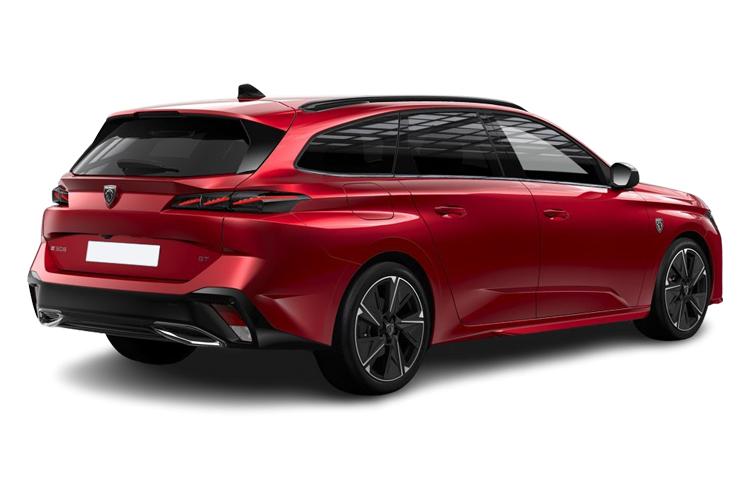
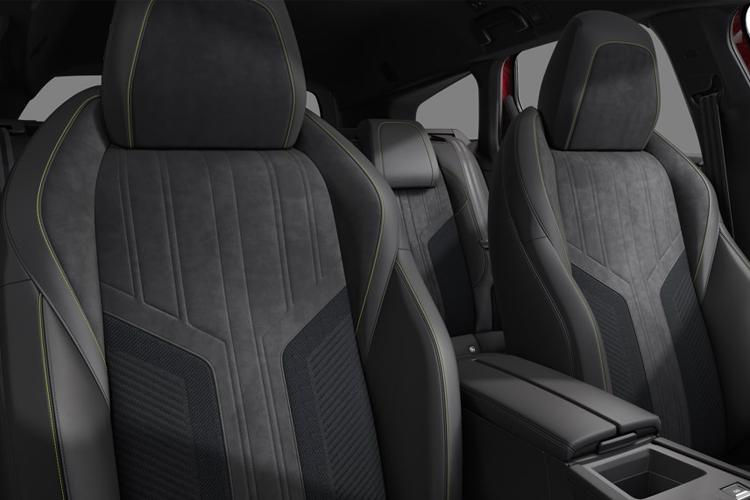
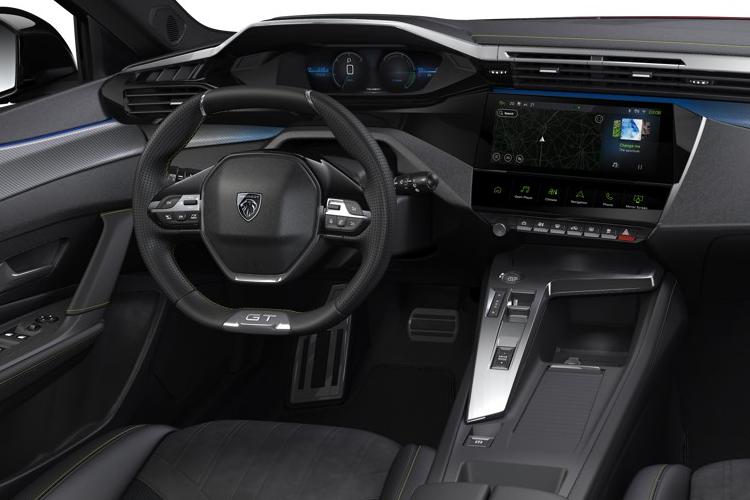

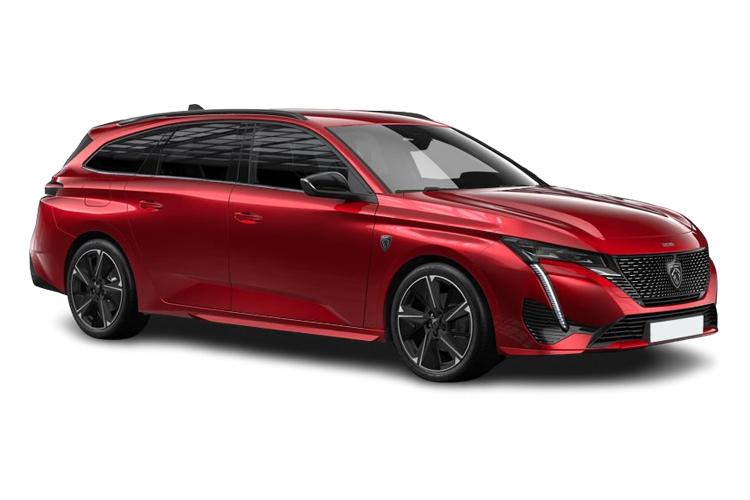
115kW GT 54kWh 5dr Auto
Need some assistance or advice? Call Us 01903 538835


By Jonathan Crouch
Conventional family hatchbacks that are also full-EVs were still quite thin on the ground back in 2023 but Peugeot's E-308 hoped to set a trend for them. It came in hatch and estate forms and aimed to establish some fresh standards for the kind of car family EV should be.
5dr Hatch, SW estate (EV)
Back in 2023, something we hadn't seen much in the explosion of full-electric compact cars were EV versions of conventional family hatchbacks. True, those then looking at either a Volkswagen ID.3 or a Kia Niro EV were essentially getting that, but both those manufacturers pretended those cars were Crossovers. Here though was something much more straightforward, the Peugeot E-308. In terms of conventional EV family hatches, it was arguably the first one we'd seen since the Volkswagen e-Golf was discontinued in 2019. Unlike that car, there was more than one body style, an SW estate offered as well as a 5-door hatch. And developed alongside this model with exactly the same 54kWh battery and powertrain were full-electric versions of its close Stellantis Group cousin, the Vauxhall Astra. This 308 was the first of the two cars to market and joined the existing 308 Hybrid Plug-in model for those wanting to make a more eco-minded choice in this segment. Late 2025 brought a mid-term facelift, but it's the pre-facelift 2023-2025-period versions of this P5-era E-308 that we look at here.
The 308 was the first Stellantis Group model to be offered with combustion, Plug-in Hybrid or pure electric power. Either way, beyond different badgework, visual differentiations designating the various powertrains used are few. Unlike most EVs, there's no ugly blanked-off front grille and the look of this appendage changes subtly with trim choice, the grille featuring horizontal chrome stamping on the mainstream 'Allure' model or a dark chrome chequered finish on a 'GT' variant. The cabin of this third generation 308 was virtually unaltered for this E-308 model. Which means that everything's very in-your-face and angular. Virtually everything you touch feels tactile and of high quality. And, as usual with a 308, the first thing you're going to have to decide is whether you can get on with the distinctive 'i-Cockpit' dash design with its tiny steering wheel, above which (rather than through which) you're supposed to view the instruments. The little gauges you view, of the virtual variety displayed on a 10-inch screen, are unusual too, but all the information shown is clear and easy to assimilate and the screen layout gets clever 3D graphics with top 'GT' trim. The central monitor is also 10-inches in size, but is deeper and more informative, underscored by a row of what Peugeot calls 'i-toggle' switches which operate the climate features but can be re-programmed for other functions if you wish. Normally, you'd expect this central screen layout to flow down into the lower part of the centre stack, but the designers clearly felt more storage space could be freed up by separating out the angular lower console with its diminutive little 'impulse selector' gear shifting switch. Lumbar adjustment comes as standard for the beautifully-upholstered seats, with the exception of restricted rear three-quarter vision, the ergonomics are fine and build quality from the French Mulhouse factory is difficult to fault. The downsides of not creating a EV from a clean sheet of paper are generally most obvious in terms of rear seat passenger space and so it is here. It's certainly not what you'd call spacious in the back - or at least it won't be if you've front seat folk of at least average height sitting ahead of you - and there's the kind of prominent central transmission tunnel that you'd think a front-driven EV wouldn't need. We should point out that the SW estate version offers a fraction more leg space than the hatch, but the difference isn't great and you'd certainly do better in class rivals like Volkswagen's ID.3 or BYD's Atto 3. Conventionally-engined 308s offer 412-litres of luggage space but, like the Plug-in Hybrid model, the trunk capacity of this E-308 falls to 361-litres because of all the battery cells beneath the floor. Obviously, because of its slightly higher roof line, the SW estate version has a larger boot, 548-litres in size in the E-308 model. Fold everything flat and the E-308 hatch will offer you 1,271-litres of capacity. For the E-308 SW estate, the seats-folded figure is 1,574-litres. You'll have to fit everything in the back because unlike with some EV rivals, there's no extra under-bonnet 'frunk' space.
We'll quote prices based on the hatchback body style. The SW estate is worth a premium of around £1,500. Prices for the earliest 2023 'Allure'-spec E-308 version start from around £14,000 (around £16,100 retail). For the sharper-looking better-specced 'GT' version you'd probably rather have, values start on a '23-plate from around £15,150 (around £17,350 retail). All quoted values are sourced through industry experts cap hpi. <a href="https://hpivaluations.com/">Click here for a free valuation.</a>
We've come across various issues with this MK3 P5-era 308. We've heard of a number of issues with the infotainment screen (freezing, re-boots, software instability), so make sure everything works as it should. We've also come across phantom battery charge warnings. We've not come across any specific E-308 model problems, but do a full charge just in case and check the condition of the charging lead. If the car won't charge, it could be a problem with your home electrics (or those at the public charge point you're using). Check the charge light to make sure that electricity really is going through the charge port. And make sure there really is charge in the socket you're using to power from - plug something else into it to see - say, your 'phone. If that charges OK, it could be that your charging cable is demanding too much power, so try another power source. Another problem could be that the circuit may have tripped due to a circuit overload. Or perhaps there could be a problem with the charge cable: this needs to be cared for properly. Repeatedly driving over it (as previous owners may conceivably have done) will damage it eventually. Make sure you do a charge-up before signing for the car you're looking at. When you do this, make sure that when you plug in to start the charge cycle you hear the charge port and the cable locking and engaging as they should; that's all part of the charger basically confirming with the car's onboard computer that everything's good to go before releasing power. But if the charging cable fails to lock as it should, then that won't happen. If there is a failure to lock, the issue could be actuator failure, caused by a blown fuse. Otherwise, it's just the usual things; check the interior for child scrapes - and the wheels and rear bumpers for parking scratches. And insist on a fully stamped-up service history.
(approx based on a 2023 E-308 excl. VAT - autodoc) A set of front brake pads vary in price from £42-£69. For a front brake disc, think in around the £23-£83 bracket. A wiper arm is in the £86-£94 bracket. Cabin filters are in the £10-£30 bracket. A 12V battery is in the £70-£120 bracket. You'll need £100 for a 2-metre Type 2 Charging cable (32A, 7.4kW).
Back in 2023, Peugeot's 54kWh battery was being rolled out across its EVs and features here. It offers a 257 mile range figure. This battery powers a front axle-mounted 156bhp motor which is tasked with hauling nearly 1.7-tonnes of kerb weight along and the result is a car that doesn't feel particularly rapid for an EV; it'll get you to 62mph from rest in 9.8 seconds, a bit slower than the class norm, which is in the 7-8 second bracket. Overtaking needs to be quite carefully planned. At least, unlike quite a few EVs these days, top speed comfortably breaks the three-figure barrier, rated at 106mph. That's provided you engage most focused of the three available drive modes - 'Sport'; the others are 'Normal' and 'Eco'. There's quite a sporty feel thanks to Peugeot's usual (but unusual) 'i-Cockpit' driving position, which sees a dinky little quick-reacting steering wheel that's ideal for wrist-flick manoeuvres. Perform a few of them though and you'll certainly feel the prodigious weight of the battery pack which means that this usually quite light and agile family hatch here tips the scales at nearly 1.7-tonnes. At least that battery's central lower down positioning minimises the downside by lowering the centre of gravity. With this pre-facelift model, unlike with most rivals, there are no steering wheel paddles or selectable screen settings to alter brake regeneration. But Peugeot did provide a selectable 'Brake' option on the transmission interface which ups energy harvesting to the point where a lot of retardation can be handled by the brake regen system, rather than by the foot pedal. Ride quality is better than it is on most other compact EVs of this size (and far softer than in the equivalent rather over-firm Vauxhall Astra Electric); you certainly won't be clumping over speed humps and crashing through pot holes in the way we have with some small EVs we've tested. And Peugeot's kept wind noise and tyre roar at reasonable levels, so you can get the refinement benefit of that near-silent powertrain. The E-308 can charge at up to 100kW (that's about the same as a Hyundai Kona Electric from this period, but to give you some class perspective, an ID.3 from this era charges at up to 120kW). Charging at 100kW at a DC public rapid charger, the brand claims a battery replenishment rate from 20 to 80% in 28 minutes. An onboard three-phase 11 kW charger is included and if you're able to charge at 11kW at home, you'll replenish the battery completely in 5 hours 45 minutes. The 7.4kw wallbox you're more likely to have needs eight hours to do the same thing. Via the 'MyPeugeot' smartphone app or by using the vehicle's touchscreen, owners can schedule a wake-up time for the battery. This means that the cells can be at the optimal temperature for efficiency from the time you start up, plus of course the interior can also be pre-cooled or pre-heated too.
At launch, Peugeot called the E-308 'a benchmark car in its segment'. It wasn't, but we could see why you might want one. For the extra premium you might be paying over obvious segment rivals, you'll be getting a family hatch EV that handles better than most of them, rides better than nearly all of them - and arguably looks better too. Whether you ultimately choose an E-308 will have a lot to do with those looks - and whether you like its unusual 'i-Cockpit' driving position. But if you do, then there's certainly nothing else in the segment quite like it. We're perhaps most tempted by the SW version, which was the first European-built EV estate in its class, a model which manages to combine a bit of style with the sensibility you want from an EV and the practicality you'll need from a station wagon. Whatever body style you ultimately prefer, this is the kind of family hatch-sector EV model we're all going to have to get used to in the coming years. And on this evidence, the transition to that new era might be just that bit easier than expected.
Data provided by CAP-HPI database - Ref# 103224
By Jonathan Crouch
Conventional family hatchbacks that are also full-EVs were still quite thin on the ground back in 2023 but Peugeot's E-308 hoped to set a trend for them. It came in hatch and estate forms and aimed to establish some fresh standards for the kind of car family EV should be.
5dr Hatch, SW estate (EV)
Back in 2023, something we hadn't seen much in the explosion of full-electric compact cars were EV versions of conventional family hatchbacks. True, those then looking at either a Volkswagen ID.3 or a Kia Niro EV were essentially getting that, but both those manufacturers pretended those cars were Crossovers. Here though was something much more straightforward, the Peugeot E-308. In terms of conventional EV family hatches, it was arguably the first one we'd seen since the Volkswagen e-Golf was discontinued in 2019. Unlike that car, there was more than one body style, an SW estate offered as well as a 5-door hatch. And developed alongside this model with exactly the same 54kWh battery and powertrain were full-electric versions of its close Stellantis Group cousin, the Vauxhall Astra. This 308 was the first of the two cars to market and joined the existing 308 Hybrid Plug-in model for those wanting to make a more eco-minded choice in this segment. Late 2025 brought a mid-term facelift, but it's the pre-facelift 2023-2025-period versions of this P5-era E-308 that we look at here.
The 308 was the first Stellantis Group model to be offered with combustion, Plug-in Hybrid or pure electric power. Either way, beyond different badgework, visual differentiations designating the various powertrains used are few. Unlike most EVs, there's no ugly blanked-off front grille and the look of this appendage changes subtly with trim choice, the grille featuring horizontal chrome stamping on the mainstream 'Allure' model or a dark chrome chequered finish on a 'GT' variant. The cabin of this third generation 308 was virtually unaltered for this E-308 model. Which means that everything's very in-your-face and angular. Virtually everything you touch feels tactile and of high quality. And, as usual with a 308, the first thing you're going to have to decide is whether you can get on with the distinctive 'i-Cockpit' dash design with its tiny steering wheel, above which (rather than through which) you're supposed to view the instruments. The little gauges you view, of the virtual variety displayed on a 10-inch screen, are unusual too, but all the information shown is clear and easy to assimilate and the screen layout gets clever 3D graphics with top 'GT' trim. The central monitor is also 10-inches in size, but is deeper and more informative, underscored by a row of what Peugeot calls 'i-toggle' switches which operate the climate features but can be re-programmed for other functions if you wish. Normally, you'd expect this central screen layout to flow down into the lower part of the centre stack, but the designers clearly felt more storage space could be freed up by separating out the angular lower console with its diminutive little 'impulse selector' gear shifting switch. Lumbar adjustment comes as standard for the beautifully-upholstered seats, with the exception of restricted rear three-quarter vision, the ergonomics are fine and build quality from the French Mulhouse factory is difficult to fault. The downsides of not creating a EV from a clean sheet of paper are generally most obvious in terms of rear seat passenger space and so it is here. It's certainly not what you'd call spacious in the back - or at least it won't be if you've front seat folk of at least average height sitting ahead of you - and there's the kind of prominent central transmission tunnel that you'd think a front-driven EV wouldn't need. We should point out that the SW estate version offers a fraction more leg space than the hatch, but the difference isn't great and you'd certainly do better in class rivals like Volkswagen's ID.3 or BYD's Atto 3. Conventionally-engined 308s offer 412-litres of luggage space but, like the Plug-in Hybrid model, the trunk capacity of this E-308 falls to 361-litres because of all the battery cells beneath the floor. Obviously, because of its slightly higher roof line, the SW estate version has a larger boot, 548-litres in size in the E-308 model. Fold everything flat and the E-308 hatch will offer you 1,271-litres of capacity. For the E-308 SW estate, the seats-folded figure is 1,574-litres. You'll have to fit everything in the back because unlike with some EV rivals, there's no extra under-bonnet 'frunk' space.
We'll quote prices based on the hatchback body style. The SW estate is worth a premium of around £1,500. Prices for the earliest 2023 'Allure'-spec E-308 version start from around £14,000 (around £16,100 retail). For the sharper-looking better-specced 'GT' version you'd probably rather have, values start on a '23-plate from around £15,150 (around £17,350 retail). All quoted values are sourced through industry experts cap hpi. <a href="https://hpivaluations.com/">Click here for a free valuation.</a>
We've come across various issues with this MK3 P5-era 308. We've heard of a number of issues with the infotainment screen (freezing, re-boots, software instability), so make sure everything works as it should. We've also come across phantom battery charge warnings. We've not come across any specific E-308 model problems, but do a full charge just in case and check the condition of the charging lead. If the car won't charge, it could be a problem with your home electrics (or those at the public charge point you're using). Check the charge light to make sure that electricity really is going through the charge port. And make sure there really is charge in the socket you're using to power from - plug something else into it to see - say, your 'phone. If that charges OK, it could be that your charging cable is demanding too much power, so try another power source. Another problem could be that the circuit may have tripped due to a circuit overload. Or perhaps there could be a problem with the charge cable: this needs to be cared for properly. Repeatedly driving over it (as previous owners may conceivably have done) will damage it eventually. Make sure you do a charge-up before signing for the car you're looking at. When you do this, make sure that when you plug in to start the charge cycle you hear the charge port and the cable locking and engaging as they should; that's all part of the charger basically confirming with the car's onboard computer that everything's good to go before releasing power. But if the charging cable fails to lock as it should, then that won't happen. If there is a failure to lock, the issue could be actuator failure, caused by a blown fuse. Otherwise, it's just the usual things; check the interior for child scrapes - and the wheels and rear bumpers for parking scratches. And insist on a fully stamped-up service history.
(approx based on a 2023 E-308 excl. VAT - autodoc) A set of front brake pads vary in price from £42-£69. For a front brake disc, think in around the £23-£83 bracket. A wiper arm is in the £86-£94 bracket. Cabin filters are in the £10-£30 bracket. A 12V battery is in the £70-£120 bracket. You'll need £100 for a 2-metre Type 2 Charging cable (32A, 7.4kW).
Back in 2023, Peugeot's 54kWh battery was being rolled out across its EVs and features here. It offers a 257 mile range figure. This battery powers a front axle-mounted 156bhp motor which is tasked with hauling nearly 1.7-tonnes of kerb weight along and the result is a car that doesn't feel particularly rapid for an EV; it'll get you to 62mph from rest in 9.8 seconds, a bit slower than the class norm, which is in the 7-8 second bracket. Overtaking needs to be quite carefully planned. At least, unlike quite a few EVs these days, top speed comfortably breaks the three-figure barrier, rated at 106mph. That's provided you engage most focused of the three available drive modes - 'Sport'; the others are 'Normal' and 'Eco'. There's quite a sporty feel thanks to Peugeot's usual (but unusual) 'i-Cockpit' driving position, which sees a dinky little quick-reacting steering wheel that's ideal for wrist-flick manoeuvres. Perform a few of them though and you'll certainly feel the prodigious weight of the battery pack which means that this usually quite light and agile family hatch here tips the scales at nearly 1.7-tonnes. At least that battery's central lower down positioning minimises the downside by lowering the centre of gravity. With this pre-facelift model, unlike with most rivals, there are no steering wheel paddles or selectable screen settings to alter brake regeneration. But Peugeot did provide a selectable 'Brake' option on the transmission interface which ups energy harvesting to the point where a lot of retardation can be handled by the brake regen system, rather than by the foot pedal. Ride quality is better than it is on most other compact EVs of this size (and far softer than in the equivalent rather over-firm Vauxhall Astra Electric); you certainly won't be clumping over speed humps and crashing through pot holes in the way we have with some small EVs we've tested. And Peugeot's kept wind noise and tyre roar at reasonable levels, so you can get the refinement benefit of that near-silent powertrain. The E-308 can charge at up to 100kW (that's about the same as a Hyundai Kona Electric from this period, but to give you some class perspective, an ID.3 from this era charges at up to 120kW). Charging at 100kW at a DC public rapid charger, the brand claims a battery replenishment rate from 20 to 80% in 28 minutes. An onboard three-phase 11 kW charger is included and if you're able to charge at 11kW at home, you'll replenish the battery completely in 5 hours 45 minutes. The 7.4kw wallbox you're more likely to have needs eight hours to do the same thing. Via the 'MyPeugeot' smartphone app or by using the vehicle's touchscreen, owners can schedule a wake-up time for the battery. This means that the cells can be at the optimal temperature for efficiency from the time you start up, plus of course the interior can also be pre-cooled or pre-heated too.
At launch, Peugeot called the E-308 'a benchmark car in its segment'. It wasn't, but we could see why you might want one. For the extra premium you might be paying over obvious segment rivals, you'll be getting a family hatch EV that handles better than most of them, rides better than nearly all of them - and arguably looks better too. Whether you ultimately choose an E-308 will have a lot to do with those looks - and whether you like its unusual 'i-Cockpit' driving position. But if you do, then there's certainly nothing else in the segment quite like it. We're perhaps most tempted by the SW version, which was the first European-built EV estate in its class, a model which manages to combine a bit of style with the sensibility you want from an EV and the practicality you'll need from a station wagon. Whatever body style you ultimately prefer, this is the kind of family hatch-sector EV model we're all going to have to get used to in the coming years. And on this evidence, the transition to that new era might be just that bit easier than expected.
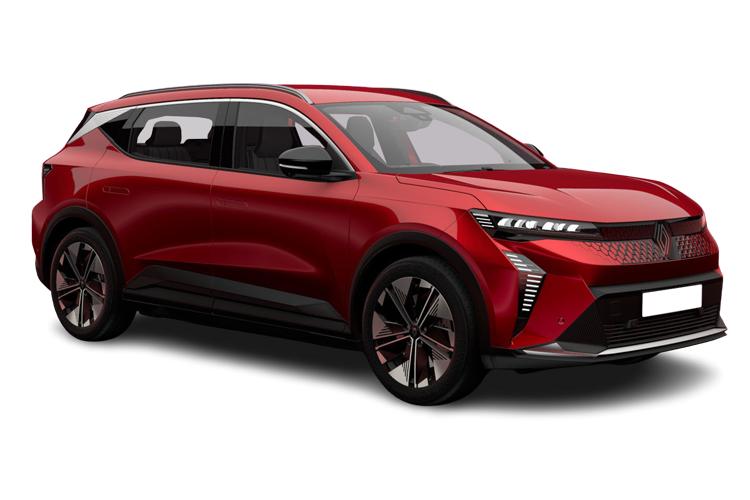
160kW Techno 87kWh Long Range 5dr Auto

POA
Business Lease Price per month (excl VAT) £287.35
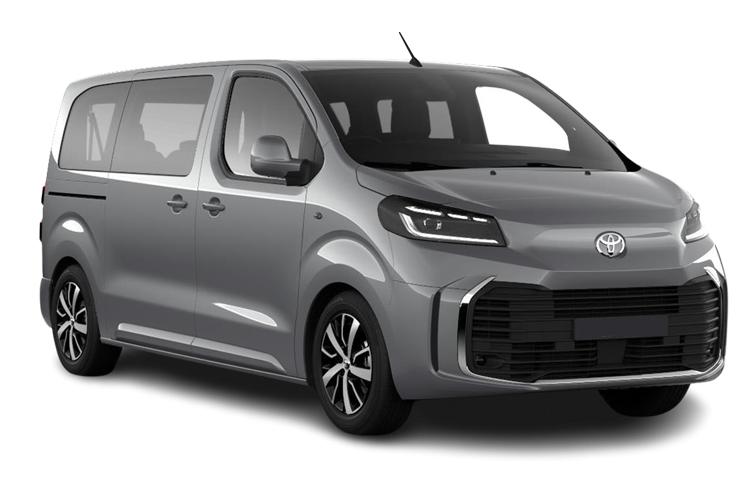
100kW Excel L2 75kWh 5dr Auto
POA
Business Lease Price per month (excl VAT) £424.38