![PEUGEOT E-TRAVELLER ELECTRIC ESTATE 100kW Allure Long [7 Seat] 50kWh 5dr Auto](https://cdn.automotus.uk/store/CVD/car/100571/front_view/traveller-petr-26.jpg)
Images are for illustrative purposes only.
![PEUGEOT E-TRAVELLER ELECTRIC ESTATE 100kW Allure Long [7 Seat] 50kWh 5dr Auto](https://cdn.automotus.uk/store/CVD/car/100571/back_view/traveller-petr-26.jpg)
![PEUGEOT E-TRAVELLER ELECTRIC ESTATE 100kW Allure Long [7 Seat] 50kWh 5dr Auto](https://cdn.automotus.uk/store/CVD/car/100571/detail_view/traveller-petr-26.jpg)
![PEUGEOT E-TRAVELLER ELECTRIC ESTATE 100kW Allure Long [7 Seat] 50kWh 5dr Auto](https://cdn.automotus.uk/store/CVD/car/100571/inside_view/traveller-petr-26.jpg)

100kW Allure Long [7 Seat] 50kWh 5dr Auto
Need some assistance or advice? Call Us 01903 538835


By Jonathan Crouch
Back in 2016, Peugeot aimed to set a fresh benchmark in the super-large MPV segment with this Traveller model, which in its first four years of production was only offered in the diesel form we focus on here. Though based on the brand's medium-sized Expert van, it also shared its EMP2 platform with some of the French maker's more conventional car models and that, along with sophisticated suspension, meant a standard of ride difficult to better in the segment. This model's running cost figures also set a fresh class standard and there was a wider variety of seating permutations than most rivals of this period could offer. Indeed, depending on the version you choose, your Traveller could take as many as nine people. On paper at least, larger families seeking a relaxed, connected and very spacious ownership experience from a large MPV from the 2016-2022 period could well find a lot to interest them here.
5dr SUV (1.6,1.5 BlueHDi diesel / 2.0 BlueHDi diesel / 50kWh full-Electric [Active,Business,Business VIP,Allure]
When it comes to really spacious seven-seat People Carriers, Peugeot used to make large ones - models like the 807 and the 5008. By the middle of this century's second decade, the brand wasn't bothering with that any more. By then, Peugeot had decided to offer an MPV that wasn't merely large but took customers to the next level beyond that. And so arrived in 2016 the Peugeot Traveller. In many ways, you can see the reasoning here. The kind of sizeable People Carrier this French brand previously made wasn't much use if, when completely filled up with people, those passengers wanted to bring baggage with them. With all seven seats filled up, the boot in the company's old 807 and 5008 models was supermini-sized and it was the same with large car-based People Movers of the 2016-era like Ford's Galaxy and Volkswagen's Sharan. To solve that issue Peugeot realised, it was necessary for the MPV in question to be designed from a more spacious starting point. Which meant basing it on a van. Peugeot knew how to do this. By 2016, its LCV-based Partner Tepee model had long been a strong seller for the company in the compact MPV segment and for most of the decade between 2006 and 2016, business buyers were offered a passenger-carrying 'Tepee' version of the Expert van. This Traveller model was also based on an Expert commercial vehicle, but in this case, the much more sophisticated third generation version which incorporated big parts of the EMP2 platform that Peugeot was using on its larger car models. These were underpinnings sophisticated enough to allow the brand to create in this Traveller MPV something more than just another industrial People Carrier. Here, they decided, was a vehicle that could bring something new to the super-large MPV segment frequented by well-heeled families with an almost permanent parking bay at the maternity unit. People who before 2016 had been buying seven and eight-seater models like Volkswagen's Caravelle and the Mercedes V-Class. In taking on these two class leaders, this Peugeot arrived with some significant advantages to counter any perceived lack of brand credibility. For one thing, it cost thousands less to buy, yet offered a similar standard of cabin quality. Plus it was far lighter, which made it more efficient to run and more agile to drive. There was also a wider range of possible seating permutations in a Traveller - you could carry up to nine people if you ticked all the right boxes. From a Peugeot dealer's point of view, the only fly in the ointment lay with the fact that the Traveller shared its design - and therefore all these virtues - with two other direct rivals, Citroen's SpaceTourer and Toyota's Proace Verso. And later also with the Vauxhall Vivaro Life too. Peugeot though, reckoned it had packaged up this proposition in a more appealing way. It all sounded quite promising, but the Traveller, like its clones, never really sold in any great numbers and combustion diesel versions were phased out in 2022. The full-electric E-Traveller model though (introduced in 2020) continued on. Here, we look at the diesel-engined Traveller as a used buy.
Large, van-based MPVs certainly aren't what they used to be. Take this Peugeot Traveller for example. Though clearly commercially-derived, it's got a bit of style to it, with compact overhangs and a high window line giving a bit of purpose to the boxy shape. The 1.9m height of the long flat roof is important - it means this model can fit under normal carpark height restrictions. And the length is critical too. Don't automatically assume that a super-large MPV like this has to be super-long from bonnet to rear bumper. One of the early body style options with this model was a 4.6m-long 'Compact' body shape that actually measured in at around 250mm shorter than car-derived MPVs like Ford's Galaxy or Volkswagen's Sharan. But that variant was quickly discontinued because most Traveller buyers wanted the extra interior room of the 4.95m-long 'Standard' version. There was also a 5.3m-long 'Long' option for those who really wanted to super-size things. At the rear of this MPV, the vertically stacked lights flank a tailgate rather than the twin side-hinged rear doors you'd get on an Expert van. The luggage space you get here with all three rows of seats in place obviously varies depending on the body style you've chosen. With the mid-range 'Standard' body shape, there's 627mm of length from the back of the third seating row to the tailgate, which means you get 640-litres of cargo space up to the level of the load bay cover - or as much as 900-litres if you were to load to the roof. A lot of the time of course, you'll be using this Peugeot with only five seats in place. If on the 'Standard' body shape model, you fold the third row backrest onto the seat base, you'd increase loading capacity to 1,100-litres - or 1,950-litres loading up to roof height. Finally, let's cover the capacity you'd get when you only need the front two seats. In the 'Standard' body shape model with second and third row backrests folded onto their bases, you'd have 2,000-litres of space up to parcel shelf level and 3,000-litres up to roof height. If you were to entirely take the second and third row seating out, those figures would each rise by 1,200-litres. Enough on luggage space: what's this Peugeot like for people? Let's start by considering things up-front, access via a wide-opening driver's door and a step up behind the wheel. Most Travellers you'll find will be 'Business'-trimmed variants, a spec level which from new came with the no-cost option of the dual front passenger bench that would normally be fitted in an Expert van. The fascia's focal point is found with a centrally-situated 7-inch 'Peugeot Connect' colour touchscreen, which back in 2016 was the most sophisticated we'd come across in any of the brand's models. It includes a 'Mirror Screen' feature, so you can duplicate your smartphone's display onto the monitor via either the 'Apple CarPlay' or the 'MirrorLink' 'Android Auto' systems. In the second row, where you get ample knee, shoulder and head room, there's a three-person rear bench that'll have a 60:40 split in it, provided you've got a mainstream version rather than one of the top VIP-trimmed models. On plusher variants, the seats are mounted on rails so can slide backwards and forwards - though not individually: the middle seat will be joined to one of the outer ones. In the third row of this Traveller, the outer passenger-side seat lifts and tilts forward to aid access, something further aided by the provision of higher roofline than you'd find in something like a Sharan or a Galaxy. Once you're in the third row, you'll be reminded just why medium-sized vans make such a great starting point for a properly large family-sized MPV. Instead of being crammed in cattle-class, as you would be in even the largest car-based People Carriers, there's more than enough space here for arms, legs and heads.
Please contact us for an exact up-to-date valuation.
Look particularly closely for dents and scratches around the bodywork given that the car will have been driven to places where it will be easy to pick these up. And inspect the interior for child and luggage damage and make sure that the upholstery and the carpets aren't stained. Make sure that all the screens and media connectivity systems work as they should. And of course insist on a fully stamped up service history. Our focus here is on issues with the diesel engined models. With these, there are a number of product recalls you need to know about. In some models built in 2018, the plug in the sump that the engine uses to drain oil out during a service might be loose, allowing oil to leak out. In some models made between 2020 and 2021, the AdBlue liquid injection system may struggle in extremely low temperatures. And models produced between 2020 and 2022 had an issue with the fuel line coming into contact with the bodywork and plastic parts - which can lead to fuel leakage. In some of the last models produced in 2022, the high voltage wiring harness may be defective - which could result in increased risk of fire. There was a problem in models produced between 2019 2020 with the rear seat adjustment lever. For models produced in 2020, there was also an issue with wheel bolts. And in models produced in 2021, there was an issue with head rests on the front modular seat on 9-seaters. Make sure that with the version you're looking at, these recall issues have been addressed by a dealer.
(approx based on a 2020 Traveller 2.0 BlueHDi 180 excl. VAT - autodoc.co.uk) Expect to pay around £4-£12 for an oil filter, around £9-£16 for an air filter and around £4-£25 for a pair of wiper blades. Front brake pads cost around £37-£70 for a set; rear pads are in the £17-£42 bracket. For front brake discs, think around £48-£60 for a pair; rear discs cost in the £25-£66 bracket. A starter motor costs in the £65-£95 bracket. A fuel filter is around £9-£24.
The Traveller is an MPV based on a van that's built on Peugeot's EMP2 family car platform. As a result, this large People Carrier rides over poor road surfaces with a calm and composure that most of its commercial vehicle-derived rivals can't match. Helping in this regard is a suspension design using adaptive shock absorbers that provide excellent control, no matter how many people are on-board. At higher speeds, you get some wind and road noise but through the bends, the handling is surprisingly stable and there's plenty of grip. Another benefit of using a passenger car base lies in the way that the Traveller feels more nimble and compact than rivals when you're threading through city streets or making your way along country lanes. Light steering and a tight turning circle contribute here too. Under the bonnet of the combustion versions, there's a choice of four BlueHDi diesel engines, with optional clutch-less gearboxes available both at the bottom and the top of the range. Customers are given the choice of either a 1.6-litre unit (later replaced by a 1.5) with either 95 or 115bhp. Alternatively, there's a 2.0-litre powerplant, available in either 150 or 180bhp guises. Go for the 150bhp unit and you can expect 53.3mpg on the combined cycle and 139g/km of CO2. If you don't want to be putting out any CO2 at all, you'll need the full-battery E-Traveller variant, which uses a 50kWh battery and a 136hp electric motor, but has a very limited 136 mile range between charges. Because the E-Traveller supports up to 100kW rapid charging technology, an 80 per cent charge will take just 30 minutes. This EV People Carrier also features a 7kW on-board charger as standard. A full charge from a 7.4kW domestic Wallbox takes 7 hours 30 minutes. With the alternative 11kW wallbox, you can reduce that to four and three-quarter hours.
If you need a large People Carrier, is there really any point in buying one that can't accommodate seven adults along with all their luggage? If your answer to that is 'no', then you'll need one based on a mid-sized van. Until the arrival of this design though, that meant choosing an MPV that would be extremely expensive, very heavy and relatively inefficient. This Peugeot Traveller offered a better option. Its good looks and smart interior gave it instant appeal, while the versatility of choosing from five, six, seven, eight or nine-seat configurations across three different body lengths gave this French model more options than most rivals could offer. Otherwise, this Peugeot's main issue probably lies in the fact that much the same package at much the same price was available in this period badged as either a Citroen SpaceTourer, a Vauxhall Vivaro Life or a Toyota Proace Verso. Which means that if you like the design of this People Carrier - and we can see why you might - then a decision to go for this Peugeot version will probably be heavily influenced by the kind of deal being offered. Value though, continues to be a brand strongpoint. Try a Traveller if you're in the market for a diesel People Carrier of this sort, we think it might surprise you.
Data provided by CAP-HPI database - Ref# 100571
By Jonathan Crouch
Back in 2016, Peugeot aimed to set a fresh benchmark in the super-large MPV segment with this Traveller model, which in its first four years of production was only offered in the diesel form we focus on here. Though based on the brand's medium-sized Expert van, it also shared its EMP2 platform with some of the French maker's more conventional car models and that, along with sophisticated suspension, meant a standard of ride difficult to better in the segment. This model's running cost figures also set a fresh class standard and there was a wider variety of seating permutations than most rivals of this period could offer. Indeed, depending on the version you choose, your Traveller could take as many as nine people. On paper at least, larger families seeking a relaxed, connected and very spacious ownership experience from a large MPV from the 2016-2022 period could well find a lot to interest them here.
5dr SUV (1.6,1.5 BlueHDi diesel / 2.0 BlueHDi diesel / 50kWh full-Electric [Active,Business,Business VIP,Allure]
When it comes to really spacious seven-seat People Carriers, Peugeot used to make large ones - models like the 807 and the 5008. By the middle of this century's second decade, the brand wasn't bothering with that any more. By then, Peugeot had decided to offer an MPV that wasn't merely large but took customers to the next level beyond that. And so arrived in 2016 the Peugeot Traveller. In many ways, you can see the reasoning here. The kind of sizeable People Carrier this French brand previously made wasn't much use if, when completely filled up with people, those passengers wanted to bring baggage with them. With all seven seats filled up, the boot in the company's old 807 and 5008 models was supermini-sized and it was the same with large car-based People Movers of the 2016-era like Ford's Galaxy and Volkswagen's Sharan. To solve that issue Peugeot realised, it was necessary for the MPV in question to be designed from a more spacious starting point. Which meant basing it on a van. Peugeot knew how to do this. By 2016, its LCV-based Partner Tepee model had long been a strong seller for the company in the compact MPV segment and for most of the decade between 2006 and 2016, business buyers were offered a passenger-carrying 'Tepee' version of the Expert van. This Traveller model was also based on an Expert commercial vehicle, but in this case, the much more sophisticated third generation version which incorporated big parts of the EMP2 platform that Peugeot was using on its larger car models. These were underpinnings sophisticated enough to allow the brand to create in this Traveller MPV something more than just another industrial People Carrier. Here, they decided, was a vehicle that could bring something new to the super-large MPV segment frequented by well-heeled families with an almost permanent parking bay at the maternity unit. People who before 2016 had been buying seven and eight-seater models like Volkswagen's Caravelle and the Mercedes V-Class. In taking on these two class leaders, this Peugeot arrived with some significant advantages to counter any perceived lack of brand credibility. For one thing, it cost thousands less to buy, yet offered a similar standard of cabin quality. Plus it was far lighter, which made it more efficient to run and more agile to drive. There was also a wider range of possible seating permutations in a Traveller - you could carry up to nine people if you ticked all the right boxes. From a Peugeot dealer's point of view, the only fly in the ointment lay with the fact that the Traveller shared its design - and therefore all these virtues - with two other direct rivals, Citroen's SpaceTourer and Toyota's Proace Verso. And later also with the Vauxhall Vivaro Life too. Peugeot though, reckoned it had packaged up this proposition in a more appealing way. It all sounded quite promising, but the Traveller, like its clones, never really sold in any great numbers and combustion diesel versions were phased out in 2022. The full-electric E-Traveller model though (introduced in 2020) continued on. Here, we look at the diesel-engined Traveller as a used buy.
Large, van-based MPVs certainly aren't what they used to be. Take this Peugeot Traveller for example. Though clearly commercially-derived, it's got a bit of style to it, with compact overhangs and a high window line giving a bit of purpose to the boxy shape. The 1.9m height of the long flat roof is important - it means this model can fit under normal carpark height restrictions. And the length is critical too. Don't automatically assume that a super-large MPV like this has to be super-long from bonnet to rear bumper. One of the early body style options with this model was a 4.6m-long 'Compact' body shape that actually measured in at around 250mm shorter than car-derived MPVs like Ford's Galaxy or Volkswagen's Sharan. But that variant was quickly discontinued because most Traveller buyers wanted the extra interior room of the 4.95m-long 'Standard' version. There was also a 5.3m-long 'Long' option for those who really wanted to super-size things. At the rear of this MPV, the vertically stacked lights flank a tailgate rather than the twin side-hinged rear doors you'd get on an Expert van. The luggage space you get here with all three rows of seats in place obviously varies depending on the body style you've chosen. With the mid-range 'Standard' body shape, there's 627mm of length from the back of the third seating row to the tailgate, which means you get 640-litres of cargo space up to the level of the load bay cover - or as much as 900-litres if you were to load to the roof. A lot of the time of course, you'll be using this Peugeot with only five seats in place. If on the 'Standard' body shape model, you fold the third row backrest onto the seat base, you'd increase loading capacity to 1,100-litres - or 1,950-litres loading up to roof height. Finally, let's cover the capacity you'd get when you only need the front two seats. In the 'Standard' body shape model with second and third row backrests folded onto their bases, you'd have 2,000-litres of space up to parcel shelf level and 3,000-litres up to roof height. If you were to entirely take the second and third row seating out, those figures would each rise by 1,200-litres. Enough on luggage space: what's this Peugeot like for people? Let's start by considering things up-front, access via a wide-opening driver's door and a step up behind the wheel. Most Travellers you'll find will be 'Business'-trimmed variants, a spec level which from new came with the no-cost option of the dual front passenger bench that would normally be fitted in an Expert van. The fascia's focal point is found with a centrally-situated 7-inch 'Peugeot Connect' colour touchscreen, which back in 2016 was the most sophisticated we'd come across in any of the brand's models. It includes a 'Mirror Screen' feature, so you can duplicate your smartphone's display onto the monitor via either the 'Apple CarPlay' or the 'MirrorLink' 'Android Auto' systems. In the second row, where you get ample knee, shoulder and head room, there's a three-person rear bench that'll have a 60:40 split in it, provided you've got a mainstream version rather than one of the top VIP-trimmed models. On plusher variants, the seats are mounted on rails so can slide backwards and forwards - though not individually: the middle seat will be joined to one of the outer ones. In the third row of this Traveller, the outer passenger-side seat lifts and tilts forward to aid access, something further aided by the provision of higher roofline than you'd find in something like a Sharan or a Galaxy. Once you're in the third row, you'll be reminded just why medium-sized vans make such a great starting point for a properly large family-sized MPV. Instead of being crammed in cattle-class, as you would be in even the largest car-based People Carriers, there's more than enough space here for arms, legs and heads.
Please contact us for an exact up-to-date valuation.
Look particularly closely for dents and scratches around the bodywork given that the car will have been driven to places where it will be easy to pick these up. And inspect the interior for child and luggage damage and make sure that the upholstery and the carpets aren't stained. Make sure that all the screens and media connectivity systems work as they should. And of course insist on a fully stamped up service history. Our focus here is on issues with the diesel engined models. With these, there are a number of product recalls you need to know about. In some models built in 2018, the plug in the sump that the engine uses to drain oil out during a service might be loose, allowing oil to leak out. In some models made between 2020 and 2021, the AdBlue liquid injection system may struggle in extremely low temperatures. And models produced between 2020 and 2022 had an issue with the fuel line coming into contact with the bodywork and plastic parts - which can lead to fuel leakage. In some of the last models produced in 2022, the high voltage wiring harness may be defective - which could result in increased risk of fire. There was a problem in models produced between 2019 2020 with the rear seat adjustment lever. For models produced in 2020, there was also an issue with wheel bolts. And in models produced in 2021, there was an issue with head rests on the front modular seat on 9-seaters. Make sure that with the version you're looking at, these recall issues have been addressed by a dealer.
(approx based on a 2020 Traveller 2.0 BlueHDi 180 excl. VAT - autodoc.co.uk) Expect to pay around £4-£12 for an oil filter, around £9-£16 for an air filter and around £4-£25 for a pair of wiper blades. Front brake pads cost around £37-£70 for a set; rear pads are in the £17-£42 bracket. For front brake discs, think around £48-£60 for a pair; rear discs cost in the £25-£66 bracket. A starter motor costs in the £65-£95 bracket. A fuel filter is around £9-£24.
The Traveller is an MPV based on a van that's built on Peugeot's EMP2 family car platform. As a result, this large People Carrier rides over poor road surfaces with a calm and composure that most of its commercial vehicle-derived rivals can't match. Helping in this regard is a suspension design using adaptive shock absorbers that provide excellent control, no matter how many people are on-board. At higher speeds, you get some wind and road noise but through the bends, the handling is surprisingly stable and there's plenty of grip. Another benefit of using a passenger car base lies in the way that the Traveller feels more nimble and compact than rivals when you're threading through city streets or making your way along country lanes. Light steering and a tight turning circle contribute here too. Under the bonnet of the combustion versions, there's a choice of four BlueHDi diesel engines, with optional clutch-less gearboxes available both at the bottom and the top of the range. Customers are given the choice of either a 1.6-litre unit (later replaced by a 1.5) with either 95 or 115bhp. Alternatively, there's a 2.0-litre powerplant, available in either 150 or 180bhp guises. Go for the 150bhp unit and you can expect 53.3mpg on the combined cycle and 139g/km of CO2. If you don't want to be putting out any CO2 at all, you'll need the full-battery E-Traveller variant, which uses a 50kWh battery and a 136hp electric motor, but has a very limited 136 mile range between charges. Because the E-Traveller supports up to 100kW rapid charging technology, an 80 per cent charge will take just 30 minutes. This EV People Carrier also features a 7kW on-board charger as standard. A full charge from a 7.4kW domestic Wallbox takes 7 hours 30 minutes. With the alternative 11kW wallbox, you can reduce that to four and three-quarter hours.
If you need a large People Carrier, is there really any point in buying one that can't accommodate seven adults along with all their luggage? If your answer to that is 'no', then you'll need one based on a mid-sized van. Until the arrival of this design though, that meant choosing an MPV that would be extremely expensive, very heavy and relatively inefficient. This Peugeot Traveller offered a better option. Its good looks and smart interior gave it instant appeal, while the versatility of choosing from five, six, seven, eight or nine-seat configurations across three different body lengths gave this French model more options than most rivals could offer. Otherwise, this Peugeot's main issue probably lies in the fact that much the same package at much the same price was available in this period badged as either a Citroen SpaceTourer, a Vauxhall Vivaro Life or a Toyota Proace Verso. Which means that if you like the design of this People Carrier - and we can see why you might - then a decision to go for this Peugeot version will probably be heavily influenced by the kind of deal being offered. Value though, continues to be a brand strongpoint. Try a Traveller if you're in the market for a diesel People Carrier of this sort, we think it might surprise you.
![PEUGEOT TRAVELLER 100kW Allure Standard [7 Seat] 75kWh 5dr Auto](https://cdn.automotus.uk/store/CVD/car/104652/front_view/traveller-petr-26.jpg)
100kW Allure Standard [7 Seat] 75kWh 5dr Auto

POA
POA
![VAUXHALL VIVARO LIFE 100kW Ultimate 75kWh 5dr Auto [7 seat]](https://cdn.automotus.uk/store/CVD/car/104636/front_view/vivaro-life-vavc-26a.jpg)
100kW Ultimate 75kWh 5dr Auto [7 seat]
POA
POA
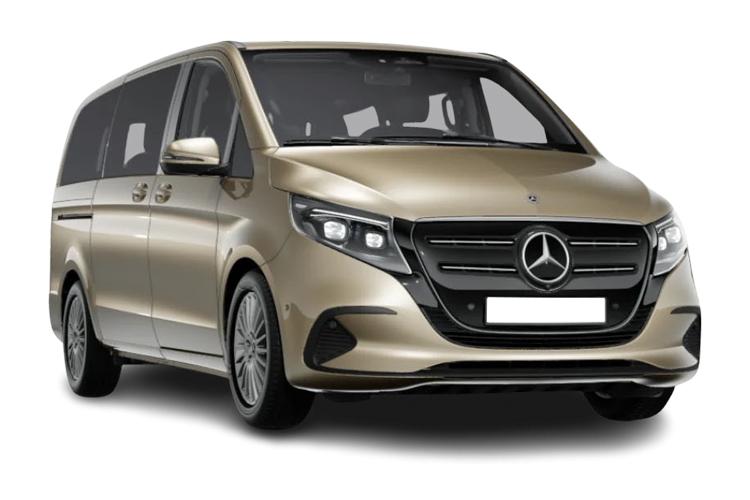
EQV 300 150 kW Executive Long 90 kWh 5dr Auto
POA
POA