
Images are for illustrative purposes only.

4.0 V8 Turbo S 5dr PDK
Need some assistance or advice? Call Us 01903 538835


By Jonathan Crouch
Named after the Carrera Panamerican road race, Porsche's Panamera has long been the brand's offering to Luxury segment buyers wanting spacious rear seat accommodation and a properly sporting Gran Turismo driving experience. This model could have ended up being a four-door version of the company's 911 coupe or a low-slung interpretation of the marque's Cayenne luxury SUV. In the event, it was always very much its own car, a long, low five-door hatch that offers something very different in its sector. The second generation G2 version of this model arrived in 2017, then was significantly updated in 2020 to create the car we're going to look at here. In this form, the second generation Panamera not only looked a little smarter but also offered a fresh electrified PHEV option - and an uber-powerful performance flagship variant. Whatever your preference, for boardroom buyers who yearn for Brands Hatch, used versions of this car promise to be a tempting proposition.
5dr 2.9 V6 / 4.0 V8 [petrol] [Hatch, Sport Turismo]
Porsche makes sportscars. And some of them look like this. Like its predecessor, this second generation Panamera, first launched in 2017, set out to be more than simply another powerfully performing Luxury segment saloon. It was a machine instead created around the uncompromising sportscar principles that so characterise its brand - and a design that in 2020 was significantly enhanced in this much improved form. To understand this car, you have to understand the way that Porsche sees it. This contender may have been priced against Mercedes S-Class-style Luxury saloons, but ever since the MK1 model's original launch back in 2009, its role in life has been styled to be subtly different. The brand sees the Panamera as a 'Gran Turismo', the kind of car that allows two rear seat passengers to recline in comfort while the driver enjoys himself. Forget Audi A8s and BMW 7 Series models. Think instead, faster versions of the Audi A7 or Mercedes CLS, perhaps a Maserati Quattroporte or even the old Aston Martin Rapide. In other words, a four-door luxury conveyance to really get the pulses racing. This car won't be chauffeur-driven. It shouldn't be anyway. It would, after all, be such a shame to ignore all of this Panamera's dynamic attributes and merely treat it as a limo. Porsche seems to agree, which was perhaps why as part of the G2 design's 2020 update, we could no longer have the lengthened 'Executive' body shape in our market. So body style choice was restricted to either the standard 'Sports Saloon' body shape (which is actually a 5-door hatch). Or the more practical 'Sport Turismo' body variant, a kind of 'Shooting Brake'-style sports estate that offered a little extra carriage space and the option of taking a third person in the rear. Whatever your Panamera preference, if you can stretch to this second generation model, see if you can stretch further and get yourself this 2020 model year-onwards updated version of that design. By then, diesel power had been dropped, but a package of updates brought sharper looks and a package of handling, media and safety updates. As well as a higher output and even more addictive aural fireworks for traditional derivatives like the V8 biturbo Panamera GTS, which in this updated form offered 480PS and sat beneath an even faster variant that Porsche had added to top the conventional part of the line-up, the Turbo S, with 630PS. By 2020 in our market, up to 70% of Panamera sales were of the PHEV plug-in hybrid versions, so for this update Porsche concentrated much of the update budget on them, improving battery range and adding in a fresh 4S E-Hybrid derivative, which sat between the base 4 E-Hybrid and top Turbo S E-Hybrid models. The Panamera sold in this form until the introduction of the third generation G3-era model in late 2023.
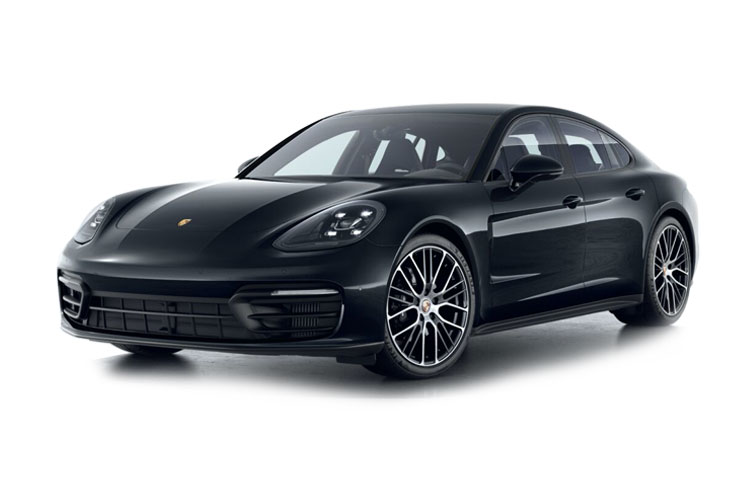
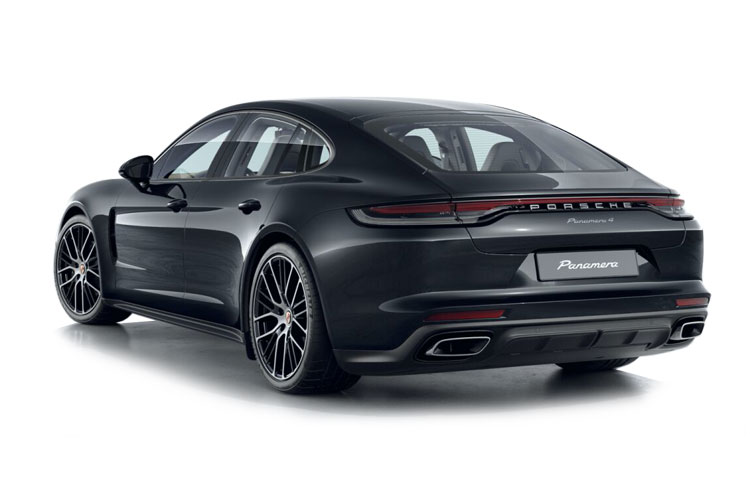
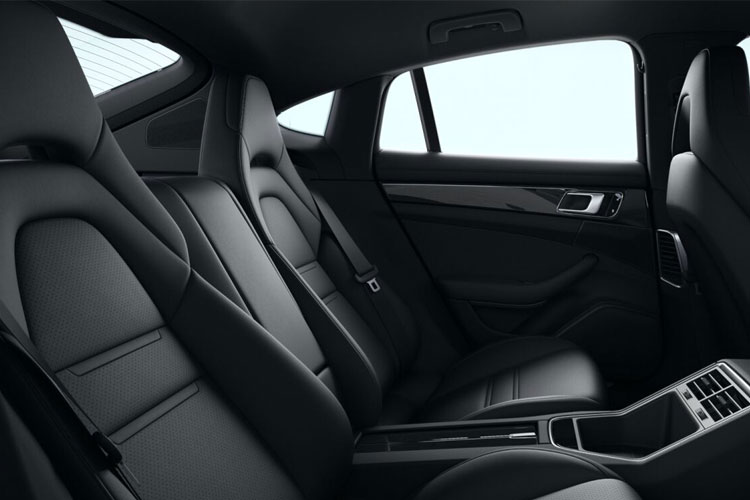
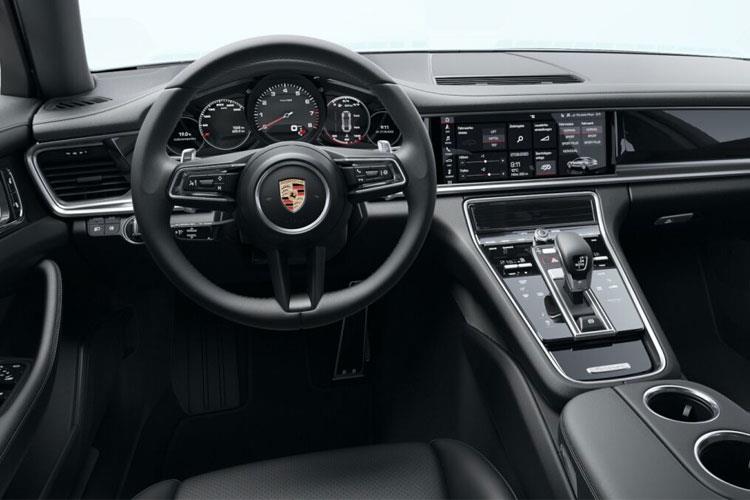
Shut your eyes, picture what a four-door Porsche 911 sports coupe might be like and you won't be a million miles away from the reality of this G2-era Panamera. The old pre-2017 first generation '970'-series G1 version of this car set out to deliver on that brief too, but never quite managed it, sleek from some angles but distinctly awkward from others. Everyone seems to be agreed that this '971'-era second generation model was a much more stylish piece of work, thanks to its longer wheelbase and lowered rear roofline. So much so that Porsche wasn't minded to make too many visual changes as part of this mid-term facelift. As before, there was a standard body shape, the alternative to which was the almost identically-sized 'Sport Turismo' 'shooting brake' estate. Move to the front and if you owned the original version of this MK2 model, you might pick up on some of the detail changes that Porsche made to this updated model. All variants got the previously optional 'Sport Design' front end styling pack, which delivered more striking air intake grilles, large side cooling openings and a single-bar front light module. Move to the rear and the sportscar cues continue. The restyled three-dimensional LED rear lamp clusters that were added as part of the update feature darkened lenses with the GTS variant and on all Panameras are connected by a narrow illuminated strip, also re-styled and there to help create a unique night time signature. At the wheel of this Porsche sportscar that also happens to be a super-luxury saloon you appreciate the implications of this curious combination almost immediately. The low-slung seating layout with its perfect positioning and almost infinite adjustability really is quite similar to a 911's, while the tall centre console that runs down the middle of the cabin hems you comfortably in, fighter aircraft cockpit-style. Virtually nothing really changed with this facelifted version of the MK2 model; there was a re-designed multi-function sports steering wheel - that was about it. As ever in a Panamera, the tall centre console that runs down the middle of the cabin hems you comfortably in, fighter aircraft cockpit-style. Around the gearstick there's a shiny black panel that comes to life with touch-sensitive controls once you fire the ignition. And just above lies the other defining feature of this cabin, the huge 12.3-inch colour touchscreen controlling the standard 'Porsche Communication Management' infotainment system. More screens are found in the instrument binnacle either side of the prominent rev counter gauge. All of it's configurable to your personal preferences as part of one of the most sophisticated cabins you'll find anywhere in this segment from this era. And in the back? Well settle in here and immediately, you feel a bit more special that you would in rival models thanks to two individual sports seats that replace the usual bench. Original buyers could also add in an optional small '2+1' centre rear seat that could be used for a child. The main outer seats aren't the compromised pews you'd expect to find in something professing to be a four-door sportscar, instead offering standards of leg and kneeroom not really that far off the kind of thing you'd get in a similarly-priced Mercedes S-Class or a BMW 7 Series saloon. As for luggage space, well if you approached this car expecting that its hatchback configuration would mean a class-leadingly large boot, then you might be a touch disappointed. Click the keyfob button for the standard power-operated tailgate and you'll find that most models offer a shallow-shaped 495-litre capacity (though it's less with the PHEVs). With everything flat, a massive 1,334-litres of space is available in most standard variants. Go for the 'Sport Turismo' estate model and a slightly larger 515-litre boot can be converted into a 1,384-litre total loading area.
Please contact us for an exact up-to-date valuation.
The problems with overheating engines that had afflicted first generation '970'-series G1 Panameras had generally been fixed by the time of this G2 model's introduction. Check for noises from the back end on your test drive which might indicate the potential failure of the rear anti-roll bar links. The previous generation model was known for this, but this G2-generation design was much better in this respect. We've heard of issues with the rear spoiler sticking, cracking noises from the sunroof when it's opening, rattles on the move and problems with the operational efficiency of the windscreen wipers. In some cases, the filler cap could require a hefty push to open it. Check the central Porsche Communication Management screen to make sure that all the systems work as they should. A few owners have noted rattles from the optional 18-way heated sports seats and from the rear parcel shelf. And occasional glitches with the cruise control. Some owners have experienced trouble with the centre screen updates being 'found' but not downloaded, but that issue is usually resolved by over-the-air software updates. Some owners had problems with navigation system not remembering recent destinations and not storing the names of locations. And if your car has a night vision camera, a stone chip to it will cost you £3,000 to replace. One 2020 software update caused the centre screen to constantly reboot, bringing worries about battery drain. And we've come across owners with various electrical system faults like airbag errors, the audio system not working properly or various safety functions being inoperable. Otherwise, the usual Panamera issues to look for hold true here. Occasionally, you come across various issues with the 'PCM' 'Porsche Communications Management' centre-dash infotainment screen. Some report warning lights advertising 'PASM' chassis system faults. One owner reported overheating at idle. And in some cases, the air conditioning system has been known to blow warm air. Beyond that, it's just the usual stuff. Check the bodywork carefully for dents and scrapes as these will be expensive to repair; the same for the alloy wheels. And obviously, insist on a fully stamped-up service history.
Porsche parts aren't particularly cheap - but you'll be expecting that. Front and rear brake pads cost in the £32-£80 bracket. Front discs sit in the £107-£262 bracket. Rear discs sit in the £84-£230 bracket. An oil filter sits in the £11-£49 bracket. Cabin filters sit in the £15-£75 bracket. Some things can be particularly expensive. One owner was quoted £5,000 to replace the navigation unit. Another owner was quoted £3,000 to replace a stone-chipped night vision assist camera. Servicing costs won't be cheap. Main services handle the replacement of pollen filter, oil filter and engine oil, plus a general inspection - that's every 2 years or 20,000 miles, with additional checks and adjustments carried out in ownership years 4, 8 and 12. The service at 6 years and 60,000 miles as a particularly big one, involving replacement spark plugs, new transmission oil and a new air filter.
Really clever engineering can defy the laws of physics. If you want proof, here it is in the metal. The first generation Panamera handled quite impressively for a model of this kind, but when we first tried this second generation version '971'-series G2 model back in 2017, we felt it was far closer to being the kind of car Porsche always wanted to make in this segment. And so it remained with this revised version of that MK2 model. Thanks to fantastic steering and an astonishing lack of body roll on fast, flowing roads, this two-tonne, four-seat Luxury segment contender feels almost as agile as a Porsche 911. Or at least it does when specified with all of the brand's expensive dynamic drive technology. There's a lot of it - adaptive anti-roll bars, 'PTV' torque vectoring and a rear-axle steering system are amongst the highlights. 'PASM' adaptive damping is standard, but most Panamera customers embellish it with the optional air suspension set-up. Virtually all of these features were subtly reworked for this updated line-up. You're going to want to know about the engines that were on offer with this revised model, all of them petrol-powered and each unit, as before, mated to the brand's 8-speed twin-clutch PDK auto gearbox. As with the original version of this G2 design, the range was fundamentally based around two powertrains, either a 2.9-litre V6 or the biturbo 4.0-litre V8. Of course though, there were plenty of variations in each case, some of them new as part of the work Porsche had done on these powerplants as part of this facelift. Your V6 options kick off with the 330PS unit used both in the 2WD base 'Panamera' model and the alternative 'Panamera 4', which adds in the 4WD system standardised across the rest of the line-up. This engine also comes in 440PS guise in the alternative Panamera 4S. Or it can be had mated to a 136PS electric motor powered by a larger 17.9kWh lithium-ion battery in the two mainstream PHEV Plug-in Hybrid models, the 462PS '4 E-Hybrid' and the added 560PS '4S E-Hybrid' model, both of which could in this updated range travel over 33 miles between charges. If, like us, you can't resist the menacing growl of the brand's 4.0-litre biturbo V8, your options start with the GTS model, the output of which was with this revised model increased to 480PS. This variant sits below the added top Turbo S model, that car offering a prodigious 630PS bettered only by the 700PS developed by the top Turbo S E-Hybrid, which adds that PHEV tech to this venerable V8.
The market has always offered very fast, very luxurious full-sized Luxury saloons. Rarely though, have they been very rewarding to drive. The Panamera has always been different, very much in a class of its own for boardroom buyers who don't spend all their lives wafting up and down autobahns. In its earlier forms, it was so nearly a truly great car. So nearly the impressively complete contender the improved version of this second generation model became. And it's worth stretching to this updated post-2020-era version of this design. In summary, if you still enjoy driving and like the way that this contender looks, you'll love the way it rewards you at the wheel. The Panamera's unconventional. It's unique. But best of all, it's a proper Porsche.
Data provided by CAP-HPI database - Ref# 95062
By Jonathan Crouch
Named after the Carrera Panamerican road race, Porsche's Panamera has long been the brand's offering to Luxury segment buyers wanting spacious rear seat accommodation and a properly sporting Gran Turismo driving experience. This model could have ended up being a four-door version of the company's 911 coupe or a low-slung interpretation of the marque's Cayenne luxury SUV. In the event, it was always very much its own car, a long, low five-door hatch that offers something very different in its sector. The second generation G2 version of this model arrived in 2017, then was significantly updated in 2020 to create the car we're going to look at here. In this form, the second generation Panamera not only looked a little smarter but also offered a fresh electrified PHEV option - and an uber-powerful performance flagship variant. Whatever your preference, for boardroom buyers who yearn for Brands Hatch, used versions of this car promise to be a tempting proposition.
5dr 2.9 V6 / 4.0 V8 [petrol] [Hatch, Sport Turismo]
Porsche makes sportscars. And some of them look like this. Like its predecessor, this second generation Panamera, first launched in 2017, set out to be more than simply another powerfully performing Luxury segment saloon. It was a machine instead created around the uncompromising sportscar principles that so characterise its brand - and a design that in 2020 was significantly enhanced in this much improved form. To understand this car, you have to understand the way that Porsche sees it. This contender may have been priced against Mercedes S-Class-style Luxury saloons, but ever since the MK1 model's original launch back in 2009, its role in life has been styled to be subtly different. The brand sees the Panamera as a 'Gran Turismo', the kind of car that allows two rear seat passengers to recline in comfort while the driver enjoys himself. Forget Audi A8s and BMW 7 Series models. Think instead, faster versions of the Audi A7 or Mercedes CLS, perhaps a Maserati Quattroporte or even the old Aston Martin Rapide. In other words, a four-door luxury conveyance to really get the pulses racing. This car won't be chauffeur-driven. It shouldn't be anyway. It would, after all, be such a shame to ignore all of this Panamera's dynamic attributes and merely treat it as a limo. Porsche seems to agree, which was perhaps why as part of the G2 design's 2020 update, we could no longer have the lengthened 'Executive' body shape in our market. So body style choice was restricted to either the standard 'Sports Saloon' body shape (which is actually a 5-door hatch). Or the more practical 'Sport Turismo' body variant, a kind of 'Shooting Brake'-style sports estate that offered a little extra carriage space and the option of taking a third person in the rear. Whatever your Panamera preference, if you can stretch to this second generation model, see if you can stretch further and get yourself this 2020 model year-onwards updated version of that design. By then, diesel power had been dropped, but a package of updates brought sharper looks and a package of handling, media and safety updates. As well as a higher output and even more addictive aural fireworks for traditional derivatives like the V8 biturbo Panamera GTS, which in this updated form offered 480PS and sat beneath an even faster variant that Porsche had added to top the conventional part of the line-up, the Turbo S, with 630PS. By 2020 in our market, up to 70% of Panamera sales were of the PHEV plug-in hybrid versions, so for this update Porsche concentrated much of the update budget on them, improving battery range and adding in a fresh 4S E-Hybrid derivative, which sat between the base 4 E-Hybrid and top Turbo S E-Hybrid models. The Panamera sold in this form until the introduction of the third generation G3-era model in late 2023.
Shut your eyes, picture what a four-door Porsche 911 sports coupe might be like and you won't be a million miles away from the reality of this G2-era Panamera. The old pre-2017 first generation '970'-series G1 version of this car set out to deliver on that brief too, but never quite managed it, sleek from some angles but distinctly awkward from others. Everyone seems to be agreed that this '971'-era second generation model was a much more stylish piece of work, thanks to its longer wheelbase and lowered rear roofline. So much so that Porsche wasn't minded to make too many visual changes as part of this mid-term facelift. As before, there was a standard body shape, the alternative to which was the almost identically-sized 'Sport Turismo' 'shooting brake' estate. Move to the front and if you owned the original version of this MK2 model, you might pick up on some of the detail changes that Porsche made to this updated model. All variants got the previously optional 'Sport Design' front end styling pack, which delivered more striking air intake grilles, large side cooling openings and a single-bar front light module. Move to the rear and the sportscar cues continue. The restyled three-dimensional LED rear lamp clusters that were added as part of the update feature darkened lenses with the GTS variant and on all Panameras are connected by a narrow illuminated strip, also re-styled and there to help create a unique night time signature. At the wheel of this Porsche sportscar that also happens to be a super-luxury saloon you appreciate the implications of this curious combination almost immediately. The low-slung seating layout with its perfect positioning and almost infinite adjustability really is quite similar to a 911's, while the tall centre console that runs down the middle of the cabin hems you comfortably in, fighter aircraft cockpit-style. Virtually nothing really changed with this facelifted version of the MK2 model; there was a re-designed multi-function sports steering wheel - that was about it. As ever in a Panamera, the tall centre console that runs down the middle of the cabin hems you comfortably in, fighter aircraft cockpit-style. Around the gearstick there's a shiny black panel that comes to life with touch-sensitive controls once you fire the ignition. And just above lies the other defining feature of this cabin, the huge 12.3-inch colour touchscreen controlling the standard 'Porsche Communication Management' infotainment system. More screens are found in the instrument binnacle either side of the prominent rev counter gauge. All of it's configurable to your personal preferences as part of one of the most sophisticated cabins you'll find anywhere in this segment from this era. And in the back? Well settle in here and immediately, you feel a bit more special that you would in rival models thanks to two individual sports seats that replace the usual bench. Original buyers could also add in an optional small '2+1' centre rear seat that could be used for a child. The main outer seats aren't the compromised pews you'd expect to find in something professing to be a four-door sportscar, instead offering standards of leg and kneeroom not really that far off the kind of thing you'd get in a similarly-priced Mercedes S-Class or a BMW 7 Series saloon. As for luggage space, well if you approached this car expecting that its hatchback configuration would mean a class-leadingly large boot, then you might be a touch disappointed. Click the keyfob button for the standard power-operated tailgate and you'll find that most models offer a shallow-shaped 495-litre capacity (though it's less with the PHEVs). With everything flat, a massive 1,334-litres of space is available in most standard variants. Go for the 'Sport Turismo' estate model and a slightly larger 515-litre boot can be converted into a 1,384-litre total loading area.
Please contact us for an exact up-to-date valuation.
The problems with overheating engines that had afflicted first generation '970'-series G1 Panameras had generally been fixed by the time of this G2 model's introduction. Check for noises from the back end on your test drive which might indicate the potential failure of the rear anti-roll bar links. The previous generation model was known for this, but this G2-generation design was much better in this respect. We've heard of issues with the rear spoiler sticking, cracking noises from the sunroof when it's opening, rattles on the move and problems with the operational efficiency of the windscreen wipers. In some cases, the filler cap could require a hefty push to open it. Check the central Porsche Communication Management screen to make sure that all the systems work as they should. A few owners have noted rattles from the optional 18-way heated sports seats and from the rear parcel shelf. And occasional glitches with the cruise control. Some owners have experienced trouble with the centre screen updates being 'found' but not downloaded, but that issue is usually resolved by over-the-air software updates. Some owners had problems with navigation system not remembering recent destinations and not storing the names of locations. And if your car has a night vision camera, a stone chip to it will cost you £3,000 to replace. One 2020 software update caused the centre screen to constantly reboot, bringing worries about battery drain. And we've come across owners with various electrical system faults like airbag errors, the audio system not working properly or various safety functions being inoperable. Otherwise, the usual Panamera issues to look for hold true here. Occasionally, you come across various issues with the 'PCM' 'Porsche Communications Management' centre-dash infotainment screen. Some report warning lights advertising 'PASM' chassis system faults. One owner reported overheating at idle. And in some cases, the air conditioning system has been known to blow warm air. Beyond that, it's just the usual stuff. Check the bodywork carefully for dents and scrapes as these will be expensive to repair; the same for the alloy wheels. And obviously, insist on a fully stamped-up service history.
Porsche parts aren't particularly cheap - but you'll be expecting that. Front and rear brake pads cost in the £32-£80 bracket. Front discs sit in the £107-£262 bracket. Rear discs sit in the £84-£230 bracket. An oil filter sits in the £11-£49 bracket. Cabin filters sit in the £15-£75 bracket. Some things can be particularly expensive. One owner was quoted £5,000 to replace the navigation unit. Another owner was quoted £3,000 to replace a stone-chipped night vision assist camera. Servicing costs won't be cheap. Main services handle the replacement of pollen filter, oil filter and engine oil, plus a general inspection - that's every 2 years or 20,000 miles, with additional checks and adjustments carried out in ownership years 4, 8 and 12. The service at 6 years and 60,000 miles as a particularly big one, involving replacement spark plugs, new transmission oil and a new air filter.
Really clever engineering can defy the laws of physics. If you want proof, here it is in the metal. The first generation Panamera handled quite impressively for a model of this kind, but when we first tried this second generation version '971'-series G2 model back in 2017, we felt it was far closer to being the kind of car Porsche always wanted to make in this segment. And so it remained with this revised version of that MK2 model. Thanks to fantastic steering and an astonishing lack of body roll on fast, flowing roads, this two-tonne, four-seat Luxury segment contender feels almost as agile as a Porsche 911. Or at least it does when specified with all of the brand's expensive dynamic drive technology. There's a lot of it - adaptive anti-roll bars, 'PTV' torque vectoring and a rear-axle steering system are amongst the highlights. 'PASM' adaptive damping is standard, but most Panamera customers embellish it with the optional air suspension set-up. Virtually all of these features were subtly reworked for this updated line-up. You're going to want to know about the engines that were on offer with this revised model, all of them petrol-powered and each unit, as before, mated to the brand's 8-speed twin-clutch PDK auto gearbox. As with the original version of this G2 design, the range was fundamentally based around two powertrains, either a 2.9-litre V6 or the biturbo 4.0-litre V8. Of course though, there were plenty of variations in each case, some of them new as part of the work Porsche had done on these powerplants as part of this facelift. Your V6 options kick off with the 330PS unit used both in the 2WD base 'Panamera' model and the alternative 'Panamera 4', which adds in the 4WD system standardised across the rest of the line-up. This engine also comes in 440PS guise in the alternative Panamera 4S. Or it can be had mated to a 136PS electric motor powered by a larger 17.9kWh lithium-ion battery in the two mainstream PHEV Plug-in Hybrid models, the 462PS '4 E-Hybrid' and the added 560PS '4S E-Hybrid' model, both of which could in this updated range travel over 33 miles between charges. If, like us, you can't resist the menacing growl of the brand's 4.0-litre biturbo V8, your options start with the GTS model, the output of which was with this revised model increased to 480PS. This variant sits below the added top Turbo S model, that car offering a prodigious 630PS bettered only by the 700PS developed by the top Turbo S E-Hybrid, which adds that PHEV tech to this venerable V8.
The market has always offered very fast, very luxurious full-sized Luxury saloons. Rarely though, have they been very rewarding to drive. The Panamera has always been different, very much in a class of its own for boardroom buyers who don't spend all their lives wafting up and down autobahns. In its earlier forms, it was so nearly a truly great car. So nearly the impressively complete contender the improved version of this second generation model became. And it's worth stretching to this updated post-2020-era version of this design. In summary, if you still enjoy driving and like the way that this contender looks, you'll love the way it rewards you at the wheel. The Panamera's unconventional. It's unique. But best of all, it's a proper Porsche.
