![PORSCHE TAYCAN SALOON 440kW GTS 93kWh 4dr Auto [22kW] [5 Seat]](https://cdn.automotus.uk/store/CVD/car/100423/front_view/taycan-potc-24.jpg)
Images are for illustrative purposes only.
![PORSCHE TAYCAN SALOON 440kW GTS 93kWh 4dr Auto [22kW] [5 Seat]](https://cdn.automotus.uk/store/CVD/car/100423/back_view/taycan-potc-24.jpg)
![PORSCHE TAYCAN SALOON 440kW GTS 93kWh 4dr Auto [22kW] [5 Seat]](https://cdn.automotus.uk/store/CVD/car/100423/detail_view/taycan-potc-24.jpg)
![PORSCHE TAYCAN SALOON 440kW GTS 93kWh 4dr Auto [22kW] [5 Seat]](https://cdn.automotus.uk/store/CVD/car/100423/inside_view/taycan-potc-24.jpg)

440kW GTS 93kWh 4dr Auto [22kW] [5 Seat]
Need some assistance or advice? Call Us 01903 538835


By Jonathan Crouch
Back in 2019, Porsche's Taycan EV changed electric vehicle design as we knew it. The way it looked, the way it drove, the way it braked, the way it charged: everything had been reconsidered, redesigned and reimagined. The result was a standard-setting battery-powered model that was purely Porsche - and very desirable indeed. Here we're going to look at the original 2019-2023-era models as a used buy.
(EV - Saloon, SUV)
What might the Porsche of full-electric performance cars be like? Back in 2019 with this Taycan, we got our answer. It was more powerful and faster than any other EV that had yet been made. With a heart that was electric, but a soul that was very much that of a Porsche. Fully electric performance cars are all much the same right? They all give you a great big heavy battery, a couple of electric motors and enough pulling power to tear up the tarmac. Oh yes and they all feel terrible the first time you throw one into a corner. For a long time prior to this Taycan's launch, Porsche had been mulling over how to deliver something better. You might still be among those who think that Porsche and electricity have about as much in common as fire and ice - and you'd be wrong. The history of Porsche actually began with electric drive. Company founder Ferdinand Porsche designed his first electric car - the Egger-Lohner C.2 Phaeton - back in 1898, then two years later followed up by creating the first electric wheel hub motor and then the world's first functional hybrid car, productionised as the Lohner-Porsche Mixte. His reasons for preferring electrification sound as natural now as they did then, Porsche complaining that the air was “ruthlessly spoiled by the large number of petrol engines in use”. What he couldn't do was overcome the usual automotive electrical downsides, heavy weight and short battery range. More than a hundred further years were to pass before his company could return to this area of development, driven to at the turn of this century by ever-more stringent emission laws. The Cayenne S Hybrid of 2010 was the first of a series of petrol/electric models that culminated in the 918 Spyder supercar of 2013, then in the 919 Hybrid World Endurance race car and then, in 2015, finally in the 'Mission E' all-electric concept model. The Mission E shocked the EV establishment with class-leading recharging times, astonishing electrified charging tech and the world's most slippery EV model shape. And it was closer to sales reality than most realised, its production-ready counterpart, this model, the Taycan, launched in late 2019. This was, according to Porsche, 'the start of a new era', yet at the same time, the company wanted to reassure its traditional customers that it wasn't about to stop making combustion-engined models any time soon. What it wanted to do was to offer the kind of credible alternative to fossil fuel that that prior to 2020 EV development had previously failed to bring us; a car with heart, soul and real driving DNA. Yet also an EV that was almost as day-to-day usable as a fuelled model, free of compromise in range and interior practicality. Was that this car? Here, we look in detail at the earlier 2020-2023-era versions of this model.
So, a Porsche like no other before it. But very definitely a Porsche. All the key elements of Zuffenhausen brand design are there - the special topography of the bonnet and front wings, air intakes instead of a dominant radiator grille, the marque's so-called 'flyline' falling roofline and a strong shoulder at the rear. These are elements that characterise every Porsche. But were, says Design Chief Michael Mauer, subtly evolved in this one. The Taycan is a car that amongst EVs is absolutely unique in its proportions, an emotionally charged performance EV that in 'Sports Saloon' sedan form sits just 1,380mm high, yet is almost 2-metres wide; there's really nothing like it. Here again, classic Porsche design staples mix with modern technology. So, thanks to the low seat and raised centre console, there's a real cockpit-style feel that's refreshingly different from the raised SUV demeanour of obvious luxury EV rivals. And the instrument cluster is wider than the steering wheel in a manner reminiscent of the original 911. Take a closer look and you'll find that what lies behind the chunky three-spoke wheel is anything but retro, a 16.8-inch curved digital screen, one of up to four at the front of the cabin. There's a lower 8.4-inch touchpad on the centre console. Just below a 10.9-inch 'PCM' 'Porsche Communication Management' central infotainment monitor which can be optionally extended with a further supplementary display for the front passenger. There's a lot to take in. All of this feels entirely appropriate to a cutting-edge 21st-century premium EV, but you can't help sometimes feeling that old-fashioned knobs and buttons, particularly on the lower centre display, would be easier and more intuitive to use on the move. There are other curiosities too; the rather hidden knurled gear shifter. Plus you're not offered any sort of handbrake button - and there are no mechanically operated louvres for the air vents either: you have to activate them via the lower screen. Still, you adjust all of this quite quickly and the instrument screen in particular has been well thought through, based around three configurable round virtual dials. Right: time to consider the rear. How, particularly with the ordinary sedan body shape, do you avoid the high stance that usually results from perching the passenger cabin on top of a whole bank of batteries - the kind of stance this Taycan just doesn't have. How did the designers manage it? Very cleverly. The rear footwells might look conventional but they're actually hollowed-out sections of the floorplan - Porsche calls them 'foot garages' - that allow your feet to be positioned at the same lower height as the battery pack, rather than being placed on top of it. No other EV design team had previously thought of doing this. For a GT-style sports saloon, headroom is actually pretty good - and surprisingly, it actually improves by a few inches if you get a car whose original owner opted for the extra-cost panoramic glass roof. The centre tunnel is particularly high (one reason why you might not want a car fitted with the optional centre seat) but it does at least give the standard two-seat layout a cocooned, sports car-like feel. Right, let's finish by considering boot space. Starting not at the boot but at the frunk - yes, like a 911, you get a little storage space beneath the bonnet. And it is little, just 84-litres in capacity. So anything of any size will have to be stored in the rear cargo area, accessed via a power-operated boot lid which rises to reveal a 366-litre space (that's 37-litres less than you'd get in Porsche's Panamera 4-E-Hybrid model of this period) though in this case, you'll probably find it's quite substantially accounted for by the charging lead case.
Please contact us for an exact up-to-date valuation.
Porsche's are usually pretty bullet-proof but you will have to tread very carefully in buying a used version of this original Taycan. We've had all kinds of reports of problems. Some owners experienced unexplained drops in range, sometimes by about 30%. There are all kinds of error messages that have popped up for some owners - including the dreaded red screen 'stop the car in a safe place' when the powertrain fails completely. Some owners found themselves getting error messages from their Porsche charger when replenishing the battery - and also found the charger shutting down during the summer months. Cutting the charging current from 48A to 36A solved the problem in some cases. We had reports of rear tyres wearing down very quickly, so check those in the car you're looking at. There have been reports of heater problems and in one case the air conditioner stopped blowing. We've heard of software issues, so check the multimedia system thoroughly. One owner had a buzzing noise coming from the mode selector. And another found that the spare key went flat after three months. Look out for a creaking noise when full lock steering at low speed - for example when parking. Obviously, there are also all the usual issues - look out for scratched alloys and insist on a fully stamped-up service history. Check that the charging lead hasn't been damaged or driven over. And do a full charge to make sure that it works properly. There were two main recalls, one for a software issue that could cause the warning message 'drive control disturbed - park vehicle safely': and another regarding the possibility of the front seats' fabric protective hose of the wiring harness being damaged when adjusting the seat in the longitudinal direction.
(Estimated prices, based on a 2021 year Taycan 4S) - ref www.design911shop.com Taycan spares are predictably quite pricey, although they never cross the border into exorbitant. Front brake pads are around £251. Front brake discs start from around £180; for a rear disc, you're looking at around £236. A pair of LED matrix headlamps would cost you from £3,764. Tail lamps start from around £367. A door mirror cover is £128.
Even the least powerful variant at launch, the 4S, had 530PS on tap and hit 62mph from rest in 4 seconds flat. A more accessible rear-driven version was launched just after the model introduction. The high-end models many will choose, the Turbo and the Turbo S version, both begin at an output starting point of 625PS, then build on it with an overboost function that supplies a few seconds of extra launch or overtaking acceleration. That increases output on the Turbo version to 680PS, which sees that car demolish the 62mph sprint in just 3.2s en route to 161mph. With the Turbo S, there's potentially 761PS and a stupendous 1,050Nm of pulling power beneath your right foot; enough to trim that sprint figure to just 2.8s. Even if you've driven cars as quick as that before, take it from us, this one will feel faster because everything's there all at once, like switching on a light. Less like a sports car, more like some sort of extreme fairground ride. Of course it won't travel too far between charges if you habitually drive like this. The base 4S variant's smaller 79.2kWh pack makes that model particularly limited in that regard, but even if you get a car whose original owner upgraded that model to the 93kWh battery size the two Turbo-spec models got as standard, the WLTP range rating still only sits in the 208 to 288 mile bracket, which is way off what you'd get in a rival Tesla from this period. Potentially, this Porsche can charge up much quicker than its American rival though; theoretically, you can pump in 62 miles of range every five minutes, thanks to this car's more sophisticated 800-volt power supply system. Though only if you're fortunate enough to find an 800 volt public charger which can allow this car to replenish itself at its peak charging capacity of 270kW - which isn't likely with our country's undeveloped national charging infrastructure. So that's a slight disappointment. But the rather unique way this car has been engineered offers ample compensation. The battery pack powers two synchronous electric motors, one on each axle (hence the all-wheel drive capability), with the rear motor linked to a 2-speed auto gearbox, the lower ratio reserved for those savage Launch Control starts. All of it's been engineered to work with a veritable arsenal of Zuffenhausen engineering in an attempt to try and make a car with a lumbering kerb weight of Porsche's Cayenne E-Hybrid SUV handle something like a proper sports saloon should. None of the dynamic stuff in play here was anything that back in 2020 we hadn't seen before - torque vectoring, adaptive damping with 3-chamber air suspension, and, optionally, rear wheel steering and 'PDCC' electromechanical roll stabilisation. But with Porsche's 4D Chassis Control set-up coordinating it all like the conductor of an orchestra, the result through the turns is quite simply astonishing when you consider the amount of weight in play here. There are drive modes of course: 'Normal' for the everyday; 'Range' if you've an eye on depleting battery capacity; or 'Sport' or 'Sport Plus' for when you're pushing on. And the steering, brakes and ride quality are all brilliant - almost 911-like. No other EV drives like this. The soul of a sports car? That about covers it.
If, like us, you'd begun to imagine that the golden age of the motor car was well behind us, there's cause for hope here. And even for an argument that a really well engineered EV can restore to enthusiasts some of the driving involvement and excitement that's been lost in recent decades as powerful petrol engines have become sanitised by turbochargers, particulate filters and camera-driven technology. Ultimately, those petrol engines have to go, but what replaces them doesn't necessarily have to be an automotive domestic appliance. The Taycan proved that. Unfortunately, there were lots of early issues the Porsche had to work through with this car, which means that you will need to buy very carefully in the second-hand market. But find a good one and you'll get a great luxury sports EV. The Taycan was, exactly as its brand promised, 'a true Porsche for the age of electromobility', and for the right kind of customer will be desired, loved and coveted like no other. It was, quite simply, an astonishing achievement.
Data provided by CAP-HPI database - Ref# 100423
By Jonathan Crouch
Back in 2019, Porsche's Taycan EV changed electric vehicle design as we knew it. The way it looked, the way it drove, the way it braked, the way it charged: everything had been reconsidered, redesigned and reimagined. The result was a standard-setting battery-powered model that was purely Porsche - and very desirable indeed. Here we're going to look at the original 2019-2023-era models as a used buy.
(EV - Saloon, SUV)
What might the Porsche of full-electric performance cars be like? Back in 2019 with this Taycan, we got our answer. It was more powerful and faster than any other EV that had yet been made. With a heart that was electric, but a soul that was very much that of a Porsche. Fully electric performance cars are all much the same right? They all give you a great big heavy battery, a couple of electric motors and enough pulling power to tear up the tarmac. Oh yes and they all feel terrible the first time you throw one into a corner. For a long time prior to this Taycan's launch, Porsche had been mulling over how to deliver something better. You might still be among those who think that Porsche and electricity have about as much in common as fire and ice - and you'd be wrong. The history of Porsche actually began with electric drive. Company founder Ferdinand Porsche designed his first electric car - the Egger-Lohner C.2 Phaeton - back in 1898, then two years later followed up by creating the first electric wheel hub motor and then the world's first functional hybrid car, productionised as the Lohner-Porsche Mixte. His reasons for preferring electrification sound as natural now as they did then, Porsche complaining that the air was “ruthlessly spoiled by the large number of petrol engines in use”. What he couldn't do was overcome the usual automotive electrical downsides, heavy weight and short battery range. More than a hundred further years were to pass before his company could return to this area of development, driven to at the turn of this century by ever-more stringent emission laws. The Cayenne S Hybrid of 2010 was the first of a series of petrol/electric models that culminated in the 918 Spyder supercar of 2013, then in the 919 Hybrid World Endurance race car and then, in 2015, finally in the 'Mission E' all-electric concept model. The Mission E shocked the EV establishment with class-leading recharging times, astonishing electrified charging tech and the world's most slippery EV model shape. And it was closer to sales reality than most realised, its production-ready counterpart, this model, the Taycan, launched in late 2019. This was, according to Porsche, 'the start of a new era', yet at the same time, the company wanted to reassure its traditional customers that it wasn't about to stop making combustion-engined models any time soon. What it wanted to do was to offer the kind of credible alternative to fossil fuel that that prior to 2020 EV development had previously failed to bring us; a car with heart, soul and real driving DNA. Yet also an EV that was almost as day-to-day usable as a fuelled model, free of compromise in range and interior practicality. Was that this car? Here, we look in detail at the earlier 2020-2023-era versions of this model.
So, a Porsche like no other before it. But very definitely a Porsche. All the key elements of Zuffenhausen brand design are there - the special topography of the bonnet and front wings, air intakes instead of a dominant radiator grille, the marque's so-called 'flyline' falling roofline and a strong shoulder at the rear. These are elements that characterise every Porsche. But were, says Design Chief Michael Mauer, subtly evolved in this one. The Taycan is a car that amongst EVs is absolutely unique in its proportions, an emotionally charged performance EV that in 'Sports Saloon' sedan form sits just 1,380mm high, yet is almost 2-metres wide; there's really nothing like it. Here again, classic Porsche design staples mix with modern technology. So, thanks to the low seat and raised centre console, there's a real cockpit-style feel that's refreshingly different from the raised SUV demeanour of obvious luxury EV rivals. And the instrument cluster is wider than the steering wheel in a manner reminiscent of the original 911. Take a closer look and you'll find that what lies behind the chunky three-spoke wheel is anything but retro, a 16.8-inch curved digital screen, one of up to four at the front of the cabin. There's a lower 8.4-inch touchpad on the centre console. Just below a 10.9-inch 'PCM' 'Porsche Communication Management' central infotainment monitor which can be optionally extended with a further supplementary display for the front passenger. There's a lot to take in. All of this feels entirely appropriate to a cutting-edge 21st-century premium EV, but you can't help sometimes feeling that old-fashioned knobs and buttons, particularly on the lower centre display, would be easier and more intuitive to use on the move. There are other curiosities too; the rather hidden knurled gear shifter. Plus you're not offered any sort of handbrake button - and there are no mechanically operated louvres for the air vents either: you have to activate them via the lower screen. Still, you adjust all of this quite quickly and the instrument screen in particular has been well thought through, based around three configurable round virtual dials. Right: time to consider the rear. How, particularly with the ordinary sedan body shape, do you avoid the high stance that usually results from perching the passenger cabin on top of a whole bank of batteries - the kind of stance this Taycan just doesn't have. How did the designers manage it? Very cleverly. The rear footwells might look conventional but they're actually hollowed-out sections of the floorplan - Porsche calls them 'foot garages' - that allow your feet to be positioned at the same lower height as the battery pack, rather than being placed on top of it. No other EV design team had previously thought of doing this. For a GT-style sports saloon, headroom is actually pretty good - and surprisingly, it actually improves by a few inches if you get a car whose original owner opted for the extra-cost panoramic glass roof. The centre tunnel is particularly high (one reason why you might not want a car fitted with the optional centre seat) but it does at least give the standard two-seat layout a cocooned, sports car-like feel. Right, let's finish by considering boot space. Starting not at the boot but at the frunk - yes, like a 911, you get a little storage space beneath the bonnet. And it is little, just 84-litres in capacity. So anything of any size will have to be stored in the rear cargo area, accessed via a power-operated boot lid which rises to reveal a 366-litre space (that's 37-litres less than you'd get in Porsche's Panamera 4-E-Hybrid model of this period) though in this case, you'll probably find it's quite substantially accounted for by the charging lead case.
Please contact us for an exact up-to-date valuation.
Porsche's are usually pretty bullet-proof but you will have to tread very carefully in buying a used version of this original Taycan. We've had all kinds of reports of problems. Some owners experienced unexplained drops in range, sometimes by about 30%. There are all kinds of error messages that have popped up for some owners - including the dreaded red screen 'stop the car in a safe place' when the powertrain fails completely. Some owners found themselves getting error messages from their Porsche charger when replenishing the battery - and also found the charger shutting down during the summer months. Cutting the charging current from 48A to 36A solved the problem in some cases. We had reports of rear tyres wearing down very quickly, so check those in the car you're looking at. There have been reports of heater problems and in one case the air conditioner stopped blowing. We've heard of software issues, so check the multimedia system thoroughly. One owner had a buzzing noise coming from the mode selector. And another found that the spare key went flat after three months. Look out for a creaking noise when full lock steering at low speed - for example when parking. Obviously, there are also all the usual issues - look out for scratched alloys and insist on a fully stamped-up service history. Check that the charging lead hasn't been damaged or driven over. And do a full charge to make sure that it works properly. There were two main recalls, one for a software issue that could cause the warning message 'drive control disturbed - park vehicle safely': and another regarding the possibility of the front seats' fabric protective hose of the wiring harness being damaged when adjusting the seat in the longitudinal direction.
(Estimated prices, based on a 2021 year Taycan 4S) - ref www.design911shop.com Taycan spares are predictably quite pricey, although they never cross the border into exorbitant. Front brake pads are around £251. Front brake discs start from around £180; for a rear disc, you're looking at around £236. A pair of LED matrix headlamps would cost you from £3,764. Tail lamps start from around £367. A door mirror cover is £128.
Even the least powerful variant at launch, the 4S, had 530PS on tap and hit 62mph from rest in 4 seconds flat. A more accessible rear-driven version was launched just after the model introduction. The high-end models many will choose, the Turbo and the Turbo S version, both begin at an output starting point of 625PS, then build on it with an overboost function that supplies a few seconds of extra launch or overtaking acceleration. That increases output on the Turbo version to 680PS, which sees that car demolish the 62mph sprint in just 3.2s en route to 161mph. With the Turbo S, there's potentially 761PS and a stupendous 1,050Nm of pulling power beneath your right foot; enough to trim that sprint figure to just 2.8s. Even if you've driven cars as quick as that before, take it from us, this one will feel faster because everything's there all at once, like switching on a light. Less like a sports car, more like some sort of extreme fairground ride. Of course it won't travel too far between charges if you habitually drive like this. The base 4S variant's smaller 79.2kWh pack makes that model particularly limited in that regard, but even if you get a car whose original owner upgraded that model to the 93kWh battery size the two Turbo-spec models got as standard, the WLTP range rating still only sits in the 208 to 288 mile bracket, which is way off what you'd get in a rival Tesla from this period. Potentially, this Porsche can charge up much quicker than its American rival though; theoretically, you can pump in 62 miles of range every five minutes, thanks to this car's more sophisticated 800-volt power supply system. Though only if you're fortunate enough to find an 800 volt public charger which can allow this car to replenish itself at its peak charging capacity of 270kW - which isn't likely with our country's undeveloped national charging infrastructure. So that's a slight disappointment. But the rather unique way this car has been engineered offers ample compensation. The battery pack powers two synchronous electric motors, one on each axle (hence the all-wheel drive capability), with the rear motor linked to a 2-speed auto gearbox, the lower ratio reserved for those savage Launch Control starts. All of it's been engineered to work with a veritable arsenal of Zuffenhausen engineering in an attempt to try and make a car with a lumbering kerb weight of Porsche's Cayenne E-Hybrid SUV handle something like a proper sports saloon should. None of the dynamic stuff in play here was anything that back in 2020 we hadn't seen before - torque vectoring, adaptive damping with 3-chamber air suspension, and, optionally, rear wheel steering and 'PDCC' electromechanical roll stabilisation. But with Porsche's 4D Chassis Control set-up coordinating it all like the conductor of an orchestra, the result through the turns is quite simply astonishing when you consider the amount of weight in play here. There are drive modes of course: 'Normal' for the everyday; 'Range' if you've an eye on depleting battery capacity; or 'Sport' or 'Sport Plus' for when you're pushing on. And the steering, brakes and ride quality are all brilliant - almost 911-like. No other EV drives like this. The soul of a sports car? That about covers it.
If, like us, you'd begun to imagine that the golden age of the motor car was well behind us, there's cause for hope here. And even for an argument that a really well engineered EV can restore to enthusiasts some of the driving involvement and excitement that's been lost in recent decades as powerful petrol engines have become sanitised by turbochargers, particulate filters and camera-driven technology. Ultimately, those petrol engines have to go, but what replaces them doesn't necessarily have to be an automotive domestic appliance. The Taycan proved that. Unfortunately, there were lots of early issues the Porsche had to work through with this car, which means that you will need to buy very carefully in the second-hand market. But find a good one and you'll get a great luxury sports EV. The Taycan was, exactly as its brand promised, 'a true Porsche for the age of electromobility', and for the right kind of customer will be desired, loved and coveted like no other. It was, quite simply, an astonishing achievement.
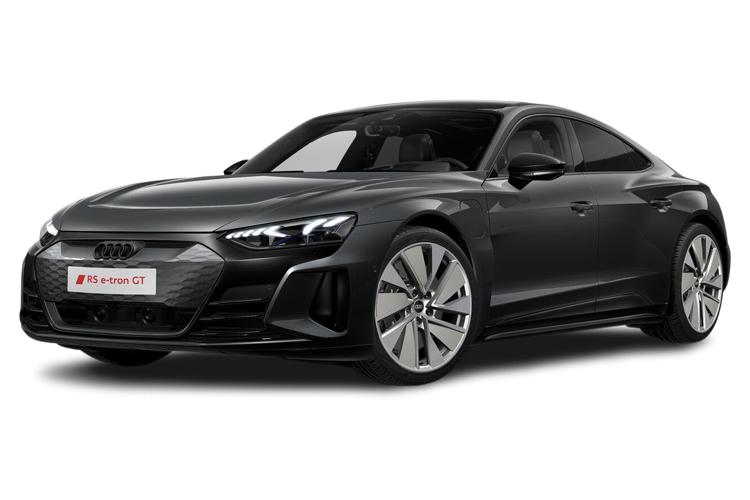
500kW 105kWh 4dr Auto

POA
Business Lease Price per month (excl VAT) £894.10
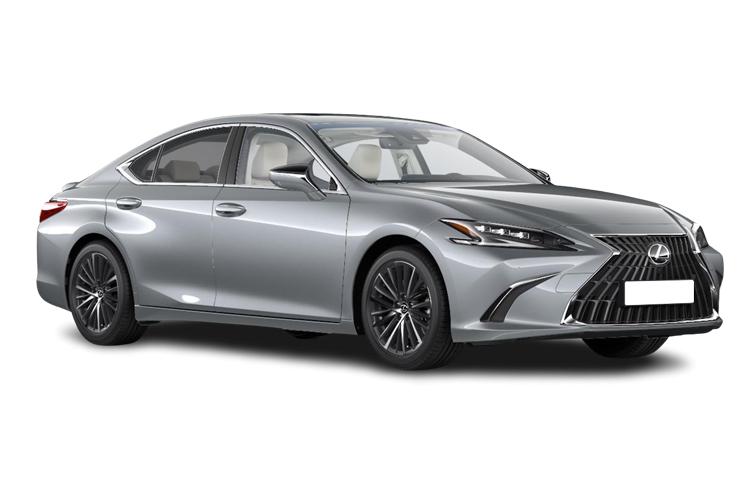
350e 165kW Premium 77 kWh 4dr Auto
POA
Business Lease Price per month (excl VAT) £448.14