Images are for illustrative purposes only.

1.6 E-TECH PHEV 160 SE Edition 5dr Auto
Need some assistance or advice? Call Us 01903 538835


By Jonathan Crouch
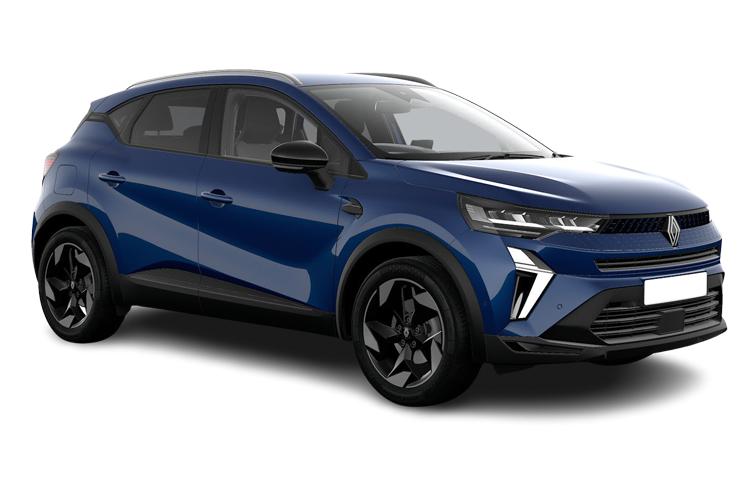
Renault has been a market leader in delivering Plug-in hybrid technology in smaller cars - models like this one, the Captur E-TECH Plug-in Hybrid 160, which sold between 2020 and 2023. This compact crossover offered a 31 mile electric driving range and super-low Benefit-in-Kind taxation exposure, both things common in this class and highly valued by potential customers. Here though, it was all presented with a combination of family friendly flexibility - the sliding rear bench for instance - and a bit of Gallic pizzaz courtesy of the available opportunities for bodywork and cabin customisation. Which all created a car that's worth a second look.
5dr SUV (1.6 PHEV)
By 2020, slowly but surely, Plug-in Hybrid technology was beginning to get more affordable amongst family cars - and the list of choices available was gradually widening. If you want this kind of tech when the time next comes to swap your used family car, then here's one of the most affordable ways to get it - Renault's Captur E-TECH Plug-in Hybrid 160, the PHEV version of our market's favourite Renault model. There were actually two Captur E-TECH hybrid models. The other was a more affordable variant you couldn't plug in, the E-TECH Hybrid 140, which used the same powertrain fitted to petrol/electric versions of the Clio supermini and might actually be a better bet for quite a few customers perusing what's on offer here. Our focus in this review though, is on the Plug-in Captur 160 model, which thanks to its much larger 9.8kWh battery could offer the commuting distance all-electric driving range that its self-charging E-TECH showroom stablemate lacked. And, thanks to that, the kind of super-low CO2 reading that in turn, delivered a super-low Benefit-in-Kind tax liability. There was quite a steep price tag though, to go with this kind of capability - which meant that numbers sold were few and Renault withdrew the PHEV Captur from sale at the end of 2023.
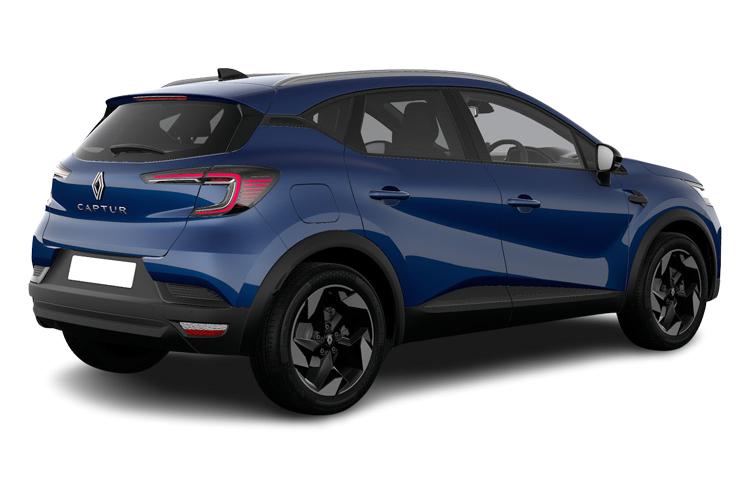
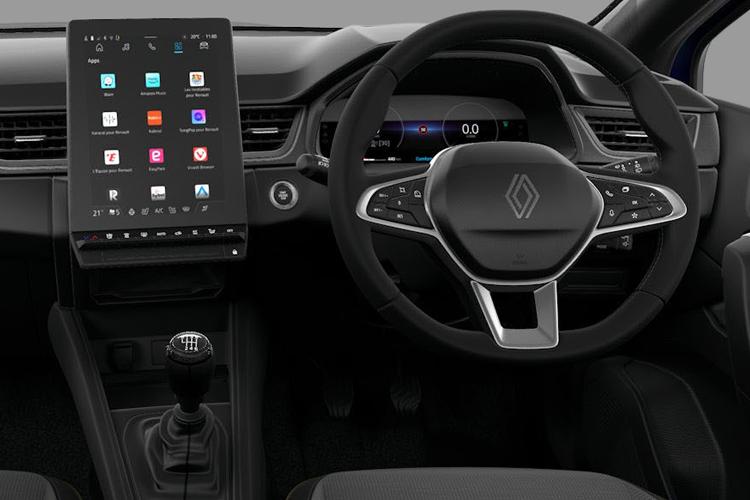
PHEV models are usually difficult to differentiate from their more conventional counterparts and this Captur E-TECH Plug-in Hybrid is no exception. The differences in chassis structure are slight too - the second generation Captur model line's CMF-B ('Common Module Family, B'-segment) platform was designed from the outset to support Hybrid and plug-in electrification - though, curiously, not a full-EV model. In this period, Renault covered off the battery-only part of the small hatch market with its little ZOE hatch, but that car couldn't offer the streetside presence or personalisation options on offer here. In profile, you get a feel for that. The roof, for instance, could from new be specified in contrasting colours - grey, white, orange or 'Diamond Black'. The side sills could be finished in orange or grey. And trendy big wheels could also feature - up to 18-inches in size, though the 'S-Edition' variant settled for 17-inch 'Bahamas' diamond cut rims. At the wheel, there's an EV Button amongst the piano-style keys below a central 9.3-inch portrait-style 'EasyLink' infotainment screen which has various EV-specific menus, including a useful 'Energy Info' graphic showing at any given time what's being powered by what. The 10-inch instrument binnacle display is EV-specific too, most of the E-TECH features showcased in the right hand virtual dial. As well as a lower charge meter, this features an outer rim showing blue 'regenerative', green 'charge' and white 'power' zones. And has a central area showing a triangulation of battery, e-motor and engine to depict in real time the hyperactive hybrid system's flow of energy. Glance down at the 'e-shifter' auto gearstick and you might notice its extra regenerative braking 'B' option, this lever sitting on top of the unusual 'floating'-style centre console fitted to all automatic Captur models, with a cool blue light shining beneath this protrusion onto the wireless 'phone charger beneath. Otherwise, things are just as they would be in any other well specified Captur - and further brightened in some cases by the optional 'Signature orange interior colour pack' which added a bit of colour to the cabin. In the rear, it actually feels very decently spacious by class standards, helped by the fact that this second generation Captur's CMF-B platform allowed for a 17mm rear legroom increase. Despite the fact that the PHEV system's battery was placed under this rear bench, it still kept the sliding function you'll find in more conventional Captur variants, moving back and forth over a range of 160mm. A rival Kia Niro plug-in model from this period can't be had with a sliding rear seat, while with a rival MINI Countryman PHEV, this feature cost extra. Out back, this Captur gets the usual 60:40-split affair which, when pushed forward, frees up 1,118-litres of capacity (down from 1,275-litres normally) across an almost-flat load floor of 1.57m.
Please contact us for an exact up-to-date valuation.
Most Captur E-Tech Plug-in Hybrid owners we came across were pretty satisfied and we haven't heard of any issues with the PHEV system, but inevitably, some other issues were thrown up by our survey. Obviously, you'll need to check the charging system. If the car won't charge, it could be a problem with your home electrics (or those at the public charge point you're using). Check the charge light to make sure that electricity really is going through the charge port. And make sure there really is charge in the socket you're using to power from - plug something else into it to see - say, your 'phone. If that charges OK, it could be that your charging cable is demanding too much power, so try another power source. Another problem could be that the circuit may have tripped due to a circuit overload. Or perhaps there could be a problem with the charge cable: this needs to be cared for properly. Repeatedly driving over it (as previous owners may conceivably have done) will damage it eventually. Make sure you do a charge-up before signing for the car you're looking at. When you do this, make sure that when you plug in to start the charge cycle you hear the charge port and the cable locking and engaging as they should; that's all part of the charger basically confirming with the car's onboard computer that everything's good to go before releasing power. But if the charging cable fails to lock as it should, then that won't happen. If there is a failure to lock, the issue could be actuator failure, caused by a blown fuse. Most of the issues you'll find are common to those of ordinary Capturs of this generation. Which in turn are common to those of a Clio supermini in this period, a car which shares much of this Captur's engineering. General problems include issues with the boot block mechanism causing the boot remain locked, an issue that can happen intermittently. This problem is caused by a faulty actuator/solenoid. You'll need to make sure that the infotainment system has got the latest software updates so that it can function as it should. Check the Renault key card and make sure it locks and unlocks the doors properly. If it doesn't, then the key battery might be flat. Then get in and make sure that the starter activates and lights up the dashboard. If it doesn't then the car battery may be at fault. If the engine can't be switched off once activated, then try pressing the starter button 5 times in quick succession and see if that solves it. As for driving issues, well look for vibrations, smoke from the exhaust and warning lights on the dash. If vibrations are the problem, check tyre pressure and the condition of the tyres. Check the steering: if it feels very heavy, then the assistance motor may be faulty. We've also come across reports of issues with electricals, ranging from faulty wipers to cars that wouldn't start. There have also been issues with faulty bulbs that stop the indicators from correctly working. We came across a number of glitches with the R-Link2 infotainment and sat nav system - things like out-of-date maps and issues with DAB drop-out. Another owner complained of dashboard rattles and window whistles. Check tyres, exhausts and front suspension alignment carefully and try to establish if the previous keeper was diligent in the car's upkeep. Look for parking scratches on the alloys and evidence of child damage on the interior plastics and upholstery. All of these issues are common and could give you scope for price negotiation.
(approx based on a 2021 Captur E-Tech Plug-in Hybrid 160 ex VAT) Day to day consumables for this Captur are in line with what you'd expect. An air filter is around £24. An oil filter is around £4. A pollen filter is around £11-£34. Front brake discs sit in the £81-£109 bracket. Rear brake discs are in the £59-£110- bracket. Front brake pads sit in the £31 to £52 bracket for a set. For rear pads it's around £31. A spark plug is around £12. A wiper blade will cost around £8-£19. A door mirror glass is around £33.
This plug-in Captur always pulls away on full-battery power. What then happens once you get going depends on how much charge there is in the battery and which of the various driving modes you've selected. There are three, 'Pure' (which engages all-electric drive) joined by 'Sport' (which is engine-only) and 'My Sense' (which is a hybrid setting engineered to use both power sources most efficiently). If, when in town for instance, you want the car locked into battery-only drive, then you'll activate the 'EV' button on the fascia. Otherwise, the hybrid 'MySense' drive mode will be your most flexible everyday setting choice, one that'll see the engine occasionally cutting in and out to help the battery until the electric range - WLTP-rated at 31 miles - is used up and full-time combustion power becomes necessary. The combustion unit in question is of 1.6-litres in size, which is paired with a 49kW electric motor and a smaller integrated starter-generator, which together draw their energy from a 7.5 kWh lithium-ion battery housed beneath the rear passenger seat and generate a combined output of 160hp. The gearbox is an auto of course (but of the more unusual 'dog box' clutchless variety) and it offers an extra 'B' mode which maximises regenerative braking - to the point where you hardly ever have to use the actual brake pedal. Whatever your chosen transmission setting, nearly all the time when you're either off-throttle or slowing the car down, restorative energy is being fed back into the battery. Much of it is then used to aid acceleration, but if you want all of it to be saved for battery-only town travel when you'll most need it, then an 'E-SAVE' setting's available to allow for that. Inevitably, all of this clever tech carries quite a weight penalty (nearly 400kgs), which has an effect on both ride quality and cornering body control. But unless you go throwing the car about, you'll probably be quite happy at the dynamic balance Renault achieved here. Particularly when you look at the WLTP-rated efficiency stats: 188.3mpg on the combined cycle and a 34g/km CO2 reading low enough to enable a Benefit-in-Kind taxation reading of just 10%. Charging from zero to 100% takes approximately three hours using a garage wallbox.
There are certainly lots of reasons why you might want one of these. Including all the usual plug-in hybrid attributes of course - basically many of the good bits of an EV without the range anxiety downside. Plus this Renault is more appealing in many ways than its two most direct period rivals, PHEV versions of the Kia Niro and the MINI Countryman, being more customisable and smoother in terms of transmission and ride quality. We'd still struggle to recommend it though, over its E-TECH Hybrid 140 self-charging non-Plug-in showroom stablemate. Compared to that car, there's a much smaller boot and a significantly higher price. And unless this PHEV model's Benefit-in-Kind tax savings are really significant for you, you'd need a very dedicated charging regime to make the running costs of this Plug-in version massively better those of the self-charging variant. Still, a very dedicated charging regime is the kind of thing that a lot of potential customers here will have in mind. And, with that in place, there'd be a lot to like here. Yes, the money being asked for this car would get you a compact SUV with a posher badge, but you wouldn't be able to cruise silently past fuel stations in it; not unless you paid vastly more anyway.
Data provided by CAP-HPI database - Ref# 99273
By Jonathan Crouch
Renault has been a market leader in delivering Plug-in hybrid technology in smaller cars - models like this one, the Captur E-TECH Plug-in Hybrid 160, which sold between 2020 and 2023. This compact crossover offered a 31 mile electric driving range and super-low Benefit-in-Kind taxation exposure, both things common in this class and highly valued by potential customers. Here though, it was all presented with a combination of family friendly flexibility - the sliding rear bench for instance - and a bit of Gallic pizzaz courtesy of the available opportunities for bodywork and cabin customisation. Which all created a car that's worth a second look.
5dr SUV (1.6 PHEV)
By 2020, slowly but surely, Plug-in Hybrid technology was beginning to get more affordable amongst family cars - and the list of choices available was gradually widening. If you want this kind of tech when the time next comes to swap your used family car, then here's one of the most affordable ways to get it - Renault's Captur E-TECH Plug-in Hybrid 160, the PHEV version of our market's favourite Renault model. There were actually two Captur E-TECH hybrid models. The other was a more affordable variant you couldn't plug in, the E-TECH Hybrid 140, which used the same powertrain fitted to petrol/electric versions of the Clio supermini and might actually be a better bet for quite a few customers perusing what's on offer here. Our focus in this review though, is on the Plug-in Captur 160 model, which thanks to its much larger 9.8kWh battery could offer the commuting distance all-electric driving range that its self-charging E-TECH showroom stablemate lacked. And, thanks to that, the kind of super-low CO2 reading that in turn, delivered a super-low Benefit-in-Kind tax liability. There was quite a steep price tag though, to go with this kind of capability - which meant that numbers sold were few and Renault withdrew the PHEV Captur from sale at the end of 2023.
PHEV models are usually difficult to differentiate from their more conventional counterparts and this Captur E-TECH Plug-in Hybrid is no exception. The differences in chassis structure are slight too - the second generation Captur model line's CMF-B ('Common Module Family, B'-segment) platform was designed from the outset to support Hybrid and plug-in electrification - though, curiously, not a full-EV model. In this period, Renault covered off the battery-only part of the small hatch market with its little ZOE hatch, but that car couldn't offer the streetside presence or personalisation options on offer here. In profile, you get a feel for that. The roof, for instance, could from new be specified in contrasting colours - grey, white, orange or 'Diamond Black'. The side sills could be finished in orange or grey. And trendy big wheels could also feature - up to 18-inches in size, though the 'S-Edition' variant settled for 17-inch 'Bahamas' diamond cut rims. At the wheel, there's an EV Button amongst the piano-style keys below a central 9.3-inch portrait-style 'EasyLink' infotainment screen which has various EV-specific menus, including a useful 'Energy Info' graphic showing at any given time what's being powered by what. The 10-inch instrument binnacle display is EV-specific too, most of the E-TECH features showcased in the right hand virtual dial. As well as a lower charge meter, this features an outer rim showing blue 'regenerative', green 'charge' and white 'power' zones. And has a central area showing a triangulation of battery, e-motor and engine to depict in real time the hyperactive hybrid system's flow of energy. Glance down at the 'e-shifter' auto gearstick and you might notice its extra regenerative braking 'B' option, this lever sitting on top of the unusual 'floating'-style centre console fitted to all automatic Captur models, with a cool blue light shining beneath this protrusion onto the wireless 'phone charger beneath. Otherwise, things are just as they would be in any other well specified Captur - and further brightened in some cases by the optional 'Signature orange interior colour pack' which added a bit of colour to the cabin. In the rear, it actually feels very decently spacious by class standards, helped by the fact that this second generation Captur's CMF-B platform allowed for a 17mm rear legroom increase. Despite the fact that the PHEV system's battery was placed under this rear bench, it still kept the sliding function you'll find in more conventional Captur variants, moving back and forth over a range of 160mm. A rival Kia Niro plug-in model from this period can't be had with a sliding rear seat, while with a rival MINI Countryman PHEV, this feature cost extra. Out back, this Captur gets the usual 60:40-split affair which, when pushed forward, frees up 1,118-litres of capacity (down from 1,275-litres normally) across an almost-flat load floor of 1.57m.
Please contact us for an exact up-to-date valuation.
Most Captur E-Tech Plug-in Hybrid owners we came across were pretty satisfied and we haven't heard of any issues with the PHEV system, but inevitably, some other issues were thrown up by our survey. Obviously, you'll need to check the charging system. If the car won't charge, it could be a problem with your home electrics (or those at the public charge point you're using). Check the charge light to make sure that electricity really is going through the charge port. And make sure there really is charge in the socket you're using to power from - plug something else into it to see - say, your 'phone. If that charges OK, it could be that your charging cable is demanding too much power, so try another power source. Another problem could be that the circuit may have tripped due to a circuit overload. Or perhaps there could be a problem with the charge cable: this needs to be cared for properly. Repeatedly driving over it (as previous owners may conceivably have done) will damage it eventually. Make sure you do a charge-up before signing for the car you're looking at. When you do this, make sure that when you plug in to start the charge cycle you hear the charge port and the cable locking and engaging as they should; that's all part of the charger basically confirming with the car's onboard computer that everything's good to go before releasing power. But if the charging cable fails to lock as it should, then that won't happen. If there is a failure to lock, the issue could be actuator failure, caused by a blown fuse. Most of the issues you'll find are common to those of ordinary Capturs of this generation. Which in turn are common to those of a Clio supermini in this period, a car which shares much of this Captur's engineering. General problems include issues with the boot block mechanism causing the boot remain locked, an issue that can happen intermittently. This problem is caused by a faulty actuator/solenoid. You'll need to make sure that the infotainment system has got the latest software updates so that it can function as it should. Check the Renault key card and make sure it locks and unlocks the doors properly. If it doesn't, then the key battery might be flat. Then get in and make sure that the starter activates and lights up the dashboard. If it doesn't then the car battery may be at fault. If the engine can't be switched off once activated, then try pressing the starter button 5 times in quick succession and see if that solves it. As for driving issues, well look for vibrations, smoke from the exhaust and warning lights on the dash. If vibrations are the problem, check tyre pressure and the condition of the tyres. Check the steering: if it feels very heavy, then the assistance motor may be faulty. We've also come across reports of issues with electricals, ranging from faulty wipers to cars that wouldn't start. There have also been issues with faulty bulbs that stop the indicators from correctly working. We came across a number of glitches with the R-Link2 infotainment and sat nav system - things like out-of-date maps and issues with DAB drop-out. Another owner complained of dashboard rattles and window whistles. Check tyres, exhausts and front suspension alignment carefully and try to establish if the previous keeper was diligent in the car's upkeep. Look for parking scratches on the alloys and evidence of child damage on the interior plastics and upholstery. All of these issues are common and could give you scope for price negotiation.
(approx based on a 2021 Captur E-Tech Plug-in Hybrid 160 ex VAT) Day to day consumables for this Captur are in line with what you'd expect. An air filter is around £24. An oil filter is around £4. A pollen filter is around £11-£34. Front brake discs sit in the £81-£109 bracket. Rear brake discs are in the £59-£110- bracket. Front brake pads sit in the £31 to £52 bracket for a set. For rear pads it's around £31. A spark plug is around £12. A wiper blade will cost around £8-£19. A door mirror glass is around £33.
This plug-in Captur always pulls away on full-battery power. What then happens once you get going depends on how much charge there is in the battery and which of the various driving modes you've selected. There are three, 'Pure' (which engages all-electric drive) joined by 'Sport' (which is engine-only) and 'My Sense' (which is a hybrid setting engineered to use both power sources most efficiently). If, when in town for instance, you want the car locked into battery-only drive, then you'll activate the 'EV' button on the fascia. Otherwise, the hybrid 'MySense' drive mode will be your most flexible everyday setting choice, one that'll see the engine occasionally cutting in and out to help the battery until the electric range - WLTP-rated at 31 miles - is used up and full-time combustion power becomes necessary. The combustion unit in question is of 1.6-litres in size, which is paired with a 49kW electric motor and a smaller integrated starter-generator, which together draw their energy from a 7.5 kWh lithium-ion battery housed beneath the rear passenger seat and generate a combined output of 160hp. The gearbox is an auto of course (but of the more unusual 'dog box' clutchless variety) and it offers an extra 'B' mode which maximises regenerative braking - to the point where you hardly ever have to use the actual brake pedal. Whatever your chosen transmission setting, nearly all the time when you're either off-throttle or slowing the car down, restorative energy is being fed back into the battery. Much of it is then used to aid acceleration, but if you want all of it to be saved for battery-only town travel when you'll most need it, then an 'E-SAVE' setting's available to allow for that. Inevitably, all of this clever tech carries quite a weight penalty (nearly 400kgs), which has an effect on both ride quality and cornering body control. But unless you go throwing the car about, you'll probably be quite happy at the dynamic balance Renault achieved here. Particularly when you look at the WLTP-rated efficiency stats: 188.3mpg on the combined cycle and a 34g/km CO2 reading low enough to enable a Benefit-in-Kind taxation reading of just 10%. Charging from zero to 100% takes approximately three hours using a garage wallbox.
There are certainly lots of reasons why you might want one of these. Including all the usual plug-in hybrid attributes of course - basically many of the good bits of an EV without the range anxiety downside. Plus this Renault is more appealing in many ways than its two most direct period rivals, PHEV versions of the Kia Niro and the MINI Countryman, being more customisable and smoother in terms of transmission and ride quality. We'd still struggle to recommend it though, over its E-TECH Hybrid 140 self-charging non-Plug-in showroom stablemate. Compared to that car, there's a much smaller boot and a significantly higher price. And unless this PHEV model's Benefit-in-Kind tax savings are really significant for you, you'd need a very dedicated charging regime to make the running costs of this Plug-in version massively better those of the self-charging variant. Still, a very dedicated charging regime is the kind of thing that a lot of potential customers here will have in mind. And, with that in place, there'd be a lot to like here. Yes, the money being asked for this car would get you a compact SUV with a posher badge, but you wouldn't be able to cruise silently past fuel stations in it; not unless you paid vastly more anyway.
2.0 PHEV Design 5dr CVT

POA
Business Lease Price per month (excl VAT) £306.90