
Images are for illustrative purposes only.

II 5dr Auto
Need some assistance or advice? Call Us 01903 538835


Rolls-Royce provides the ultimate large luxury SUV with this Cullinan model. Jonathan Crouch takes a look at the Series II version.
In the Cullinan, Rolls Royce delivered not only the world's most exclusive luxury SUV but also its most divisive car ever. Much of the engineering is shared with the Phantom and with various BMW models, but this exclusive brand has blended it all together into a car that has a very unique personality that you'll either love or hate. One thing's for sure; there's nothing quite like it. Let's check out the updated Series II version of this model.
Does the world need a Rolls Royce SUV? Apparently so because this car, the Cullinan, has apparently sold strongly since its original launch in 2018, six years prior to the 'Series II' facelift we look at here. At original launch, this was the first model of this kind that the brand had produced and, perhaps a little more surprisingly, it was the first to feature 4WD. That set up is BMW-derived but the bespoke aluminium space frame the huge body sits upon isn't - Rolls wants to move away from the Munich maker's architecture. Unsurprisingly, the company still hasn't engineered this model for Range Rover-rivalling off road prowess. Instead it's intended for what the company calls 'the lost mile' element of journeys - the awkward final bit of a multi-millionaire's journey to his ski lodge or partridge shoot. Ultimately, this was always going to be a controversial car. But is it a good one? Let's find out...
Nothing's changed mechanically as part of the Series II update (so still no sort of electrification). As before, there's not much about the engineering of the Cullinan that's unfamiliar. The aluminium platform is shared with the Phantom, as is the 48V 6.75-litre V12 plumbed in beneath the expansive bonnet. It puts out 563bhp but has been designed in this case for the kind of greater low down torque appropriate for an SUV. It drives through another familiar Rolls fitment, an 8-speed auto gearbox that allows the sat nav to help with gear selection but not the driver. And power gets to the tarmac, the mud or the snow via an embellished version of BMW's xDrive 4WD system that, via an electronically-controlled clutch, can send up to 100% of power to the rear axle or divert up to 50% of it to the front, as required. There's all of BMW's choicest active drive dynamics technology of course, electrically-active anti-roll bars (needed because there'd otherwise be Channel Ferry levels of roly-poly cornering demeanour). Plus you also get active rear-wheel steering (needed to avoid the turning circle being comparable to that of a London bus). And of course electronically-controlled air suspension, which rises by 40mm in off road mode. There's nothing as crude as a low range gearbox of course (so owners can't expect this car to match a Range Rover on the rough). But apparently, if you switch the stability control off, it locks the all-wheel drive into a 50:50 torque split, which ought to be enough to help owners extradite themselves from a mildy mucky spot. On tarmac, 62mph from rest is impressively brisk given the gargantuan weight - 5.2s dead. But the towing capacity is quoted at just 2.5 tonnes.
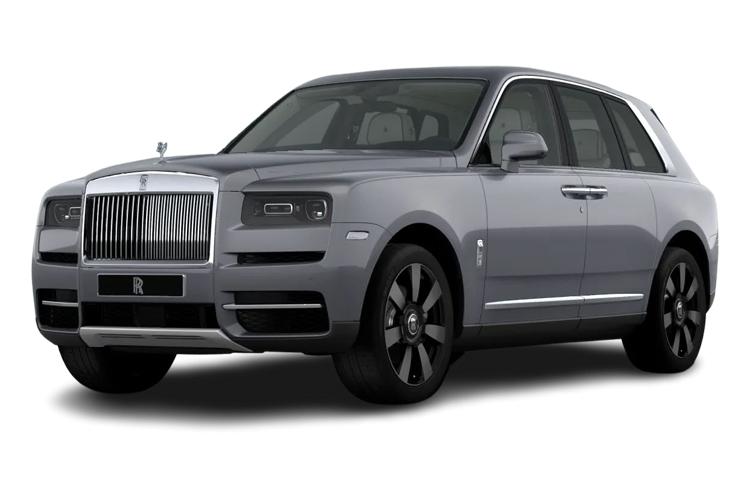
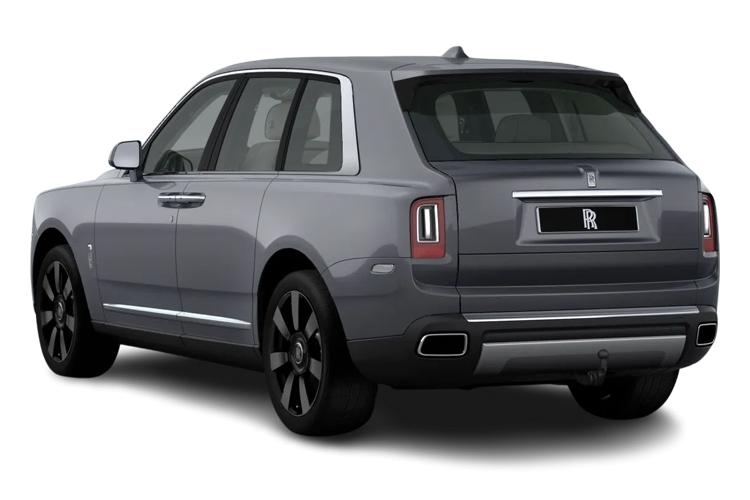
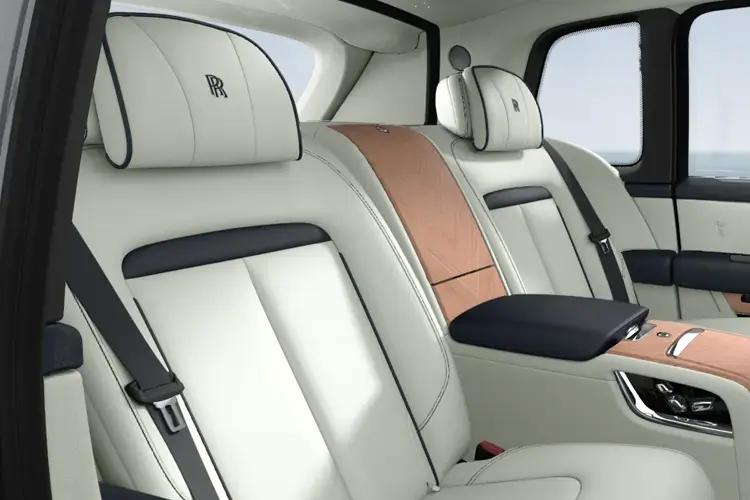
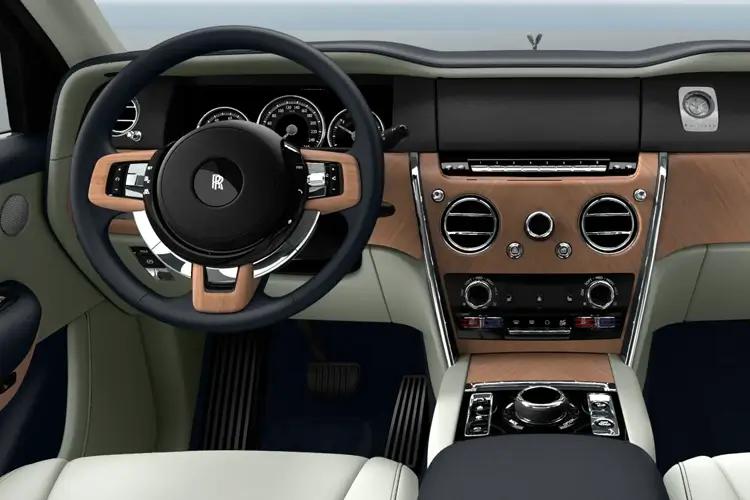
Perhaps it's appropriate given this car's controversial concept that the styling is so divisive. Rolls Royce's former design chief didn't want to style it - and you can see why. The company's top brass insisted on clear brand carry-over aesthetic cues that were never intended to work with an SUV and the result is an odd combination of aesthetic themes that rather remind you of the mess Porsche got into with its very first Cayenne. Having said all that, what's served up here is definitely imposing and clearly exclusive, which, let's face it, is all most likely buyers will really want. As to what's changed with this Series II model, well a few nips and tucks make it look less 'London Taxi'-like. There's a revised front grille with crisper edges and a new V-shape to the area beneath the grille, plus revised daytime running lights and re-shaped air intakes. The sides have gloss rather than matt black sills and at the rear, there's further gloss black trimming, plus a more prominent skid plate and fresh surrounds for the exhaust exits. Of course, its extravagantly opulent inside - how could it not be. At the wheel, you sit commandingly high grasping a steering wheel somewhat thicker than the Rolls norm and facing a digital instrument binnacle featuring four interlocking Rolls Royce logos. There's plenty of dashboard 'jewellery' of course, with lovely chromium-plated switches and rotary controlled. Plus there's beautiful open-pore wood and exquisite fine leather. Again, we need to cover the Series II changes; basically, a new more digitalised pillar-to-pillar glass dash, which is functional for the driver and in the middle but decorative in front of the passenger. It all lights up in three phases when you open the door - first the instruments, then the passenger section and finally the cabinet around the new analogue clock and Spirit of Ecstacy mascot (the first time the latter has been seen inside a Rolls-Royce). It's all quite an evenbt after dark. As before and as the Rolls Royce way, the rear doors hinge at the C-pillar rather than the B-pillar and open to reveal a configurable rear cabin. Most owners opt for the three-person rear bench, but a two individual seat set-up is also available with a glass screen behind to improve refinement. Out back, there's a 560-litre boot.
If you're concerned about the price, then you're probably not target market for this car. If you're interested, the figure in question is £330,000 (around £55,000 more than the pre-facelift version), but that's only a starting point; almost all owners will be paying over £350,000 once they've specced their cars to their liking. Standard technology of course isn't lacking. The central information screen is (for the first time in a Rolls Royce) touch sensitive, allowing the driver to quickly select functions, map views and vehicle set-up whilst on the move. This portal can still be controlled from the iconic Spirit of Ecstasy controller which nestles on the central console with the 'Off-Road' button, Hill Descent Control button and Air Suspension height adjustment controls. A host of other cutting-edge technology features makes Rolls-Royce Cullinan the most technologically advanced car of its type in the world. Further equipment includes a Night Vision and Vision Assist system, including daytime and night-time Wildlife & Pedestrian warning. Plus there's an Alertness Assistant; a 4-Camera system with Panoramic View, all-round visibility and helicopter view; Active Cruise Control; Collision Warning; Cross-Traffic Warning, Lane Departure and Lane Change Warning; an 7x3 High-Resolution Head-Up Display, a WiFi hotspot; and of course the latest Navigation and Entertainment Systems.
Naturally, the most overriding concern will be residual value. Buying a big, expensive car that doesn't quite hit the mark is a more effective way to burn money than wiring cash to Nigeria in the hope that one of those letters from obscure businessmen looking to get their millions out of the country has to be genuine. Catastrophic depreciation didn't afflict earlier versions of this car too much though. There's something ineffably special about a Cullinan. Call it a daringness or a certain extremity of character but this model is never going to be remembered as a makeweight Rolls. On virtually every other financial measure, the car will pound your wallet. Insurance is best obtained through a specialist, while fuel consumption is optimistically claimed to be 17.7mpg, although a figure around 13mpg might be more realistic in day to day driving. Carbon dioxide emissions are 363g/km, predictably landing you in the highest rating for road tax. To be honest, who cares? This is a car that's all about sensation and the way it makes you feel. On those scores, it's an unqualified success.
Rolls Royce is unphased by the mixed reaction this car has received, pointing to a bulging order book and an almost universally favourable reaction from loyal customers who've been waiting years to replace their Range Rovers with something more upmarket. If you don't like the Cullinan, it's likely that it wasn't aimed at you anyway. If you do, then no other super-luxury SUV will satisfy you as much. There is after all, quite simply no other car of this kind that can transport you with greater luxury and refinement, No other SUV makes as important a statement of your net wealth. And no other 4x4 offers the kind of craftsmanship and exclusivity that sets this one apart. Which means that if you have the means to buy a Cullinan, you might well be the kind of person who'll find this car difficult to resist.
Data provided by CAP-HPI database - Ref# 105928
Rolls-Royce provides the ultimate large luxury SUV with this Cullinan model. Jonathan Crouch takes a look at the Series II version.
In the Cullinan, Rolls Royce delivered not only the world's most exclusive luxury SUV but also its most divisive car ever. Much of the engineering is shared with the Phantom and with various BMW models, but this exclusive brand has blended it all together into a car that has a very unique personality that you'll either love or hate. One thing's for sure; there's nothing quite like it. Let's check out the updated Series II version of this model.
Does the world need a Rolls Royce SUV? Apparently so because this car, the Cullinan, has apparently sold strongly since its original launch in 2018, six years prior to the 'Series II' facelift we look at here. At original launch, this was the first model of this kind that the brand had produced and, perhaps a little more surprisingly, it was the first to feature 4WD. That set up is BMW-derived but the bespoke aluminium space frame the huge body sits upon isn't - Rolls wants to move away from the Munich maker's architecture. Unsurprisingly, the company still hasn't engineered this model for Range Rover-rivalling off road prowess. Instead it's intended for what the company calls 'the lost mile' element of journeys - the awkward final bit of a multi-millionaire's journey to his ski lodge or partridge shoot. Ultimately, this was always going to be a controversial car. But is it a good one? Let's find out...
Nothing's changed mechanically as part of the Series II update (so still no sort of electrification). As before, there's not much about the engineering of the Cullinan that's unfamiliar. The aluminium platform is shared with the Phantom, as is the 48V 6.75-litre V12 plumbed in beneath the expansive bonnet. It puts out 563bhp but has been designed in this case for the kind of greater low down torque appropriate for an SUV. It drives through another familiar Rolls fitment, an 8-speed auto gearbox that allows the sat nav to help with gear selection but not the driver. And power gets to the tarmac, the mud or the snow via an embellished version of BMW's xDrive 4WD system that, via an electronically-controlled clutch, can send up to 100% of power to the rear axle or divert up to 50% of it to the front, as required. There's all of BMW's choicest active drive dynamics technology of course, electrically-active anti-roll bars (needed because there'd otherwise be Channel Ferry levels of roly-poly cornering demeanour). Plus you also get active rear-wheel steering (needed to avoid the turning circle being comparable to that of a London bus). And of course electronically-controlled air suspension, which rises by 40mm in off road mode. There's nothing as crude as a low range gearbox of course (so owners can't expect this car to match a Range Rover on the rough). But apparently, if you switch the stability control off, it locks the all-wheel drive into a 50:50 torque split, which ought to be enough to help owners extradite themselves from a mildy mucky spot. On tarmac, 62mph from rest is impressively brisk given the gargantuan weight - 5.2s dead. But the towing capacity is quoted at just 2.5 tonnes.
Perhaps it's appropriate given this car's controversial concept that the styling is so divisive. Rolls Royce's former design chief didn't want to style it - and you can see why. The company's top brass insisted on clear brand carry-over aesthetic cues that were never intended to work with an SUV and the result is an odd combination of aesthetic themes that rather remind you of the mess Porsche got into with its very first Cayenne. Having said all that, what's served up here is definitely imposing and clearly exclusive, which, let's face it, is all most likely buyers will really want. As to what's changed with this Series II model, well a few nips and tucks make it look less 'London Taxi'-like. There's a revised front grille with crisper edges and a new V-shape to the area beneath the grille, plus revised daytime running lights and re-shaped air intakes. The sides have gloss rather than matt black sills and at the rear, there's further gloss black trimming, plus a more prominent skid plate and fresh surrounds for the exhaust exits. Of course, its extravagantly opulent inside - how could it not be. At the wheel, you sit commandingly high grasping a steering wheel somewhat thicker than the Rolls norm and facing a digital instrument binnacle featuring four interlocking Rolls Royce logos. There's plenty of dashboard 'jewellery' of course, with lovely chromium-plated switches and rotary controlled. Plus there's beautiful open-pore wood and exquisite fine leather. Again, we need to cover the Series II changes; basically, a new more digitalised pillar-to-pillar glass dash, which is functional for the driver and in the middle but decorative in front of the passenger. It all lights up in three phases when you open the door - first the instruments, then the passenger section and finally the cabinet around the new analogue clock and Spirit of Ecstacy mascot (the first time the latter has been seen inside a Rolls-Royce). It's all quite an evenbt after dark. As before and as the Rolls Royce way, the rear doors hinge at the C-pillar rather than the B-pillar and open to reveal a configurable rear cabin. Most owners opt for the three-person rear bench, but a two individual seat set-up is also available with a glass screen behind to improve refinement. Out back, there's a 560-litre boot.
If you're concerned about the price, then you're probably not target market for this car. If you're interested, the figure in question is £330,000 (around £55,000 more than the pre-facelift version), but that's only a starting point; almost all owners will be paying over £350,000 once they've specced their cars to their liking. Standard technology of course isn't lacking. The central information screen is (for the first time in a Rolls Royce) touch sensitive, allowing the driver to quickly select functions, map views and vehicle set-up whilst on the move. This portal can still be controlled from the iconic Spirit of Ecstasy controller which nestles on the central console with the 'Off-Road' button, Hill Descent Control button and Air Suspension height adjustment controls. A host of other cutting-edge technology features makes Rolls-Royce Cullinan the most technologically advanced car of its type in the world. Further equipment includes a Night Vision and Vision Assist system, including daytime and night-time Wildlife & Pedestrian warning. Plus there's an Alertness Assistant; a 4-Camera system with Panoramic View, all-round visibility and helicopter view; Active Cruise Control; Collision Warning; Cross-Traffic Warning, Lane Departure and Lane Change Warning; an 7x3 High-Resolution Head-Up Display, a WiFi hotspot; and of course the latest Navigation and Entertainment Systems.
Naturally, the most overriding concern will be residual value. Buying a big, expensive car that doesn't quite hit the mark is a more effective way to burn money than wiring cash to Nigeria in the hope that one of those letters from obscure businessmen looking to get their millions out of the country has to be genuine. Catastrophic depreciation didn't afflict earlier versions of this car too much though. There's something ineffably special about a Cullinan. Call it a daringness or a certain extremity of character but this model is never going to be remembered as a makeweight Rolls. On virtually every other financial measure, the car will pound your wallet. Insurance is best obtained through a specialist, while fuel consumption is optimistically claimed to be 17.7mpg, although a figure around 13mpg might be more realistic in day to day driving. Carbon dioxide emissions are 363g/km, predictably landing you in the highest rating for road tax. To be honest, who cares? This is a car that's all about sensation and the way it makes you feel. On those scores, it's an unqualified success.
Rolls Royce is unphased by the mixed reaction this car has received, pointing to a bulging order book and an almost universally favourable reaction from loyal customers who've been waiting years to replace their Range Rovers with something more upmarket. If you don't like the Cullinan, it's likely that it wasn't aimed at you anyway. If you do, then no other super-luxury SUV will satisfy you as much. There is after all, quite simply no other car of this kind that can transport you with greater luxury and refinement, No other SUV makes as important a statement of your net wealth. And no other 4x4 offers the kind of craftsmanship and exclusivity that sets this one apart. Which means that if you have the means to buy a Cullinan, you might well be the kind of person who'll find this car difficult to resist.
