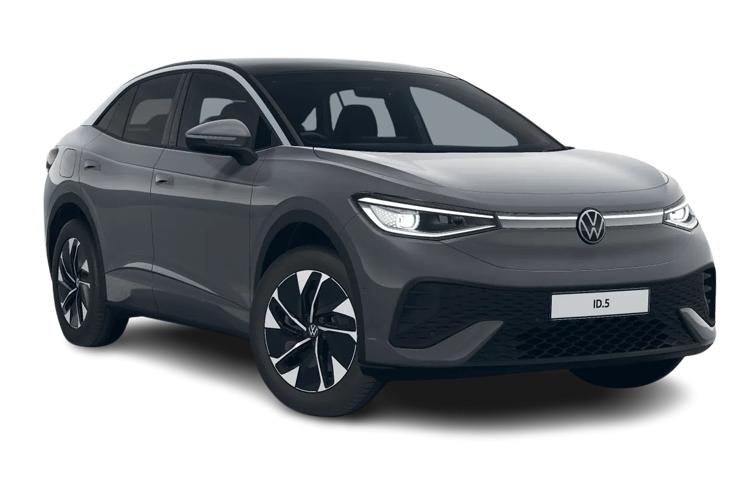
Images are for illustrative purposes only.

430kW 120kWh 2dr Auto
Need some assistance or advice? Call Us 01903 538835


Rolls-Royce entered the EV era with this Spectre coupe. Jonathan Crouch takes a look at the Series II version.
The Spectre was the car that took Rolls-Royce into a new fully electric era. And in this Series II form, this huge four-door coupe gets faster and longer-ranging. It still delivers a fittingly opulent interpretation of full battery motion for the world's moneyed elite. And excess combines with efficiency to provide a rather unique end result.
There isn't anything more logical than an electric Rolls-Royce. Founder Henry Royce trained as an electrical engineer and when at Cambridge, owned an electric car, a US-built Colombia Electric Carriage, a genre of automobile that back in 1900 he predicted would be 'very useful when fixed charging stations can be arranged'. We're still battling with that issue, but it did take rather a long time for Rolls-Royce to bring us an EV, this car, the Spectre coupe, back in 2022. Prior to this model's arrival, the company had been dabbling with the EV idea for decades, back in 2011 producing a one-off electric Phantom called the 120EX to test reaction from customers. Who turned it down on account of its Tesla-derived powerplant's feeble range, slow charging and restricted battery life. So Rolls-Royce spent the whole of this century's second decade working on something better, aided by the might of its BMW parent - and the Spectre was it, a four-seat two-door coupe. It introduced an extended aluminium spaceframe platform intended to underpin all the forthcoming new EVs from the company as it moved towards positioning as an electric-only brand by 2030. The Spectre went on to be the brand's second best seller (surpassing the Phantom and Ghost combustion models) prior to a mid-term update in Summer 2026 that created the car we're going to look at here.
The Series II engineering improvements have brought both more power and more driving range. The standard model's dual-motor AWD powertrain now puts out 593bhp and 1,015Nm of torque (up from 577bhp and 900Nm before). And an even more powerful 'Black Badge' flagship variant has been added to the line-up, offering 670bhp and 1,100Nm of pulling power. As before, think 62mph in just over 4s on the way to 155mph. The 118kWh battery capacity is unchanged but new borrowed BMW 'Gen6' cylindrical cell technology (from the updated i7) means that range is up by 18%, so the Series II Spectre can now cover up to 390 miles on a charge (up from 329 miles before). As you'd expect, progress is almost silent - but doesn't have to be. A selectable artificial sound is available and even if you don't activate it, sound levels are tuned for what the brand calls 'the right kind of silence'. Surprisingly, there are no driving modes: only a 'B' heightened brake regeneration setting to maximise off-throttle energy harvesting. That enables 'one pedal' driving in most circumstances. Rolls-Royce is particularly proud of the Spectre's digitally integrated evolution of the brand's Planar suspension set-up. This is an orchestra of systems with precisely defined responses to driver inputs and road conditions, delivering Rolls-Royce's hallmark 'magic carpet ride'. The Planar system can decouple the car's anti-roll bars, allowing each wheel to act independently, preventing the rocking motion that occurs when one side of a vehicle hits an undulation in the road. This also reduces high-frequency ride imperfections caused by shortcomings in road surface quality. Once a corner is identified as imminent, the Planar system recouples the components and stiffens the dampers, then the four-wheel steering system is then prepared for activation to ensure effortless entry and exit. Under cornering, 18 sensors are monitored, and steering, braking, power delivery and suspension parameters are adjusted so that Spectre remains stable.
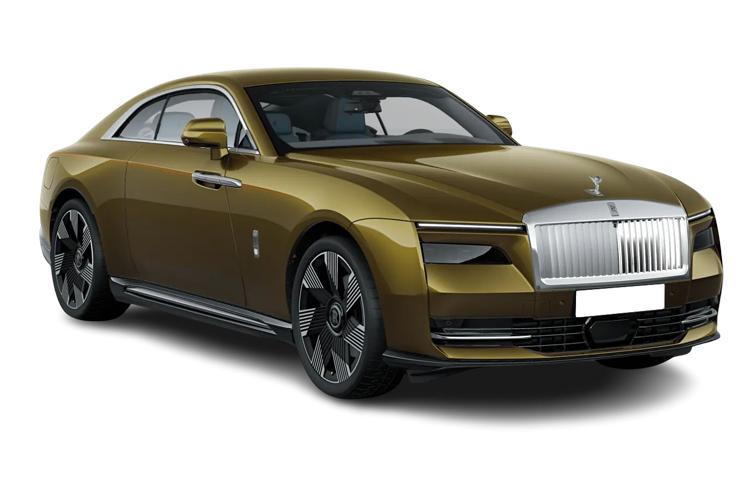
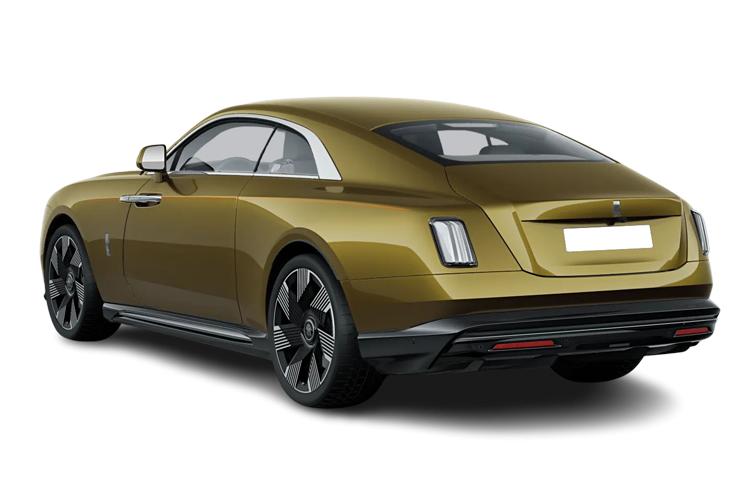
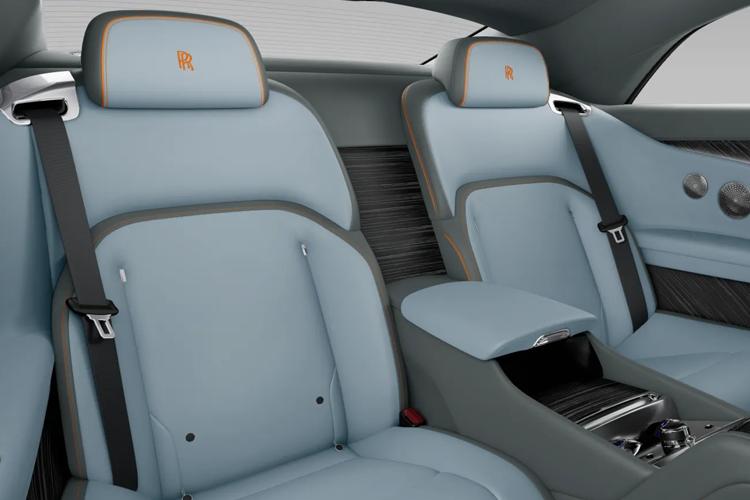
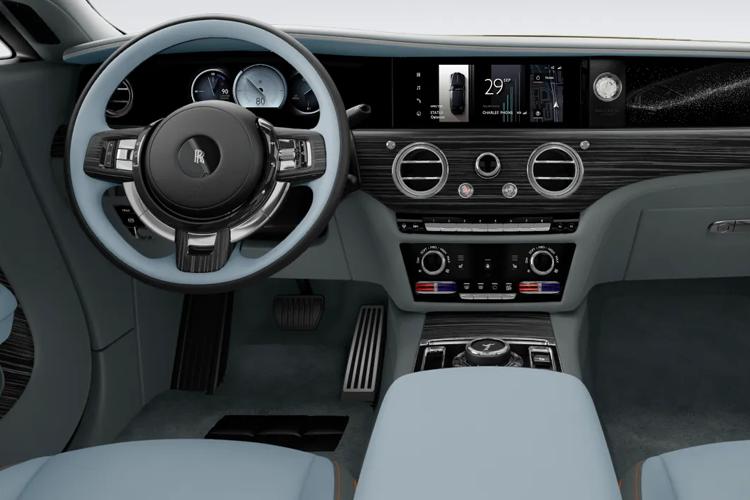
Throughout history, the most aspirational and legendary Rolls-Royce models have been coupes. The Phantom Coupe (which left production in 2016) is already much sought after: so too will be the more recently retired two-door Wraith. The Spectre is a size larger still, 5,453mm long, 2,080mm wide and 1,559mm tall. And it represents the third generation of Rolls-Royce models introduced since BMW bought the company in 2003. This is the sleekest Rolls-Royce ever (the drag coefficient is just 0.25Cd); it's also the stiffest (by 30%), aided by the integration of the huge battery into the structure (which makes this the heaviest model in the history of the brand, at 2,975kg). It also has the widest front grille ever, topped by an aerodynamic Spirit of Ecstasy mascot. The standard wheels have enormous 23-inch rims. All the exterior changes you'd notice on this updated model apply to the top 'Black Badge' version, which gets brightwork largely replaced by a specially deveoped Iced Black matte finish and gains new 'open-spoke' wheels with enormous brakes. When it's time to take a seat inside, a huge 1.5-metre rear-hinged door (the biggest ever fitted to a Rolls-Royce) opens automatically to admit you. An owner of the original model might notice this updated car's more intricate clock (inspired by aviation instruments) and the new wave-like pattern on the fascia ahead of the front seat passenger. Otherwise, the cabin is as before. There's no huge centre screen; just a restrained and neatly integrated infotainment display complemented by the expected digital instrument cluster. You sit quite high, as is necessary for an ideal view forward over the vast bonnet. Personalisation options include intricate LED lighting for the doors and fascia. And you can have a ceiling reminiscent of a star-lit sky. Thanks to the long 3,210mm wheelbase, there's reasonable space for a couple of adults in the back. Front or rear, the expected cosseting environment prevails, full of soft leathers and immaculately veneered wood. As before, the boot is 390-litres in capacity, which includes a dedicated 50-litre underfloor storage compartment for the charging leads (because there's no frunk).
Prices for the standard model start at around the £330,000 mark, while the top 'Black Badge' version will cost around £400,000. But virtually no one pays list price for a Spectre and options take the asking figure for most owners to well over £500,000. Lots of little incorporated details may well make wealthy buyers feel better about that kind of outlay. To affirm the Spectre's expression after dark, the grille is softly illuminated, with 22 LEDs lighting up the sandblasted rear side of each of the vanes, their gentle glow reflected in the polished front surfaces for a subtle and three-dimensional night signature. With this Series II model, there's a much wider selection of options available through the brand's Bespoke division. And, as before, the Spectre is available with 'Starlight Doors', which incorporate 4,796 softly illuminated 'stars'. The coach doors can also be commissioned with a backdrop of wood Canadel Panelling, which takes its name from the cove in the South of France where Sir Henry Royce and his design team spent their winters. The ethereal night-time theme continues with the Spectre's Illuminated Fascia. Developed over the course of two years and more than 10,000 collective hours, it incorporates the Spectre nameplate surrounded by a cluster of over 5,500 stars. Located on the passenger side of the dashboard, the illuminations are completely invisible when the car is not in operation. As with all Rolls-Royces, the Spectre's interior offers clients near-infinite bespoke possibilities. The all-new front seat design has been inspired by British tailoring, with lapel sections that can be rendered in contrasting or matching colours to the main base. Bespoke stitching, embroidery and intricate piping has, as ever, been considered in their inception.
We gave you the longer battery range figure in our driving section - 390 miles, based on a claimed consumption figure of 2.9 miles per kWh, but you'll need to almost always engage the provided 'B' brake regen function and drive conservatively to get anywhere near that. The company's last EV, experimental 120EX of a decade ago, had a range of only 124 miles so things have moved on quite a way since then. The Spectre's drivetrain and its electrical architecture form what the brand calls the car's 'backbone', enabling over a 100 complex sub-systems to be integrated with each other and cope with over 140,000 send-and-receive functions. BMW still hasn't embraced an 800V electrical architecture for its EVs, so Rolls-Royce hasn't either, which means the Spectre won't be able to use the new generation of ultra-fast rapid public chargers that's currently springing up across Europe. At rapid chargers you can use, you won't be expecting the Spectre's enormous 118kWh battery (112.4kWh usable) to be quick to charge and it isn't. Charging happens at 195KW and a 10-80% charge using a rapid charger can be done in approximately 34 minutes.
Rolls-Royce arguably needs EVs more than any other brand. So many of its high net worth customers live opulently in the middle of the kind of major cities that will soon be banning combustion vehicles from their streets. Yet the brand confidently boasts that it could have sold the Spectre with a V12. Maybe, but not for long and the company knows it, which is why it will never again design a new model with an engine. The claim for the Spectre is that it's 'a Rolls-Royce first and an EV second' and we think most customers will concur with that. The marque says it has 'a unique heritage in electric power' that pre-dates the founding of the company itself, but it hasn't rushed to bring a more modern interpretation of full-battery motion to market. The result though, was worth the wait.
Data provided by CAP-HPI database - Ref# 103637
Rolls-Royce entered the EV era with this Spectre coupe. Jonathan Crouch takes a look at the Series II version.
The Spectre was the car that took Rolls-Royce into a new fully electric era. And in this Series II form, this huge four-door coupe gets faster and longer-ranging. It still delivers a fittingly opulent interpretation of full battery motion for the world's moneyed elite. And excess combines with efficiency to provide a rather unique end result.
There isn't anything more logical than an electric Rolls-Royce. Founder Henry Royce trained as an electrical engineer and when at Cambridge, owned an electric car, a US-built Colombia Electric Carriage, a genre of automobile that back in 1900 he predicted would be 'very useful when fixed charging stations can be arranged'. We're still battling with that issue, but it did take rather a long time for Rolls-Royce to bring us an EV, this car, the Spectre coupe, back in 2022. Prior to this model's arrival, the company had been dabbling with the EV idea for decades, back in 2011 producing a one-off electric Phantom called the 120EX to test reaction from customers. Who turned it down on account of its Tesla-derived powerplant's feeble range, slow charging and restricted battery life. So Rolls-Royce spent the whole of this century's second decade working on something better, aided by the might of its BMW parent - and the Spectre was it, a four-seat two-door coupe. It introduced an extended aluminium spaceframe platform intended to underpin all the forthcoming new EVs from the company as it moved towards positioning as an electric-only brand by 2030. The Spectre went on to be the brand's second best seller (surpassing the Phantom and Ghost combustion models) prior to a mid-term update in Summer 2026 that created the car we're going to look at here.
The Series II engineering improvements have brought both more power and more driving range. The standard model's dual-motor AWD powertrain now puts out 593bhp and 1,015Nm of torque (up from 577bhp and 900Nm before). And an even more powerful 'Black Badge' flagship variant has been added to the line-up, offering 670bhp and 1,100Nm of pulling power. As before, think 62mph in just over 4s on the way to 155mph. The 118kWh battery capacity is unchanged but new borrowed BMW 'Gen6' cylindrical cell technology (from the updated i7) means that range is up by 18%, so the Series II Spectre can now cover up to 390 miles on a charge (up from 329 miles before). As you'd expect, progress is almost silent - but doesn't have to be. A selectable artificial sound is available and even if you don't activate it, sound levels are tuned for what the brand calls 'the right kind of silence'. Surprisingly, there are no driving modes: only a 'B' heightened brake regeneration setting to maximise off-throttle energy harvesting. That enables 'one pedal' driving in most circumstances. Rolls-Royce is particularly proud of the Spectre's digitally integrated evolution of the brand's Planar suspension set-up. This is an orchestra of systems with precisely defined responses to driver inputs and road conditions, delivering Rolls-Royce's hallmark 'magic carpet ride'. The Planar system can decouple the car's anti-roll bars, allowing each wheel to act independently, preventing the rocking motion that occurs when one side of a vehicle hits an undulation in the road. This also reduces high-frequency ride imperfections caused by shortcomings in road surface quality. Once a corner is identified as imminent, the Planar system recouples the components and stiffens the dampers, then the four-wheel steering system is then prepared for activation to ensure effortless entry and exit. Under cornering, 18 sensors are monitored, and steering, braking, power delivery and suspension parameters are adjusted so that Spectre remains stable.
Throughout history, the most aspirational and legendary Rolls-Royce models have been coupes. The Phantom Coupe (which left production in 2016) is already much sought after: so too will be the more recently retired two-door Wraith. The Spectre is a size larger still, 5,453mm long, 2,080mm wide and 1,559mm tall. And it represents the third generation of Rolls-Royce models introduced since BMW bought the company in 2003. This is the sleekest Rolls-Royce ever (the drag coefficient is just 0.25Cd); it's also the stiffest (by 30%), aided by the integration of the huge battery into the structure (which makes this the heaviest model in the history of the brand, at 2,975kg). It also has the widest front grille ever, topped by an aerodynamic Spirit of Ecstasy mascot. The standard wheels have enormous 23-inch rims. All the exterior changes you'd notice on this updated model apply to the top 'Black Badge' version, which gets brightwork largely replaced by a specially deveoped Iced Black matte finish and gains new 'open-spoke' wheels with enormous brakes. When it's time to take a seat inside, a huge 1.5-metre rear-hinged door (the biggest ever fitted to a Rolls-Royce) opens automatically to admit you. An owner of the original model might notice this updated car's more intricate clock (inspired by aviation instruments) and the new wave-like pattern on the fascia ahead of the front seat passenger. Otherwise, the cabin is as before. There's no huge centre screen; just a restrained and neatly integrated infotainment display complemented by the expected digital instrument cluster. You sit quite high, as is necessary for an ideal view forward over the vast bonnet. Personalisation options include intricate LED lighting for the doors and fascia. And you can have a ceiling reminiscent of a star-lit sky. Thanks to the long 3,210mm wheelbase, there's reasonable space for a couple of adults in the back. Front or rear, the expected cosseting environment prevails, full of soft leathers and immaculately veneered wood. As before, the boot is 390-litres in capacity, which includes a dedicated 50-litre underfloor storage compartment for the charging leads (because there's no frunk).
Prices for the standard model start at around the £330,000 mark, while the top 'Black Badge' version will cost around £400,000. But virtually no one pays list price for a Spectre and options take the asking figure for most owners to well over £500,000. Lots of little incorporated details may well make wealthy buyers feel better about that kind of outlay. To affirm the Spectre's expression after dark, the grille is softly illuminated, with 22 LEDs lighting up the sandblasted rear side of each of the vanes, their gentle glow reflected in the polished front surfaces for a subtle and three-dimensional night signature. With this Series II model, there's a much wider selection of options available through the brand's Bespoke division. And, as before, the Spectre is available with 'Starlight Doors', which incorporate 4,796 softly illuminated 'stars'. The coach doors can also be commissioned with a backdrop of wood Canadel Panelling, which takes its name from the cove in the South of France where Sir Henry Royce and his design team spent their winters. The ethereal night-time theme continues with the Spectre's Illuminated Fascia. Developed over the course of two years and more than 10,000 collective hours, it incorporates the Spectre nameplate surrounded by a cluster of over 5,500 stars. Located on the passenger side of the dashboard, the illuminations are completely invisible when the car is not in operation. As with all Rolls-Royces, the Spectre's interior offers clients near-infinite bespoke possibilities. The all-new front seat design has been inspired by British tailoring, with lapel sections that can be rendered in contrasting or matching colours to the main base. Bespoke stitching, embroidery and intricate piping has, as ever, been considered in their inception.
We gave you the longer battery range figure in our driving section - 390 miles, based on a claimed consumption figure of 2.9 miles per kWh, but you'll need to almost always engage the provided 'B' brake regen function and drive conservatively to get anywhere near that. The company's last EV, experimental 120EX of a decade ago, had a range of only 124 miles so things have moved on quite a way since then. The Spectre's drivetrain and its electrical architecture form what the brand calls the car's 'backbone', enabling over a 100 complex sub-systems to be integrated with each other and cope with over 140,000 send-and-receive functions. BMW still hasn't embraced an 800V electrical architecture for its EVs, so Rolls-Royce hasn't either, which means the Spectre won't be able to use the new generation of ultra-fast rapid public chargers that's currently springing up across Europe. At rapid chargers you can use, you won't be expecting the Spectre's enormous 118kWh battery (112.4kWh usable) to be quick to charge and it isn't. Charging happens at 195KW and a 10-80% charge using a rapid charger can be done in approximately 34 minutes.
Rolls-Royce arguably needs EVs more than any other brand. So many of its high net worth customers live opulently in the middle of the kind of major cities that will soon be banning combustion vehicles from their streets. Yet the brand confidently boasts that it could have sold the Spectre with a V12. Maybe, but not for long and the company knows it, which is why it will never again design a new model with an engine. The claim for the Spectre is that it's 'a Rolls-Royce first and an EV second' and we think most customers will concur with that. The marque says it has 'a unique heritage in electric power' that pre-dates the founding of the company itself, but it hasn't rushed to bring a more modern interpretation of full-battery motion to market. The result though, was worth the wait.