
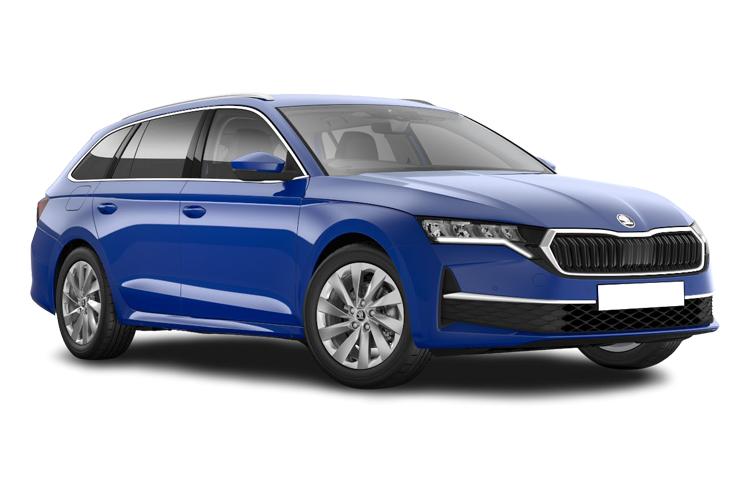
Images are for illustrative purposes only.
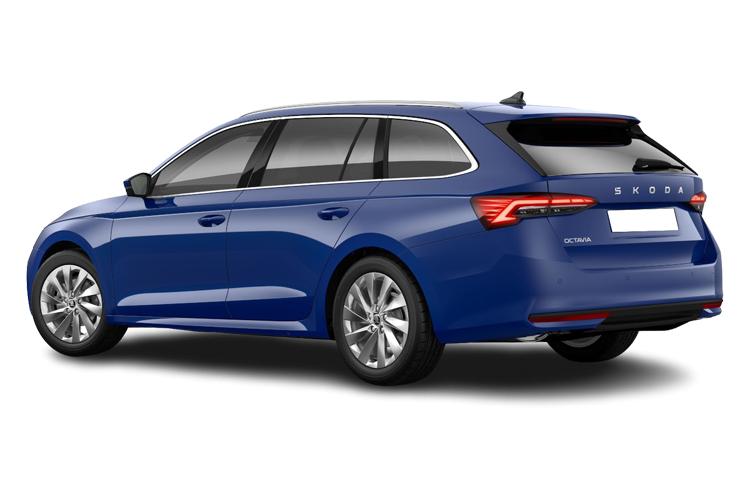

2.0 TDI 150 SE L 5dr DSG
Need some assistance or advice? Call Us 01903 538835


Skoda's fourth generation Octavia Estate continues to go large. Jonathan Crouch takes a look at the improved version.
The fourth generation version of Skoda's Octavia Estate gets a light refresh as part of this Czech model's mid-term update. It's still great value for money, equipment levels are strong and it holds up to 640-litres without having to fold the back seats. That's similar to the kind of space you could expect from much pricier Passat-segment station wagon models in the next class up.
Do you really need a small estate car? The whole purpose of an estate car is its easy load lugging ability and to choose a small one is a bit like choosing a slow supercar or an ugly coupe; it pretty much defeats the initial point. But if you want a new car, you've to keep to a budget and you fancy a station wagon over an SUV, going for a decently-sized Passat or Peugeot 508 SW-class estate costs serious money these days. Which you might think would leave you needing to look at a late, low mileage decently-sized estate rather than something new. Before you do that though, check out the car we're looking into here, the latest improved MK4 version of Skoda's Octavia Estate. It might just surprise you.
The subtleness of this car's mid-term is equally evident by the minimal changes made to the engine range. As before, the core of the range is made up of 1.5-litre TSI petrol or 2.0 TDI diesel engines, each with either 116PS or 150PS options. As previously, if you pay extra for the petrol unit with a DSG 7-speed automatic, you get the brand's mHEV mild hybrid tech thrown in. The diesel, which remains unelectrified, comes in lower-powered form with a manual gearbox and in higher-powered guise with the DSG auto. So far, there's no PHEV drivetrain available, but we expect one before the end of this car's life cycle. The previous entry-level 1.0-litre petrol engine is no longer offered. Nor is the uprated 2.0-litre diesel in the vRS, though vRS customers do now get an upgraded version of the 2.0-litre TSI petrol unit - now with power boosted to 265PS, along with a sports exhaust that produces a more characterful sound. As previously, the vRS sits 15mm lower than the standard model on firmer sports suspension. It can't now be had with AWD though. Actually, AWD (once an Octavia calling card) is generally noticeable by its absence, though you can talk to your dealer about an AWD 2.0 TSI petrol variant with 204PS. As before, all Octavias use the Volkswagen Group's MQB platform - the evolved version of it engineered for the current MK8 Volkswagen Golf. Whatever flavour of Octavia Estate you happen to prefer, it'll come with plenty of drive assist technology, including a standard Adaptive Cruise Control system that uses the car's front camera system, GPS data and a host of sensors to drive the car predictively. So when 'ACC' is set, the car knows in advance about bends, roundabouts and upcoming traffic flow, plus this Skoda will adapt itself to speed limits as you enter them.
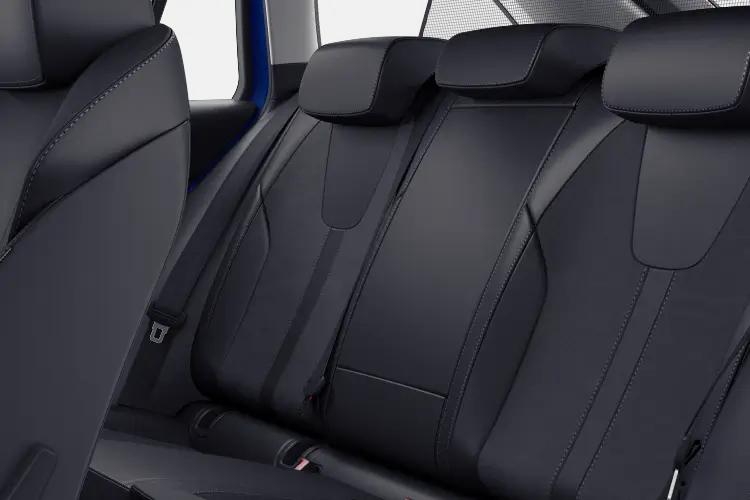
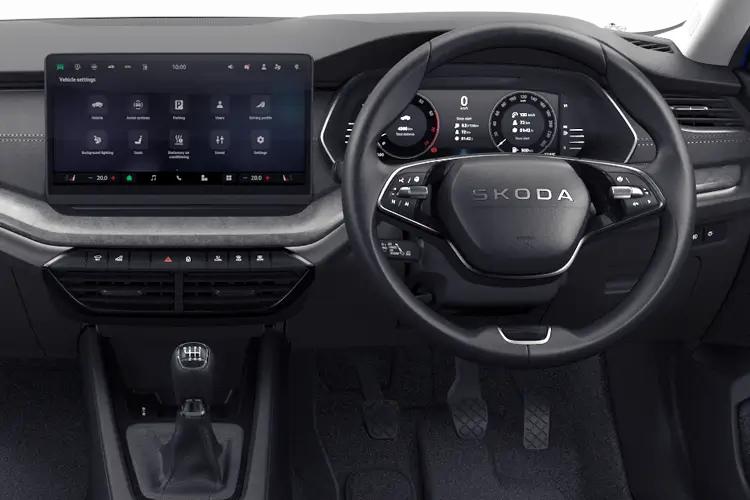
You'd have to be quite a Skoda loyalist to notice the visual changes made to the updated version of this fourth generation Octavia Estate. A subtly revised front grille is flanked by more angular restyled LED headlamps positioned above a pronounced crease in the front bumper that's supposed to present a visual reference to the Czech flag. Both front and rear bumpers have been revised too - to be more aerodynamic; which is the main reason why overall length is up by 9mm (to 4,705mm - compared to 4,698mm for the equivalent hatch version). The rear LED lamp clusters have been redesigned too. And there are some fresh wheel designs. Once you get behind the wheel, you'll find the changes made this this updated MK4 model are as subtle as they were outside. If you happen to be familiar with the original version of this NX-era design, the main thing you'll probably notice is the new, larger 13-inch central screen; before perhaps going on to note the new recycled cabin materials and the steering wheel's smarter two-dimensional Skoda badge. There are cabin charging upgrades too: the 'Phone Box' wireless charging mat now provides for up to 15W wireless charging; and the USB-C ports deliver up to 45W - triple the amount offered with the pre-facelifted car. The 'Virtual Cockpit' digital instrument screen has now been standardised in its largest 10.25-inch size and, as before, can display in a choice of four graphic layouts that include twin dials and full-screen mapping. In the rear, as usual with an Octavia, back seat space is class-leading, thanks to this Octavia's unusually long 2,686mm wheelbase - that's 67mm lengthier than a Volkswagen Golf. As a result, it's more spacious in the back than any other family hatch-segment model - at least for legs and knees anyway. Out back, cargo space remains class-leading, though you'll only get a powered tailgate to access it if you avoid base trim. Once the hatch rises, 640-litres of space is revealed - compared to 600-litres in the hatch.
If you're anything like most, you'll probably be shocked at the prices of new cars. This is a time when Vauxhall can charge you up to £35,000 or more for a Corsa and still keep a straight face and as such, the fact that you can buy a Skoda Octavia Estate for a starting figure beginning at around £28,500 (around £1,000 more than the hatch version) seems extremely reasonable. Positively generous in fact. Okay, so that'll mean the entry level engine and trim, but even that includes quite a lot these days. The core trim level is 'SE Technology'. The mid trim level is 'SE L', then 'Sportline', with the top of the range marked by the sporty vRS models. As usual with a Skoda, all variants get as standard a range of practical 'Simply Clever' features, a number of which (the ice scraper and the optional umbrella) have made the switch to sustainable materials. An extra storage box is now available for rear seat passengers and estate customers can now order an optional luggage cover that will retract when the tailgate is opened. There's loads of safety kit of course - and Skoda has updated the car's 'Attention and Drowsiness Assistant'. The brand's 'Collision Avoidance Assistance' autonomous braking system is standard across the range, along with lane departure warning (featuring steering assistance) and predictive cruise control, which works alongside a traffic sign recognition set-up. There are also new Park Assist features; and revisions to the keyless-entry system, with proximity sensors that now automatically lock or unlock the car as you approach or walk away from it. The other option you'll want to consider is the new, larger 13-inch centre screen which, like the smaller monitor, has a new ChatGPT version of Skoda's 'Laura' voice control system built into it (named after one of Skoda's founders, Vaclav Laurin).
The efficiency figures are much as before, though Skoda claims that the volume 1.5-litre TSI petrol engine's turbocharger has been re-worked to improve economy and minimise thermal loses. As before, the mHEV mild hybrid system that's fitted to 1.5-litre TSI auto models doesn't make a huge frugality difference. To recap, it pairs a 12-volt belt-driven starter motor with a small 48-volt lithium ion-battery, which stores energy that's recuperated under braking. The setup assists the petrol engine with a small electric boost, while also enabling this Skoda to coast with the engine completely disengaged at speed on the highway, improving efficiency and reducing CO2 emissions. You'll be wanting the WLTP emissions figures that'll determine this car's tax status. For the manual 1.5 TSI petrol, it's 121g/km (and 53.0mpg on the combined cycle). For the 2.0 TDI 150PS diesel DSG auto, it's 120g/km (and 61.9mpg). As for servicing, well as usual with Skoda models, there's a choice of either 'Fixed' or 'Flexible' maintenance packages. You'll choose the 'Fixed' approach if you cover less than 10,000 miles a year and with this, the car will typically be looked at every twelve months. If your daily commute is more than 25 miles and your Octavia will regularly be driven on longer distance journeys, you'll be able to work with a 'Flexible' regime that in the first two years of ownership could see you travelling up to 20,000 miles or waiting up to 24 months before a garage visit. A single inspection service every year or 20,000 miles will be required thereafter, whichever comes sooner. And warranties? Well the standard package is three years and 60,000 miles. We can't see why Skoda couldn't extend that mileage limit to 100,000 miles, since that what you get with a mechanically very similar Volkswagen Transporter model. Doing that though, wouldn't give Skoda dealers so much of an opportunity to sell extended warranty packages.
There aren't too many cars that have improved their appeal quite as markedly as this fourth generation Skoda Octavia estate. Yes, it's now smarter, more media-savvy and better equipped, which are all decisively good things. But the keys to this car's big draw are simple. It's still spacious and great value - and the prices haven't taken a sharp climb. The Octavia was already one of the most affordable cars in the family hatchback-derived station wagon sector. It's no longer really in that segment but now gives cars like the estate versions of the SEAT Leon and Volkswagen Passat a real headache. The best value is obviously to be had at the entry-level end of the Octavia Estate range. At the top end of the line-up, it's easy to see many trading equipment for badge equity and defecting to Volkswagen or Audi products, but given that they're all built by the same group, that might not be such a bad thing. Not so much if the money was going to BMW or Mercedes though. As it stands, this is a solid seven out of ten car. You'll love it.
Data provided by CAP-HPI database - Ref# 94070
Skoda's fourth generation Octavia Estate continues to go large. Jonathan Crouch takes a look at the improved version.
The fourth generation version of Skoda's Octavia Estate gets a light refresh as part of this Czech model's mid-term update. It's still great value for money, equipment levels are strong and it holds up to 640-litres without having to fold the back seats. That's similar to the kind of space you could expect from much pricier Passat-segment station wagon models in the next class up.
Do you really need a small estate car? The whole purpose of an estate car is its easy load lugging ability and to choose a small one is a bit like choosing a slow supercar or an ugly coupe; it pretty much defeats the initial point. But if you want a new car, you've to keep to a budget and you fancy a station wagon over an SUV, going for a decently-sized Passat or Peugeot 508 SW-class estate costs serious money these days. Which you might think would leave you needing to look at a late, low mileage decently-sized estate rather than something new. Before you do that though, check out the car we're looking into here, the latest improved MK4 version of Skoda's Octavia Estate. It might just surprise you.
The subtleness of this car's mid-term is equally evident by the minimal changes made to the engine range. As before, the core of the range is made up of 1.5-litre TSI petrol or 2.0 TDI diesel engines, each with either 116PS or 150PS options. As previously, if you pay extra for the petrol unit with a DSG 7-speed automatic, you get the brand's mHEV mild hybrid tech thrown in. The diesel, which remains unelectrified, comes in lower-powered form with a manual gearbox and in higher-powered guise with the DSG auto. So far, there's no PHEV drivetrain available, but we expect one before the end of this car's life cycle. The previous entry-level 1.0-litre petrol engine is no longer offered. Nor is the uprated 2.0-litre diesel in the vRS, though vRS customers do now get an upgraded version of the 2.0-litre TSI petrol unit - now with power boosted to 265PS, along with a sports exhaust that produces a more characterful sound. As previously, the vRS sits 15mm lower than the standard model on firmer sports suspension. It can't now be had with AWD though. Actually, AWD (once an Octavia calling card) is generally noticeable by its absence, though you can talk to your dealer about an AWD 2.0 TSI petrol variant with 204PS. As before, all Octavias use the Volkswagen Group's MQB platform - the evolved version of it engineered for the current MK8 Volkswagen Golf. Whatever flavour of Octavia Estate you happen to prefer, it'll come with plenty of drive assist technology, including a standard Adaptive Cruise Control system that uses the car's front camera system, GPS data and a host of sensors to drive the car predictively. So when 'ACC' is set, the car knows in advance about bends, roundabouts and upcoming traffic flow, plus this Skoda will adapt itself to speed limits as you enter them.
You'd have to be quite a Skoda loyalist to notice the visual changes made to the updated version of this fourth generation Octavia Estate. A subtly revised front grille is flanked by more angular restyled LED headlamps positioned above a pronounced crease in the front bumper that's supposed to present a visual reference to the Czech flag. Both front and rear bumpers have been revised too - to be more aerodynamic; which is the main reason why overall length is up by 9mm (to 4,705mm - compared to 4,698mm for the equivalent hatch version). The rear LED lamp clusters have been redesigned too. And there are some fresh wheel designs. Once you get behind the wheel, you'll find the changes made this this updated MK4 model are as subtle as they were outside. If you happen to be familiar with the original version of this NX-era design, the main thing you'll probably notice is the new, larger 13-inch central screen; before perhaps going on to note the new recycled cabin materials and the steering wheel's smarter two-dimensional Skoda badge. There are cabin charging upgrades too: the 'Phone Box' wireless charging mat now provides for up to 15W wireless charging; and the USB-C ports deliver up to 45W - triple the amount offered with the pre-facelifted car. The 'Virtual Cockpit' digital instrument screen has now been standardised in its largest 10.25-inch size and, as before, can display in a choice of four graphic layouts that include twin dials and full-screen mapping. In the rear, as usual with an Octavia, back seat space is class-leading, thanks to this Octavia's unusually long 2,686mm wheelbase - that's 67mm lengthier than a Volkswagen Golf. As a result, it's more spacious in the back than any other family hatch-segment model - at least for legs and knees anyway. Out back, cargo space remains class-leading, though you'll only get a powered tailgate to access it if you avoid base trim. Once the hatch rises, 640-litres of space is revealed - compared to 600-litres in the hatch.
If you're anything like most, you'll probably be shocked at the prices of new cars. This is a time when Vauxhall can charge you up to £35,000 or more for a Corsa and still keep a straight face and as such, the fact that you can buy a Skoda Octavia Estate for a starting figure beginning at around £28,500 (around £1,000 more than the hatch version) seems extremely reasonable. Positively generous in fact. Okay, so that'll mean the entry level engine and trim, but even that includes quite a lot these days. The core trim level is 'SE Technology'. The mid trim level is 'SE L', then 'Sportline', with the top of the range marked by the sporty vRS models. As usual with a Skoda, all variants get as standard a range of practical 'Simply Clever' features, a number of which (the ice scraper and the optional umbrella) have made the switch to sustainable materials. An extra storage box is now available for rear seat passengers and estate customers can now order an optional luggage cover that will retract when the tailgate is opened. There's loads of safety kit of course - and Skoda has updated the car's 'Attention and Drowsiness Assistant'. The brand's 'Collision Avoidance Assistance' autonomous braking system is standard across the range, along with lane departure warning (featuring steering assistance) and predictive cruise control, which works alongside a traffic sign recognition set-up. There are also new Park Assist features; and revisions to the keyless-entry system, with proximity sensors that now automatically lock or unlock the car as you approach or walk away from it. The other option you'll want to consider is the new, larger 13-inch centre screen which, like the smaller monitor, has a new ChatGPT version of Skoda's 'Laura' voice control system built into it (named after one of Skoda's founders, Vaclav Laurin).
The efficiency figures are much as before, though Skoda claims that the volume 1.5-litre TSI petrol engine's turbocharger has been re-worked to improve economy and minimise thermal loses. As before, the mHEV mild hybrid system that's fitted to 1.5-litre TSI auto models doesn't make a huge frugality difference. To recap, it pairs a 12-volt belt-driven starter motor with a small 48-volt lithium ion-battery, which stores energy that's recuperated under braking. The setup assists the petrol engine with a small electric boost, while also enabling this Skoda to coast with the engine completely disengaged at speed on the highway, improving efficiency and reducing CO2 emissions. You'll be wanting the WLTP emissions figures that'll determine this car's tax status. For the manual 1.5 TSI petrol, it's 121g/km (and 53.0mpg on the combined cycle). For the 2.0 TDI 150PS diesel DSG auto, it's 120g/km (and 61.9mpg). As for servicing, well as usual with Skoda models, there's a choice of either 'Fixed' or 'Flexible' maintenance packages. You'll choose the 'Fixed' approach if you cover less than 10,000 miles a year and with this, the car will typically be looked at every twelve months. If your daily commute is more than 25 miles and your Octavia will regularly be driven on longer distance journeys, you'll be able to work with a 'Flexible' regime that in the first two years of ownership could see you travelling up to 20,000 miles or waiting up to 24 months before a garage visit. A single inspection service every year or 20,000 miles will be required thereafter, whichever comes sooner. And warranties? Well the standard package is three years and 60,000 miles. We can't see why Skoda couldn't extend that mileage limit to 100,000 miles, since that what you get with a mechanically very similar Volkswagen Transporter model. Doing that though, wouldn't give Skoda dealers so much of an opportunity to sell extended warranty packages.
There aren't too many cars that have improved their appeal quite as markedly as this fourth generation Skoda Octavia estate. Yes, it's now smarter, more media-savvy and better equipped, which are all decisively good things. But the keys to this car's big draw are simple. It's still spacious and great value - and the prices haven't taken a sharp climb. The Octavia was already one of the most affordable cars in the family hatchback-derived station wagon sector. It's no longer really in that segment but now gives cars like the estate versions of the SEAT Leon and Volkswagen Passat a real headache. The best value is obviously to be had at the entry-level end of the Octavia Estate range. At the top end of the line-up, it's easy to see many trading equipment for badge equity and defecting to Volkswagen or Audi products, but given that they're all built by the same group, that might not be such a bad thing. Not so much if the money was going to BMW or Mercedes though. As it stands, this is a solid seven out of ten car. You'll love it.
