
Images are for illustrative purposes only.

1.2 Dualjet 83 12V Hybrid SZ-T 5dr
Need some assistance or advice? Call Us 01903 538835


By Jonathan Crouch
The Swift supermini is Suzuki's most successful model and this sleeker third generation post-2017-era A2L design represented the brand's third try at creating a small car tailor-made for European buyers. Let's check it out as a used buy.
5dr hatch (Petrol -1.2 Dualjet 90PS / 1.0 Boosterjet / 1.4 Boosterjet)
Unlike some of its competitors, Suzuki has never forgotten the essentials of supermini motoring. Such a car should not only be economical and as spacious as possible but also very affordable, endearingly charismatic and extremely light. Over throughout its model generations, Suzuki Swift models have usually ticked these boxes and in 2017, the signs were that this MK3 A2L version would do so again. This comes perhaps, from the way that Suzuki has always specialised in small cars and continues to do so, often offering a wider selection of options than any other brand. Back in 2017, the Swift was actually one of three similarly-sized contenders that slotted into the company's line-up just above the tiny Celerio citycar and shared the same hi-tech 'HEARTECT' platform, the others being the diminutive Ignis crossover and the more sober-suited Baleno model. This car though, was the most significant of the trio from a sales perspective and had been for the brand for the last couple of decades. Swift sales really took off with the launch of the first of three generations of Swift specifically designed for Europe, the cute RS model of 2004, followed by a MK2 AZG design in 2010. By 2017, more than a million MK1 and MK2 examples of this Japanese supermini had found European buyers. This MK3 version did of course face massive competition in our market, but came well prepared for it. At launch, it was still cheaper than most of its rivals but was also up to 10% lighter, 19% more powerful and 8% more fuel-efficient than its predecessor. Plus from 2018 onwards, there was a flagship 1.4-litre Swift Sport hot hatch model that claimed to be able to out-perform shopping rocket rivals costing thousands more (and was updated with 48V mild hybrid power in 2020). That mild hybrid system, gradually introduced before the 2020 update, was standardised across the range in 2020 too. Throughout this MK3 design's life, there was also an unusual ALLGRIP 4WD variant that delivered all-round winter traction for about 50% less than potential buyers would have had to find for a typical all-wheel-driven small SUV. This MK3 A2L Swift sold until early 2024 - when it was replaced by a MK4 AOL model.
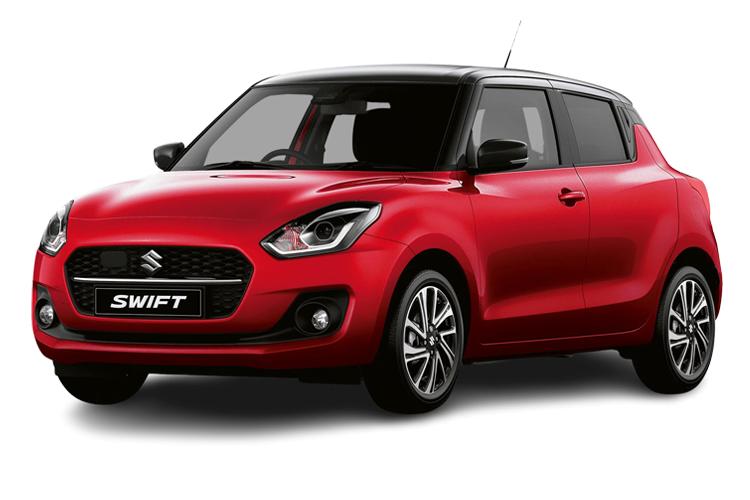
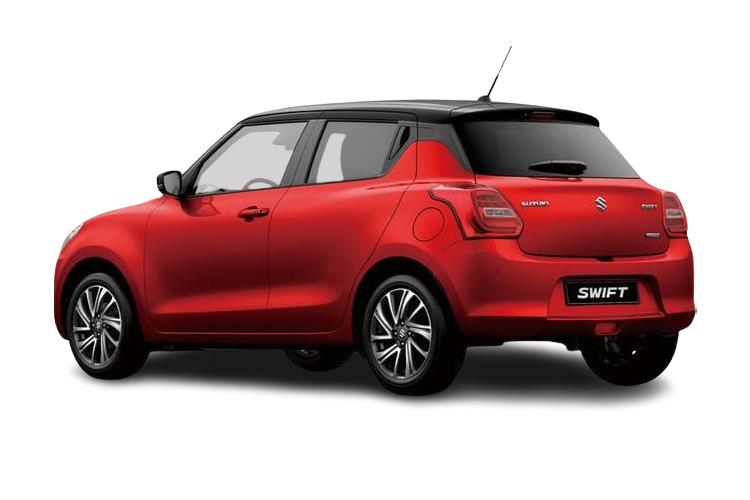
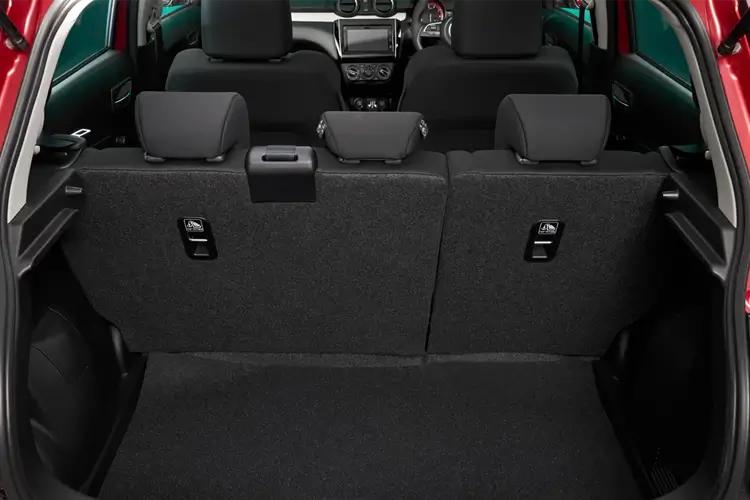
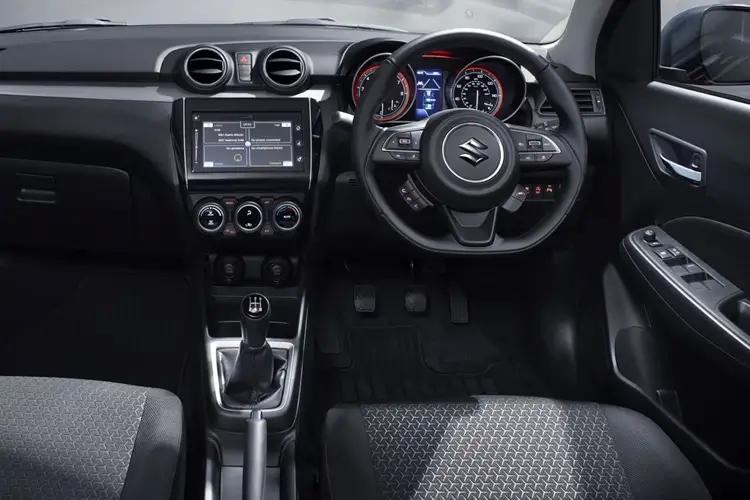
The design of this third generation A2L Swift represented a recognisable evolution of this model line. It retained the wrap-around windscreen, upright headlamps and smiling lower air intake of its predecessor but delivered significantly different overall dimensions that saw the body shorter, lower and wider than before. At a glance, you'd know this was a Swift, but you'd also appreciate that it was a more modern one. You feel this model's light weight when you slam the driver's door shut, which isn't ideal, but otherwise, by supermini standards, the cabin feels quite nice, providing you're not expecting premium-quality fittings and acres of slush-moulded soft-touch plastic: you're not paying for that kind of thing here and you don't get it. As with Suzuki's Baleno and the Ignis models of this period, the brand decided to style the fascia around a 7-inch colour infotainment touchscreen, which was a standard feature above entry-level trim. This car remained one of the more compact models in the supermini segment when it came to rear seat space. Still, thanks to that lengthened wheelbase and some extra room liberated from the engine compartment, there was here marginally more legroom on offer than there had been before. Out back in the boot, the light tailgate raises to reveal a cargo area space 25% larger than was available in the previous generation model. The 265-litre capacity isn't anything like enough to threaten the segment class leaders from this period in this regard but it was at least enough to get this Suzuki back on a competitive footing.
Please contact us for an exact up-to-date valuation.
Not much goes wrong with a MK3 model Swift. On some cars, there was a software problem that led to noises on start-off, generated by the ESP hydraulic unit. We came across a few complaints of squeaking brakes. Some cars developed an immobiliser problem which led to starting problems. And there was a software issue on early 2017 cars that could lead to the main battery not being charged when driving; this needed a dealer update. Check that all screen function - including 'phone mirroring - work as they should. Otherwise, there shouldn't be too much to worry about. Some models came with a reversing camera but there were no rear parking sensors, so look out for the usual scrapes and scuffs and kerbed alloy wheels. And inspect the interior for signs of child damage in the back. Obviously favour cars that have a properly stamped-up service history. Suzuki-forums.com is a useful owners' site.
(approx prices based on a 2020 Swift 1.0 SHVS ex VAT - Autopartspro) An oil filter costs in the £2-£42 bracket. Front brake pads sit in the £18 to £40 bracket for a set; rear pads are in the £13 to £45 bracket. Front brake discs sits in the £23 to £30 bracket; rear discs are in the £20 to £29 bracket for a pricier brand. You'll pay between £2 and £24 for a fuel filter, around £280 to £417 for an alternator and a starter motor will sit in the £72 to £213 bracket. Air filters cost between £6 and £58 depending on brand.
On the move, this Swift wasn't quite as agile and involving as it had been previously, but it could still be fun and rewarding in a way that few supermini rivals from this period can match. The ride's not bad either, though perhaps inevitably, the unsophisticated suspension set-up is sometimes caught out by broken surfaces, tarmac tears and pot holes. The stiff, sophisticated 'HEARTECT' platform that this car shared with its Ignis and Baleno supermini stablemates is a major contributor to this Swift's feather-light kerb weight. This in term means that small, relatively low-powered engines are all that's necessary to push this Suzuki along at a decent lick. There are two mainstream units on offer, both petrol-powered and neither especially refined, the range kicking off with a four cylinder 1.2-litre Dualjet petrol engine developing 90PS. Far better though, is the alternative three cylinder 1.0-litre Boosterjet powerplant that most Swift customers choose. This engine compensates for its smaller size by the addition of a little turbocharger that pushes the output up to 111PS, and from new could be ordered with the option of a six-speed automatic gearbox. Both engines were also offered with the brand's 'SHVS' or 'Smart Hybrid Vehicle by Suzuki' technology. Here, an 'Integrated Starter Generator' works with a tiny lithium-ion battery to harvest kinetic energy when you brake and convert it into electrical energy that can power the engine stop-start system and give you a small energy boost as you accelerate. This set-up's priority though, is to promote efficiency, which is why a 1.0-litre Boosterjet SHVS Swift model can manage 65.7mpg on the combined cycle and 97g/km. If you want the 'SHVS' set-up with the feebler normally aspirated 1.2-litre Dualjet engine, you have to have it mated to Suzuki's on-demand 'ALLGRIP' 4WD system. Suzuki also offered a Swift Sport hot hatch model, which for this generation used a 1.4-litre 140PS version of the Boosterjet engine; this unit was uprated to 48V mild Hybrid status as part of a 2020 model update.
The Swift has always been known as the thinking person's supermini - and very little changed in that regard with this third generation A2L version. You come away from looking at one thinking that this car deserves a higher profile in our market - but maybe that's the way Swift owners like it. The Swift model line has always been eager and affordable, but previous to this MK3 version, you had to offset that against a relatively cramped cabin and so-so levels of running cost efficiency, issues effectively dealt with by this A2L design. Yes, there was still work for Suzuki to do in terms of ride and cabin quality, but even in these areas, it was clear with this car that the gap to pricier mainstream supermini rivals was narrowing. Despite that this still probably isn't a supermini that most of those who'll settle for the usual suspects in this segment from the 2017-2023 period will ever consider. But it's an alternative that we think they should try before signing on the dotted line. Here's an affordable car that now doesn't feel quite so much like one. And a well kept secret that doesn't deserve to remain that way.
Data provided by CAP-HPI database - Ref# 94837
By Jonathan Crouch
The Swift supermini is Suzuki's most successful model and this sleeker third generation post-2017-era A2L design represented the brand's third try at creating a small car tailor-made for European buyers. Let's check it out as a used buy.
5dr hatch (Petrol -1.2 Dualjet 90PS / 1.0 Boosterjet / 1.4 Boosterjet)
Unlike some of its competitors, Suzuki has never forgotten the essentials of supermini motoring. Such a car should not only be economical and as spacious as possible but also very affordable, endearingly charismatic and extremely light. Over throughout its model generations, Suzuki Swift models have usually ticked these boxes and in 2017, the signs were that this MK3 A2L version would do so again. This comes perhaps, from the way that Suzuki has always specialised in small cars and continues to do so, often offering a wider selection of options than any other brand. Back in 2017, the Swift was actually one of three similarly-sized contenders that slotted into the company's line-up just above the tiny Celerio citycar and shared the same hi-tech 'HEARTECT' platform, the others being the diminutive Ignis crossover and the more sober-suited Baleno model. This car though, was the most significant of the trio from a sales perspective and had been for the brand for the last couple of decades. Swift sales really took off with the launch of the first of three generations of Swift specifically designed for Europe, the cute RS model of 2004, followed by a MK2 AZG design in 2010. By 2017, more than a million MK1 and MK2 examples of this Japanese supermini had found European buyers. This MK3 version did of course face massive competition in our market, but came well prepared for it. At launch, it was still cheaper than most of its rivals but was also up to 10% lighter, 19% more powerful and 8% more fuel-efficient than its predecessor. Plus from 2018 onwards, there was a flagship 1.4-litre Swift Sport hot hatch model that claimed to be able to out-perform shopping rocket rivals costing thousands more (and was updated with 48V mild hybrid power in 2020). That mild hybrid system, gradually introduced before the 2020 update, was standardised across the range in 2020 too. Throughout this MK3 design's life, there was also an unusual ALLGRIP 4WD variant that delivered all-round winter traction for about 50% less than potential buyers would have had to find for a typical all-wheel-driven small SUV. This MK3 A2L Swift sold until early 2024 - when it was replaced by a MK4 AOL model.
The design of this third generation A2L Swift represented a recognisable evolution of this model line. It retained the wrap-around windscreen, upright headlamps and smiling lower air intake of its predecessor but delivered significantly different overall dimensions that saw the body shorter, lower and wider than before. At a glance, you'd know this was a Swift, but you'd also appreciate that it was a more modern one. You feel this model's light weight when you slam the driver's door shut, which isn't ideal, but otherwise, by supermini standards, the cabin feels quite nice, providing you're not expecting premium-quality fittings and acres of slush-moulded soft-touch plastic: you're not paying for that kind of thing here and you don't get it. As with Suzuki's Baleno and the Ignis models of this period, the brand decided to style the fascia around a 7-inch colour infotainment touchscreen, which was a standard feature above entry-level trim. This car remained one of the more compact models in the supermini segment when it came to rear seat space. Still, thanks to that lengthened wheelbase and some extra room liberated from the engine compartment, there was here marginally more legroom on offer than there had been before. Out back in the boot, the light tailgate raises to reveal a cargo area space 25% larger than was available in the previous generation model. The 265-litre capacity isn't anything like enough to threaten the segment class leaders from this period in this regard but it was at least enough to get this Suzuki back on a competitive footing.
Please contact us for an exact up-to-date valuation.
Not much goes wrong with a MK3 model Swift. On some cars, there was a software problem that led to noises on start-off, generated by the ESP hydraulic unit. We came across a few complaints of squeaking brakes. Some cars developed an immobiliser problem which led to starting problems. And there was a software issue on early 2017 cars that could lead to the main battery not being charged when driving; this needed a dealer update. Check that all screen function - including 'phone mirroring - work as they should. Otherwise, there shouldn't be too much to worry about. Some models came with a reversing camera but there were no rear parking sensors, so look out for the usual scrapes and scuffs and kerbed alloy wheels. And inspect the interior for signs of child damage in the back. Obviously favour cars that have a properly stamped-up service history. Suzuki-forums.com is a useful owners' site.
(approx prices based on a 2020 Swift 1.0 SHVS ex VAT - Autopartspro) An oil filter costs in the £2-£42 bracket. Front brake pads sit in the £18 to £40 bracket for a set; rear pads are in the £13 to £45 bracket. Front brake discs sits in the £23 to £30 bracket; rear discs are in the £20 to £29 bracket for a pricier brand. You'll pay between £2 and £24 for a fuel filter, around £280 to £417 for an alternator and a starter motor will sit in the £72 to £213 bracket. Air filters cost between £6 and £58 depending on brand.
On the move, this Swift wasn't quite as agile and involving as it had been previously, but it could still be fun and rewarding in a way that few supermini rivals from this period can match. The ride's not bad either, though perhaps inevitably, the unsophisticated suspension set-up is sometimes caught out by broken surfaces, tarmac tears and pot holes. The stiff, sophisticated 'HEARTECT' platform that this car shared with its Ignis and Baleno supermini stablemates is a major contributor to this Swift's feather-light kerb weight. This in term means that small, relatively low-powered engines are all that's necessary to push this Suzuki along at a decent lick. There are two mainstream units on offer, both petrol-powered and neither especially refined, the range kicking off with a four cylinder 1.2-litre Dualjet petrol engine developing 90PS. Far better though, is the alternative three cylinder 1.0-litre Boosterjet powerplant that most Swift customers choose. This engine compensates for its smaller size by the addition of a little turbocharger that pushes the output up to 111PS, and from new could be ordered with the option of a six-speed automatic gearbox. Both engines were also offered with the brand's 'SHVS' or 'Smart Hybrid Vehicle by Suzuki' technology. Here, an 'Integrated Starter Generator' works with a tiny lithium-ion battery to harvest kinetic energy when you brake and convert it into electrical energy that can power the engine stop-start system and give you a small energy boost as you accelerate. This set-up's priority though, is to promote efficiency, which is why a 1.0-litre Boosterjet SHVS Swift model can manage 65.7mpg on the combined cycle and 97g/km. If you want the 'SHVS' set-up with the feebler normally aspirated 1.2-litre Dualjet engine, you have to have it mated to Suzuki's on-demand 'ALLGRIP' 4WD system. Suzuki also offered a Swift Sport hot hatch model, which for this generation used a 1.4-litre 140PS version of the Boosterjet engine; this unit was uprated to 48V mild Hybrid status as part of a 2020 model update.
The Swift has always been known as the thinking person's supermini - and very little changed in that regard with this third generation A2L version. You come away from looking at one thinking that this car deserves a higher profile in our market - but maybe that's the way Swift owners like it. The Swift model line has always been eager and affordable, but previous to this MK3 version, you had to offset that against a relatively cramped cabin and so-so levels of running cost efficiency, issues effectively dealt with by this A2L design. Yes, there was still work for Suzuki to do in terms of ride and cabin quality, but even in these areas, it was clear with this car that the gap to pricier mainstream supermini rivals was narrowing. Despite that this still probably isn't a supermini that most of those who'll settle for the usual suspects in this segment from the 2017-2023 period will ever consider. But it's an alternative that we think they should try before signing on the dotted line. Here's an affordable car that now doesn't feel quite so much like one. And a well kept secret that doesn't deserve to remain that way.
