
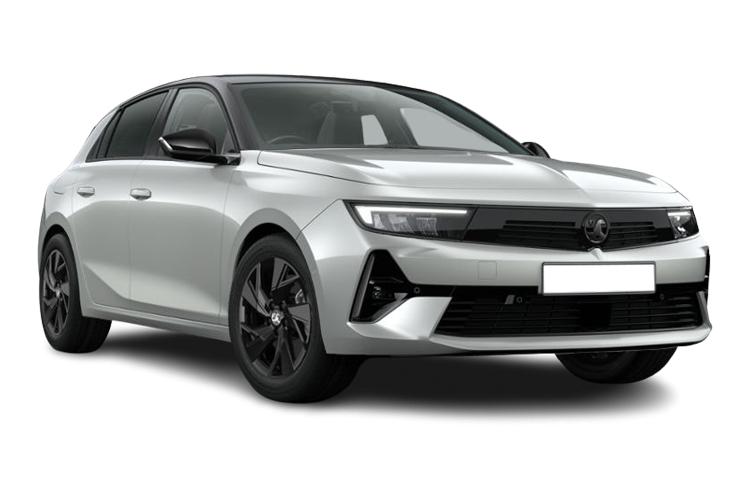
Images are for illustrative purposes only.
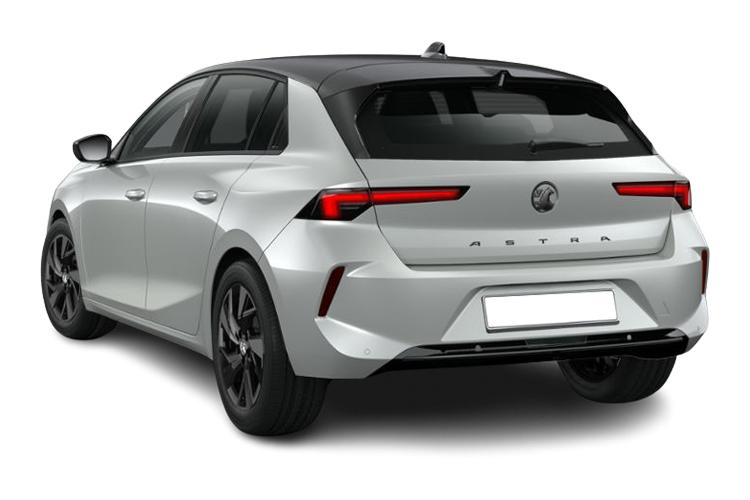
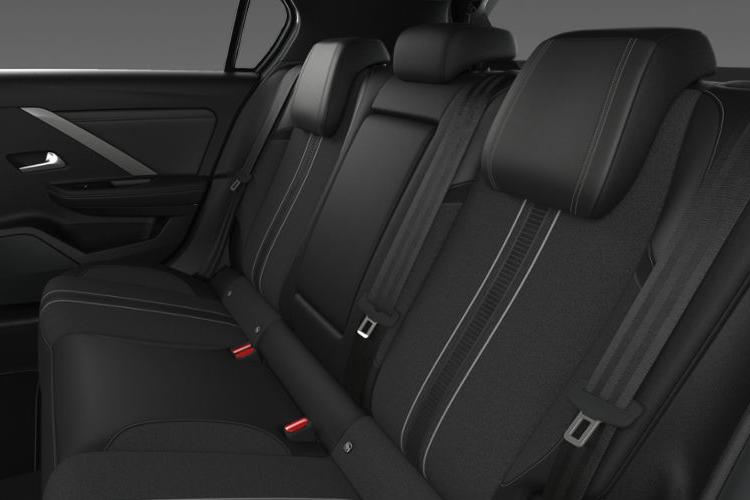
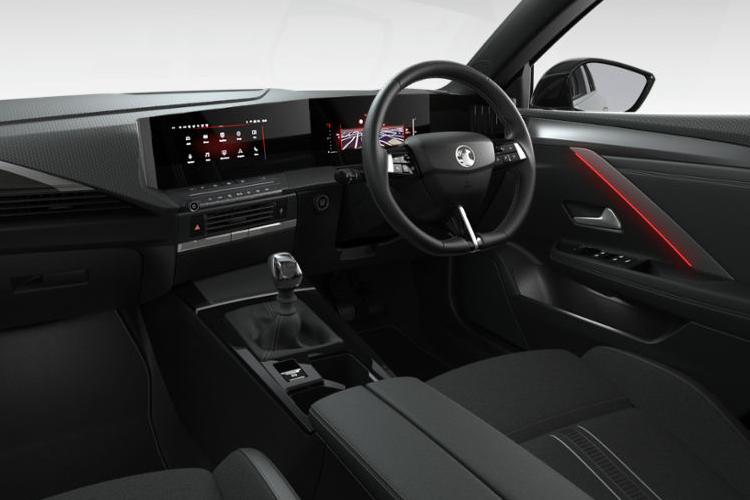

1.5 Turbo D Business Edition 5dr
Need some assistance or advice? Call Us 01903 538835


The improved version of Vauxhall's eighth generation Astra is now a cooler, more fashionable family hatch choice. Jonathan Crouch takes a look.
The Vauxhall Astra. It's long been the staple of the company car park and this improved version of the eighth generation design aims to combine this model line's traditional no-nonsense appeal with a bit of extra flair. Plus there' greater comfort, an eco remit and significant changes for the versions you can plug in.
This eighth generation Vauxhall Astra has been a very different kind of Astra; launched back in 2021, it had to be. After years of blandness from this model line, this MK8 version gained a far more streetwise look. And the option of both Plug-in Hybrid and full-electric drivetrains. Four years on though, a lot's changed in the family hatch segment in which this car competes. The Astra's traditional arch-rival the Ford Focus may be bowing out, but since this Vauxhall's original launch, we've had an updated version of the Volkswagen Golf and all-new smaller players arrive like the Kia K4 and the DS No4. Plus the segment is gradually being eroded by Hybrids and EVs. All of which makes necessary the mid-term MK8 Astra facelift we examine here. There's a smarter look, a bigger battery for the EV, more supportive seats, HD exterior lighting technology and recycled fabrics. As before, there's a choice of hatch or Sports Tourer estate body styles. And virtually brand new is the longer-ranging 17.2kWh battery Plug-in Hybrid drivetrain. Lots to talk about here then. Let's take a closer look.
For the time being, the majority of Astra sales will continue to be either of the conventional 1.2-litre petrol combustion version, a 130PS manual or auto transmission powertrain that continues unchanged. Or of the Turbo Hybrid e-DCT6 variant, which uses a 48V self-charging Hybrid unit with 145PS and a dual-clutch 6-speed auto gearbox with a little 28hp electric motor built into it. But let's get on to what's different under the bonnet. The main updates here concern the powertrains you can plug in. The Plug-in Hybrid variant had only just been updated at the time of this facelift with a bigger 17.2kWh battery (up from 12.4kWh before), with EV range consequently improved to 52 miles (EAER). The powertrain on offer here is the usual now-uprated one that the Stellantis Group fits to its latest PHEV models, a 1.6 litre turbo petrol unit producing 150PS allied to a single electric motor delivering 110PS, the combined maximum in the mainstream Hybrid 195 variant being 195PS and 360Nm of torque. There's now a 7-speed auto gearbox (replacing the previous 8-speeder) and you can set the car to run in a dedicated pure electric mode. The Astra Electric gets significant changes too, with a bigger 58kWh battery offering a range of up to 282 miles (22 miles further than the original version of this model could go). As before, there's a front-mounted 152bhp electric motor putting out a healthy 270Nm of torque. This kind of output ought to be enough for a car of this size, but because of the plump kerb weight, the initially rapid start-off punch tails off pretty rapidly, the 62mph benchmark finally reached in just 9.2 seconds, on the way to a modest top speed of 105mph. Through the corners, you'll feel the extra weight of that big battery, but as usual in an EV, its central low-down positioning minimises the downside by lowering the centre of gravity. Whatever version of this car you choose, it's refreshing to find when you set off down the road in this Vauxhall that an Astra feels significantly different to the Peugeot 308 it's almost entirely based upon. With slightly more of a focus on handling than comfort. True, there's not the rewarding depth of dynamic prowess that you'd get in this class in, say, a Mazda3, but we reckon this Astra still qualifies as best of the rest if you like your driving, mating the fluid gait you get with its Peugeot cousin with a slightly sharper feel. That's partly down to a bit more steering feedback; and partly down to fractionally firmer damping, though this Vauxhall rumbles a little over poorer surfaces as a result.
This improved version of the eighth generation Astra has a much smarter look, whether you order it in hatch or Sports Tourer form. There's a smarter, more purposeful look for the Vauxhall 'Vizor' front face, while the brand badge is now illuminated, with lighting strips either side, flowing into redesigned headlamps now featuring the brand's anti-glare 'Intelli-Lux' technology. The front bumpers have also been redesigned - as have the wheels, available in 17 or 18-inch sizes. Plus there are additional colour choices. Inside, the main change is the installation of the brand's more supportive 'Intelli-Seats'. These are characterised by a recessed channel running up the middle of the front seat bases, which - inspired by the saddle design on road bicycles - reduces pressure on the tailbone (coccyx). Further up the line-up, the car now comes with multi-adjustable, AGR-certified seats for driver and front passenger with covers made of an eco fabric called 'ReNewKnit'. This mono-material, with a high-quality suede appearance, is 100% recycled and, unlike composite materials, does not have to be laboriously separated, reducing the CO2 footprint and helping to avoid waste. These chairs include multi-stage seat heating, electro-pneumatic lumbar support, and massage and memory functions. The dashboard's 'Multimedia Pure Panel Pro Navigation' design is much as before, with a 10-inch digital instrument cluster and a 10-inch central colour touchscreen. But Vauxhall says that central monitor's user interfaces have been made clearer and more intuitive, in line with those on the Grandland SUV. Everything else is as before. Which means that in the rear seat, you get 680mm of leg space, 10mm more than in the Peugeot 308, but it still feels a touch more cramped than the class norm: a SEAT Leon for instance, has 20mm more room for stretching out. A third central passenger could be accommodated but, as with most cars in this class, it'd be a bit of a squash. Out back in the conventionally-engined or Hybrid hatch versions, you'll find yourself surveying a decently-sized 422-litre boot, the size of which beats most class rivals. If you want to plug your Astra in with the PHEV or full-EV versions, that capacity falls to 352-litres because of the battery below the cargo area floor. You also lose the ordinary variant's adjustable-height base. With the Sports Tourer estate, conventionally-engined models have a 608-litre boot (it's 548-litres with the Plug-in Hybrid or EV versions) and there's 600mm of load height, along with a 40:20:40 rear seatback split.
In an interesting approach to pricing, Vauxhall has recided that all electrified versions of this model - Hybrid, Plug-in Hybrid and Electric - should be priced at exactly the same level. And that there should be no price premium to graduate from the hatch body shape to the Sports Tourer estate. Which is a huge change from the approach taken with the pre-facelift version of this model, where the price difference between the Hybrid and the Plug-in Hybrid variants was vast; and there was a premium of at least £1,250 (and sometimes much more) if you wanted the estate version rather than the hatch. All of this means that prices start from around £30,000 with base 'Griffin' trim for either hatch or Sports Tourer versions of the Astra Hybrid e-DCT6, the Astra Electric or the Astra Plug-in Hybrid e-DCT7. If you want to pay less than that for your Astra, ask your dealer about the more conventionally-powered unelectrified 1.2 Turbo three cylinder petrol version of this model. There are two other mainstream trim levels, also featuring electrified engine price parity - mid-level 'GS' (from around £31,500) and top 'Ultimate' (from around £34,000). Choose the Astra Electric and you can deduct a £1,500 government grant from these quoted figures. With all Astra derivatives, you can expect plenty of equipment for the money, with standard features like full-LED headlights, digital instrument dials, a head-up display and standard wireless 'Apple CarPlay' and 'Android Auto' smartphone-mirroring for the centre dash screen. Plus heat for the front seats and steering wheel, a wireless charging mat and a 180-degree reversing camera. You'll be able to specify your Astra with large wheels - up to 18-inches in diameter - and above base trim, you get a 2-tone paint finish. Top 'Ultimate' variants get the brand's 'Intelli-Drive 2.0' technology, which includes Advanced Intelligent Speed Adaptation (which monitors both road signs and weather conditions to adjust the vehicle speed) and Semi Automated Lane Change (which works at speeds between 45mph and 70mph, with the driver able to instruct the vehicle to change lanes). conditions permitting. The 'Intelli-Drive 2.0' package also includes Rear Cross Traffic Alert, which uses radars on the rear bumpers to detect moving objects to the rear sides of the vehicle, such as cars or motorcycles manoeuvring in a car park, alerting the driver when reversing.
The Peugeot and Citroen-derived PureTech engines in use here have already proven to be extremely efficient in other Stellantis Group cars we've tried them in and of course the same is true of this Astra. Think 52.3mpg on the combined cycle and 123g/km of CO2 for both versions of the 1.2 Turbo petrol engine with manual transmission; and 50.4mpg and 125g/km of CO2 for the 1.2-litre Turbo 130PS auto. These figures are helped by this eighth generation Astra's relatively light weight, gained through the use of high-tech materials such as the latest thermoplastics. Low rolling resistance tyres also play their part. Combustion engines though are soon to be no more in Vauxhalls - the brand will sell only EVs from 2028. For the time being though, the Astra's electrification is varied. Your first option lies with self-charging 48V Hybrid tech, which sees a 136PS version of the usual 1.2-litre petrol engine paired with a 6-speed dual clutch transmission which has a little 28hp electric motor built into it. In this form, the Astra Hybrid can return up to 60.1mpg on the combined cycle and up to 106g/km of CO2. Otherwise, if you want an Astra with an engine, you'll need the pricier PHEV version. Opt for a Plug-in Hybrid variant and as we mentioned in our 'Driving Experience' section, up to 52 miles of EAER-rated battery running is claimed, while CO2 is rated at between 18 and 19g/km and combined fuel economy is rated at 353mpg. From a household plug, the Astra Plug-in Hybrid variants can be replenished in 7 hours 24 minutes. Plug into a 3.2kW home wall box or public charger and replenishment will take 4 hours 17 minutes. Connected up to 7.4kW home wall box or public charger, you can reduce that to 2 hours and 5 minutes. Of course, you'll need to allow longer to charge if you choose the full-EV version of this car, the Astra Electric. This has a 400-volt battery with a now-larger 58kWh of usable capacity and should go 282 miles between charges. An 11kW on-board charger is offered as standard and the charging figures shouldn't be much different from those of the previous 54kWh model. For reference, these saw a full charge from empty achieved in 5hr 45mins using a public charger. Supporting up to 100kW rapid charging, a 10% to 80% charge can be completed in just 30 minutes.
The way Vauxhall tells it, British drivers have a special relationship with the Astra, the brand reckoning that in the last forty years, over a quarter of all British drivers have at some point either owned or driven something from this enduring model line. Even if that's true, it's only because in earlier generations, Astras swamped the fleet market where they ended up being used by people not given much option in their choice of car. The truth is that in the past, this Vauxhall hatch has never been a preferred choice in its class, with sales heavily dependent on dramatic discounts. But that's all in the past now. This eighth generation Astra hasn't sold in the kinds of numbers we saw with earlier models, but that's to be expected. These are different times. And this is a very different Astra, especially in this updated form. A better one? We think those owners still loyal to this model line, not tempted away by Crossovers or EVs, will think so. There's just enough brand identity here to give you reasons to want one, the smarter look makes this car stand out a little more and you'll appreciate the more supportive seats. All of this certainly gives reason to add the Astra to your family hatch shopping list once more. And maybe even to put in asterix next to it.
Data provided by CAP-HPI database - Ref# 99103
The improved version of Vauxhall's eighth generation Astra is now a cooler, more fashionable family hatch choice. Jonathan Crouch takes a look.
The Vauxhall Astra. It's long been the staple of the company car park and this improved version of the eighth generation design aims to combine this model line's traditional no-nonsense appeal with a bit of extra flair. Plus there' greater comfort, an eco remit and significant changes for the versions you can plug in.
This eighth generation Vauxhall Astra has been a very different kind of Astra; launched back in 2021, it had to be. After years of blandness from this model line, this MK8 version gained a far more streetwise look. And the option of both Plug-in Hybrid and full-electric drivetrains. Four years on though, a lot's changed in the family hatch segment in which this car competes. The Astra's traditional arch-rival the Ford Focus may be bowing out, but since this Vauxhall's original launch, we've had an updated version of the Volkswagen Golf and all-new smaller players arrive like the Kia K4 and the DS No4. Plus the segment is gradually being eroded by Hybrids and EVs. All of which makes necessary the mid-term MK8 Astra facelift we examine here. There's a smarter look, a bigger battery for the EV, more supportive seats, HD exterior lighting technology and recycled fabrics. As before, there's a choice of hatch or Sports Tourer estate body styles. And virtually brand new is the longer-ranging 17.2kWh battery Plug-in Hybrid drivetrain. Lots to talk about here then. Let's take a closer look.
For the time being, the majority of Astra sales will continue to be either of the conventional 1.2-litre petrol combustion version, a 130PS manual or auto transmission powertrain that continues unchanged. Or of the Turbo Hybrid e-DCT6 variant, which uses a 48V self-charging Hybrid unit with 145PS and a dual-clutch 6-speed auto gearbox with a little 28hp electric motor built into it. But let's get on to what's different under the bonnet. The main updates here concern the powertrains you can plug in. The Plug-in Hybrid variant had only just been updated at the time of this facelift with a bigger 17.2kWh battery (up from 12.4kWh before), with EV range consequently improved to 52 miles (EAER). The powertrain on offer here is the usual now-uprated one that the Stellantis Group fits to its latest PHEV models, a 1.6 litre turbo petrol unit producing 150PS allied to a single electric motor delivering 110PS, the combined maximum in the mainstream Hybrid 195 variant being 195PS and 360Nm of torque. There's now a 7-speed auto gearbox (replacing the previous 8-speeder) and you can set the car to run in a dedicated pure electric mode. The Astra Electric gets significant changes too, with a bigger 58kWh battery offering a range of up to 282 miles (22 miles further than the original version of this model could go). As before, there's a front-mounted 152bhp electric motor putting out a healthy 270Nm of torque. This kind of output ought to be enough for a car of this size, but because of the plump kerb weight, the initially rapid start-off punch tails off pretty rapidly, the 62mph benchmark finally reached in just 9.2 seconds, on the way to a modest top speed of 105mph. Through the corners, you'll feel the extra weight of that big battery, but as usual in an EV, its central low-down positioning minimises the downside by lowering the centre of gravity. Whatever version of this car you choose, it's refreshing to find when you set off down the road in this Vauxhall that an Astra feels significantly different to the Peugeot 308 it's almost entirely based upon. With slightly more of a focus on handling than comfort. True, there's not the rewarding depth of dynamic prowess that you'd get in this class in, say, a Mazda3, but we reckon this Astra still qualifies as best of the rest if you like your driving, mating the fluid gait you get with its Peugeot cousin with a slightly sharper feel. That's partly down to a bit more steering feedback; and partly down to fractionally firmer damping, though this Vauxhall rumbles a little over poorer surfaces as a result.
This improved version of the eighth generation Astra has a much smarter look, whether you order it in hatch or Sports Tourer form. There's a smarter, more purposeful look for the Vauxhall 'Vizor' front face, while the brand badge is now illuminated, with lighting strips either side, flowing into redesigned headlamps now featuring the brand's anti-glare 'Intelli-Lux' technology. The front bumpers have also been redesigned - as have the wheels, available in 17 or 18-inch sizes. Plus there are additional colour choices. Inside, the main change is the installation of the brand's more supportive 'Intelli-Seats'. These are characterised by a recessed channel running up the middle of the front seat bases, which - inspired by the saddle design on road bicycles - reduces pressure on the tailbone (coccyx). Further up the line-up, the car now comes with multi-adjustable, AGR-certified seats for driver and front passenger with covers made of an eco fabric called 'ReNewKnit'. This mono-material, with a high-quality suede appearance, is 100% recycled and, unlike composite materials, does not have to be laboriously separated, reducing the CO2 footprint and helping to avoid waste. These chairs include multi-stage seat heating, electro-pneumatic lumbar support, and massage and memory functions. The dashboard's 'Multimedia Pure Panel Pro Navigation' design is much as before, with a 10-inch digital instrument cluster and a 10-inch central colour touchscreen. But Vauxhall says that central monitor's user interfaces have been made clearer and more intuitive, in line with those on the Grandland SUV. Everything else is as before. Which means that in the rear seat, you get 680mm of leg space, 10mm more than in the Peugeot 308, but it still feels a touch more cramped than the class norm: a SEAT Leon for instance, has 20mm more room for stretching out. A third central passenger could be accommodated but, as with most cars in this class, it'd be a bit of a squash. Out back in the conventionally-engined or Hybrid hatch versions, you'll find yourself surveying a decently-sized 422-litre boot, the size of which beats most class rivals. If you want to plug your Astra in with the PHEV or full-EV versions, that capacity falls to 352-litres because of the battery below the cargo area floor. You also lose the ordinary variant's adjustable-height base. With the Sports Tourer estate, conventionally-engined models have a 608-litre boot (it's 548-litres with the Plug-in Hybrid or EV versions) and there's 600mm of load height, along with a 40:20:40 rear seatback split.
In an interesting approach to pricing, Vauxhall has recided that all electrified versions of this model - Hybrid, Plug-in Hybrid and Electric - should be priced at exactly the same level. And that there should be no price premium to graduate from the hatch body shape to the Sports Tourer estate. Which is a huge change from the approach taken with the pre-facelift version of this model, where the price difference between the Hybrid and the Plug-in Hybrid variants was vast; and there was a premium of at least £1,250 (and sometimes much more) if you wanted the estate version rather than the hatch. All of this means that prices start from around £30,000 with base 'Griffin' trim for either hatch or Sports Tourer versions of the Astra Hybrid e-DCT6, the Astra Electric or the Astra Plug-in Hybrid e-DCT7. If you want to pay less than that for your Astra, ask your dealer about the more conventionally-powered unelectrified 1.2 Turbo three cylinder petrol version of this model. There are two other mainstream trim levels, also featuring electrified engine price parity - mid-level 'GS' (from around £31,500) and top 'Ultimate' (from around £34,000). Choose the Astra Electric and you can deduct a £1,500 government grant from these quoted figures. With all Astra derivatives, you can expect plenty of equipment for the money, with standard features like full-LED headlights, digital instrument dials, a head-up display and standard wireless 'Apple CarPlay' and 'Android Auto' smartphone-mirroring for the centre dash screen. Plus heat for the front seats and steering wheel, a wireless charging mat and a 180-degree reversing camera. You'll be able to specify your Astra with large wheels - up to 18-inches in diameter - and above base trim, you get a 2-tone paint finish. Top 'Ultimate' variants get the brand's 'Intelli-Drive 2.0' technology, which includes Advanced Intelligent Speed Adaptation (which monitors both road signs and weather conditions to adjust the vehicle speed) and Semi Automated Lane Change (which works at speeds between 45mph and 70mph, with the driver able to instruct the vehicle to change lanes). conditions permitting. The 'Intelli-Drive 2.0' package also includes Rear Cross Traffic Alert, which uses radars on the rear bumpers to detect moving objects to the rear sides of the vehicle, such as cars or motorcycles manoeuvring in a car park, alerting the driver when reversing.
The Peugeot and Citroen-derived PureTech engines in use here have already proven to be extremely efficient in other Stellantis Group cars we've tried them in and of course the same is true of this Astra. Think 52.3mpg on the combined cycle and 123g/km of CO2 for both versions of the 1.2 Turbo petrol engine with manual transmission; and 50.4mpg and 125g/km of CO2 for the 1.2-litre Turbo 130PS auto. These figures are helped by this eighth generation Astra's relatively light weight, gained through the use of high-tech materials such as the latest thermoplastics. Low rolling resistance tyres also play their part. Combustion engines though are soon to be no more in Vauxhalls - the brand will sell only EVs from 2028. For the time being though, the Astra's electrification is varied. Your first option lies with self-charging 48V Hybrid tech, which sees a 136PS version of the usual 1.2-litre petrol engine paired with a 6-speed dual clutch transmission which has a little 28hp electric motor built into it. In this form, the Astra Hybrid can return up to 60.1mpg on the combined cycle and up to 106g/km of CO2. Otherwise, if you want an Astra with an engine, you'll need the pricier PHEV version. Opt for a Plug-in Hybrid variant and as we mentioned in our 'Driving Experience' section, up to 52 miles of EAER-rated battery running is claimed, while CO2 is rated at between 18 and 19g/km and combined fuel economy is rated at 353mpg. From a household plug, the Astra Plug-in Hybrid variants can be replenished in 7 hours 24 minutes. Plug into a 3.2kW home wall box or public charger and replenishment will take 4 hours 17 minutes. Connected up to 7.4kW home wall box or public charger, you can reduce that to 2 hours and 5 minutes. Of course, you'll need to allow longer to charge if you choose the full-EV version of this car, the Astra Electric. This has a 400-volt battery with a now-larger 58kWh of usable capacity and should go 282 miles between charges. An 11kW on-board charger is offered as standard and the charging figures shouldn't be much different from those of the previous 54kWh model. For reference, these saw a full charge from empty achieved in 5hr 45mins using a public charger. Supporting up to 100kW rapid charging, a 10% to 80% charge can be completed in just 30 minutes.
The way Vauxhall tells it, British drivers have a special relationship with the Astra, the brand reckoning that in the last forty years, over a quarter of all British drivers have at some point either owned or driven something from this enduring model line. Even if that's true, it's only because in earlier generations, Astras swamped the fleet market where they ended up being used by people not given much option in their choice of car. The truth is that in the past, this Vauxhall hatch has never been a preferred choice in its class, with sales heavily dependent on dramatic discounts. But that's all in the past now. This eighth generation Astra hasn't sold in the kinds of numbers we saw with earlier models, but that's to be expected. These are different times. And this is a very different Astra, especially in this updated form. A better one? We think those owners still loyal to this model line, not tempted away by Crossovers or EVs, will think so. There's just enough brand identity here to give you reasons to want one, the smarter look makes this car stand out a little more and you'll appreciate the more supportive seats. All of this certainly gives reason to add the Astra to your family hatch shopping list once more. And maybe even to put in asterix next to it.
