
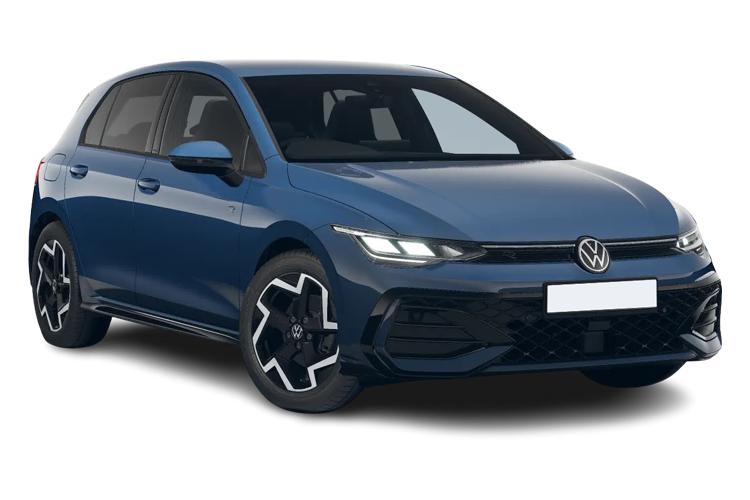
Images are for illustrative purposes only.

2.0 TDI Life 5dr DSG
Need some assistance or advice? Call Us 01903 538835


By Jonathan Crouch
Volkswagen reimagined what its Golf family hatchback should be with this eighth generation model, packaging it very differently from its predecessor. Under the skin, hybrid engineering was prevalent further up the range but for potential buyers, what will probably matter most is the more distinctive look and the classy minimalist digitalised cabin. Loyal Golf owners will find lots to like here. Here, we look at the pre-facelifted 2020-2023 version of this MK8 design.
5dr Family Hatchback / Estate (Life, Match, Style, R-Line, Alltrack, GTI, GTI Clubsport, R)
An awful lot has happened to Volkswagen since the Golf was first launched back in 1974, replacing the classic Beetle. By 2020 one thing hadn't changed though. This enduring family hatchback was still the brand's most important model - and the one that most fundamentally defined it. So what of this 8th generation version, launched in early 2020? As a used family hatchback, might it be all the car you'd ever need? By then, there was of course plenty of Golf lineage. The promise of the MK1 'Typ 17'-series car in 1974, which then rather quickly visually entered middle age with the MK2 'Typ 19E'-series version of 1983 and the MK3 'Typ 1H' design of 1991. A cleaner, sharper-looking MK4 'Typ 1J'-series Golf model followed in 1997, which Volkswagen tried to make a little plusher with the MK5 'Typ 1K'-series model of 2006 and the barely changed MK6 'Typ5 K'-series design that very quickly followed it in 2008. Perhaps the biggest change in Golf history came with this current car's predecessor, the MK7 'Typ 5G'-series car that launched in 2012, the first car in the Volkswagen Group to adopt that conglomerate's all-new MGB Modular Matrix Transverse platform for its compact models, a chassis still used by the MK8 version. That seventh generation model was significantly updated in 2017 to see out the decade until the launch of the car we're going to look at here. These previous Golf designs encapsulated what family hatchback motoring used to be. What it was going to be in the future was surely closer to another car the brand launched in 2020, a model that back then some were seeing as a potential Golf replacement - the all-electric ID.3. So with this MK8 Golf, there had to be new and more compelling reasons why this car should retain its commanding position in the Volkswagen model range - should retain its existence at all. Merely another dose of the things that had marked out the evolution of the seven previous Golf generations - a quality feel and carefully progressive design - simply weren't going to cut it. All that being the case, it was initially a little disappointing then with this MK8 design to find so much carried over from before - there was much the same MQB platform and the fundamentals of most of the engines hadn't changed much either. Because of the ID.3, there was no all-electric replacement for the old eGolf and the GTE plug-in model's basic powertrain dated back to 2016. But if you're loyal to the Golf model line, as so many customers are, don't despair in considering this MK8 version in its original form. This car did try valiantly to re-invent itself. Most notably with its more fashionable front-end look. Which, as it turns out, was more than just mere window dressing. There was a completely new digitalised cabin, mild hybrid technology could now feature beneath the bonnet and there was the kind of media and safety tech that until a 2020, family hatch folk could only dream about. Best of all, in this form the Golf remained what a lot of people still wanted it to be: a family hatch with the quality of a premium brand model at a price close to that of the volume maker offering in this segment. As one former Volkswagen Group Chairman once pointed out, “the biggest mistake any Volkswagen Golf can make is to stop being a Golf”. This Mark 8 model didn't make that error. Here, we'll focus on the early 2020-2023 versions of this model, the cars produced before the mid-term facelift that arrived in early-2024.
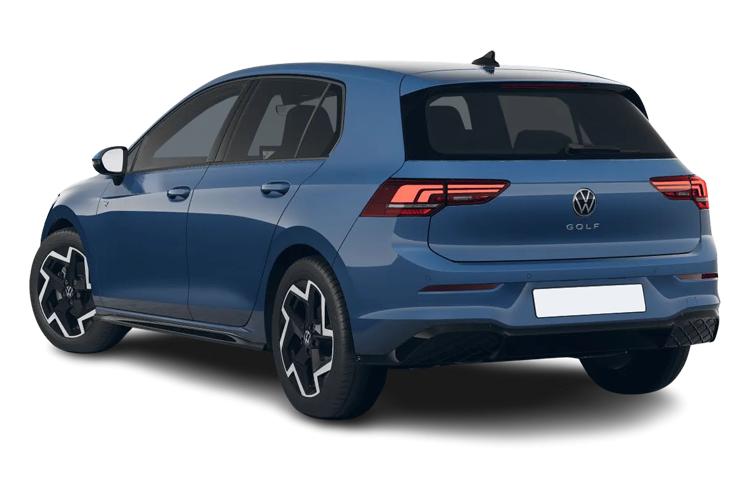
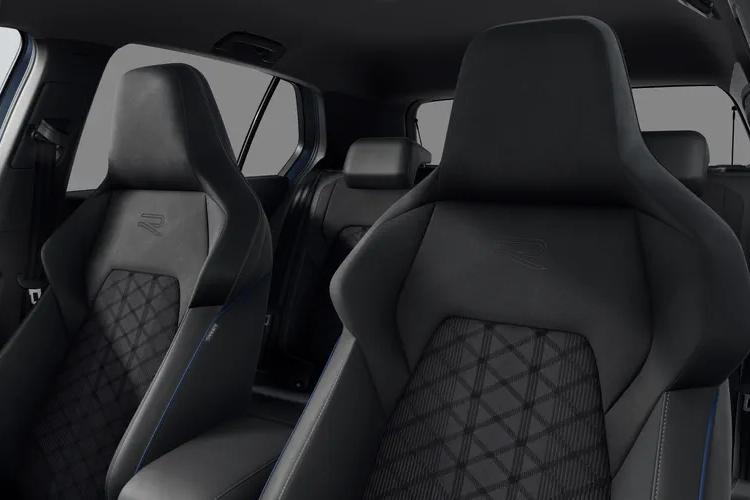
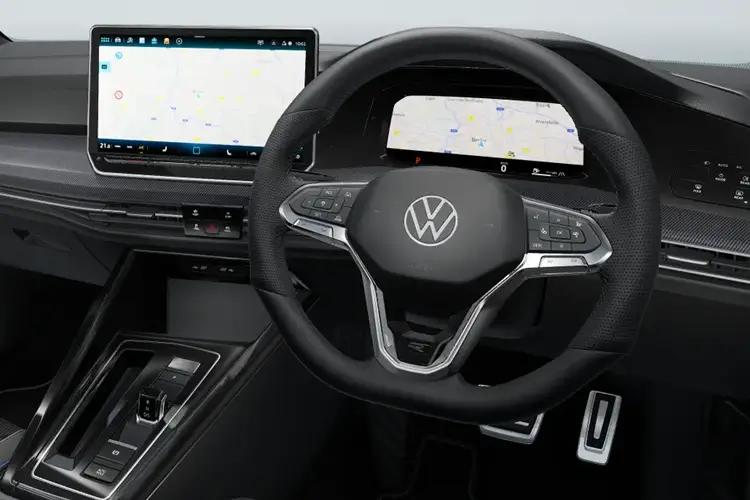
The Golf is always been one of those cars that almost everyone recognises. That continued with this 8th generation version but you'd certainly know that it was a slightly more progressive interpretation of a classic theme - 'an indicator of the present', according to Head of Volkswagen Group Design Klaus Bischoff at launch in 2020. 'Its design', he said then, 'represents the evolution of millions of people feeling at home'. The main exterior visual talking point was the way the designers had changed the front end, with its lower nose and slimmer grille flanked by full-LED headlights. At the back, there was the same clean, sharp finishing that's always pleased Golf customers, but perhaps with more of a chiselled look, featuring wide LED tail lamp clusters and a more sculpted bumper arrangement disguising the fact that this 8th generation model had become 10mm narrower and sat 36mm lower than its predecessor. Behind the wheel, the quality on offer is satisfyingly Golf-like. The classy full-width strip of vents we first saw in the MK8 Passat embellish the mid-level of the fascia, below a smart trim-dependent decor strip. Ambient multi-coloured lighting was standard and the lower centre console became much wider with this MK8 design, delivering something of the feel of a larger, more expensive car. The big news with this eighth generation Golf was the cabin's so-called 'digital revolution', this MK8 Golf's 'Innovision' cabin concept seeing a 10-inch 'Discover Media Navigation' centre-dash touchscreen matched with a 'Digital Cockpit Pro' instrument binnacle display of the same size. Conventional switches were replaced by capacitive touch buttons and there was a clever new optional “Hello Volkswagen” intuitive voice control system. As for the rear seat, thanks to the extra 16mm of length between the wheels with this MK8 design, there's a fraction more legroom than there was with the old MK7 design, so a pair of six-foot adults can be accommodated reasonably here, providing front seat occupants don't slide their seats fully back. As for the boot, well your seller may well be keen to reference the fact that the 381-litre space provided here is 40-litres more than you get in a rival Ford Focus, but that's not saying much. Pushing forward the conventional 60:40 split-rear bench frees up 1,237-litres across a load area that'll be virtually flat if you have the boot floor in its upper position. If you do need lots of regular cargo versatility, you'll obviously be better off choosing the Golf Estate body style.
Please contact us for an exact up-to-date valuation.
We've heard of various problems. Most were related to the infotainment or other electrical systems. Multiple software issues plagued early versions of this model, so if you're looking at a 2020 or 2021-plated car, make particularly sure that all the infotainment functions work exactly as they should. In some cases, the infotainment system failed to start when the engine was fired. We came across several cars that had developed annoying creaks (rear seat backrest/door frames that creak against the body over speed humps/centre console trim creaks/front door handles etc). Sometimes, the gear shift knob on manual models has been known to come off. Look out for uneven panel gaps between the bottom of the A-pillar and the top of the wing. Problems have been reported with the functionality of the Travel Assist semi-autonomous driving system too, so check the functionality of that if it's been fitted. The speed sign recognition system can malfunction too. We've heard of misfiring TSI engines and transmission chatter too. Otherwise, it's just the usual things, check for scratched alloys and interior child damage - and insist on a fully stamped up service history.
[based on a 2020 Golf 1.0 TSI 115PS ex VAT - autodoc.co.uk] An air filter will be priced in the £8-£59 bracket. The front brake discs we came across sat in the £25-£46 bracket, with rear discs costing in the £19-£46 bracket. Front brake pads are in the £29 to £81 bracket for a set; rears are £14-£70. An alternator is in the £162-£480 bracket; front shock absorbers are in the £138 bracket. Wiper blades are in the £6-£12 bracket and a starter motor will cost in the £117 to £273 bracket.
On the move in this car, Golf regulars will certainly feel right at home. As ever, there's a real polish to this car, not only in the way it's built and the way it looks but also in the way it drives. Get used to this MK8 design and you'll find that as with its predecessor, progress can be effortless, thanks to a combination of stability, poise and control that makes journey times shrink rapidly. Exemplary refinement helps here too, something that's particularly marked out the Golf ever since it was mated to the VW Group's rigidly sophisticated MQB platform. After using this car, a drive in an ordinary rival mainstream Focus-class family hatch from this period can seem quite noisy. That'll be evident whichever powerplant you choose; as with the previous MK7 model, only those units developing 150PS or more entitle this Golf to be fitted with properly sophisticated multi-link rear suspension. Otherwise, you'll have a cruder torsion beam set-up. The mainstream TSI petrol range was still built around 1.0-litre and 1.5-litre units. The three cylinder 1.0-litre version got 110PS and the four cylinder 1.5 is offered in either 130PS guise or in the 150PS form many original customers wanted, the more powerful version also available (providing you specify a DSG auto gearbox) with the option of Volkswagen's mild hybrid 'eTSI' tech. In that form, it returned WLTP-rated figures of up to 49.2mpg and up to 130g/km of CO2, the technology equating, so Volkswagen said, to an improvement of up to 17% in efficiency. Talking of electrification, there was no full-battery-powered e-Golf available as part of this eighth generation range (by 2020, VW's futuristic ID.3 hatch had taken up that baton), but TDI diesel variants continued, these now exclusively being of the 2.0-litre variety, with a mainstream choice of 115 or 150PS outputs. Across the line-up, lower-powered engines are manual: the fastest ones tend to only use the brand's 7-speed DSG auto gearbox; and in the middle of the range, you'll have the option of either. So far, so relatively familiar. Yet progress was also made with this eighth generation design. This car does more than just 'drive like a Golf'. Turn sharply into a bend and if you happen to be familiar with the previous MK7 version, you'll notice that this Golf 8 responds a little more directly, especially in the first few degrees of lock. So its reactions feel fractionally faster, allowing you to more confidently place it at corner entry, helped by the standard XDS torque vectoring system. If you get a car whose original owner paid the extra for the brand's improved 'DCC' 'Dynamic Chassis Control' adaptive damping set-up, you'll benefit from an added 'Driving dynamics manager' system that co-ordinates the 'DCC' damping with the 'XDS' torque vectoring, so as to always allow your Golf to select precisely the right control system at the right time for any driving manoeuvre. What else? Well there are more sophisticated Golf variants, if you've the money to fund them. There's the GTE Plug-in hybrid, which in this pre-facelifted model used a 1.4-litre TSI petrol engine mated to a 6-speed DSG auto gearbox. Along with an 85kW electric motor powered by a larger (compared to the MK7 GTE) lithium-ion battery that allowed for an all-electric driving range of up to 36 miles. In this pre-facelifted MK8 model, the GTE's total output was 245PS, which (possibly not co-incidentally) was the same as that boasted by the 8th generation Golf GTI hot hatch, which, as ever, used a conventional 2.0-litre TSI petrol turbo unit, an engine that was also available in uprated 330PS form in the top Golf R super hatch, which had standard 4MOTION 4WD. Completing the range of further Golf options, there was the GTD, an auto-only diesel hot hatch variant with a GTI-style handling set-up that used the 2.0-litre TDI engine in a 200PS state of tune. Across the range, there was a clever new 'Travel Assist' system, which was either standard or optional (depending on the trim level selected) and enables partially-assisted so-called 'level 2' autonomous driving, thanks to use of the standard 'Adaptive Cruise Control' and 'Lane assist' systems. The previous generation model had a Traffic Jam Assist' set-up that could enable it to do this kind of thing in low speed traffic queues but with 'Travel Assist', autonomous driving will work at speeds of up to 130mph, providing your hands are firmly on the wheel.
More youthful and contemporary this MK8 Golf might be, but it was still very much a Golf - though quite a different kind of one. Where the old MK7 version of this design was radical in its engineering but conservative in its packaging, this eighth generation interpretation of this enduring model line was to some extent the precise opposite. Fortunately though for Volkswagen, the result turned out to be a very complete package. All of which meant that this was still, as a Golf always should be, a benchmark in its segment. In used form, it's a car that in this original MK8 form must feature highly on any family hatch buyer's shopping list if they're looking for a model from the 2020-2023 period. In short, this was still a Golf - with all the model line heritage, depth of engineering and inherent quality that this badge has come to represent. So nothing here really changed. Even if everything seemed different.
Data provided by CAP-HPI database - Ref# 96281
By Jonathan Crouch
Volkswagen reimagined what its Golf family hatchback should be with this eighth generation model, packaging it very differently from its predecessor. Under the skin, hybrid engineering was prevalent further up the range but for potential buyers, what will probably matter most is the more distinctive look and the classy minimalist digitalised cabin. Loyal Golf owners will find lots to like here. Here, we look at the pre-facelifted 2020-2023 version of this MK8 design.
5dr Family Hatchback / Estate (Life, Match, Style, R-Line, Alltrack, GTI, GTI Clubsport, R)
An awful lot has happened to Volkswagen since the Golf was first launched back in 1974, replacing the classic Beetle. By 2020 one thing hadn't changed though. This enduring family hatchback was still the brand's most important model - and the one that most fundamentally defined it. So what of this 8th generation version, launched in early 2020? As a used family hatchback, might it be all the car you'd ever need? By then, there was of course plenty of Golf lineage. The promise of the MK1 'Typ 17'-series car in 1974, which then rather quickly visually entered middle age with the MK2 'Typ 19E'-series version of 1983 and the MK3 'Typ 1H' design of 1991. A cleaner, sharper-looking MK4 'Typ 1J'-series Golf model followed in 1997, which Volkswagen tried to make a little plusher with the MK5 'Typ 1K'-series model of 2006 and the barely changed MK6 'Typ5 K'-series design that very quickly followed it in 2008. Perhaps the biggest change in Golf history came with this current car's predecessor, the MK7 'Typ 5G'-series car that launched in 2012, the first car in the Volkswagen Group to adopt that conglomerate's all-new MGB Modular Matrix Transverse platform for its compact models, a chassis still used by the MK8 version. That seventh generation model was significantly updated in 2017 to see out the decade until the launch of the car we're going to look at here. These previous Golf designs encapsulated what family hatchback motoring used to be. What it was going to be in the future was surely closer to another car the brand launched in 2020, a model that back then some were seeing as a potential Golf replacement - the all-electric ID.3. So with this MK8 Golf, there had to be new and more compelling reasons why this car should retain its commanding position in the Volkswagen model range - should retain its existence at all. Merely another dose of the things that had marked out the evolution of the seven previous Golf generations - a quality feel and carefully progressive design - simply weren't going to cut it. All that being the case, it was initially a little disappointing then with this MK8 design to find so much carried over from before - there was much the same MQB platform and the fundamentals of most of the engines hadn't changed much either. Because of the ID.3, there was no all-electric replacement for the old eGolf and the GTE plug-in model's basic powertrain dated back to 2016. But if you're loyal to the Golf model line, as so many customers are, don't despair in considering this MK8 version in its original form. This car did try valiantly to re-invent itself. Most notably with its more fashionable front-end look. Which, as it turns out, was more than just mere window dressing. There was a completely new digitalised cabin, mild hybrid technology could now feature beneath the bonnet and there was the kind of media and safety tech that until a 2020, family hatch folk could only dream about. Best of all, in this form the Golf remained what a lot of people still wanted it to be: a family hatch with the quality of a premium brand model at a price close to that of the volume maker offering in this segment. As one former Volkswagen Group Chairman once pointed out, “the biggest mistake any Volkswagen Golf can make is to stop being a Golf”. This Mark 8 model didn't make that error. Here, we'll focus on the early 2020-2023 versions of this model, the cars produced before the mid-term facelift that arrived in early-2024.
The Golf is always been one of those cars that almost everyone recognises. That continued with this 8th generation version but you'd certainly know that it was a slightly more progressive interpretation of a classic theme - 'an indicator of the present', according to Head of Volkswagen Group Design Klaus Bischoff at launch in 2020. 'Its design', he said then, 'represents the evolution of millions of people feeling at home'. The main exterior visual talking point was the way the designers had changed the front end, with its lower nose and slimmer grille flanked by full-LED headlights. At the back, there was the same clean, sharp finishing that's always pleased Golf customers, but perhaps with more of a chiselled look, featuring wide LED tail lamp clusters and a more sculpted bumper arrangement disguising the fact that this 8th generation model had become 10mm narrower and sat 36mm lower than its predecessor. Behind the wheel, the quality on offer is satisfyingly Golf-like. The classy full-width strip of vents we first saw in the MK8 Passat embellish the mid-level of the fascia, below a smart trim-dependent decor strip. Ambient multi-coloured lighting was standard and the lower centre console became much wider with this MK8 design, delivering something of the feel of a larger, more expensive car. The big news with this eighth generation Golf was the cabin's so-called 'digital revolution', this MK8 Golf's 'Innovision' cabin concept seeing a 10-inch 'Discover Media Navigation' centre-dash touchscreen matched with a 'Digital Cockpit Pro' instrument binnacle display of the same size. Conventional switches were replaced by capacitive touch buttons and there was a clever new optional “Hello Volkswagen” intuitive voice control system. As for the rear seat, thanks to the extra 16mm of length between the wheels with this MK8 design, there's a fraction more legroom than there was with the old MK7 design, so a pair of six-foot adults can be accommodated reasonably here, providing front seat occupants don't slide their seats fully back. As for the boot, well your seller may well be keen to reference the fact that the 381-litre space provided here is 40-litres more than you get in a rival Ford Focus, but that's not saying much. Pushing forward the conventional 60:40 split-rear bench frees up 1,237-litres across a load area that'll be virtually flat if you have the boot floor in its upper position. If you do need lots of regular cargo versatility, you'll obviously be better off choosing the Golf Estate body style.
Please contact us for an exact up-to-date valuation.
We've heard of various problems. Most were related to the infotainment or other electrical systems. Multiple software issues plagued early versions of this model, so if you're looking at a 2020 or 2021-plated car, make particularly sure that all the infotainment functions work exactly as they should. In some cases, the infotainment system failed to start when the engine was fired. We came across several cars that had developed annoying creaks (rear seat backrest/door frames that creak against the body over speed humps/centre console trim creaks/front door handles etc). Sometimes, the gear shift knob on manual models has been known to come off. Look out for uneven panel gaps between the bottom of the A-pillar and the top of the wing. Problems have been reported with the functionality of the Travel Assist semi-autonomous driving system too, so check the functionality of that if it's been fitted. The speed sign recognition system can malfunction too. We've heard of misfiring TSI engines and transmission chatter too. Otherwise, it's just the usual things, check for scratched alloys and interior child damage - and insist on a fully stamped up service history.
[based on a 2020 Golf 1.0 TSI 115PS ex VAT - autodoc.co.uk] An air filter will be priced in the £8-£59 bracket. The front brake discs we came across sat in the £25-£46 bracket, with rear discs costing in the £19-£46 bracket. Front brake pads are in the £29 to £81 bracket for a set; rears are £14-£70. An alternator is in the £162-£480 bracket; front shock absorbers are in the £138 bracket. Wiper blades are in the £6-£12 bracket and a starter motor will cost in the £117 to £273 bracket.
On the move in this car, Golf regulars will certainly feel right at home. As ever, there's a real polish to this car, not only in the way it's built and the way it looks but also in the way it drives. Get used to this MK8 design and you'll find that as with its predecessor, progress can be effortless, thanks to a combination of stability, poise and control that makes journey times shrink rapidly. Exemplary refinement helps here too, something that's particularly marked out the Golf ever since it was mated to the VW Group's rigidly sophisticated MQB platform. After using this car, a drive in an ordinary rival mainstream Focus-class family hatch from this period can seem quite noisy. That'll be evident whichever powerplant you choose; as with the previous MK7 model, only those units developing 150PS or more entitle this Golf to be fitted with properly sophisticated multi-link rear suspension. Otherwise, you'll have a cruder torsion beam set-up. The mainstream TSI petrol range was still built around 1.0-litre and 1.5-litre units. The three cylinder 1.0-litre version got 110PS and the four cylinder 1.5 is offered in either 130PS guise or in the 150PS form many original customers wanted, the more powerful version also available (providing you specify a DSG auto gearbox) with the option of Volkswagen's mild hybrid 'eTSI' tech. In that form, it returned WLTP-rated figures of up to 49.2mpg and up to 130g/km of CO2, the technology equating, so Volkswagen said, to an improvement of up to 17% in efficiency. Talking of electrification, there was no full-battery-powered e-Golf available as part of this eighth generation range (by 2020, VW's futuristic ID.3 hatch had taken up that baton), but TDI diesel variants continued, these now exclusively being of the 2.0-litre variety, with a mainstream choice of 115 or 150PS outputs. Across the line-up, lower-powered engines are manual: the fastest ones tend to only use the brand's 7-speed DSG auto gearbox; and in the middle of the range, you'll have the option of either. So far, so relatively familiar. Yet progress was also made with this eighth generation design. This car does more than just 'drive like a Golf'. Turn sharply into a bend and if you happen to be familiar with the previous MK7 version, you'll notice that this Golf 8 responds a little more directly, especially in the first few degrees of lock. So its reactions feel fractionally faster, allowing you to more confidently place it at corner entry, helped by the standard XDS torque vectoring system. If you get a car whose original owner paid the extra for the brand's improved 'DCC' 'Dynamic Chassis Control' adaptive damping set-up, you'll benefit from an added 'Driving dynamics manager' system that co-ordinates the 'DCC' damping with the 'XDS' torque vectoring, so as to always allow your Golf to select precisely the right control system at the right time for any driving manoeuvre. What else? Well there are more sophisticated Golf variants, if you've the money to fund them. There's the GTE Plug-in hybrid, which in this pre-facelifted model used a 1.4-litre TSI petrol engine mated to a 6-speed DSG auto gearbox. Along with an 85kW electric motor powered by a larger (compared to the MK7 GTE) lithium-ion battery that allowed for an all-electric driving range of up to 36 miles. In this pre-facelifted MK8 model, the GTE's total output was 245PS, which (possibly not co-incidentally) was the same as that boasted by the 8th generation Golf GTI hot hatch, which, as ever, used a conventional 2.0-litre TSI petrol turbo unit, an engine that was also available in uprated 330PS form in the top Golf R super hatch, which had standard 4MOTION 4WD. Completing the range of further Golf options, there was the GTD, an auto-only diesel hot hatch variant with a GTI-style handling set-up that used the 2.0-litre TDI engine in a 200PS state of tune. Across the range, there was a clever new 'Travel Assist' system, which was either standard or optional (depending on the trim level selected) and enables partially-assisted so-called 'level 2' autonomous driving, thanks to use of the standard 'Adaptive Cruise Control' and 'Lane assist' systems. The previous generation model had a Traffic Jam Assist' set-up that could enable it to do this kind of thing in low speed traffic queues but with 'Travel Assist', autonomous driving will work at speeds of up to 130mph, providing your hands are firmly on the wheel.
More youthful and contemporary this MK8 Golf might be, but it was still very much a Golf - though quite a different kind of one. Where the old MK7 version of this design was radical in its engineering but conservative in its packaging, this eighth generation interpretation of this enduring model line was to some extent the precise opposite. Fortunately though for Volkswagen, the result turned out to be a very complete package. All of which meant that this was still, as a Golf always should be, a benchmark in its segment. In used form, it's a car that in this original MK8 form must feature highly on any family hatch buyer's shopping list if they're looking for a model from the 2020-2023 period. In short, this was still a Golf - with all the model line heritage, depth of engineering and inherent quality that this badge has come to represent. So nothing here really changed. Even if everything seemed different.
