
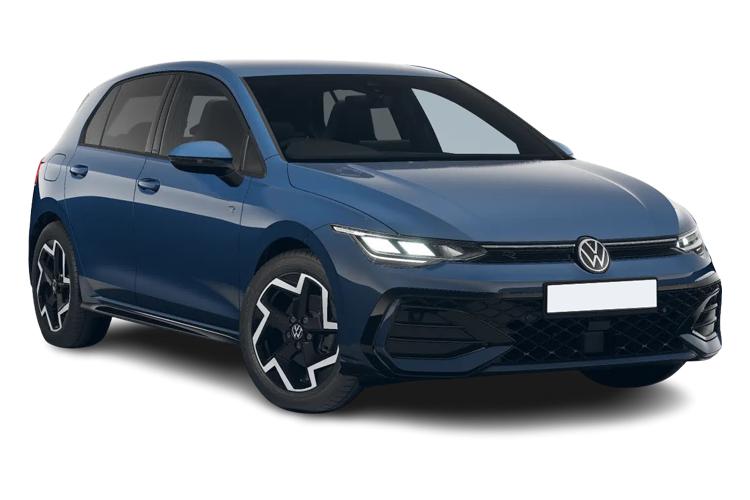
Images are for illustrative purposes only.

2.0 TSI GTI 5dr DSG
Need some assistance or advice? Call Us 01903 538835


By Jonathan Crouch
With each generation, the Volkswagen Golf GTI becomes more polished, but not every evolution of this 'Gran Turismo Iniezion' (or 'GTI') model has proved to be a real step forward. This MK8 model though, was, combining fresh technology with advanced chassis dynamics, plus a little of the original GTI DNA still remained. Let's check the original version of this MK8 Golf GTI model out as a used buy.
5dr Family Hatchback (GTI)
Before Volkswagen dreamed up the Golf GTI, there was no such thing as a 'hot hatchback'. Now the phrase has entered everyday parlance and virtually any manufacturer that has a hatchback also has a hot one - or a warm one at the very least. It was 1976 when the original version of this car was born and since then, through numerous generations and with the help of countless imitators, it has brought performance, handling and fun to the masses on an unprecedented scale. The Golf GTI we look at here was the mark eight and claimed to be the best yet. But did that mean 'best of breed' or 'best in class'? This car, after all, might have long defined the hot hatch genre but it's rarely been recognised as the most accomplished car in its sector. In fact, to be brutally honest, there have been some distinctly average Golf GTI models over the years, the low point reached in the Nineties with unremarkable third and fourth generation models. All that changed though in 2005 with a completely re-developed fifth generation version that also lent its platform and most of its 2.0-litre turbo mechanicals to the slicker MK6 design that followed in 2009. For the first time since the Seventies and early Eighties, a hot Golf was a credible driver's choice once again. By 2013 though, Volkswagen's iconic shopping rocket was beginning to be overtaken by a whole host of rivals, all of whom offered more firepower and greater technical superiority. Another big step forward was called for - and this MK8 car's predecessor, the seventh generation Golf GTI, represented exactly that, thanks to its extra power, hi-tech MQB platform and more sophisticated suspension and steering. This eighth generation 'CD1'-series model that arrived in 2020 didn't re-invent that modern-era Golf GTI formula, but it did develop it quite a long way - as we're about to see. It was joined in 2021 by a 300PS GTI Clubsport model. Here, we'll focus on the early 2020-2024 straightforward GTI versions of this model, the cars produced before the mid-term facelift that arrived in mid-2024.
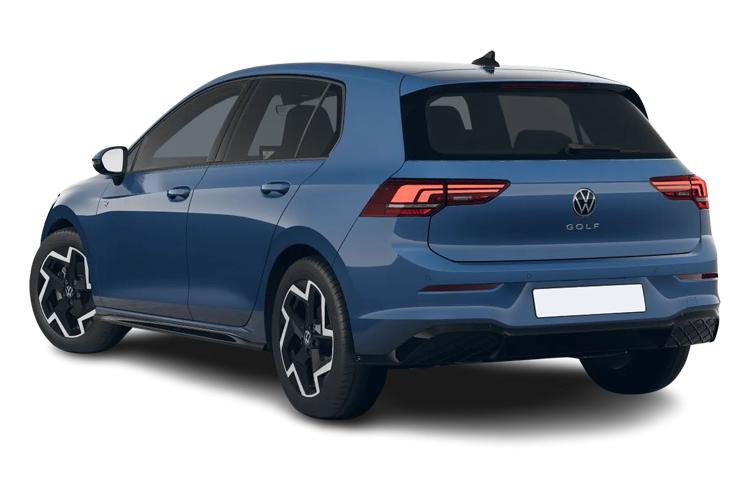
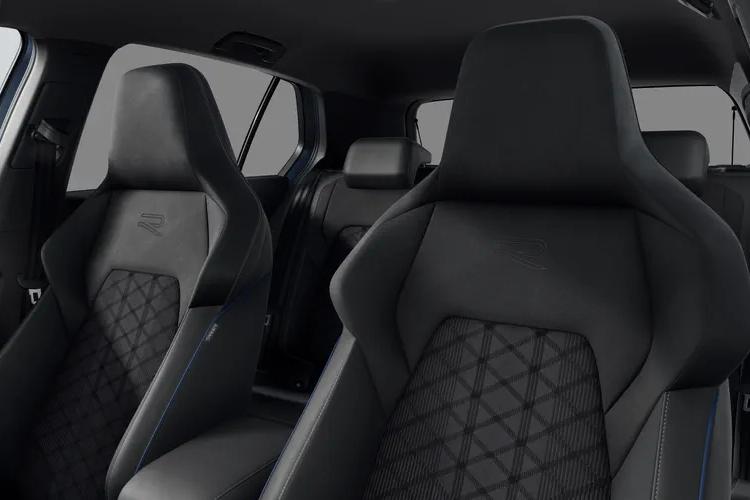
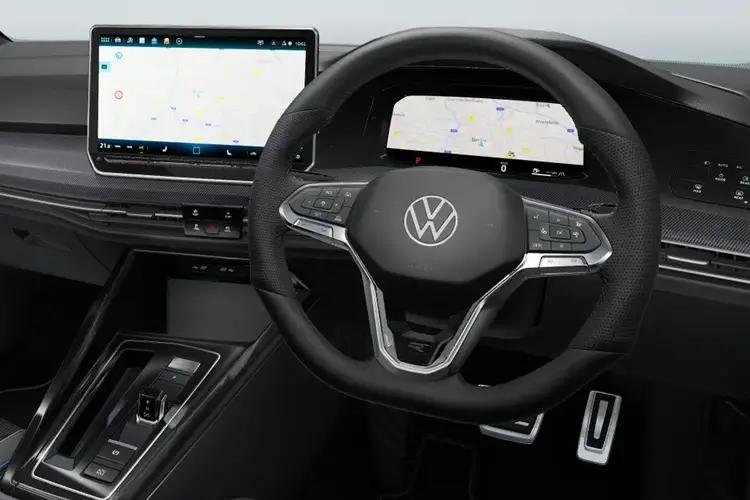
Because with this eighth generation GTI model, styling chief Klaus Bischoff and his team had to keep basically the same structure as before, they were a little limited in how much could be done to fundamentally change the design of this car, by now only offered in a single five-door hatch body style. Within those constraints though, quite a lot was done here, much of it aimed at creating a low visual centre of gravity, primarily achieved through the wide air intakes at the front and the striking shoulder line. You'll note the main differences at the front, where traditional model line touches - things like the classic 'GTI' badging and the red strip across the radiator grille - are blended into the lower, more menacing nose that was a feature of this eighth generation Golf design. Full-LED headlights fitted with the brand's intelligent 'I.Q. Light' matrix beams were standard and an LED strip in each headlamp mirrors the red grille line when the daytime running lights are activated - or when the driver approaches with the key. You might find the wide lower grille and fairy-light LED front foglamps to be a little fussy, but there are some undeniably nice touches - like the way the radiator grille illuminates as a continuation of the headlamp LED daytime running light strip. Much less is different from the side, where you might pick up the fact that this variant rides 15mm lower than a regular Golf. The profile is characterised by three elements; this 'GTI'-branded front wing signet badge; wide black lower side skirt sills featuring a splitter design similar to that found on race cars; and unique 18-inch 'Richmond' alloy wheels with red brake calipers, which could on request be upgraded to larger 19-inch rims (the biggest ever fitted to a Golf GTI). Full-LED tail lights feature at the rear and the GTI lettering was positioned centrally under the Volkswagen emblem. This hot hatch variant appears to be even flatter than less powerful Golf models thanks to a roof spoiler that extends significantly towards the rear and is painted in vehicle colour at the top, with glossy black at the bottom. Lower down, a sporty diffuser distinguishes this car from lesser Golfs and, in keeping with GTI tradition, this eighth generation model's exhaust system had one tailpipe on the left and one on the right. Inside, there's certainly plenty here that'll be familiar to Golf GTI regulars; like the GTI sports seats in tartan with their black side bolsters and the three silver double spokes on the dished sports steering wheel. The manual model got a dimpled 'golf ball'-style gear knob too. Despite this, the over-riding impression for loyal owners will probably be of just how different everything is. Not really because of freshly added detail touches like the pulsating starter bar, the extra steering wheel touch controls or, on the DSG auto variant, a much shorter, stubbier drive selector. No, what was primarily different here lay with the adoption of what Volkswagen called a completely 'digital' cabin. As on an ordinary MK8 Golf from this period, this came courtesy of the brand's so-called 'Innovision Cockpit', which fuses a 10.25-inch digital instrument binnacle screen with a 10-inch centre-dash screen. With the 'Digital Cockpit Pro' instrument binnacle screen, the virtual gauges were embellished in this hot hatch model with stylised GTI-branding and a smart honeycomb background. This display is a little smaller than the 'Virtual Cockpit' screen you'd get in a rival Audi S3, but it works in much the same way, a 'View' button on the steering wheel offering a choice of four graphic layouts. Anything this instrument binnacle display can't tell you - and much that it can - will be covered off by that 10-inch centre-dash touchscreen we mentioned earlier, which was a decent step forward from the 'Composition Media' monitor fitted to the previous generation model - which already was better than rival set-ups. This replacement 'Discover Media Navigation' system put this Golf even further beyond its competitors' reach in this regard, when it comes to clarity and ease of use. You'll have to get used to a few things about it though, primarily the curious slider at the bottom of the screen for volume control, which not everyone likes. Enough with screens and digitalisation. What else do you need to know here, apart from the fact that as usual on a Golf, build quality's impeccable. Maybe that the ergonomics are predictably faultless. And that the seats (which come with integrated headrests and lumbar adjustment) are brilliantly supportive. The combination of these tiny front quarterlights and slim A-pillars mean good frontward vision too. Over-the-shoulder vision isn't quite as good; the large C-pillars rather get in the way, so it's just as well that rear parking sensors were standard-fit. A rear view camera wasn't. In the back, thanks to the extra 16mm of length between the wheels with this MK8 design, there was a fraction more legroom than in the MK7 model, so a pair of six-foot adults could be accommodated reasonably here, providing front seat occupants don't slide their seats fully back. As for the boot, well your sales person might reference the fact that the 381-litre space provided here is 40-litres more than you get in a rival Ford Focus ST. Pushing forward the conventional 60:40 split-rear bench you get frees up 1,237-litres across a load area that'll be virtually flat if you have the boot floor in its upper position.
Please contact us for an exact up-to-date valuation.
We've heard of various problems. Most were related to the infotainment or other electrical systems. Multiple software issues plagued early versions of this model, so if you're looking at a 2020 or 2021-plated car, make particularly sure that all the infotainment functions work exactly as they should. In some cases, the infotainment system failed to start when the engine was fired. We came across several cars that had developed annoying creaks (rear seat backrest/door frames that creak against the body over speed humps/centre console trim creaks/front door handles etc). Sometimes, the gear shift knob on manual models has been known to come off. Look out for uneven panel gaps between the bottom of the A-pillar and the top of the wing. Problems have been reported with the functionality of the Travel Assist semi-autonomous driving system too, so check the functionality of that if it's been fitted. The speed sign recognition system can malfunction too. We've heard of misfiring TSI engines and transmission chatter too. Otherwise, it's just the usual things, check for scratched alloys and interior child damage - and insist on a fully stamped up service history.
[based on a 2020 Golf GTI 2.0 TSI ex VAT - autodoc.co.uk] An air filter will be priced in the £8-£59 bracket. The front brake discs we came across sat in the £25-£46 bracket, with rear discs costing in the £19-£46 bracket. Front brake pads are in the £29 to £81 bracket for a set; rears are £14-£70. An alternator is in the £162-£480 bracket; front shock absorbers are in the £138 bracket. Wiper blades are in the £6-£12 bracket and a starter motor will cost in the £117 to £273 bracket.
At first glance here, not much seemed to have changed over the old MK7 Golf GTI. The 'EA888'-series 2.0-litre TSI engine was lifted from the 'Performance'-spec version of the previous generation model and developed the same output (245PS) and much the same performance stats (rest to 62mph in 6.3s en route to 155mph). There were also the same manual or 7-speed DSG auto gearbox options - and, as before, an extra cost 'DCC' 'Dynamic Chassis Control' adaptive damping system was available. But look closer at what VW served up here. Chief Engineer Jürgen Pützschler and his development team knew they had to enhance this car's low-speed agility, high-speed stability and driver feedback. And, as you'll discover in less than half a mile on your favourite twisting secondary road piece of tarmac, they did here. The steering, which had disappointed us on the previous generation model, here became incisive and communicative. The brakes are brilliant. That Porsche-developed DSG auto is rifle crack-quick through the ratios. Body roll is brilliantly judged. And dry weather grip at speed through the turns seems almost endless. There are plenty of reasons for these improvements. The previously optional 'XDS+' electronically controlled locking front differential became standard with this MK* model and was tuned to activate more effectively to improve mid-corner traction. Plus Volkswagen added a completely new variable ratio steering rack, with response quickened by up to 7% for more incisive turn-in bite. Orchestrating all of these elements was a new, faster acting and more comprehensive 'Vehicle Dynamics Manager' set-up, which was there to oversee just about every dynamic variable and then alters the drivetrain, suspension and steering to get the nose into and around each turn more quickly and safely. On top of that, spring rates were increased by 5% at the front and 15% at the rear; the DSG 7-speed paddleshift auto gearbox became a different, sharper-reacting shift-by-wire set-up; and the 'DCC' 'Dynamic Chassis Control' adaptive damping system (a must-have option) was completely reconfigured to be far more tune-able, so that a keen owner could set up this GTI just as a race driver would set up his race car. On the subject of damping, the ride of this MK8 model became a bit firmer than before. But this Golf GTI was still better than its rivals at not being a hot hatch when not being a hot hatch was exactly what its owners required - when the rain's pouring, a long highway trip's beckoning, urban driving's required or when you simply can't be bothered with red mist modes. At which point you might also find that it's the most efficient car in its class, capable of returning impressive WLTP stats for a hot hatch of this capability - in DSG auto form, that means up to 38.2mpg on the combined cycle and up to 168g/km of CO2. But when you're ready to drive this GTI in the way it was designed to be driven, this can be an astonishingly rapid back road brawler. Jekyll and Hyde in one immaculately fashioned Wolfsburg package. And therein lies the joy of this car.
In all the dynamic measures that tend to matter to hot hatch drivers - 0-60 acceleration, top speed, lap times, lateral grip, braking performance and so on - this MK8 Golf GTI never really seriously bothers the class best. You might not be immediately arrested by the looks either, or the initial experience on the drive round the block. But persevere. Nearly half a century of experience in creating a car of this kind has to count for something. It does. Importantly, unlike some of its rivals, Wolfsburg didn't make the mistake here of developing this GTI for the track rather than the road, so bumpy British tarmac doesn't bother it. You're always confident in pushing the performance envelope - in a way that few rivals can match. Yet that's possible without the sweaty palms that usually characterise red mist motoring. MK5, MK6 and MK7 Golf GTI models were also accomplished in this way, but with its sharper steering, stiffer set-up, better traction and more tuneable responses, this MK8 version could not only be a confident performance car but a credibly exciting one too. So yes, it should sell to folk who want a proper hot hatch experience as well as a very mature one. The very first generation version set out to define a fundamental standard for performance that was more precise than any other compact car. So it is here. Long after the novelty of some rivals has worn off, this GTI will always feel a class act. Crucially though, in this form it was also a very entertaining one.
Data provided by CAP-HPI database - Ref# 95323
By Jonathan Crouch
With each generation, the Volkswagen Golf GTI becomes more polished, but not every evolution of this 'Gran Turismo Iniezion' (or 'GTI') model has proved to be a real step forward. This MK8 model though, was, combining fresh technology with advanced chassis dynamics, plus a little of the original GTI DNA still remained. Let's check the original version of this MK8 Golf GTI model out as a used buy.
5dr Family Hatchback (GTI)
Before Volkswagen dreamed up the Golf GTI, there was no such thing as a 'hot hatchback'. Now the phrase has entered everyday parlance and virtually any manufacturer that has a hatchback also has a hot one - or a warm one at the very least. It was 1976 when the original version of this car was born and since then, through numerous generations and with the help of countless imitators, it has brought performance, handling and fun to the masses on an unprecedented scale. The Golf GTI we look at here was the mark eight and claimed to be the best yet. But did that mean 'best of breed' or 'best in class'? This car, after all, might have long defined the hot hatch genre but it's rarely been recognised as the most accomplished car in its sector. In fact, to be brutally honest, there have been some distinctly average Golf GTI models over the years, the low point reached in the Nineties with unremarkable third and fourth generation models. All that changed though in 2005 with a completely re-developed fifth generation version that also lent its platform and most of its 2.0-litre turbo mechanicals to the slicker MK6 design that followed in 2009. For the first time since the Seventies and early Eighties, a hot Golf was a credible driver's choice once again. By 2013 though, Volkswagen's iconic shopping rocket was beginning to be overtaken by a whole host of rivals, all of whom offered more firepower and greater technical superiority. Another big step forward was called for - and this MK8 car's predecessor, the seventh generation Golf GTI, represented exactly that, thanks to its extra power, hi-tech MQB platform and more sophisticated suspension and steering. This eighth generation 'CD1'-series model that arrived in 2020 didn't re-invent that modern-era Golf GTI formula, but it did develop it quite a long way - as we're about to see. It was joined in 2021 by a 300PS GTI Clubsport model. Here, we'll focus on the early 2020-2024 straightforward GTI versions of this model, the cars produced before the mid-term facelift that arrived in mid-2024.
Because with this eighth generation GTI model, styling chief Klaus Bischoff and his team had to keep basically the same structure as before, they were a little limited in how much could be done to fundamentally change the design of this car, by now only offered in a single five-door hatch body style. Within those constraints though, quite a lot was done here, much of it aimed at creating a low visual centre of gravity, primarily achieved through the wide air intakes at the front and the striking shoulder line. You'll note the main differences at the front, where traditional model line touches - things like the classic 'GTI' badging and the red strip across the radiator grille - are blended into the lower, more menacing nose that was a feature of this eighth generation Golf design. Full-LED headlights fitted with the brand's intelligent 'I.Q. Light' matrix beams were standard and an LED strip in each headlamp mirrors the red grille line when the daytime running lights are activated - or when the driver approaches with the key. You might find the wide lower grille and fairy-light LED front foglamps to be a little fussy, but there are some undeniably nice touches - like the way the radiator grille illuminates as a continuation of the headlamp LED daytime running light strip. Much less is different from the side, where you might pick up the fact that this variant rides 15mm lower than a regular Golf. The profile is characterised by three elements; this 'GTI'-branded front wing signet badge; wide black lower side skirt sills featuring a splitter design similar to that found on race cars; and unique 18-inch 'Richmond' alloy wheels with red brake calipers, which could on request be upgraded to larger 19-inch rims (the biggest ever fitted to a Golf GTI). Full-LED tail lights feature at the rear and the GTI lettering was positioned centrally under the Volkswagen emblem. This hot hatch variant appears to be even flatter than less powerful Golf models thanks to a roof spoiler that extends significantly towards the rear and is painted in vehicle colour at the top, with glossy black at the bottom. Lower down, a sporty diffuser distinguishes this car from lesser Golfs and, in keeping with GTI tradition, this eighth generation model's exhaust system had one tailpipe on the left and one on the right. Inside, there's certainly plenty here that'll be familiar to Golf GTI regulars; like the GTI sports seats in tartan with their black side bolsters and the three silver double spokes on the dished sports steering wheel. The manual model got a dimpled 'golf ball'-style gear knob too. Despite this, the over-riding impression for loyal owners will probably be of just how different everything is. Not really because of freshly added detail touches like the pulsating starter bar, the extra steering wheel touch controls or, on the DSG auto variant, a much shorter, stubbier drive selector. No, what was primarily different here lay with the adoption of what Volkswagen called a completely 'digital' cabin. As on an ordinary MK8 Golf from this period, this came courtesy of the brand's so-called 'Innovision Cockpit', which fuses a 10.25-inch digital instrument binnacle screen with a 10-inch centre-dash screen. With the 'Digital Cockpit Pro' instrument binnacle screen, the virtual gauges were embellished in this hot hatch model with stylised GTI-branding and a smart honeycomb background. This display is a little smaller than the 'Virtual Cockpit' screen you'd get in a rival Audi S3, but it works in much the same way, a 'View' button on the steering wheel offering a choice of four graphic layouts. Anything this instrument binnacle display can't tell you - and much that it can - will be covered off by that 10-inch centre-dash touchscreen we mentioned earlier, which was a decent step forward from the 'Composition Media' monitor fitted to the previous generation model - which already was better than rival set-ups. This replacement 'Discover Media Navigation' system put this Golf even further beyond its competitors' reach in this regard, when it comes to clarity and ease of use. You'll have to get used to a few things about it though, primarily the curious slider at the bottom of the screen for volume control, which not everyone likes. Enough with screens and digitalisation. What else do you need to know here, apart from the fact that as usual on a Golf, build quality's impeccable. Maybe that the ergonomics are predictably faultless. And that the seats (which come with integrated headrests and lumbar adjustment) are brilliantly supportive. The combination of these tiny front quarterlights and slim A-pillars mean good frontward vision too. Over-the-shoulder vision isn't quite as good; the large C-pillars rather get in the way, so it's just as well that rear parking sensors were standard-fit. A rear view camera wasn't. In the back, thanks to the extra 16mm of length between the wheels with this MK8 design, there was a fraction more legroom than in the MK7 model, so a pair of six-foot adults could be accommodated reasonably here, providing front seat occupants don't slide their seats fully back. As for the boot, well your sales person might reference the fact that the 381-litre space provided here is 40-litres more than you get in a rival Ford Focus ST. Pushing forward the conventional 60:40 split-rear bench you get frees up 1,237-litres across a load area that'll be virtually flat if you have the boot floor in its upper position.
Please contact us for an exact up-to-date valuation.
We've heard of various problems. Most were related to the infotainment or other electrical systems. Multiple software issues plagued early versions of this model, so if you're looking at a 2020 or 2021-plated car, make particularly sure that all the infotainment functions work exactly as they should. In some cases, the infotainment system failed to start when the engine was fired. We came across several cars that had developed annoying creaks (rear seat backrest/door frames that creak against the body over speed humps/centre console trim creaks/front door handles etc). Sometimes, the gear shift knob on manual models has been known to come off. Look out for uneven panel gaps between the bottom of the A-pillar and the top of the wing. Problems have been reported with the functionality of the Travel Assist semi-autonomous driving system too, so check the functionality of that if it's been fitted. The speed sign recognition system can malfunction too. We've heard of misfiring TSI engines and transmission chatter too. Otherwise, it's just the usual things, check for scratched alloys and interior child damage - and insist on a fully stamped up service history.
[based on a 2020 Golf GTI 2.0 TSI ex VAT - autodoc.co.uk] An air filter will be priced in the £8-£59 bracket. The front brake discs we came across sat in the £25-£46 bracket, with rear discs costing in the £19-£46 bracket. Front brake pads are in the £29 to £81 bracket for a set; rears are £14-£70. An alternator is in the £162-£480 bracket; front shock absorbers are in the £138 bracket. Wiper blades are in the £6-£12 bracket and a starter motor will cost in the £117 to £273 bracket.
At first glance here, not much seemed to have changed over the old MK7 Golf GTI. The 'EA888'-series 2.0-litre TSI engine was lifted from the 'Performance'-spec version of the previous generation model and developed the same output (245PS) and much the same performance stats (rest to 62mph in 6.3s en route to 155mph). There were also the same manual or 7-speed DSG auto gearbox options - and, as before, an extra cost 'DCC' 'Dynamic Chassis Control' adaptive damping system was available. But look closer at what VW served up here. Chief Engineer Jürgen Pützschler and his development team knew they had to enhance this car's low-speed agility, high-speed stability and driver feedback. And, as you'll discover in less than half a mile on your favourite twisting secondary road piece of tarmac, they did here. The steering, which had disappointed us on the previous generation model, here became incisive and communicative. The brakes are brilliant. That Porsche-developed DSG auto is rifle crack-quick through the ratios. Body roll is brilliantly judged. And dry weather grip at speed through the turns seems almost endless. There are plenty of reasons for these improvements. The previously optional 'XDS+' electronically controlled locking front differential became standard with this MK* model and was tuned to activate more effectively to improve mid-corner traction. Plus Volkswagen added a completely new variable ratio steering rack, with response quickened by up to 7% for more incisive turn-in bite. Orchestrating all of these elements was a new, faster acting and more comprehensive 'Vehicle Dynamics Manager' set-up, which was there to oversee just about every dynamic variable and then alters the drivetrain, suspension and steering to get the nose into and around each turn more quickly and safely. On top of that, spring rates were increased by 5% at the front and 15% at the rear; the DSG 7-speed paddleshift auto gearbox became a different, sharper-reacting shift-by-wire set-up; and the 'DCC' 'Dynamic Chassis Control' adaptive damping system (a must-have option) was completely reconfigured to be far more tune-able, so that a keen owner could set up this GTI just as a race driver would set up his race car. On the subject of damping, the ride of this MK8 model became a bit firmer than before. But this Golf GTI was still better than its rivals at not being a hot hatch when not being a hot hatch was exactly what its owners required - when the rain's pouring, a long highway trip's beckoning, urban driving's required or when you simply can't be bothered with red mist modes. At which point you might also find that it's the most efficient car in its class, capable of returning impressive WLTP stats for a hot hatch of this capability - in DSG auto form, that means up to 38.2mpg on the combined cycle and up to 168g/km of CO2. But when you're ready to drive this GTI in the way it was designed to be driven, this can be an astonishingly rapid back road brawler. Jekyll and Hyde in one immaculately fashioned Wolfsburg package. And therein lies the joy of this car.
In all the dynamic measures that tend to matter to hot hatch drivers - 0-60 acceleration, top speed, lap times, lateral grip, braking performance and so on - this MK8 Golf GTI never really seriously bothers the class best. You might not be immediately arrested by the looks either, or the initial experience on the drive round the block. But persevere. Nearly half a century of experience in creating a car of this kind has to count for something. It does. Importantly, unlike some of its rivals, Wolfsburg didn't make the mistake here of developing this GTI for the track rather than the road, so bumpy British tarmac doesn't bother it. You're always confident in pushing the performance envelope - in a way that few rivals can match. Yet that's possible without the sweaty palms that usually characterise red mist motoring. MK5, MK6 and MK7 Golf GTI models were also accomplished in this way, but with its sharper steering, stiffer set-up, better traction and more tuneable responses, this MK8 version could not only be a confident performance car but a credibly exciting one too. So yes, it should sell to folk who want a proper hot hatch experience as well as a very mature one. The very first generation version set out to define a fundamental standard for performance that was more precise than any other compact car. So it is here. Long after the novelty of some rivals has worn off, this GTI will always feel a class act. Crucially though, in this form it was also a very entertaining one.
