
![VOLKSWAGEN ID.4 ESTATE 109kW Life Pure 52kWh 5dr Auto [110kW Ch]](https://cdn.automotus.uk/store/CVD/car/99651/front_view/id-4-vwad-26.jpg)
Images are for illustrative purposes only.
![VOLKSWAGEN ID.4 ESTATE 109kW Life Pure 52kWh 5dr Auto [110kW Ch]](https://cdn.automotus.uk/store/CVD/car/99651/back_view/id-4-vwad-26.jpg)
![VOLKSWAGEN ID.4 ESTATE 109kW Life Pure 52kWh 5dr Auto [110kW Ch]](https://cdn.automotus.uk/store/CVD/car/99651/detail_view/id-4-vwad-26.jpg)
![VOLKSWAGEN ID.4 ESTATE 109kW Life Pure 52kWh 5dr Auto [110kW Ch]](https://cdn.automotus.uk/store/CVD/car/99651/inside_view/id-4-vwad-26.jpg)

109kW Life Pure 52kWh 5dr Auto [110kW Ch]
Need some assistance or advice? Call Us 01903 538835


By Jonathan Crouch
In 2021, Volkswagen ramped up its efforts in the EV segment with this ID.4 compact mid-sized Crossover, which was the marque's first global market electric vehicle. It aimed to deliver more of a premium choice than volume brands could then offer in this rapidly growing segment. Ready for the EV switch and need a pre-owned mid-sized mainstream brand SUV with a bit more of an up-market feel? We think you might be tempted by this one.
5dr SUV (52kWh, 77kWh)
Back at its launch in 2021, the ID.4 was key in the realisation of Volkswagen's plan to sell 1.5 million EVs worldwide by 2025. The brand expected the ID.4 to account for about a third of that total - so it could hardly have been more important. We mentioned global sales. From this model's introduction, Volkswagen saw this very much as a 'world car', in the mould of the original Beetle or the modernday Golf. And because the world today is obsessed with SUVs, particularly compact-to-mid-sized ones, that's what this had to be. From original launch, the aim here was to out-sell established EV crossovers of this size, like Kia e-Niro and the Hyundai Kona Electric; and, in this model's more premium forms, to take sales from slightly pricier ones, like the Ford Mustang Mach-E and the Tesla Model Y. In line with this ID.4's global pretensions, it was built not only in Germany (at VW's Zwickau plant) but also by factories in China and the US. All the engineering here was shared with the similar VW Group EVs that campaign in this class, two available at this ID.4's original launch (the Skoda Enyaq iV and the Aidi Q4 e-tron), the other introduced two years afterwards (the CUPRA Tavascan). These three cars represent arguably this Volkswagen's closest rivals and, like the ID.4, all use the same MEB electric platform and primarily the same EV engineering that we first saw in Volkswagen's only slightly smaller ID.3 hatchback. So, a slightly aspirational Volkswagen EV. Interested yet? And does an early ID.4 make sense as a used buy? Let's see. Here, we'll focus on the early 2021-2023 versions of this model, the cars produced before the mid-term facelift that arrived in late-2024.
This ID.4, said then-Volkswagen styling Chief Klaus Zyciora at its launch, aimed to represent 'the evolution of electric vehicle design'. Well it was certainly an evolution from the friendly but slightly anonymous look of its showroom stablemate, the ID.3 family hatch. And it was a more substantial thing, 287mm longer and 60mm higher, with short bonnet proportions unlike any existing Volkswagen SUV. The profile is certainly distinctive, thanks to a variety of careful touches - an A-pillar that starts a long way forward, a strong wave-like shoulder line, arched flanks and a low dynamic roof arch intended to make the silhouette look long and stretched. All the key drive stuff sits over the rear axle - principally the single-speed gearbox and the permanent-magnet synchronous electric motor that's been mated to it, both very efficiently packaged; Volkswagen says that both elements, together with the associated control electronics, collectively weigh just 90kgs and could fit into a typical gym bag. All of this powered by a high voltage battery that is efficiently arranged in the underbody to save space. Which leaves nothing to sit at the front end but a few auxiliary units like the air conditioning compressor and of course the steering rack. So, just as with the original rear-engined Beetle, there's no need for a grille to embellish the flat front end, which sees air flow through a hexagon-trimmed wide inlet lower down, which has a silver-trimmed lower frame. The brand badge sits simply on a narrow light strip, which, above base trim, rather neatly illuminates when the large headlights are on full beam. At the wheel, there's no need for a gear lever, an ignition slot or a handbrake - and that's just the beginning of the things you'll need to adjust to, in a cabin designed around what Volkswagen calls an 'Open Space' concept. You sit quite high, on top of all those batteries, and the interior design has an airy but minimalist and rather clinical feel which Volkswagen tried unsuccessfully to lift by imprinting 'Play' and 'Pause' symbols on the two footwell pedals. There's not much in the way of switchgear and of course, you do without conventional instruments, all of this replaced by a couple of TFT displays, a little 5.3-inch one behind the steering wheel and a main 'Discover Max' tablet of 12-inches in size in the centre of the dash. Build quality is generally good but cheaper plastics betray the cost cutting necessary to undergird all that sophisticated EV technology. The gear selector is housed in a right hand protrusion from the instrument binnacle, though here, there's the additional novelty in the fact that the whole binnacle moves up and down as you adjust the wheel. Other adjustments are done using either touch-sensitive buttons (like the fiddly sliders for the climate system); or with voice control prefaced by the command “Hello I.D”. In the rear, Volkswagen claims that there's as much leg room as you'd get in a Mercedes E-Class executive saloon or their large 7-seat Tiguan Allspace SUV; it certainly feels like it. It's also wider cabin than you'd expect a compact-to-mid-sized SUV to be able to provide and with no central transmission tunnel to obstruct things, three adults could actually fit reasonably easily into the back of this car. Out back, there's 543-litres of boot space. The rear bench doesn't split flexibly 40:20:40, but Volkswagen does at least provide a ski hatch so that longer items to be poked through into the cabin. Flattening the 60:40-split rear bench frees up 1,575-litres of capacity loaded to roof height.
Please contact us for an exact up-to-date valuation.
We've heard of various problems. An electrical system / drive system malfunction has afflicted a number of cars. One owner experienced all the safety systems shutting down due to a loose wire in the wiring harness. In another case, the illumination light on the driver's door handle went out. Apparently the steering wheel sometimes peels off like sunburnt skin after a time too, requiring the whole wheel to be replaced. In a number of cases, repeated glitches were only solved when the dealership replaced the communication modules between the dash unit and the head unit. One owner reported that the brakes randomly jam on for no apparent reason very slow traffic. And reported warning lights on the dash at least once a week saying the Park assist system is malfunctioning and the brake booster is limited. ECU problems seem to be relatively common, due to cracked system or daughter boards or cold solder joints. Check the infotainment screen thoroughly. Some owners reported Android Auto only works half of the time, with the other half needing to be rebooted several times. Apparently the volume gets often stuck. In one case the infotainment screen kept rebooting every few minutes due to a bad USB hub. One owner reported that the taillights remained on for hours after the vehicle was powered down. And got frequent electrical system yellow warning errors several times. In another case, an instrument cluster showed a cascade of errors and needed a car reboot. Check the scheduled charging - it sometimes doesn't work. And occasionally the electronic door openers fail to trigger. Driver detection is sometimes unreliable with owners getting warned to put their hands on the steering wheel when they are already on the wheel. Otherwise, it's just the usual things, check for scratched alloys and interior child damage - and insist on a fully stamped up service history.
[based on a 2022 ID.4 77kWh Pro Performance 204PS ex VAT] An pollen filter will be priced in the £6-£21 bracket. The front brake discs we came across sat in the £75 bracket, with pricier-branded discs costing up to £117. Front brake pads are in the £35 to £122 bracket for a set. A rear shock absorber is in the £24-£78 bracket; front shock absorbers are in the £138 bracket. Wiper blades are in the £6-£11 bracket and a wiper motor will cost in the £37 to £132 bracket.
There's a bit to adapt to if this is your first experience of EV motoring. No gearstick, no handbrake, no ignition key and just the sound of silence as the fixed ratio transmission blends an almost endless wave of torque into meaningful and surprisingly rapid forward progress. The forward thrust away from rest isn't quite as abrupt as it is in Volkswagen's smaller ID.3, mostly because the ID.4 is nearly 200kgs heavier, a factor which affects most areas of this car's drive demeanour, sometimes helpfully, sometimes not. That of course is a legacy of the substantial battery packs it must carry about. Base models, which respectively feature electric motors developing either 148PS or 170PS, use a 52kWh lithium-ion unit offering a claimed driving distance of up to 213 miles. The longer-range variant, using a motor putting out 204PS, has a rather more substantial 77kWh battery that ups that to as much as 310 miles, though we never saw anything like that throughout our testing. A dual motor 4MOTION version of the 77kWh 204PS powertrain was also made available shortly after launch but even in that form, like Volkswagen's original post-war Beetle, this ID.4 is primarily rear-driven. When you drive it in town, you quickly realise the real advantages of placing the powertrain - the electric motor and its associated single-speed auto gearbox - on the back axle, thereby freeing up the front wheels for steering duties; the result is a London taxi-like 10.2-metre turning circle. Beyond the city limits, that drive format allows for a near-50:50 almost perfect weight distribution which, together with the low centre of gravity provided by the central battery pack placement, helps disguise the portly weight this SUV must carry around. Traction through the turns is excellent and body roll is checked by firm damping cleverly engineered for suppleness over poor surfaces. All of which ought to provide the recipe for a decently sporting EV - and in some ways it does, though the steering, while accurate, offers disappointingly little real feedback. If you do prioritise performance in your choice of ID.4, Volkswagen wants you to consider the top flagship GTX variant, a dual motor model with the 77kWh battery but a more potent 299PS motor output. That version gets an extra 'Traction' mode to add to the other drive settings common across the model line-up; there's 'Comfort', 'Sport' and 'Individual'. Plus you get an 'Eco' setting that, to maximise range, you'll need to frequently use in combination with the available 'B' regenerative braking function, which slows the car significantly when you come off the accelerator. Whatever ID.4 model you select, your charging regime should be quite straightforward. There's a 'We Charge' app that helps you find and use over 150,000 public charge points. An AC1-phase 7.2kW garage wallbox would replenish the 52kWh model from zero in about nine and a half hours; think a little over 12 hours for the 77kWh variant. What about if you find a public rapid charger along your route? Well the smaller 52kWh battery supports 100kW DC charging; the 77kWh battery ups that to 125kW, which means that even on the longer range model, at a DC3 100kW charge point, it'll take no more than around 30 minutes to recharge your ID.4 with enough direct current to cover the next 137 miles.
Voted 'World Car of the Year' at its introduction, the ID.4 is certainly a world class SUV; mind you it ought to be, given the investment that went into it. It has the quality look and feel of a premium brand product; enough (just) to justify the extra cost over its almost identically-engineered Skoda Enyaq iV VW Group cousin. We certainly admire the ID.4's brilliant packaging, the ride and refinement and the way it's so easy to adapt to for those converting from fossil fuel. It's not perfect of course. It could certainly be more engaging to drive. Yes, the build quality isn't all it could be in every area - and the infotainment system can be clunky to use; upgrade to the post-2024 version if you want these issues addressed. And for sure, the value in the range certainly lies with the more affordable models. For all that though, there's lots to like here - and it's delivered with a much higher-end feel than you get in an ID.3. Ultimately, if all you care about in a Crossover EV of this kind is value and driving range, this probably won't be your first choice. But if your priorities are a little broader than that and you want a little more 'feel good' factor in a car of this sort, this early ID.4 might well have your number.
Data provided by CAP-HPI database - Ref# 99651
By Jonathan Crouch
In 2021, Volkswagen ramped up its efforts in the EV segment with this ID.4 compact mid-sized Crossover, which was the marque's first global market electric vehicle. It aimed to deliver more of a premium choice than volume brands could then offer in this rapidly growing segment. Ready for the EV switch and need a pre-owned mid-sized mainstream brand SUV with a bit more of an up-market feel? We think you might be tempted by this one.
5dr SUV (52kWh, 77kWh)
Back at its launch in 2021, the ID.4 was key in the realisation of Volkswagen's plan to sell 1.5 million EVs worldwide by 2025. The brand expected the ID.4 to account for about a third of that total - so it could hardly have been more important. We mentioned global sales. From this model's introduction, Volkswagen saw this very much as a 'world car', in the mould of the original Beetle or the modernday Golf. And because the world today is obsessed with SUVs, particularly compact-to-mid-sized ones, that's what this had to be. From original launch, the aim here was to out-sell established EV crossovers of this size, like Kia e-Niro and the Hyundai Kona Electric; and, in this model's more premium forms, to take sales from slightly pricier ones, like the Ford Mustang Mach-E and the Tesla Model Y. In line with this ID.4's global pretensions, it was built not only in Germany (at VW's Zwickau plant) but also by factories in China and the US. All the engineering here was shared with the similar VW Group EVs that campaign in this class, two available at this ID.4's original launch (the Skoda Enyaq iV and the Aidi Q4 e-tron), the other introduced two years afterwards (the CUPRA Tavascan). These three cars represent arguably this Volkswagen's closest rivals and, like the ID.4, all use the same MEB electric platform and primarily the same EV engineering that we first saw in Volkswagen's only slightly smaller ID.3 hatchback. So, a slightly aspirational Volkswagen EV. Interested yet? And does an early ID.4 make sense as a used buy? Let's see. Here, we'll focus on the early 2021-2023 versions of this model, the cars produced before the mid-term facelift that arrived in late-2024.
This ID.4, said then-Volkswagen styling Chief Klaus Zyciora at its launch, aimed to represent 'the evolution of electric vehicle design'. Well it was certainly an evolution from the friendly but slightly anonymous look of its showroom stablemate, the ID.3 family hatch. And it was a more substantial thing, 287mm longer and 60mm higher, with short bonnet proportions unlike any existing Volkswagen SUV. The profile is certainly distinctive, thanks to a variety of careful touches - an A-pillar that starts a long way forward, a strong wave-like shoulder line, arched flanks and a low dynamic roof arch intended to make the silhouette look long and stretched. All the key drive stuff sits over the rear axle - principally the single-speed gearbox and the permanent-magnet synchronous electric motor that's been mated to it, both very efficiently packaged; Volkswagen says that both elements, together with the associated control electronics, collectively weigh just 90kgs and could fit into a typical gym bag. All of this powered by a high voltage battery that is efficiently arranged in the underbody to save space. Which leaves nothing to sit at the front end but a few auxiliary units like the air conditioning compressor and of course the steering rack. So, just as with the original rear-engined Beetle, there's no need for a grille to embellish the flat front end, which sees air flow through a hexagon-trimmed wide inlet lower down, which has a silver-trimmed lower frame. The brand badge sits simply on a narrow light strip, which, above base trim, rather neatly illuminates when the large headlights are on full beam. At the wheel, there's no need for a gear lever, an ignition slot or a handbrake - and that's just the beginning of the things you'll need to adjust to, in a cabin designed around what Volkswagen calls an 'Open Space' concept. You sit quite high, on top of all those batteries, and the interior design has an airy but minimalist and rather clinical feel which Volkswagen tried unsuccessfully to lift by imprinting 'Play' and 'Pause' symbols on the two footwell pedals. There's not much in the way of switchgear and of course, you do without conventional instruments, all of this replaced by a couple of TFT displays, a little 5.3-inch one behind the steering wheel and a main 'Discover Max' tablet of 12-inches in size in the centre of the dash. Build quality is generally good but cheaper plastics betray the cost cutting necessary to undergird all that sophisticated EV technology. The gear selector is housed in a right hand protrusion from the instrument binnacle, though here, there's the additional novelty in the fact that the whole binnacle moves up and down as you adjust the wheel. Other adjustments are done using either touch-sensitive buttons (like the fiddly sliders for the climate system); or with voice control prefaced by the command “Hello I.D”. In the rear, Volkswagen claims that there's as much leg room as you'd get in a Mercedes E-Class executive saloon or their large 7-seat Tiguan Allspace SUV; it certainly feels like it. It's also wider cabin than you'd expect a compact-to-mid-sized SUV to be able to provide and with no central transmission tunnel to obstruct things, three adults could actually fit reasonably easily into the back of this car. Out back, there's 543-litres of boot space. The rear bench doesn't split flexibly 40:20:40, but Volkswagen does at least provide a ski hatch so that longer items to be poked through into the cabin. Flattening the 60:40-split rear bench frees up 1,575-litres of capacity loaded to roof height.
Please contact us for an exact up-to-date valuation.
We've heard of various problems. An electrical system / drive system malfunction has afflicted a number of cars. One owner experienced all the safety systems shutting down due to a loose wire in the wiring harness. In another case, the illumination light on the driver's door handle went out. Apparently the steering wheel sometimes peels off like sunburnt skin after a time too, requiring the whole wheel to be replaced. In a number of cases, repeated glitches were only solved when the dealership replaced the communication modules between the dash unit and the head unit. One owner reported that the brakes randomly jam on for no apparent reason very slow traffic. And reported warning lights on the dash at least once a week saying the Park assist system is malfunctioning and the brake booster is limited. ECU problems seem to be relatively common, due to cracked system or daughter boards or cold solder joints. Check the infotainment screen thoroughly. Some owners reported Android Auto only works half of the time, with the other half needing to be rebooted several times. Apparently the volume gets often stuck. In one case the infotainment screen kept rebooting every few minutes due to a bad USB hub. One owner reported that the taillights remained on for hours after the vehicle was powered down. And got frequent electrical system yellow warning errors several times. In another case, an instrument cluster showed a cascade of errors and needed a car reboot. Check the scheduled charging - it sometimes doesn't work. And occasionally the electronic door openers fail to trigger. Driver detection is sometimes unreliable with owners getting warned to put their hands on the steering wheel when they are already on the wheel. Otherwise, it's just the usual things, check for scratched alloys and interior child damage - and insist on a fully stamped up service history.
[based on a 2022 ID.4 77kWh Pro Performance 204PS ex VAT] An pollen filter will be priced in the £6-£21 bracket. The front brake discs we came across sat in the £75 bracket, with pricier-branded discs costing up to £117. Front brake pads are in the £35 to £122 bracket for a set. A rear shock absorber is in the £24-£78 bracket; front shock absorbers are in the £138 bracket. Wiper blades are in the £6-£11 bracket and a wiper motor will cost in the £37 to £132 bracket.
There's a bit to adapt to if this is your first experience of EV motoring. No gearstick, no handbrake, no ignition key and just the sound of silence as the fixed ratio transmission blends an almost endless wave of torque into meaningful and surprisingly rapid forward progress. The forward thrust away from rest isn't quite as abrupt as it is in Volkswagen's smaller ID.3, mostly because the ID.4 is nearly 200kgs heavier, a factor which affects most areas of this car's drive demeanour, sometimes helpfully, sometimes not. That of course is a legacy of the substantial battery packs it must carry about. Base models, which respectively feature electric motors developing either 148PS or 170PS, use a 52kWh lithium-ion unit offering a claimed driving distance of up to 213 miles. The longer-range variant, using a motor putting out 204PS, has a rather more substantial 77kWh battery that ups that to as much as 310 miles, though we never saw anything like that throughout our testing. A dual motor 4MOTION version of the 77kWh 204PS powertrain was also made available shortly after launch but even in that form, like Volkswagen's original post-war Beetle, this ID.4 is primarily rear-driven. When you drive it in town, you quickly realise the real advantages of placing the powertrain - the electric motor and its associated single-speed auto gearbox - on the back axle, thereby freeing up the front wheels for steering duties; the result is a London taxi-like 10.2-metre turning circle. Beyond the city limits, that drive format allows for a near-50:50 almost perfect weight distribution which, together with the low centre of gravity provided by the central battery pack placement, helps disguise the portly weight this SUV must carry around. Traction through the turns is excellent and body roll is checked by firm damping cleverly engineered for suppleness over poor surfaces. All of which ought to provide the recipe for a decently sporting EV - and in some ways it does, though the steering, while accurate, offers disappointingly little real feedback. If you do prioritise performance in your choice of ID.4, Volkswagen wants you to consider the top flagship GTX variant, a dual motor model with the 77kWh battery but a more potent 299PS motor output. That version gets an extra 'Traction' mode to add to the other drive settings common across the model line-up; there's 'Comfort', 'Sport' and 'Individual'. Plus you get an 'Eco' setting that, to maximise range, you'll need to frequently use in combination with the available 'B' regenerative braking function, which slows the car significantly when you come off the accelerator. Whatever ID.4 model you select, your charging regime should be quite straightforward. There's a 'We Charge' app that helps you find and use over 150,000 public charge points. An AC1-phase 7.2kW garage wallbox would replenish the 52kWh model from zero in about nine and a half hours; think a little over 12 hours for the 77kWh variant. What about if you find a public rapid charger along your route? Well the smaller 52kWh battery supports 100kW DC charging; the 77kWh battery ups that to 125kW, which means that even on the longer range model, at a DC3 100kW charge point, it'll take no more than around 30 minutes to recharge your ID.4 with enough direct current to cover the next 137 miles.
Voted 'World Car of the Year' at its introduction, the ID.4 is certainly a world class SUV; mind you it ought to be, given the investment that went into it. It has the quality look and feel of a premium brand product; enough (just) to justify the extra cost over its almost identically-engineered Skoda Enyaq iV VW Group cousin. We certainly admire the ID.4's brilliant packaging, the ride and refinement and the way it's so easy to adapt to for those converting from fossil fuel. It's not perfect of course. It could certainly be more engaging to drive. Yes, the build quality isn't all it could be in every area - and the infotainment system can be clunky to use; upgrade to the post-2024 version if you want these issues addressed. And for sure, the value in the range certainly lies with the more affordable models. For all that though, there's lots to like here - and it's delivered with a much higher-end feel than you get in an ID.3. Ultimately, if all you care about in a Crossover EV of this kind is value and driving range, this probably won't be your first choice. But if your priorities are a little broader than that and you want a little more 'feel good' factor in a car of this sort, this early ID.4 might well have your number.
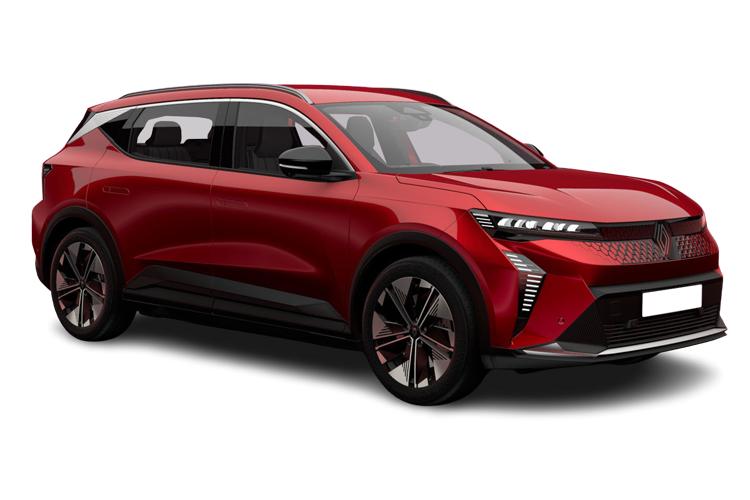
160kW Techno 87kWh Long Range 5dr Auto

POA
Business Lease Price per month (excl VAT) £287.35
![LEAPMOTOR C10 160kW 70kWh 5dr Auto [11 kWCh]](https://cdn.automotus.uk/store/CVD/car/107795/front_view/c10-lmlc-25.jpg)
160kW 70kWh 5dr Auto [11 kWCh]
POA
Business Lease Price per month (excl VAT) £264.83

![PORSCHE TAYCAN 520kW Turbo 105kWh 5dr Auto [5 Seat]](https://cdn.automotus.uk/store/CVD/car/105053/front_view/taycan-turismo-pott-25.jpg)