
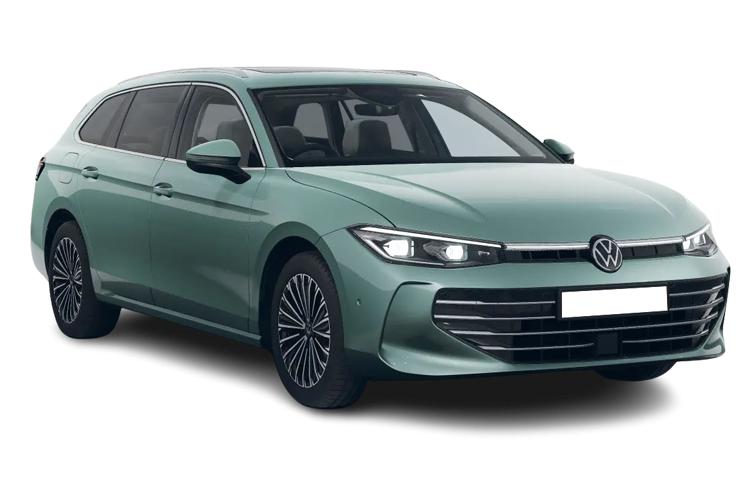
Images are for illustrative purposes only.
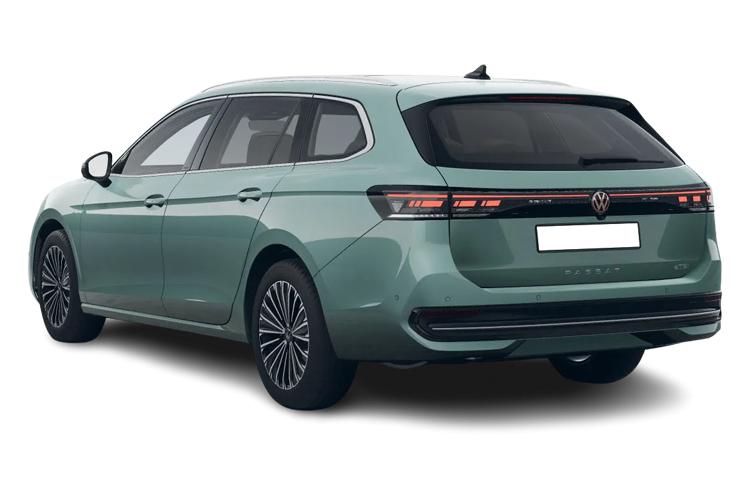

1.5 TSI eHybrid 272 R-Line 5dr DSG
Need some assistance or advice? Call Us 01903 538835


Volkswagen has dramatically improved its Plug-in Hybrid Passat. Jonathan Crouch checks it out.
The ninth generation Volkswagen Passat comes with a much more sophisticated Plug-in Hybrid powertrain boasting a considerably larger battery that allows for a vast improvement in EV driving range. It's enough to almost make this car usable as an EV. Almost.
Suddenly, everybody seems to want a Hybrid. Volkswagen thought that by now, it would be winding down Hybrid model production in favour of EVs; instead, like other mainstream brands, it's going the other way as customer concerns about high EV pricing and a shaky public charging infrastructure make many think again about their planned impending electric vehicle switch. Hence the importance to the ninth generation B9-series Passat range of the eHybrid models we look at here. And why Volkswagen has put such a vast amount of technological effort in improving this car over the rather limited Passat GTE PHEV model it replaced. The brand still doesn't have a self-charging full-Hybrid engine, but there are now two Plug-in Hybrid Passat powertrain options - and, as with all MK9 Passats, this car can only be had as an estate. Might it be a cleverer choice than that mid-sized EV crossover you were thinking about? Let's take a closer look.
In the absence of the kind of self-charging full-Hybrid engine that Volkswagen ought by now to be offering, the alternative to the brand's rather ineffectual eTSI mild hybrid tech in this car is a much improved does of PHEV technology. It's now badged 'eHybrid' and is vastly improved but can still only drive the front wheels. The eHybrid Passats replace the old GTE model's 1.4-litre engine with the eTSI model's 1.5-litre unit and now come in a choice of versions, with either 204PS or 272PS. The key change though, is that both now get a far larger 19.7kWh battery (up from 13.0kWh before), which has more than doubled EV drive range to as much as 82 miles; enough, Volkswagen reckons, to allow most families to use a Passat eHybrid much like an EV. As with the old Passat GTE, there's a 6-speed DSG auto gearbox to replace the 7-speed DSG auto used in the conventionally-engined model. This greater degree of powertrain electrification has been allowed for by this MK9 Passat's new MLB evo platform. Alongside which Volkswagen has also developed an uprated 'DCC Pro' version of its adaptive damping system, with a myriad of settings (15 in all). Previously, 'DCC' in a Passat was quite a crude system that operated with single valves. 'DCC Pro' is a far more sophisticated two-valve set-up that's co-ordinated by the 'Vehicle Dynamics Manger' set-up now added to all versions of this car. For reference, that's the system we first saw on the Golf GTI, which co-ordinates the stability, traction and XDS electronic differential lock functions a bit like the conductor of an orchestra, so that they better work together. You can also pay extra for 'DCC Pro' with mid-level trim and we'd say that it's a worthwhile investment if you really want this car to ride like a Passat should - and it's really needed with the extra weight of the eHybrid system.
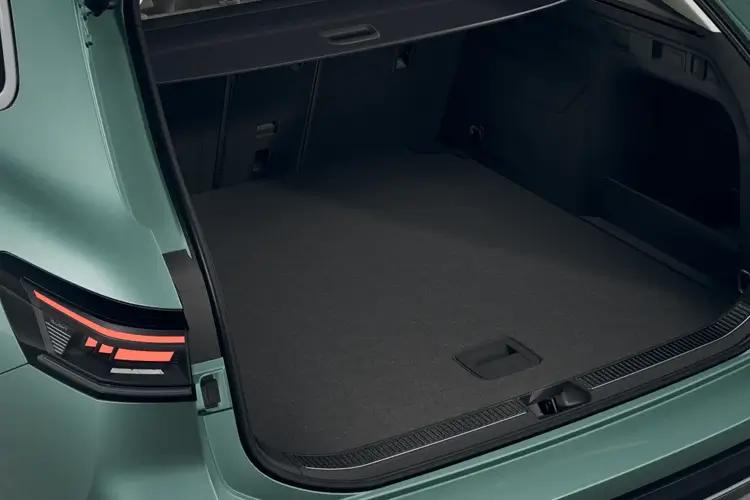
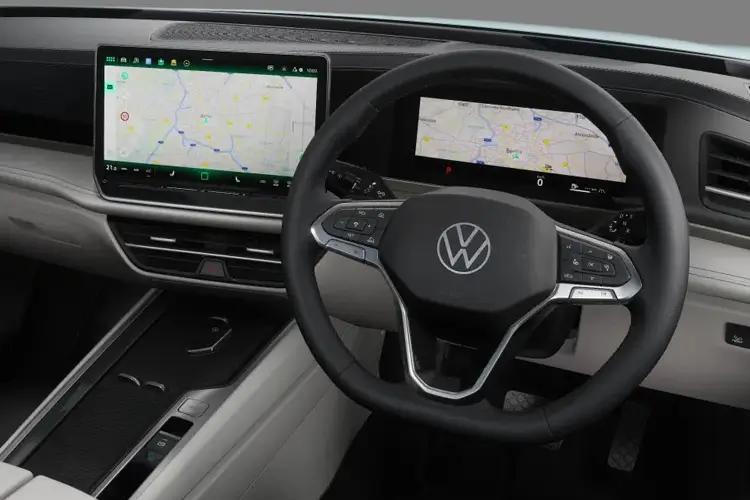
Space is what this ninth generation Passat is all about. For the first time in this model line's history, it's only available as an estate - a station wagon that significantly bigger than its predecessor. The 4,917mm length is 144mm longer than before, plus the car is 20mm wider (1,852mm). To disguise these quite prodigious dimensions and try and make the car look a little less boxy, Volkswagen has reduced roof height by 10mm (1,506mm). There's a deeper front bumper and wheel sizes are up to 19-inches. The long, low look has improved the drag factor to 0.25Cd. Up-front inside, there's a heavily restyled dashboard with a 10.3-inch instrument screen and a separated 12.9-inch infotainment monitor (available at extra cost in bigger 15.0-inch form). The centre screen runs the brand's latest MIB4 software, with its smarter menu structures, higher resolution graphics, a permanent climate control bar and conversational voice control. The slider controls for volume and temperature are carried over but are now back-lit; the gear selector has been moved up to the steering column where the steering wheel now has physical buttons; an arty dashboard panel is enhanced by night-time ambient lighting; and there's a higher feeling of perceived quality. You get more cabin storage space too. Perhaps the biggest cabin change though, is in rear seat legroom. The wheelbase length is up by 50mm and leg space at the back has increased by exactly that amount. It really is palatial now in the rear. Luggage capacity is hit by the PHEV installation, falling from 690 to 530-litres because of the under-floor battery location.
Expect Passat eHybrid pricing to sit in the £44,000-£50,000 bracket, with the estate range split across three model lines - 'Match', 'Elegance' and 'Black Edition'. Customers prepared to avoid base trim will be offered the option of finding £2,500 more to go from the 204PS to the uprated 272PS version of that drivetrain. All variants get LED headlights and taillights, roof rails, smartphone-mirroring and USB-C charging ports. Plus climate control and a rear view camera, along with a 10.3-inch digital instrument display and a 12.9-inch central infotainment touchscreen. Key options include IQ.Matrix LED headlights and various parking tech features. 'Park Assist Plus' steers you in and out of spaces automatically, while 'Park Assist Pro' is able to do this while you're standing outside the vehicle, thanks to the car's capability for remembering the last 50-metres of its journey. The usual 'Travel Assist' semi-autonomous drive tech is available too. Safety kit includes a clever 'Automatic Post-Collision Braking System' that automatically brakes the car down to 6mph after a collision - so if, say, someone hits you and, understandably, you go to pieces, the car will automatically sort itself out. There's also a 'Front Assist' system that at speed, scans the road ahead as you drive for potential accident hazards, warning you if one is detected and automatically braking if necessary. You get that same kind of functionality at urban speeds too, as part of a 'City Emergency Braking' system included as part of the 'Front Assist' package.
A Passat eHybrid costs a lot more money than the old Passat GTE. Still, in return, you now get a Passat that could conceivably operate for you much like a mid-sized EV crossover, provided you restricted yourself to suburban journeys. That's thanks to a considerably bigger 19.7kWh battery than the previous generation Passat PHEV (the GTE model) could offer (up from 13kWh). Which is why EV range potential has jumped hugely from just 36 miles to as much as 82 miles with this updated model. That range extension of course dramatically affects the efficiency figures, which as usual with a PHEV, mainly show how ineffectual the current WLTP ratings cycle is in measuring the true frugality and cleanliness of a Plug-in Hybrid. In both guises, a Passat eHybrid is rated at up to 706.2mpg on the combined cycle. In reality, if you keep the car fully charged, its frugality will probably be somewhere close to what a careful owner would get in a diesel-powered model. Where you will get discernible benefit from the fantasy land stats though is of course when it comes to CO2, with super-low ratings that'll reduce your Benefit-in-Kind tax payments to near-EV levels. The 204PS model is measured at just 8g/km; with the 272PS variant, it's up to 9g/km. A Passat eHybrid would go over 500 miles between fuel stops so, for example, you could travel from London to Paris and back without refuelling. And it would be more if the ordinary Passat model's 66-litre fuel tank wasn't reduced in size to just 50-litres for the eHybrid version. The PHEV system's battery can now be charged at a home wallbox at up to 11kW - a more common 7.4kW wallbox needs around three and a half hours for a full charge; it'd be about five hours from a domestic plug. Out and about, your Passat Plug-in Hybrid can now be DC-charged at up to 50kW (up from a yawningly slow 3.6kW before). Which would allow you to DC-charge a Passat eHybrid from 10-80% in just 23 minutes. But that would be expensive, so you probably prefer to charge to car at home; from a typical 7.4kw walllox, from empty to full, that'll take about four hours.
This Passat eHybrid will make a lot of sense for the right kind of buyer, scoring in the way that it makes something so complicated so universally acceptable. There's no weird bodywork. No confusing digital read-outs. No odd driving technique to master. Here, you simply get a Passat very much as you might have always known it. Just one with a little extra to offer. Yes, differences come with the Plug-in Hybrid technology, but as a driver, you're not forced to embrace them. Indeed, drive this car in full-engine mode and you could conceivably fail to notice anything out of the ordinary about it at all. Everything's so straightforward - so normal. Just leave the thing in its 'Hybrid' setting and you'll get diesel-like fuel economy with a real surging turn of pace when you need it. Even if you never once plugged this car in, you'd probably be perfectly happy with what you had. Right here, right now, thanks to that improved EV range, you might think this is a better choice than a mid-sized EV crossover. And we'd find it difficult to disagree.
Data provided by CAP-HPI database - Ref# 104645
Volkswagen has dramatically improved its Plug-in Hybrid Passat. Jonathan Crouch checks it out.
The ninth generation Volkswagen Passat comes with a much more sophisticated Plug-in Hybrid powertrain boasting a considerably larger battery that allows for a vast improvement in EV driving range. It's enough to almost make this car usable as an EV. Almost.
Suddenly, everybody seems to want a Hybrid. Volkswagen thought that by now, it would be winding down Hybrid model production in favour of EVs; instead, like other mainstream brands, it's going the other way as customer concerns about high EV pricing and a shaky public charging infrastructure make many think again about their planned impending electric vehicle switch. Hence the importance to the ninth generation B9-series Passat range of the eHybrid models we look at here. And why Volkswagen has put such a vast amount of technological effort in improving this car over the rather limited Passat GTE PHEV model it replaced. The brand still doesn't have a self-charging full-Hybrid engine, but there are now two Plug-in Hybrid Passat powertrain options - and, as with all MK9 Passats, this car can only be had as an estate. Might it be a cleverer choice than that mid-sized EV crossover you were thinking about? Let's take a closer look.
In the absence of the kind of self-charging full-Hybrid engine that Volkswagen ought by now to be offering, the alternative to the brand's rather ineffectual eTSI mild hybrid tech in this car is a much improved does of PHEV technology. It's now badged 'eHybrid' and is vastly improved but can still only drive the front wheels. The eHybrid Passats replace the old GTE model's 1.4-litre engine with the eTSI model's 1.5-litre unit and now come in a choice of versions, with either 204PS or 272PS. The key change though, is that both now get a far larger 19.7kWh battery (up from 13.0kWh before), which has more than doubled EV drive range to as much as 82 miles; enough, Volkswagen reckons, to allow most families to use a Passat eHybrid much like an EV. As with the old Passat GTE, there's a 6-speed DSG auto gearbox to replace the 7-speed DSG auto used in the conventionally-engined model. This greater degree of powertrain electrification has been allowed for by this MK9 Passat's new MLB evo platform. Alongside which Volkswagen has also developed an uprated 'DCC Pro' version of its adaptive damping system, with a myriad of settings (15 in all). Previously, 'DCC' in a Passat was quite a crude system that operated with single valves. 'DCC Pro' is a far more sophisticated two-valve set-up that's co-ordinated by the 'Vehicle Dynamics Manger' set-up now added to all versions of this car. For reference, that's the system we first saw on the Golf GTI, which co-ordinates the stability, traction and XDS electronic differential lock functions a bit like the conductor of an orchestra, so that they better work together. You can also pay extra for 'DCC Pro' with mid-level trim and we'd say that it's a worthwhile investment if you really want this car to ride like a Passat should - and it's really needed with the extra weight of the eHybrid system.
Space is what this ninth generation Passat is all about. For the first time in this model line's history, it's only available as an estate - a station wagon that significantly bigger than its predecessor. The 4,917mm length is 144mm longer than before, plus the car is 20mm wider (1,852mm). To disguise these quite prodigious dimensions and try and make the car look a little less boxy, Volkswagen has reduced roof height by 10mm (1,506mm). There's a deeper front bumper and wheel sizes are up to 19-inches. The long, low look has improved the drag factor to 0.25Cd. Up-front inside, there's a heavily restyled dashboard with a 10.3-inch instrument screen and a separated 12.9-inch infotainment monitor (available at extra cost in bigger 15.0-inch form). The centre screen runs the brand's latest MIB4 software, with its smarter menu structures, higher resolution graphics, a permanent climate control bar and conversational voice control. The slider controls for volume and temperature are carried over but are now back-lit; the gear selector has been moved up to the steering column where the steering wheel now has physical buttons; an arty dashboard panel is enhanced by night-time ambient lighting; and there's a higher feeling of perceived quality. You get more cabin storage space too. Perhaps the biggest cabin change though, is in rear seat legroom. The wheelbase length is up by 50mm and leg space at the back has increased by exactly that amount. It really is palatial now in the rear. Luggage capacity is hit by the PHEV installation, falling from 690 to 530-litres because of the under-floor battery location.
Expect Passat eHybrid pricing to sit in the £44,000-£50,000 bracket, with the estate range split across three model lines - 'Match', 'Elegance' and 'Black Edition'. Customers prepared to avoid base trim will be offered the option of finding £2,500 more to go from the 204PS to the uprated 272PS version of that drivetrain. All variants get LED headlights and taillights, roof rails, smartphone-mirroring and USB-C charging ports. Plus climate control and a rear view camera, along with a 10.3-inch digital instrument display and a 12.9-inch central infotainment touchscreen. Key options include IQ.Matrix LED headlights and various parking tech features. 'Park Assist Plus' steers you in and out of spaces automatically, while 'Park Assist Pro' is able to do this while you're standing outside the vehicle, thanks to the car's capability for remembering the last 50-metres of its journey. The usual 'Travel Assist' semi-autonomous drive tech is available too. Safety kit includes a clever 'Automatic Post-Collision Braking System' that automatically brakes the car down to 6mph after a collision - so if, say, someone hits you and, understandably, you go to pieces, the car will automatically sort itself out. There's also a 'Front Assist' system that at speed, scans the road ahead as you drive for potential accident hazards, warning you if one is detected and automatically braking if necessary. You get that same kind of functionality at urban speeds too, as part of a 'City Emergency Braking' system included as part of the 'Front Assist' package.
A Passat eHybrid costs a lot more money than the old Passat GTE. Still, in return, you now get a Passat that could conceivably operate for you much like a mid-sized EV crossover, provided you restricted yourself to suburban journeys. That's thanks to a considerably bigger 19.7kWh battery than the previous generation Passat PHEV (the GTE model) could offer (up from 13kWh). Which is why EV range potential has jumped hugely from just 36 miles to as much as 82 miles with this updated model. That range extension of course dramatically affects the efficiency figures, which as usual with a PHEV, mainly show how ineffectual the current WLTP ratings cycle is in measuring the true frugality and cleanliness of a Plug-in Hybrid. In both guises, a Passat eHybrid is rated at up to 706.2mpg on the combined cycle. In reality, if you keep the car fully charged, its frugality will probably be somewhere close to what a careful owner would get in a diesel-powered model. Where you will get discernible benefit from the fantasy land stats though is of course when it comes to CO2, with super-low ratings that'll reduce your Benefit-in-Kind tax payments to near-EV levels. The 204PS model is measured at just 8g/km; with the 272PS variant, it's up to 9g/km. A Passat eHybrid would go over 500 miles between fuel stops so, for example, you could travel from London to Paris and back without refuelling. And it would be more if the ordinary Passat model's 66-litre fuel tank wasn't reduced in size to just 50-litres for the eHybrid version. The PHEV system's battery can now be charged at a home wallbox at up to 11kW - a more common 7.4kW wallbox needs around three and a half hours for a full charge; it'd be about five hours from a domestic plug. Out and about, your Passat Plug-in Hybrid can now be DC-charged at up to 50kW (up from a yawningly slow 3.6kW before). Which would allow you to DC-charge a Passat eHybrid from 10-80% in just 23 minutes. But that would be expensive, so you probably prefer to charge to car at home; from a typical 7.4kw walllox, from empty to full, that'll take about four hours.
This Passat eHybrid will make a lot of sense for the right kind of buyer, scoring in the way that it makes something so complicated so universally acceptable. There's no weird bodywork. No confusing digital read-outs. No odd driving technique to master. Here, you simply get a Passat very much as you might have always known it. Just one with a little extra to offer. Yes, differences come with the Plug-in Hybrid technology, but as a driver, you're not forced to embrace them. Indeed, drive this car in full-engine mode and you could conceivably fail to notice anything out of the ordinary about it at all. Everything's so straightforward - so normal. Just leave the thing in its 'Hybrid' setting and you'll get diesel-like fuel economy with a real surging turn of pace when you need it. Even if you never once plugged this car in, you'd probably be perfectly happy with what you had. Right here, right now, thanks to that improved EV range, you might think this is a better choice than a mid-sized EV crossover. And we'd find it difficult to disagree.
![SEAT LEON 1.5 e-Hybrid FR 5dr DSG [DAP]](https://cdn.automotus.uk/store/CVD/car/106142/front_view/leon-estate-sels-25.jpg)
1.5 e-Hybrid FR 5dr DSG [DAP]

POA
Business Lease Price per month (excl VAT) £300.33

![JAECOO 8 1.5T SHS Luxury 5dr Auto [7 Seater]](https://cdn.automotus.uk/store/CVD/car/109843/front_view/j8-jcs8-26.jpg)