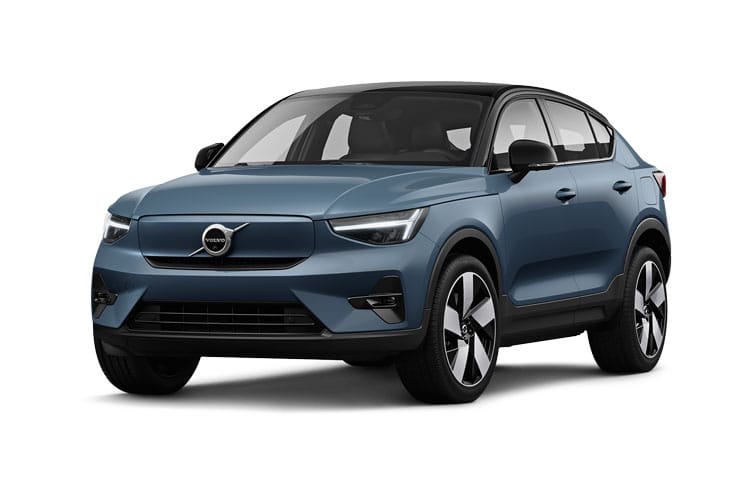
Images are for illustrative purposes only.
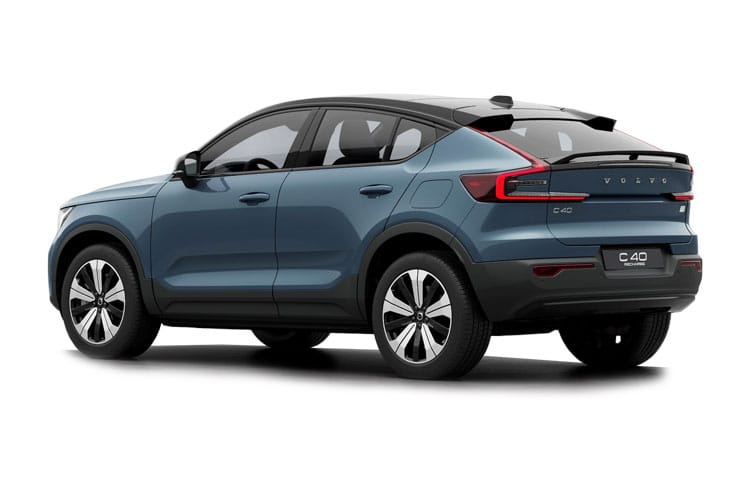
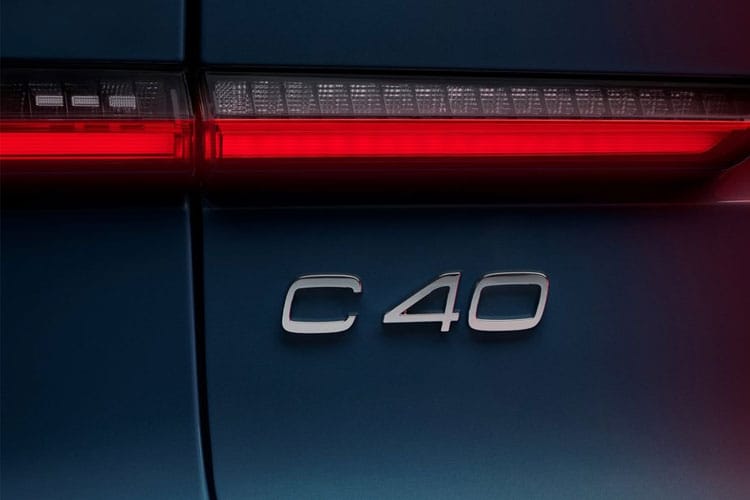

300kW Recharge Twin Ultimate 78kWh 5dr AWD Auto
Need some assistance or advice? Call Us 01903 538835


By Jonathan Crouch
Volvo knows it needs more SUVs. It seeks a more youthful audience. And it has to have more electric models. Back in 2022, this C40 Recharge delivered all three in one package and showed clearly the direction the brand was heading in the future. There's a base front-driven model. And a state-of-the-art fully-electric all-wheel-drive powertrain that offers a WLTP-rated range of 274 miles on a single charge and an output of 408hp. The drawback either way from new was premium pricing but otherwise, a lot of boxes seem to have been ticked here. It could make a decent used buy.
5dr SUV (EV)
Given that Volvo's been making overt noises about full electrification for what seems like decades, it's something of a surprise to realise that this C40 Recharge EV in 2022 introduced the company's very first exclusively electric model line. The C40 borrowed everything that matters from Volvo's very first all-electric model, the XC40 Recharge Pure Electric. But clothed that powertrain with more unique styling and a swept-back coupe-style silhouette. Think of the two models as something akin to what Audi offered in this segment with its Q4 e-tron and Q4 Sportback e-tron SUVs and you'll be somewhere close to what the Swedish maker was trying to do here. Like the XC40 Recharge, the C40 was sold primarily online. And, as with that car (and the last design of this sort that Volvo made, the C30 sold between 2006 and 2013), it rolled down the production lines of Volvo's Belgium factory in Ghent, which by 2021 was gradually transitioning away from producing combustion models. This C40 was itself a transitional car, its CMA platform inevitably slightly compromised by the need to take the combustion engines its cousin the XC40 still offered. But it was an important stepping stone into the bespoke-designed all-electric future that Volvo had planned. And it offered some interesting touches of design that aimed to set it apart in the increasingly over-crowded premium mid-sized EV crossover segment. In Spring 2023, the C40 was fundamentally re-engineered as part of an update that saw some really far-reaching changes; a switch from front to rear-wheel drive for the base 'Single Motor' version; and different front and rear e-motors for the 'Twin Motor' version. Plus faster charging times and higher EV driving range figures across the line-up. The C40 Recharge continued in this form until Spring 2024, when it was re-badged as the 'EC40'. It's the 2022-2023-era C40 Recharge models that we look at here.
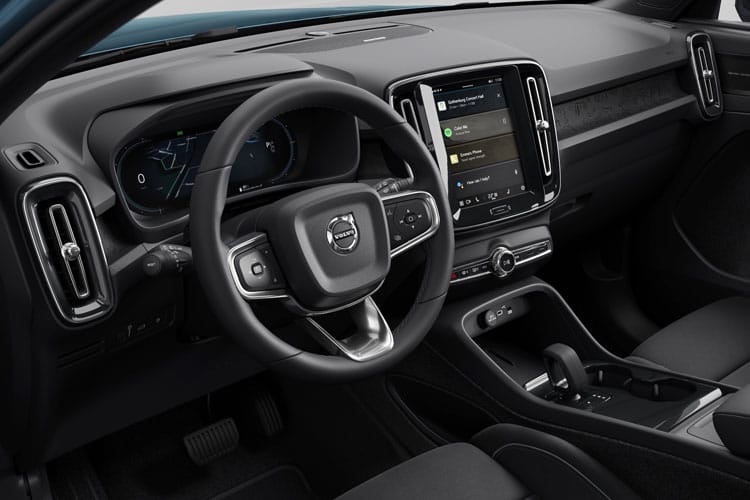
Sometimes it's refreshing to upset an ordered plan. Volvo's route to full-electrification was supposed to be based on full-electric versions of the XC40 combustion models, paving the way to the all-new SPA2-platform EVs that will complete the company's switch to a full-battery range by 2030. But then, one day, a young stylist in T. Jon Mayer's Exterior Design team, Yury Zamkavenka, spontaneously jotted down a sketch of a shape that might widen the XC40 Pure Electric model's appeal. And the C40 Recharge was born. As the 'C'-designated model badge suggests, it's coupe-like, but Volvo prefers to suggest that this letter stands for 'crossover'. Which is probably accurate, this model's squat muscularity emphasised by its tall rear deck and big wheels that sit in black plastic-clad arches. Obviously the major way this car differs from the XC40 is with its roof line, which here slopes 69mm lower. Total length is 6mm shorter than that car too, but the width and wheelbase dimensions are identical. The cabin design was carried over without much revision from the XC40, which inevitably means that on a car potentially costing well over 50% more than the entry-level combustion version of one of those, there are trim elements that feel somewhat out of place at this price point. Volvo did its best to lift things - notably with the striated plastic trimming panels you get with top-level trim, which illuminate translucently at night. The decor that surrounds you is vegan-based - and sustainably-sourced wherever possible, notably in terms of the upholstery and the carpeting. What wasn't sustainable for a modern day EV Volvo was the brand's old Sensus infotainment system for the 9-inch Centre Console Portrait Touch Screen, so that was replaced with a much improved Android infotainment set-up, which includes worldwide navigation to Google Maps, advanced voice recognition by Google Assistant and access to the Google Play Store for a range of in-car apps. The other screen you'll be using is the 12.3-inch 'Progressive Driver Display' you view through the pleasingly chunky three-spoke wheel; you view a speed meter on the left and an EV drive meter on the right. What else? Well over-the-shoulder vision is slightly restricted, but that's alleviated by a rear camera and all-round sensors. As for cabin practicality, well there are plenty of stowage receptacles, plus some nice touches like a lift-out centre bin - and a hook that folds out of the glovebox for handbags or take-aways. In the rear, it's not too bad once you're in, though taller folk will inevitably find their heads brushing the ceiling. Ah yes, the ceiling. It's mainly glass. Which is just as well because otherwise this rear part of the cabin really would feel dark and pokey thanks to that huge D-pillar blind spot we mentioned. It's disappointing that an Electric vehicle with no need for a transmission tunnel nevertheless has one that's so big that it's almost impossible for an adult to sit in the centre at the back. The standard powered tailgate rises to reveal 413-litres of luggage space. That's 39-litres less than you'd get in a comparable XC40 Pure Electric from this period, but 49-litres more than you'd get from a comparable (and near-identically-engineered) Polestar 2. You can fit 853-litres of luggage into a C40 if you load to the roof. If you need more room, then a ski-hatch is provided for longer items. Which is some compensation for the fact that you can't have the useful 40:20:40 rear seatback split that some rivals offer. Fold the rear bench forward and up to 853-litres of total capacity is revealed - or up to 1,205-litres if you load to the roof. Because no engine is needed beneath the clamshell bonnet, Volvo has used the space to create a 'frunk', a 31-litre space that's perfect for the two provided charge leads.
Please contact us for an exact up-to-date valuation.
There aren't many major issues here, other than a few electrical and software issues; go thoroughly over all the powered and infotainment functions of the car you're looking at. Eventually, when the battery is on its way out, you'll obviously find that it won't go as far on each charge - and when it starts to run low on charge, you'll find that the car will particularly start to struggle going uphill. If the car won't charge, it could be a problem with your home electrics (or those at the public charge point you're using). Check the charge light to make sure that electricity really is going through the charge port. And make sure there really is charge in the socket you're using to power from - plug something else into it to see - say, your 'phone. If that charges OK, it could be that your charging cable is demanding too much power, so try another power source. Another problem could be that the circuit may have tripped due to a circuit overload. Or perhaps there could be a problem with the charge cable: this needs to be cared for properly. Repeatedly driving over it (as previous owners may conceivably have done) will damage it eventually. Make sure you do a charge-up before signing for the car you're looking at. When you do this, make sure that when you plug in to start the charge cycle you hear the charge port and the cable locking and engaging as they should; that's all part of the charger basically confirming with the car's onboard computer that everything's good to go before releasing power. But if the charging cable fails to lock as it should, then that won't happen. If there is a failure to lock, the issue could be actuator failure, caused by a blown fuse. Otherwise, it's just the usual things; look out for stone chips and alloy wheel scratches. And insist on a fully stamped-up service history.
(approx based on a 2023 C40 Recharge Twin Motor ex VAT) A wiper blade will cost you from about £11 to around £34. Front brake pads sit in the £67 bracket; rears will sit in the £33 bracket. Front brake discs sit in the £58 bracket; a pair of rear discs are about £87. A pollen filter is around £18-£31.
Customers choose between two flavours of C40: either the base front-driven 'Recharge' version, which uses a 69kWh battery powering a 231hp electric motor and offers a 269 mile range. Or the AWD 'Recharge Twin' version, uses a larger 78kWh battery pack powering a motor on each axle, delivering a 408hp output and a 274 mile driving range. The front-driven version will be quite sufficient for most, but the 660Nm of the top 'Twin' version is quite amusing to have beneath your right foot, if rather irrelevant for a car of this kind. To get the claimed mileage, you'll need to engage what the Swedish maker calls 'One Pedal Drive', selectable from the 'Driving' menu provided on the centre-dash screen. This dramatically increases the regenerative braking effect when you come off the throttle, to the point where, as advertised, the brake pedal will hardly ever be needed. You're not often going to be often tempted to hurl your C40 about, partly because of its prodigious kerb weight (over 2.1-tonnes in the 'Twin' model) and partly because of the rather over-light steering that even a 'firm' mode option can't do much about. Still, that won't both most likely customers, who'll be more interested in the way that progress at speed, even over really poor surfaces, is remarkably assured. Lower frequency pot holes and speed humps though, can catch the damping out a bit. At a cruise, you might note that there's a bit more tyre roar than is usual in an EV, but compensation comes in the form of Volvo's 'Pilot Assist' driver assistance system for steering, acceleration and braking support, there to help take the strain during long motorway journeys or when sitting in traffic. This improved version of this set-up the C40 got uses Google Maps for information like speed limits and bends in the road to improve its functionality. Whichever C40 Recharge model you choose, charging times are competitive for the two batteries. The 69kWh one in the front-driven 'Recharge' variant (67kWh usable) charges at up to 130kW. The 78kWh unit in this AWD 'Recharge Twin' (75kWh usable) charges at up to 130kW. Either way, a 10-80% battery replenishment can take just 37 minutes using a public DC fast charger. A full charge using the onboard AC charger plugged into your 32 amp garage wallbox will take 12 hours.
You can't help but feel that many of those who choose a C40 are people would have also been quite satisfied with the XC40 Recharge Pure Electric model it's based upon. From launch, Volvo talked of the need for the kind of younger demographic who'll presumably find the C40's more coupe-style looks appealing. But then adds that it expects older folk to like it too. Ultimately, no one is quite sure how precisely the EV market is going to develop. But Volvo was keen to make sure all the bases were covered. We're not completely sure that all of them were here. The C40 will appeal to Volvo loyalists very much, but whether it has the crossover charm to win over a Teutonic audience on the used market is much less certain. There are various reasons for that. We're not absolutely sure that all aspects of cabin quality are quite good enough for a car of this price. And we can't really see why the Twin Motor version needs to be so powerful: the more affordable Single Motor variant is all you really need. Overall, our preference in this category would be for a Polestar 2, which probably wouldn't upset Volvo very much, but the C40 undeniably offers something a little different, not only from that car but also in the segment as a whole. For that, we like it: you might too.
Data provided by CAP-HPI database - Ref# 99642
By Jonathan Crouch
Volvo knows it needs more SUVs. It seeks a more youthful audience. And it has to have more electric models. Back in 2022, this C40 Recharge delivered all three in one package and showed clearly the direction the brand was heading in the future. There's a base front-driven model. And a state-of-the-art fully-electric all-wheel-drive powertrain that offers a WLTP-rated range of 274 miles on a single charge and an output of 408hp. The drawback either way from new was premium pricing but otherwise, a lot of boxes seem to have been ticked here. It could make a decent used buy.
5dr SUV (EV)
Given that Volvo's been making overt noises about full electrification for what seems like decades, it's something of a surprise to realise that this C40 Recharge EV in 2022 introduced the company's very first exclusively electric model line. The C40 borrowed everything that matters from Volvo's very first all-electric model, the XC40 Recharge Pure Electric. But clothed that powertrain with more unique styling and a swept-back coupe-style silhouette. Think of the two models as something akin to what Audi offered in this segment with its Q4 e-tron and Q4 Sportback e-tron SUVs and you'll be somewhere close to what the Swedish maker was trying to do here. Like the XC40 Recharge, the C40 was sold primarily online. And, as with that car (and the last design of this sort that Volvo made, the C30 sold between 2006 and 2013), it rolled down the production lines of Volvo's Belgium factory in Ghent, which by 2021 was gradually transitioning away from producing combustion models. This C40 was itself a transitional car, its CMA platform inevitably slightly compromised by the need to take the combustion engines its cousin the XC40 still offered. But it was an important stepping stone into the bespoke-designed all-electric future that Volvo had planned. And it offered some interesting touches of design that aimed to set it apart in the increasingly over-crowded premium mid-sized EV crossover segment. In Spring 2023, the C40 was fundamentally re-engineered as part of an update that saw some really far-reaching changes; a switch from front to rear-wheel drive for the base 'Single Motor' version; and different front and rear e-motors for the 'Twin Motor' version. Plus faster charging times and higher EV driving range figures across the line-up. The C40 Recharge continued in this form until Spring 2024, when it was re-badged as the 'EC40'. It's the 2022-2023-era C40 Recharge models that we look at here.
Sometimes it's refreshing to upset an ordered plan. Volvo's route to full-electrification was supposed to be based on full-electric versions of the XC40 combustion models, paving the way to the all-new SPA2-platform EVs that will complete the company's switch to a full-battery range by 2030. But then, one day, a young stylist in T. Jon Mayer's Exterior Design team, Yury Zamkavenka, spontaneously jotted down a sketch of a shape that might widen the XC40 Pure Electric model's appeal. And the C40 Recharge was born. As the 'C'-designated model badge suggests, it's coupe-like, but Volvo prefers to suggest that this letter stands for 'crossover'. Which is probably accurate, this model's squat muscularity emphasised by its tall rear deck and big wheels that sit in black plastic-clad arches. Obviously the major way this car differs from the XC40 is with its roof line, which here slopes 69mm lower. Total length is 6mm shorter than that car too, but the width and wheelbase dimensions are identical. The cabin design was carried over without much revision from the XC40, which inevitably means that on a car potentially costing well over 50% more than the entry-level combustion version of one of those, there are trim elements that feel somewhat out of place at this price point. Volvo did its best to lift things - notably with the striated plastic trimming panels you get with top-level trim, which illuminate translucently at night. The decor that surrounds you is vegan-based - and sustainably-sourced wherever possible, notably in terms of the upholstery and the carpeting. What wasn't sustainable for a modern day EV Volvo was the brand's old Sensus infotainment system for the 9-inch Centre Console Portrait Touch Screen, so that was replaced with a much improved Android infotainment set-up, which includes worldwide navigation to Google Maps, advanced voice recognition by Google Assistant and access to the Google Play Store for a range of in-car apps. The other screen you'll be using is the 12.3-inch 'Progressive Driver Display' you view through the pleasingly chunky three-spoke wheel; you view a speed meter on the left and an EV drive meter on the right. What else? Well over-the-shoulder vision is slightly restricted, but that's alleviated by a rear camera and all-round sensors. As for cabin practicality, well there are plenty of stowage receptacles, plus some nice touches like a lift-out centre bin - and a hook that folds out of the glovebox for handbags or take-aways. In the rear, it's not too bad once you're in, though taller folk will inevitably find their heads brushing the ceiling. Ah yes, the ceiling. It's mainly glass. Which is just as well because otherwise this rear part of the cabin really would feel dark and pokey thanks to that huge D-pillar blind spot we mentioned. It's disappointing that an Electric vehicle with no need for a transmission tunnel nevertheless has one that's so big that it's almost impossible for an adult to sit in the centre at the back. The standard powered tailgate rises to reveal 413-litres of luggage space. That's 39-litres less than you'd get in a comparable XC40 Pure Electric from this period, but 49-litres more than you'd get from a comparable (and near-identically-engineered) Polestar 2. You can fit 853-litres of luggage into a C40 if you load to the roof. If you need more room, then a ski-hatch is provided for longer items. Which is some compensation for the fact that you can't have the useful 40:20:40 rear seatback split that some rivals offer. Fold the rear bench forward and up to 853-litres of total capacity is revealed - or up to 1,205-litres if you load to the roof. Because no engine is needed beneath the clamshell bonnet, Volvo has used the space to create a 'frunk', a 31-litre space that's perfect for the two provided charge leads.
Please contact us for an exact up-to-date valuation.
There aren't many major issues here, other than a few electrical and software issues; go thoroughly over all the powered and infotainment functions of the car you're looking at. Eventually, when the battery is on its way out, you'll obviously find that it won't go as far on each charge - and when it starts to run low on charge, you'll find that the car will particularly start to struggle going uphill. If the car won't charge, it could be a problem with your home electrics (or those at the public charge point you're using). Check the charge light to make sure that electricity really is going through the charge port. And make sure there really is charge in the socket you're using to power from - plug something else into it to see - say, your 'phone. If that charges OK, it could be that your charging cable is demanding too much power, so try another power source. Another problem could be that the circuit may have tripped due to a circuit overload. Or perhaps there could be a problem with the charge cable: this needs to be cared for properly. Repeatedly driving over it (as previous owners may conceivably have done) will damage it eventually. Make sure you do a charge-up before signing for the car you're looking at. When you do this, make sure that when you plug in to start the charge cycle you hear the charge port and the cable locking and engaging as they should; that's all part of the charger basically confirming with the car's onboard computer that everything's good to go before releasing power. But if the charging cable fails to lock as it should, then that won't happen. If there is a failure to lock, the issue could be actuator failure, caused by a blown fuse. Otherwise, it's just the usual things; look out for stone chips and alloy wheel scratches. And insist on a fully stamped-up service history.
(approx based on a 2023 C40 Recharge Twin Motor ex VAT) A wiper blade will cost you from about £11 to around £34. Front brake pads sit in the £67 bracket; rears will sit in the £33 bracket. Front brake discs sit in the £58 bracket; a pair of rear discs are about £87. A pollen filter is around £18-£31.
Customers choose between two flavours of C40: either the base front-driven 'Recharge' version, which uses a 69kWh battery powering a 231hp electric motor and offers a 269 mile range. Or the AWD 'Recharge Twin' version, uses a larger 78kWh battery pack powering a motor on each axle, delivering a 408hp output and a 274 mile driving range. The front-driven version will be quite sufficient for most, but the 660Nm of the top 'Twin' version is quite amusing to have beneath your right foot, if rather irrelevant for a car of this kind. To get the claimed mileage, you'll need to engage what the Swedish maker calls 'One Pedal Drive', selectable from the 'Driving' menu provided on the centre-dash screen. This dramatically increases the regenerative braking effect when you come off the throttle, to the point where, as advertised, the brake pedal will hardly ever be needed. You're not often going to be often tempted to hurl your C40 about, partly because of its prodigious kerb weight (over 2.1-tonnes in the 'Twin' model) and partly because of the rather over-light steering that even a 'firm' mode option can't do much about. Still, that won't both most likely customers, who'll be more interested in the way that progress at speed, even over really poor surfaces, is remarkably assured. Lower frequency pot holes and speed humps though, can catch the damping out a bit. At a cruise, you might note that there's a bit more tyre roar than is usual in an EV, but compensation comes in the form of Volvo's 'Pilot Assist' driver assistance system for steering, acceleration and braking support, there to help take the strain during long motorway journeys or when sitting in traffic. This improved version of this set-up the C40 got uses Google Maps for information like speed limits and bends in the road to improve its functionality. Whichever C40 Recharge model you choose, charging times are competitive for the two batteries. The 69kWh one in the front-driven 'Recharge' variant (67kWh usable) charges at up to 130kW. The 78kWh unit in this AWD 'Recharge Twin' (75kWh usable) charges at up to 130kW. Either way, a 10-80% battery replenishment can take just 37 minutes using a public DC fast charger. A full charge using the onboard AC charger plugged into your 32 amp garage wallbox will take 12 hours.
You can't help but feel that many of those who choose a C40 are people would have also been quite satisfied with the XC40 Recharge Pure Electric model it's based upon. From launch, Volvo talked of the need for the kind of younger demographic who'll presumably find the C40's more coupe-style looks appealing. But then adds that it expects older folk to like it too. Ultimately, no one is quite sure how precisely the EV market is going to develop. But Volvo was keen to make sure all the bases were covered. We're not completely sure that all of them were here. The C40 will appeal to Volvo loyalists very much, but whether it has the crossover charm to win over a Teutonic audience on the used market is much less certain. There are various reasons for that. We're not absolutely sure that all aspects of cabin quality are quite good enough for a car of this price. And we can't really see why the Twin Motor version needs to be so powerful: the more affordable Single Motor variant is all you really need. Overall, our preference in this category would be for a Polestar 2, which probably wouldn't upset Volvo very much, but the C40 undeniably offers something a little different, not only from that car but also in the segment as a whole. For that, we like it: you might too.
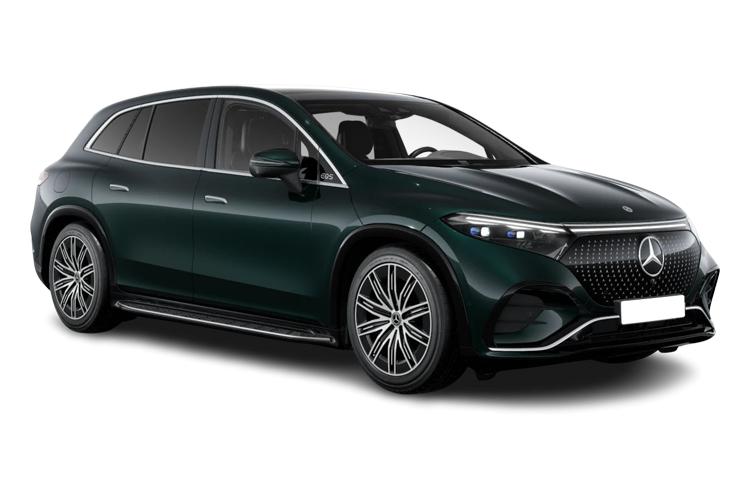
EQS 450 4M 265kW AMG Line Premium+ 118kWh 5dr Auto

POA
POA
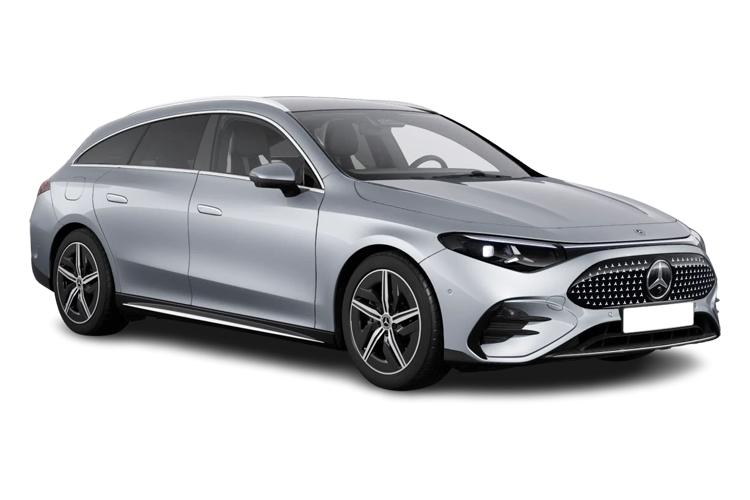
CLA 250+ 200kW EQ Tech Sport 85kWh 5dr Auto
POA
POA