
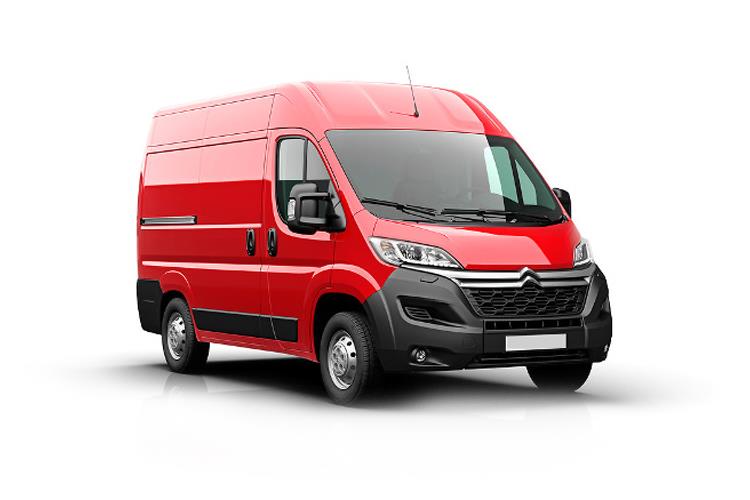
Images are for illustrative purposes only.

88kW 75kWh Chassis Cab Enterprise Auto
Need some assistance or advice? Call Us 01903 538835


By Jonathan Crouch
In 2014, Citroen restyled and revitalised its largest van, the Relay, the chevron brand's clone of its PSA Group cousin, the Peugeot Boxer. From launch, both the Boxer and this Relay claimed the highest payloads in the large van sector, along with class-leading load-carrying practicality and low cost of operation. Equipment levels were also superior to those of obvious rivals. In other words, it aims to score in the areas that really matter to business users. Let's check this 2014-2024-era Relay out as a used buy.
Medium-sized van (2.2 diesel/Full-Electric)
The Relay has been with us in one form or another since 1994 when it replaced the boxy old Italian-built C25 model. The Relay-name is UK-specific, this van being known as the 'Jumper' elsewhere in Europe. The MK2 model dates back to 2006 but was substantially updated in mid-2014 to create the facelifted version we're going to look at here. As before, it shared its design and its engines with rival Peugeot's Boxer; to begin with the similar-looking Fiat Ducato from this era merely borrowed this Citroen's body and suspension. From launch, Citroen boldly claimed sector-leading payloads compared to rivals and reckoned this post-2014-era model could offer top-of-the-class standards of driver comfort, safety, convenience and efficiency. An all-electric e-Relay model arrived in 2022. The Relay (and e-Relay) sold in this form until early 2024, when they were substantially updated. It's the pre-facelift 2014-2024-era versions though, that we concentrate on here.
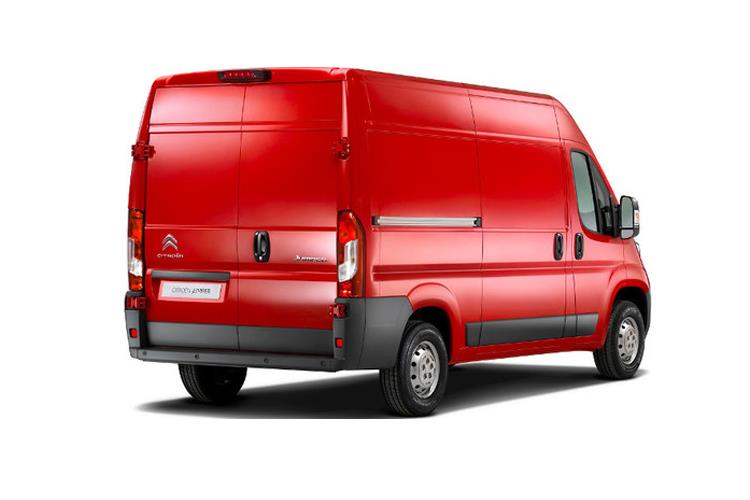
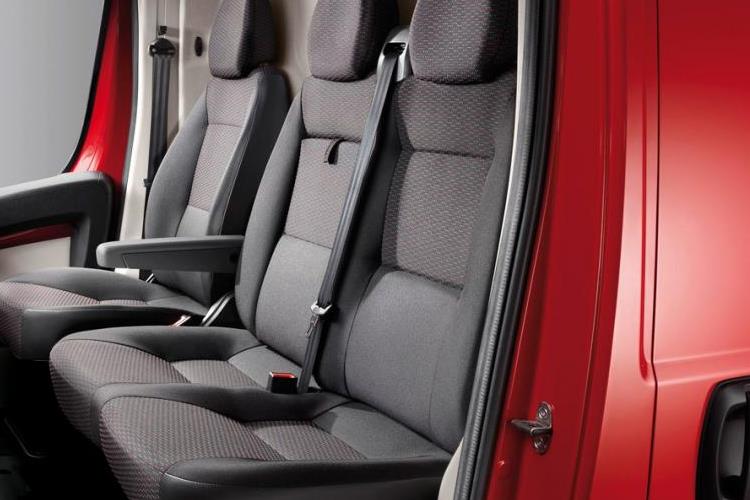
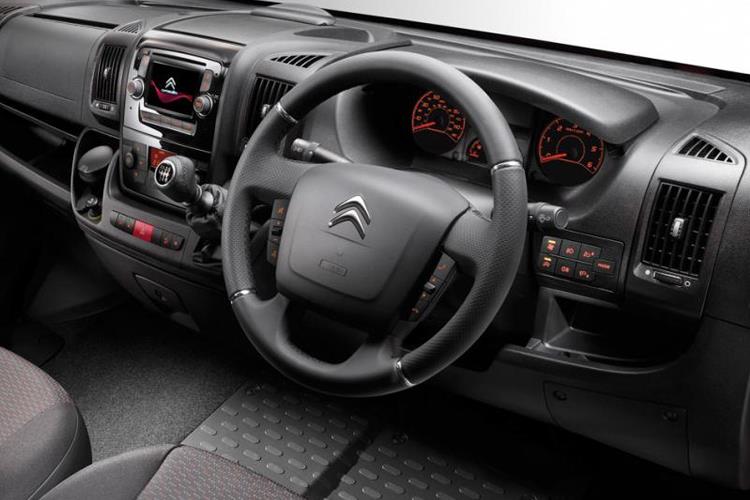
Conventionally-styled this van is not. Instead, the Relay has the kind of front end which draws your gaze this way and that. The headlights and front grille were re-styled in 2014 for the improved version of this MK2 model, inspired by the then-current range of Citroen cars, with large chevrons that blend into the chrome strips on the nose. Inside the cab, the design is less dramatic than that of the exterior but it is thoughtfully executed. A fresh addition for this improved post-2014-era MK2 model Relay was a 5-inch dash-mounted touchscreen infotainment display screen which makes the vehicle feel more modern inside. Build quality isn't quite as solid as some pricier rivals but it all feels built to last, with plenty of thought given to day-to-day usability. On to practicalities. The junior version of this Relay is the L1H1 (short wheelbase, low roof) panel van which could be specified in 3.0 and 3.3 tonne gross weights, and has a load space volume of 8.0 m3. Despite this being the smallest van in the range, it still has a load length of 2670mm, an internal load compartment height of 1662mm, a maximum load width of 1870mm and a between-the-wheel arches dimension of 1422mm - wide enough for an 8ft x 4ft sheet to be loaded flat on the floor. Graduate to the medium wheelbase L2 model and you can get both standard and high roof formats, giving respective load volumes of 10m3 and 11.5m3. The Relay L2 panel van has a load deck length of 3120mm and either an interior load height of 1662mm (H1) or 1932mm (H2). It could also be specified in 3.3, 3.5 and 4.005 tonne gross weight versions. Should you really need some big capacity, the long wheelbase L3 format will be the ticket. In this configuration, the Relay has a load deck length of 3705mm and an internal load height of 1932mm, which gives a 13 m3 capacity. The largest Relay panel vans are the 3.5 and 4.005 tonne L4H2 and L4H3 models, which have a load deck length of 4070mm and a 17.0m3 capacity. If you're opting for the all-electric e-Relay, you'll be pleased to find that its EV powertrain doesn't compromise load volume. That's because the drive system's lithium-ion battery is mounted under the floor between the front and rear axle and so doesn't impinge on the cargo bay. On to running cost efficiency. The 2.2 litre turbo-charged diesel engines offer reasonable fuel economy. The 120hp variant manages up to around 35mpg on the WLTP cycle in regular use, with the 140hp unit much the same. Even the gutsier 165hp powerplant only falls as far as around 31mpg.
Please contact us for an exact up-to-date valuation.
These vans are pretty tough, but there are a few things you'll need to look out for. It's the usual advice with large LCVs to buy on condition rather than year and look for a van that has tended to have performed lightweight delivery duties rather than consistently butting up against its payload limits. Make sure that all the connectivity works properly - Bluetooth-linking and so on. Check for load bay scuffs and scratches. And insist on a fully stamped-up service history.
(approx based on a Relay 2.2D 165hp - 2022) Air filters are around £23-£41. Oil filters are around £8. Front brake pads are around £53. A pair of front brake discs cost in the £72 bracket. A pair of rear brake discs are typically in the £82 bracket. Wiper blades are around £40.
So what's it like to drive? Well, for a start, there's a big climb up into the cab, which means that the driver has great panoramic views of the road ahead. Beneath your right foot, you've a choice of three common rail HDi four cylinder 16-valve 2.2-litre diesel engines. First, there's a 110bhp model, or you can choose the version most operators went for, which develops 130bhp. There's also a 150bhp version of the same engine. Alternatively, there's the all-electric e-Relay model introduced in 2022. Here, there's a choice of batteries, but the base 37kWh one will only work for city-based operators because its driving range is restricted to just 72 miles. That increases to 139 miles with the larger 70kWh battery. This EV model's under-floor battery positioning results in a low centre of gravity, improving cornering and stability even when fully loaded. A sophisticated regenerative braking system that recovers energy when slowing is said to increase the e-Relay's efficiency.
And in summary? Well it's true that this improved MK2 Relay's build quality still wasn't quite a match for more expensive competitors, but it was much improved. Ultimately, there may be more desirable large panel vans out there from the 2014-2024 period, but few make more sense than this Relay. If you thought all big LCVs were the same, perhaps it's time you concentrated on how manufacturers really differentiate their products. On that score, Citroen did a decent job with this model. It deserves your attention.
Data provided by CAP-HPI database - Ref# 55888
By Jonathan Crouch
In 2014, Citroen restyled and revitalised its largest van, the Relay, the chevron brand's clone of its PSA Group cousin, the Peugeot Boxer. From launch, both the Boxer and this Relay claimed the highest payloads in the large van sector, along with class-leading load-carrying practicality and low cost of operation. Equipment levels were also superior to those of obvious rivals. In other words, it aims to score in the areas that really matter to business users. Let's check this 2014-2024-era Relay out as a used buy.
Medium-sized van (2.2 diesel/Full-Electric)
The Relay has been with us in one form or another since 1994 when it replaced the boxy old Italian-built C25 model. The Relay-name is UK-specific, this van being known as the 'Jumper' elsewhere in Europe. The MK2 model dates back to 2006 but was substantially updated in mid-2014 to create the facelifted version we're going to look at here. As before, it shared its design and its engines with rival Peugeot's Boxer; to begin with the similar-looking Fiat Ducato from this era merely borrowed this Citroen's body and suspension. From launch, Citroen boldly claimed sector-leading payloads compared to rivals and reckoned this post-2014-era model could offer top-of-the-class standards of driver comfort, safety, convenience and efficiency. An all-electric e-Relay model arrived in 2022. The Relay (and e-Relay) sold in this form until early 2024, when they were substantially updated. It's the pre-facelift 2014-2024-era versions though, that we concentrate on here.
Conventionally-styled this van is not. Instead, the Relay has the kind of front end which draws your gaze this way and that. The headlights and front grille were re-styled in 2014 for the improved version of this MK2 model, inspired by the then-current range of Citroen cars, with large chevrons that blend into the chrome strips on the nose. Inside the cab, the design is less dramatic than that of the exterior but it is thoughtfully executed. A fresh addition for this improved post-2014-era MK2 model Relay was a 5-inch dash-mounted touchscreen infotainment display screen which makes the vehicle feel more modern inside. Build quality isn't quite as solid as some pricier rivals but it all feels built to last, with plenty of thought given to day-to-day usability. On to practicalities. The junior version of this Relay is the L1H1 (short wheelbase, low roof) panel van which could be specified in 3.0 and 3.3 tonne gross weights, and has a load space volume of 8.0 m3. Despite this being the smallest van in the range, it still has a load length of 2670mm, an internal load compartment height of 1662mm, a maximum load width of 1870mm and a between-the-wheel arches dimension of 1422mm - wide enough for an 8ft x 4ft sheet to be loaded flat on the floor. Graduate to the medium wheelbase L2 model and you can get both standard and high roof formats, giving respective load volumes of 10m3 and 11.5m3. The Relay L2 panel van has a load deck length of 3120mm and either an interior load height of 1662mm (H1) or 1932mm (H2). It could also be specified in 3.3, 3.5 and 4.005 tonne gross weight versions. Should you really need some big capacity, the long wheelbase L3 format will be the ticket. In this configuration, the Relay has a load deck length of 3705mm and an internal load height of 1932mm, which gives a 13 m3 capacity. The largest Relay panel vans are the 3.5 and 4.005 tonne L4H2 and L4H3 models, which have a load deck length of 4070mm and a 17.0m3 capacity. If you're opting for the all-electric e-Relay, you'll be pleased to find that its EV powertrain doesn't compromise load volume. That's because the drive system's lithium-ion battery is mounted under the floor between the front and rear axle and so doesn't impinge on the cargo bay. On to running cost efficiency. The 2.2 litre turbo-charged diesel engines offer reasonable fuel economy. The 120hp variant manages up to around 35mpg on the WLTP cycle in regular use, with the 140hp unit much the same. Even the gutsier 165hp powerplant only falls as far as around 31mpg.
Please contact us for an exact up-to-date valuation.
These vans are pretty tough, but there are a few things you'll need to look out for. It's the usual advice with large LCVs to buy on condition rather than year and look for a van that has tended to have performed lightweight delivery duties rather than consistently butting up against its payload limits. Make sure that all the connectivity works properly - Bluetooth-linking and so on. Check for load bay scuffs and scratches. And insist on a fully stamped-up service history.
(approx based on a Relay 2.2D 165hp - 2022) Air filters are around £23-£41. Oil filters are around £8. Front brake pads are around £53. A pair of front brake discs cost in the £72 bracket. A pair of rear brake discs are typically in the £82 bracket. Wiper blades are around £40.
So what's it like to drive? Well, for a start, there's a big climb up into the cab, which means that the driver has great panoramic views of the road ahead. Beneath your right foot, you've a choice of three common rail HDi four cylinder 16-valve 2.2-litre diesel engines. First, there's a 110bhp model, or you can choose the version most operators went for, which develops 130bhp. There's also a 150bhp version of the same engine. Alternatively, there's the all-electric e-Relay model introduced in 2022. Here, there's a choice of batteries, but the base 37kWh one will only work for city-based operators because its driving range is restricted to just 72 miles. That increases to 139 miles with the larger 70kWh battery. This EV model's under-floor battery positioning results in a low centre of gravity, improving cornering and stability even when fully loaded. A sophisticated regenerative braking system that recovers energy when slowing is said to increase the e-Relay's efficiency.
And in summary? Well it's true that this improved MK2 Relay's build quality still wasn't quite a match for more expensive competitors, but it was much improved. Ultimately, there may be more desirable large panel vans out there from the 2014-2024 period, but few make more sense than this Relay. If you thought all big LCVs were the same, perhaps it's time you concentrated on how manufacturers really differentiate their products. On that score, Citroen did a decent job with this model. It deserves your attention.
