
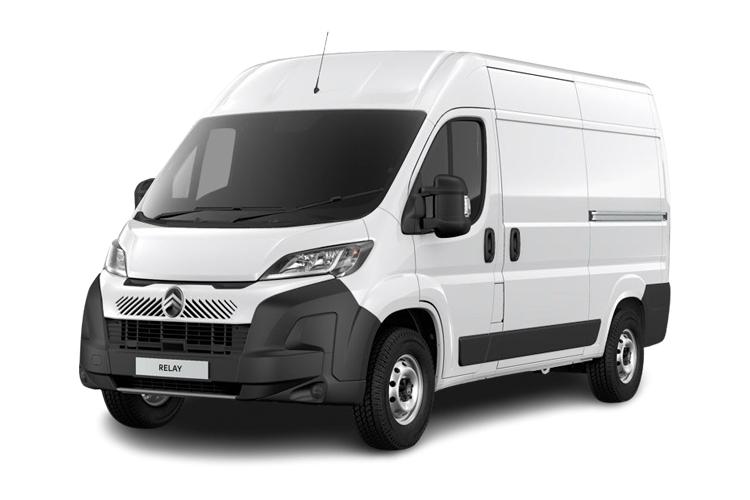
Images are for illustrative purposes only.
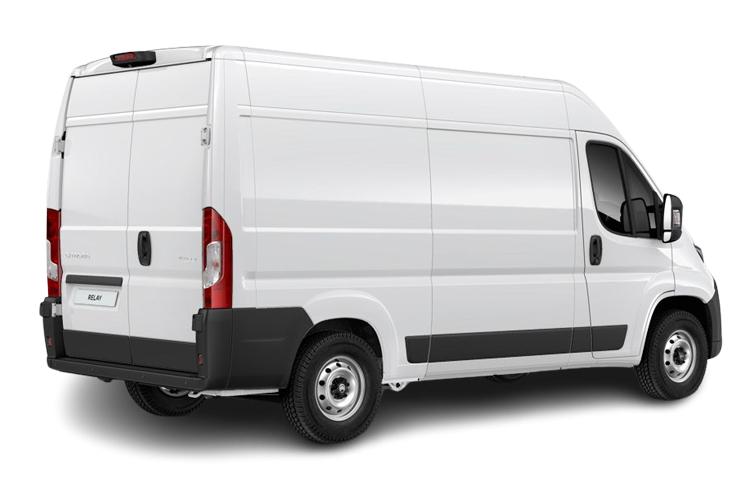
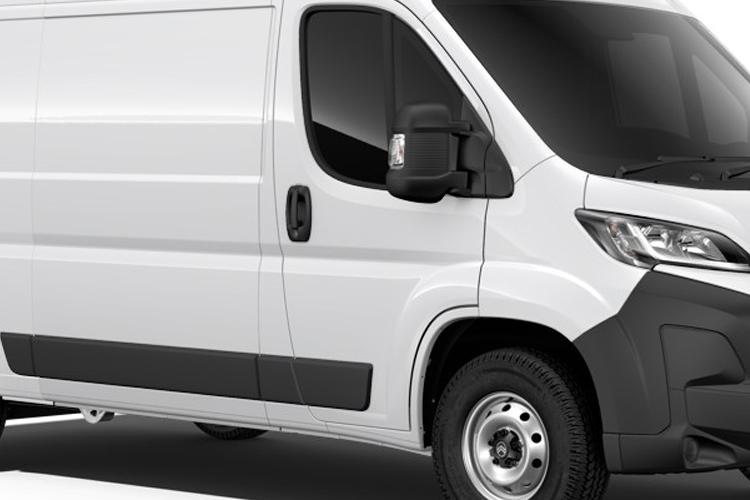
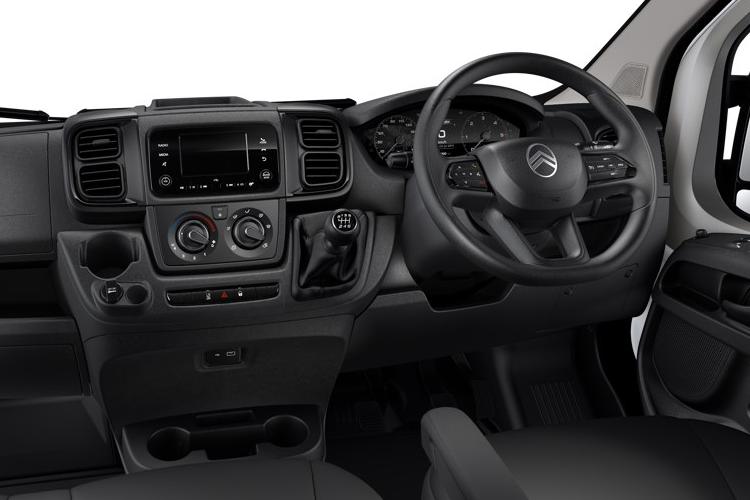

200kW 110kWh H3 Van Enterprise Auto
Need some assistance or advice? Call Us 01903 538835


In this improved form, Citroen's e-Relay will suit a much wider business demographic. Jonathan Crouch drives it.
Citroen has much improved the full-electric version of its largest van, the Relay, with a larger battery, a gutsier electric motor and a bigger 22kW onboard charger. The e-Relay shares its design and drivetrain with four key rivals from Peugeot, Vauxhall, Fiat and Toyota. And now offers the option of a heavier payload, though it still isn't as great as the diesel version. Cargo capacity isn't compromised by the EV installation and charging speeds are relatively fast by class standards.
The Stellantis Group has taken its time getting into gear with its large EV van models, all of which first arrived back in 2022, including the original version of the big LCV we look at here, the Citroen e-Relay. It directly shares its design and electric engineering with four other segment rivals, Peugeot's E-Boxer, Vauxhall's Movano Electric, Fiat's E-Ducato and Toyota's Proace Max Electric. The original e-Relay used a Turkish-installed EV drivetrain that left it woefully under-powered and under-endowed with range compared to competitors like Ford's E-Transit, so lots of work has gone into improving this significantly updated version. This now gets a vastly bigger 110kWh battery, which also brings with it a vastly improved level of EV driving range. Plus in this updated form, this now-smarter-looking big EV van can take much heavier loads too. Let's take a closer look.
The original e-Relay felt a bit feeble for an EV van - but that's all changed now. It now gets a much larger 110kWh battery (to replace the previous 37kWh and 70kWh battery options); and that new battery pack energises a much more powerful 270PS motor (up from 122PS before). As a result, pulling power rises from 260 to 410Nm. The performance and range of the e-Relay can be optimised depending on conditions thanks to three driving modes, and features paddles located just behind the steering wheel that activate four levels of regenerative deceleration, thus enhancing range - now rated at between 235 and 262 miles (up from 154 miles in the old 75kWh model). The steering's quite a old-fashioned set-up that's quite heavy at low speeds, but lightens up at faster ones. Whatever e-Relay variant you select, around town, this van can make light work of tricky urban situations; the 'L3H2' variant offers a relatively tight 14.14m turning circle between kerbs.
Apart from the badging and the charging flap, there are no exterior giveaways to this e-Relay's full-EV status. The front end of this updated e-Relay has been redesigned to add a bit of personality while improving this van's aerodynamic characteristics. The bumper, radiator grille (now the same colour as the bodywork) and rear-view mirrors have also been redesigned with this in mind. The black lower section has been reinforced to further enhance the vehicle's impact protection. The smarter LED headlamps are also 30% more efficient than their halogen predecessors and the rear lights have been given a fresh design. As before, there's a multi-piece front bumper to minimise accident damage and reduce repair costs. The key differences though, lie inside. Climb up into the cab and you'll find that the designers have done their best to disguise the basic age of this design's interior architecture by revising the look of the dashboard and fascia around modern-era central infotainment screens. Mind you, the amount of screen tech you actually get depends quite a lot on whether you've paid the extra for an electrified powertrain. This e-Relay gets a new 7-inch digital instrument cluster - a screen that's optional on the diesel version. It's based around a central speedometer flanked (on this Electric model) by a Power Meter and a gauge for battery charge. You can vary what you see in the middle of the screen though trip computer, drive assist and audio settings, plus it can show full-screen mapping and even an analogue speedometer. Everything else you'll to know will be on the dashboard's central monitor, which grows from 5-inches in the diesel versions to 7-inches for the Electric model. With both powertrains, it can be upgraded at extra cost to the 10-inch size we tried. As before, there's a dual passenger seat incorporating a drop-down desk unit. Up to ten in-cab storage areas are available, including the glovebox, a dash-mounted document clip and various open or lidded compartments on the dashboard. In addition, there are large door pockets, storage space beneath the passenger seat and a sizeable 22-litre overhead storage compartment. There's been a clear effort not just to improve the perception of quality in the cab but also to beef up high use, high stress items such as the rear doors. These have been reinforced and high strength door hinges are used. Similarly, the sliding side load doors benefit from reinforced rails, runners and door locks - all of which raise durability and security standards.
Prices, as you'd expect, are much the same as those being charged for the Vauxhall Movano Electric, Peugeot e-Boxer, Fiat E-Ducato and Toyota Proace Max Electric models that share this Citroen's engineering. That meant at the launch of this updated model that without VAT but after deduction of the government's £5,000 Plug-in Van Grant, you're looking at starting figures beginning at just under £46,000 for the L3H2 35 version. Add around £800 more for the weightier '40' variant. There's only one 110kWh battery option - and only one trim level ('Enterprise') too. To give you some price perspective, at the time of this updated model's launch, an equivalent 35 L3H2 140hp BlueHDi diesel auto version of this Relay cost from just over £35,000. At least your business will get a reasonable amount of kit for its money. Cruise control with programmable speed limiter is standard, while for added practicality, a 12V socket is fitted to the load area. There's also a USB charging socket on the dashboard. The e-Relay now features 'My Citroën Play Plus' package featuring a 10-inch colour touchscreen with Citroen Connect DAB radio, 'Apple CarPlay' and 'AndroidAuto' with TomTom 3D connected navigation. The interior is enhanced with a wireless phone charger, automatic climate control and upgraded fabric upholstery.
On to practicalities. You get a choice of two roof heights with the e-Relay - H2 or the high-roof H3 model. And body lengths are limited to the longer L3 and L4 models. There's now a heavy duty version, so payload isn't quite so limited. 1,435kg will be the most you can carry - compared to up to 2-tonnes in some versions of the diesel variant. That's better than a Mercedes eSprinter. But Citroen shouldn't congratulate itself. In contrast, the closely-related Fiat E-Ducato can take up to 1,570kgs. Outside the Stellantis Group, other rivals can easily better this Citroen's payload showing too. Load capacity figures are the same as with a diesel-powered Relay. That's because the drive system's lithium-ion battery is mounted under the floor between the front and rear axle and so doesn't impinge on the cargo bay. In L3 configuration, the e-Relay has a load deck length of 3705mm and an internal load height of 1932mm, which gives a 13m3 capacity. The largest e-Relay L4 has a load deck length of 4070mm and a 17.0m3 capacity. We gave you the range figure - up to 263 miles - in our Driving section (up from 154 miles previously). The e-Relay is now fitted as standard with a 22kW onboard charger. As a result, a full charge from an 11kW AC charger will take 6 hours 5 minutes. While using a 150kW DC rapid charging point, 55 minutes is enough to charge the battery to 80%. Like Citroen's other fully electric LCV models, the e-Relay is exempt from current ultra-low and congestion charge payments. The zero emissions powertrain also allows businesses to save significantly on company van tax, with a 0% Benefit-in-Kind tax rate. This provides eligible businesses with immediate and significant annual savings that can amount to thousands of pounds.
With this updated e-Relay, there's no longer such a feeling of getting first generation EV large van tech. This is really the kind of e-Relay we should have had from the start, with competitive range and payload stats, plus an interior that no longer looks like it was designed in the last decade. Get a good deal and you now really could consider choosing an e-Relay over a Ford E-Transit or even a Mercedes eSprinter. Whether you'd want one over a mechanically-identical Vauxhall Movano Electric, Fiat E-Ducato, Peugeot E-Boxer or Toyota Proace Max Electric is another question of course. Still, if your fleet already runs Citroens - and particularly e-Berlingo and e-Dispatch models - it would make sense to keep things common and add a few e-Relays as well. This might still be a somewhat strange confection, but it's the first really competitive large Citroen EV van. And that makes it a significant milestone in Citroen development.
Data provided by CAP-HPI database - Ref# 58202
In this improved form, Citroen's e-Relay will suit a much wider business demographic. Jonathan Crouch drives it.
Citroen has much improved the full-electric version of its largest van, the Relay, with a larger battery, a gutsier electric motor and a bigger 22kW onboard charger. The e-Relay shares its design and drivetrain with four key rivals from Peugeot, Vauxhall, Fiat and Toyota. And now offers the option of a heavier payload, though it still isn't as great as the diesel version. Cargo capacity isn't compromised by the EV installation and charging speeds are relatively fast by class standards.
The Stellantis Group has taken its time getting into gear with its large EV van models, all of which first arrived back in 2022, including the original version of the big LCV we look at here, the Citroen e-Relay. It directly shares its design and electric engineering with four other segment rivals, Peugeot's E-Boxer, Vauxhall's Movano Electric, Fiat's E-Ducato and Toyota's Proace Max Electric. The original e-Relay used a Turkish-installed EV drivetrain that left it woefully under-powered and under-endowed with range compared to competitors like Ford's E-Transit, so lots of work has gone into improving this significantly updated version. This now gets a vastly bigger 110kWh battery, which also brings with it a vastly improved level of EV driving range. Plus in this updated form, this now-smarter-looking big EV van can take much heavier loads too. Let's take a closer look.
The original e-Relay felt a bit feeble for an EV van - but that's all changed now. It now gets a much larger 110kWh battery (to replace the previous 37kWh and 70kWh battery options); and that new battery pack energises a much more powerful 270PS motor (up from 122PS before). As a result, pulling power rises from 260 to 410Nm. The performance and range of the e-Relay can be optimised depending on conditions thanks to three driving modes, and features paddles located just behind the steering wheel that activate four levels of regenerative deceleration, thus enhancing range - now rated at between 235 and 262 miles (up from 154 miles in the old 75kWh model). The steering's quite a old-fashioned set-up that's quite heavy at low speeds, but lightens up at faster ones. Whatever e-Relay variant you select, around town, this van can make light work of tricky urban situations; the 'L3H2' variant offers a relatively tight 14.14m turning circle between kerbs.
Apart from the badging and the charging flap, there are no exterior giveaways to this e-Relay's full-EV status. The front end of this updated e-Relay has been redesigned to add a bit of personality while improving this van's aerodynamic characteristics. The bumper, radiator grille (now the same colour as the bodywork) and rear-view mirrors have also been redesigned with this in mind. The black lower section has been reinforced to further enhance the vehicle's impact protection. The smarter LED headlamps are also 30% more efficient than their halogen predecessors and the rear lights have been given a fresh design. As before, there's a multi-piece front bumper to minimise accident damage and reduce repair costs. The key differences though, lie inside. Climb up into the cab and you'll find that the designers have done their best to disguise the basic age of this design's interior architecture by revising the look of the dashboard and fascia around modern-era central infotainment screens. Mind you, the amount of screen tech you actually get depends quite a lot on whether you've paid the extra for an electrified powertrain. This e-Relay gets a new 7-inch digital instrument cluster - a screen that's optional on the diesel version. It's based around a central speedometer flanked (on this Electric model) by a Power Meter and a gauge for battery charge. You can vary what you see in the middle of the screen though trip computer, drive assist and audio settings, plus it can show full-screen mapping and even an analogue speedometer. Everything else you'll to know will be on the dashboard's central monitor, which grows from 5-inches in the diesel versions to 7-inches for the Electric model. With both powertrains, it can be upgraded at extra cost to the 10-inch size we tried. As before, there's a dual passenger seat incorporating a drop-down desk unit. Up to ten in-cab storage areas are available, including the glovebox, a dash-mounted document clip and various open or lidded compartments on the dashboard. In addition, there are large door pockets, storage space beneath the passenger seat and a sizeable 22-litre overhead storage compartment. There's been a clear effort not just to improve the perception of quality in the cab but also to beef up high use, high stress items such as the rear doors. These have been reinforced and high strength door hinges are used. Similarly, the sliding side load doors benefit from reinforced rails, runners and door locks - all of which raise durability and security standards.
Prices, as you'd expect, are much the same as those being charged for the Vauxhall Movano Electric, Peugeot e-Boxer, Fiat E-Ducato and Toyota Proace Max Electric models that share this Citroen's engineering. That meant at the launch of this updated model that without VAT but after deduction of the government's £5,000 Plug-in Van Grant, you're looking at starting figures beginning at just under £46,000 for the L3H2 35 version. Add around £800 more for the weightier '40' variant. There's only one 110kWh battery option - and only one trim level ('Enterprise') too. To give you some price perspective, at the time of this updated model's launch, an equivalent 35 L3H2 140hp BlueHDi diesel auto version of this Relay cost from just over £35,000. At least your business will get a reasonable amount of kit for its money. Cruise control with programmable speed limiter is standard, while for added practicality, a 12V socket is fitted to the load area. There's also a USB charging socket on the dashboard. The e-Relay now features 'My Citroën Play Plus' package featuring a 10-inch colour touchscreen with Citroen Connect DAB radio, 'Apple CarPlay' and 'AndroidAuto' with TomTom 3D connected navigation. The interior is enhanced with a wireless phone charger, automatic climate control and upgraded fabric upholstery.
On to practicalities. You get a choice of two roof heights with the e-Relay - H2 or the high-roof H3 model. And body lengths are limited to the longer L3 and L4 models. There's now a heavy duty version, so payload isn't quite so limited. 1,435kg will be the most you can carry - compared to up to 2-tonnes in some versions of the diesel variant. That's better than a Mercedes eSprinter. But Citroen shouldn't congratulate itself. In contrast, the closely-related Fiat E-Ducato can take up to 1,570kgs. Outside the Stellantis Group, other rivals can easily better this Citroen's payload showing too. Load capacity figures are the same as with a diesel-powered Relay. That's because the drive system's lithium-ion battery is mounted under the floor between the front and rear axle and so doesn't impinge on the cargo bay. In L3 configuration, the e-Relay has a load deck length of 3705mm and an internal load height of 1932mm, which gives a 13m3 capacity. The largest e-Relay L4 has a load deck length of 4070mm and a 17.0m3 capacity. We gave you the range figure - up to 263 miles - in our Driving section (up from 154 miles previously). The e-Relay is now fitted as standard with a 22kW onboard charger. As a result, a full charge from an 11kW AC charger will take 6 hours 5 minutes. While using a 150kW DC rapid charging point, 55 minutes is enough to charge the battery to 80%. Like Citroen's other fully electric LCV models, the e-Relay is exempt from current ultra-low and congestion charge payments. The zero emissions powertrain also allows businesses to save significantly on company van tax, with a 0% Benefit-in-Kind tax rate. This provides eligible businesses with immediate and significant annual savings that can amount to thousands of pounds.
With this updated e-Relay, there's no longer such a feeling of getting first generation EV large van tech. This is really the kind of e-Relay we should have had from the start, with competitive range and payload stats, plus an interior that no longer looks like it was designed in the last decade. Get a good deal and you now really could consider choosing an e-Relay over a Ford E-Transit or even a Mercedes eSprinter. Whether you'd want one over a mechanically-identical Vauxhall Movano Electric, Fiat E-Ducato, Peugeot E-Boxer or Toyota Proace Max Electric is another question of course. Still, if your fleet already runs Citroens - and particularly e-Berlingo and e-Dispatch models - it would make sense to keep things common and add a few e-Relays as well. This might still be a somewhat strange confection, but it's the first really competitive large Citroen EV van. And that makes it a significant milestone in Citroen development.
