
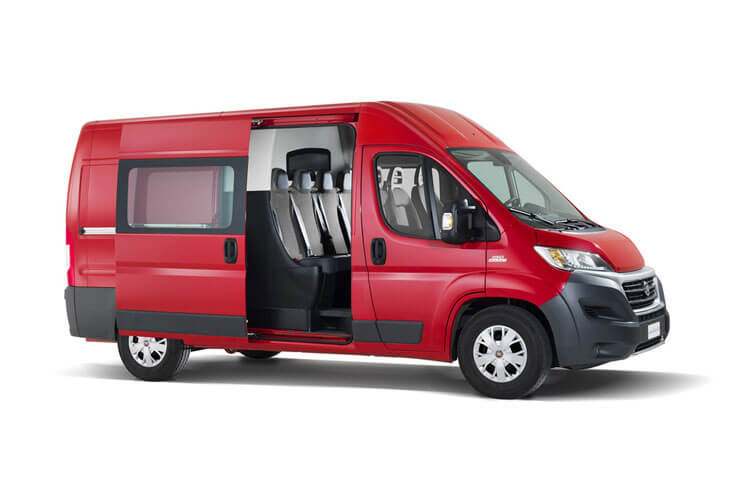
Images are for illustrative purposes only.
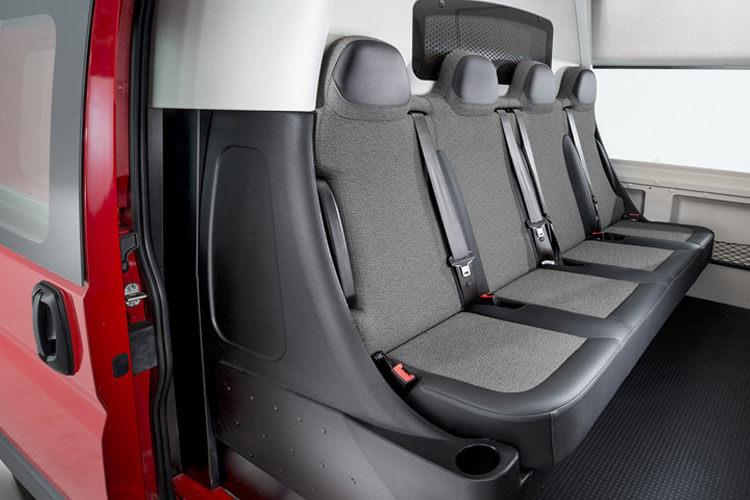

2.3 Multijet High Roof Window Van 180 Power Auto
Need some assistance or advice? Call Us 01903 538835


By Jonathan Crouch
In MK6 X290 model form sold between 2014 and 2021, Fiat's Ducato has much to offer in the large van segment. Buyers will find class-leading attributes when it comes to areas like payload, towing capability and running cost efficiency. Plus there's a smarter look and greater driveability. It all ought to be enough to give this vehicle greater class prominence in the used market.
Large van (2.3, 3.0 Multijet diesel)
The Fiat Ducato. It's the company's largest van and, according to the Italian brand, the most important model in its LCV line-up. That's certainly the case in Europe where it'sa sales leader. Here though, it's a less familiar sight than it should be on our roads, something Fiat set out to change when it launched the much improved sixth generation 'X290'-series version in 2014. On paper back then, its propects certainly looked promising. No other brand of the period could offer such a wide range of derivatives and, given the right permutation, this Ducato could also out-pace its rivals in important areas like gross vehicle weight, rear axle payload and overall payload. On top of that, the Ducato's Multijet II diesel power units were class-leadingly clean and frugal. They were engines unique to this Fiat, representing the most important difference between this model and its two design stablemates, Citroen's Relay and Peugeot's Boxer. Otherwise though, the three vehicles had much in common, which was no bad thing given that the same basic formula provided so much flexibility when it comes to choices of bodystyle, roof height, vehicle length and wheelbase. The 'X290'-series design got an upgrade in 2020, with new styling, fresh lighting technology and improved interior comfort. Then a further upgraded 'Series 8' version arrived in 2022. It's the 2014-2021-era 'X290' models though, we're looking at here.
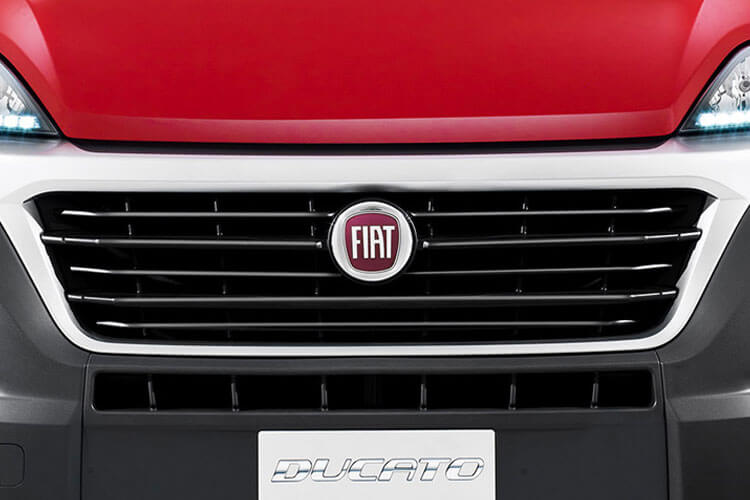
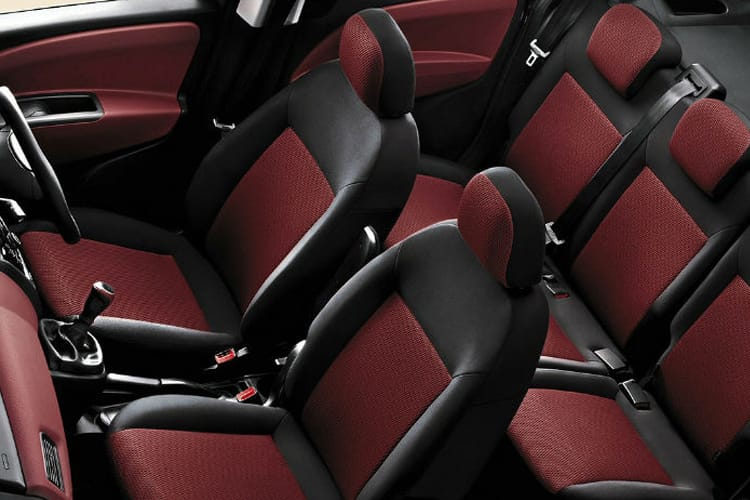
This sixth generation 'X290'-series Ducato wasn't all-new. Under the skin, it was really more a thoroughly revised version of the previous 'X250' MK5 model. Fiat wanted buyers to think of it in fresh terms though, hence the effort put in to completely re-styling the front end which features a smarter headlight and bumper design that stylist Alessandro Silva said was inspired by a spartan helmet. Once you're inside, you'll find yourself in a cabin that in truth, is basically the same as that of the previous generation model, though it feels more up to date thanks to a smarter-looking dash. A fresh additon for this sixth generation Ducato was the option of a 5-inch dash-mounted 'U-Connect' touchscreen infotainment display, which makes the vehicle feel more modern inside and will be an option many operators felt justified in paying a little extra for. As well as the usual stereo and Bluetooth elements, this handles features like audio streaming, text-to-speak messaging and Tom Tom satellite navigation with voice control. Also look for models fitted with the Multifunction Tablet Holder, a dash-mounted clipboard that folds out of the top of the fascia. It not only holds notepads and delivery notes but can also transform itself into a cradle that can securely hold your smartphone or tablet screen. What about practicalities in the load Bay? Let's start with the headline stat that most operators tend to look for first - load volume. Notebooks at the ready? Right, here we go. At the bottom of the range, there's the smallest short wheelbase standard roof 'SH1' model which will give you 8.0m3. That'll increase to 10.0m3 if you up the wheelbase to 'medium' level and get an 'MH1' derivative. Or 11.5m3 if you also up the roof height to 'high' spec with an 'MH2' derivative. Perhaps the sweetspot in the range is provided by a long wheelbase Ducato with that same roof height, the 'LH2' variant that delivers a useful 13.0m3 of volume. From here, if that's still not big enough, you can get either an 'extra-high' roof (in the 'LH3' model). Or an 'extra long' wheelbase (in the 'LXH2' variant). Either way, you'll have 15.0m3 of cargo space to play with inside. At the top of the range, an 'LXH3' variant that has both the 'extra high' roof and the 'extra long' wheelbase would give you a massive 17.0m3. Perhaps though, you're more interested in the length of loads you'll be able to carry. Well, pretty much everything you can think of will probably fit. Load lengths vary from 2670mm in the smallest 'SH1' variant to a huge 4,070mm in that 'LXH3' range-topper. Loading height will of course be important too. As we mentioned, there are three roof sizes, the 'standard' roof model giving you 1,662mm of internal roof height, the 'high' roof upping that figure to 1,932mm and the 'extra high' roof increasing the figure still further to 2,172mm. On to vehicle weight, something it's important to get right as it'll determine how bulky the stuff you'll be able to carry can be. There are five 'GVW' 'Gross Vehicle Weights' you can choose, designated by the two figures in the full model name. With all of that sorted, we can talk payload, an area where Fiat reckoned this 'X290' design had a key advantage over some of its period rivals. Even the least capable Ducato model, the smallest '30 SH1 derivative', can manage 1,140kgs of weight. The '35 SH1' variant can manage 1,640kgs and, at the top of the range, the most capable '42 LXH3' version can deal with an impressive 2,035kgs.
Please contact us for an exact up-to-date valuation.
Ducatos have to cope with pot holed Italian and Southern European roads so the pretty tough. The most common problem with the engines relates to the camshaft - the belt cam needing to be changed every 3 years to prevent a serious problem with the timing belt. If you've an automatic gearbox fitted to a variant made between 2014 and 2020, you may well find its changes sluggish - the 2021 auto transmission upgrade improved this. Manual gearboxes rarely need to be fully replaced but we have come across reports of clutch failures with dual mass flywheels failing due to the high reverse ratio. We've come across plenty of Ducatos that have done over 200,000 miles, but after that point, the steering, suspension and wheel bearings will obviously all be past their best. Check side marker lights - we've come across reports of non-functioning items. On 2018 models there was a recall due to the drive axle touching the wiring. And on 2019 models another recall related to non-conforming steering knuckles. On 2019 models the wheel axle on a few selected examples proved to be defective and could break. Check that this was looked at by the dealer when the issue was brought to light. The same applies to an issue with the seat belt anchorage on the seats swivel plate on 2021 models. In 2021, there was also an issue with the high-level brake light. Otherwise, it's just the usual things. On older models, there've been a few issues with the electrics, so make sure that all the connectivity works properly - Bluetooth-linking and so on. Check for load bay scuffs and scratches. And insist on a fully stamped-up service history.
(approx based on a Ducato 2.3 Multijet 130hp - 2015) Air filters are around £10-£12. Oil filters are around £7. A fuel filter is around £12-£43. Front brake pads are around £20-£58; rears are about £20-£35. Front brake discs cost in the £36-£63 bracket (£112-£119 for pricier brands). Rear brake discs are typically in the £71-£98 bracket (£112-£114 for pricier brands). A starter motor is around £126-£282. An alternator sits in the £115-£368 bracket. Front shock absorbers are in the £80-£128 bracket. Rear shock absorbers are in the £51-£80 bracket.
Engine-wise, buyers get the option of a 2.3-litre MultiJet II diesel engine in three states of tune - 110bhp, 130bhp or 150bhp, plus there's a 180bhp 3.0-litre unit at the top of the range for really heavy duty work. Whatever your choice of powerplant, you shuld find your Ducato more driveable this time round. Thanks to a revised braking system, pedal effort has been reduced by 45%. Refinement's been improved too and a revised clutch slave cylinder reduces the gear ratio, thereby lessening the need to rev the engine hard. All of this will make a big difference for urban users.
Fiat's experience and expertise when it comes to large vans is matched in this 'X290'-series 2014-2021-era Ducato by very well thought-out product design. A wider range of derivatives give this vehicle one advantage over its Citroen and Peugeot design stablemates from this period, but a more significant differentiating factor lies with the MultiJet diesel engines that were exclusive to this model. You can see why Fiat didn't want to share them. Lower-powered versions of this unit offer more torque and towing power and across the line-up, efficiency gains were enough to make this Ducato the cleanest and most frugal large van of its kind in its era. It's all indicative of the way that the Italian brand had clearly thought long and hard about what operators actually wanted here. Take things like this X290 model's easier urban driveability and its clever 'Traction+' grip control system. Then there are the neat cabin touches - the Multifunction Tablet Holder, the U-Connect infotainment screen and the folding middle passenger seat. It's attributes like these that will serve this Fiat well on the test drive and in operation. Though at first glance, this sixth generation 'X290' Ducato seems little different from the pre-2014-era version, closer inspection reveals a very complete product indeed. As a result, if your business is in the market for a large van from the 2014-2021 period, it may very well be that your business really needs to go for an Italian.
Data provided by CAP-HPI database - Ref# 46159
By Jonathan Crouch
In MK6 X290 model form sold between 2014 and 2021, Fiat's Ducato has much to offer in the large van segment. Buyers will find class-leading attributes when it comes to areas like payload, towing capability and running cost efficiency. Plus there's a smarter look and greater driveability. It all ought to be enough to give this vehicle greater class prominence in the used market.
Large van (2.3, 3.0 Multijet diesel)
The Fiat Ducato. It's the company's largest van and, according to the Italian brand, the most important model in its LCV line-up. That's certainly the case in Europe where it'sa sales leader. Here though, it's a less familiar sight than it should be on our roads, something Fiat set out to change when it launched the much improved sixth generation 'X290'-series version in 2014. On paper back then, its propects certainly looked promising. No other brand of the period could offer such a wide range of derivatives and, given the right permutation, this Ducato could also out-pace its rivals in important areas like gross vehicle weight, rear axle payload and overall payload. On top of that, the Ducato's Multijet II diesel power units were class-leadingly clean and frugal. They were engines unique to this Fiat, representing the most important difference between this model and its two design stablemates, Citroen's Relay and Peugeot's Boxer. Otherwise though, the three vehicles had much in common, which was no bad thing given that the same basic formula provided so much flexibility when it comes to choices of bodystyle, roof height, vehicle length and wheelbase. The 'X290'-series design got an upgrade in 2020, with new styling, fresh lighting technology and improved interior comfort. Then a further upgraded 'Series 8' version arrived in 2022. It's the 2014-2021-era 'X290' models though, we're looking at here.
This sixth generation 'X290'-series Ducato wasn't all-new. Under the skin, it was really more a thoroughly revised version of the previous 'X250' MK5 model. Fiat wanted buyers to think of it in fresh terms though, hence the effort put in to completely re-styling the front end which features a smarter headlight and bumper design that stylist Alessandro Silva said was inspired by a spartan helmet. Once you're inside, you'll find yourself in a cabin that in truth, is basically the same as that of the previous generation model, though it feels more up to date thanks to a smarter-looking dash. A fresh additon for this sixth generation Ducato was the option of a 5-inch dash-mounted 'U-Connect' touchscreen infotainment display, which makes the vehicle feel more modern inside and will be an option many operators felt justified in paying a little extra for. As well as the usual stereo and Bluetooth elements, this handles features like audio streaming, text-to-speak messaging and Tom Tom satellite navigation with voice control. Also look for models fitted with the Multifunction Tablet Holder, a dash-mounted clipboard that folds out of the top of the fascia. It not only holds notepads and delivery notes but can also transform itself into a cradle that can securely hold your smartphone or tablet screen. What about practicalities in the load Bay? Let's start with the headline stat that most operators tend to look for first - load volume. Notebooks at the ready? Right, here we go. At the bottom of the range, there's the smallest short wheelbase standard roof 'SH1' model which will give you 8.0m3. That'll increase to 10.0m3 if you up the wheelbase to 'medium' level and get an 'MH1' derivative. Or 11.5m3 if you also up the roof height to 'high' spec with an 'MH2' derivative. Perhaps the sweetspot in the range is provided by a long wheelbase Ducato with that same roof height, the 'LH2' variant that delivers a useful 13.0m3 of volume. From here, if that's still not big enough, you can get either an 'extra-high' roof (in the 'LH3' model). Or an 'extra long' wheelbase (in the 'LXH2' variant). Either way, you'll have 15.0m3 of cargo space to play with inside. At the top of the range, an 'LXH3' variant that has both the 'extra high' roof and the 'extra long' wheelbase would give you a massive 17.0m3. Perhaps though, you're more interested in the length of loads you'll be able to carry. Well, pretty much everything you can think of will probably fit. Load lengths vary from 2670mm in the smallest 'SH1' variant to a huge 4,070mm in that 'LXH3' range-topper. Loading height will of course be important too. As we mentioned, there are three roof sizes, the 'standard' roof model giving you 1,662mm of internal roof height, the 'high' roof upping that figure to 1,932mm and the 'extra high' roof increasing the figure still further to 2,172mm. On to vehicle weight, something it's important to get right as it'll determine how bulky the stuff you'll be able to carry can be. There are five 'GVW' 'Gross Vehicle Weights' you can choose, designated by the two figures in the full model name. With all of that sorted, we can talk payload, an area where Fiat reckoned this 'X290' design had a key advantage over some of its period rivals. Even the least capable Ducato model, the smallest '30 SH1 derivative', can manage 1,140kgs of weight. The '35 SH1' variant can manage 1,640kgs and, at the top of the range, the most capable '42 LXH3' version can deal with an impressive 2,035kgs.
Please contact us for an exact up-to-date valuation.
Ducatos have to cope with pot holed Italian and Southern European roads so the pretty tough. The most common problem with the engines relates to the camshaft - the belt cam needing to be changed every 3 years to prevent a serious problem with the timing belt. If you've an automatic gearbox fitted to a variant made between 2014 and 2020, you may well find its changes sluggish - the 2021 auto transmission upgrade improved this. Manual gearboxes rarely need to be fully replaced but we have come across reports of clutch failures with dual mass flywheels failing due to the high reverse ratio. We've come across plenty of Ducatos that have done over 200,000 miles, but after that point, the steering, suspension and wheel bearings will obviously all be past their best. Check side marker lights - we've come across reports of non-functioning items. On 2018 models there was a recall due to the drive axle touching the wiring. And on 2019 models another recall related to non-conforming steering knuckles. On 2019 models the wheel axle on a few selected examples proved to be defective and could break. Check that this was looked at by the dealer when the issue was brought to light. The same applies to an issue with the seat belt anchorage on the seats swivel plate on 2021 models. In 2021, there was also an issue with the high-level brake light. Otherwise, it's just the usual things. On older models, there've been a few issues with the electrics, so make sure that all the connectivity works properly - Bluetooth-linking and so on. Check for load bay scuffs and scratches. And insist on a fully stamped-up service history.
(approx based on a Ducato 2.3 Multijet 130hp - 2015) Air filters are around £10-£12. Oil filters are around £7. A fuel filter is around £12-£43. Front brake pads are around £20-£58; rears are about £20-£35. Front brake discs cost in the £36-£63 bracket (£112-£119 for pricier brands). Rear brake discs are typically in the £71-£98 bracket (£112-£114 for pricier brands). A starter motor is around £126-£282. An alternator sits in the £115-£368 bracket. Front shock absorbers are in the £80-£128 bracket. Rear shock absorbers are in the £51-£80 bracket.
Engine-wise, buyers get the option of a 2.3-litre MultiJet II diesel engine in three states of tune - 110bhp, 130bhp or 150bhp, plus there's a 180bhp 3.0-litre unit at the top of the range for really heavy duty work. Whatever your choice of powerplant, you shuld find your Ducato more driveable this time round. Thanks to a revised braking system, pedal effort has been reduced by 45%. Refinement's been improved too and a revised clutch slave cylinder reduces the gear ratio, thereby lessening the need to rev the engine hard. All of this will make a big difference for urban users.
Fiat's experience and expertise when it comes to large vans is matched in this 'X290'-series 2014-2021-era Ducato by very well thought-out product design. A wider range of derivatives give this vehicle one advantage over its Citroen and Peugeot design stablemates from this period, but a more significant differentiating factor lies with the MultiJet diesel engines that were exclusive to this model. You can see why Fiat didn't want to share them. Lower-powered versions of this unit offer more torque and towing power and across the line-up, efficiency gains were enough to make this Ducato the cleanest and most frugal large van of its kind in its era. It's all indicative of the way that the Italian brand had clearly thought long and hard about what operators actually wanted here. Take things like this X290 model's easier urban driveability and its clever 'Traction+' grip control system. Then there are the neat cabin touches - the Multifunction Tablet Holder, the U-Connect infotainment screen and the folding middle passenger seat. It's attributes like these that will serve this Fiat well on the test drive and in operation. Though at first glance, this sixth generation 'X290' Ducato seems little different from the pre-2014-era version, closer inspection reveals a very complete product indeed. As a result, if your business is in the market for a large van from the 2014-2021 period, it may very well be that your business really needs to go for an Italian.
