
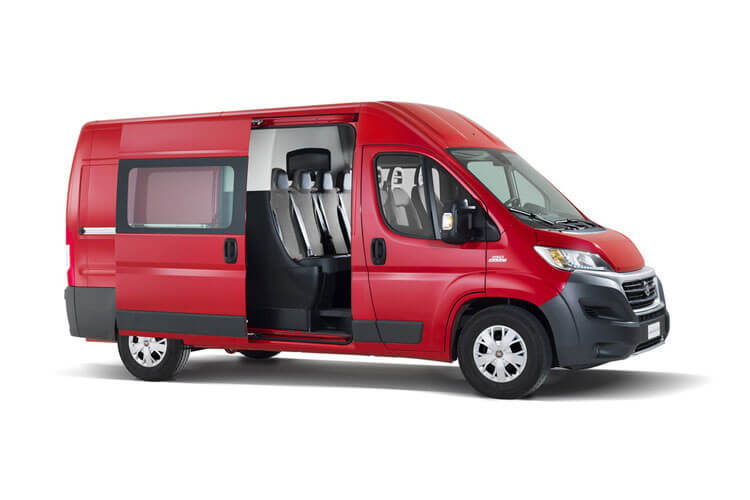
Images are for illustrative purposes only.
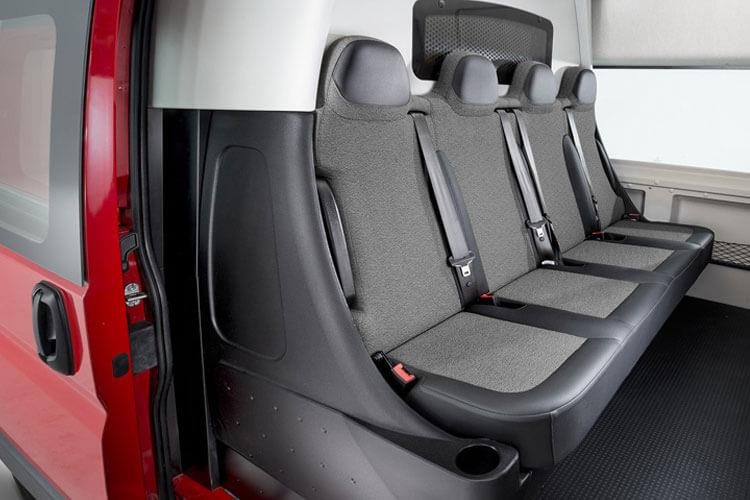
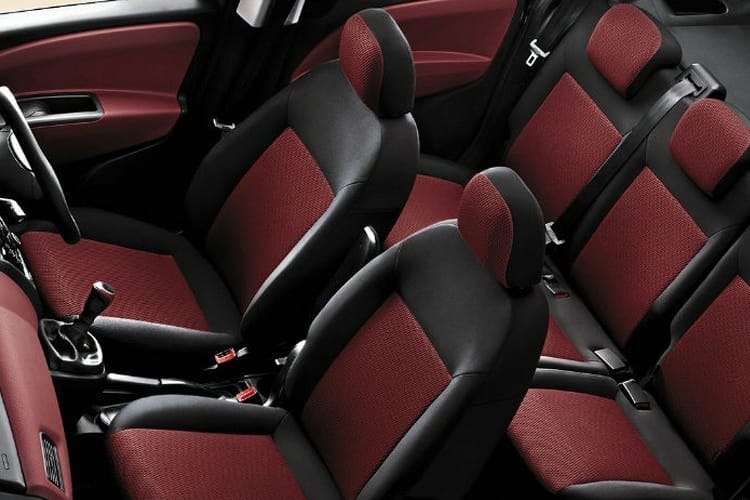

90kW 47kWh H1 Chassis Cab Auto
Need some assistance or advice? Call Us 01903 538835


By Jonathan Crouch
If even a compact van is too big for you and you're looking for an even smaller LCV on the used market - a vehicle for urban use that's priced affordably - then Citroen's little Nemo should be on your shopping list. Here's what to look for.
Compact van (1.2, 1.3, 1.4 diesel / 1.4 petrol - X, LX, Enterprise])
Back in 2007, the market for supermini-derived high-cube vans was seen as the next big thing in LCV circles. And the PSA Group bought into it big time, developing one design shared with the Fiat Group that brought us the Fiat Fiorino, the Peugeot Bipper and this van, the Citroen Nemo. Prior to the arrival of this design, any LCV smaller than something Berlingo-sized based on a family hatch was generally a supermini with blanked-out rear windows; a Vauxhall Corsavan or a Ford Fiestavan for instance. For not much more money, little high-cube LCVs like the Nemo promised something better, with almost double the carriage capacity but with pretty much exactly the same roadside footprint. There was also a short-lived 'Nemo Multispace' car-like small MPV version too. In theory, the concept behind the Nemo LCV sounded great. In practice, the idea didn't really catch on. Only Ford followed the Nemo, the Bipper and the Fiorino into the segment for tiny vans and when the time came for the Nemo to be eventually pensioned off in 2017, Citroen decided not to replace it.
The Nemo was designed with the urban environment very much in mind and was decently screwed together at its Turkish factory. The wheels are pushed to the corners of the vehicle to maximise interior space and manoeuvrability, while keeping the van compact and wieldy. The substantial wrap-around bumper protects against parking knocks and expensive components like the headlamps, bonnet and radiator are set well back to lessen the chance of them coming to harm. The interior of the Nemo will feel a little confined to those familiar with full size compact vans but there's reasonable space for driver and passenger. The driving position is upright and affords a good view of the Nemo's surroundings, with the seat and the steering wheel offering a good range of adjustability. Cab stowage space for oddments is less generous than in models from the next class up, but with 12 compartments to choose from, there should be room for most of the essentials. There's even the option of a folding dashboard desk. So, will this van cope with the kind of use your business demands? Well let's find out. Notebooks at the ready: here are the figures that you'll need. At first glance, the Nemo does look rather small. At 3,864mm long and 1,589mm wide, this is after all a compact van with a footprint tinier that most superminis. Despite this however, there's a 2.5m3 load volume to play with (only 0.5 cubic metres less than Citroen's MK2 Berlingo van) and a payload capacity of 610kg. That volume can be increased by means of an Extenso folding passenger seat (if the original buyer had that fitted) which flops down to increase capacity to 2.8m3. That improvement may not sound like much but it increases the available load length from 1,523mm to 2,491mm which is really handy when you're trying to cram longer items inside. The load bay is accessed through asymmetrically-split rear doors on the standard model with the slimmer of the two mounted on the offside. They can be pushed through 90° and through 170° if you release the easy-to-unlatch door stays. A sliding side door was available on plusher versions, with a second sliding door residing on the options list. One issue is that the apertures behind these side doors are narrow (1041mm high and 644mm wide), so large items will probably have to go in through the rear (where the door aperture is 1,060mm high and 1,140 mm wide). Here, there's a low 527mm loading height and 1,064mm between the wheel arches. Load bay width is 1,473mm, while maximum height is 1,205mm. Around half-a-dozen load tie-down rings are there to secure loads but if you forget to use them and your cargo slithers forward, then you'll be protected by a restraint frame that angles backwards into the cargo area. The doors are lined to half their height but many original buyers added in ply-lining to protect the rest of the cargo area against minor scrapes and scratches.
Please contact us for an exact up-to-date valuation.
Most Nemo owners in our survey seemed satisfied but inevitably, there were a few issues. Front suspension top bearing failures are a known problem with this design. And we came across reports of front brake discs and pads being needed too frequently. And one that referenced a front suspension top bearing failure. Beyond this specific stuff, look out for the usual LCV things; a severely scratched and dented load bay, sagging seats and shiny steering wheels, all of it betraying a long, arduous previous life. Make sure that the servicing record reflect garage visits to correspond with the various PSA Group manufacturer recalls that were issued. In November 2011, a recall stated that 'Engine may fail due to incorrect machining of crankshaft causes insufficient lubrication'. The next one in February 2012 stated 'Rear crossmember may crack if suspension is repeatedly extended to maximum travel. Then in November 2012, there was 'Engine may fail due to con-rod bearings not being properly manufactured.'
(approx based on a 2015 Nemo 1.3 BlueHDi ex VAT) An air filter will be in the £11-£13 bracket. An oil filter will be around £5-£7. Front brake discs are £49-£72 a pair and front pads will set you back around £25-£50. A brake drum is around £38. A radiator is around £120, a headlamp around £98 and a tail lamp around £55.
Back in 2007, Citroen had no objection to using Fiat's Grande Punto as a basis for this van but, like partners Peugeot, they were less keen to use the Italian company's engines. Hence the use of the same 1.4-litre petrol and diesel powerplants you'll find in Citroen small cars from this era, developing 75 and 70bhp respectively. These are usefully more frugal than the larger 1.6-litre units you'll find on the bigger MK2 Berlingo models from this period - and not much slower. Though the likely low urban mileage this vehicle will cover might tempt some operators to save a few pounds on the purchase price and choose the 1.4-litre petrol version, test the diesel model and you can see why most businesses don't. With 160Nm of torque (over 40Nm more than the petrol unit), it has the low-end muscle that drivers like for getting their payload smartly off the line. Citroen experimented with a 1.2-litre diesel in this model but by the end of this Nemo's production life, it was using the PSA Group's 1.3-litre BlueHDi diesel unit, which is probably the one to go for if you can stretch to it. This van's extra diesel pulling power comes into its own around town, meaning that you're less likely to feel the need to row the thing along with its chunky dash-mounted 5-speed gearbox lever. If you want to avoid the need to do that completely, find yourself a variant fitted with the 'SensoDrive' semi-automatic transmission option. The Nemo grosses at 1,700kg which ensures that it is subject to car speed limits instead of the more onerous ones imposed on commercial vehicles exceeding the two tonne breakpoint. Plus you could tow a braked trailer grossing at 600kg. For urban use, operators will be pleased to find that all Nemos have the accurate power steering and the tight turning circle that's needed when space is tight. That means just 2.8 turns lock-to-lock, enabling a 10.0m kerb-to-kerb turning circle rising to 10.5m wall-to-wall. On the open road, body roll is well controlled, as are noise levels, but the ride is a bit choppy on uneven surfaces. You'll find ventilated disc brakes at the front, drums at the rear, and ABS and Electronic Brakeforce Distribution are both standard features, though ESP stability control was lacking on this vehicle for most of its production life.
If you're looking for a used compact van, don't dismiss an LCV of the Citroen Nemo's size out of hand until you've tried one and checked out whether it really could cope with your company's likely everyday use. You could easily find that it's a better option than the slightly larger mid-sized Citroen Berlingo/Renault Kangoo-sized LCV that you might otherwise have chosen. It'll certainly be significantly cheaper to run. As to whether the Nemo is a better bet than its Fiat and Peugeot design stablemates, well that's a more difficult call: they all benefit from the same excellent design. The Citroen's diesel engine is slightly slower than the Fiat alternative but bit also slightly greener. In the end though, it'll probably come down to the deal you get and the proximity and quality of your local dealer.
Data provided by CAP-HPI database - Ref# 48984
By Jonathan Crouch
If even a compact van is too big for you and you're looking for an even smaller LCV on the used market - a vehicle for urban use that's priced affordably - then Citroen's little Nemo should be on your shopping list. Here's what to look for.
Compact van (1.2, 1.3, 1.4 diesel / 1.4 petrol - X, LX, Enterprise])
Back in 2007, the market for supermini-derived high-cube vans was seen as the next big thing in LCV circles. And the PSA Group bought into it big time, developing one design shared with the Fiat Group that brought us the Fiat Fiorino, the Peugeot Bipper and this van, the Citroen Nemo. Prior to the arrival of this design, any LCV smaller than something Berlingo-sized based on a family hatch was generally a supermini with blanked-out rear windows; a Vauxhall Corsavan or a Ford Fiestavan for instance. For not much more money, little high-cube LCVs like the Nemo promised something better, with almost double the carriage capacity but with pretty much exactly the same roadside footprint. There was also a short-lived 'Nemo Multispace' car-like small MPV version too. In theory, the concept behind the Nemo LCV sounded great. In practice, the idea didn't really catch on. Only Ford followed the Nemo, the Bipper and the Fiorino into the segment for tiny vans and when the time came for the Nemo to be eventually pensioned off in 2017, Citroen decided not to replace it.
The Nemo was designed with the urban environment very much in mind and was decently screwed together at its Turkish factory. The wheels are pushed to the corners of the vehicle to maximise interior space and manoeuvrability, while keeping the van compact and wieldy. The substantial wrap-around bumper protects against parking knocks and expensive components like the headlamps, bonnet and radiator are set well back to lessen the chance of them coming to harm. The interior of the Nemo will feel a little confined to those familiar with full size compact vans but there's reasonable space for driver and passenger. The driving position is upright and affords a good view of the Nemo's surroundings, with the seat and the steering wheel offering a good range of adjustability. Cab stowage space for oddments is less generous than in models from the next class up, but with 12 compartments to choose from, there should be room for most of the essentials. There's even the option of a folding dashboard desk. So, will this van cope with the kind of use your business demands? Well let's find out. Notebooks at the ready: here are the figures that you'll need. At first glance, the Nemo does look rather small. At 3,864mm long and 1,589mm wide, this is after all a compact van with a footprint tinier that most superminis. Despite this however, there's a 2.5m3 load volume to play with (only 0.5 cubic metres less than Citroen's MK2 Berlingo van) and a payload capacity of 610kg. That volume can be increased by means of an Extenso folding passenger seat (if the original buyer had that fitted) which flops down to increase capacity to 2.8m3. That improvement may not sound like much but it increases the available load length from 1,523mm to 2,491mm which is really handy when you're trying to cram longer items inside. The load bay is accessed through asymmetrically-split rear doors on the standard model with the slimmer of the two mounted on the offside. They can be pushed through 90° and through 170° if you release the easy-to-unlatch door stays. A sliding side door was available on plusher versions, with a second sliding door residing on the options list. One issue is that the apertures behind these side doors are narrow (1041mm high and 644mm wide), so large items will probably have to go in through the rear (where the door aperture is 1,060mm high and 1,140 mm wide). Here, there's a low 527mm loading height and 1,064mm between the wheel arches. Load bay width is 1,473mm, while maximum height is 1,205mm. Around half-a-dozen load tie-down rings are there to secure loads but if you forget to use them and your cargo slithers forward, then you'll be protected by a restraint frame that angles backwards into the cargo area. The doors are lined to half their height but many original buyers added in ply-lining to protect the rest of the cargo area against minor scrapes and scratches.
Please contact us for an exact up-to-date valuation.
Most Nemo owners in our survey seemed satisfied but inevitably, there were a few issues. Front suspension top bearing failures are a known problem with this design. And we came across reports of front brake discs and pads being needed too frequently. And one that referenced a front suspension top bearing failure. Beyond this specific stuff, look out for the usual LCV things; a severely scratched and dented load bay, sagging seats and shiny steering wheels, all of it betraying a long, arduous previous life. Make sure that the servicing record reflect garage visits to correspond with the various PSA Group manufacturer recalls that were issued. In November 2011, a recall stated that 'Engine may fail due to incorrect machining of crankshaft causes insufficient lubrication'. The next one in February 2012 stated 'Rear crossmember may crack if suspension is repeatedly extended to maximum travel. Then in November 2012, there was 'Engine may fail due to con-rod bearings not being properly manufactured.'
(approx based on a 2015 Nemo 1.3 BlueHDi ex VAT) An air filter will be in the £11-£13 bracket. An oil filter will be around £5-£7. Front brake discs are £49-£72 a pair and front pads will set you back around £25-£50. A brake drum is around £38. A radiator is around £120, a headlamp around £98 and a tail lamp around £55.
Back in 2007, Citroen had no objection to using Fiat's Grande Punto as a basis for this van but, like partners Peugeot, they were less keen to use the Italian company's engines. Hence the use of the same 1.4-litre petrol and diesel powerplants you'll find in Citroen small cars from this era, developing 75 and 70bhp respectively. These are usefully more frugal than the larger 1.6-litre units you'll find on the bigger MK2 Berlingo models from this period - and not much slower. Though the likely low urban mileage this vehicle will cover might tempt some operators to save a few pounds on the purchase price and choose the 1.4-litre petrol version, test the diesel model and you can see why most businesses don't. With 160Nm of torque (over 40Nm more than the petrol unit), it has the low-end muscle that drivers like for getting their payload smartly off the line. Citroen experimented with a 1.2-litre diesel in this model but by the end of this Nemo's production life, it was using the PSA Group's 1.3-litre BlueHDi diesel unit, which is probably the one to go for if you can stretch to it. This van's extra diesel pulling power comes into its own around town, meaning that you're less likely to feel the need to row the thing along with its chunky dash-mounted 5-speed gearbox lever. If you want to avoid the need to do that completely, find yourself a variant fitted with the 'SensoDrive' semi-automatic transmission option. The Nemo grosses at 1,700kg which ensures that it is subject to car speed limits instead of the more onerous ones imposed on commercial vehicles exceeding the two tonne breakpoint. Plus you could tow a braked trailer grossing at 600kg. For urban use, operators will be pleased to find that all Nemos have the accurate power steering and the tight turning circle that's needed when space is tight. That means just 2.8 turns lock-to-lock, enabling a 10.0m kerb-to-kerb turning circle rising to 10.5m wall-to-wall. On the open road, body roll is well controlled, as are noise levels, but the ride is a bit choppy on uneven surfaces. You'll find ventilated disc brakes at the front, drums at the rear, and ABS and Electronic Brakeforce Distribution are both standard features, though ESP stability control was lacking on this vehicle for most of its production life.
If you're looking for a used compact van, don't dismiss an LCV of the Citroen Nemo's size out of hand until you've tried one and checked out whether it really could cope with your company's likely everyday use. You could easily find that it's a better option than the slightly larger mid-sized Citroen Berlingo/Renault Kangoo-sized LCV that you might otherwise have chosen. It'll certainly be significantly cheaper to run. As to whether the Nemo is a better bet than its Fiat and Peugeot design stablemates, well that's a more difficult call: they all benefit from the same excellent design. The Citroen's diesel engine is slightly slower than the Fiat alternative but bit also slightly greener. In the end though, it'll probably come down to the deal you get and the proximity and quality of your local dealer.
