
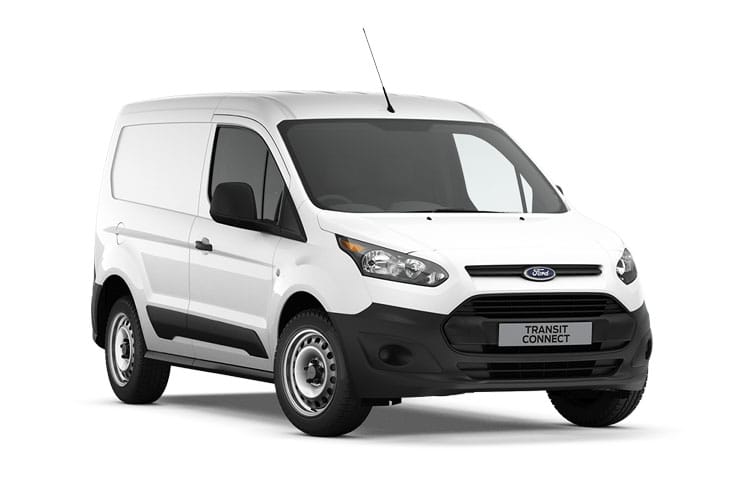
Images are for illustrative purposes only.
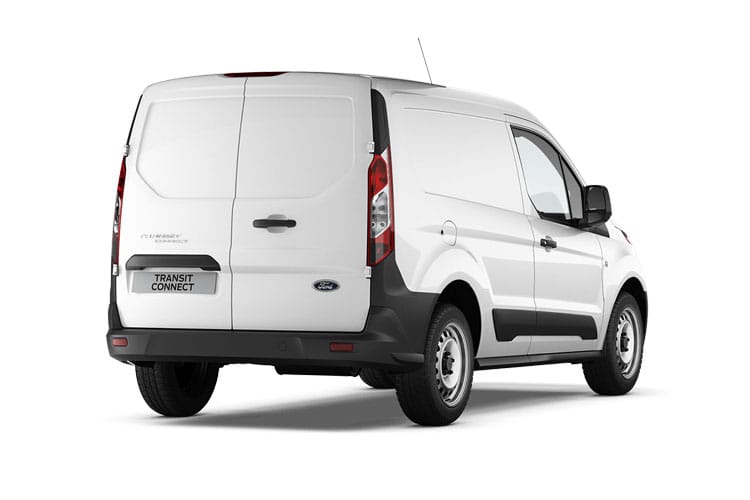
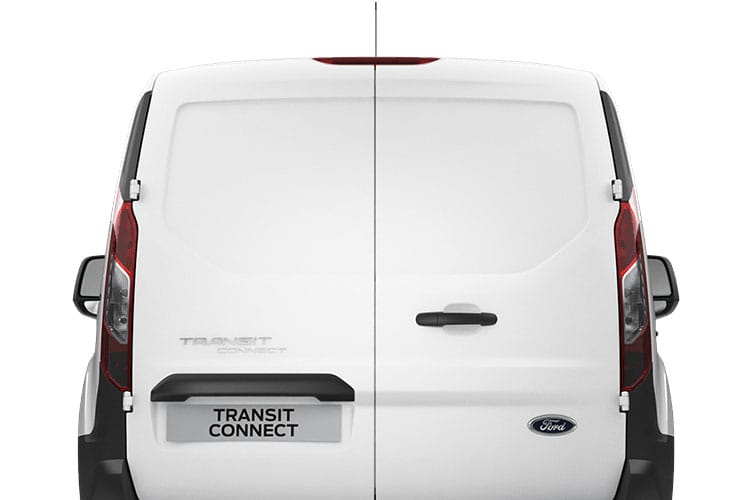
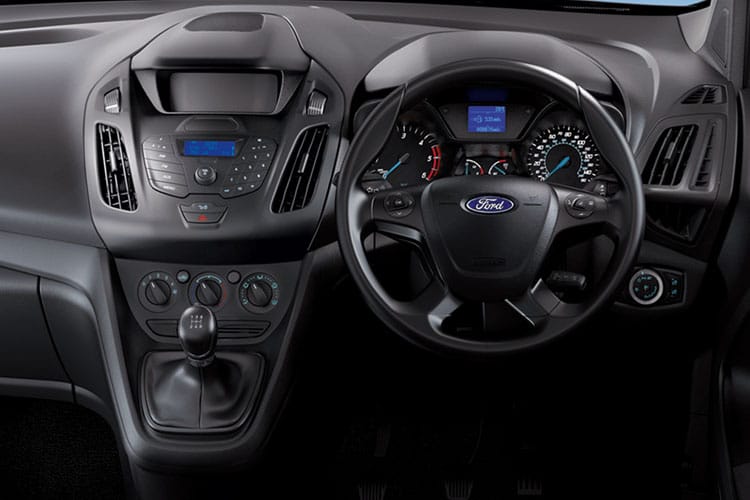

1.5 EcoBlue 100ps D/Cab Van Powershift
Need some assistance or advice? Call Us 01903 538835


By Jonathan Crouch
Ford's second generation Transit Connect was in this much improved post-2018-era form a compact van - with big ideas. It costs as little to run as a smaller LCV, yet if specified correctly, can swallow almost as large a load as a medium-sized model from the next class up. It'll take passengers as well as packages, deal with long loads in its stride and look after your life with its SYNC 3 telemetry. In short, if you were shopping in this segment for a small van from the 2018-2024 period, you'd have to consider it.
compact van (1.5 TDCi diesel / 1.0T EcoBoost petrol)
Ford's compact Transit Connect was the LCV that really galvanised the small van sector when it was first launched in the UK back in 2003. This second generation version, announced late in 2013, took the segment another further step forward and was substantially revised in 2018 to create the model we're going to look at here. To understand the impact that this Connect model has made on the light commercial vehicle sector since the turn of the century, you have to remember that prior to the first generation version's original introduction, most compact vans were merely small superminis or family hatchbacks with blanked-out windows. In contrast, the MK1 model Connect was one of the very first purpose-designed small vans. True, it used a lot of mechanical parts from Ford's passenger car line-up - mainly from the Fiesta supermini - but the load bay LCV stuff, the really important part of the design, was properly created around the needs of business buyers. Competitors though, were quick to copy the concept - and develop it even further with a sub-segment of even smaller vans aimed at boutique operators and city-centre-based businesses. Which, by the end of the first decade of the Noughties, left the Connect trying, rather awkwardly, to be all things to buyers in the compact LCV segment. It needed a new lease of life - and got it in this second generation guise, launched in 2013 as part of a four-model Transit line-up that also included the smaller Courier model and the larger Custom and fully-fledged Transit designs. At introduction, the MK2 Connect was best-in-class in most areas, but five years on, with a fresh generation of direct rivals from brands like Citroen, Peugeot and Vauxhall redefining what a compact van could be, it was clear that mid-term updates would be needed if this model was to retain its segment sales leadership. Hence the version of this LCV we were given for the 2018 model year, which got an all-new engine range, a redesigned cabin, smarter exterior looks, a fresh 8-speed auto gearbox option, a dynamic-looking 'Sport' model and a dose of Ford's latest camera-driven safety tech. It sold until early 2024, when it was replaced by a Volkswagen-engineered third generation model.
Mindful of the fact that this Transit Connect would also form the base for two car-like MPV Tourneo models, Ford styled it to look as interesting as the necessarily boxy shape would allow. The main visual change over the original version of this second generation design was the adoption of a three-bar Transit grille. Inside, if you happen to be familiar with the original 2013-onwards version of this second generation model, you'll notice quite a few changes with this revised version. Smarter trimming materials feature and the centre stack's completely different, with redesigned ventilation controls and, on plusher variants, a smart 6-inch 'SYNC 3' colour touchscreen sprouting from the top of the fascia. Original Transit Connect buyers could choose between either the usual two-seat format or a dual passenger seat. The advantage of choosing a version with the dual passenger seat is that it this format could be combined with a useful load-through hatch that enables you to push long items through from the cargo area. Out back, the amount you can carry will obviously depend primarily on your choice between the short wheelbase 'L1' variant and the long wheelbase 'L2' model. Both body styles offer 1,269mm of load space height and 1,538mm of load area width, a figure that narrows to 1,249mm between the wheel arches. The 'L1' offers a 2.9m3 of cubic capacity and a door-to-bulkhead load space length of 1,558mm. Thanks to an extra 400mm of body length, the 'L2' version offers 3.2m3 of cubic capacity and a door-to-bulkhead load space length of 1,958mm. Which means that in an 'L2', you could accommodate two euro pallets rather than one. Getting a model whose original owner specified the useful load-through hatch into the cabin allows you to increase your loading length considerably - to 3-metres in the L1 or as much as 3.4-metres in the 'L2'. One sliding side door is standard and in the 'L2', it's wide enough to allow you to load in a euro pallet from the side. As for the weight this van will carry, well you can maximise that if you get a model whose original owner ticked the box for the 'high payload capacity' Gross Vehicle Mass option available with each of the body styles. The 'L1' can offer a maximum gross payload of up to 865kgs, depending on variant. For the 'L2', the figure is up to 834kgs, again depending on variant. Running costs were improved on this updated MK2 model thanks to Ford's more advanced 'EcoBlue' diesel engine technology for the 1.5-litre black pump-fuelled variants. And the addition of cylinder deactivation to the single 1.0-litre EcoBoost petrol model. Service intervals on both engines were extended as part of this update, with manual diesel variants offering best-in-class variable intervals of up to 2 years or 25,000 miles. Volume 75PS and 100PS versions of the diesel Transit Connect achieve up to 60.1mpg on the combined cycle and 124g/km of CO2.
Please contact us for an exact up-to-date valuation.
This Transit Connect generally has a strong reliability record, but our ownership survey did throw up a few issues to look out for. The interior isn't the last word in sophistication but it is hardwearing. Check for damage to locks, tired rear suspension, rogered clutches and brakes and make sure that the load bay tie-downs aren't bent or broken. As usual, look for a full service history; with vehicles as recent as the MK2 Transit Connect, there's little excuse for skipped servicing or scrimping on maintenance. Look out for rusting rear door hinges and check the outer CV joint rubber boot covers for splits. They wear and if they let water in, the CV joints will wear quickly. Check the tyres for wear or sidewall damage. If there are signs of uneven wear, it could mean that the tracking has been knocked out and damaged sidewalls or wheels also signal abuse. Check the clutch for slip or judder by rolling away in second with low revs. If there's any evidence of it then negotiate a discount, or have a new one fitted before buying. On higher mileage examples, check whether the timing belt has been replaced. It ought to have been done every 60,000 miles or four years, whichever is sooner. Listen out for any rumbling or drone from the wheel bearings when test driving. Be sure to run the van at everything from town speeds to dual carriageway speeds. Check how the vehicle you're looking at has been used - and don't be too afraid of higher mileage examples. A 40,000 mile Connect doing short drop town driving might be in rougher condition mechanically than a 100,000+ mile example that's spent most of its time travelling on motorways. Finally, have a good look around the cabin for any water ingress; lift carpets, look under the seats and check under floor mats. Check that any drainage holes around the windscreen front firewall aren't blocked.
(approx prices, based on a 2019 Transit Connect 1.5 TDCi 120PS panel van - autodoc.co.uk) As with most Ford models, spare parts are reasonably priced and very plentiful. Front brake pads sell in the £17-£47 bracket - rear pads are from around £12. Front brake discs range in the £30-£56 bracket (rears are priced from around £20). An air filter is in the £7-£18 bracket, a fuel filter is around £7-£17 and an oil filter is around £5-£23. A wiper blade is in the £6-£20 bracket. A water pump and timing belt kit is in the £43-£151 bracket. You'll pay in the £62-£180 bracket for a starter motor.
If ever you needed proof that modern vans have become completely car-like in terms of the technology they use, this improved version of the MK2 Transit Connect provides it. Correctly specified, this van will park itself, stop itself to avoid an accident and even find you a restaurant, a fuel station or a parking space. This Ford evolved beneath the bonnet too, thanks to the installation of a more refined and efficient 1.5-litre EcoBlue diesel unit, available in a choice of 75PS, 100PS or 120PS outputs. For those who avoided the base unit, there was the option of a new 8-speed automatic gearbox. The brand also offered an alternative 100PS 1.0-litre EcoBoost petrol powerplant for urban businesses likely to be carrying lighter loads. Whatever your choice beneath the bonnet, you'll find that this Transit Connect retained its segment leadership in terms of drive dynamics. Once you've dropped off your load, you could even imagine rather enjoying yourself on the way home around the twisty stuff in one of these. To a point.
It was the Transit Connect that properly established the compact van segment. And it's this model line that has probably done most to further develop it. What hasn't changed over the decades though, is the class-leading driveability of this LCV. Add to that the fact that this MK2 model was un-bettered in its class for its period in areas like in-cab infotainment and the availability of camera-driven safety provision and you can see why it remains so popular. Still an odd job van perhaps, but these days, a very clever one indeed.
Data provided by CAP-HPI database - Ref# 42564
By Jonathan Crouch
Ford's second generation Transit Connect was in this much improved post-2018-era form a compact van - with big ideas. It costs as little to run as a smaller LCV, yet if specified correctly, can swallow almost as large a load as a medium-sized model from the next class up. It'll take passengers as well as packages, deal with long loads in its stride and look after your life with its SYNC 3 telemetry. In short, if you were shopping in this segment for a small van from the 2018-2024 period, you'd have to consider it.
compact van (1.5 TDCi diesel / 1.0T EcoBoost petrol)
Ford's compact Transit Connect was the LCV that really galvanised the small van sector when it was first launched in the UK back in 2003. This second generation version, announced late in 2013, took the segment another further step forward and was substantially revised in 2018 to create the model we're going to look at here. To understand the impact that this Connect model has made on the light commercial vehicle sector since the turn of the century, you have to remember that prior to the first generation version's original introduction, most compact vans were merely small superminis or family hatchbacks with blanked-out windows. In contrast, the MK1 model Connect was one of the very first purpose-designed small vans. True, it used a lot of mechanical parts from Ford's passenger car line-up - mainly from the Fiesta supermini - but the load bay LCV stuff, the really important part of the design, was properly created around the needs of business buyers. Competitors though, were quick to copy the concept - and develop it even further with a sub-segment of even smaller vans aimed at boutique operators and city-centre-based businesses. Which, by the end of the first decade of the Noughties, left the Connect trying, rather awkwardly, to be all things to buyers in the compact LCV segment. It needed a new lease of life - and got it in this second generation guise, launched in 2013 as part of a four-model Transit line-up that also included the smaller Courier model and the larger Custom and fully-fledged Transit designs. At introduction, the MK2 Connect was best-in-class in most areas, but five years on, with a fresh generation of direct rivals from brands like Citroen, Peugeot and Vauxhall redefining what a compact van could be, it was clear that mid-term updates would be needed if this model was to retain its segment sales leadership. Hence the version of this LCV we were given for the 2018 model year, which got an all-new engine range, a redesigned cabin, smarter exterior looks, a fresh 8-speed auto gearbox option, a dynamic-looking 'Sport' model and a dose of Ford's latest camera-driven safety tech. It sold until early 2024, when it was replaced by a Volkswagen-engineered third generation model.
Mindful of the fact that this Transit Connect would also form the base for two car-like MPV Tourneo models, Ford styled it to look as interesting as the necessarily boxy shape would allow. The main visual change over the original version of this second generation design was the adoption of a three-bar Transit grille. Inside, if you happen to be familiar with the original 2013-onwards version of this second generation model, you'll notice quite a few changes with this revised version. Smarter trimming materials feature and the centre stack's completely different, with redesigned ventilation controls and, on plusher variants, a smart 6-inch 'SYNC 3' colour touchscreen sprouting from the top of the fascia. Original Transit Connect buyers could choose between either the usual two-seat format or a dual passenger seat. The advantage of choosing a version with the dual passenger seat is that it this format could be combined with a useful load-through hatch that enables you to push long items through from the cargo area. Out back, the amount you can carry will obviously depend primarily on your choice between the short wheelbase 'L1' variant and the long wheelbase 'L2' model. Both body styles offer 1,269mm of load space height and 1,538mm of load area width, a figure that narrows to 1,249mm between the wheel arches. The 'L1' offers a 2.9m3 of cubic capacity and a door-to-bulkhead load space length of 1,558mm. Thanks to an extra 400mm of body length, the 'L2' version offers 3.2m3 of cubic capacity and a door-to-bulkhead load space length of 1,958mm. Which means that in an 'L2', you could accommodate two euro pallets rather than one. Getting a model whose original owner specified the useful load-through hatch into the cabin allows you to increase your loading length considerably - to 3-metres in the L1 or as much as 3.4-metres in the 'L2'. One sliding side door is standard and in the 'L2', it's wide enough to allow you to load in a euro pallet from the side. As for the weight this van will carry, well you can maximise that if you get a model whose original owner ticked the box for the 'high payload capacity' Gross Vehicle Mass option available with each of the body styles. The 'L1' can offer a maximum gross payload of up to 865kgs, depending on variant. For the 'L2', the figure is up to 834kgs, again depending on variant. Running costs were improved on this updated MK2 model thanks to Ford's more advanced 'EcoBlue' diesel engine technology for the 1.5-litre black pump-fuelled variants. And the addition of cylinder deactivation to the single 1.0-litre EcoBoost petrol model. Service intervals on both engines were extended as part of this update, with manual diesel variants offering best-in-class variable intervals of up to 2 years or 25,000 miles. Volume 75PS and 100PS versions of the diesel Transit Connect achieve up to 60.1mpg on the combined cycle and 124g/km of CO2.
Please contact us for an exact up-to-date valuation.
This Transit Connect generally has a strong reliability record, but our ownership survey did throw up a few issues to look out for. The interior isn't the last word in sophistication but it is hardwearing. Check for damage to locks, tired rear suspension, rogered clutches and brakes and make sure that the load bay tie-downs aren't bent or broken. As usual, look for a full service history; with vehicles as recent as the MK2 Transit Connect, there's little excuse for skipped servicing or scrimping on maintenance. Look out for rusting rear door hinges and check the outer CV joint rubber boot covers for splits. They wear and if they let water in, the CV joints will wear quickly. Check the tyres for wear or sidewall damage. If there are signs of uneven wear, it could mean that the tracking has been knocked out and damaged sidewalls or wheels also signal abuse. Check the clutch for slip or judder by rolling away in second with low revs. If there's any evidence of it then negotiate a discount, or have a new one fitted before buying. On higher mileage examples, check whether the timing belt has been replaced. It ought to have been done every 60,000 miles or four years, whichever is sooner. Listen out for any rumbling or drone from the wheel bearings when test driving. Be sure to run the van at everything from town speeds to dual carriageway speeds. Check how the vehicle you're looking at has been used - and don't be too afraid of higher mileage examples. A 40,000 mile Connect doing short drop town driving might be in rougher condition mechanically than a 100,000+ mile example that's spent most of its time travelling on motorways. Finally, have a good look around the cabin for any water ingress; lift carpets, look under the seats and check under floor mats. Check that any drainage holes around the windscreen front firewall aren't blocked.
(approx prices, based on a 2019 Transit Connect 1.5 TDCi 120PS panel van - autodoc.co.uk) As with most Ford models, spare parts are reasonably priced and very plentiful. Front brake pads sell in the £17-£47 bracket - rear pads are from around £12. Front brake discs range in the £30-£56 bracket (rears are priced from around £20). An air filter is in the £7-£18 bracket, a fuel filter is around £7-£17 and an oil filter is around £5-£23. A wiper blade is in the £6-£20 bracket. A water pump and timing belt kit is in the £43-£151 bracket. You'll pay in the £62-£180 bracket for a starter motor.
If ever you needed proof that modern vans have become completely car-like in terms of the technology they use, this improved version of the MK2 Transit Connect provides it. Correctly specified, this van will park itself, stop itself to avoid an accident and even find you a restaurant, a fuel station or a parking space. This Ford evolved beneath the bonnet too, thanks to the installation of a more refined and efficient 1.5-litre EcoBlue diesel unit, available in a choice of 75PS, 100PS or 120PS outputs. For those who avoided the base unit, there was the option of a new 8-speed automatic gearbox. The brand also offered an alternative 100PS 1.0-litre EcoBoost petrol powerplant for urban businesses likely to be carrying lighter loads. Whatever your choice beneath the bonnet, you'll find that this Transit Connect retained its segment leadership in terms of drive dynamics. Once you've dropped off your load, you could even imagine rather enjoying yourself on the way home around the twisty stuff in one of these. To a point.
It was the Transit Connect that properly established the compact van segment. And it's this model line that has probably done most to further develop it. What hasn't changed over the decades though, is the class-leading driveability of this LCV. Add to that the fact that this MK2 model was un-bettered in its class for its period in areas like in-cab infotainment and the availability of camera-driven safety provision and you can see why it remains so popular. Still an odd job van perhaps, but these days, a very clever one indeed.
