
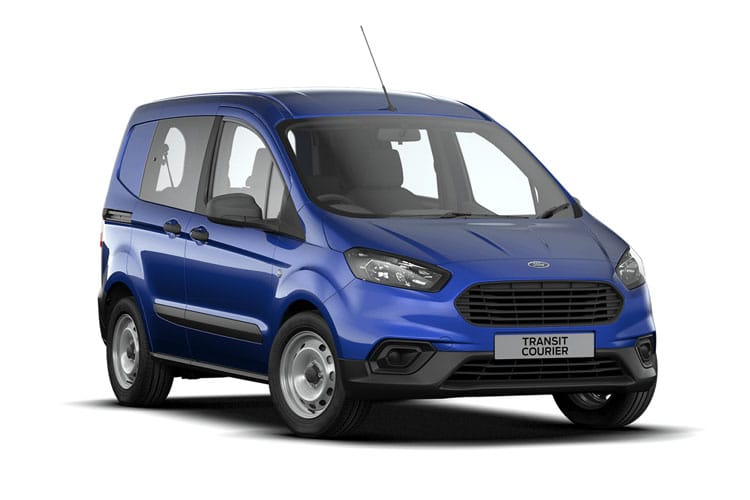
Images are for illustrative purposes only.
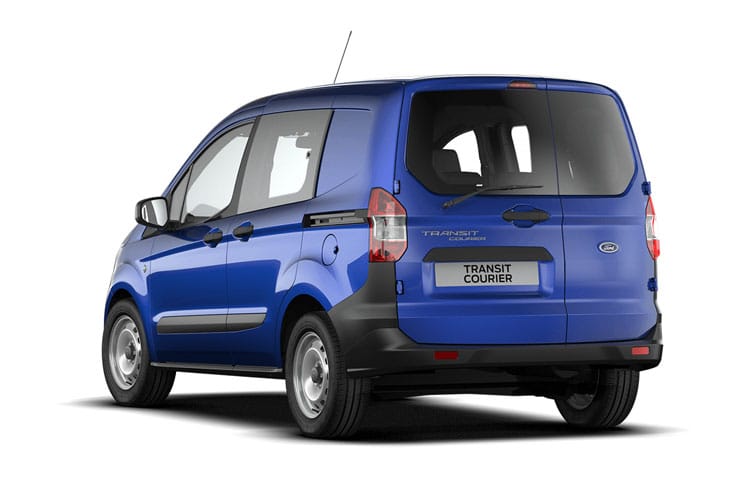

1.0 EcoBoost Sport Van
Need some assistance or advice? Call Us 01903 538835


By Jonathan Crouch
Ford's smallest style of Transit, the Transit Courier launched in 2014, proved in first generation form to be predictably efficient but deceptively spacious and capable. You certainly wouldn't expect it to swallow up to 2.6m3 or lug around as much as 660kgs. As a result, it's a van that can.
small van (1.5 EcoBlue diesel/1.0 EcoBoost petrol)
Today, a Ford Transit can be many quite separate things. Depending on the model range you prefer, select from either large or very large, compact or, as in this case, spaciously small. We're talking about the first generation Transit Courier, launched in 2014. This Courier model might have sat on much the same underpinnings as a Fiesta van sold in this period but in contrast to its stablemate, it was designed first and foremost as a van, one reason why it was considerably more spacious and usable than that LCV Fiesta. It was aimed at the urban delivery market and businesses whose cargo needs didn't really justify a stretch to Ford's larger Focus hatch-derived Transit Connect model. Prior to 2014 and since 2008, these kinds of customers had been mainly served by the shared design known either as a Citroen Nemo, a Peugeot Bipper or a Fiat Fiorino, vans that had this little segment pretty much to themselves until this Transit Courier arrived early in 2014. Ford reckoned that LCVs of this sort had traditionally under-performed in terms of their usability. In response, this Courier model had the potential for slightly greater carriage capacity and a significantly greater payload than these city van rivals. The Blue Oval brand also believed that it this Transit Courier model brought to this segment traditional Transit toughness. It sold until late 2023, when it was replaced by a new generation design.
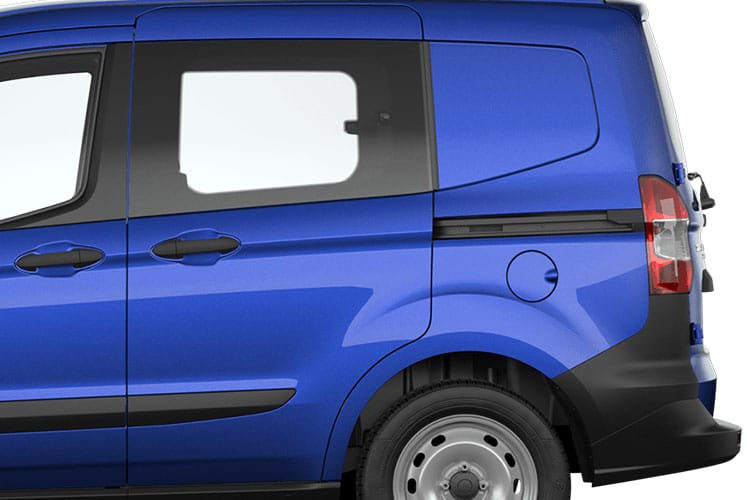
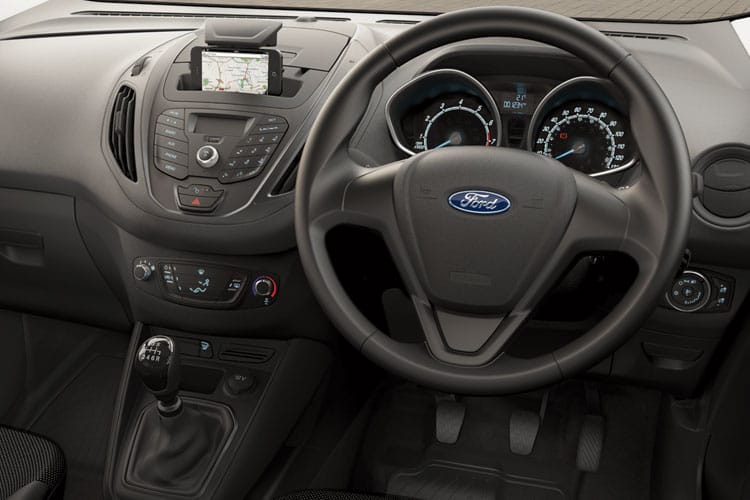
City vans need to do that seemingly impossible thing of being big on the inside but as small as is practicable outside. That's perhaps one reason why many of them look very similar - a cube and a bonnet with the brand family face grafted on the front. The Transit Courier doesn't deviate too far from this template, although the steeply raked windscreen does give it more of a one-box look. Couple that with the prominent Ford front grille and the subtly flared wheel arches and you could even say that this LCV looks quite handsome. It'll be practical too thanks to rugged bumpers and body side mouldings that provide added protection and minimise repair costs. Step inside and you'll be reminded that Ford also knows a thing or two about cabin design. It's more spacious than you would expect a van in this segment to be and also unusual in this class is the provision of a steering wheel that adjusts for both reach and rake. Build quality from the Turkish factory seems strong and this is a well thought-out mobile office environment too, with smart stowage including a "mega-centre" console capable of storing A4 documents and small laptops. There's also the option of overhead stowage and a storage drawer under the driver's seat. A so-called 'Device Dock' in the centre of the instrument panel is a unique feature in this class and enables occupants to store, mount and charge mobile devices, including phones and satnavs. In the load area, a 2.3m3 load volume is revealed and, thanks to a load space width between the wheel arches of 1,012mm, there's enough room for a standard euro pallet, with the total load space width measuring 1,488mm and the area here lit by ultra-bright LED load space lighting (where that's option was taken up). That load volume isn't quite enough for this Courier to match the 2.5m3 offered by the rival Peugeot Bipper/Citroen Nemo/Fiat Fiorino design of this period, so if you want to exceed that, you'll need to get a model whose original owner paid extra for the fold-dive passenger seat which works with a folding mesh bulkhead and increases load capacity to 2.6m3. This feature increases load area length from 1.62m to a 2.59m total of the kind you'd expect from a much larger van. Even at 1.62m though, you're talking longest-in-class load length, with 100mm more load length than you'd get in that rival Nemo/Bipper/Fiorino design. The GVM (or 'Gross Vehicle Mass') of this Courier is either 1,795kgs for the diesels or 1,775kgs for the petrol model. And talking of weight, the generous maximum payload capacity of up to 660kg.
Please contact us for an exact up-to-date valuation.
This Transit Courier generally has a strong reliability record, but our ownership survey did throw up a few issues to look out for. There were a number of problems with the 1.0-litre EcoBoost petrol engine, that led to several recalls in 2018. The big problem was the cooling system, which stopped working when the engine reached a certain temperature. On the number of post-2015 models, we've heard that the cooling system won't cool below 27-degrees. We've also heard of problems with a carbon build-up in the fuel intake valve because that valve has no cleaning mechanism. When you test your vehicle, check the manual gearshift: we've heard of issues with the shift getting stuck in one gear. Apparently this is a very common issue with this model. And it could mean that various parts need to be repaired or replaced, including the gearshift cable and the gear selector. You may even have to replace the entire transmission. We also heard of oil sump problems and a faulty airflow from the engine hoses. All of these contribute to various turbo problems. What else? Well the interior isn't the last word in sophistication but it is hardwearing. This Transit Courier is built to be extremely tough, and has benefited from many years of continual development. Check for damage to locks, tired rear suspension, rogered clutches and brakes and make sure that the load bay tie-downs aren't bent or broken. Look out for rusting rear door hinges. As usual, look for a full service history, with vehicles as recent as the Transit Courier, there's little excuse for skipped servicing or scrimping on maintenance.
(approx based on a 2018 Transit Courier Van 1.0 EcoBoost - Ex Vat) An oil filter is in the £7-£9 bracket. An air filter costs around £11. A pollen filter costs around £9-£23. A rear outer lamp costs around £60. A wiper blade is in the £3-£14 bracket. A rear brake discs cost in the £15 bracket. A front brake pad is in the £16-£40 brackets; rears are in the £16-£27 bracket. A radiator is around £180.
Although you don't get any choice when it comes to Transit Courier body styles, you'll need to come to a decision when it comes to the engine. The Courier is available with highly-efficient diesel and petrol powerplants that target best-in-class fuel economy aided by Auto Stop/Start systems for extra frugality. Most customers will want a diesel and can choose between a couple of TDCi alternatives, a 1.5-litre variant with 75PS or (initially offered but quickly deleted) a 1.6-litre 95PS Duratorq unit. Urban-based businesses might also like to consider the single petrol option that'll give them Ford's tiny 1.0-litre 100PS EcoBoost engine. This doesn't deliver as much pulling power as the TDCi options: you get 170Nm of torque - as opposed to 190Nm for the 1.5 TDCi or 215Nm for the 1.6-litre TDCi variant. It all means that if engine flexibility and hitting economy figures is important to you, the diesels may well be a better bet, all the more so if you routinely drive your van at or near its payload limit.
If you're going to have a really small van, then you might as well also make it a really spacious one. It took Ford a long time to get around to offering business buyers such a thing, but back in 2014 with this Transit Courier, the brand managed to redefine what an LCV of this kind should be like. Why? Well because it nails the two things that as a business buyer, you'll be most interested in. There's up to 10% more cargo volume than you'd get from direct competitors of the period. And best-in-class fuel economy, along with the potential for clean sub-100g/km CO2 emissions. The media-savvy will appreciate the in-car technology on offer too, particularly the SYNC connectivity system. If you're an urban-based operator looking for a used small van, it might all be enough to make the prospect of down-sizing your LCV a pleasant possibility. And if it isn't, there's always the Transit Connect, the next model up in the brand's LCV hierarchy. Many target buyers though, will find this Courier quite sufficient for their needs, swayed also perhaps by the engaging driving dynamics that come courtesy of the Fiesta underpinnings. Pricing's quite affordable too, though there are cheaper choices in this class. There aren't many better ones though. Which means that if you're looking for a more efficient fleet of vans, opting for one of these could be a good Courier move.
Data provided by CAP-HPI database - Ref# 41293
By Jonathan Crouch
Ford's smallest style of Transit, the Transit Courier launched in 2014, proved in first generation form to be predictably efficient but deceptively spacious and capable. You certainly wouldn't expect it to swallow up to 2.6m3 or lug around as much as 660kgs. As a result, it's a van that can.
small van (1.5 EcoBlue diesel/1.0 EcoBoost petrol)
Today, a Ford Transit can be many quite separate things. Depending on the model range you prefer, select from either large or very large, compact or, as in this case, spaciously small. We're talking about the first generation Transit Courier, launched in 2014. This Courier model might have sat on much the same underpinnings as a Fiesta van sold in this period but in contrast to its stablemate, it was designed first and foremost as a van, one reason why it was considerably more spacious and usable than that LCV Fiesta. It was aimed at the urban delivery market and businesses whose cargo needs didn't really justify a stretch to Ford's larger Focus hatch-derived Transit Connect model. Prior to 2014 and since 2008, these kinds of customers had been mainly served by the shared design known either as a Citroen Nemo, a Peugeot Bipper or a Fiat Fiorino, vans that had this little segment pretty much to themselves until this Transit Courier arrived early in 2014. Ford reckoned that LCVs of this sort had traditionally under-performed in terms of their usability. In response, this Courier model had the potential for slightly greater carriage capacity and a significantly greater payload than these city van rivals. The Blue Oval brand also believed that it this Transit Courier model brought to this segment traditional Transit toughness. It sold until late 2023, when it was replaced by a new generation design.
City vans need to do that seemingly impossible thing of being big on the inside but as small as is practicable outside. That's perhaps one reason why many of them look very similar - a cube and a bonnet with the brand family face grafted on the front. The Transit Courier doesn't deviate too far from this template, although the steeply raked windscreen does give it more of a one-box look. Couple that with the prominent Ford front grille and the subtly flared wheel arches and you could even say that this LCV looks quite handsome. It'll be practical too thanks to rugged bumpers and body side mouldings that provide added protection and minimise repair costs. Step inside and you'll be reminded that Ford also knows a thing or two about cabin design. It's more spacious than you would expect a van in this segment to be and also unusual in this class is the provision of a steering wheel that adjusts for both reach and rake. Build quality from the Turkish factory seems strong and this is a well thought-out mobile office environment too, with smart stowage including a "mega-centre" console capable of storing A4 documents and small laptops. There's also the option of overhead stowage and a storage drawer under the driver's seat. A so-called 'Device Dock' in the centre of the instrument panel is a unique feature in this class and enables occupants to store, mount and charge mobile devices, including phones and satnavs. In the load area, a 2.3m3 load volume is revealed and, thanks to a load space width between the wheel arches of 1,012mm, there's enough room for a standard euro pallet, with the total load space width measuring 1,488mm and the area here lit by ultra-bright LED load space lighting (where that's option was taken up). That load volume isn't quite enough for this Courier to match the 2.5m3 offered by the rival Peugeot Bipper/Citroen Nemo/Fiat Fiorino design of this period, so if you want to exceed that, you'll need to get a model whose original owner paid extra for the fold-dive passenger seat which works with a folding mesh bulkhead and increases load capacity to 2.6m3. This feature increases load area length from 1.62m to a 2.59m total of the kind you'd expect from a much larger van. Even at 1.62m though, you're talking longest-in-class load length, with 100mm more load length than you'd get in that rival Nemo/Bipper/Fiorino design. The GVM (or 'Gross Vehicle Mass') of this Courier is either 1,795kgs for the diesels or 1,775kgs for the petrol model. And talking of weight, the generous maximum payload capacity of up to 660kg.
Please contact us for an exact up-to-date valuation.
This Transit Courier generally has a strong reliability record, but our ownership survey did throw up a few issues to look out for. There were a number of problems with the 1.0-litre EcoBoost petrol engine, that led to several recalls in 2018. The big problem was the cooling system, which stopped working when the engine reached a certain temperature. On the number of post-2015 models, we've heard that the cooling system won't cool below 27-degrees. We've also heard of problems with a carbon build-up in the fuel intake valve because that valve has no cleaning mechanism. When you test your vehicle, check the manual gearshift: we've heard of issues with the shift getting stuck in one gear. Apparently this is a very common issue with this model. And it could mean that various parts need to be repaired or replaced, including the gearshift cable and the gear selector. You may even have to replace the entire transmission. We also heard of oil sump problems and a faulty airflow from the engine hoses. All of these contribute to various turbo problems. What else? Well the interior isn't the last word in sophistication but it is hardwearing. This Transit Courier is built to be extremely tough, and has benefited from many years of continual development. Check for damage to locks, tired rear suspension, rogered clutches and brakes and make sure that the load bay tie-downs aren't bent or broken. Look out for rusting rear door hinges. As usual, look for a full service history, with vehicles as recent as the Transit Courier, there's little excuse for skipped servicing or scrimping on maintenance.
(approx based on a 2018 Transit Courier Van 1.0 EcoBoost - Ex Vat) An oil filter is in the £7-£9 bracket. An air filter costs around £11. A pollen filter costs around £9-£23. A rear outer lamp costs around £60. A wiper blade is in the £3-£14 bracket. A rear brake discs cost in the £15 bracket. A front brake pad is in the £16-£40 brackets; rears are in the £16-£27 bracket. A radiator is around £180.
Although you don't get any choice when it comes to Transit Courier body styles, you'll need to come to a decision when it comes to the engine. The Courier is available with highly-efficient diesel and petrol powerplants that target best-in-class fuel economy aided by Auto Stop/Start systems for extra frugality. Most customers will want a diesel and can choose between a couple of TDCi alternatives, a 1.5-litre variant with 75PS or (initially offered but quickly deleted) a 1.6-litre 95PS Duratorq unit. Urban-based businesses might also like to consider the single petrol option that'll give them Ford's tiny 1.0-litre 100PS EcoBoost engine. This doesn't deliver as much pulling power as the TDCi options: you get 170Nm of torque - as opposed to 190Nm for the 1.5 TDCi or 215Nm for the 1.6-litre TDCi variant. It all means that if engine flexibility and hitting economy figures is important to you, the diesels may well be a better bet, all the more so if you routinely drive your van at or near its payload limit.
If you're going to have a really small van, then you might as well also make it a really spacious one. It took Ford a long time to get around to offering business buyers such a thing, but back in 2014 with this Transit Courier, the brand managed to redefine what an LCV of this kind should be like. Why? Well because it nails the two things that as a business buyer, you'll be most interested in. There's up to 10% more cargo volume than you'd get from direct competitors of the period. And best-in-class fuel economy, along with the potential for clean sub-100g/km CO2 emissions. The media-savvy will appreciate the in-car technology on offer too, particularly the SYNC connectivity system. If you're an urban-based operator looking for a used small van, it might all be enough to make the prospect of down-sizing your LCV a pleasant possibility. And if it isn't, there's always the Transit Connect, the next model up in the brand's LCV hierarchy. Many target buyers though, will find this Courier quite sufficient for their needs, swayed also perhaps by the engaging driving dynamics that come courtesy of the Fiesta underpinnings. Pricing's quite affordable too, though there are cheaper choices in this class. There aren't many better ones though. Which means that if you're looking for a more efficient fleet of vans, opting for one of these could be a good Courier move.
