
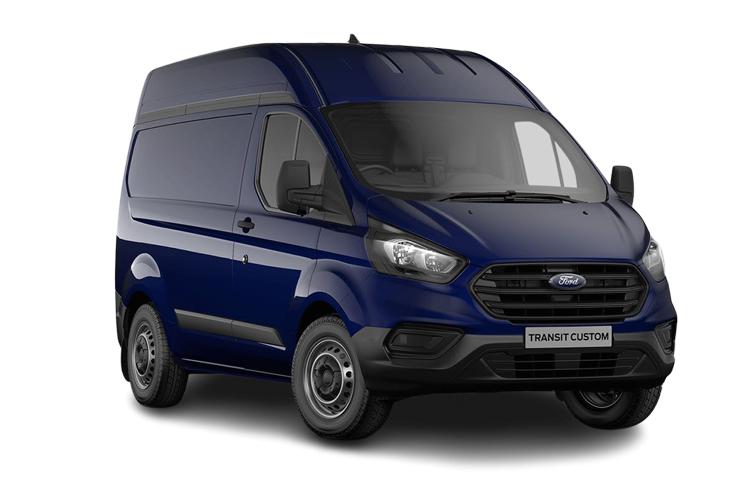
Images are for illustrative purposes only.
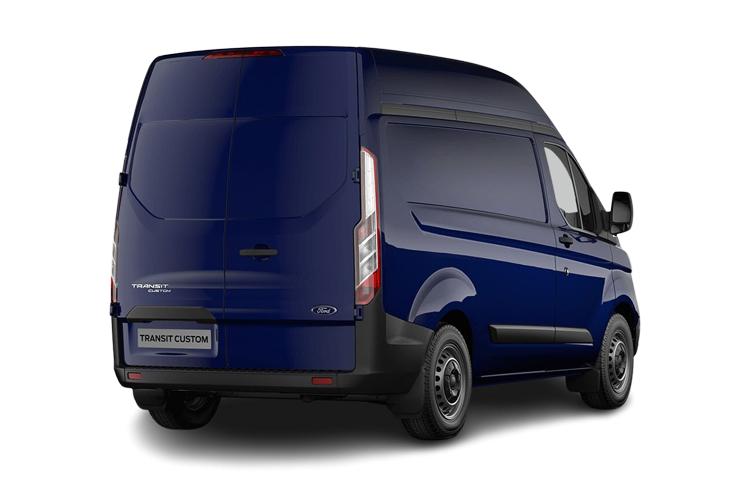
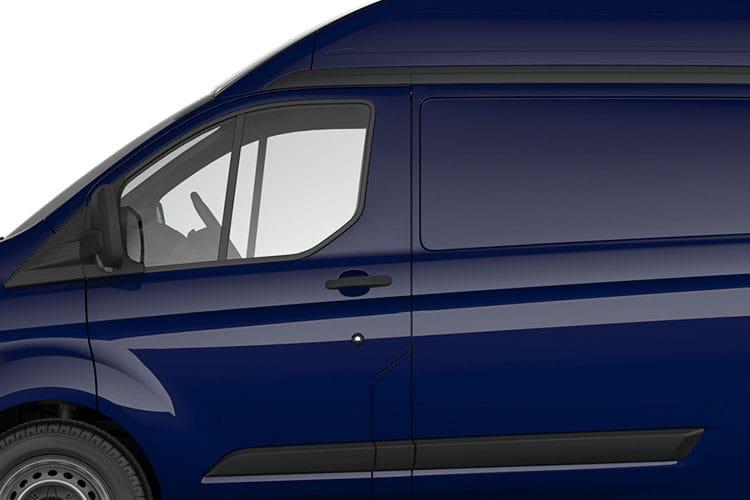
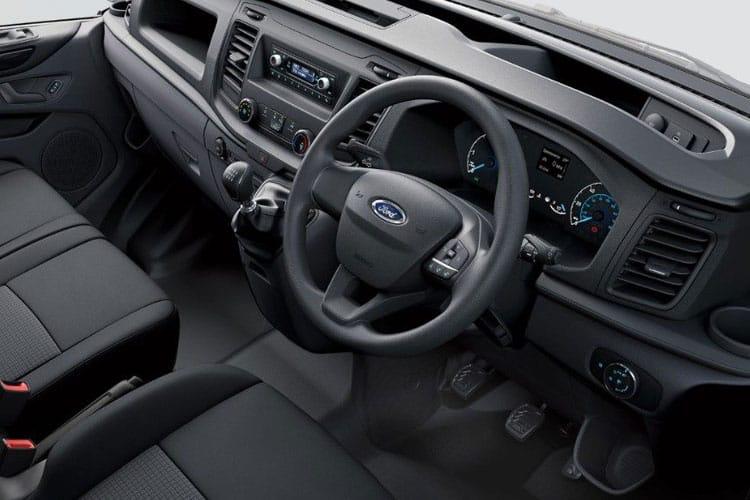

2.0 EcoBlue 130ps High Roof Trail Van
Need some assistance or advice? Call Us 01903 538835


By Jonathan Crouch
The Transit Custom isn't Ford's largest Transit model line but it's an impressively versatile medium-sized LCV segment player that in first generation form was vastly improved in 2018, creating the product we're looking at here. Transit models have ruled the British large LCV market for around half a century and products like this one are the reason why.
2/4/5dr medium/large van (2.0 EcoBlue diesel/1.0 EcoBoost PHEV petrol)
The Transit Custom is arguably the most important version of Britain's most important LCV model line. It's Ford's one-tonne van, competing in the key segment for medium-sized models, and in early 2018 the first generation model was improved significantly to create the LCV we look at here as a used buy. 'Custom' used to be merely a Transit trim level but in 2012, Ford decided it should designate their newly-created medium-sized Transit model line. The brand had never previously offered such a thing, expecting instead that one single large design could meet the needs of every business, providing it was available in enough shapes and sizes. In creating the Transit Custom - and the separate larger full-sized model that sold alongside it known merely as the 'Transit' - Ford finally changed its approach, recognising what its rivals had known for decades; that the market segments for medium-sized and large LCVs are very different, each requiring a unique approach. Here, that brought us a very competitive product indeed, something reflected by the fact that in its first four years on sale, over 206,000 Transit Custom models were sold, contributing to buoyant sales across a Transit line-up that by 2018 was in its 53rd year of LCV market leadership. By this point though, the medium-sized LCV segment competition had raised its game, with all-new or substantially revised versions of every major rival threating the Blue Oval maker's UK commercial sector dominance. Hence the need for the revised Transit Custom model range we're going to look at here. If you know this product, you might notice the sharper styling, but what was more important was what lay beneath the bonnet, an all-new range of 2.0-litre EcoBlue diesel engines that Ford said could save the average Transit Custom operator over £1,250 a year. For those wanting even more efficiency, a frugally-orientated 'Econetic' version provided it, plus Plug-in petrol/electric hybrid tech was developed too. In addition, big advances were made in camera-driven safety and media connectivity. And there was an even wider range of CV conversions for those needing them, with well over 300 Transit Custom derivatives on offer. Not bad when you remember that there were just 75 variants available when the original model Transit was first launched back in 1965. The Transit Custom sold in this form until early 2023, when it was replaced by a second generation design shared with Volkswagen.
There are several hundred Transit Custom derivatives from which to choose, with most being centred around the Panel Van body style. Adding people to the packaging mix means you might want to look at the Double-Cab-in-Van body shape with its extra rearward seats in front of the load bay. Or, if you want to give the whole space over to the carriage of people, there's the Kombi minibus or the more luxurious Tourneo large MPV model, both of which can seat either eight or nine. Our focus here though is the panel van version. A van needs to look smart, modern and professional. This one does, with signature kinetic design features that bring a purposeful stance and bold rising shoulder line, clearly marking out this Transit Custom as a cargo carrier very much of its time. Over 2,200 parts were changed in creating this revised version, so what we're looking at here is a bit more than just a facelift. Quite a few of them feature at the front, where the bonnet, the wings and the lower bumper area were all changed. Also new were the slimmer, more dynamic LED-framed headlamps which could include HID Xenon technology and which flank a bolder, high-mounted 3-bar Transit grille. Inside, the cabin design is very different from what went before. There was an all-new dash and instrument layout that on top models featured Ford's sophisticated 'SYNC 3' 8-inch infotainment touchscreen. This offers 'Apple CarPlay' and 'Android Auto' smartphone-mirroring, Bluetooth, audio and, if specified, navigational functions - and delivers intuitive voice control too. The seats were redesigned for greater support, materials quality was vastly better and there was a big increase in interior stowage around the cabin, primarily through the addition of three dash-top open stowage areas. As before, there's a three-person seating layout and the centre backrest folds down to create a desk-top area. In addition, the seat base lifts to reveal extra storage capacity. Flexibility when it comes to load-carrying practicality is of course a fundamental requirement of any van and Ford did its best to nail that here. As an example, a typical 'L1H1' Transit Custom with standard wheelbase and roof heights is capable of carrying up to 6.0m3 of cubic capacity. There's a load area height of 1,406mm and a class-leading width between the wheel arches of 1,351mm, plus a load area length of 2,554mm. In all variants, you can increase your load area length by 517mm by making use of a useful flap in the bulkhead which allows you to push really lengthy items into the cab. If you need something bigger in the Transit Custom range, a higher 'H2' roof height is available, as is a longer 'L2' wheelbase. Together, these two additions could potentially give you up to 8.3m3 of total capacity. The payload figures are class-competitive (up to 1,530kgs in the 'L1H1' model) and these readings will obviously be heavily influenced by the Gross Vehicle Weight you choose. There's a choice of 2,600kg, 2,800kg, 3,000kg, 3,200kg and 3,400kg series models, the longer 'L2' body shape only available with the three weightiest options.
Please contact us for an exact up-to-date valuation.
This Transit Custom generally has a strong reliability record, but our ownership survey did throw up a few issues to look out for. The interior isn't the last word in sophistication but it is hardwearing. This Transit is built to be extremely tough, and has benefited from many years of continual development. Check for damage to locks, tired rear suspension, rogered clutches and brakes and make sure that the load bay tie-downs aren't bent or broken. As usual, look for a full service history, with vehicles as recent as the Transit Custom, there's little excuse for skipped servicing or scrimping on maintenance. Look out for rusting rear door hinges and check the outer CV joint rubber boot covers for splits. They wear and if they let water in, the CV joints will wear quickly. On the test drive, listen for whistling during gear changes which references problems with the intercooler pipe. It splits where it rubs against a nut near the alternator. Underneath, check for oil leaks - there have been reports that the crank oil seal can let oil out between the engine and the gearbox. With the diesel engine, there are reports of noisy idler pulleys, and adjustment needed to the belt tensioner.
(approx prices, based on a 2020-reg PHEV 1.0 EcoBoost ex VAT) As with most Ford models, spare parts are reasonably priced and very plentiful. You'll pay £8-£12 for an oil filter and £24-£27 for an air filter. It's £8-£52 for a wiper blade. Front brake pads are in the £25-£67 bracket. A pair of rear brake discs is around £110. A headlamp is in the £177-£259. A tail light is in the £127-£165 bracket. A water pump is around £50; a thermostat around £28. A shock absorber around £80-£98.
There's no getting away from the fact that by far the most important update made to this Transit Custom in as part of the 2018 update lay with the installation of a whole fresh range of 2.0-litre 'EcoBlue' diesel engines which, as well as being much more efficient, offered 20% more pulling power through the gears. If you're familiar with previous versions of this van, you should notice that pretty quickly out on the road. There's a choice of 105, 130 and 170PS outputs, the latter two available with a 'Selectshift 6-speed automatic transmission. Expect running cost returns in the 40 to 45mpg combined cycle bracket and CO2 readings in the 165 to 180g/km range - which is very class-competitive. If you want to do better, Ford offered a super-frugal 'ECOnetic' version of the 105PS model. Service intervals on the diesel models are set at a lengthy 36,000 miles or every two years - which is class-leading. If your business wants to make a particularly green statement, you can seek out the Plug-in Hybrid version, which mates a 1.0-litre EcoBoost petrol engine to a 50Kw electric motor powered by a lithium ion rechargeable battery. As before, across the range, handling through the bends is class-leading, thanks in part to the torque vectoring system that Ford developed for its passenger cars. And there's a useful 2,500kg braked towing capacity too.
This updated version of the first generation Transit Custom was the most sophisticated Transit we'd yet seen, but businesses still bought it for the same reasons they always had. This Custom model remained such a simple, straightforward one-stop choice and it helped that it satisfied a wider variety of commercial needs than any other Transit derivative. We didn't believe that there wasn't much wrong with the original version of this van and we think there was even less wrong with this one. The key change was the installation of Ford's much more efficient EcoBlue engine line-up, at a stroke dealing with the one Achilles heel of the original Custom - running costs that were a little off the pace. With that sorted, it was easier to be swayed by this LCVs many selling points; boxy practicality, class-leading handling, thoughtful equipment features and the UK's largest dealer network. True, some rivals offer classier cabs - but they cost a lot more. This model was number one for a reason.
Data provided by CAP-HPI database - Ref# 48579
By Jonathan Crouch
The Transit Custom isn't Ford's largest Transit model line but it's an impressively versatile medium-sized LCV segment player that in first generation form was vastly improved in 2018, creating the product we're looking at here. Transit models have ruled the British large LCV market for around half a century and products like this one are the reason why.
2/4/5dr medium/large van (2.0 EcoBlue diesel/1.0 EcoBoost PHEV petrol)
The Transit Custom is arguably the most important version of Britain's most important LCV model line. It's Ford's one-tonne van, competing in the key segment for medium-sized models, and in early 2018 the first generation model was improved significantly to create the LCV we look at here as a used buy. 'Custom' used to be merely a Transit trim level but in 2012, Ford decided it should designate their newly-created medium-sized Transit model line. The brand had never previously offered such a thing, expecting instead that one single large design could meet the needs of every business, providing it was available in enough shapes and sizes. In creating the Transit Custom - and the separate larger full-sized model that sold alongside it known merely as the 'Transit' - Ford finally changed its approach, recognising what its rivals had known for decades; that the market segments for medium-sized and large LCVs are very different, each requiring a unique approach. Here, that brought us a very competitive product indeed, something reflected by the fact that in its first four years on sale, over 206,000 Transit Custom models were sold, contributing to buoyant sales across a Transit line-up that by 2018 was in its 53rd year of LCV market leadership. By this point though, the medium-sized LCV segment competition had raised its game, with all-new or substantially revised versions of every major rival threating the Blue Oval maker's UK commercial sector dominance. Hence the need for the revised Transit Custom model range we're going to look at here. If you know this product, you might notice the sharper styling, but what was more important was what lay beneath the bonnet, an all-new range of 2.0-litre EcoBlue diesel engines that Ford said could save the average Transit Custom operator over £1,250 a year. For those wanting even more efficiency, a frugally-orientated 'Econetic' version provided it, plus Plug-in petrol/electric hybrid tech was developed too. In addition, big advances were made in camera-driven safety and media connectivity. And there was an even wider range of CV conversions for those needing them, with well over 300 Transit Custom derivatives on offer. Not bad when you remember that there were just 75 variants available when the original model Transit was first launched back in 1965. The Transit Custom sold in this form until early 2023, when it was replaced by a second generation design shared with Volkswagen.
There are several hundred Transit Custom derivatives from which to choose, with most being centred around the Panel Van body style. Adding people to the packaging mix means you might want to look at the Double-Cab-in-Van body shape with its extra rearward seats in front of the load bay. Or, if you want to give the whole space over to the carriage of people, there's the Kombi minibus or the more luxurious Tourneo large MPV model, both of which can seat either eight or nine. Our focus here though is the panel van version. A van needs to look smart, modern and professional. This one does, with signature kinetic design features that bring a purposeful stance and bold rising shoulder line, clearly marking out this Transit Custom as a cargo carrier very much of its time. Over 2,200 parts were changed in creating this revised version, so what we're looking at here is a bit more than just a facelift. Quite a few of them feature at the front, where the bonnet, the wings and the lower bumper area were all changed. Also new were the slimmer, more dynamic LED-framed headlamps which could include HID Xenon technology and which flank a bolder, high-mounted 3-bar Transit grille. Inside, the cabin design is very different from what went before. There was an all-new dash and instrument layout that on top models featured Ford's sophisticated 'SYNC 3' 8-inch infotainment touchscreen. This offers 'Apple CarPlay' and 'Android Auto' smartphone-mirroring, Bluetooth, audio and, if specified, navigational functions - and delivers intuitive voice control too. The seats were redesigned for greater support, materials quality was vastly better and there was a big increase in interior stowage around the cabin, primarily through the addition of three dash-top open stowage areas. As before, there's a three-person seating layout and the centre backrest folds down to create a desk-top area. In addition, the seat base lifts to reveal extra storage capacity. Flexibility when it comes to load-carrying practicality is of course a fundamental requirement of any van and Ford did its best to nail that here. As an example, a typical 'L1H1' Transit Custom with standard wheelbase and roof heights is capable of carrying up to 6.0m3 of cubic capacity. There's a load area height of 1,406mm and a class-leading width between the wheel arches of 1,351mm, plus a load area length of 2,554mm. In all variants, you can increase your load area length by 517mm by making use of a useful flap in the bulkhead which allows you to push really lengthy items into the cab. If you need something bigger in the Transit Custom range, a higher 'H2' roof height is available, as is a longer 'L2' wheelbase. Together, these two additions could potentially give you up to 8.3m3 of total capacity. The payload figures are class-competitive (up to 1,530kgs in the 'L1H1' model) and these readings will obviously be heavily influenced by the Gross Vehicle Weight you choose. There's a choice of 2,600kg, 2,800kg, 3,000kg, 3,200kg and 3,400kg series models, the longer 'L2' body shape only available with the three weightiest options.
Please contact us for an exact up-to-date valuation.
This Transit Custom generally has a strong reliability record, but our ownership survey did throw up a few issues to look out for. The interior isn't the last word in sophistication but it is hardwearing. This Transit is built to be extremely tough, and has benefited from many years of continual development. Check for damage to locks, tired rear suspension, rogered clutches and brakes and make sure that the load bay tie-downs aren't bent or broken. As usual, look for a full service history, with vehicles as recent as the Transit Custom, there's little excuse for skipped servicing or scrimping on maintenance. Look out for rusting rear door hinges and check the outer CV joint rubber boot covers for splits. They wear and if they let water in, the CV joints will wear quickly. On the test drive, listen for whistling during gear changes which references problems with the intercooler pipe. It splits where it rubs against a nut near the alternator. Underneath, check for oil leaks - there have been reports that the crank oil seal can let oil out between the engine and the gearbox. With the diesel engine, there are reports of noisy idler pulleys, and adjustment needed to the belt tensioner.
(approx prices, based on a 2020-reg PHEV 1.0 EcoBoost ex VAT) As with most Ford models, spare parts are reasonably priced and very plentiful. You'll pay £8-£12 for an oil filter and £24-£27 for an air filter. It's £8-£52 for a wiper blade. Front brake pads are in the £25-£67 bracket. A pair of rear brake discs is around £110. A headlamp is in the £177-£259. A tail light is in the £127-£165 bracket. A water pump is around £50; a thermostat around £28. A shock absorber around £80-£98.
There's no getting away from the fact that by far the most important update made to this Transit Custom in as part of the 2018 update lay with the installation of a whole fresh range of 2.0-litre 'EcoBlue' diesel engines which, as well as being much more efficient, offered 20% more pulling power through the gears. If you're familiar with previous versions of this van, you should notice that pretty quickly out on the road. There's a choice of 105, 130 and 170PS outputs, the latter two available with a 'Selectshift 6-speed automatic transmission. Expect running cost returns in the 40 to 45mpg combined cycle bracket and CO2 readings in the 165 to 180g/km range - which is very class-competitive. If you want to do better, Ford offered a super-frugal 'ECOnetic' version of the 105PS model. Service intervals on the diesel models are set at a lengthy 36,000 miles or every two years - which is class-leading. If your business wants to make a particularly green statement, you can seek out the Plug-in Hybrid version, which mates a 1.0-litre EcoBoost petrol engine to a 50Kw electric motor powered by a lithium ion rechargeable battery. As before, across the range, handling through the bends is class-leading, thanks in part to the torque vectoring system that Ford developed for its passenger cars. And there's a useful 2,500kg braked towing capacity too.
This updated version of the first generation Transit Custom was the most sophisticated Transit we'd yet seen, but businesses still bought it for the same reasons they always had. This Custom model remained such a simple, straightforward one-stop choice and it helped that it satisfied a wider variety of commercial needs than any other Transit derivative. We didn't believe that there wasn't much wrong with the original version of this van and we think there was even less wrong with this one. The key change was the installation of Ford's much more efficient EcoBlue engine line-up, at a stroke dealing with the one Achilles heel of the original Custom - running costs that were a little off the pace. With that sorted, it was easier to be swayed by this LCVs many selling points; boxy practicality, class-leading handling, thoughtful equipment features and the UK's largest dealer network. True, some rivals offer classier cabs - but they cost a lot more. This model was number one for a reason.
