
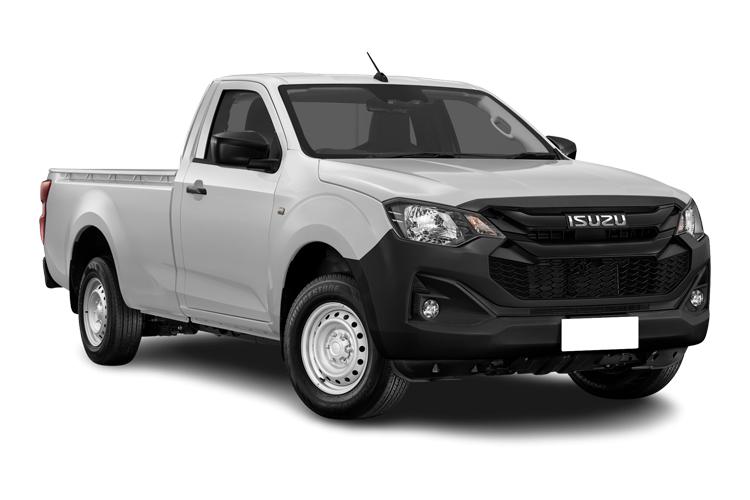
Images are for illustrative purposes only.
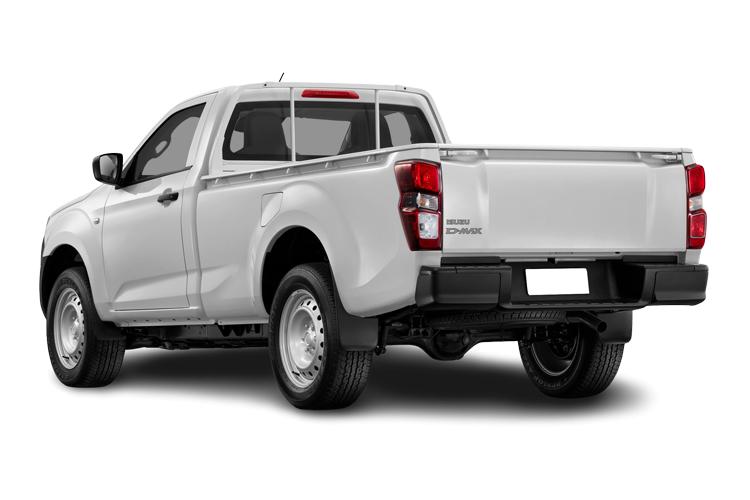
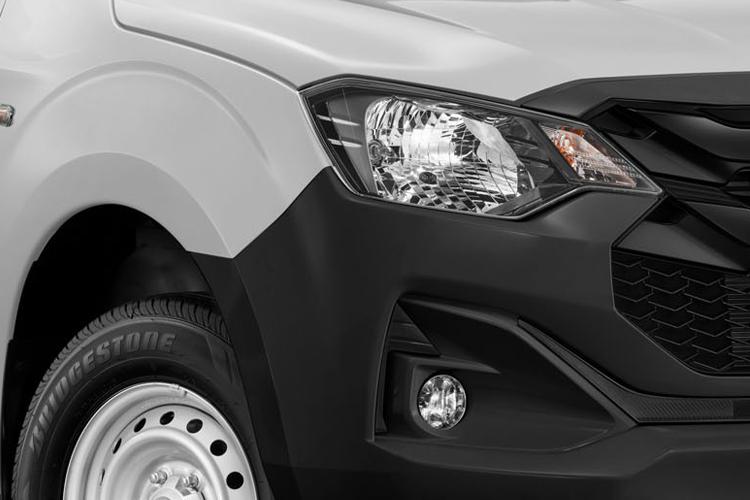
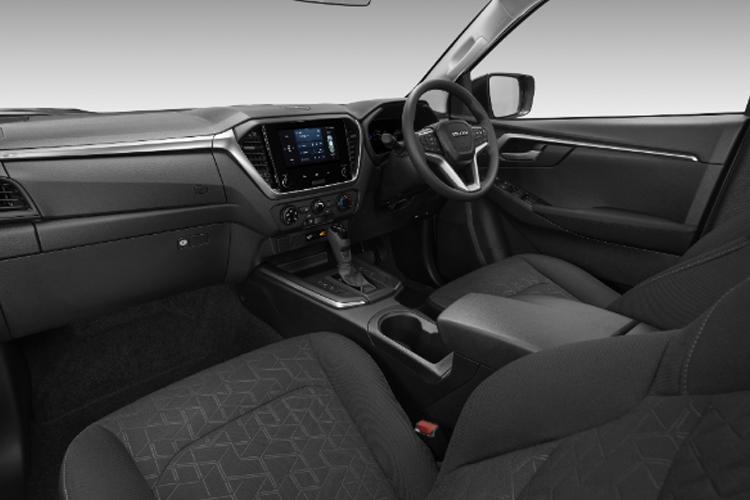

140kW 67kWh eDL40 Double Cab Pickup 4x4 Auto
Need some assistance or advice? Call Us 01903 538835


Should your next Isuzu D-Max be all-electric? Jonathan Crouch drives the D-Max EV.
Isuzu tries its hand at an electric pick-up with this D-Max EV. The compromises are quite impressively few over the diesel version, but the price is high and range is limited.
Pick-up makers know they'll eventually have to create purpose-built EVs - but we're not seeing many of those just yet. We are starting to see a full-electric versions of existing diesel models though - and one of these is the pick-up we look at here, Isuzu's D-Max EV. It looks virtually no different to the black pump-fuelled version, sits on exactly the same ladder-frame chassis and has virtually the same interior. And it can tow and lug around the same amount. Of course beyond that, there are fundamental differences here, not least the vastly increased price. Let's take a closer look.
Perhaps because the diesel engine in an ordinary D-Max is so rumbly, it seems particularly strange to set off in this EV model in near silence. So what kind of EV drivetrain do we have here? Well as you'd expect, it's a dual motor system with a motor on each axle - we've had 2WD electric pick-up trucks, but they're not much use to anyone. Here, this AWD set-up delivers a combined output of 200bhp (62bhp at the front and 139bhp at the rear). There's 348Nm of torque (115Nm at the front and 233Nm at the rear), so the grunt that you'd expect from the diesel version is also in evidence here. Those motors are energised by a 66.9kWh battery under the floor, which is smaller than you might expect - as (despite the special low rolling resistance Dunlop tyres) is the range figure; 163 miles on the combined cycle and up to 224 miles in city traffic. Getting near to either of those figures requires permanent engagement of the provided 'ECO' mode and proactive use of the four-stage paddleshift brake regen system. That drivetrain we've just briefed you on - badged 'eDL40' - is the only one available to EV folk wanting this Isuzu and powers this truck to 62mph in 10.1s on the way to just over 80mph. The important engineering factor here though - and the big feature that rival EV pick-ups will envy - is this Isuzu's bespoke new DeDoin rear suspension (which replaces the diesel model's leaf springs). This not only allows this D-Max to retain the diesel model's one-tonne payload and 3.5-tonne payload but also has dynamic benefits in terms of ride and handling. You shouldn't expect too much in terms of handling of course: no ladder-framed pick-up contender in this class can properly replicate the car-like drive dynamics of an SUV and this one certainly doesn't. There's quite an unsettled ride on all but the smoothest surfaces and if, rather unwisely, you push on too much through tighter turns at speed, there's plenty of the sort of body roll you'd always expect from a pick-up, that leaves you sliding around on the flat-bottomed seats. What about off the tarmac? Well Isuzu talks of a lack of off-road compromise here and, as with the diesel model, there's a dedicated 'Rough Terrain' mode for what the Japanese maker calls 'extreme off-road capability'. But the reality is that because of the battery pack's positioning beneath the carry-over ladder-frame chassis, ground clearance has (very obviously) been reduced from 235mm to 210mm. But you can still wade through water up to 600mm deep. And Isuzu quotes approach and departure angles of 30.5-degrees and 24.2-degrees respectively.
You'll do well to spot that this is an electric D-Max rather than a diesel one. The original concept version had a different smoother-looking front end but for the production model, that's been swapped out for a more conventional grille. Which means that the visual changes are limited to blue-tinged Bi-LED headlights. And blue EV badges on the front wings and the tailgate - that's about it. This electric model comes in Extended Cab and Double Cab body shapes. From the side, you might note the way the battery placement under the chassis necessitates 25mm drop in ride height. And the top spec version is set apart by dark grey rather than chrome exterior trimming. Inside, differences over the diesel are equally difficult to spot, though a close glance at the usual 7-inch instrument screen reveals the top additions of battery read-outs, while flanking the display is a power/charge gauge on the left and a battery level gauge on the right. Otherwise, it's all as usual with a D-Max, with the normal durable plastics and a commanding driving position. As usual with this Isuzu, the size of centre screen you get depends on trim choice - 8-inches with base spec or 9-inches if you go for a top 'V-Cross' version. What's it like for rear passengers in the Double Cab model? Well once inside, there's slightly more passenger comfort than you might expect; leg room's helped by the 3,125mm wheelbase length. And there's also decent room for head and shoulders. Plus you'll appreciate the way that the seat back angle has been slightly set to make the backrest less vertically inclined, which gives noticeably greater comfort on longer journeys.
All the prices we're going to quote here are excluding the VAT that most business users will be able to reclaim on this Isuzu. That's a point worth making because at the time of this test in Autumn 2026, this was the only full-electric pick-up on sale here on which it was possible to reclaim purchase VAT, courtesy of its class-leading one-tonne payload. From launch D-Max EV prices looked somewhat off-putting, starting from around £60,000 (ex-VAT) for the eDL40 version in rare Extended Cab body shape. The Double Cab version most will want costs £1,000 more. Double Cab customers who want a higher level of trim are offered the top 'V-Cross' variant, which as we compiled this review was pitched ex-VAT at around £62,500. You can deduct £5,000 from all of these figures, courtesy of the available £5,000 government Plug-in Van Grant. That grant's also available on this truck's non-VAT-reclaimable EV pick-up segment rivals. With it deducted, a Maxus eTerron9 would be about £3,000 less, a Toyota Hilux BEV around £8,000 less and a KGM Musso EV a massive £15,000 less. But all three of those rival models are considerably limited on payload; this battery-powered D-Max isn't. The only other plug-in pick-up you can buy that can match this Isuzu's 1-tonne payload is the Ford Ranger PHEV; that's obviously not an EV but it is substantially cheaper, with prices starting from around £38,000 as we filmed. It's also worth comparing the cost of this D-Max EV against the cost of a D-Max diesel; the price difference to plug in is substantial. Even after grant deduction, this D-Max EV still requires around £10,000 more from you than an equivalently-trimmed automatic combustion counterpart. Small wonder that the EV part of the pick-up segment remains so small. If having considered all of that it's a D-Max EV you still want, then you might be wondering about standard equipment. Well the two eDL40 variants come with Bi-LED headlights, keyless entry, all-round parking sensors, side steps, LED front fog lights, auto headlamps and wipers, LED tail lamps and 18-inch two-tone alloy wheels, plus there's a full-sized spare wheel and an alarm. Drive stuff includes intelligent adaptive cruise control, a 'Rough Terrain' drive mode and Hill Descent Control. Inside, there's leather upholstery, a power-adjustable driver's seat with electric lumbar support, dual-zone climate control, a 7-inch instrument screen, heated front seats and an 8-inch centre screen with wireless 'Apple CarPlay' and 'Android Auto', a 6-speaker audio set-up and a surround view camera system. This top 'V-Cross'-spec adds dark grey exterior styling, a matt dark grey wheel finish and headlamp levelling, while inside there's a larger 9-inch centre screen with navigation, plus an upgraded 8-speaker sound system and an auto-dimming rear view mirror.
What about charging? Well you can only DC-replenish the battery of this Isuzu at up to 50kW, which is extremely slow by current EV standard. Which is why restoring 20-80% capacity takes around an hour. If you're able to AC charge at your home or business using a three-phase supply 11kW wallbox, you'll need about 10 hours for a full charge. Whatever kind of charger you use, given the restricted 163 mile quoted driving range, you're going to be visiting it quite frequently. At least the practicalities should stack up. The big trump card for Isuzu here, as we've mentioned elsewhere in this review is payload. The three other EV pick-up models available at the time of this test - the Maxus eTerron9, the KGM Musso EV and the Toyota Hilux BEV - can only manage, respectively, 620kg, 690kg and 715kg of payload respectively, which for quite a few operators just isn't going to be enough. The D-Max EV in contrast, offers the same one-tonne payload as the diesel version - specifically 1,015kg for the Double Cab and 1,050kg for the Extended cab. There's the same 3.5-tonne braked towing limit as the diesel version too. The load area of this EV variant is another thing that's exactly the same as that of the combustion model, 1,530mm wide and 500mm deep. With this Double Cab bodyshape it's 1,520mm long, which makes it one of the shorter cargo bays in the segment. Like all D-Max models, this one offers one of the best warranties in the pick-up segment - a five year / 125,000 mile guarantee. Plus there's three years of roadside recovery and assistance, a three-year paint warranty and six years of anti-corrosion cover. What else? Residual values for the diesel version are strong but these are unlikely to be replicated by this much pricier EV variant. There is at least a big tax saving for EV motoring. As usual with EVs, there's low BiK tax to pay - 4% at the time of our test until Spring 2027, then 5% in the '27 to '28 tax year and 7% in the '28 to '29 tax year; a diesel D-Max (like other diesel pick-ups) incurs a hefty 37% BiK tax bill. Which means a 20% tax payer will need to find only £20 annually for a D-Max EV, compared to about £240 for the equivalent D-Max diesel.
This is clearly an exploratory exercise by Isuzu. The next-generation D-Max will have a really credible EV variant and it'll be a much more competitive proposition than this D-Max EV. Still, if you want to be an early adopter in the electric pick-up market and don't want to buy from a budget brand, this (for the time being) is where it's at. Unless of course you're prepared to compromise little on your eco-ambitions and opt for Ford Ranger PHEV, which we'd suggest might be a good alternative. Isuzu says this D-Max EV is uncompromised in its off-road prowess over the diesel - which isn't quite true. But the brand has done well to keep so much of the combustion version's all-round toughness here. But there's a price for that. For the time being, it's likely that only quite a few small percentage of D-Max customers will be prepared to pay it.
Data provided by CAP-HPI database - Ref# 63010
Should your next Isuzu D-Max be all-electric? Jonathan Crouch drives the D-Max EV.
Isuzu tries its hand at an electric pick-up with this D-Max EV. The compromises are quite impressively few over the diesel version, but the price is high and range is limited.
Pick-up makers know they'll eventually have to create purpose-built EVs - but we're not seeing many of those just yet. We are starting to see a full-electric versions of existing diesel models though - and one of these is the pick-up we look at here, Isuzu's D-Max EV. It looks virtually no different to the black pump-fuelled version, sits on exactly the same ladder-frame chassis and has virtually the same interior. And it can tow and lug around the same amount. Of course beyond that, there are fundamental differences here, not least the vastly increased price. Let's take a closer look.
Perhaps because the diesel engine in an ordinary D-Max is so rumbly, it seems particularly strange to set off in this EV model in near silence. So what kind of EV drivetrain do we have here? Well as you'd expect, it's a dual motor system with a motor on each axle - we've had 2WD electric pick-up trucks, but they're not much use to anyone. Here, this AWD set-up delivers a combined output of 200bhp (62bhp at the front and 139bhp at the rear). There's 348Nm of torque (115Nm at the front and 233Nm at the rear), so the grunt that you'd expect from the diesel version is also in evidence here. Those motors are energised by a 66.9kWh battery under the floor, which is smaller than you might expect - as (despite the special low rolling resistance Dunlop tyres) is the range figure; 163 miles on the combined cycle and up to 224 miles in city traffic. Getting near to either of those figures requires permanent engagement of the provided 'ECO' mode and proactive use of the four-stage paddleshift brake regen system. That drivetrain we've just briefed you on - badged 'eDL40' - is the only one available to EV folk wanting this Isuzu and powers this truck to 62mph in 10.1s on the way to just over 80mph. The important engineering factor here though - and the big feature that rival EV pick-ups will envy - is this Isuzu's bespoke new DeDoin rear suspension (which replaces the diesel model's leaf springs). This not only allows this D-Max to retain the diesel model's one-tonne payload and 3.5-tonne payload but also has dynamic benefits in terms of ride and handling. You shouldn't expect too much in terms of handling of course: no ladder-framed pick-up contender in this class can properly replicate the car-like drive dynamics of an SUV and this one certainly doesn't. There's quite an unsettled ride on all but the smoothest surfaces and if, rather unwisely, you push on too much through tighter turns at speed, there's plenty of the sort of body roll you'd always expect from a pick-up, that leaves you sliding around on the flat-bottomed seats. What about off the tarmac? Well Isuzu talks of a lack of off-road compromise here and, as with the diesel model, there's a dedicated 'Rough Terrain' mode for what the Japanese maker calls 'extreme off-road capability'. But the reality is that because of the battery pack's positioning beneath the carry-over ladder-frame chassis, ground clearance has (very obviously) been reduced from 235mm to 210mm. But you can still wade through water up to 600mm deep. And Isuzu quotes approach and departure angles of 30.5-degrees and 24.2-degrees respectively.
You'll do well to spot that this is an electric D-Max rather than a diesel one. The original concept version had a different smoother-looking front end but for the production model, that's been swapped out for a more conventional grille. Which means that the visual changes are limited to blue-tinged Bi-LED headlights. And blue EV badges on the front wings and the tailgate - that's about it. This electric model comes in Extended Cab and Double Cab body shapes. From the side, you might note the way the battery placement under the chassis necessitates 25mm drop in ride height. And the top spec version is set apart by dark grey rather than chrome exterior trimming. Inside, differences over the diesel are equally difficult to spot, though a close glance at the usual 7-inch instrument screen reveals the top additions of battery read-outs, while flanking the display is a power/charge gauge on the left and a battery level gauge on the right. Otherwise, it's all as usual with a D-Max, with the normal durable plastics and a commanding driving position. As usual with this Isuzu, the size of centre screen you get depends on trim choice - 8-inches with base spec or 9-inches if you go for a top 'V-Cross' version. What's it like for rear passengers in the Double Cab model? Well once inside, there's slightly more passenger comfort than you might expect; leg room's helped by the 3,125mm wheelbase length. And there's also decent room for head and shoulders. Plus you'll appreciate the way that the seat back angle has been slightly set to make the backrest less vertically inclined, which gives noticeably greater comfort on longer journeys.
All the prices we're going to quote here are excluding the VAT that most business users will be able to reclaim on this Isuzu. That's a point worth making because at the time of this test in Autumn 2026, this was the only full-electric pick-up on sale here on which it was possible to reclaim purchase VAT, courtesy of its class-leading one-tonne payload. From launch D-Max EV prices looked somewhat off-putting, starting from around £60,000 (ex-VAT) for the eDL40 version in rare Extended Cab body shape. The Double Cab version most will want costs £1,000 more. Double Cab customers who want a higher level of trim are offered the top 'V-Cross' variant, which as we compiled this review was pitched ex-VAT at around £62,500. You can deduct £5,000 from all of these figures, courtesy of the available £5,000 government Plug-in Van Grant. That grant's also available on this truck's non-VAT-reclaimable EV pick-up segment rivals. With it deducted, a Maxus eTerron9 would be about £3,000 less, a Toyota Hilux BEV around £8,000 less and a KGM Musso EV a massive £15,000 less. But all three of those rival models are considerably limited on payload; this battery-powered D-Max isn't. The only other plug-in pick-up you can buy that can match this Isuzu's 1-tonne payload is the Ford Ranger PHEV; that's obviously not an EV but it is substantially cheaper, with prices starting from around £38,000 as we filmed. It's also worth comparing the cost of this D-Max EV against the cost of a D-Max diesel; the price difference to plug in is substantial. Even after grant deduction, this D-Max EV still requires around £10,000 more from you than an equivalently-trimmed automatic combustion counterpart. Small wonder that the EV part of the pick-up segment remains so small. If having considered all of that it's a D-Max EV you still want, then you might be wondering about standard equipment. Well the two eDL40 variants come with Bi-LED headlights, keyless entry, all-round parking sensors, side steps, LED front fog lights, auto headlamps and wipers, LED tail lamps and 18-inch two-tone alloy wheels, plus there's a full-sized spare wheel and an alarm. Drive stuff includes intelligent adaptive cruise control, a 'Rough Terrain' drive mode and Hill Descent Control. Inside, there's leather upholstery, a power-adjustable driver's seat with electric lumbar support, dual-zone climate control, a 7-inch instrument screen, heated front seats and an 8-inch centre screen with wireless 'Apple CarPlay' and 'Android Auto', a 6-speaker audio set-up and a surround view camera system. This top 'V-Cross'-spec adds dark grey exterior styling, a matt dark grey wheel finish and headlamp levelling, while inside there's a larger 9-inch centre screen with navigation, plus an upgraded 8-speaker sound system and an auto-dimming rear view mirror.
What about charging? Well you can only DC-replenish the battery of this Isuzu at up to 50kW, which is extremely slow by current EV standard. Which is why restoring 20-80% capacity takes around an hour. If you're able to AC charge at your home or business using a three-phase supply 11kW wallbox, you'll need about 10 hours for a full charge. Whatever kind of charger you use, given the restricted 163 mile quoted driving range, you're going to be visiting it quite frequently. At least the practicalities should stack up. The big trump card for Isuzu here, as we've mentioned elsewhere in this review is payload. The three other EV pick-up models available at the time of this test - the Maxus eTerron9, the KGM Musso EV and the Toyota Hilux BEV - can only manage, respectively, 620kg, 690kg and 715kg of payload respectively, which for quite a few operators just isn't going to be enough. The D-Max EV in contrast, offers the same one-tonne payload as the diesel version - specifically 1,015kg for the Double Cab and 1,050kg for the Extended cab. There's the same 3.5-tonne braked towing limit as the diesel version too. The load area of this EV variant is another thing that's exactly the same as that of the combustion model, 1,530mm wide and 500mm deep. With this Double Cab bodyshape it's 1,520mm long, which makes it one of the shorter cargo bays in the segment. Like all D-Max models, this one offers one of the best warranties in the pick-up segment - a five year / 125,000 mile guarantee. Plus there's three years of roadside recovery and assistance, a three-year paint warranty and six years of anti-corrosion cover. What else? Residual values for the diesel version are strong but these are unlikely to be replicated by this much pricier EV variant. There is at least a big tax saving for EV motoring. As usual with EVs, there's low BiK tax to pay - 4% at the time of our test until Spring 2027, then 5% in the '27 to '28 tax year and 7% in the '28 to '29 tax year; a diesel D-Max (like other diesel pick-ups) incurs a hefty 37% BiK tax bill. Which means a 20% tax payer will need to find only £20 annually for a D-Max EV, compared to about £240 for the equivalent D-Max diesel.
This is clearly an exploratory exercise by Isuzu. The next-generation D-Max will have a really credible EV variant and it'll be a much more competitive proposition than this D-Max EV. Still, if you want to be an early adopter in the electric pick-up market and don't want to buy from a budget brand, this (for the time being) is where it's at. Unless of course you're prepared to compromise little on your eco-ambitions and opt for Ford Ranger PHEV, which we'd suggest might be a good alternative. Isuzu says this D-Max EV is uncompromised in its off-road prowess over the diesel - which isn't quite true. But the brand has done well to keep so much of the combustion version's all-round toughness here. But there's a price for that. For the time being, it's likely that only quite a few small percentage of D-Max customers will be prepared to pay it.
