
Images are for illustrative purposes only.

2.0 BlueHDi 145 Professional Van EAT8
Need some assistance or advice? Call Us 01903 538835


With style and size on its side, the third generation Peugeot Expert is ready to do battle with the small panel van sector's big hitters. Jonathan Crouch drives it.
With style, size and technology now on its side, the improved version of Peugeot's third generation Expert has much to offer if you're looking for a versatile medium range mid-sized van. There are diesel and full-EV versions on offer.
Want a job done properly? Then call in an Expert. In this case, we're talking LCVs, mid-sized ones to be exact. This is Peugeot's entry in the volume medium-range van sector, led comfortably for UK market sales by the Ford Transit Custom, but also populated by many other segment big-hitters. Taking all of those on isn't something you'd want to do single-handed, so the French brand has chosen to share this design not only with its partner Citroen's Dispatch model, but also with Vauxhall's Vivaro, Fiat's Scudo and even a brand outside the Stellantis conglomerate, Toyota with their Proace: all these vans share the same platform and basic design. Earlier generation versions of this Expert didn't significantly trouble the main players in this segment - namely the first generation model of 1996 and the second generation version of 2007. The MK3 'K0'-series model though, launched back in 2016, got itself sorted out, with more sophisticated design and larger load volumes that still rival anything in the class. A full-EV version, the E-Expert, arrived in 2020 and the whole range was usefully updated in early 2024 to create the LCV we're going to look at here. You get clever design, proven powertrains and low running costs in a package that certainly works on paper. Whether it'll cut the mustard day-in-day-out though is what we're here to find out.
So, do you get an Expert drive experience? Well, let's start with powertrains. As with its various design clones, engine choice in this Peugeot is pretty straightforward, provided you've a clear idea of the kind of work you want it to do. If your needs are mainly based around lighter loads and short distance urban work, then the entry-level 120hp 1.5-litre BlueHDi 120 unit (paired with manual transmission) may well be quite sufficient. Otherwise, you'll probably be looking at the 2.2-litre BlueHDi diesel with 150hp, which is what we're trying here with a manual gearbox but which also comes with the option of 8-speed EAT8 automatic transmission. This 2.2-litre diesel unit also comes at the top of the line-up in auto-only 180hp form. There's also a full-electric version, the E-Expert, which now offers a 230 mile driving range from its 75kWh battery. A key factor behind the success of previous generation Expert models has been found in the way that this French LCV is able to remain compact and wieldy in the manner of smaller, more car-like vans from the class below. This MK3 model's bigger of course than those older designs, but it retains much of that same usability around town and rides much better thanks to supple suspension and a stiff EMP2 platform. Special wishbone filtering dampens the impacts of our country's terrible tarmac and the variable stiffness springs and shock absorbers deliver surprising levels of comfort whether the vehicle is loaded or unloaded. Peugeot's also done a lot of work to improve refinement. And we like the 'Driving time warning system' which flashes up a dash warning after two hours of uninterrupted driving at speeds of 40mph and above. If your business has moved on from smoky diesels, you'll be most interested in the single E-Expert electric variant we mentioned earlier. This EV uses a 136PS electric motor and is now only available with a large 75kWh battery pack that facilitates the improved 230 mile best EV range figure we mentioned earlier. That's about 12 miles further than the equivalent version of the pre-facelift E-Expert model. If you're wondering what driving a full-electric mid-sized van might be like, well, there's not too much to get your head around. You turn the key in the ignition, wait for the starting beep, then flick the gear toggle into Drive. There's a drive-mode selector that allows drivers to switch between 'Eco', 'Normal' and 'Power' modes. The 'Normal' setting restricts you to 109PS and will feel a bit like driving a lower capacity diesel. 'Eco' mode restricts you further to 81.5PS and reduces the power consumption of the air conditioning and other accessories. If you want the full 136PS and 270Nm of torque from the electric motor, selecting 'Power' mode unlocks it. There are paddles behind the steering wheel to vary brake regen (replacing the previous gearbox B setting), with the fiercest setting slowing you very noticeably off-throttle. Top speed is just 81mph. 62mph from rest takes 14.3s.
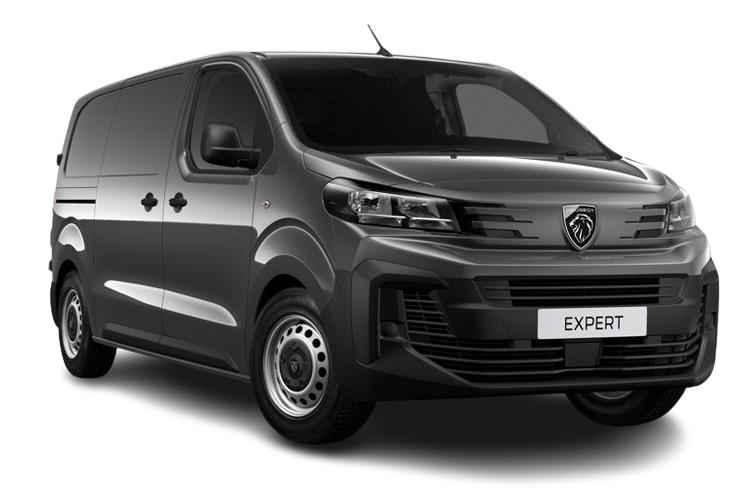
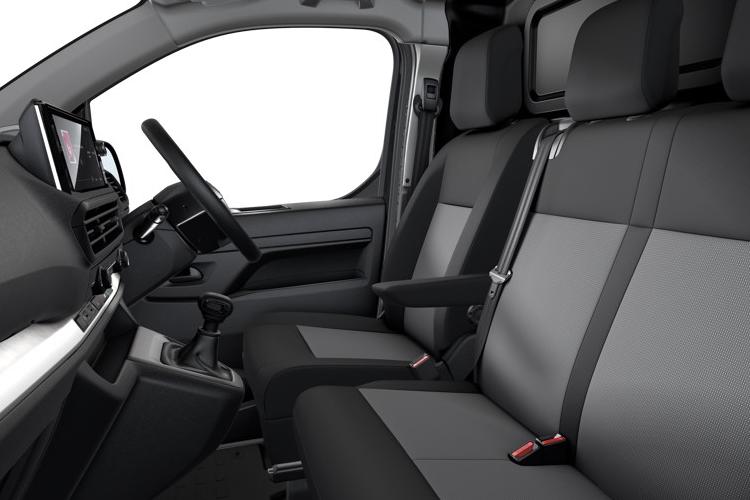
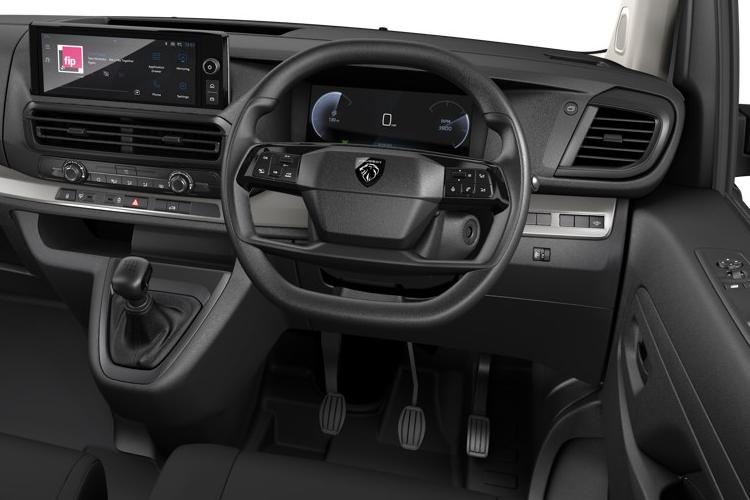
This improved Expert gets some subtle visual changes, including a redesigned front grille with the latest Peugeot emblem. Plusher 'Asphalt'-trimmed versions are set apart by eco LED headlights and body-coloured bumpers with 17-inch wheel trims. As before, there are low side protection strips and the solid front bumper integrates air inlets across the entire width of the vehicle, aiming to emphasise what Peugeot hopes is a robust appearance. In the cab, Peugeot has redesigned the dashboard for this facelifted model, mainly to incorporate a larger 10-inch touchscreen, which has an 'OK Peugeot' ChatGPT-assisted voice system. There's now a 10-inch digital instrument cluster too. As with other versions of this design, the interior isn't the most spacious you'll find in the segment and doesn't feel it, partly thanks to the high waistline. There's quite a low seating position (for a van), with plenty of seat and wheel adjustment. As usual in this class, a three-person bench seat is fitted and with pricier trim (or as an option), there's a Moduwork bulkhead flap so that longer items can be pushed through from the cargo area. That set-up comes together with a fold-down section for the centre seat that when flattened, doubles as a work surface. The dashboard is almost identical to that you'll find in the other versions of this design, which means that most functions are on the central touchscreen, though the climate controls are separated out below. Go for the E-Expert and there are a few cabin changes. In place of the rev counter, you get an energy gauge for the battery. The gear lever meanwhile, gets replaced by a drive selector for switching between the various driving modes. The centre infotainment screen has a Power Flow option which shows you at any given time what's being powered by what. A fuel gauge is provided but of course the purpose here is to show the remaining battery capacity. The water temperature gauge from the diesel Expert is replaced by one showing energy consumption by the climate control system.
Basic list pricing suggests that you'll probably be paying somewhere in the £29,000 to £34,000 bracket for a mainstream diesel Expert, depending upon the bodystyle and trim level you choose. As well as the usual panel van, there is a Crew Van option. Van customers get a choice of 'Standard' or 'Long' body lengths. Trim levels start with 'Professional', then run to 'Asphalt'. There's also a top 'Sport' version. Buyers choose between three BlueHDi diesel engines - a 1.5 or a 2.2-litre unit with either 150 or 180PS and an automatic option. There's a full-electric E-Expert EV version too, which now has to be had with a 75kWh battery and prices from around £36,000 after deduction of the available £5,000 government grant. All Expert van models are decently equipped. Base 'Professional' spec now includes a redesigned Mistral Black dashboard and a heated driver's seat as standard, while there's a 10-inch digital instrument cluster - plus a 10-inch centre touchscreen enhanced by the 'OK PEUGEOT' natural voice assistant, integrated with ChatGPT. Plusher 'Asphalt' trim adds Peugeot's 'i-Connect Advanced' infotainment system with TomTom 3D Connected Navigation. As for safety and security kit, well 'Professional' spec gives you the basics - a driver's airbag, electronic stability control, an alarm, a laminated acoustic windscreen and so on. But you'll need plusher 'Asphalt' trim to get a wider range of active safety aids like blind spot monitoring, traffic sign recognition and Lane departure warning. 'Asphalt'-spec models also get navigation, plus body-coloured bumpers, rear parking sensors, a leather multi-function steering wheel and a rear view camera, plus the 'Moduwork' fold-out seat with its seat back table and extra storage (an option with base trim).
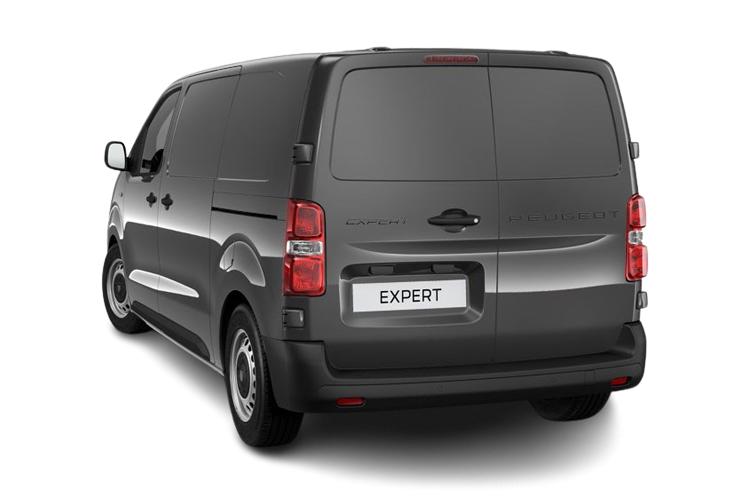
Most customers will be choosing this Expert in conventional panel van form, where you'll find that at floor level, the cargo bay is 2,512mm in length for the Standard wheelbase version and 2,862mm for the lengthier Long variant, with 1,258mm of width between the wheel arches and a maximum height of 1,397mm from floor to ceiling. Overall cargo capacity sees a minimum load volume of 5.3 cubic metres for the Standard-length model, and 6.1 cubic metres for the Long variant. This expands to 5.8 and 6.6 cubic metres respectively when the 'Moduwork' load-through-load bulkhead facility is used (an option on base-spec trim). One reason you might still want an Expert in its diesel form relates to payload. And, sure enough, the diesel model panel van's payload figures look decent, varying between 1,121kg and as much as 1,384kg (which is one of the highest figures in the sector). The Electric model is limited to a payload of between 1,011kg and 1,210kg, depending on variant. Diesel model panel van Gross Vehicle Weights vary between 2,830kg and 3,100kg. EV variant panel van Gross Vehicle Weights start at 3,160kg. The braked towing weight on the diesel is 2,000kg for the 1.5 and 2,500kg for the 2.2-litre units. With the EV, the braked towing weight is limited to a tonne. Not all contenders in this segment provide a sliding side door on both sides of the vehicle - but the panel van version of this Peugeot does, with an aperture 1,241mm in height and 935mm in width. As for the full-electric model, well the 75kWh battery has a WLTP range of up to 217 miles. The E-Expert is fitted with a 7.4kW onboard charger (with an 11kW three-phase charger available as an option) and can also be charged at up to 100kW on a DC rapid charger. It can be charged by an 7.4Wh wallbox in eleven hours 20 minutes - or in 45 minutes from a 100kW DC public charger.
Despite the recent growth in sales of ever-larger compact vans, you can see why so many operators still choose to play it safe and opt for a larger but still relatively light and manoeuvrable mid-sized LCV like this one. The Expert's designers have clearly looked very closely at what modern businesses need and this smarter updated version makes even more sense on the balance sheet. It's more than competitive against the Transit Customs and Renault Trafics of this world, but whether you'd want one over its Citroen, Toyota and Fiat design stablemates will depend as usual much upon the deal that you're offered and the proximity of your local franchise. Still, Peugeot's huge dealer network and tight pricing sets it up nicely here. It's user-friendly - just like this van.
Data provided by CAP-HPI database - Ref# 58125
With style and size on its side, the third generation Peugeot Expert is ready to do battle with the small panel van sector's big hitters. Jonathan Crouch drives it.
With style, size and technology now on its side, the improved version of Peugeot's third generation Expert has much to offer if you're looking for a versatile medium range mid-sized van. There are diesel and full-EV versions on offer.
Want a job done properly? Then call in an Expert. In this case, we're talking LCVs, mid-sized ones to be exact. This is Peugeot's entry in the volume medium-range van sector, led comfortably for UK market sales by the Ford Transit Custom, but also populated by many other segment big-hitters. Taking all of those on isn't something you'd want to do single-handed, so the French brand has chosen to share this design not only with its partner Citroen's Dispatch model, but also with Vauxhall's Vivaro, Fiat's Scudo and even a brand outside the Stellantis conglomerate, Toyota with their Proace: all these vans share the same platform and basic design. Earlier generation versions of this Expert didn't significantly trouble the main players in this segment - namely the first generation model of 1996 and the second generation version of 2007. The MK3 'K0'-series model though, launched back in 2016, got itself sorted out, with more sophisticated design and larger load volumes that still rival anything in the class. A full-EV version, the E-Expert, arrived in 2020 and the whole range was usefully updated in early 2024 to create the LCV we're going to look at here. You get clever design, proven powertrains and low running costs in a package that certainly works on paper. Whether it'll cut the mustard day-in-day-out though is what we're here to find out.
So, do you get an Expert drive experience? Well, let's start with powertrains. As with its various design clones, engine choice in this Peugeot is pretty straightforward, provided you've a clear idea of the kind of work you want it to do. If your needs are mainly based around lighter loads and short distance urban work, then the entry-level 120hp 1.5-litre BlueHDi 120 unit (paired with manual transmission) may well be quite sufficient. Otherwise, you'll probably be looking at the 2.2-litre BlueHDi diesel with 150hp, which is what we're trying here with a manual gearbox but which also comes with the option of 8-speed EAT8 automatic transmission. This 2.2-litre diesel unit also comes at the top of the line-up in auto-only 180hp form. There's also a full-electric version, the E-Expert, which now offers a 230 mile driving range from its 75kWh battery. A key factor behind the success of previous generation Expert models has been found in the way that this French LCV is able to remain compact and wieldy in the manner of smaller, more car-like vans from the class below. This MK3 model's bigger of course than those older designs, but it retains much of that same usability around town and rides much better thanks to supple suspension and a stiff EMP2 platform. Special wishbone filtering dampens the impacts of our country's terrible tarmac and the variable stiffness springs and shock absorbers deliver surprising levels of comfort whether the vehicle is loaded or unloaded. Peugeot's also done a lot of work to improve refinement. And we like the 'Driving time warning system' which flashes up a dash warning after two hours of uninterrupted driving at speeds of 40mph and above. If your business has moved on from smoky diesels, you'll be most interested in the single E-Expert electric variant we mentioned earlier. This EV uses a 136PS electric motor and is now only available with a large 75kWh battery pack that facilitates the improved 230 mile best EV range figure we mentioned earlier. That's about 12 miles further than the equivalent version of the pre-facelift E-Expert model. If you're wondering what driving a full-electric mid-sized van might be like, well, there's not too much to get your head around. You turn the key in the ignition, wait for the starting beep, then flick the gear toggle into Drive. There's a drive-mode selector that allows drivers to switch between 'Eco', 'Normal' and 'Power' modes. The 'Normal' setting restricts you to 109PS and will feel a bit like driving a lower capacity diesel. 'Eco' mode restricts you further to 81.5PS and reduces the power consumption of the air conditioning and other accessories. If you want the full 136PS and 270Nm of torque from the electric motor, selecting 'Power' mode unlocks it. There are paddles behind the steering wheel to vary brake regen (replacing the previous gearbox B setting), with the fiercest setting slowing you very noticeably off-throttle. Top speed is just 81mph. 62mph from rest takes 14.3s.
This improved Expert gets some subtle visual changes, including a redesigned front grille with the latest Peugeot emblem. Plusher 'Asphalt'-trimmed versions are set apart by eco LED headlights and body-coloured bumpers with 17-inch wheel trims. As before, there are low side protection strips and the solid front bumper integrates air inlets across the entire width of the vehicle, aiming to emphasise what Peugeot hopes is a robust appearance. In the cab, Peugeot has redesigned the dashboard for this facelifted model, mainly to incorporate a larger 10-inch touchscreen, which has an 'OK Peugeot' ChatGPT-assisted voice system. There's now a 10-inch digital instrument cluster too. As with other versions of this design, the interior isn't the most spacious you'll find in the segment and doesn't feel it, partly thanks to the high waistline. There's quite a low seating position (for a van), with plenty of seat and wheel adjustment. As usual in this class, a three-person bench seat is fitted and with pricier trim (or as an option), there's a Moduwork bulkhead flap so that longer items can be pushed through from the cargo area. That set-up comes together with a fold-down section for the centre seat that when flattened, doubles as a work surface. The dashboard is almost identical to that you'll find in the other versions of this design, which means that most functions are on the central touchscreen, though the climate controls are separated out below. Go for the E-Expert and there are a few cabin changes. In place of the rev counter, you get an energy gauge for the battery. The gear lever meanwhile, gets replaced by a drive selector for switching between the various driving modes. The centre infotainment screen has a Power Flow option which shows you at any given time what's being powered by what. A fuel gauge is provided but of course the purpose here is to show the remaining battery capacity. The water temperature gauge from the diesel Expert is replaced by one showing energy consumption by the climate control system.
Basic list pricing suggests that you'll probably be paying somewhere in the £29,000 to £34,000 bracket for a mainstream diesel Expert, depending upon the bodystyle and trim level you choose. As well as the usual panel van, there is a Crew Van option. Van customers get a choice of 'Standard' or 'Long' body lengths. Trim levels start with 'Professional', then run to 'Asphalt'. There's also a top 'Sport' version. Buyers choose between three BlueHDi diesel engines - a 1.5 or a 2.2-litre unit with either 150 or 180PS and an automatic option. There's a full-electric E-Expert EV version too, which now has to be had with a 75kWh battery and prices from around £36,000 after deduction of the available £5,000 government grant. All Expert van models are decently equipped. Base 'Professional' spec now includes a redesigned Mistral Black dashboard and a heated driver's seat as standard, while there's a 10-inch digital instrument cluster - plus a 10-inch centre touchscreen enhanced by the 'OK PEUGEOT' natural voice assistant, integrated with ChatGPT. Plusher 'Asphalt' trim adds Peugeot's 'i-Connect Advanced' infotainment system with TomTom 3D Connected Navigation. As for safety and security kit, well 'Professional' spec gives you the basics - a driver's airbag, electronic stability control, an alarm, a laminated acoustic windscreen and so on. But you'll need plusher 'Asphalt' trim to get a wider range of active safety aids like blind spot monitoring, traffic sign recognition and Lane departure warning. 'Asphalt'-spec models also get navigation, plus body-coloured bumpers, rear parking sensors, a leather multi-function steering wheel and a rear view camera, plus the 'Moduwork' fold-out seat with its seat back table and extra storage (an option with base trim).
Most customers will be choosing this Expert in conventional panel van form, where you'll find that at floor level, the cargo bay is 2,512mm in length for the Standard wheelbase version and 2,862mm for the lengthier Long variant, with 1,258mm of width between the wheel arches and a maximum height of 1,397mm from floor to ceiling. Overall cargo capacity sees a minimum load volume of 5.3 cubic metres for the Standard-length model, and 6.1 cubic metres for the Long variant. This expands to 5.8 and 6.6 cubic metres respectively when the 'Moduwork' load-through-load bulkhead facility is used (an option on base-spec trim). One reason you might still want an Expert in its diesel form relates to payload. And, sure enough, the diesel model panel van's payload figures look decent, varying between 1,121kg and as much as 1,384kg (which is one of the highest figures in the sector). The Electric model is limited to a payload of between 1,011kg and 1,210kg, depending on variant. Diesel model panel van Gross Vehicle Weights vary between 2,830kg and 3,100kg. EV variant panel van Gross Vehicle Weights start at 3,160kg. The braked towing weight on the diesel is 2,000kg for the 1.5 and 2,500kg for the 2.2-litre units. With the EV, the braked towing weight is limited to a tonne. Not all contenders in this segment provide a sliding side door on both sides of the vehicle - but the panel van version of this Peugeot does, with an aperture 1,241mm in height and 935mm in width. As for the full-electric model, well the 75kWh battery has a WLTP range of up to 217 miles. The E-Expert is fitted with a 7.4kW onboard charger (with an 11kW three-phase charger available as an option) and can also be charged at up to 100kW on a DC rapid charger. It can be charged by an 7.4Wh wallbox in eleven hours 20 minutes - or in 45 minutes from a 100kW DC public charger.
Despite the recent growth in sales of ever-larger compact vans, you can see why so many operators still choose to play it safe and opt for a larger but still relatively light and manoeuvrable mid-sized LCV like this one. The Expert's designers have clearly looked very closely at what modern businesses need and this smarter updated version makes even more sense on the balance sheet. It's more than competitive against the Transit Customs and Renault Trafics of this world, but whether you'd want one over its Citroen, Toyota and Fiat design stablemates will depend as usual much upon the deal that you're offered and the proximity of your local franchise. Still, Peugeot's huge dealer network and tight pricing sets it up nicely here. It's user-friendly - just like this van.
