
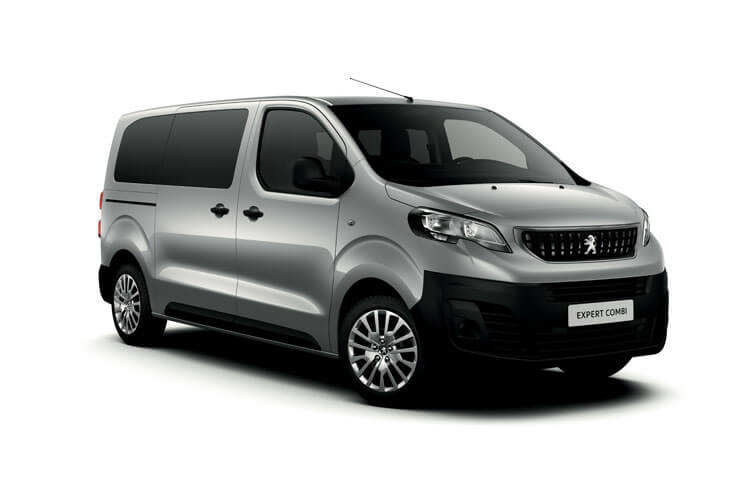
Images are for illustrative purposes only.

1200 1.5 BlueHDi 100 S Van
Need some assistance or advice? Call Us 01903 538835


By Jonathan Crouch
In the third generation guise launched in 2016, Peugeot's Expert van proved to be a far more credible contender in the mid-sized LCV segment. It was based on a modified version of the EMP2 platform that underpinned most of the French maker's mid-sized family cars in this period, so driving dynamics were much improved over previous Experts, as were the BlueHDi engines that delivered strong standards of efficiency. Buyers also get clever packaging, a three-way choice of body lengths and some versatile loading options. This shared Stellantis design remains a very complete proposition.
Medium-sized van (1.5, 2.0 diesel/Full-Electric)
If you want a job done properly, then conventional wisdom is that you should call in an expert. This Expert perhaps, which was Peugeot's entrant in the important mid-sized LCV segment from 2016 onwards. This third generation version was produced as part of a design collaboration that claimed to bring us what its makers reckoned from launch was the only model in this class that was really new from the ground up. They were referring to the fact that if you look beneath the skin of direct segment rivals from the middle of this century's second decade (like Renault's Trafic, Ford's Transit Custom and Volkswagen's Transporter), you'll find that structurally, all borrow from an awful lot of older generation technology. In contrast, this Expert model, like its design stablemates the Citroen Dispatch and the Toyota Proace (and later the Vauxhall Vivaro and the Fiat Scudo) was built around the PSA Group's lighter, stiffer and more modern EMP2 'Efficient Modular Platform'. A chassis inherited by the PSA's replacement Stellantis Group a couple of years after this MK3 Expert's launch. The main advantage of these underpinnings were light weight, with a kerb weight that saw this design weigh up to 150kgs less than its predecessor and up to 300kgs less than some of its direct rivals from this period. Initially, there were three body shape choices, but the smallest 'Compact' version was quickly deleted as it conflicted with sales of the smaller Partner van. Afterwards, Peugeot offered customers the same choice of standard and long wheelbase body shapes as its competitors (but never a high roof option as was available in a rival Ford Transit Custom). The next big milestone in development of this MK3 Expert was the announcement of an all-electric E-Expert model in 2020. More fundamental to the fortunes of this Expert model was the way that this MK3 design could match its competitors in terms of the size and weight of the cargo it could carry. Operators with longer memories might remember that the original MK1 Expert model of 1995 struggled in this regard, sized rather awkwardly between the compact and mid-sized van segments. The second generation version of 2006 was much better though, progress further underlined at the launch of this MK3 model in 2016 by its class-leading maximum payload capability of around 1.4-tonnes. In short, a lot of boxes were ticked here. This LCV was updated in Spring 2024, but it's the pre-facelift 2016-2024-era Expert we concentrate on here.
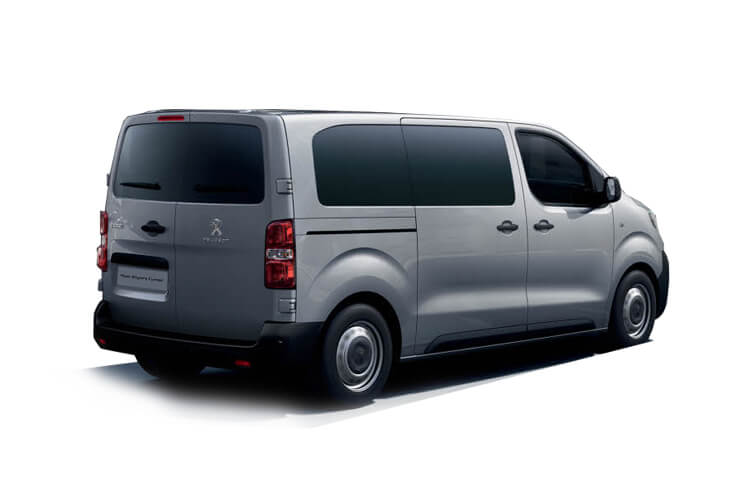
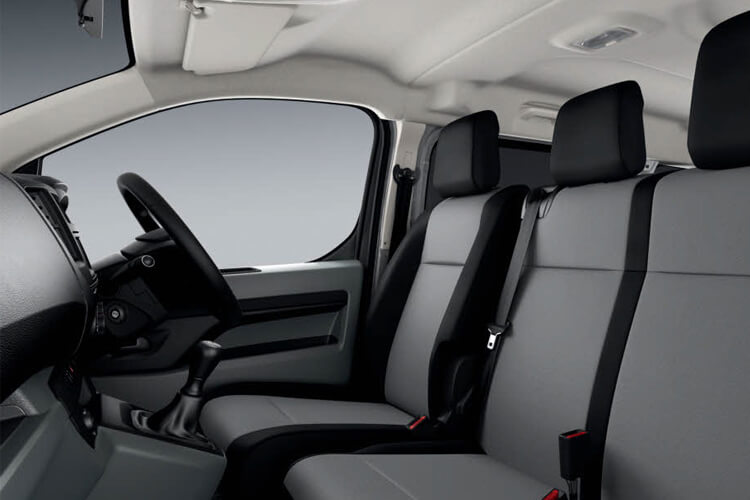
It might not be over-stating things to suggest that this third generation Expert van was the first recognisably mid-sized model that Peugeot had ever delivered to the LCV market. In essence, previous generation versions never looked quite big enough for the role they were supposed to have been designed for, but this MK3 model was different. In place of its predecessor's elongated nose, it got a short, high bonnet and compact overhangs that provided for a more powerful streetside presence that felt properly substantial, with a rugged, workmanlike appeal. When it's time to take a seat at the wheel, as usual in a mid-sized van from this segment, your position is high and commanding and the driver is properly looked after with height and lumbar adjustment, along with an armrest. You can recline this seat back and slide it back a little further if you get an Expert that was originally specified with the optional insulated bulkhead. Look around and you'll find a cab that's pretty well built but one which feels a little sober with all its dark greys and blacks. Rivals deliver a little more stylistic flourish. More of an issue though, lies with the front A-pillars: they're rather thick, so you have to peer around them occasionally when pulling out of tighter junctions. Otherwise, there's very little to criticise. Four large air vents help keep the cab cool and through the smart three-spoke wheel, you view two clearly-presented dials separated by an information display screen. There's the dual front passenger bench that most users will want. The middle-seated person will obviously be slightly restricted in terms of stretch-out space, but because the gearstick has been taken from its conventional position on the floor and mounted in an extended section of the lower dash, an adult could cope here, provided the journey in question wasn't too long. There's less restriction if you opt for an automatic model because there, the gearstick is mounted off the steering wheel. Avoid entry-level trim and as standard, this bench comes in so-called 'Moduwork' configurable form. That enables it to be raised to accommodate bulky items pushed through a provided hatch from the cargo area. Or, if you want to use your Expert as a mobile office, the backrest of the middle seat can be folded forward to create a desk that'll be an ideal position for your laptop when you stop between deliveries to check up on your emails. Another key cabin feature you get if you're able to avoid entry-level trim is this centrally-positioned 7-inch 'Peugeot Connect' colour touchscreen. It includes a 'Mirror Screen' feature, so you can duplicate your smartphone's display onto the monitor via either the 'Apple CarPlay' or the 'MirrorLink' 'Android Auto' systems. Time to consider the cargo area in a little more detail. Even the rare 'Compact' bodystyle offers 4.6m3 of capacity and 2,162mm of floor length - enough to carry two fully loaded Europallets, which is pretty impressive given that in this form, your Expert would be only 4.6m long. Most will choose the 'Standard' body shape which has 5.3m3 and 2,512mm of floor length. Go for the top 'Long' body style and you're looking at 6.1m3 and 2,862mm of floor length. Don't make your decision between these three bodyshapes until you've taken into account the potential extra capacity that can be freed up by a very clever extra feature that was incorporated into this third generation Expert design - the 'Moduwork' load-through bulkhead. It's a standard inclusion provided you avoid entry-level trim and whichever body style you choose, it can add a useful 1,162mm to the overall loading length and 0.5m3 to the overall carriage capacity. You might be familiar with the idea behind this from Ford, Vauxhall and Renault rivals to this model - that of providing an opening from the cargo bay so that longer items can be poked through. With those vans though, you simply get a small hatch in the bulkhead that's really only large enough to enable you to poke through things like pipes. With this Peugeot's 'Moduwork' set-up though, you can also fold the seat in the cab upwards so that the aperture created can be much bigger, so also enabling bulkier items to edge up into the cab space when necessary. As for exactly how bulky those items could be, well you'll need to know that payload (which of course varies according to your choice of engine and body style) will for panel van customers be rated between 1,099 to 1,499kgs. Check the spec of your chosen variant carefully to make sure that the final figure suits the uses you have in mind for this van. What won't vary is the loading area height. Because Peugeot chose not to offer a choice of roof heights with this model line, this is set at 1,397mm for all variants. Another stat that all Expert models share is the 1,628mm load area width, which narrows to 1,258mm between the wheelarches.
Please contact us for an exact up-to-date valuation.
We've heard of various issues with this MK3 Expert. With the diesel, some owners have had problems with the fuel injectors, leading to reduced engine performance. There have also been reports of timing chain issues and manual gearbox problems like slipping clutches or difficult gear engagement. Worn shock absorbers and potential Diesel Particulate Filter blockages are relative common. And look out for electric faults like alternator failure or battery drain. We've heard of radiator issues causing engine over-heating; corrosion issues on older models; and exhaust system problems like a noisy muffler. There are no major issues reported with the electric E-Expert, but do a thorough full charge to check the system through. These vans are pretty tough, but there are a few things you'll need to look out for. It's the usual advice with large LCVs to buy on condition rather than year and look for a van that has tended to have performed lightweight delivery duties rather than consistently butting up against its payload limits. Make sure that all the connectivity works properly - Bluetooth-linking and so on. Check for load bay scuffs and scratches. And insist on a fully stamped-up service history.
(approx based on an Expert 1.5 Turbo D 120hp - 2022) Air filters are around £8-£40. Oil filters are around £6-£13. Front brake pads are around £28-£111 - it's £33-£51 for a set of rear pads. A pair of front brake discs cost in the £41-£60 bracket. A pair of rear brake discs are typically in the £27-£53 bracket. Wiper blades are around £6-£20. A headlight is in the £256-£308 bracket.
This MK3 Expert's EMP2 family car platform considerably improved its driving dynamics, the third generation version of this mid-sized LCV in this guise able to ride over poor road surfaces with a calm and composure that most rivals of its period couldn't match. Helping in this regard is a suspension design using adaptive shock absorbers that provide excellent control, no matter how much weight is on-board. At higher speeds, you get some wind and road noise but through the bends, the handling is surprisingly stable and there's plenty of grip. Another benefit of using a passenger car base lies in the way that the Expert feels more nimble and compact than most of its rivals when you're threading through city streets or making your way along country lanes. Light steering and a relatively tight turning circle contribute here too. Under the bonnet, there's a choice of BlueHDi diesel engines, with customers choosing from a range of efficient 1.6 or 2.0-litre BlueHDi units. The 1.6-litre unit was replaced by a 1.5-litre BlueHDi unit a couple of years after launch. Go for the smaller diesel and there's a choice of 95 or 115bhp outputs, the former with the option of 'ETG6' clutch-less transmission (later updated to an EAT8 8-speed auto). We'd be tempted though, by the extra torque for the 2.0-litre engines, all able to tow up to 2.5-tonnes. We recommend the 120bhp unit, able to return up to 53.3mpg on the combined cycle and up to 139g/km of CO2. There's also a 150bhp variant and a flagship 180bhp model that must be ordered with auto transmission. The new-era alternative is the all-electric E-Expert, offered with a choice of either 50kWh or 75kWh battery sizes. You'll almost certainly want the larger battery as with that, driving range rises from 142 to 205 miles. There are three driving modes ('Eco', 'Normal' and 'Sport') plus a brake regen setting on the single-speed auto gearbox. A 100kW rapid-charge to 80% takes 32 minutes for the smaller battery and 45 minutes for the larger one. From a 7kW wallbox, the respective charge times are seven or eleven hours. With both diesel and EV powertrains, ride and handling meet the class standard and this LCV's easy to use around town.
Spend as much time as we have looking at the mid-sized van segment and you quickly realise that different brands have priorities in different areas. Some products are good to drive. Others look efficient to run. Still others have a quality feel or offer clever equipment features. The problem is though, in finding an LCV design that ticks all these boxes. We reckon though, that this MK3 Expert got closer to that goal than most other models we've come across in the sector. The problems with this LCV, such as they are, tend to be things that may not bother many potential company buyers very much. It isn't, for example, the sharpest steer in the segment. And some customers could be disappointed that Peugeot chose not to offer a choice of roof heights. Beyond that though, there's really not too much to complain about. Otherwise, this Expert's main issue probably lies in the fact that much the same package at much the same price is available badged as either a Citroen Dispatch, a Toyota Proace and, later, also as a Vauxhall Vivaro and a Fiat Scudo. Which means that unless you particularly like the slightly altered styling of this Peugeot, a decision to choose it will probably be most heavily influenced by the location of your nearest franchise and the kind of deal they're likely to offer you. Since Peugeot has a bigger dealer network than Toyota or its Stellantis cousin brands, that gives the company a small but significant advantage, something that could well be just enough to give this LCV the edge over its design stablemates. Try it. If you're in the market for a mid-sized van of this sort, we think it might surprise you.
Data provided by CAP-HPI database - Ref# 44711
By Jonathan Crouch
In the third generation guise launched in 2016, Peugeot's Expert van proved to be a far more credible contender in the mid-sized LCV segment. It was based on a modified version of the EMP2 platform that underpinned most of the French maker's mid-sized family cars in this period, so driving dynamics were much improved over previous Experts, as were the BlueHDi engines that delivered strong standards of efficiency. Buyers also get clever packaging, a three-way choice of body lengths and some versatile loading options. This shared Stellantis design remains a very complete proposition.
Medium-sized van (1.5, 2.0 diesel/Full-Electric)
If you want a job done properly, then conventional wisdom is that you should call in an expert. This Expert perhaps, which was Peugeot's entrant in the important mid-sized LCV segment from 2016 onwards. This third generation version was produced as part of a design collaboration that claimed to bring us what its makers reckoned from launch was the only model in this class that was really new from the ground up. They were referring to the fact that if you look beneath the skin of direct segment rivals from the middle of this century's second decade (like Renault's Trafic, Ford's Transit Custom and Volkswagen's Transporter), you'll find that structurally, all borrow from an awful lot of older generation technology. In contrast, this Expert model, like its design stablemates the Citroen Dispatch and the Toyota Proace (and later the Vauxhall Vivaro and the Fiat Scudo) was built around the PSA Group's lighter, stiffer and more modern EMP2 'Efficient Modular Platform'. A chassis inherited by the PSA's replacement Stellantis Group a couple of years after this MK3 Expert's launch. The main advantage of these underpinnings were light weight, with a kerb weight that saw this design weigh up to 150kgs less than its predecessor and up to 300kgs less than some of its direct rivals from this period. Initially, there were three body shape choices, but the smallest 'Compact' version was quickly deleted as it conflicted with sales of the smaller Partner van. Afterwards, Peugeot offered customers the same choice of standard and long wheelbase body shapes as its competitors (but never a high roof option as was available in a rival Ford Transit Custom). The next big milestone in development of this MK3 Expert was the announcement of an all-electric E-Expert model in 2020. More fundamental to the fortunes of this Expert model was the way that this MK3 design could match its competitors in terms of the size and weight of the cargo it could carry. Operators with longer memories might remember that the original MK1 Expert model of 1995 struggled in this regard, sized rather awkwardly between the compact and mid-sized van segments. The second generation version of 2006 was much better though, progress further underlined at the launch of this MK3 model in 2016 by its class-leading maximum payload capability of around 1.4-tonnes. In short, a lot of boxes were ticked here. This LCV was updated in Spring 2024, but it's the pre-facelift 2016-2024-era Expert we concentrate on here.
It might not be over-stating things to suggest that this third generation Expert van was the first recognisably mid-sized model that Peugeot had ever delivered to the LCV market. In essence, previous generation versions never looked quite big enough for the role they were supposed to have been designed for, but this MK3 model was different. In place of its predecessor's elongated nose, it got a short, high bonnet and compact overhangs that provided for a more powerful streetside presence that felt properly substantial, with a rugged, workmanlike appeal. When it's time to take a seat at the wheel, as usual in a mid-sized van from this segment, your position is high and commanding and the driver is properly looked after with height and lumbar adjustment, along with an armrest. You can recline this seat back and slide it back a little further if you get an Expert that was originally specified with the optional insulated bulkhead. Look around and you'll find a cab that's pretty well built but one which feels a little sober with all its dark greys and blacks. Rivals deliver a little more stylistic flourish. More of an issue though, lies with the front A-pillars: they're rather thick, so you have to peer around them occasionally when pulling out of tighter junctions. Otherwise, there's very little to criticise. Four large air vents help keep the cab cool and through the smart three-spoke wheel, you view two clearly-presented dials separated by an information display screen. There's the dual front passenger bench that most users will want. The middle-seated person will obviously be slightly restricted in terms of stretch-out space, but because the gearstick has been taken from its conventional position on the floor and mounted in an extended section of the lower dash, an adult could cope here, provided the journey in question wasn't too long. There's less restriction if you opt for an automatic model because there, the gearstick is mounted off the steering wheel. Avoid entry-level trim and as standard, this bench comes in so-called 'Moduwork' configurable form. That enables it to be raised to accommodate bulky items pushed through a provided hatch from the cargo area. Or, if you want to use your Expert as a mobile office, the backrest of the middle seat can be folded forward to create a desk that'll be an ideal position for your laptop when you stop between deliveries to check up on your emails. Another key cabin feature you get if you're able to avoid entry-level trim is this centrally-positioned 7-inch 'Peugeot Connect' colour touchscreen. It includes a 'Mirror Screen' feature, so you can duplicate your smartphone's display onto the monitor via either the 'Apple CarPlay' or the 'MirrorLink' 'Android Auto' systems. Time to consider the cargo area in a little more detail. Even the rare 'Compact' bodystyle offers 4.6m3 of capacity and 2,162mm of floor length - enough to carry two fully loaded Europallets, which is pretty impressive given that in this form, your Expert would be only 4.6m long. Most will choose the 'Standard' body shape which has 5.3m3 and 2,512mm of floor length. Go for the top 'Long' body style and you're looking at 6.1m3 and 2,862mm of floor length. Don't make your decision between these three bodyshapes until you've taken into account the potential extra capacity that can be freed up by a very clever extra feature that was incorporated into this third generation Expert design - the 'Moduwork' load-through bulkhead. It's a standard inclusion provided you avoid entry-level trim and whichever body style you choose, it can add a useful 1,162mm to the overall loading length and 0.5m3 to the overall carriage capacity. You might be familiar with the idea behind this from Ford, Vauxhall and Renault rivals to this model - that of providing an opening from the cargo bay so that longer items can be poked through. With those vans though, you simply get a small hatch in the bulkhead that's really only large enough to enable you to poke through things like pipes. With this Peugeot's 'Moduwork' set-up though, you can also fold the seat in the cab upwards so that the aperture created can be much bigger, so also enabling bulkier items to edge up into the cab space when necessary. As for exactly how bulky those items could be, well you'll need to know that payload (which of course varies according to your choice of engine and body style) will for panel van customers be rated between 1,099 to 1,499kgs. Check the spec of your chosen variant carefully to make sure that the final figure suits the uses you have in mind for this van. What won't vary is the loading area height. Because Peugeot chose not to offer a choice of roof heights with this model line, this is set at 1,397mm for all variants. Another stat that all Expert models share is the 1,628mm load area width, which narrows to 1,258mm between the wheelarches.
Please contact us for an exact up-to-date valuation.
We've heard of various issues with this MK3 Expert. With the diesel, some owners have had problems with the fuel injectors, leading to reduced engine performance. There have also been reports of timing chain issues and manual gearbox problems like slipping clutches or difficult gear engagement. Worn shock absorbers and potential Diesel Particulate Filter blockages are relative common. And look out for electric faults like alternator failure or battery drain. We've heard of radiator issues causing engine over-heating; corrosion issues on older models; and exhaust system problems like a noisy muffler. There are no major issues reported with the electric E-Expert, but do a thorough full charge to check the system through. These vans are pretty tough, but there are a few things you'll need to look out for. It's the usual advice with large LCVs to buy on condition rather than year and look for a van that has tended to have performed lightweight delivery duties rather than consistently butting up against its payload limits. Make sure that all the connectivity works properly - Bluetooth-linking and so on. Check for load bay scuffs and scratches. And insist on a fully stamped-up service history.
(approx based on an Expert 1.5 Turbo D 120hp - 2022) Air filters are around £8-£40. Oil filters are around £6-£13. Front brake pads are around £28-£111 - it's £33-£51 for a set of rear pads. A pair of front brake discs cost in the £41-£60 bracket. A pair of rear brake discs are typically in the £27-£53 bracket. Wiper blades are around £6-£20. A headlight is in the £256-£308 bracket.
This MK3 Expert's EMP2 family car platform considerably improved its driving dynamics, the third generation version of this mid-sized LCV in this guise able to ride over poor road surfaces with a calm and composure that most rivals of its period couldn't match. Helping in this regard is a suspension design using adaptive shock absorbers that provide excellent control, no matter how much weight is on-board. At higher speeds, you get some wind and road noise but through the bends, the handling is surprisingly stable and there's plenty of grip. Another benefit of using a passenger car base lies in the way that the Expert feels more nimble and compact than most of its rivals when you're threading through city streets or making your way along country lanes. Light steering and a relatively tight turning circle contribute here too. Under the bonnet, there's a choice of BlueHDi diesel engines, with customers choosing from a range of efficient 1.6 or 2.0-litre BlueHDi units. The 1.6-litre unit was replaced by a 1.5-litre BlueHDi unit a couple of years after launch. Go for the smaller diesel and there's a choice of 95 or 115bhp outputs, the former with the option of 'ETG6' clutch-less transmission (later updated to an EAT8 8-speed auto). We'd be tempted though, by the extra torque for the 2.0-litre engines, all able to tow up to 2.5-tonnes. We recommend the 120bhp unit, able to return up to 53.3mpg on the combined cycle and up to 139g/km of CO2. There's also a 150bhp variant and a flagship 180bhp model that must be ordered with auto transmission. The new-era alternative is the all-electric E-Expert, offered with a choice of either 50kWh or 75kWh battery sizes. You'll almost certainly want the larger battery as with that, driving range rises from 142 to 205 miles. There are three driving modes ('Eco', 'Normal' and 'Sport') plus a brake regen setting on the single-speed auto gearbox. A 100kW rapid-charge to 80% takes 32 minutes for the smaller battery and 45 minutes for the larger one. From a 7kW wallbox, the respective charge times are seven or eleven hours. With both diesel and EV powertrains, ride and handling meet the class standard and this LCV's easy to use around town.
Spend as much time as we have looking at the mid-sized van segment and you quickly realise that different brands have priorities in different areas. Some products are good to drive. Others look efficient to run. Still others have a quality feel or offer clever equipment features. The problem is though, in finding an LCV design that ticks all these boxes. We reckon though, that this MK3 Expert got closer to that goal than most other models we've come across in the sector. The problems with this LCV, such as they are, tend to be things that may not bother many potential company buyers very much. It isn't, for example, the sharpest steer in the segment. And some customers could be disappointed that Peugeot chose not to offer a choice of roof heights. Beyond that though, there's really not too much to complain about. Otherwise, this Expert's main issue probably lies in the fact that much the same package at much the same price is available badged as either a Citroen Dispatch, a Toyota Proace and, later, also as a Vauxhall Vivaro and a Fiat Scudo. Which means that unless you particularly like the slightly altered styling of this Peugeot, a decision to choose it will probably be most heavily influenced by the location of your nearest franchise and the kind of deal they're likely to offer you. Since Peugeot has a bigger dealer network than Toyota or its Stellantis cousin brands, that gives the company a small but significant advantage, something that could well be just enough to give this LCV the edge over its design stablemates. Try it. If you're in the market for a mid-sized van of this sort, we think it might surprise you.
