
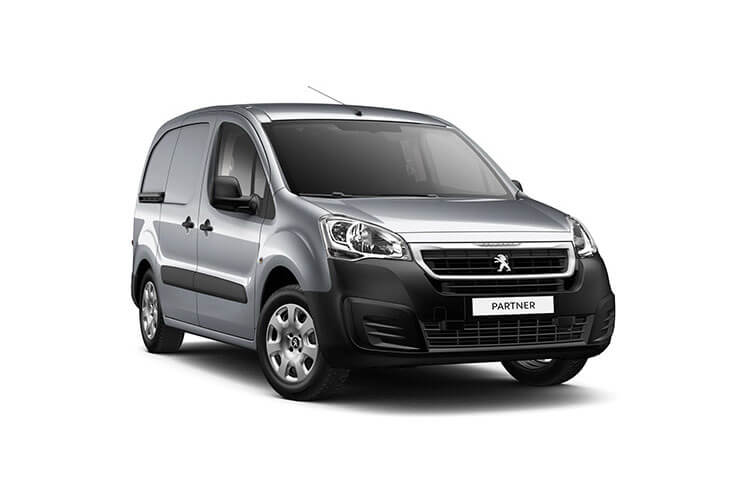
Images are for illustrative purposes only.
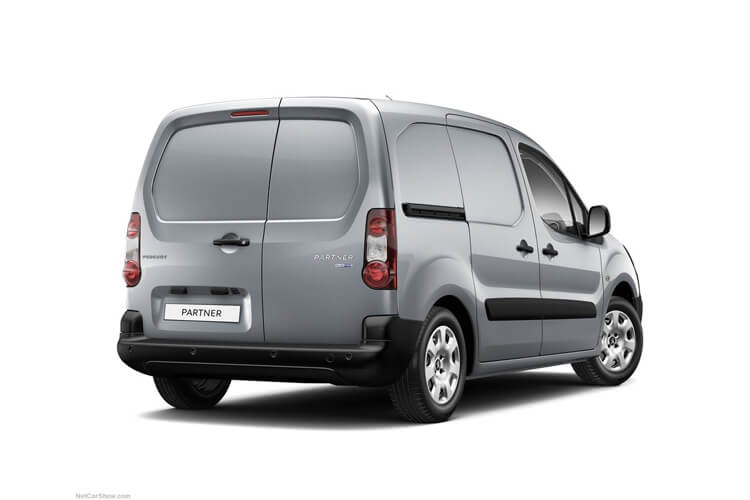
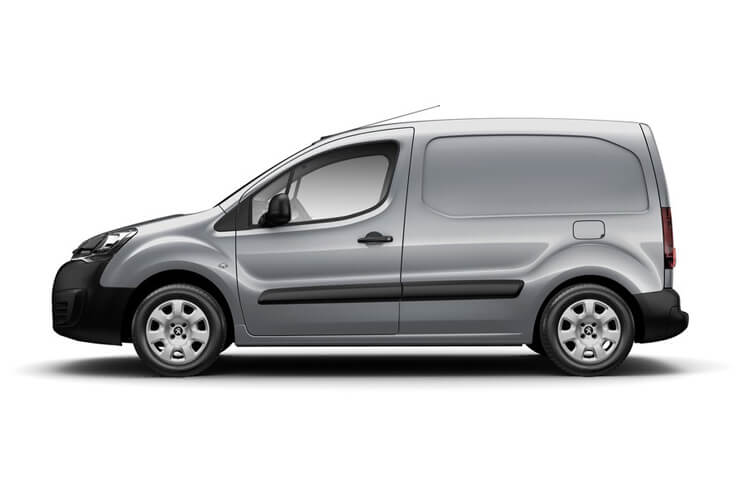

950 1.5 BlueHDi 100 S Van
Need some assistance or advice? Call Us 01903 538835


By Jonathan Crouch
Peugeot's Partner Van is a compact LCV that built on two decades of ruggedness and quality in this much improved third generation form. At the wheel, you get a unique 'i-Cockpit' cab design, plus there's clever technology that aimed to set a fresh commercial segment benchmark in this class, along with a more efficient BlueHDi diesel engine range. The larger of the two body shapes got a longer wheelbase for extra space and you'll appreciate the clever cabin configurability. This LCV was voted International Van of the Year at its launch - for good reason. Here, we look at this MK3 model in its original 2018-2023-era form.
compact van (1.5 BlueHDi diesel / Electric - EV)
The Partner nameplate first arrived in the LCV segment in 1996, with a second generation version launched in 2008, then updated in 2015. Building on this strong heritage, this MK3 Partner Van - launched in late 2018 - marked a thorough renewal of this best-seller. As before, it's the kind of model you choose if your business needs a compact LCV that isn't quite as small as a modern city van-sector model would be. Vehicles like that are based on superminis: Partner-type models, in contrast, sit upon the more spacious platforms originally developed for family hatchbacks or small MPVs. Back in 2018, there were certainly plenty of vans of that type - most notably perhaps, this Peugeot's near-identical design stablemates, Citroen's Berlingo and Vauxhall's Combo. Beyond what was then called the PSA Group, this Partner had to directly take on strong-selling contenders like Ford's Transit Connect, Fiat's Doblo Cargo and Volkswagen's Caddy, along with two further brand-shared designs, the Renault Kangoo and the Mercedes Citan. Keen for the Partner to stand out from this crowd, Peugeot equipped it with something that back in 2018 had never been seen on a van before - its clever 'i-Cockpit' instrument binnacle and steering wheel package, something that had been used on the company's passenger car models to improve handling feel and reduce driving fatigue. It gave this Partner something to set it apart from Citroen and Vauxhall design stablemates that, like this model, aimed to bring a fresh level of cutting-edge technology to this part of the LCV segment. Like them, this van offered a new 1.5-litre BlueHDi diesel engine and the availability of a slick-shifting new EAT8 auto gearbox that Peugeot hoped would suit urban-based users. The stiffer EMP2 platform used by this MK3 design was paired with electric power steering. And new technology included a clever surround rear-vision camera. Plus, as before, there were a couple of body lengths and two or three seat options, plus a Crew Van variant. A full-electric version arrived in 2021. Diesel and EV versions of this Partner sold in this form until early 2024, when this design was updated with a facelifted model.
In place of the previous design's rather apologetic look, this MK3 Partner took the opportunity provided by the installation of its fresh EMP2 platform to deliver a stronger, more dynamic and robust design with shorter overhangs for better manoeuvrability and a higher bonnet for greater rigidity. At the wheel it's not just the unique 'i-Cockpit' dashboard layout that makes it feel different from the previous generation model; everything's of much higher quality than was the case with the MK2 model, with a more horizontally-orientated architecture and smarter materials on the dashboard, the centre console and the doors. There was a bit of extra optional high-tech - the 'Surround Rear Vision' screen for instance - plus plusher versions got a much more sophisticated centre-dash infotainment screen, which was 8-inches in size. The seats were much improved too - particularly the driver's chair, which can feature Peugeot's particularly supportive 'Advanced Comfort' design. And there's plenty of cabin practicality. If you were to add up the capacity of all the different nooks and crannies available within the cab of this Partner van, you'd arrive at a figure of 113-litres. Time to focus on practicality. As ever, there are two Partner body shapes to consider - the 4.4m-long 'Standard'-length version and a lengthier 4.75m 'Long' variant which in MK3 form gained a proper long wheelbase platform, so can take more inside. Even the 'Standard'-shape Partner model has a load area big enough to swallow a couple of Euro pallets (thanks to a useful 1,229mm of width between the wheel arches) and can offer 3.3m3 of carriage capacity and 1,817mm of load space length. The bigger 'Long' version can increase those figures to 3.9m3 of capacity and 2,167mm of load space length. Either way, there's 1,236mm of interior height. With both body shapes, you can extend the capacity by an extra 0.5m3 by using the clever 'Multi-Flex' modular bench seat package that was standard above entry-level trim. This will enable you to flatten the outer passenger seat into the floor and push through longer items into the cab. What else? Well payload capacity is rated at either fractionally above or fractionally below a tonne - which is class-competitive. As for efficiency, well with the volume BlueHDi 100 powerplant that most Partner van buyers will choose, you're looking at between 66 and 68mpg on the combined cycle and somewhere between 109 and 112g/km of CO2.
Please contact us for an exact up-to-date valuation.
This MK3 Partner generally has a strong reliability record, but our ownership survey did throw up a few issues to look out for. We are going to concentrate on the diesel model here, because that's the most common version most used vehicle buyers will be looking for. The exhaust gas recirculation valve commonly fails on black pump-fuelled models. Signs from include rough idling, increased fuel consumption and reduced power. Regular cleaning can alleviate this issue. We also come across timing belt issues. The timing belt requires replacement at specific intervals, usually 60,000 miles. If the previous owner hasn't done that, this can result in huge engine damage. Check the service history to see whether the timing belt has been changed when it should have been. We've also come across gearbox problems with the manual transmission, which can develop synchromesh wear, particularly in 2nd and 3rd gears. On your test drive, look out for grinding noises when changing gear - and for difficulty were engaging reverse. We've come across various electrical system faults, particularly regarding the battery management set-up and the alternator. Look out for dashboard warning lights that are illuminating randomly. We also came across diesel particulate filter blockages, usually with versions of this van that have mainly been used in town. And there have been a few turbocharger failures, usually caused due to oil starvation or excessive carbon build-up. Signs of this include loss of power, blue smoke from the exhaust and whistling noises. The front suspension arms and bushes sometimes wear prematurely - look out for knocking sounds going over bumps. And we've heard of fuel injector problems - the injectors can become clogged or fail completely. If the Partner you're trying runs roughly, starts poorly and exhibits excessive smoke, this could be why. We've heard of clutch wear - watch for slipping, juddering and high biting points. And there have been issues with door mechanism failures, the braking system, the air conditioning, the oil pump, the starter motor and the windscreen wiper mechanism. Insist on a full service history and negotiate on the price if the cargo area is scraped and dented. The electric version has got a reasonable reliability record, but has exhibited software faults. Test drive very carefully. And make sure the vehicle charges as it should and that the charging lead is not damaged.
(approx prices, based on a 2019 Partner van BlueHDi 1.5 102hp - ex-VAT - autodoc.co.uk) As with most Citroen models, spare parts are reasonably priced and very plentiful. Front brake pads sell in the £21-£30 bracket - rear pads are from around £17. Front brake discs range in the £28-£65 bracket (rears are priced from around £25). An air filter is in the £7-£32 bracket, a fuel filter is around £12-£27 and an oil filter is around £6-£21. A wiper blade is in the £5-£43 bracket. A water pump and timing belt kit is in the £80-£152 bracket. You'll pay in the £110-£240 bracket for a starter motor.
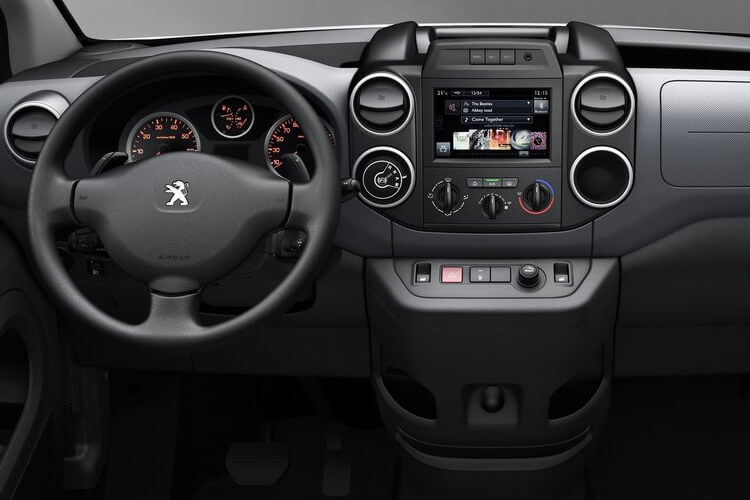
Once you're on the move in this third generation Partner van model, the first thing you'll notice is the unusual driving position delivered by the brand's clever 'i-Cockpit' dashboard design. This sees you grasping a tiny sportscar-like steering wheel over the rim of which you view the instrument binnacle. The little wheel enables wrist-flick-style steering turns through twisting corners and roundabouts, should you be in the mood to give your Partner a bit of a work out. You probably won't be. There's very little about the handling dynamics of this van that encourage you to push it on in any way at all. Instead, development priority has been given to the creation of a supple quality of ride - something daily drivers will probably appreciate rather more. Engine-wise, the range is primarily based around diesel power, with the new slightly smaller 1.5-litre BlueHDi unit developed for this model offering either 75hp or 100hp, or, at the top of the range, 130hp. There was also a short-lived and rare 1.2-litre three cylinder PureTech petrol option with either 110 or 130hp. The most powerful diesel got the option of the brand's new EAT8 auto gearbox, a mandatory fitment on the top petrol unit. Talking of transmission, the shift quality of the manual box could be slicker but we did appreciate the improvements in highway refinement brought about by the installation of a full-height bulkhead in the cab. We also really like the optional 'Surround Rear Vision' system which can function as a rear view mirror and improves passenger-side visibility. Further peace of mind can come with the addition of the extra-cost camera-driven safety kit that was provided for this MK3 design. And for those operators needing to deliver in places like slippery building sites, Peugeot provided the option of its clever 'Grip Control' system for extra front wheel traction.
Peugeot's third generation Partner van became cleverer and more sophisticated, whilst still retaining the practicality that's made it an LCV favorite. The looks and the cabin are much more modern, as is the infotainment and safety provision. The French brand obviously put plenty of thought into the design of this MK3 model Partner and it's backed up the hi-tech stuff with slick features intended to make the working day that little bit straightforward - the Multi-Flex modular seating system for instance, a must-have feature on this LCV. Overall then, what are we looking at? A sensible business Partner? Well that's one way of putting it. You might though, prefer to simply see this model in the way that many owners do: as their right hand van.
Data provided by CAP-HPI database - Ref# 44400
By Jonathan Crouch
Peugeot's Partner Van is a compact LCV that built on two decades of ruggedness and quality in this much improved third generation form. At the wheel, you get a unique 'i-Cockpit' cab design, plus there's clever technology that aimed to set a fresh commercial segment benchmark in this class, along with a more efficient BlueHDi diesel engine range. The larger of the two body shapes got a longer wheelbase for extra space and you'll appreciate the clever cabin configurability. This LCV was voted International Van of the Year at its launch - for good reason. Here, we look at this MK3 model in its original 2018-2023-era form.
compact van (1.5 BlueHDi diesel / Electric - EV)
The Partner nameplate first arrived in the LCV segment in 1996, with a second generation version launched in 2008, then updated in 2015. Building on this strong heritage, this MK3 Partner Van - launched in late 2018 - marked a thorough renewal of this best-seller. As before, it's the kind of model you choose if your business needs a compact LCV that isn't quite as small as a modern city van-sector model would be. Vehicles like that are based on superminis: Partner-type models, in contrast, sit upon the more spacious platforms originally developed for family hatchbacks or small MPVs. Back in 2018, there were certainly plenty of vans of that type - most notably perhaps, this Peugeot's near-identical design stablemates, Citroen's Berlingo and Vauxhall's Combo. Beyond what was then called the PSA Group, this Partner had to directly take on strong-selling contenders like Ford's Transit Connect, Fiat's Doblo Cargo and Volkswagen's Caddy, along with two further brand-shared designs, the Renault Kangoo and the Mercedes Citan. Keen for the Partner to stand out from this crowd, Peugeot equipped it with something that back in 2018 had never been seen on a van before - its clever 'i-Cockpit' instrument binnacle and steering wheel package, something that had been used on the company's passenger car models to improve handling feel and reduce driving fatigue. It gave this Partner something to set it apart from Citroen and Vauxhall design stablemates that, like this model, aimed to bring a fresh level of cutting-edge technology to this part of the LCV segment. Like them, this van offered a new 1.5-litre BlueHDi diesel engine and the availability of a slick-shifting new EAT8 auto gearbox that Peugeot hoped would suit urban-based users. The stiffer EMP2 platform used by this MK3 design was paired with electric power steering. And new technology included a clever surround rear-vision camera. Plus, as before, there were a couple of body lengths and two or three seat options, plus a Crew Van variant. A full-electric version arrived in 2021. Diesel and EV versions of this Partner sold in this form until early 2024, when this design was updated with a facelifted model.
In place of the previous design's rather apologetic look, this MK3 Partner took the opportunity provided by the installation of its fresh EMP2 platform to deliver a stronger, more dynamic and robust design with shorter overhangs for better manoeuvrability and a higher bonnet for greater rigidity. At the wheel it's not just the unique 'i-Cockpit' dashboard layout that makes it feel different from the previous generation model; everything's of much higher quality than was the case with the MK2 model, with a more horizontally-orientated architecture and smarter materials on the dashboard, the centre console and the doors. There was a bit of extra optional high-tech - the 'Surround Rear Vision' screen for instance - plus plusher versions got a much more sophisticated centre-dash infotainment screen, which was 8-inches in size. The seats were much improved too - particularly the driver's chair, which can feature Peugeot's particularly supportive 'Advanced Comfort' design. And there's plenty of cabin practicality. If you were to add up the capacity of all the different nooks and crannies available within the cab of this Partner van, you'd arrive at a figure of 113-litres. Time to focus on practicality. As ever, there are two Partner body shapes to consider - the 4.4m-long 'Standard'-length version and a lengthier 4.75m 'Long' variant which in MK3 form gained a proper long wheelbase platform, so can take more inside. Even the 'Standard'-shape Partner model has a load area big enough to swallow a couple of Euro pallets (thanks to a useful 1,229mm of width between the wheel arches) and can offer 3.3m3 of carriage capacity and 1,817mm of load space length. The bigger 'Long' version can increase those figures to 3.9m3 of capacity and 2,167mm of load space length. Either way, there's 1,236mm of interior height. With both body shapes, you can extend the capacity by an extra 0.5m3 by using the clever 'Multi-Flex' modular bench seat package that was standard above entry-level trim. This will enable you to flatten the outer passenger seat into the floor and push through longer items into the cab. What else? Well payload capacity is rated at either fractionally above or fractionally below a tonne - which is class-competitive. As for efficiency, well with the volume BlueHDi 100 powerplant that most Partner van buyers will choose, you're looking at between 66 and 68mpg on the combined cycle and somewhere between 109 and 112g/km of CO2.
Please contact us for an exact up-to-date valuation.
This MK3 Partner generally has a strong reliability record, but our ownership survey did throw up a few issues to look out for. We are going to concentrate on the diesel model here, because that's the most common version most used vehicle buyers will be looking for. The exhaust gas recirculation valve commonly fails on black pump-fuelled models. Signs from include rough idling, increased fuel consumption and reduced power. Regular cleaning can alleviate this issue. We also come across timing belt issues. The timing belt requires replacement at specific intervals, usually 60,000 miles. If the previous owner hasn't done that, this can result in huge engine damage. Check the service history to see whether the timing belt has been changed when it should have been. We've also come across gearbox problems with the manual transmission, which can develop synchromesh wear, particularly in 2nd and 3rd gears. On your test drive, look out for grinding noises when changing gear - and for difficulty were engaging reverse. We've come across various electrical system faults, particularly regarding the battery management set-up and the alternator. Look out for dashboard warning lights that are illuminating randomly. We also came across diesel particulate filter blockages, usually with versions of this van that have mainly been used in town. And there have been a few turbocharger failures, usually caused due to oil starvation or excessive carbon build-up. Signs of this include loss of power, blue smoke from the exhaust and whistling noises. The front suspension arms and bushes sometimes wear prematurely - look out for knocking sounds going over bumps. And we've heard of fuel injector problems - the injectors can become clogged or fail completely. If the Partner you're trying runs roughly, starts poorly and exhibits excessive smoke, this could be why. We've heard of clutch wear - watch for slipping, juddering and high biting points. And there have been issues with door mechanism failures, the braking system, the air conditioning, the oil pump, the starter motor and the windscreen wiper mechanism. Insist on a full service history and negotiate on the price if the cargo area is scraped and dented. The electric version has got a reasonable reliability record, but has exhibited software faults. Test drive very carefully. And make sure the vehicle charges as it should and that the charging lead is not damaged.
(approx prices, based on a 2019 Partner van BlueHDi 1.5 102hp - ex-VAT - autodoc.co.uk) As with most Citroen models, spare parts are reasonably priced and very plentiful. Front brake pads sell in the £21-£30 bracket - rear pads are from around £17. Front brake discs range in the £28-£65 bracket (rears are priced from around £25). An air filter is in the £7-£32 bracket, a fuel filter is around £12-£27 and an oil filter is around £6-£21. A wiper blade is in the £5-£43 bracket. A water pump and timing belt kit is in the £80-£152 bracket. You'll pay in the £110-£240 bracket for a starter motor.
Once you're on the move in this third generation Partner van model, the first thing you'll notice is the unusual driving position delivered by the brand's clever 'i-Cockpit' dashboard design. This sees you grasping a tiny sportscar-like steering wheel over the rim of which you view the instrument binnacle. The little wheel enables wrist-flick-style steering turns through twisting corners and roundabouts, should you be in the mood to give your Partner a bit of a work out. You probably won't be. There's very little about the handling dynamics of this van that encourage you to push it on in any way at all. Instead, development priority has been given to the creation of a supple quality of ride - something daily drivers will probably appreciate rather more. Engine-wise, the range is primarily based around diesel power, with the new slightly smaller 1.5-litre BlueHDi unit developed for this model offering either 75hp or 100hp, or, at the top of the range, 130hp. There was also a short-lived and rare 1.2-litre three cylinder PureTech petrol option with either 110 or 130hp. The most powerful diesel got the option of the brand's new EAT8 auto gearbox, a mandatory fitment on the top petrol unit. Talking of transmission, the shift quality of the manual box could be slicker but we did appreciate the improvements in highway refinement brought about by the installation of a full-height bulkhead in the cab. We also really like the optional 'Surround Rear Vision' system which can function as a rear view mirror and improves passenger-side visibility. Further peace of mind can come with the addition of the extra-cost camera-driven safety kit that was provided for this MK3 design. And for those operators needing to deliver in places like slippery building sites, Peugeot provided the option of its clever 'Grip Control' system for extra front wheel traction.
Peugeot's third generation Partner van became cleverer and more sophisticated, whilst still retaining the practicality that's made it an LCV favorite. The looks and the cabin are much more modern, as is the infotainment and safety provision. The French brand obviously put plenty of thought into the design of this MK3 model Partner and it's backed up the hi-tech stuff with slick features intended to make the working day that little bit straightforward - the Multi-Flex modular seating system for instance, a must-have feature on this LCV. Overall then, what are we looking at? A sensible business Partner? Well that's one way of putting it. You might though, prefer to simply see this model in the way that many owners do: as their right hand van.
