
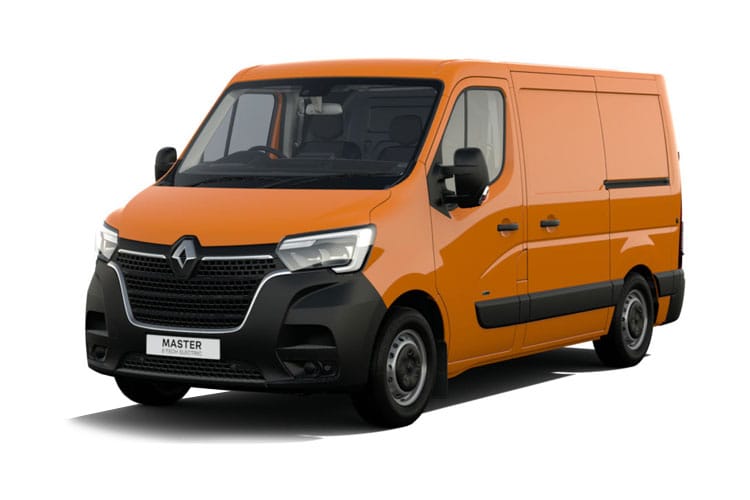
Images are for illustrative purposes only.
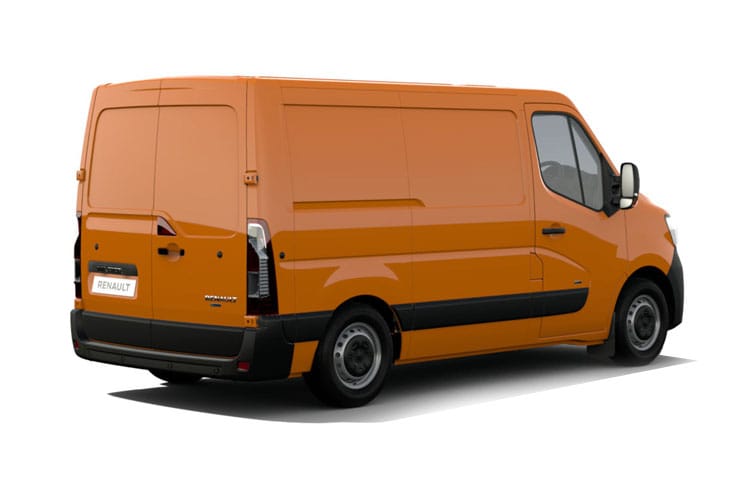
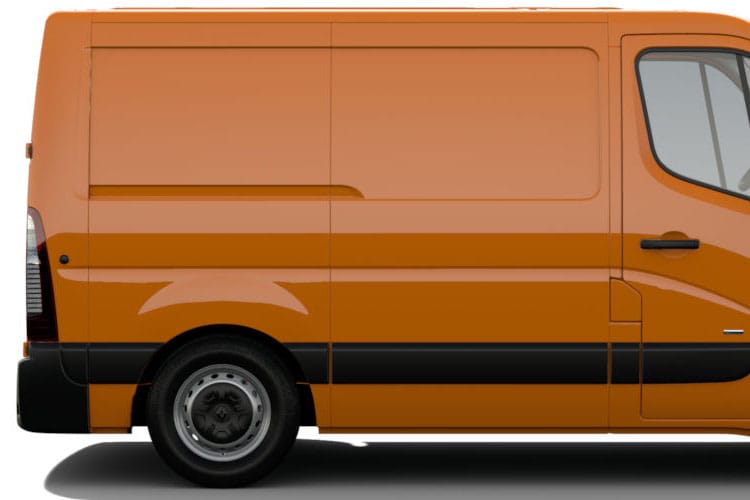

MM35 57kW 52kWh Advance Medium Roof Van Auto
Need some assistance or advice? Call Us 01903 538835


Renault's Master E-Tech was one of the original full-electric large vans. How should you rate it now? Jonathan Crouch decides.
The electric Renault Master E-Tech has improved its offering considerably since we first saw it back in 2018, but you'll still have to make a few compromises if you're to choose this large battery-powered van over the equivalent diesel version. Still, it's now more smartly designed and much more practical than before. Value's still a draw card here too, but you'll need to have the kind of business that suits what this French contender can deliver.
Being first to market isn't always a good thing, as Renault has discovered to its cost over the last two decades with its pioneering role in the EV automotive revolution. Which included a leading role in electrifying large vans: the brand's big Master LCV was the first of these to offer a full-EV variant back in 2018. Not many people bought that model (badged the Master Z.E.) because, to be frank, it wasn't very good, with a feeble 33kWh battery offering a driving range of just 74 miles. But this French maker subsequently worked on the technology, a 2020 update bringing this model a new name, the Master E-Tech, and more importantly, a bigger 52kWh battery, boosting range to 126 miles. In 2022 though, Ford's E-Transit re-set what the segment could expect from a large EV van and a further step forward was needed. Does this new generation Master E-Tech Electric (which shares everything with Nissan's Interstar-e) provide just that? Let's see.
Whereas the previous Master E-Tech was woefully under-powered and under-energised (borrowing its drivetrain from the brand's little supermini-sized ZOE van), this one's a very different story. This EV variant now has much improved pulling power, thanks to a new 140hp motor delivering 300Nm of torque. It's paired with a much bigger 87kWh battery that provides for a vastly improved range figure of up to 285 miles. Renault's also worked hard on a novel new power-assisted dynamic braking control system that keeps braking effectiveness and pedal feel the same, regardless of how much weight the van is carrying. It also triggers the automatic emergency braking system sooner (response time has been halved) and enhances regeneration, extending the range of the electric versions. And, as you'd expect from an all-new design, the portfolio of camera and radar driver assistance and safety features has been widened. There are now 20 available systems to maximise safety for people in and around the vehicle. It's active safety features include its lateral stability, automatic emergency braking and trailer stability assist systems. It also comes with Intelligent Speed Assist to help the driver stay within the speed limit. The shorter wheelbase and redesigned front axle provide for extra manoeuvrability, including a 1.5-metre-shorter turning diameter.
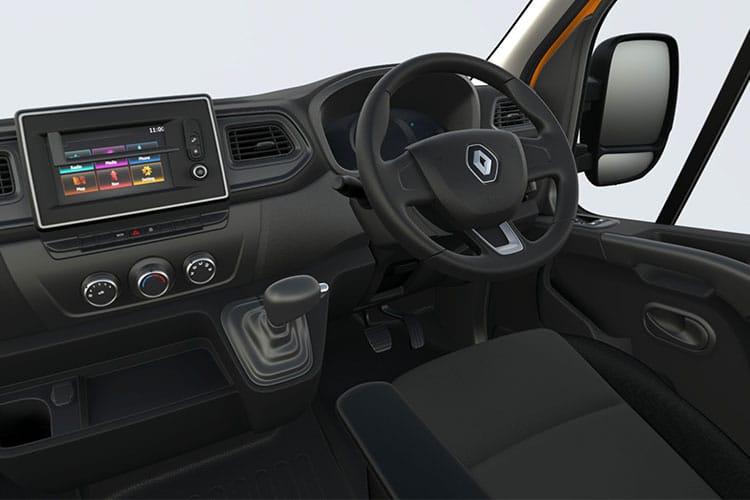
Apart from the badging and front grille, there are no obvious visual changes made to designate this particular Master model's E-Tech electric remit. So unless your customers notice the charging flap, you won't be scoring any extra ecological points with your deliveries, unless they happen to observe this big LCV's less rumbly approach. Renault describes this fourth generation Master's exterior design as 'show stopping', which might be a slight exaggeration but it's certainly a more attractive thing than its rather non-descript predecessor. The grille showcases the brand's latest logo and is surrounded by extra-large full-LED headlamps in a signature C-shaped array. Lots of work has gone into aerodynamics - hence the 'aerovan' marketing; the bonnet's shorter, the windscreen is further forward and tilted, the wing mirrors, air intake, ducts in the bumper and roofline slope are all streamlined and the rear is narrower. Things are also very different in the cab. The S-shaped dashboard and the dark-upholstered seats have a more car-like feel - as does the steering wheel, which now houses the transmission controls in automatic models. There's also a new 10-inch centre screen and various different kinds of seating options. Choose the bench format most customers will want and the back of the middle seat folds down into a desk, while the base houses a slot to store a laptop and there are USB-C ports to power devices. Renault claims 135-litres of total cabin storage space (a 25% increase), which is market-leading. The available space is spread across the dashboard, side cupholders, glovebox drawers, ceiling slot and two storage tiers in the doors.
For this E-Tech Electric Master, VAT-inclusive prices start at about £47,000 after subtraction of the £5,000 Plug-in Van Grant. There's only one trim level for the E-Tech, base 'Advance'. There's a choice of two body lengths - 'MM' and 'LM', with '35' (3.5-tonne) or '40' (4.0-tonne) Gross Vehicle Weight options in each case. Quite a lot costs extra: you'll have to pay more for front fog lamps, LED cargo area lighting and a rear view camera. You might also want to add Automatic Cruise Control with Stop & Go and a 'Driver Assistance Pack' with auto high beam, Blind spot warning and a rear view camera. You'll be able to equip this Master with Vehicle-to-Load (V2L) and Vehicle-to-Grid (V2G) capabilities. These include charging other devices from an outlet in the interior or load area, as well as adaptors to plug power tools, computers and other devices into charger outlets. You can also power custom-built body parts (refrigerated compartments, automatic tailgates, extra heating or air-conditioning systems, etc.) directly from the battery. This EV E-Tech version can also feed energy from its battery to the grid (V2G) using a bi-directional charger.
As usual with an EV van, the loading area size isn't compromised by the EV drivetrain. Master panel van load capacities range from 10.8 to 14.8 cubic metres, with a 40mm wider opening at the sliding side door and (with this generation model) 100mm longer load areas - the longest in the category. This MK4 design's greater payload capacity, length, width and volume should grow its market share. There's a choice of medium (MM/L1) or long (LM/L2) wheelbases (cargo area length 3225mm or 3857mm); and medium or high roof options. Payload capacity is much better this time round, up from a relatively feeble (for a large van) 1,279kgs to 1,625kgs, though that's still nearly half a tonne down on the potential of the equivalent diesel. The Master E-Tech electric version's 87kWh battery provides a WLTP range of up to 285 miles. And this variant has towing capability of 2.5 tonnes. Its energy consumption seems reasonable, at a WLTP standardised 21 kWh/100km, thanks to the battery heat management system. A 130kW DC fast charge adds 229km of range in just 30 minutes. A 22kW AC home charger tops up the battery from 10% to 100% in just under four hours. You'll need 28 hours and 30 minutes to top up completely from a 7.4kW garage wallbox. As usual with a Renault van, a 3 year/100,000 mile warranty is provided, with no mileage limit for the first two years and roadside assistance for the entire duration. You also get a 3 year paintwork guarantee and a 12 year anti-corrosion warranty.
All the current big electric vans are, to some extent, a design compromise, originally created for diesel power, now converted to electric. With some of these EV commercial vehicles, the design changes go deeper than others. Originally, the Master E-Tech wasn't one of those, but it now is. It's certainly impressive just how far Renault has developed this model since its original launch in 2018. Take the considerable driving range and payload improvements this time round, though you might find that the latter stat still slightly restricts what you can do with this LCV. Like its Stellantis Group segment competitors from Vauxhall, Citroen, Peugeot and Fiat, it's still primarily targeted at urban users who need to take large, bulky, light things over short distances. No doubt the replacement for this model will be able to do more than that, but for the time being, this Renault knows its niche.
Data provided by CAP-HPI database - Ref# 56221
Renault's Master E-Tech was one of the original full-electric large vans. How should you rate it now? Jonathan Crouch decides.
The electric Renault Master E-Tech has improved its offering considerably since we first saw it back in 2018, but you'll still have to make a few compromises if you're to choose this large battery-powered van over the equivalent diesel version. Still, it's now more smartly designed and much more practical than before. Value's still a draw card here too, but you'll need to have the kind of business that suits what this French contender can deliver.
Being first to market isn't always a good thing, as Renault has discovered to its cost over the last two decades with its pioneering role in the EV automotive revolution. Which included a leading role in electrifying large vans: the brand's big Master LCV was the first of these to offer a full-EV variant back in 2018. Not many people bought that model (badged the Master Z.E.) because, to be frank, it wasn't very good, with a feeble 33kWh battery offering a driving range of just 74 miles. But this French maker subsequently worked on the technology, a 2020 update bringing this model a new name, the Master E-Tech, and more importantly, a bigger 52kWh battery, boosting range to 126 miles. In 2022 though, Ford's E-Transit re-set what the segment could expect from a large EV van and a further step forward was needed. Does this new generation Master E-Tech Electric (which shares everything with Nissan's Interstar-e) provide just that? Let's see.
Whereas the previous Master E-Tech was woefully under-powered and under-energised (borrowing its drivetrain from the brand's little supermini-sized ZOE van), this one's a very different story. This EV variant now has much improved pulling power, thanks to a new 140hp motor delivering 300Nm of torque. It's paired with a much bigger 87kWh battery that provides for a vastly improved range figure of up to 285 miles. Renault's also worked hard on a novel new power-assisted dynamic braking control system that keeps braking effectiveness and pedal feel the same, regardless of how much weight the van is carrying. It also triggers the automatic emergency braking system sooner (response time has been halved) and enhances regeneration, extending the range of the electric versions. And, as you'd expect from an all-new design, the portfolio of camera and radar driver assistance and safety features has been widened. There are now 20 available systems to maximise safety for people in and around the vehicle. It's active safety features include its lateral stability, automatic emergency braking and trailer stability assist systems. It also comes with Intelligent Speed Assist to help the driver stay within the speed limit. The shorter wheelbase and redesigned front axle provide for extra manoeuvrability, including a 1.5-metre-shorter turning diameter.
Apart from the badging and front grille, there are no obvious visual changes made to designate this particular Master model's E-Tech electric remit. So unless your customers notice the charging flap, you won't be scoring any extra ecological points with your deliveries, unless they happen to observe this big LCV's less rumbly approach. Renault describes this fourth generation Master's exterior design as 'show stopping', which might be a slight exaggeration but it's certainly a more attractive thing than its rather non-descript predecessor. The grille showcases the brand's latest logo and is surrounded by extra-large full-LED headlamps in a signature C-shaped array. Lots of work has gone into aerodynamics - hence the 'aerovan' marketing; the bonnet's shorter, the windscreen is further forward and tilted, the wing mirrors, air intake, ducts in the bumper and roofline slope are all streamlined and the rear is narrower. Things are also very different in the cab. The S-shaped dashboard and the dark-upholstered seats have a more car-like feel - as does the steering wheel, which now houses the transmission controls in automatic models. There's also a new 10-inch centre screen and various different kinds of seating options. Choose the bench format most customers will want and the back of the middle seat folds down into a desk, while the base houses a slot to store a laptop and there are USB-C ports to power devices. Renault claims 135-litres of total cabin storage space (a 25% increase), which is market-leading. The available space is spread across the dashboard, side cupholders, glovebox drawers, ceiling slot and two storage tiers in the doors.
For this E-Tech Electric Master, VAT-inclusive prices start at about £47,000 after subtraction of the £5,000 Plug-in Van Grant. There's only one trim level for the E-Tech, base 'Advance'. There's a choice of two body lengths - 'MM' and 'LM', with '35' (3.5-tonne) or '40' (4.0-tonne) Gross Vehicle Weight options in each case. Quite a lot costs extra: you'll have to pay more for front fog lamps, LED cargo area lighting and a rear view camera. You might also want to add Automatic Cruise Control with Stop & Go and a 'Driver Assistance Pack' with auto high beam, Blind spot warning and a rear view camera. You'll be able to equip this Master with Vehicle-to-Load (V2L) and Vehicle-to-Grid (V2G) capabilities. These include charging other devices from an outlet in the interior or load area, as well as adaptors to plug power tools, computers and other devices into charger outlets. You can also power custom-built body parts (refrigerated compartments, automatic tailgates, extra heating or air-conditioning systems, etc.) directly from the battery. This EV E-Tech version can also feed energy from its battery to the grid (V2G) using a bi-directional charger.
As usual with an EV van, the loading area size isn't compromised by the EV drivetrain. Master panel van load capacities range from 10.8 to 14.8 cubic metres, with a 40mm wider opening at the sliding side door and (with this generation model) 100mm longer load areas - the longest in the category. This MK4 design's greater payload capacity, length, width and volume should grow its market share. There's a choice of medium (MM/L1) or long (LM/L2) wheelbases (cargo area length 3225mm or 3857mm); and medium or high roof options. Payload capacity is much better this time round, up from a relatively feeble (for a large van) 1,279kgs to 1,625kgs, though that's still nearly half a tonne down on the potential of the equivalent diesel. The Master E-Tech electric version's 87kWh battery provides a WLTP range of up to 285 miles. And this variant has towing capability of 2.5 tonnes. Its energy consumption seems reasonable, at a WLTP standardised 21 kWh/100km, thanks to the battery heat management system. A 130kW DC fast charge adds 229km of range in just 30 minutes. A 22kW AC home charger tops up the battery from 10% to 100% in just under four hours. You'll need 28 hours and 30 minutes to top up completely from a 7.4kW garage wallbox. As usual with a Renault van, a 3 year/100,000 mile warranty is provided, with no mileage limit for the first two years and roadside assistance for the entire duration. You also get a 3 year paintwork guarantee and a 12 year anti-corrosion warranty.
All the current big electric vans are, to some extent, a design compromise, originally created for diesel power, now converted to electric. With some of these EV commercial vehicles, the design changes go deeper than others. Originally, the Master E-Tech wasn't one of those, but it now is. It's certainly impressive just how far Renault has developed this model since its original launch in 2018. Take the considerable driving range and payload improvements this time round, though you might find that the latter stat still slightly restricts what you can do with this LCV. Like its Stellantis Group segment competitors from Vauxhall, Citroen, Peugeot and Fiat, it's still primarily targeted at urban users who need to take large, bulky, light things over short distances. No doubt the replacement for this model will be able to do more than that, but for the time being, this Renault knows its niche.
