
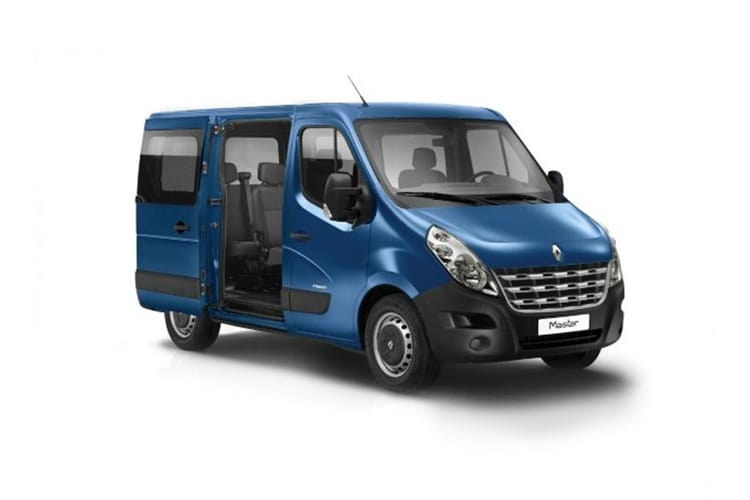
Images are for illustrative purposes only.
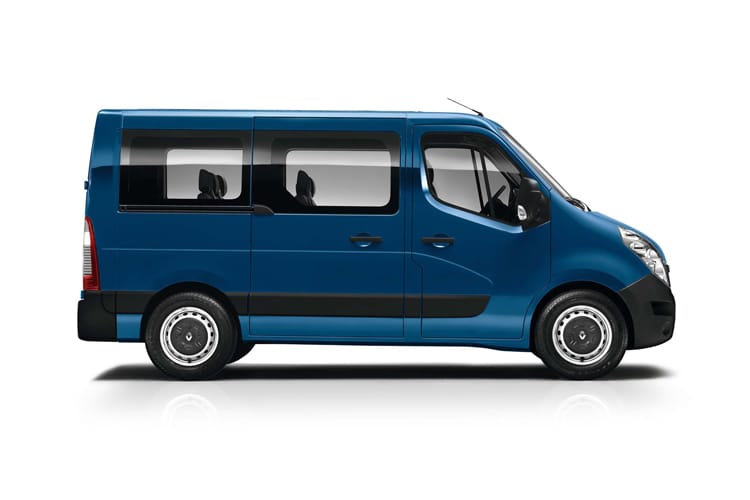
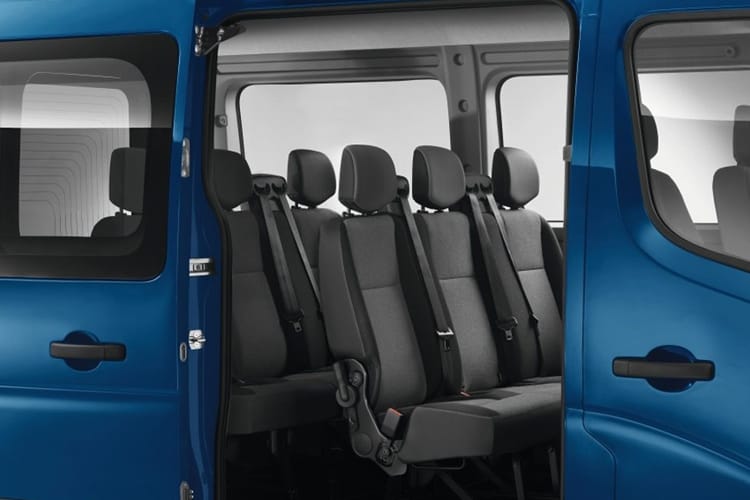
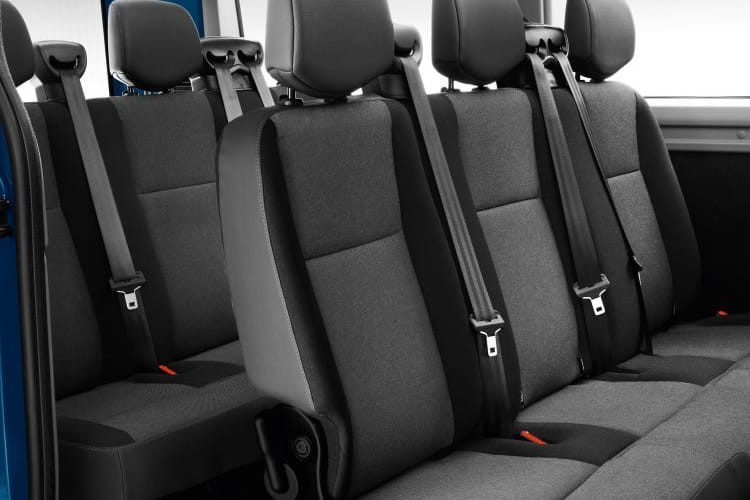

ML35dCi 125 Low Roof D/Cab Chassis
Need some assistance or advice? Call Us 01903 538835


BY ANDY ENRIGHT
The van-based MPV sector has been one of the fastest growing market segments amongst UK car buyers. Popularised by cars like the Renault Kangoo and Citroen Berlingo Multispace, a whole host of manufacturers have since joined the fray. Some have been more successful than others. Peugeot adopted a wait-and-see approach to this market, and their Partner Combi is an intelligent offering. Based on the Partner van - and sharing many parts with the Berlingo range - the Partner Combi was inexpensive to bring to market whilst at the same time based on a proven winning formula. The result is that it has always had a low sticker price and no shortage of takers. A used Partner Combi maximises your savings still further.
Models Covered:
Although its Citroen Berlingo Multispace sibling had been on sale for three years, it wasn't until June 2001 that Peugeot put its toe in the water with the Partner Combi. Learning lessons from Citroen, who inexplicably started out with a three-door model only, the Peugeot had five doors, and a pair of solid, no-nonsense engines. Buyers chose either a 1.4-litre petrol or a 1.9-litre diesel. In late 2001 a Quiksilver model was added to the range with no less than five fixed glass panels in the roof and bedecked with some dubious decals. Later the Escapade was introduced and by mid 2005, that was the only derivative left on sale. It was powered by the 2.0-litre HDi diesel engine. In the early part of 2006, the Partner Combi range was reduced down to one model - the 90bhp HDi diesel powered Escapade.
Based on the Partner van, the Combi's cuboid design liberates an awful lot of fresh air inside, helped by a flat floor and two twin sliding rear doors. Fold the rear seats down and you've got a great venue for kids birthday parties that will clean up easily and will prevent the usual chicken nugget in video recorder moment. Stowage areas under the floor allow for valuables to be kept out of sight when parked up - a perennial problem with such vehicle - and the sliding doors certainly come into their own in tight parking spaces when it's all too easy to clang the next car when loading shopping, children or other consumer durables. That space allows the Partner Combi to double up effectively as a rugged workhorse and part time MPV and vice versa. Power steering makes the Peugeot easy to manoeuvre at low speeds and kids can be firmly bolted into two Isofix mountings. If you've got three kids, you'll either have to lash in a baby seat or consider that tempting move into a shoe, although all five seats are all fitted with three-point seat belts. Despite the Combi's back to basics approach, safety and security are reasonably good. It would have been good to see anti-lock brakes and twin airbags as, in the event of a frontal collision, you'll get an airbag whilst the Partner gives your partner a handy air vent. Still, rigid side impact beams and pre-tensioning seat belts will protect the family whilst an engine immobiliser and remote control door locking will prevent your Partner from leaving you in the night.
Please contact us for an exact up-to-date valuation.
As with all cars that get used to ferry children back and forth, check for rips, stains and other damage to upholstery and minor trim parts. Check the integrity of the fitments inside as, unsurprisingly, the plastics quality used in the Partner Combi probably wouldn't find their way into an Audi. On some of the cubbies it's possible for coins, keys and the like to slip between ill-matched mouldings and down into the fascia innards. The mechanicals are proven technology and shouldn't cause any significant worry. Despite this, check for its service history but otherwise what you see is pretty much what you get with a Combi.
(Estimated prices, based on a 1.4i) One of the advantages of being spawned from a commercial vehicle is spares affordability. Commercial fleet operators are a canny crew and they factor in the cost of spares when making a buying decision. Realising that they couldn't suddenly ramp the price of a spare part up when it came to the 'civilian' Partner Combi without a rat being smelled, Peugeot are obliged to offer us super-economy parts prices. Therefore, a new exhaust system will be around £150, new front brake pads £50, with rears coming in at about £58. A new radiator is around £165, whilst a new starter motor will set you back approximately £250. A headlight retails at £65.
Two engines are available, a 75bhp 1.4-litre petrol unit or a 1.9-litre 71bhp diesel. Not too far apart in terms of power, the two engines also offer near identical fuel consumption, the petrol making an average of 40mpg and the diesel 41mpg. According to our crude calculations, you'd need to drive over 50,000 miles to recoup the extra cost of the diesel in terms of average fuel bills, but the oil burner will probably command a higher residual value. Take your pick. Anyone expecting a vehicle based on a light van to offer a syrupy ride will be disappointed. Having said that, the Partner Combi has the ability to convert all but the most sceptical. Both models are genuinely good fun to drive, with an acceptable amount of body roll in corners, and a fair amount of poke. Take the 1.9D version. Rest to 60 in 15.2 seconds may not worry the hot hatch brigade, but it feels much quicker in a Partner Combi, due in no small part to the low window line allowing you to see the ground rushing by in your peripheral vision. Peugeots have always had a reputation for building fun small cars and the Partner Combi is no exception. Baby Peugeots of the eighties had a wonderful reputation for effervescent handling, vivid acceleration and scalpel-sharp steering. Peugeot have managed to imbue the Partner Combi with a good dose of that old school energy whilst employing quality control procedures that are far tighter.
If you require unpretentious, cheap and cheerful family transportation that won't extinguish your will to live every time you get in, the Peugeot Partner Combi is a decent bet. No, it's not particularly luxurious but it has an infectious charm that endears itself to most. Its vast load area, no-nonsense rubber matting and many stowage bins means it can carry gear that far bigger vehicles would baulk at, yet is shorter and more manoeuvrable than a Honda Civic. With used versions now appearing in meaningful numbers, it makes a very sensible buy. What's more, with the money you'll save you might be able to afford a used 106GTi to indulge your selfish streak!
Data provided by CAP-HPI database - Ref# 21475
BY ANDY ENRIGHT
The van-based MPV sector has been one of the fastest growing market segments amongst UK car buyers. Popularised by cars like the Renault Kangoo and Citroen Berlingo Multispace, a whole host of manufacturers have since joined the fray. Some have been more successful than others. Peugeot adopted a wait-and-see approach to this market, and their Partner Combi is an intelligent offering. Based on the Partner van - and sharing many parts with the Berlingo range - the Partner Combi was inexpensive to bring to market whilst at the same time based on a proven winning formula. The result is that it has always had a low sticker price and no shortage of takers. A used Partner Combi maximises your savings still further.
Models Covered:
Although its Citroen Berlingo Multispace sibling had been on sale for three years, it wasn't until June 2001 that Peugeot put its toe in the water with the Partner Combi. Learning lessons from Citroen, who inexplicably started out with a three-door model only, the Peugeot had five doors, and a pair of solid, no-nonsense engines. Buyers chose either a 1.4-litre petrol or a 1.9-litre diesel. In late 2001 a Quiksilver model was added to the range with no less than five fixed glass panels in the roof and bedecked with some dubious decals. Later the Escapade was introduced and by mid 2005, that was the only derivative left on sale. It was powered by the 2.0-litre HDi diesel engine. In the early part of 2006, the Partner Combi range was reduced down to one model - the 90bhp HDi diesel powered Escapade.
Based on the Partner van, the Combi's cuboid design liberates an awful lot of fresh air inside, helped by a flat floor and two twin sliding rear doors. Fold the rear seats down and you've got a great venue for kids birthday parties that will clean up easily and will prevent the usual chicken nugget in video recorder moment. Stowage areas under the floor allow for valuables to be kept out of sight when parked up - a perennial problem with such vehicle - and the sliding doors certainly come into their own in tight parking spaces when it's all too easy to clang the next car when loading shopping, children or other consumer durables. That space allows the Partner Combi to double up effectively as a rugged workhorse and part time MPV and vice versa. Power steering makes the Peugeot easy to manoeuvre at low speeds and kids can be firmly bolted into two Isofix mountings. If you've got three kids, you'll either have to lash in a baby seat or consider that tempting move into a shoe, although all five seats are all fitted with three-point seat belts. Despite the Combi's back to basics approach, safety and security are reasonably good. It would have been good to see anti-lock brakes and twin airbags as, in the event of a frontal collision, you'll get an airbag whilst the Partner gives your partner a handy air vent. Still, rigid side impact beams and pre-tensioning seat belts will protect the family whilst an engine immobiliser and remote control door locking will prevent your Partner from leaving you in the night.
Please contact us for an exact up-to-date valuation.
As with all cars that get used to ferry children back and forth, check for rips, stains and other damage to upholstery and minor trim parts. Check the integrity of the fitments inside as, unsurprisingly, the plastics quality used in the Partner Combi probably wouldn't find their way into an Audi. On some of the cubbies it's possible for coins, keys and the like to slip between ill-matched mouldings and down into the fascia innards. The mechanicals are proven technology and shouldn't cause any significant worry. Despite this, check for its service history but otherwise what you see is pretty much what you get with a Combi.
(Estimated prices, based on a 1.4i) One of the advantages of being spawned from a commercial vehicle is spares affordability. Commercial fleet operators are a canny crew and they factor in the cost of spares when making a buying decision. Realising that they couldn't suddenly ramp the price of a spare part up when it came to the 'civilian' Partner Combi without a rat being smelled, Peugeot are obliged to offer us super-economy parts prices. Therefore, a new exhaust system will be around £150, new front brake pads £50, with rears coming in at about £58. A new radiator is around £165, whilst a new starter motor will set you back approximately £250. A headlight retails at £65.
Two engines are available, a 75bhp 1.4-litre petrol unit or a 1.9-litre 71bhp diesel. Not too far apart in terms of power, the two engines also offer near identical fuel consumption, the petrol making an average of 40mpg and the diesel 41mpg. According to our crude calculations, you'd need to drive over 50,000 miles to recoup the extra cost of the diesel in terms of average fuel bills, but the oil burner will probably command a higher residual value. Take your pick. Anyone expecting a vehicle based on a light van to offer a syrupy ride will be disappointed. Having said that, the Partner Combi has the ability to convert all but the most sceptical. Both models are genuinely good fun to drive, with an acceptable amount of body roll in corners, and a fair amount of poke. Take the 1.9D version. Rest to 60 in 15.2 seconds may not worry the hot hatch brigade, but it feels much quicker in a Partner Combi, due in no small part to the low window line allowing you to see the ground rushing by in your peripheral vision. Peugeots have always had a reputation for building fun small cars and the Partner Combi is no exception. Baby Peugeots of the eighties had a wonderful reputation for effervescent handling, vivid acceleration and scalpel-sharp steering. Peugeot have managed to imbue the Partner Combi with a good dose of that old school energy whilst employing quality control procedures that are far tighter.
If you require unpretentious, cheap and cheerful family transportation that won't extinguish your will to live every time you get in, the Peugeot Partner Combi is a decent bet. No, it's not particularly luxurious but it has an infectious charm that endears itself to most. Its vast load area, no-nonsense rubber matting and many stowage bins means it can carry gear that far bigger vehicles would baulk at, yet is shorter and more manoeuvrable than a Honda Civic. With used versions now appearing in meaningful numbers, it makes a very sensible buy. What's more, with the money you'll save you might be able to afford a used 106GTi to indulge your selfish streak!
