
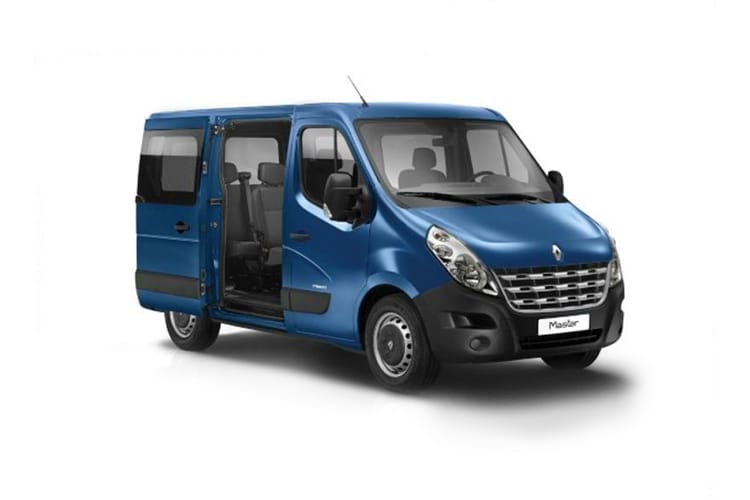
Images are for illustrative purposes only.
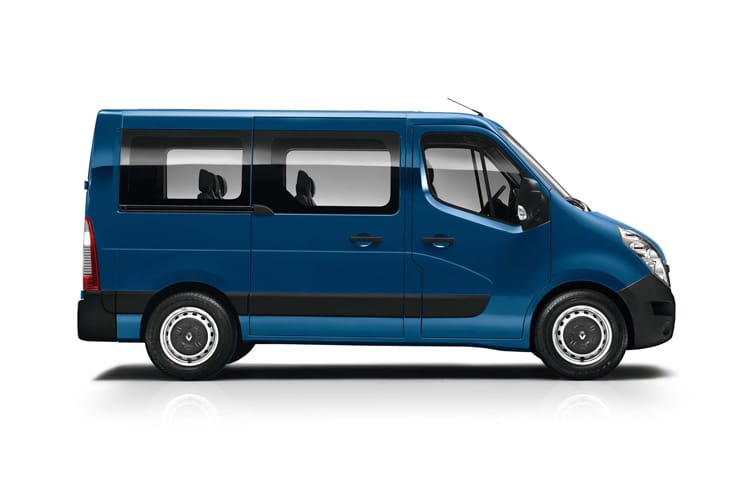
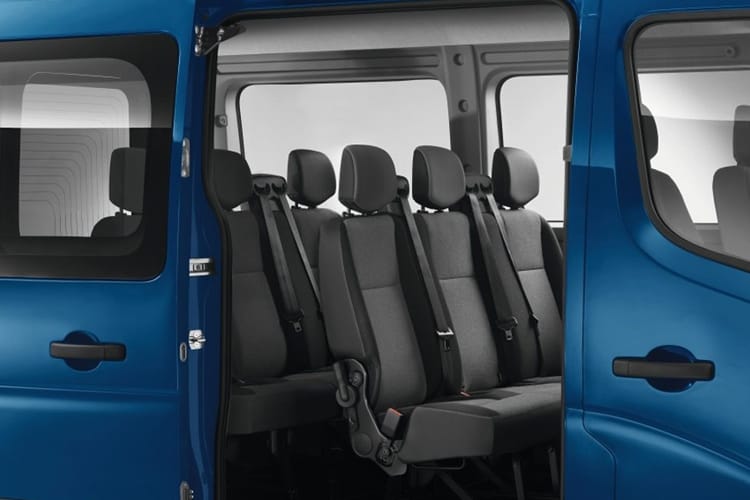
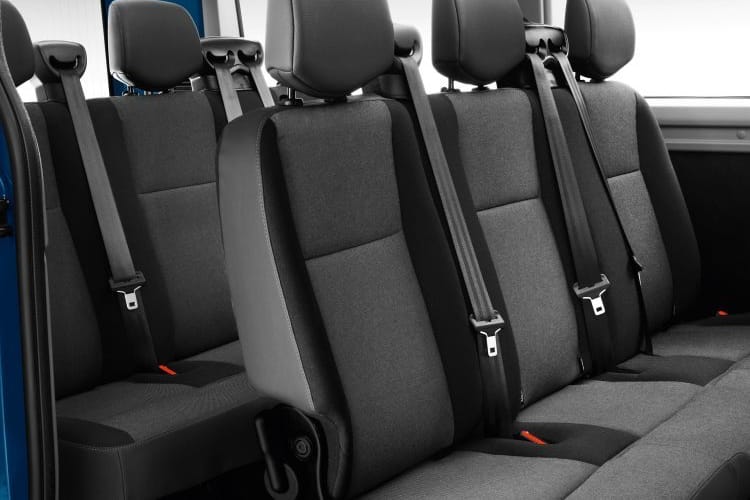

MM33dCi 125 Medium Roof 9 Seater Combi Quickshift6
Need some assistance or advice? Call Us 01903 538835


By Jonathan Crouch
The third generation of Renault's huge Master van, launched in 2010, was tasked with living up to its name by lording it over LCV rivals in the large van sector. From launch, the headlines looked as promising as this LCV's more assertive styling. Front wheel drive versions were more affordable to buy and run, while rear wheel drive models could handle much heavier loads. As a result, this Renault proved able to handle tough competition in the large van sector far more easily. But does it make sense as a used buy?
Large-sized van (2.3 CDTi diesel)
The Master has been around in one guise or another since 1980, with that first generation model lasting for 17 years. Its 1997 replacement stuck around for a mere 13 years until the third generation Master appeared in 2010, continuing to share its design and all its engineering with two key segment competitors, Vauxhall's Movano and the Nissan NV400. All three of these LCVs were substantially upgraded in 2019, but it's the pre-facelift MK3 model we're going to look at here. Packing up a Master is no small task, given loading capacities of anywhere between 8 and 18m3 in standard van models. And the torquey 2.3-litre dCi engine can haul big weights too - up to 4.5-tonnes, if you're really piling on the pounds. This diesel unit was used throughout the 2010-2019 period, but in 2018 an all-electric Z.E. version was added to the range.
For most businesses, aesthetics will be of limited importance when it comes to their choice of van, but even so, this MK3 Master took care to smarten up its act in third generation guise. The tall, thin double-optic headlamps and the cheesegrater front grille are distinctive, while a thick bumper adds aggression to the front end, curling up at the edges to protect the corners from knocks. Renault was also kind enough to cut steps into the bumper so that owners could get a leg-up when cleaning the windscreen. Side rubbing strips are a boon along the flanks too. Inside the cab, an extra 5.7cm of vehicle length means that there's more comfortable room for three, though the centre seat passenger's space is still rather narrow with knee room slightly compromised by the cup holders and storage provided by two centre-mounted bins. There isn't quite the same kind of soft touch, granite build quality you'd find in more expensive Volkswagen or Mercedes rivals but fit and finish certainly improved over the previous model and what the Master lacks in tactile feel, it more than makes up for in practical touches. Both seat and wheel are height-adjustable and there's a minefield of storage options inside the Master's cab (150 litres in total), from the usual door bins, overhead shelf, cup holders, chilled glove boxes and cubby holes to compartments for laptops and sunglasses, plus original buyers could have an optional clipboard that folds out of the dash for holding invoices, maps or delivery notes. Not quite so neat is the positioning of the grab handle you grasp on entering the cab, stuck above the door pillar rather than being more naturally placed on the A-pillar. The overhead positioning of the digital tachograph slot (necessary for those venturing above 3.5 tonnes) isn't ideal either. Which shouldn't detract from the fact that overall, this is a beautifully thought out cabin. Highlights include optional touches like the huge, split storage area under the passenger seats, accessible simply by flipping up the cushions. Then there's the way the centre seat backrest folds down to create a table that uniquely swivels towards the driver. And the sat nav screen that folds out of the roof, incorporates real time traffic information to guide you round jams and includes MP3 and Bluetooth compatibility. Of the four vehicle lengths, L1 and L2 were produced for front wheel drive customers, whilst the huge L4 bodyshape (two metres longer than Renault's enormous Grand Espace people carrier) was solely for rear-driven variants. It's the mid-range L3 bodyshape that'll probably suit most customers though and this came in either layout. Depending on your choice between three body heights (H1, 2 and 3), that means cubic metre capacities that run from 8 to 14.8m3 for front wheel drive models and between 12.4 and 17.0m3 if you opt for rear wheel drive (though with a Luton conversion, you can push this up to as much as 22m3). That kind of carriage capacity can mean a lot of weight, so it's just as well that an extra 4.5 tonne gross vehicle weight option was added into the top of this Mk3 model range, sitting above more familiar 2.8, 3.3 and 3.5-tonne variants. As a result, payload capacities can run from 994kg to as much as 2254kg. At the business end, there are the usual twin side-hinged rear doors opening out to 180-degrees and which can optionally extend to 270-degrees. As for getting stuff in, well, the loading height is usefully low at 548mm (or 674mm with rear wheel-drive) and there's a wide aperture of 1724mm in height and 1580mm in width once you've lumped your cargo up to floor level. Once inside, there's 1765mm of width, narrowing to 1080mm between the wheelboxes. Alternatively, there's a sliding side door, which is 17cm wider than it was on the previous generation model, offering an opening 1684mm high and 1270mm wide: a sliding door on the opposite side was optional but included on all models is a full width bulkhead to stop stuff sliding forward into the cab with you. Which is a scenario the numerous tie-down points are in any case there to prevent. Many models will have as many as 14 to choose from. A useful shelf above the cab area, accessible only from the loadbay, is useful for tucking away lashing straps and other bits and pieces.
Please contact us for an exact up-to-date valuation.
These vans are pretty tough, but there are a few things you'll need to look out for. It's the usual advice with large vans to buy on condition rather than year and look for a van that has tended to have performed lightweight delivery duties rather than consistently butting up against its payload limits. We've heard reports of gearbox faults: listen hard for whining noises on your test drive. There've been a few issues with the electrics, so make sure that all the connectivity works properly - Bluetooth-linking and so on. Check for load bay scuffs and scratches. And insist on a fully stamped-up service history.
(approx based on a Master 2.3 CDTi - 2015) Air filters are around £20-£33. Oil filters are around £8-£14. Front brake pads are around £27-£43; rears are about £27-£75. Rear brake discs are typically in the £80-£95 bracket. A fuel filter is about £10-£20. Wiper blades are around £11-£19. A headlamp is around £136. A tail lamp is around £63. A starter motor is in the £120 bracket. A radiator is in the £150-£233 bracket. A water pump kit is in the £37 bracket.
So, take a seat at the wheel. What'll you notice? Well, the driving position's higher than it was in the previous generation version for a start (49mm to be exact) which, along with revisions to the windscreen and side windows, gives you a commanding view ahead. Under the bonnet, the engine's the same whichever Master you choose, a 2.3-litre dCi diesel unit, though you can choose between three engine outputs - 100, 125 or 145bhp - and select between either front or rear wheel drive. You'd go for rear wheel drive with its twin rear wheels on each side if you were planning on carrying larger loads, which is why the rwd option comes only with the taller H2 and H3 medium and tall roof bodystyles and the longer L3 and L4 medium and long wheelbases with their extended overhangs. Just as well then, that the engines are a pretty willing bunch, even the entry-level 100bhp unit offering 285Nm of punch through the 6-speed gearbox, a figure the top 145bhp variant extends to 350Nm, sufficient to haul a trailer grossing at 3.0 tonnes. That's also enough to deal with gross vehicle weights of either 2.8, 3.3, 3.5 and now a whopping 4.5 tonnes, giving payload capacities than run between 994 and 2254kg, depending on the version you choose. On the move, though the gearbox could be slicker and the engine a little quieter, you're immediately impressed with this van's composure, both around corners and over poor surfaces. Rear wheel drive makes this vehicle especially manoeuvrable. It's true that the steering is a little on the light side for motorway work, but you appreciate that when trying to thread this large vehicle through tight city streets. Or indeed, exercising the tight turning circle, 13.6m between kerbs, rising to 14.1m between walls.
The market's largest vans, LCVs like this one, are more significant than you might think. If, increasingly, goods can be carried in efficient, eco-friendly vehicles like this rather than in smoky lorries, then everyone will benefit. Goods will be cheaper, they'll get there quicker and the polar bears will have a few more years on the ice cap. For that to happen of course, large vans need to be able to take larger loads - and this one can, with its greater space and higher weight limits. Which matters. How many lorry journeys, after all, could equally easily be completed by a Renault Master if it had, say, a 22m3 Luton body and its top 4.5 tonne weight capacity? An enormous number. Few large van rivals offer quite such a practical alternative for goods transit and those that do struggle to match this French contender's sensible convenience features and low running costs. True, build quality could be a little tougher but that apart, this is a remarkably complete used LCV package. Which if you've packages of your own, could make a remarkably astute choice.
Data provided by CAP-HPI database - Ref# 21025
By Jonathan Crouch
The third generation of Renault's huge Master van, launched in 2010, was tasked with living up to its name by lording it over LCV rivals in the large van sector. From launch, the headlines looked as promising as this LCV's more assertive styling. Front wheel drive versions were more affordable to buy and run, while rear wheel drive models could handle much heavier loads. As a result, this Renault proved able to handle tough competition in the large van sector far more easily. But does it make sense as a used buy?
Large-sized van (2.3 CDTi diesel)
The Master has been around in one guise or another since 1980, with that first generation model lasting for 17 years. Its 1997 replacement stuck around for a mere 13 years until the third generation Master appeared in 2010, continuing to share its design and all its engineering with two key segment competitors, Vauxhall's Movano and the Nissan NV400. All three of these LCVs were substantially upgraded in 2019, but it's the pre-facelift MK3 model we're going to look at here. Packing up a Master is no small task, given loading capacities of anywhere between 8 and 18m3 in standard van models. And the torquey 2.3-litre dCi engine can haul big weights too - up to 4.5-tonnes, if you're really piling on the pounds. This diesel unit was used throughout the 2010-2019 period, but in 2018 an all-electric Z.E. version was added to the range.
For most businesses, aesthetics will be of limited importance when it comes to their choice of van, but even so, this MK3 Master took care to smarten up its act in third generation guise. The tall, thin double-optic headlamps and the cheesegrater front grille are distinctive, while a thick bumper adds aggression to the front end, curling up at the edges to protect the corners from knocks. Renault was also kind enough to cut steps into the bumper so that owners could get a leg-up when cleaning the windscreen. Side rubbing strips are a boon along the flanks too. Inside the cab, an extra 5.7cm of vehicle length means that there's more comfortable room for three, though the centre seat passenger's space is still rather narrow with knee room slightly compromised by the cup holders and storage provided by two centre-mounted bins. There isn't quite the same kind of soft touch, granite build quality you'd find in more expensive Volkswagen or Mercedes rivals but fit and finish certainly improved over the previous model and what the Master lacks in tactile feel, it more than makes up for in practical touches. Both seat and wheel are height-adjustable and there's a minefield of storage options inside the Master's cab (150 litres in total), from the usual door bins, overhead shelf, cup holders, chilled glove boxes and cubby holes to compartments for laptops and sunglasses, plus original buyers could have an optional clipboard that folds out of the dash for holding invoices, maps or delivery notes. Not quite so neat is the positioning of the grab handle you grasp on entering the cab, stuck above the door pillar rather than being more naturally placed on the A-pillar. The overhead positioning of the digital tachograph slot (necessary for those venturing above 3.5 tonnes) isn't ideal either. Which shouldn't detract from the fact that overall, this is a beautifully thought out cabin. Highlights include optional touches like the huge, split storage area under the passenger seats, accessible simply by flipping up the cushions. Then there's the way the centre seat backrest folds down to create a table that uniquely swivels towards the driver. And the sat nav screen that folds out of the roof, incorporates real time traffic information to guide you round jams and includes MP3 and Bluetooth compatibility. Of the four vehicle lengths, L1 and L2 were produced for front wheel drive customers, whilst the huge L4 bodyshape (two metres longer than Renault's enormous Grand Espace people carrier) was solely for rear-driven variants. It's the mid-range L3 bodyshape that'll probably suit most customers though and this came in either layout. Depending on your choice between three body heights (H1, 2 and 3), that means cubic metre capacities that run from 8 to 14.8m3 for front wheel drive models and between 12.4 and 17.0m3 if you opt for rear wheel drive (though with a Luton conversion, you can push this up to as much as 22m3). That kind of carriage capacity can mean a lot of weight, so it's just as well that an extra 4.5 tonne gross vehicle weight option was added into the top of this Mk3 model range, sitting above more familiar 2.8, 3.3 and 3.5-tonne variants. As a result, payload capacities can run from 994kg to as much as 2254kg. At the business end, there are the usual twin side-hinged rear doors opening out to 180-degrees and which can optionally extend to 270-degrees. As for getting stuff in, well, the loading height is usefully low at 548mm (or 674mm with rear wheel-drive) and there's a wide aperture of 1724mm in height and 1580mm in width once you've lumped your cargo up to floor level. Once inside, there's 1765mm of width, narrowing to 1080mm between the wheelboxes. Alternatively, there's a sliding side door, which is 17cm wider than it was on the previous generation model, offering an opening 1684mm high and 1270mm wide: a sliding door on the opposite side was optional but included on all models is a full width bulkhead to stop stuff sliding forward into the cab with you. Which is a scenario the numerous tie-down points are in any case there to prevent. Many models will have as many as 14 to choose from. A useful shelf above the cab area, accessible only from the loadbay, is useful for tucking away lashing straps and other bits and pieces.
Please contact us for an exact up-to-date valuation.
These vans are pretty tough, but there are a few things you'll need to look out for. It's the usual advice with large vans to buy on condition rather than year and look for a van that has tended to have performed lightweight delivery duties rather than consistently butting up against its payload limits. We've heard reports of gearbox faults: listen hard for whining noises on your test drive. There've been a few issues with the electrics, so make sure that all the connectivity works properly - Bluetooth-linking and so on. Check for load bay scuffs and scratches. And insist on a fully stamped-up service history.
(approx based on a Master 2.3 CDTi - 2015) Air filters are around £20-£33. Oil filters are around £8-£14. Front brake pads are around £27-£43; rears are about £27-£75. Rear brake discs are typically in the £80-£95 bracket. A fuel filter is about £10-£20. Wiper blades are around £11-£19. A headlamp is around £136. A tail lamp is around £63. A starter motor is in the £120 bracket. A radiator is in the £150-£233 bracket. A water pump kit is in the £37 bracket.
So, take a seat at the wheel. What'll you notice? Well, the driving position's higher than it was in the previous generation version for a start (49mm to be exact) which, along with revisions to the windscreen and side windows, gives you a commanding view ahead. Under the bonnet, the engine's the same whichever Master you choose, a 2.3-litre dCi diesel unit, though you can choose between three engine outputs - 100, 125 or 145bhp - and select between either front or rear wheel drive. You'd go for rear wheel drive with its twin rear wheels on each side if you were planning on carrying larger loads, which is why the rwd option comes only with the taller H2 and H3 medium and tall roof bodystyles and the longer L3 and L4 medium and long wheelbases with their extended overhangs. Just as well then, that the engines are a pretty willing bunch, even the entry-level 100bhp unit offering 285Nm of punch through the 6-speed gearbox, a figure the top 145bhp variant extends to 350Nm, sufficient to haul a trailer grossing at 3.0 tonnes. That's also enough to deal with gross vehicle weights of either 2.8, 3.3, 3.5 and now a whopping 4.5 tonnes, giving payload capacities than run between 994 and 2254kg, depending on the version you choose. On the move, though the gearbox could be slicker and the engine a little quieter, you're immediately impressed with this van's composure, both around corners and over poor surfaces. Rear wheel drive makes this vehicle especially manoeuvrable. It's true that the steering is a little on the light side for motorway work, but you appreciate that when trying to thread this large vehicle through tight city streets. Or indeed, exercising the tight turning circle, 13.6m between kerbs, rising to 14.1m between walls.
The market's largest vans, LCVs like this one, are more significant than you might think. If, increasingly, goods can be carried in efficient, eco-friendly vehicles like this rather than in smoky lorries, then everyone will benefit. Goods will be cheaper, they'll get there quicker and the polar bears will have a few more years on the ice cap. For that to happen of course, large vans need to be able to take larger loads - and this one can, with its greater space and higher weight limits. Which matters. How many lorry journeys, after all, could equally easily be completed by a Renault Master if it had, say, a 22m3 Luton body and its top 4.5 tonne weight capacity? An enormous number. Few large van rivals offer quite such a practical alternative for goods transit and those that do struggle to match this French contender's sensible convenience features and low running costs. True, build quality could be a little tougher but that apart, this is a remarkably complete used LCV package. Which if you've packages of your own, could make a remarkably astute choice.
