
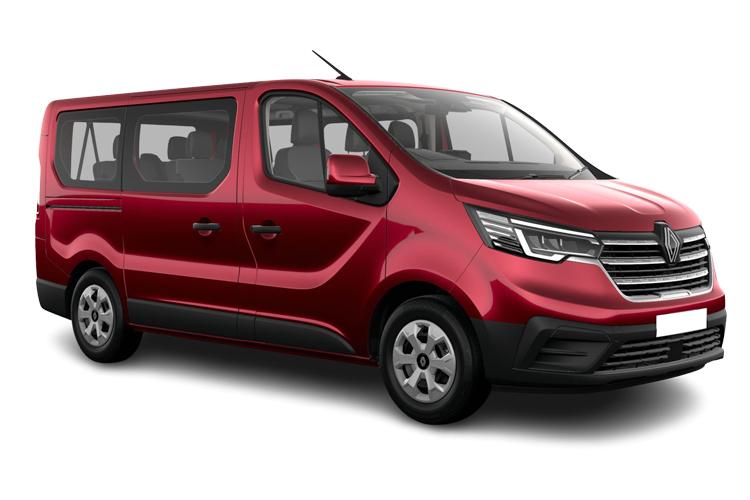
Images are for illustrative purposes only.
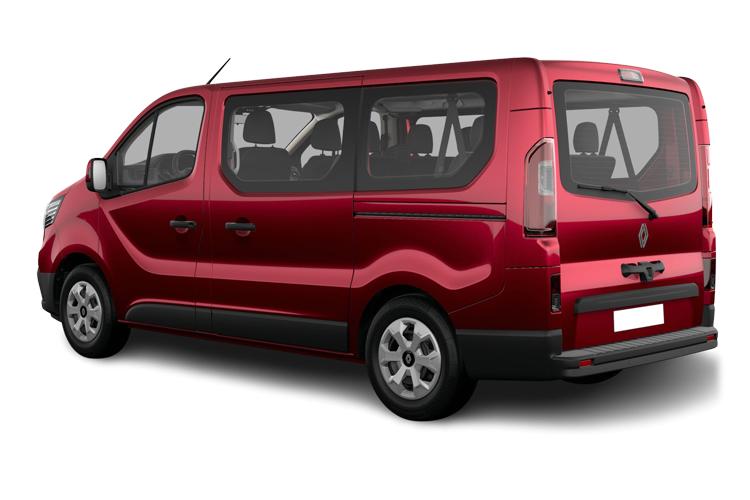
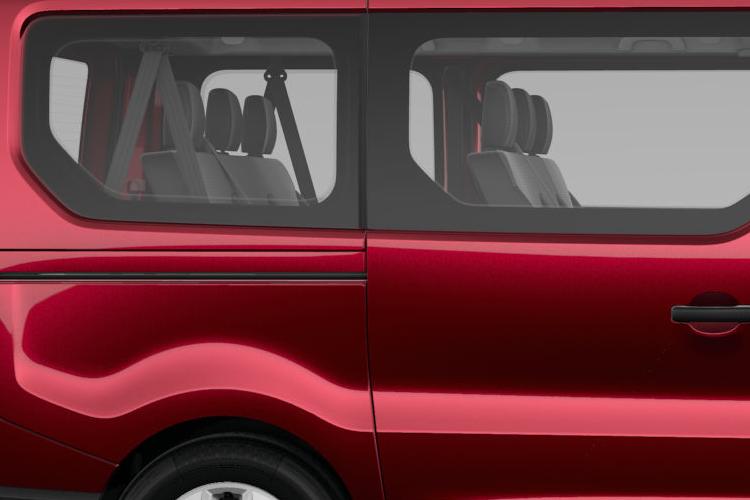
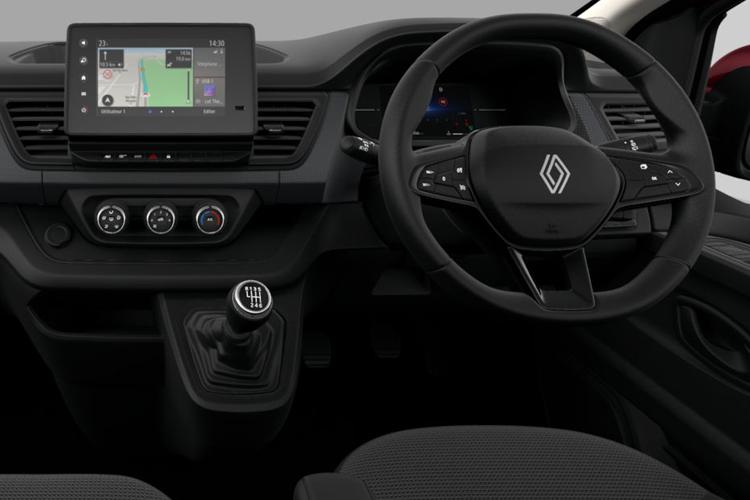

SL28 ENERGY dCi 145 Business+ Van EDC
Need some assistance or advice? Call Us 01903 538835


By Jonathan Crouch
Renault significantly improved their third generation mid-sized Trafic van in 2019, with a range of more efficient 2.0-litre dCi diesel engines, the option of EDC auto transmission and a smarter cabin with extra technology. As before, there was a choice of two lengths and two roof heights for the panel vans and the cabin was designed to function as a mobile office. It all meant that this van remained a strong contender in the medium-sized LCV segment. How does it stack up in this form as a used buy?
Medium-sized van (1.6 CDTi diesel)
This MK3 model Trafic van was a very important van indeed - at least for its makers Renault. Back in 2014, at a time when a risky development emphasis on electric power had left sales of the company's passenger cars under threat, the brand's continued leadership of the European Light Commercial Vehicle segment was crucial. And more than any other product, this was the vehicle that was tasked with sustaining that. In 2019, it was usefully improved to create the LCV we're going to look at here. The Trafic certainly had a fight on its hands to face down direct medium-sized LCV rivals as talented as Ford's Transit Custom, Volkswagen's Transporter and Mercedes' Vito, plus the shared PSA Group design badged as either a Peugeot Expert, a Citroen Dispatch or the Toyota Proace. An even tougher challenge for Renault lay in differentiating this product from its near-identical design stablemates, Fiat's Talento and the Nissan NV300. Until 2019, this Trafic had shared its design with Vauxhall's Vivaro too but by 2019, that model had shifted away to PSA Group underpinnings. Possibly at just the wrong time because this Renault's updated 2019 model year design made it more class-competitive than it had previously ever been. By then, the Trafic had been available in our market since 1980, with a second generation 'X83'-series version launched in 2001 and this MK3 'X82'-series model debuting in 2014, five years before the wide-ranging product upgrade creating the LCV we're going to look at here. Plenty changed as part of this update. There was a wholesale switch from 1.6 to 2.0-litre dCi diesel engines, along with the option of a new twin-clutch auto gearbox, plus operators got smarter styling, an upgraded cabin and stronger standards of safety and media connectivity. All of which this Trafic needed to restore its market positioning. Directly prior to this update, sales in 2018 had plummeted by 40%. In 2021, there was a further updated that rejuvenated the cabin design, but it's the earlier 2019-2021-era Trafic models though, that we look at here.
Though this design was shared between several brands, when produced as a Renault Trafic, it certainly had its own identity. Especially in this updated post-2019 form, where the exterior styling features changes intended to offer a more expressive and hi-tech look. As for what changed with this revised version of the 'X82'-series MK3 model, well the headlamps were in this form of the full-LED variety and there was Renault's signature C-shaped LED running light layout surrounding them, in line with the brand's then-current styling theme. This remains one of the larger medium-sized vans on the market. As usual in this class, there are short (L1) or long (L2) wheelbase body shapes and even the 'L1' version is virtually 5-metres in length. There are two roof height options and a wraparound rear bumper flows into generously-sized, strategically placed side protective mouldings that give a robust appearance and are perfectly sited for the rough and tumble of this van's likely working environment. Once you're inside, you'll find slightly more of a quality feel than was evident in the original version of this MK3 design, thanks in part to the addition of smart satin chrome inserts for the air vents, the centre console surround, the air-conditioning controls and the instrument cluster. Because this was merely a mid-term update, this Trafic didn't feature any elements of Renault's current instrument binnacle design, continuing instead with a layout borrowed from the old fourth generation Clio supermini that featured a 'cyclops-eye-style' oval centre digital read-out and flanking round rev counter and fuel gauges. If you ran an old pre-2014-era second generation Trafic model, you'll notice quite a lot of extra space in the cabin, this MK3 design offering an extra 116mm of cabin length for all front seat occupants. Well, almost all. If you happen to have drawn the short straw and find yourself stuck in the middle of the cab in front of the dash-mounted gearstick, your journey will be as comfort-compromised as it always is in vans that offer such an extra middle seat berth. We're not going to criticise that. In any case, if you get yourself a model with the 'mobile office'-style folding front seat (which is standard providing you avoid entry-level trim), you'll find that most of the time, you won't be using this space for seating anyway. Fold it down and you've got yourself a workable desk surface with a cup holder and a (rather flimsy-feeling) clipboard attachment that can be mounted into these angled slots to face either the driver or the passenger. Below, there's ample space for a laptop, the kind of device you could quickly link into the various infotainment technology features on offer. Bluetooth is of course standard across the range and Renault added in a better quality microphone for improved sound quality. We mentioned infotainment. Ideally, you'd want this 'MediaNav' 7-inch colour touchscreen, but unless you choose the top 'Sport' variant, you'll have to pay extra for it. What about the loading area? It's accessed through asymmetrically-split rear doors with chunky handles, these portals winging back to offer an impressive opening angle of up to 255-degrees. What about capacities? Well that of course will depend on your choice of body shape. There are two body lengths, the short wheelbase variants badged 'SL' or 'L1'; and the long wheelbase derivatives badged 'LL' or 'L2'. There are a couple of roof heights available in each case - either standard 'H1' or high roof 'H2'. The short wheelbase standard roof height 'L1H1' model can manage a 5.2m3 load capacity total - so even here, your Trafic panel van will be able to swallow up to three europallets - or no fewer than 11 'BA13-spec' standard sheets of plasterboard. This though, can rise to as much as 8.6m3 in an 'LL' long wheelbase High Roof 'Panel Van' variant. Before you decide on body length and roof height, make sure you take into account the advantages of the load-through bulkhead flaps that come as standard, providing you avoid entry-level trim. This kind of feature also features with direct rivals from this period - the Ford Transit Custom for instance, allowing longer items like ladders or planks of wood to be poked through into the cab. The difference here though, is that you can slide such items much further into the cab. On that rival Transit Custom, you can only push things through from the cargo bay as far as the edge of the seat base. It's useful to be able to do that of course, but the difference with a Trafic is that you can go further, with an extra flap in that seat base allowing items to slide further into the passenger foot well. The first flap in the bulkhead adds an extra 41cm of loading length; the second adds 80cms. The apertures they create are 228mm high and 510mm wide and the flaps are held open by magnets. Of course operators won't only be concerned about the capacity they can carry: they'll also want a van that can deal with heavy weights too. In short wheelbase form, you get a choice of either 2.8 or 3.0-tonne models, designated either 'SL28' or 'SL30'. The long wheelbase range sticks with the heavier option, so here, you'll be looking at an 'LL30' variant. A 2.8-tonne version can deal with a payload of anything between 1,036kg and 1,078kgs, depending on the variant and trim level you're looking at. A 3.0-tonne model can deal with between 1,170kgs and 1,240kgs depending on model. What else? Well as usual there's a standard side loading door on the left hand side of the vehicle and an optional second one for the right hand side. To prevent damage from such unsecured items, most operators will want to look at the kind of ply-lining kit to properly protect the load bay.
Please contact us for an exact up-to-date valuation.
These vans are pretty tough, but there are a few things you'll need to look out for. It's the usual advice with small vans to buy on condition rather than year and look for a van that has tended to have performed lightweight delivery duties rather than consistently butting up against its payload limits. We've heard reports of gearbox faults: listen hard for whining noises on your test drive. There've been a few issues with the electrics, so make sure that all the connectivity works properly - Bluetooth-linking and so on. Check for load bay scuffs and scratches. And insist on a fully stamped-up service history.
(approx based on a Trafic 2.0 dCi - 2019) Air filters are around £6. Oil filters are around £5-£6. A fuel filter is around £25-£26. Front brake pads are around £17-£32; rears are about £13-£26. Front brake discs cost in the £44-£92 bracket. Rear brake discs are typically in the £32-£67 bracket. Wiper blades are around £4-£15. Headlamps sit in the £146-£266 bracket. A tail lamp sits in the £75-£119 bracket.
The big news with the revised version of this third generation Trafic lay with Renault's switch back from 1.6 to 2.0-litre dCi diesel power for this post-2019 facelifted model. This more modern powerplant featured a variable geometry turbocharger compliant with Euro6d-temp standards and was of course far more refined than the rumbly old 2.0-litre unit used in the pre-2014-era MK2 Trafic. This more modern fifth generation engine came in three outputs - dCi 120, dCi 145 ENERGY and dCi 170 ENERGY. Either way, this powerplant was said to be around 2% cleaner and more frugal than the old 1.6; Renault reckoned that operators could expect a 2mpg improvement in overall running costs as a result. An engine Stop&Start system was added as standard across the range. The top pair of engines were with this update available with the option of Renault's EDC6 dual-clutch auto transmission - a potential boon for urban users. This Renault remained a tough workhorse whatever its working conditions. Maybe that'll involve towing; Trafic operators get a braked towing capacity of 2.0-tonnes. Maybe it'll involve deliveries over loose surfaces such as gravel, light snow or mud. If so, a standard 'Grip Xtend' feature allows one wheel to spin to help you gain traction. Or maybe it'll involve long motorway mileage. If so, you'll appreciate refinement that's aided by an acoustic windscreen using a special resin that filters out vibrations, minimises hum and restricts the amount of transmission noise you get in the cabin. There's a three year / 100,000 mile warranty and maintenance costs should be reasonable, courtesy of reasonably lengthy service intervals that are every two years or 24,000 miles, whichever comes first.
The van market is changing - and this Renault Trafic needed to change with it: in 2019, it did. In this form, the third generation design became smarter and more efficient than it was before and with its MediaNav Evolution connectivity fitted, also had the potential to function as an office on the road. An owner-driver could be pretty much permanently based in the thing if they so wished. We especially like the careful touches: the load-through facility in the full-steel bulkhead that lets you poke long items into the cab. The 'Eco Mode' driving option that makes it easy to lower your running costs. The Mobile Office package with its folding front seat. The way you can mount your smartphone or tablet on the dashboard to work with Renault's clever R&GO app. And the wide-angle passenger sunvisor mirror that helps when reversing. Though we've seen some of these things before in other LCV products, they were delivered here with a greater level of thought and thoroughness that operators will like. It'll all made quite a difference in a vehicle that wants to be as crucial in the business lives of its customers as it will be to its brand. It certainly looks well equipped for that job. Your righthand van? That's about the size of it.
Data provided by CAP-HPI database - Ref# 45104
By Jonathan Crouch
Renault significantly improved their third generation mid-sized Trafic van in 2019, with a range of more efficient 2.0-litre dCi diesel engines, the option of EDC auto transmission and a smarter cabin with extra technology. As before, there was a choice of two lengths and two roof heights for the panel vans and the cabin was designed to function as a mobile office. It all meant that this van remained a strong contender in the medium-sized LCV segment. How does it stack up in this form as a used buy?
Medium-sized van (1.6 CDTi diesel)
This MK3 model Trafic van was a very important van indeed - at least for its makers Renault. Back in 2014, at a time when a risky development emphasis on electric power had left sales of the company's passenger cars under threat, the brand's continued leadership of the European Light Commercial Vehicle segment was crucial. And more than any other product, this was the vehicle that was tasked with sustaining that. In 2019, it was usefully improved to create the LCV we're going to look at here. The Trafic certainly had a fight on its hands to face down direct medium-sized LCV rivals as talented as Ford's Transit Custom, Volkswagen's Transporter and Mercedes' Vito, plus the shared PSA Group design badged as either a Peugeot Expert, a Citroen Dispatch or the Toyota Proace. An even tougher challenge for Renault lay in differentiating this product from its near-identical design stablemates, Fiat's Talento and the Nissan NV300. Until 2019, this Trafic had shared its design with Vauxhall's Vivaro too but by 2019, that model had shifted away to PSA Group underpinnings. Possibly at just the wrong time because this Renault's updated 2019 model year design made it more class-competitive than it had previously ever been. By then, the Trafic had been available in our market since 1980, with a second generation 'X83'-series version launched in 2001 and this MK3 'X82'-series model debuting in 2014, five years before the wide-ranging product upgrade creating the LCV we're going to look at here. Plenty changed as part of this update. There was a wholesale switch from 1.6 to 2.0-litre dCi diesel engines, along with the option of a new twin-clutch auto gearbox, plus operators got smarter styling, an upgraded cabin and stronger standards of safety and media connectivity. All of which this Trafic needed to restore its market positioning. Directly prior to this update, sales in 2018 had plummeted by 40%. In 2021, there was a further updated that rejuvenated the cabin design, but it's the earlier 2019-2021-era Trafic models though, that we look at here.
Though this design was shared between several brands, when produced as a Renault Trafic, it certainly had its own identity. Especially in this updated post-2019 form, where the exterior styling features changes intended to offer a more expressive and hi-tech look. As for what changed with this revised version of the 'X82'-series MK3 model, well the headlamps were in this form of the full-LED variety and there was Renault's signature C-shaped LED running light layout surrounding them, in line with the brand's then-current styling theme. This remains one of the larger medium-sized vans on the market. As usual in this class, there are short (L1) or long (L2) wheelbase body shapes and even the 'L1' version is virtually 5-metres in length. There are two roof height options and a wraparound rear bumper flows into generously-sized, strategically placed side protective mouldings that give a robust appearance and are perfectly sited for the rough and tumble of this van's likely working environment. Once you're inside, you'll find slightly more of a quality feel than was evident in the original version of this MK3 design, thanks in part to the addition of smart satin chrome inserts for the air vents, the centre console surround, the air-conditioning controls and the instrument cluster. Because this was merely a mid-term update, this Trafic didn't feature any elements of Renault's current instrument binnacle design, continuing instead with a layout borrowed from the old fourth generation Clio supermini that featured a 'cyclops-eye-style' oval centre digital read-out and flanking round rev counter and fuel gauges. If you ran an old pre-2014-era second generation Trafic model, you'll notice quite a lot of extra space in the cabin, this MK3 design offering an extra 116mm of cabin length for all front seat occupants. Well, almost all. If you happen to have drawn the short straw and find yourself stuck in the middle of the cab in front of the dash-mounted gearstick, your journey will be as comfort-compromised as it always is in vans that offer such an extra middle seat berth. We're not going to criticise that. In any case, if you get yourself a model with the 'mobile office'-style folding front seat (which is standard providing you avoid entry-level trim), you'll find that most of the time, you won't be using this space for seating anyway. Fold it down and you've got yourself a workable desk surface with a cup holder and a (rather flimsy-feeling) clipboard attachment that can be mounted into these angled slots to face either the driver or the passenger. Below, there's ample space for a laptop, the kind of device you could quickly link into the various infotainment technology features on offer. Bluetooth is of course standard across the range and Renault added in a better quality microphone for improved sound quality. We mentioned infotainment. Ideally, you'd want this 'MediaNav' 7-inch colour touchscreen, but unless you choose the top 'Sport' variant, you'll have to pay extra for it. What about the loading area? It's accessed through asymmetrically-split rear doors with chunky handles, these portals winging back to offer an impressive opening angle of up to 255-degrees. What about capacities? Well that of course will depend on your choice of body shape. There are two body lengths, the short wheelbase variants badged 'SL' or 'L1'; and the long wheelbase derivatives badged 'LL' or 'L2'. There are a couple of roof heights available in each case - either standard 'H1' or high roof 'H2'. The short wheelbase standard roof height 'L1H1' model can manage a 5.2m3 load capacity total - so even here, your Trafic panel van will be able to swallow up to three europallets - or no fewer than 11 'BA13-spec' standard sheets of plasterboard. This though, can rise to as much as 8.6m3 in an 'LL' long wheelbase High Roof 'Panel Van' variant. Before you decide on body length and roof height, make sure you take into account the advantages of the load-through bulkhead flaps that come as standard, providing you avoid entry-level trim. This kind of feature also features with direct rivals from this period - the Ford Transit Custom for instance, allowing longer items like ladders or planks of wood to be poked through into the cab. The difference here though, is that you can slide such items much further into the cab. On that rival Transit Custom, you can only push things through from the cargo bay as far as the edge of the seat base. It's useful to be able to do that of course, but the difference with a Trafic is that you can go further, with an extra flap in that seat base allowing items to slide further into the passenger foot well. The first flap in the bulkhead adds an extra 41cm of loading length; the second adds 80cms. The apertures they create are 228mm high and 510mm wide and the flaps are held open by magnets. Of course operators won't only be concerned about the capacity they can carry: they'll also want a van that can deal with heavy weights too. In short wheelbase form, you get a choice of either 2.8 or 3.0-tonne models, designated either 'SL28' or 'SL30'. The long wheelbase range sticks with the heavier option, so here, you'll be looking at an 'LL30' variant. A 2.8-tonne version can deal with a payload of anything between 1,036kg and 1,078kgs, depending on the variant and trim level you're looking at. A 3.0-tonne model can deal with between 1,170kgs and 1,240kgs depending on model. What else? Well as usual there's a standard side loading door on the left hand side of the vehicle and an optional second one for the right hand side. To prevent damage from such unsecured items, most operators will want to look at the kind of ply-lining kit to properly protect the load bay.
Please contact us for an exact up-to-date valuation.
These vans are pretty tough, but there are a few things you'll need to look out for. It's the usual advice with small vans to buy on condition rather than year and look for a van that has tended to have performed lightweight delivery duties rather than consistently butting up against its payload limits. We've heard reports of gearbox faults: listen hard for whining noises on your test drive. There've been a few issues with the electrics, so make sure that all the connectivity works properly - Bluetooth-linking and so on. Check for load bay scuffs and scratches. And insist on a fully stamped-up service history.
(approx based on a Trafic 2.0 dCi - 2019) Air filters are around £6. Oil filters are around £5-£6. A fuel filter is around £25-£26. Front brake pads are around £17-£32; rears are about £13-£26. Front brake discs cost in the £44-£92 bracket. Rear brake discs are typically in the £32-£67 bracket. Wiper blades are around £4-£15. Headlamps sit in the £146-£266 bracket. A tail lamp sits in the £75-£119 bracket.
The big news with the revised version of this third generation Trafic lay with Renault's switch back from 1.6 to 2.0-litre dCi diesel power for this post-2019 facelifted model. This more modern powerplant featured a variable geometry turbocharger compliant with Euro6d-temp standards and was of course far more refined than the rumbly old 2.0-litre unit used in the pre-2014-era MK2 Trafic. This more modern fifth generation engine came in three outputs - dCi 120, dCi 145 ENERGY and dCi 170 ENERGY. Either way, this powerplant was said to be around 2% cleaner and more frugal than the old 1.6; Renault reckoned that operators could expect a 2mpg improvement in overall running costs as a result. An engine Stop&Start system was added as standard across the range. The top pair of engines were with this update available with the option of Renault's EDC6 dual-clutch auto transmission - a potential boon for urban users. This Renault remained a tough workhorse whatever its working conditions. Maybe that'll involve towing; Trafic operators get a braked towing capacity of 2.0-tonnes. Maybe it'll involve deliveries over loose surfaces such as gravel, light snow or mud. If so, a standard 'Grip Xtend' feature allows one wheel to spin to help you gain traction. Or maybe it'll involve long motorway mileage. If so, you'll appreciate refinement that's aided by an acoustic windscreen using a special resin that filters out vibrations, minimises hum and restricts the amount of transmission noise you get in the cabin. There's a three year / 100,000 mile warranty and maintenance costs should be reasonable, courtesy of reasonably lengthy service intervals that are every two years or 24,000 miles, whichever comes first.
The van market is changing - and this Renault Trafic needed to change with it: in 2019, it did. In this form, the third generation design became smarter and more efficient than it was before and with its MediaNav Evolution connectivity fitted, also had the potential to function as an office on the road. An owner-driver could be pretty much permanently based in the thing if they so wished. We especially like the careful touches: the load-through facility in the full-steel bulkhead that lets you poke long items into the cab. The 'Eco Mode' driving option that makes it easy to lower your running costs. The Mobile Office package with its folding front seat. The way you can mount your smartphone or tablet on the dashboard to work with Renault's clever R&GO app. And the wide-angle passenger sunvisor mirror that helps when reversing. Though we've seen some of these things before in other LCV products, they were delivered here with a greater level of thought and thoroughness that operators will like. It'll all made quite a difference in a vehicle that wants to be as crucial in the business lives of its customers as it will be to its brand. It certainly looks well equipped for that job. Your righthand van? That's about the size of it.
