
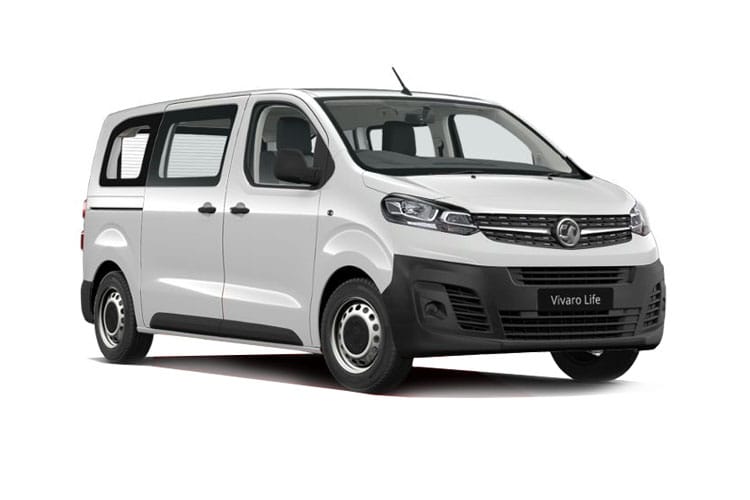
Images are for illustrative purposes only.
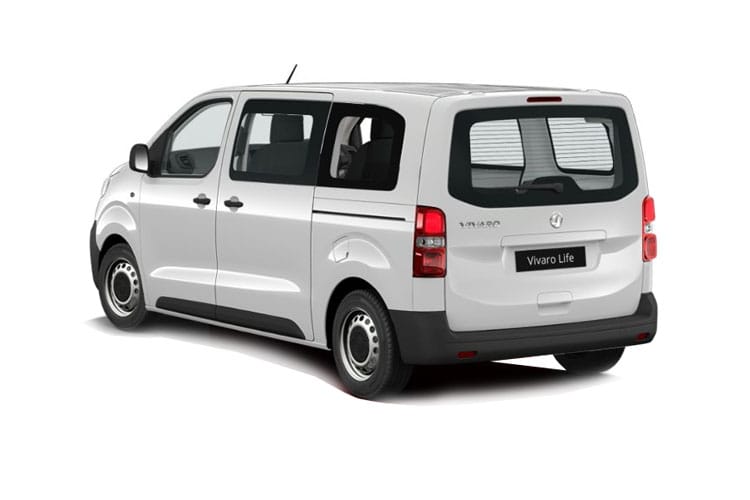
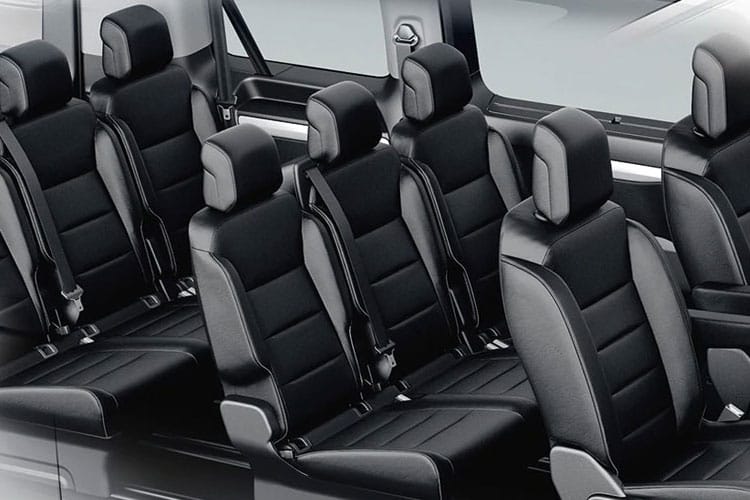
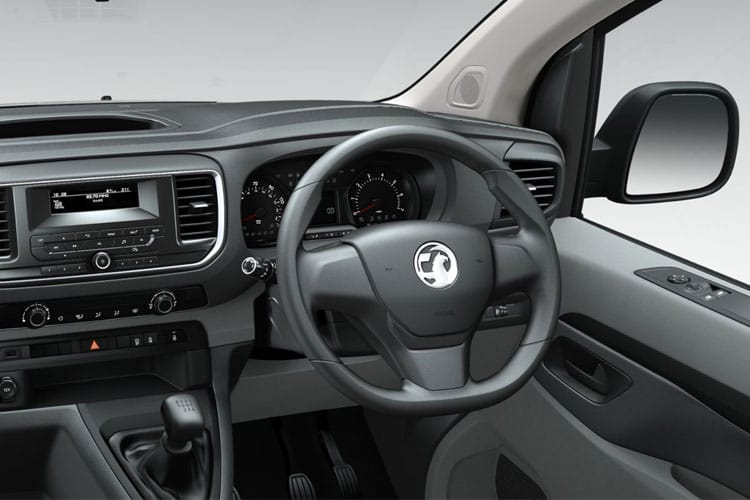

3100 2.0d 180PS Prime H1 D/Cab Auto
Need some assistance or advice? Call Us 01903 538835


The third generation Vauxhall Vivaro is now a more sophisticated proposition. Jonathan Crouch drives it.
Here's a more sophisticated kind of Vauxhall Vivaro van. This improved version of this British-built mid-sized Stellantis Group-shared third generation design now looks sharper and gains a much more sophisticated cabin. While still delivering the practicality and value that loyal buyers like. All looked after by one of the largest and most experienced dealer networks in the business. It is, in short, a contender that potential buyers in this segment can't ignore.
Since the turn of the century, Vauxhall's Vivaro has been the main challenger to Ford in the mid-sized part of the LCV segment. This improved version of the third generation design aims to sharpen its proposition considerably. The first two generations of Vivaro, launched respectively in 2001 and 2014, were designs shared with Renault and Nissan but this MK3 model switched to a Stellantis Group EMP2 platform at its launch in 2019. That means it's basically the same product as a Peugeot Expert, a Citroen Dispatch, a Fiat Scudo or a Toyota Proace. In an effort to make this British-built Vivaro stand out from these close cousins (and offer revitalised appeal against an all-new version of its arch-rival Ford's Transit Custom), Vauxhall introduced the range of mid-term updates in late 2023 that we going to look at here, applicable to both combustion and electric models.
Not much has changed in terms of the engineering of this model - at least not with the diesel variants anyway. As before, there's a choice of two Stellantis Group Turbo D units, a 120PS 1.5 and a 150PS 2.2-litre powerplant, the latter available with the option of automatic transmission if you don't want the standard 6-speed manual. There's also an auto-only 2.2-litre 180PS diesel unit. Your more forward-thinking alternative (if your business can stretch to it) is the Vivaro Electric, which has a 75kWh battery providing a range of up to 230 miles - around 12 miles more than the pre-facelift version. As before, there's a 136PS electric motor offering 260Nm of torque and there are three driving modes - 'Normal', 'Eco' and 'Power', with only the latter releasing the motor's full output. The Vivaro Electric has a regenerative braking system that can be adjusted through three recuperation levels using paddle shifters behind the steering wheel. Whatever Vivaro you choose, as before there's a little bit of an issue with an offset driving position (which also affects this model's Stellantis Group cousins), but refinement is good by LCV standards, as is ride quality thanks to load-sensitive shock absorbers and a so-called 'passive' suspension system that adjusts springing and damping as required, depending on the road surface. Plus this model feels quite manoeuvrable. Testers who'd found the sheer size of some other mid-sized LCVs in this segment a little daunting when dealing with narrow country lanes and squeezing through gaps in the traffic were, we found, much more easily able to acclimatise to a Vivaro. The bonnet's set quite high, but the nose has a squared-off shape that we've found during our testing programme makes this Vauxhall easy to place in tight urban situations.
This isn't a new generation Vivaro, but Vauxhall wants you to think it is. Hence the installation of the brand's more charismatic 'Vizor' front end now familiar from its other models. The Vizor panel extends seamlessly across the front, integrating with headlights that can now incorporate LED beams. The panel features the company's latest Griffin logo at its centre. As before, there are two body lengths - 4.98m and 5.33m - and a double cab variant. The main design changes though, lie inside where every Vivaro now features a 10-inch digital driver instrument display, complemented by 10-inch central touchscreen featuring standard-fit wireless 'Apple CarPlay' and 'Android Auto'. As part of redesigning the dashboard to take this bigger monitor, the designers have also taken the opportunity to enlarge the storage areas around the instrument panel and the centre console. If you choose the Electric model, there's a clever 'e-Power Take-off' unit feature which allows the vehicle's traction battery to be used as a power source for other electrical devices. Otherwise, things are much as before, which means quite a car-like seating position with plenty of seat and wheel adjustment. As usual in this class, a three-person bench seat is fitted and there's a 'FlexCargo' bulkhead flap so that longer items can be pushed through from the cargo area. The middle part of the seat folds down to create a table. Most dashboard functions are on the central touchscreen, though the climate controls are separated out below.
Vivaro pricing starts at around £31,000 (exc VAT) for diesel versions and this LCV is available in three trim levels - 'Prime', 'Pro' and 'GS' - with a choice of two lengths, 'L1' (4.98m) and 'L2' (5.33m). The electric model has a 75kWh battery and (before deduction of the available £5,000 government Plug-in Van Grant), starts from just over £38,000 after grant deduction (exc VAT), a saving of over £2,500 over the pre-facelift model. That battery version is also available in an MPV passenger carrying form badged as the Vivaro Life Electric. Vauxhall continues to offer a platform-chassis option for a variety of body types. And for panel van folk needing more seats, there's a Doublecab variant that features an innovative hinged steel-mesh bulkhead that articulates forward when the second row seats are folded and not in use. There's still no high-roof option. All models are decently equipped, but bear in mind you have to opt for a plusher 'Pro' spec to get the useful 'FlexCargo' load-through bulkhead. With both models, the 10-inch centre screen uses an integrated Snapdragon Cockpit platform from Qualcomm technologies enabling state-of-the-art graphics, multimedia features and computer vision capabilities. There's lots of safety kit too. Even 'Prime' versions now come as standard with systems such as High Beam Assist, Intelligent Speed Assist, Lane Keep Assist, Driver Attention Alert and Advanced Emergency Braking. Adaptive Cruise Control with a Stop and Go function is also available as an option. In all, eighteen advanced driver assistance systems fitted across the range and particularly notable is the new Dynamic Surround Vision system, standard on Pro versions and optional on Prime versions. This comprises two cameras, one located above the rear doors and another under the passenger-side exterior mirror. The images - of the rear while driving and (when activated by the indicator stalk) of the side blind-spot - are displayed in the new high-definition digital rear-view mirror.
Nothing's changed out back. So the load area is 2,512mm in length for the standard wheelbase 'L1' and 2,862mm for the long wheelbase 'L2'), with 1.26-metres of width between the wheel arches and a maximum height of 1,397mm from floor to ceiling. Overall cargo capacity sees a minimum load volume of 5.3 cubic metres for the 'L1', and 6.1 cubic metres for the 'L2'. This expands to 5.8 and 6.6 cubic metres when the through-load facility is used (standard if you avoid base-spec trim), but this only applies to loads that can fit through the hole in the bulkhead. Depending on engine, this van can take up to 1.4 tonnes of payload. As for running costs, well the 1.5 120PS diesel variant returns around 47mpg on the WLTP combined cycle. Servicing is every 25,000 miles for the 1.5 diesel engine and every 30,000 miles for the 2.0-litre diesel: both variants should be seen by dealership at least every two years. It's a bit behind the 36,000 mile service intervals you get from a Ford Transit Custom though. If you're looking at the full-battery version, you'll want to know that the Vivaro Electric can be charged using the standard 7.4kW onboard charger (an 11 kW charger is optional). The 75kWh battery can be recharged from 5%-80% in 45 minutes at a 100kW public charging station. Both versions of this LCV are looked after by Vauxhall's 'Van Business Centres' program which provides business hubs offering a complete range of extended servicing hours to better suit business customers.
In a medium range market where there really isn't that much to choose between the very best panel vans, buying decisions often come down to very small differences. If you've an LCV brand, the more of these you can build into your product, the better placed it will be. And on that basis, the improved version of this third generation Vivaro is very well placed indeed. It's now got a bit more visual identity and the enhanced cockpit tech is very welcome. Of course, potential Vivaro customers convinced by Vauxhall's proposition will need to remember that in a rival Peugeot Expert, Citroen Dispatch, Fiat Scudo or Toyota Proace, they could have pretty much exactly the same product with a different badge. It's at that point though that the power of Vauxhall's huge UK dealer network might well sway the decision this Luton brand's way. A small but significant difference. But maybe perhaps in this case, a crucial one.
Data provided by CAP-HPI database - Ref# 61366
The third generation Vauxhall Vivaro is now a more sophisticated proposition. Jonathan Crouch drives it.
Here's a more sophisticated kind of Vauxhall Vivaro van. This improved version of this British-built mid-sized Stellantis Group-shared third generation design now looks sharper and gains a much more sophisticated cabin. While still delivering the practicality and value that loyal buyers like. All looked after by one of the largest and most experienced dealer networks in the business. It is, in short, a contender that potential buyers in this segment can't ignore.
Since the turn of the century, Vauxhall's Vivaro has been the main challenger to Ford in the mid-sized part of the LCV segment. This improved version of the third generation design aims to sharpen its proposition considerably. The first two generations of Vivaro, launched respectively in 2001 and 2014, were designs shared with Renault and Nissan but this MK3 model switched to a Stellantis Group EMP2 platform at its launch in 2019. That means it's basically the same product as a Peugeot Expert, a Citroen Dispatch, a Fiat Scudo or a Toyota Proace. In an effort to make this British-built Vivaro stand out from these close cousins (and offer revitalised appeal against an all-new version of its arch-rival Ford's Transit Custom), Vauxhall introduced the range of mid-term updates in late 2023 that we going to look at here, applicable to both combustion and electric models.
Not much has changed in terms of the engineering of this model - at least not with the diesel variants anyway. As before, there's a choice of two Stellantis Group Turbo D units, a 120PS 1.5 and a 150PS 2.2-litre powerplant, the latter available with the option of automatic transmission if you don't want the standard 6-speed manual. There's also an auto-only 2.2-litre 180PS diesel unit. Your more forward-thinking alternative (if your business can stretch to it) is the Vivaro Electric, which has a 75kWh battery providing a range of up to 230 miles - around 12 miles more than the pre-facelift version. As before, there's a 136PS electric motor offering 260Nm of torque and there are three driving modes - 'Normal', 'Eco' and 'Power', with only the latter releasing the motor's full output. The Vivaro Electric has a regenerative braking system that can be adjusted through three recuperation levels using paddle shifters behind the steering wheel. Whatever Vivaro you choose, as before there's a little bit of an issue with an offset driving position (which also affects this model's Stellantis Group cousins), but refinement is good by LCV standards, as is ride quality thanks to load-sensitive shock absorbers and a so-called 'passive' suspension system that adjusts springing and damping as required, depending on the road surface. Plus this model feels quite manoeuvrable. Testers who'd found the sheer size of some other mid-sized LCVs in this segment a little daunting when dealing with narrow country lanes and squeezing through gaps in the traffic were, we found, much more easily able to acclimatise to a Vivaro. The bonnet's set quite high, but the nose has a squared-off shape that we've found during our testing programme makes this Vauxhall easy to place in tight urban situations.
This isn't a new generation Vivaro, but Vauxhall wants you to think it is. Hence the installation of the brand's more charismatic 'Vizor' front end now familiar from its other models. The Vizor panel extends seamlessly across the front, integrating with headlights that can now incorporate LED beams. The panel features the company's latest Griffin logo at its centre. As before, there are two body lengths - 4.98m and 5.33m - and a double cab variant. The main design changes though, lie inside where every Vivaro now features a 10-inch digital driver instrument display, complemented by 10-inch central touchscreen featuring standard-fit wireless 'Apple CarPlay' and 'Android Auto'. As part of redesigning the dashboard to take this bigger monitor, the designers have also taken the opportunity to enlarge the storage areas around the instrument panel and the centre console. If you choose the Electric model, there's a clever 'e-Power Take-off' unit feature which allows the vehicle's traction battery to be used as a power source for other electrical devices. Otherwise, things are much as before, which means quite a car-like seating position with plenty of seat and wheel adjustment. As usual in this class, a three-person bench seat is fitted and there's a 'FlexCargo' bulkhead flap so that longer items can be pushed through from the cargo area. The middle part of the seat folds down to create a table. Most dashboard functions are on the central touchscreen, though the climate controls are separated out below.
Vivaro pricing starts at around £31,000 (exc VAT) for diesel versions and this LCV is available in three trim levels - 'Prime', 'Pro' and 'GS' - with a choice of two lengths, 'L1' (4.98m) and 'L2' (5.33m). The electric model has a 75kWh battery and (before deduction of the available £5,000 government Plug-in Van Grant), starts from just over £38,000 after grant deduction (exc VAT), a saving of over £2,500 over the pre-facelift model. That battery version is also available in an MPV passenger carrying form badged as the Vivaro Life Electric. Vauxhall continues to offer a platform-chassis option for a variety of body types. And for panel van folk needing more seats, there's a Doublecab variant that features an innovative hinged steel-mesh bulkhead that articulates forward when the second row seats are folded and not in use. There's still no high-roof option. All models are decently equipped, but bear in mind you have to opt for a plusher 'Pro' spec to get the useful 'FlexCargo' load-through bulkhead. With both models, the 10-inch centre screen uses an integrated Snapdragon Cockpit platform from Qualcomm technologies enabling state-of-the-art graphics, multimedia features and computer vision capabilities. There's lots of safety kit too. Even 'Prime' versions now come as standard with systems such as High Beam Assist, Intelligent Speed Assist, Lane Keep Assist, Driver Attention Alert and Advanced Emergency Braking. Adaptive Cruise Control with a Stop and Go function is also available as an option. In all, eighteen advanced driver assistance systems fitted across the range and particularly notable is the new Dynamic Surround Vision system, standard on Pro versions and optional on Prime versions. This comprises two cameras, one located above the rear doors and another under the passenger-side exterior mirror. The images - of the rear while driving and (when activated by the indicator stalk) of the side blind-spot - are displayed in the new high-definition digital rear-view mirror.
Nothing's changed out back. So the load area is 2,512mm in length for the standard wheelbase 'L1' and 2,862mm for the long wheelbase 'L2'), with 1.26-metres of width between the wheel arches and a maximum height of 1,397mm from floor to ceiling. Overall cargo capacity sees a minimum load volume of 5.3 cubic metres for the 'L1', and 6.1 cubic metres for the 'L2'. This expands to 5.8 and 6.6 cubic metres when the through-load facility is used (standard if you avoid base-spec trim), but this only applies to loads that can fit through the hole in the bulkhead. Depending on engine, this van can take up to 1.4 tonnes of payload. As for running costs, well the 1.5 120PS diesel variant returns around 47mpg on the WLTP combined cycle. Servicing is every 25,000 miles for the 1.5 diesel engine and every 30,000 miles for the 2.0-litre diesel: both variants should be seen by dealership at least every two years. It's a bit behind the 36,000 mile service intervals you get from a Ford Transit Custom though. If you're looking at the full-battery version, you'll want to know that the Vivaro Electric can be charged using the standard 7.4kW onboard charger (an 11 kW charger is optional). The 75kWh battery can be recharged from 5%-80% in 45 minutes at a 100kW public charging station. Both versions of this LCV are looked after by Vauxhall's 'Van Business Centres' program which provides business hubs offering a complete range of extended servicing hours to better suit business customers.
In a medium range market where there really isn't that much to choose between the very best panel vans, buying decisions often come down to very small differences. If you've an LCV brand, the more of these you can build into your product, the better placed it will be. And on that basis, the improved version of this third generation Vivaro is very well placed indeed. It's now got a bit more visual identity and the enhanced cockpit tech is very welcome. Of course, potential Vivaro customers convinced by Vauxhall's proposition will need to remember that in a rival Peugeot Expert, Citroen Dispatch, Fiat Scudo or Toyota Proace, they could have pretty much exactly the same product with a different badge. It's at that point though that the power of Vauxhall's huge UK dealer network might well sway the decision this Luton brand's way. A small but significant difference. But maybe perhaps in this case, a crucial one.
