
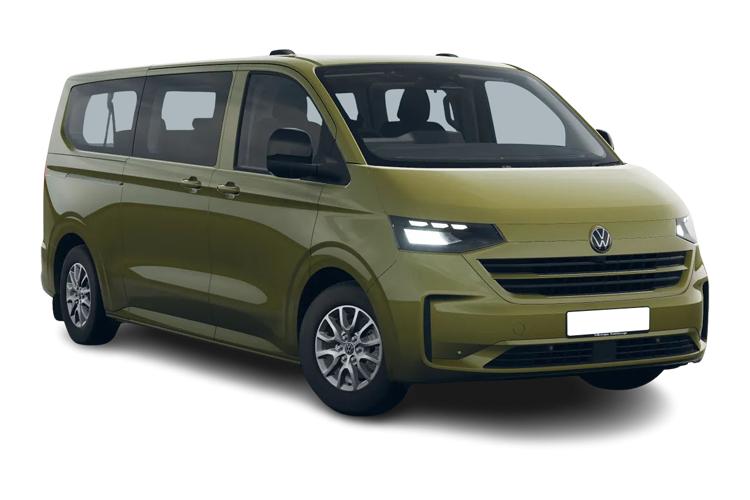
Images are for illustrative purposes only.
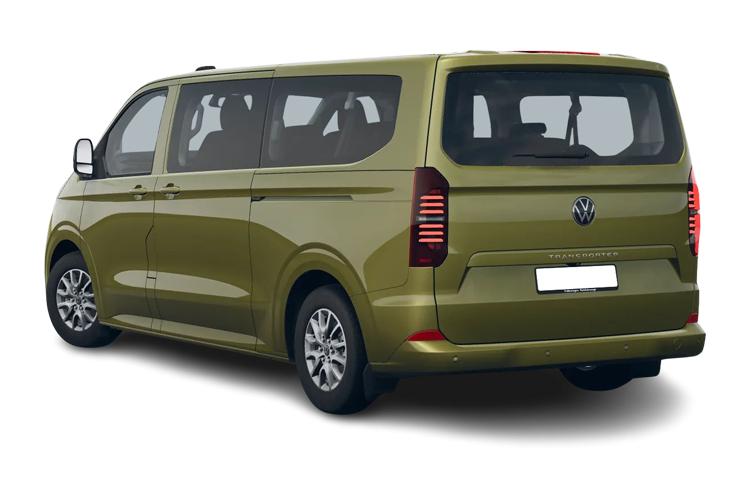
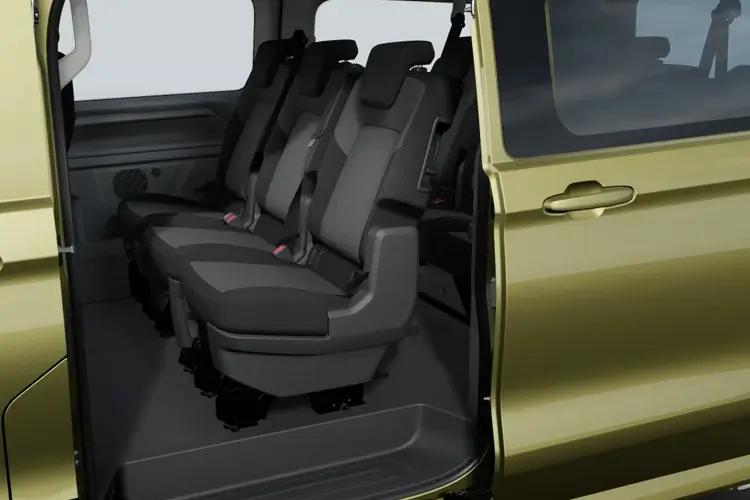
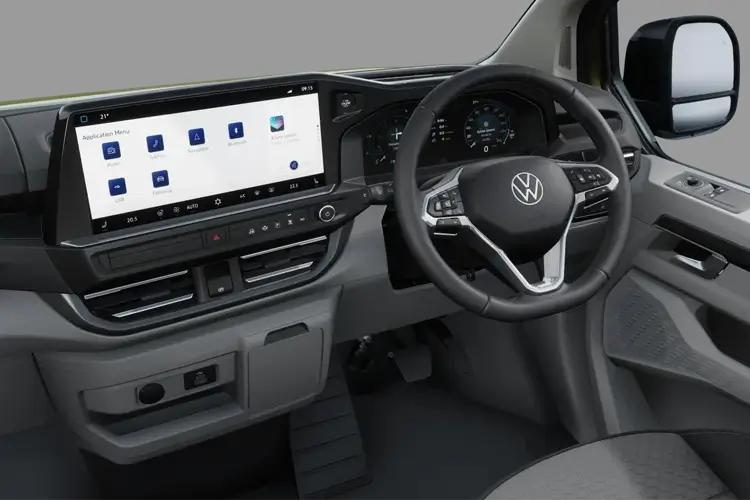

2.5 PHEV 230 Sportline Kombi Van Auto
Need some assistance or advice? Call Us 01903 538835


Volkswagen has revitalised its long-running Transporter mid-sized van, courtesy of a little help from rivals Ford. Jonathan Crouch drives it.
Everything about Volkswagen's seventh generation Transporter van is different - but much is also the same. The tough build, interior quality, torquey diesel engines and strong residuals of this mid-sized LCV will all be recognisable to existing owners. Who'll be intrigued by the new PHEV and EV powertrains that shared development with Ford has made possible.
Think of a Volkswagen van and it's quite probable that you'll be picturing this one, the Transporter. It is, after all, the brand's best selling commercial vehicle, with a production run that stretches back to 1950. Here, we've the seventh generation T7 version, a van significantly improved in many of the areas that really matter. The Transporter story dates right back to Germany's bleak post-war era and 1949 when a Dutch vehicle importer called Ben Pon spotted workers at Volkswagen's Wolfsburg factory using a stripped-down Beetle to move parts around. Inspired, he sketched out a platform for a versatile commercial vehicle that would go on to set a template for the kind of spacious modern van we're familiar with today. That T1 Transporter sold for 17 years before a more spacious T2 model was introduced in 1967, followed by a more angular T3 version in 1979. More familiar on modern roads are the T4 design of 1990, its replacement T5 successor of 2003 and this modern Transporter's direct predecessor, the T6, which sold between 2015 and 2024. All of these Transporter models were aimed at the same medium-sized van segment that this one targets - right in the heart of the commercial vehicle sector. Business people shopping here need something more spacious than a compact LCV like Volkswagen's own Caddy, but they don't want to stretch to the higher running costs of a really large van. It's an ultra-competitive segment thoroughly dominated in our market by the model this seventh generation Transporter now shares all its engineering with, Ford's Transit Custom. Thanks to the 'Project Cyclone' agreement between the two companies, every modern era Ford and VW LCV is now a shared design and Ford led the development of this one, as they did with the Ranger/Amarok pick-up. Volkswagen's worked hard though, to give this Transporter its own identity and has slotted it into its 'Bulli' commercial vehicle range alongside the ID.Buzz Cargo EV and the Multivan MPV, which now forms a basis for the brand's successful California camper. Previous Transporter models have usually been seen as a 'quality' choice in this segment; can this Ford-engineered MK7 version follow suit? What impact will the new PHEV and EV derivatives have? And just how 'Volkswagen' is it?
A major oversight with the design of the previous T6 generation Transporter was not to allow for any kind of electrification. Contrast that with what's on offer here; a choice of EV powertrains (including the most powerful one in the segment). Plus another Transporter first; a PHEV engine. The only other model in the segment to offer that is this VW's Ford Transit Custom cousin. Which donates all its powertrains (and their associated transmissions) to this Volkswagen. Including the conventional diesel unit - the kind of powerplant that most operators will want for quite a few years yet. Volkswagen badges it as a 'TDI' but it's basically a Ford EcoBlue unit - and not a particularly modern one. Still, there's plenty of power output choice, this 2.0-litre black pump-fuelled engine offered either with 110PS and a 6-speed manual gearbox, 150PS (if you want the option of an 8-speed automatic) or with 170PS (in which case this van has to be had in auto form). Most will want the mid-level 150PS unit and if you choose that with an automatic, you'll be offered the option of 4MOTION 4WD. If you're prepared to step into the brave new world of electrification with your Transporter - but not quite ready to expose your business to the UK's currently somewhat flaky public charging network, then Volkswagen hopes it has a solution in the form of the eHybrid PHEV model. This offers quite a prodigious output - 232PS - courtesy of a 2.5-litre turbocharged petrol engine, paired with an 85kW electric motor offering up to 57 mile of EV range. If a full-EV it has to be though, only the eTransporter will satisfy you. There are three versions of this full-electric model, offering either 136PS, 218PS or even 286PS. All use a single electric motor to drive the rear wheels (though a dual motor AWD model will follow at a later date); and all are powered by a 70kWh battery that should give you around 236 miles of range from a full charge.
This is apparently 'a new interpretation' of what a Transporter should look like; at least it's more than just a re-badged Transit Custom - which is all this model is in the cargo bay and beneath the bodywork. Volkswagen of course is keen to emphasise the design cues that differentiate this T7 body shape, many of them referencing previous Transporter models. The so-called 'Bulli line', which separates the upper and lower portions of the body, draws from the T1; the shape of the front grille was influenced by the T5; and the headlamps reference the most recent T6. There are two body lengths (5,050mm and 5,450mm) and two roof heights (just under 2m and just under 2.5m). The standard version is a useful 146mm longer than its predecessor. There are various body styles too, a double cab dropside truck and two passenger-carrying versions, the five/six-seater Kombi crew van and the eight/nine-seater Shuttle minibus. Across the range, wheel sizes now go right up to 19-inches (why?). And on the PHEV and EV versions, the charging port is under the right headlamp. There's a very different and much more car-like ambience inside this seventh generation Transporter, courtesy of quite a standard-fit screen fest - a 12-inch fully-digital instrument panel and a 13-inch central touchscreen (both re-skinned versions of displays that appear in the equivalent Ford). Volkswagen has used its own fonts and graphics - and scattered a few of its own physical controls around the fascia for differentiation. As with the Transit Custom, there's an impressively flat cabin floor and the choice of two or three-seat formats. Small detail cab enhancements include the replacement of the traditional handbrake lever by a dashboard switch. And the gear selector on automatic versions is now located on the steering column, which frees up space for a larger central storage cubby. There are more (and more powerful) USB ports dotted around the cabin, with the option of 230V (400-watt) sockets for energising things like power tools. With the PHEV and EV models, a 2.3kW inverter can be added too.
Predictably there's a slight price rise over the previous generation Transporter, but don't expect the asking figures to be that much different from what you'd pay for a comparable Ford Transit Custom. Pricing at the time of our review in Summer 2026 was starting from around £39,000 including VAT, but it's pretty easy to push that figure up closer to £50,000 as you increase size, Gross Vehicle Weight and trim level. For the TDI variant, there are four trim levels - 'Commerce', 'Commerce Plus', 'Commerce Pro' and 'Sportline'. As we compiled this review, the BEV electric model cost from around £47,000 including VAT but after deduction of the government's £5,000 Plug-in Van Grant. That battery-powered model comes either in 'Commerce Plus' or 'Commerce Pro' forms. The eHybrid PHEV version starts from around £47,000. Across the line-up, apart from the different weight ratings, there are two wheelbase lengths and two roof heights. You get a wider choice of body styles than with most competitors. As well as the conventional panel van, there's not only a crew van version with two rows of seats and a bulkhead (VW calls it a 'Kombi'); but also a 'Shuttle' variant for those needing to take more people (with three rows of seats, windows all-round and space for up to nine). There's also a fourth body style we haven't seen anywhere before, which VW calls the 'plus' (which has an L-shaped composite bulkhead which splits the rear compartment, with a two-seat, fully-trimmed second row alongside a full-length cargo space). Standard equipment levels across the panel van range promise to be quite generous, with LED headlights and tail lamps, Lane keeping assistance, autonomous emergency braking and an electronic parking brake with auto hold. In the cab, all models get a 12-inch digital instrument cluster and a 13-inch central touchscreen with DAB+ radio, online services and 'Apple CarPlay'/'Android Auto' smartphone connectivity. Choose an electric or a PHEV version and your Transporter can also feature vehicle-to-load power sockets up-front, allowing you to tap into the vehicle's battery in order to power devices up to 2.3kW, like lap tops or kettles.
You may or may not be convinced by all this seventh generation Transporter's flashy technology and its potential for electrified powertrains. But what you'll really want to know is whether it's a more practical proposition than its predecessor. Rest assured that it is. Out back, buyers choose between a tailgate or wide-opening wing doors. With a normal wheelbase and a standard roof height, as we have here, capacity has increased by over 10% to 5.8m3. Thanks to the longer 3,100mm wheelbase, there's a maximum load length of 2,602mm (60mm longer than the previous model) for the short wheelbase version, which extends to 3,050mm with the load-through bulkhead in use; for the long wheelbase model, the load compartment length is 3,002mm, extended to 3,450mm if you use the load-through bulkhead. To better accommodate Euro pallets, the cargo bay is now 128mm wider, measuring 1,777mm - or 1,392mm between the wheel arches. If you decide you need the long wheelbase version, storage volume increases to 6.8m3, courtesy of a maximum load length of 3,002mm. And with a Transporter featuring a long wheelbase and a high roof, you'd have up to 9.0m3 to play with. If you want a better mix of space flexibility for packages and people than either the panel van or the alternative Kombi crew van can offer, then (as with a comparable Ford Transit Custom), you can opt for a panel van body shape that comes with an innovative L-shaped bulkhead (VW calls it the 'plus'), this offering second row seating without too much of an impact on rear cargo space. Across the Transporter line-up, there's a higher payload than with the previous generation model - up to 1,280kg with the diesel versions (a 0.13-tonne increase) - it's up to 1-tonne for the EV variant. Obviously, the cleanest and most efficient version of this model is the e-Transporter, which as we told you in our 'Driving' section offers a 70kWh usable-capacity battery which, with the base 136PS motor, is capable of up to around 236 miles between charges. Inevitably, that drops a bit with the two more powerful motor options. The e-Transporter's 70kWh battery charges at up to 125kW. Charging takes just under 8 hours from an 11kW source, while DC public charging can take the battery from 10 to 80% capacity (so from around 35 miles of range to around 190 miles of range) in just under 30 minutes. The charge profile has been designed to 'frontload' the energy, which allows the 125kW fast charge to add 23 miles of range in just 5 minutes for quick top-ups. Better still, the 'one pedal' brake regen driving system can keep the battery topped up as you journey on.
As every business knows, the cheapest option isn't always the most cost-effective one. In the medium-sized Mercedes Vito and Vivaro-class van sector, this Transporter is a perfect example of that. There are certainly cheaper alternatives, but few of them can match this Volkswagen's build quality or its residual values. The Wolfsburg brand's strategy with this model has always been to provide 'the right van for every customer' and nothing's changed with this Generation 7 version, which remains very 'Volkswagen', despite its borrowed Ford design and engineering. Volkswagen calls this model line an 'icon'; it's not quite that but the Transporter series is certainly the most enduring model line the commercial vehicle industry has ever seen - and a vehicle with a greater history of development than any other in its segment. A more spacious cargo bay and extra technology have built upon that legacy, cementing this T7 model's proposition in its sector and underlining this product's importance for potential business customers. It all means that, like the vehicle itself, this Volkswagen's market proposition remains as solid as ever.
Data provided by CAP-HPI database - Ref# 63188
Volkswagen has revitalised its long-running Transporter mid-sized van, courtesy of a little help from rivals Ford. Jonathan Crouch drives it.
Everything about Volkswagen's seventh generation Transporter van is different - but much is also the same. The tough build, interior quality, torquey diesel engines and strong residuals of this mid-sized LCV will all be recognisable to existing owners. Who'll be intrigued by the new PHEV and EV powertrains that shared development with Ford has made possible.
Think of a Volkswagen van and it's quite probable that you'll be picturing this one, the Transporter. It is, after all, the brand's best selling commercial vehicle, with a production run that stretches back to 1950. Here, we've the seventh generation T7 version, a van significantly improved in many of the areas that really matter. The Transporter story dates right back to Germany's bleak post-war era and 1949 when a Dutch vehicle importer called Ben Pon spotted workers at Volkswagen's Wolfsburg factory using a stripped-down Beetle to move parts around. Inspired, he sketched out a platform for a versatile commercial vehicle that would go on to set a template for the kind of spacious modern van we're familiar with today. That T1 Transporter sold for 17 years before a more spacious T2 model was introduced in 1967, followed by a more angular T3 version in 1979. More familiar on modern roads are the T4 design of 1990, its replacement T5 successor of 2003 and this modern Transporter's direct predecessor, the T6, which sold between 2015 and 2024. All of these Transporter models were aimed at the same medium-sized van segment that this one targets - right in the heart of the commercial vehicle sector. Business people shopping here need something more spacious than a compact LCV like Volkswagen's own Caddy, but they don't want to stretch to the higher running costs of a really large van. It's an ultra-competitive segment thoroughly dominated in our market by the model this seventh generation Transporter now shares all its engineering with, Ford's Transit Custom. Thanks to the 'Project Cyclone' agreement between the two companies, every modern era Ford and VW LCV is now a shared design and Ford led the development of this one, as they did with the Ranger/Amarok pick-up. Volkswagen's worked hard though, to give this Transporter its own identity and has slotted it into its 'Bulli' commercial vehicle range alongside the ID.Buzz Cargo EV and the Multivan MPV, which now forms a basis for the brand's successful California camper. Previous Transporter models have usually been seen as a 'quality' choice in this segment; can this Ford-engineered MK7 version follow suit? What impact will the new PHEV and EV derivatives have? And just how 'Volkswagen' is it?
A major oversight with the design of the previous T6 generation Transporter was not to allow for any kind of electrification. Contrast that with what's on offer here; a choice of EV powertrains (including the most powerful one in the segment). Plus another Transporter first; a PHEV engine. The only other model in the segment to offer that is this VW's Ford Transit Custom cousin. Which donates all its powertrains (and their associated transmissions) to this Volkswagen. Including the conventional diesel unit - the kind of powerplant that most operators will want for quite a few years yet. Volkswagen badges it as a 'TDI' but it's basically a Ford EcoBlue unit - and not a particularly modern one. Still, there's plenty of power output choice, this 2.0-litre black pump-fuelled engine offered either with 110PS and a 6-speed manual gearbox, 150PS (if you want the option of an 8-speed automatic) or with 170PS (in which case this van has to be had in auto form). Most will want the mid-level 150PS unit and if you choose that with an automatic, you'll be offered the option of 4MOTION 4WD. If you're prepared to step into the brave new world of electrification with your Transporter - but not quite ready to expose your business to the UK's currently somewhat flaky public charging network, then Volkswagen hopes it has a solution in the form of the eHybrid PHEV model. This offers quite a prodigious output - 232PS - courtesy of a 2.5-litre turbocharged petrol engine, paired with an 85kW electric motor offering up to 57 mile of EV range. If a full-EV it has to be though, only the eTransporter will satisfy you. There are three versions of this full-electric model, offering either 136PS, 218PS or even 286PS. All use a single electric motor to drive the rear wheels (though a dual motor AWD model will follow at a later date); and all are powered by a 70kWh battery that should give you around 236 miles of range from a full charge.
This is apparently 'a new interpretation' of what a Transporter should look like; at least it's more than just a re-badged Transit Custom - which is all this model is in the cargo bay and beneath the bodywork. Volkswagen of course is keen to emphasise the design cues that differentiate this T7 body shape, many of them referencing previous Transporter models. The so-called 'Bulli line', which separates the upper and lower portions of the body, draws from the T1; the shape of the front grille was influenced by the T5; and the headlamps reference the most recent T6. There are two body lengths (5,050mm and 5,450mm) and two roof heights (just under 2m and just under 2.5m). The standard version is a useful 146mm longer than its predecessor. There are various body styles too, a double cab dropside truck and two passenger-carrying versions, the five/six-seater Kombi crew van and the eight/nine-seater Shuttle minibus. Across the range, wheel sizes now go right up to 19-inches (why?). And on the PHEV and EV versions, the charging port is under the right headlamp. There's a very different and much more car-like ambience inside this seventh generation Transporter, courtesy of quite a standard-fit screen fest - a 12-inch fully-digital instrument panel and a 13-inch central touchscreen (both re-skinned versions of displays that appear in the equivalent Ford). Volkswagen has used its own fonts and graphics - and scattered a few of its own physical controls around the fascia for differentiation. As with the Transit Custom, there's an impressively flat cabin floor and the choice of two or three-seat formats. Small detail cab enhancements include the replacement of the traditional handbrake lever by a dashboard switch. And the gear selector on automatic versions is now located on the steering column, which frees up space for a larger central storage cubby. There are more (and more powerful) USB ports dotted around the cabin, with the option of 230V (400-watt) sockets for energising things like power tools. With the PHEV and EV models, a 2.3kW inverter can be added too.
Predictably there's a slight price rise over the previous generation Transporter, but don't expect the asking figures to be that much different from what you'd pay for a comparable Ford Transit Custom. Pricing at the time of our review in Summer 2026 was starting from around £39,000 including VAT, but it's pretty easy to push that figure up closer to £50,000 as you increase size, Gross Vehicle Weight and trim level. For the TDI variant, there are four trim levels - 'Commerce', 'Commerce Plus', 'Commerce Pro' and 'Sportline'. As we compiled this review, the BEV electric model cost from around £47,000 including VAT but after deduction of the government's £5,000 Plug-in Van Grant. That battery-powered model comes either in 'Commerce Plus' or 'Commerce Pro' forms. The eHybrid PHEV version starts from around £47,000. Across the line-up, apart from the different weight ratings, there are two wheelbase lengths and two roof heights. You get a wider choice of body styles than with most competitors. As well as the conventional panel van, there's not only a crew van version with two rows of seats and a bulkhead (VW calls it a 'Kombi'); but also a 'Shuttle' variant for those needing to take more people (with three rows of seats, windows all-round and space for up to nine). There's also a fourth body style we haven't seen anywhere before, which VW calls the 'plus' (which has an L-shaped composite bulkhead which splits the rear compartment, with a two-seat, fully-trimmed second row alongside a full-length cargo space). Standard equipment levels across the panel van range promise to be quite generous, with LED headlights and tail lamps, Lane keeping assistance, autonomous emergency braking and an electronic parking brake with auto hold. In the cab, all models get a 12-inch digital instrument cluster and a 13-inch central touchscreen with DAB+ radio, online services and 'Apple CarPlay'/'Android Auto' smartphone connectivity. Choose an electric or a PHEV version and your Transporter can also feature vehicle-to-load power sockets up-front, allowing you to tap into the vehicle's battery in order to power devices up to 2.3kW, like lap tops or kettles.
You may or may not be convinced by all this seventh generation Transporter's flashy technology and its potential for electrified powertrains. But what you'll really want to know is whether it's a more practical proposition than its predecessor. Rest assured that it is. Out back, buyers choose between a tailgate or wide-opening wing doors. With a normal wheelbase and a standard roof height, as we have here, capacity has increased by over 10% to 5.8m3. Thanks to the longer 3,100mm wheelbase, there's a maximum load length of 2,602mm (60mm longer than the previous model) for the short wheelbase version, which extends to 3,050mm with the load-through bulkhead in use; for the long wheelbase model, the load compartment length is 3,002mm, extended to 3,450mm if you use the load-through bulkhead. To better accommodate Euro pallets, the cargo bay is now 128mm wider, measuring 1,777mm - or 1,392mm between the wheel arches. If you decide you need the long wheelbase version, storage volume increases to 6.8m3, courtesy of a maximum load length of 3,002mm. And with a Transporter featuring a long wheelbase and a high roof, you'd have up to 9.0m3 to play with. If you want a better mix of space flexibility for packages and people than either the panel van or the alternative Kombi crew van can offer, then (as with a comparable Ford Transit Custom), you can opt for a panel van body shape that comes with an innovative L-shaped bulkhead (VW calls it the 'plus'), this offering second row seating without too much of an impact on rear cargo space. Across the Transporter line-up, there's a higher payload than with the previous generation model - up to 1,280kg with the diesel versions (a 0.13-tonne increase) - it's up to 1-tonne for the EV variant. Obviously, the cleanest and most efficient version of this model is the e-Transporter, which as we told you in our 'Driving' section offers a 70kWh usable-capacity battery which, with the base 136PS motor, is capable of up to around 236 miles between charges. Inevitably, that drops a bit with the two more powerful motor options. The e-Transporter's 70kWh battery charges at up to 125kW. Charging takes just under 8 hours from an 11kW source, while DC public charging can take the battery from 10 to 80% capacity (so from around 35 miles of range to around 190 miles of range) in just under 30 minutes. The charge profile has been designed to 'frontload' the energy, which allows the 125kW fast charge to add 23 miles of range in just 5 minutes for quick top-ups. Better still, the 'one pedal' brake regen driving system can keep the battery topped up as you journey on.
As every business knows, the cheapest option isn't always the most cost-effective one. In the medium-sized Mercedes Vito and Vivaro-class van sector, this Transporter is a perfect example of that. There are certainly cheaper alternatives, but few of them can match this Volkswagen's build quality or its residual values. The Wolfsburg brand's strategy with this model has always been to provide 'the right van for every customer' and nothing's changed with this Generation 7 version, which remains very 'Volkswagen', despite its borrowed Ford design and engineering. Volkswagen calls this model line an 'icon'; it's not quite that but the Transporter series is certainly the most enduring model line the commercial vehicle industry has ever seen - and a vehicle with a greater history of development than any other in its segment. A more spacious cargo bay and extra technology have built upon that legacy, cementing this T7 model's proposition in its sector and underlining this product's importance for potential business customers. It all means that, like the vehicle itself, this Volkswagen's market proposition remains as solid as ever.
